The University of Maine Cooperative Extension invites applications for a full-time, fiscal-year, continuing contract eligible faculty appointment as Assistant Extension Professor and Assistant Professor of Animal Science.
This position is an 85% appointment with UMaine Extension and a 15% teaching appointment through the University of Maine School of Food and Agriculture.
The successful candidate will be located on the campus of the University of Maine in Orono, Maine.
The faculty member in this position will develop and lead educational outreach and applied research with an emphasis on dairy science; work with other UMaine faculty and professionals, advisory boards and volunteers to offer off-campus programs addressing the educational needs of the Maine dairy industry and other agricultural industries; teach undergraduate courses in the School of Food and Agriculture (SFA).
Search Timeline is as follows: Review of applications to begin: April 15, 2021 Screening interviews to begin no earlier than: April 30, 2021 On-site (or virtual visit) interviews to begin no earlier than: May 15, 2021 Tentative start date: July 1, 2021
I have been mentoring Tindall as a graduate committee member since she began in fall 2019, teaching her laboratory and analytical skills in microbial ecology, DNA sequencing, and bioinformatic analysis. We first met when she came to visit when I was working in Oregon, and since then have connected remotely. She has a flair for bioinformatics analysis, and a passion for sustainable agricultural development. She plans to defend her thesis in 2021, and then to further her career in sustainable agriculture in Montana.
Industrialized agriculture results in simplified landscapes where many of the regulatory ecosystem functions driven by soil biological and physicochemical characteristics have been hampered or replaced with intensive, synthetic inputs. To restore long-term agricultural sustainability and soil health, soil should function as both a resource and a complex ecosystem. In this study, we examined how cropping systems impact soil bacterial community diversity and composition, important indicators of soil ecosystem health. Soils from a representative cropping system in the semi-arid Northern Great Plains were collected in June and August of 2017 from the final phase of a five-year crop rotation managed either with chemical inputs and no-tillage, as a USDA-certified organic tillage system, or as a USDA-certified organic sheep grazing system with reduced tillage intensity. DNA was extracted and sequenced for bacteria community analysis via 16S rRNA gene sequencing. Bacterial richness and diversity decreased in all farming systems from June to August and was lowest in the chemical no-tillage system, while evenness increased over the sampling period. Crop species identity did not affect bacterial richness, diversity, or evenness. Conventional no-till, organic tilled, and organic grazed management systems resulted in dissimilar microbial communities. Overall, cropping systems and seasonal changes had a greater effect on microbial community structure and diversity than crop identity. Future research should assess how the rhizobiome responds to the specific phases of a crop rotation, as differences in bulk soil microbial communities by crop identity were not detectable.
Last week, I chatted about Microbes and Social Equity with Ali Tobey, Marketing and Communications Graduate Assistant for the Office of the Vice President for Research and Dean of the Graduate School at the University of Maine. The MSE working group has been meeting for a year to discuss how microorganisms are what connects us to each other or to the environment, how microbes are involved in so much of human health, how disparities in access to basic needs can affect your health and your microbes, and how social policy can be used to resolve social inequity and improve health for all.
This spring, the MSE group and the University of Maine Institute of Medicine are hosting a semester-long speaker series. The talks range from basic to applied science, from research to education to medical practice, and touch on a variety of topics. The series is free, and open to the public, but registration is required.
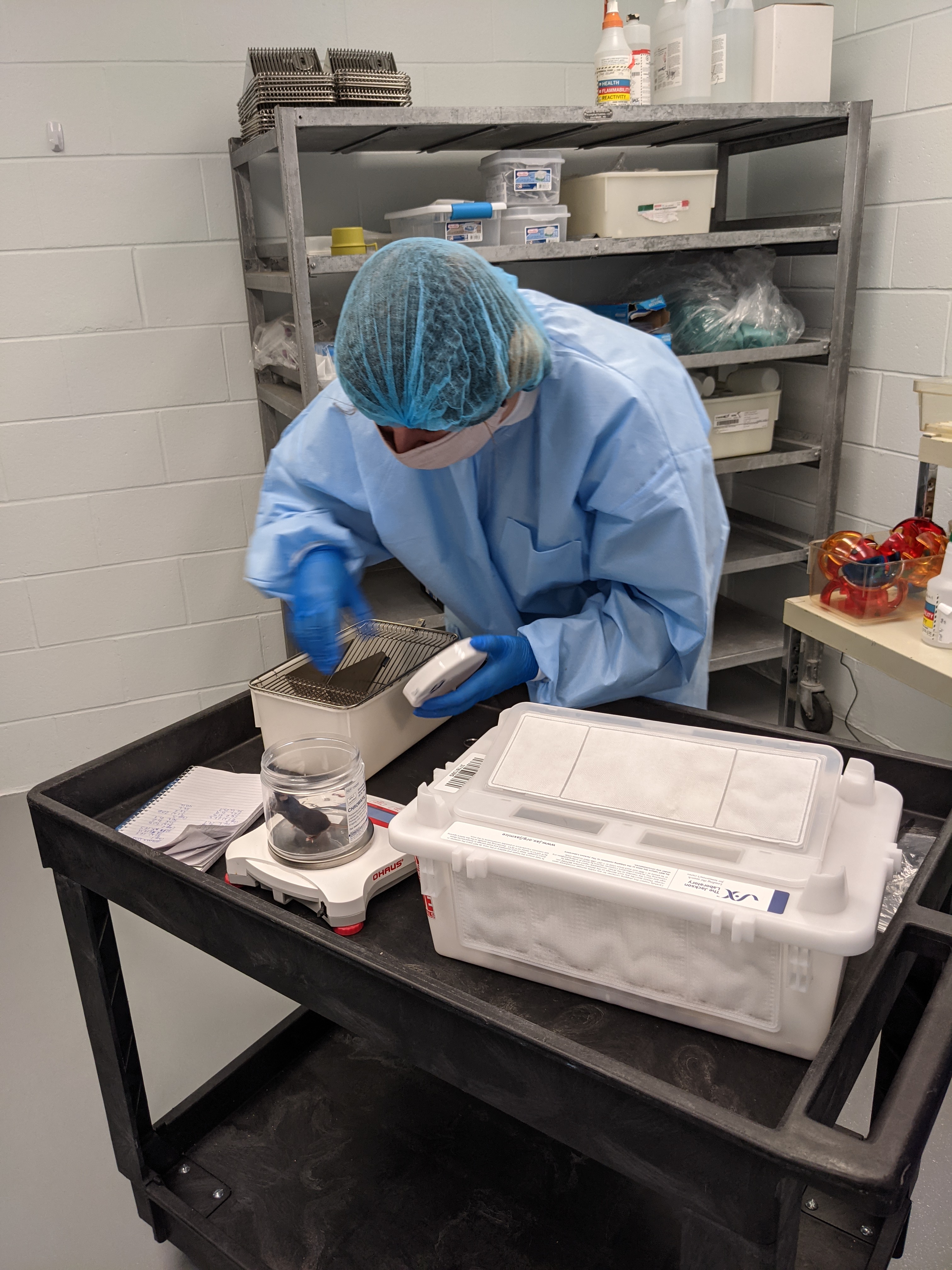
The first mouse study of the Ishaq Lab (in conjunction with the Zhang and Li labs at Husson University) has concluded phase 1, which means that over a few short days, an incredible number of samples needed to be collected, preserved, and processed for further laboratory work (phase 2) which will take through the summer to complete.
Sample collection was made more challenging by the pandemic, because we needed to distance as much as possible, disinfect objects and surfaces, wear masks, and increase the amount of ventilation in a space. Luckily, this type of work lends itself to these types of precautions – not only did we already need to wear a significant amount of protective gear to work with mice or handle their feces, but biosafety work like this requires higher than usual ventilation and frequent sanitation of objects and spaces. Since some of this work could be performed simultaneously in different rooms, we were able to use both Ishaq lab spaces and the ‘mouse house’ to keep people distanced.
During the 40-day mouse study, ‘Team Broccoli’ collected:
640 mouse body weight data measurements
433 fecal samples, which were archived for possible culturing and/or sequencing
400 additional samples collected over two days:
40 blood samples for immune factor identification
360 gut samples
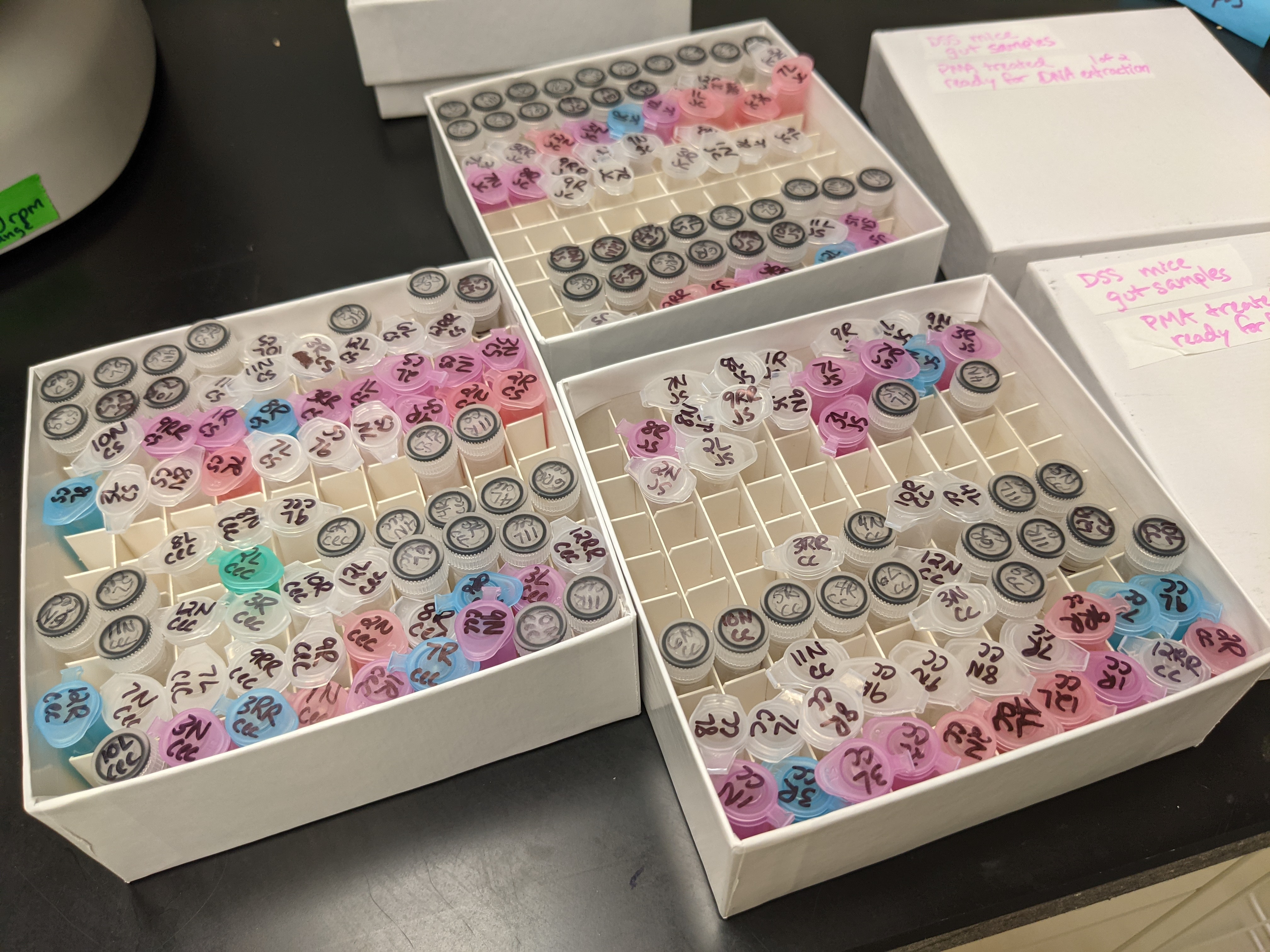
Of which, 200 were PMA treated within 12 hours of collection for use in DNA sequencing
160 of which will be cultured to isolate bacteria. This will create 1 ~ 8 isolates per sample that will need to be grown on its own plate, transferred to broth media, and then frozen with glycerol at -80C until they can be revived and studied later this year.
As has become a New Year’s Eve tradition, here is the Ishaq Lab’s Year in Review for 2020! In previous years, I remarked on difficult and delightful times alike, but 2020 has been a year full of intense loss for so many, and some have unfairly borne more of that heavy weight. In reflecting on whether to go ahead with the post for this year, I chose to do so and to include a tone of optimism and hope because, for the first time in the Ishaq Lab, I am not writing the story of me, I am writing the story of we. Even though we couldn’t all be together this year, the Ishaq Lab has tried to do our best to stay connected, and I have had the pleasure of watching my new lab team work together and grow as scientists. I am proud of how they have handled this year, and I wanted to share their triumphs.
Research
2020 was the year for launching the first official projects of the Ishaq Lab, including a field project, a mouse project, and a handful of data analysis or microbial community projects.
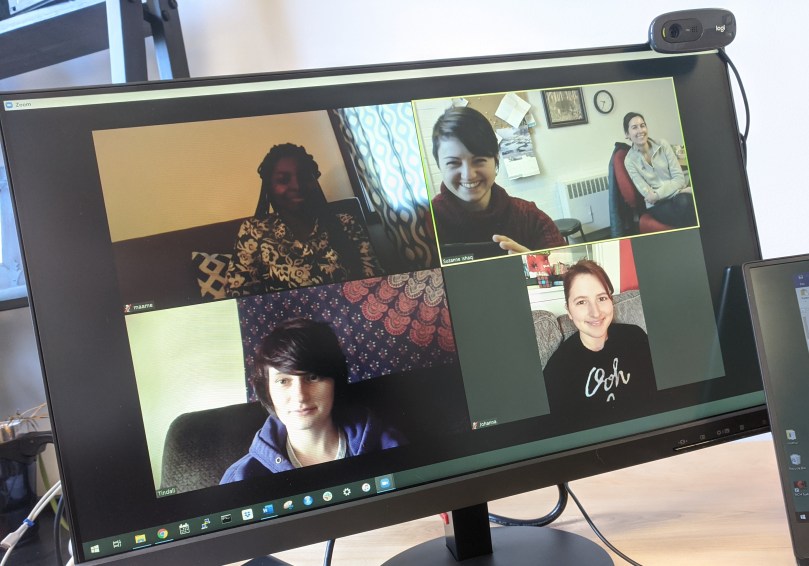
Early in the year, students began joining the lab, and we had our very first lab meeting, featuring Adwoa Dankwa (UM Perry lab), Alex Fahey (in the office with me), Tindall Ouverson (MSU, Menalled/Seipel lab), and Johanna Holman. Ironically, we had our first lab meeting over Zoom to facilitate students in multiple geographic areas, not suspecting we would only have virtual lab meetings this year.
The first field project was a literal one – a soil project! Because of the pandemic response in the spring and early summer, laboratory work was reduced until we could do so safely in enclosed spaces. But, we were able to launch a field project because the samples could be collected and processed by one person alone over the summer. Undergrad Nick Hershbine, who is majoring in Ecology and Environmental Sciences, has been investigating the microbial community in blueberry soil from farms around Maine. This is part of a larger project led by Dr. Lily Calderwood, and is supported by the Wild Blueberry Commission of Maine (“Exploration of Soil Microbiota in Wild Blueberry Soils“). Nick is in the process of data analysis and interpretation, and we hope to write up the preliminary results over the winter.
The Ishaq Lab also launched its first mouse project! This is my first time managing mice, and luckily I have expert collaborators at Husson University and a stellar grad student taking the lead on those portions. I’ll be overseeing the microbial ecology aspects, done by master’s student Johanna Holman for her graduate work. Joe Balkan, a Biology undergrad at Tufts University, has been reviewing previous literature for culturing protocols, and will be joining us for two weeks over break to help with some bacterial work. Undergrad Evan Warburton, who started in the fall semester, will pick up that microbiology work from Joe at the beginning of the spring semester.
The Ishaq Lab also had its first student presentation this year, by master’s student Sarah Hosler giving a graduate seminar on her proposed research for her degree, which involves host-microbial interactions in ruminants. The first portion of laboratory work for her project will take place starting in winter break. We’re not ready to share any details, but first we will be trying out some new methodology, as well as recreating some older methodology which has fallen out of fashion.
As part of that first step, Sarah will be assisting with the Capstone project of undergrad Emily Pierce, who was awarded a UMaine CUGR undergrad fellowship to fund her work this spring. Emily will be investigating host-microbe interactions during Cryptosporidium parvum infections, something which routinely devastates newborn livestock. We had anticipated running this experiment last summer, but postponed it for safety. Emily and master’s of professional studies Alex Fahey have made good use of that delay, however, and have been spending the time reading scientific manuscripts, assembling experimental protocols, and designing their project. Alex does not need to complete a thesis for her degree, it’s more about assembling a variety of skills, so she has participated in a number of supportive activities this year.
Undergrad Jade Chin has been working on her Honor’s Thesis project, the scope of which has had to nimbly pivot over the past year as we weren’t sure what we would be able to accomplish during the pandemic. For example, we spent two months waiting for DNA extraction kits to arrive due to supply shortages and the federal disruption of the postal service. Those kits are critical to the very first step of the experimental procedures and one we could not skip. Jade will defend her Honors thesis in spring 2021, including a written thesis, an oral presentation, and even a short interview with her thesis committee, although it will be less formal and less strenuous than a graduate-level defense.
Grace Lee, an undergrad at Bowdoin College, has been working on data analysis of microbial communities associated with lobster in aquaculture, which is part of a larger project by Drs. Debbie Bouchard, Jean MacRae, and Heather Hamlin. The dataset is a large and complicated one, though with an elegant experimental design. We anticipate writing up the results beginning this winter and continuing through the spring. Grace will be joined by an undergrad who I have been mentoring in my AVS 401 Capstone class, who will be contributing a literature review for the manuscript.
Three papers were published this year, which were all part of previous projects at former positions. This included the culmination of my post-doc work in the Menalled Lab from back in 2016, and one of the small projects I participated in while at BioBE from 2017 to mid 2019.
Horve, P.F., Dietz, L., Ishaq, S.L., Kline, J., Fretz, M., Van Den Wymelenberg, K. 2020. Viable bacterial communities on hospital window components in patient rooms. PeerJ 8: e9580. Article.
Ishaq, S.L., Seipel, T., Yeoman, C.J., Menalled, F.D. 2020. Dryland cropping systems, weed communities, and disease status modulate the effect of climate conditions on wheat soil bacterial communities. mSphere 5:e00340-20. Article.
Ishaq, S.L., Seipel, T., Yeoman, C.J., Menalled, F.D. 2020. Soil bacterial communities of wheat vary across the growing season and among dryland farming systems. Geoderma 358(15):113989. Article. This was accepted in 2019 but not officially published till 2020.
It’s very common to have a slump in publications when starting a new position, and particularly when that involves moving to a new institution and establishing a new lab group. Research can take awhile to gain momentum, especially when you need to recruit and train new lab members. Or, when those lab members have to pause their lab work for global public health reasons. The Ishaq lab isn’t worried, we’ll make up for it in 2021. With all the ongoing projects, we anticipate a handful of other papers being developed next year. I’ve also got four manuscripts that have been in review for months, a process which has also been (understandably) delayed because of the pandemic.
We tried out some designs for Ishaq Lab stickers!
Teaching
I taught three new classes this year; one that was new to me and two that I developed myself. In spring 2020, I taught a special topics version of my DNA sequencing data analysis class, which means that I got provisional approval to teach it as a one-off while I completed the full course approval. Because the data analysis class is cross-listed for undergraduate seniors and for graduate students, it needed to go through two different curricula approval processes, and curricula must be approved a certain amount of time before the first instance of the class. That class has now been formally approved as AVS 454/554. From the spring version, two scientific manuscripts are in review, and a third is in preparation while more data are added. We managed to achieve a lot in the spring class, considering halfway through the semester we switched to remote instruction only as the early throes of the pandemic descended.
The other two new classes I taught this fall, including the first part of the Animal and Veterinary Sciences Capstone Experience, AVS 401, which instructs students on writing and presenting research proposals and matches students with a research mentor to try and complete the project. It was particularly challenging to do that this fall, when many researchers still had their work on pause because of the pandemic. I’ll be continuing this class in the spring as AVS 402, in which students present what they’ve done. While only a few AVS students will pursue research as a career, they will all need to implement the scientific method and the ethos of research into their lives no matter where they end up. Being able to find, assess, and critique information are all critical skills which this Capstone Experience helps them to develop.
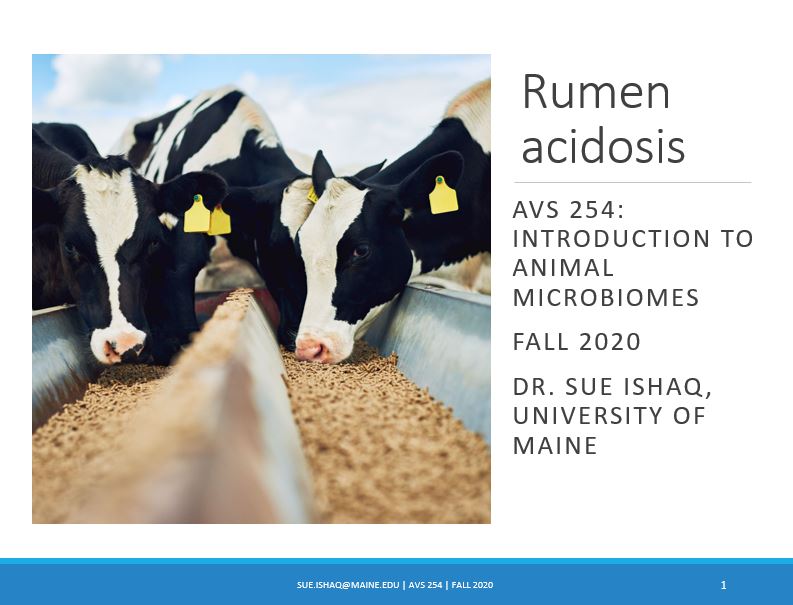
I taught AVS 254, Introduction to Animal Microbiomes. I’ve previously taught some of this material, but to very different student audiences, which required a lot of course development on the fly over the semester. Even with the previous material, I still needed to revise all my previous lectures to adapt to a new lecture length, add new ones to make up about half the semester, and, as our understanding of host-associated microbiomes evolves over time, the course materials needed to be updated (annually) to present up-to-date knowledge. The last lecture of the semester was a compiled video of ‘science journeys‘, featuring researchers in host-associated microbiology sharing what they work on and how they got here. You can watch the video, too!
I also spent a lot of time this fall curating the Teaching Statement portion of my tenure packet, some of which I shared as a series of posts this fall. Next spring I will have my third-year review, which will be the first official hurdle and where I get more substantive feedback from my peer committee about the trajectory of my teaching, research, and outreach as I develop my packet to apply for tenure in ~ year 5. In 2021, I have a planned blog post describing the history and process of tenure, and I will likely share other portions of my tenure packet, such as my research statement.
Presentations from my couch
As I recently posted, 2020 has been The Year of The Virtual Conference. Many conference in spring and summer of 2020 were outright cancelled, but some managed to revise their format and be held virtually later in the year. This was achieved with a combination of live-streaming and pre-recorded content, all of which became on-demand during the conference. Viewers could ask questions through a chat function, or by posting questions directly to the presentation page. While early attempts to host large virtual meetings with researchers in multiple time zones faced a steep learning curve, overall, I think many people realized the potential provided by a virtual platform. For example, without travel costs, more students and early career researchers could afford to attend, and researchers with family care, health, or other constraints could participate on their own time.
Seven of the eight planned scientific presentations of my work took place in 2020, listed here with some links to video content.
Outreach
Similarly, seven of the eight planned public presentations took place, with some links to video content in the list below:
Genomes to Phenomes (G2P) group, University of Maine. Co-hosted a session with grad student Alice Hotopp, on gut microbes and survival of reintroduced animals. Oct 30, 2020.
University of Maine Cooperative Extension Oxford County 4-H Teen Science Cafe (virtual), “Gut microbes on the farm”, Oct 15, 2020.
University of Maine Cooperative Extension Oxford County 4-H Jamboree (virtual), “Gut microbes on the farm”, Aug 13, 2020. Video.
Invited to lead Journal Club with the Fogler Library, August 4, 2020. led a 1 hour discussion on gut microbes and survival of reintroduced animals.
Albright College Science Research Institute summer program 2020, which engages grades 5-12 in research. “A crash course in the gut microbiome”, virtual presentation, Aug 4, 2020.
I’ve also been endeavoring to promote the AVS Capstone Experience projects, in part by sharing student-written project summaries on social media and UMaine news outlets. I will do something similar at the end of the spring 2021 semester when projects are complete. And, the online conferences have gotten me thinking about how to create an on-demand virtual symposium that is open to the public…
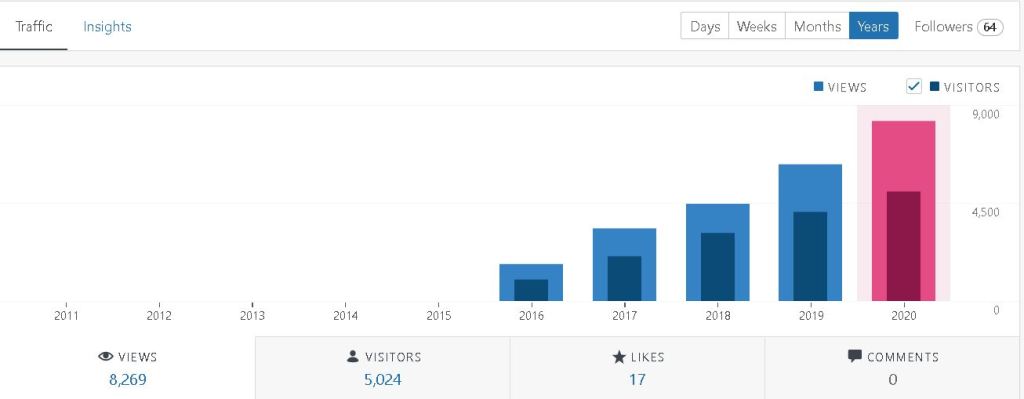
My site had its most popular year, with just over 5,000 visitors taking >8,250 views from 112 countries, as shown in the image below. This November had a record number of visitors, with >1,100! In total, my site has had >15,200 visitors and just under 24,000 views since January 2016, more than I had imagined possible when I began. The website visitors are joined by 64 wordpress followers, 100 on Instagram, 113 on Facebook, nearly 1200 on Twitter, and 0 on Tumblr, which I set up because wordpress will auto-reblog to there, just in case anyone still uses Tumblr.
Website visitor statistics for 2020.
Life
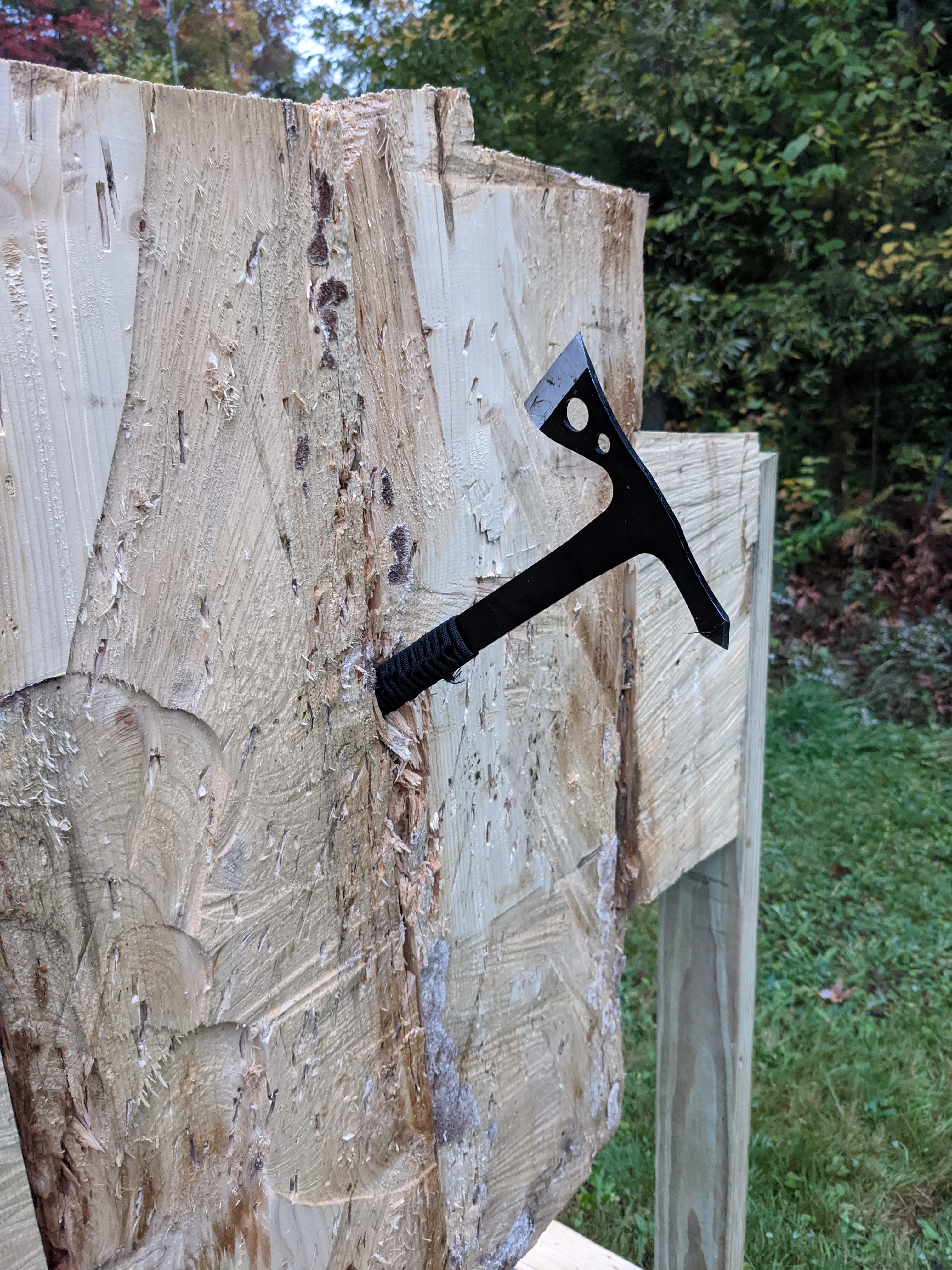
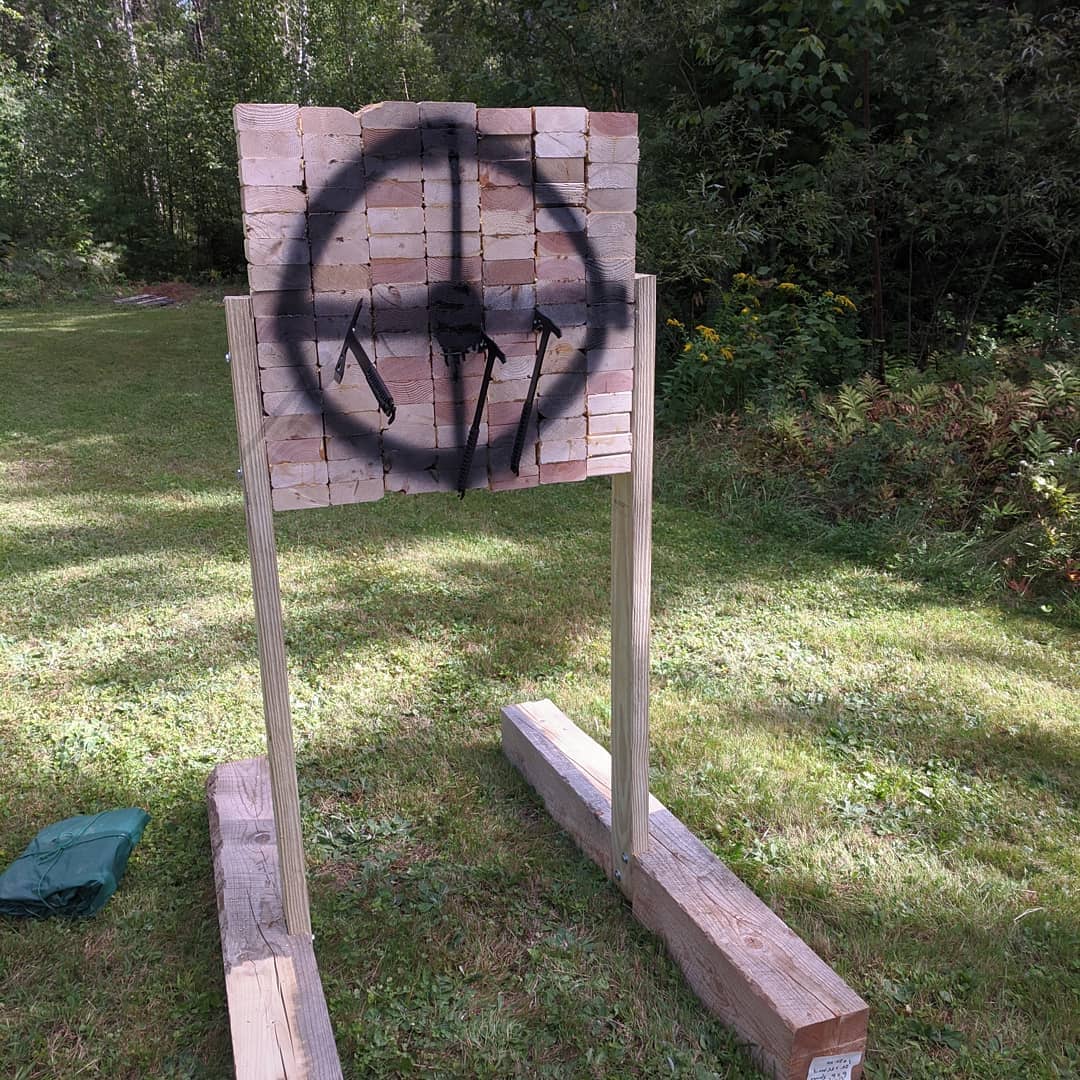
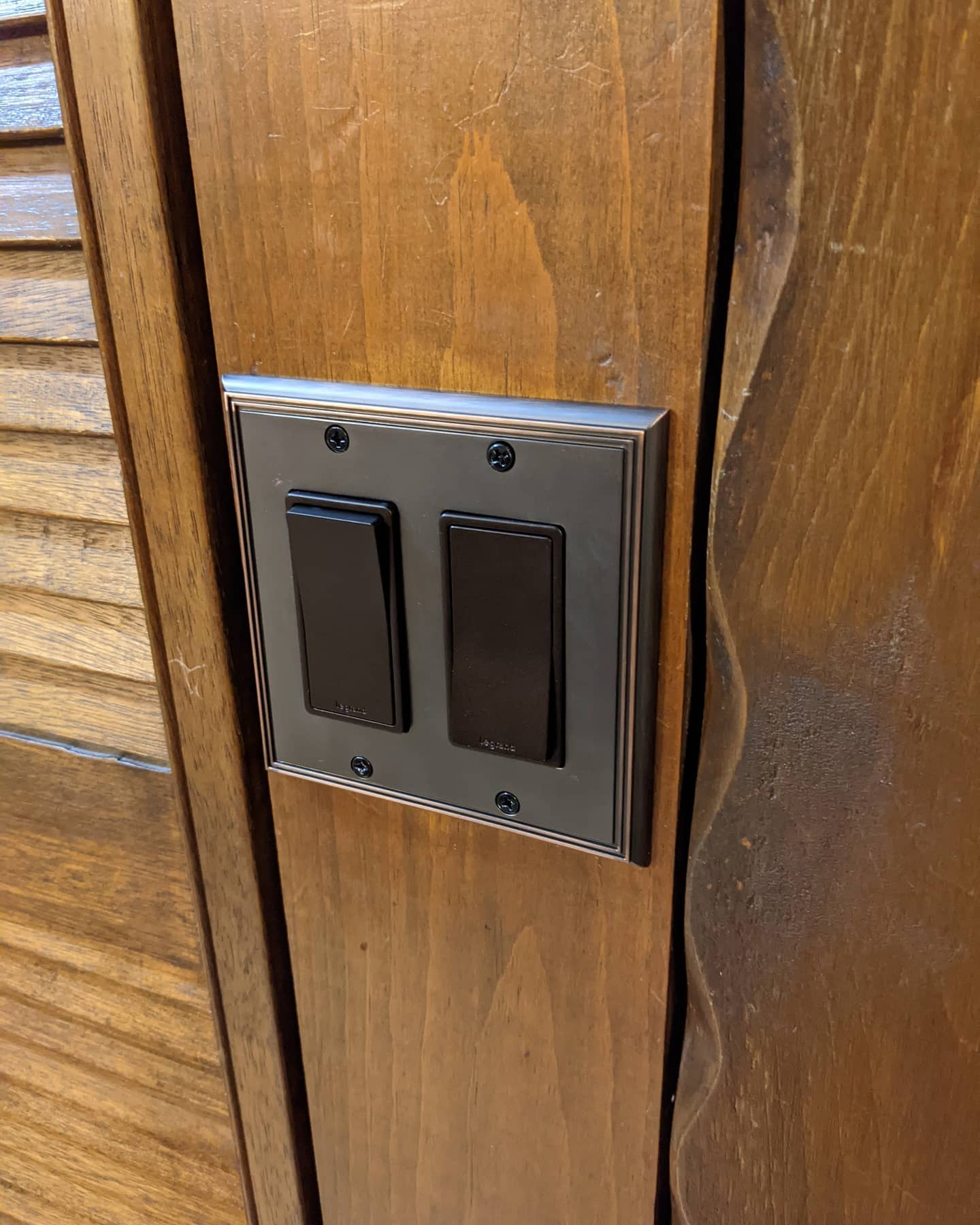
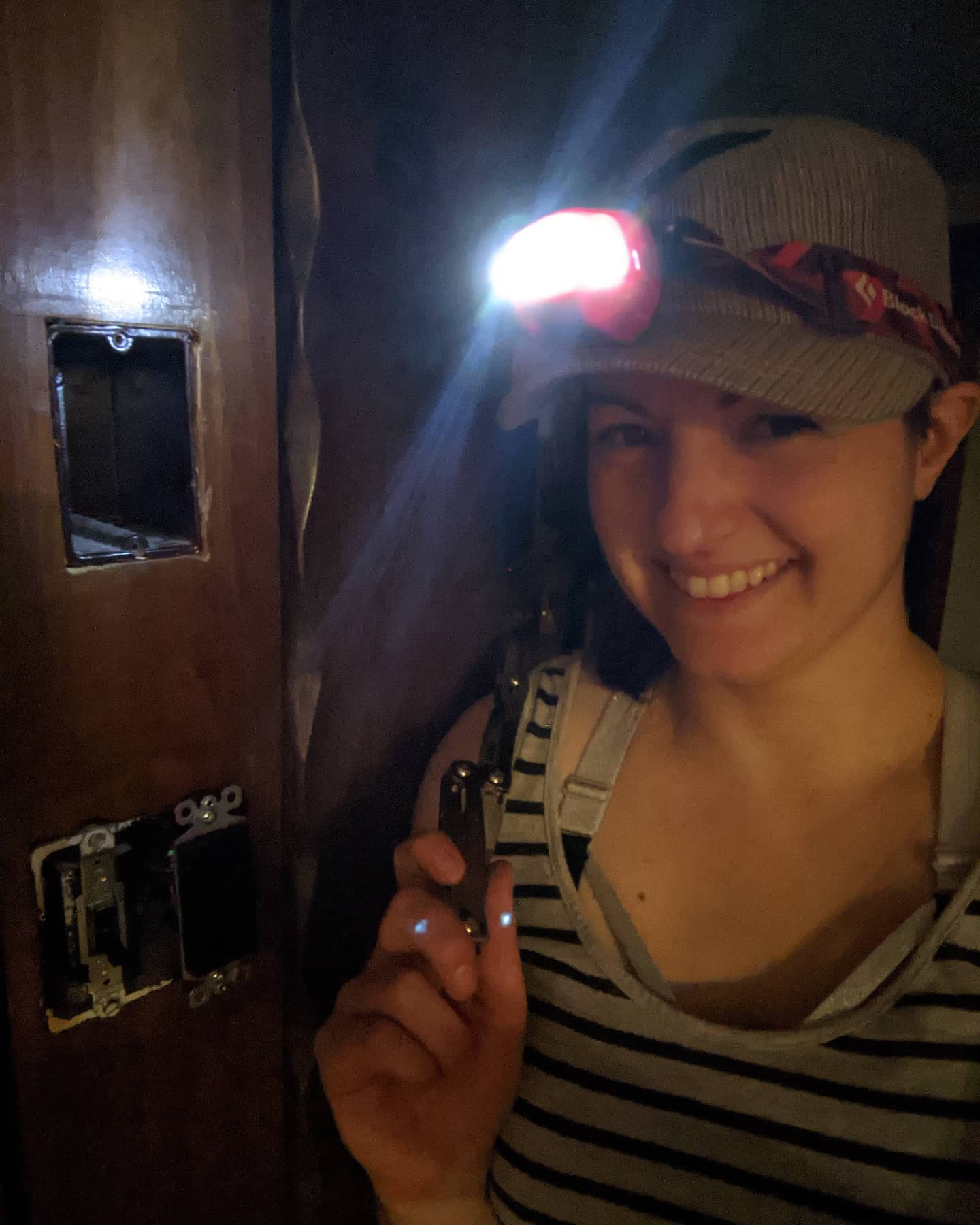
I picked up a new hobby this year – axe throwing! I tried it at an axe bar last winter and instantly took a shine to it. We made wood targets at home and bought a few throwing axes, and while I haven’t become the maverick I had hoped, it is a lot of fun. I’ve also picked up an arguably more useful skill, basic electrical work to change outlets and light switches! We’ve been slowly updating and renovating our house, and I’m looking forward to learning drywalling and flooring next near.
Looking Ahead
2021 is anticipated to be an exciting year, and will be a combination of wrapping up current projects so some of my students can graduate, as well as progressing the graduate work of Johanna and Sarah. In my “free time”, I’ll continue to fine-tune my curricula, and it’ll be back to the writing table as I revise the research proposals that I submitted this year which were not awarded funding. Of the twelve proposals I submitted in 2020, two were awarded, one is already revised and back in review, at least two will be revised and resubmitted, and at least two new ones are planned.
I’ll be part of my first graduate thesis defense as part of the committee, as Tindall Ouverson is expected to defend her master’s in 2021 from Montana State University. Tindall’s first paper on soil bacteria in agricultural fields is currently in review, and the data analysis for two more (one of which is not on soil microbes) is underway.
I’ll also be leading the committee for Jade’s Honors thesis defense in March. Alex won’t be giving a defense to finish her degree, but she’ll still be informally meeting her committee to reflect on her academic journey and if she’s prepared for a professional career. Johanna and Sarah will soon be inviting faculty to their committees, and next year I will be chairing those meetings.
I’ll be teaching the AVS 402 Capstone class for the first time, but as I already spent the fall semester with AVS seniors in AVS 401, it shouldn’t be any trouble. Just a LOT of revising papers and giving feedback. I’ll be teaching my DNA analysis class again, and will spend the next few weeks updating the materials from last spring when I taught the special topics version. I’ll also be compiling datasets for my students to work on, and hopefully, to turn into scientific manuscripts by the end of the semester.
A number of events developed by the Microbes and Social Equity working group will come to fruition in 2021, and I will finally be able to tell you about them in detail! Stay tuned for information on a speaker series running from February through April, a hybrid (virtual and in person) symposium in June, and a public announcement of a scientific journal special collection.
I’m also pleased to say that one of my cousins will be joining the website behind-the-scenes in 2021, to add alternative text to my website images to make them more inclusive. This and other work will serve as part of the requirement for science/service hours for membership to the Science National Honor Society! I’ll leave it to my cousin to make a formal introduction in a blog post on science accessibility, but welcome to the team!
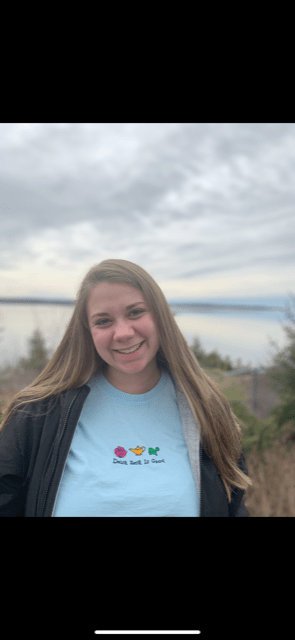
Emily joined the lab in early 2020 to work on a project investigating calf health and gut microbes, but very soon after joining the lab, the SARS-CoV-2 pandemic emerged and changed the way we were able to interact on campus. Without missing a beat, Emily shifted her efforts from helping me wrangle the lab renovations and sorting out our inventory, to helping me improve my teaching materials, to diving deep into previous literature to dig up protocols for her experiment in 2021: “Ideal Conditions for Cryptosporidium Attachment and Infection.“
We’ll be performing the experiment itself over the winter break, and then using the spring to analyze the data and write them up. As part of the CUGR award, Emily will be presenting her work at the 2021 Student Symposium in April, which will be held virtually this year. You’ll have to wait till then to get more details!
With the closing of the fall semester, I said goodbye to the students in my AVS 254: Introduction to Animal Microbiomes class. Despite the challenges and turmoil of fall 2020, these students have been engaged, enthusiastic, and creative. After presenting lectures on the microbial communities in and on animal hosts and how they can impact health and fitness, for the final class of the semester, I wanted to close with perspectives from the broader world of science.
To that end, I compiled several videos of “science journeys”, as told by active researchers in host microbiology, with an introduction to the class/video and my own science journey. I hope to compile a new volume each year I teach the class, to gather diverse paths.
I am extremely grateful for the time, effort, and thoughtfulness of the researchers who were able to contribute during a hectic semester to volume one:
Edna Chiang, University of Wisconsin Madison, @EdnaChiang
Dr. Kaitlin Flynn, Benaroya Research Institute in Seattle, @microkaitlin
Kiran Gurung, University of Groningen, @kirangurung29
Jocelyn R. Holt, Texas A&M University, @JocelynRHolt
Chissa Rivaldi, University of Notre Dame, @Powerofcheez
Dr. Laura Tipton, Chaminade University of Honolulu, @lauraomics
Dr. Benjamin Wenner, The Ohio State University, @Bynjammin
Mice have arrived for a collaborative project on diet, gut microbes, and health in conjunction with researchers at Husson University! This is the first mouse project for the Ishaq Lab, and also my first hands-on mouse project (in my previous publications with mice, I received datasets but the mouse work was performed solely by my collaborators).
This is one of my first new collaborations at the University of Maine, which began in September 2019 as I was just finding my way around campus. An established researcher at Husson University, Dr. Yanyan Li, reached out to welcome me and talk about overlap between our work. Yanyan, her husband Dr. Tao Zhang, also a researcher at Husson University, and collaborator Dr. Grace Chen at Michigan State University, had been working on beneficial compounds found in broccoli using mice as an experimental model for Inflammatory Bowel Disease (IBD). Over the past year, in consultation with IBD experts Drs. Gary Mawe and Peter Moses (who I worked with previously while at UVM!), we have written several proposals for funding to expand the project.
Johanna Holman worked for several years with Yanyan and Tao, as an undergraduate researcher and then as a research assistant. She joined the Ishaq Lab this fall to continue her work as a graduate student and add gut microbiology to her skill repertoire. This experiment will form the base of her graduate thesis, and Johanna is taking a lead role in managing the project as well as several undergraduate researchers, including Dorien Baudewyns, assisting with the mice and lab work. As an early career researcher, and new to mice, I’m extremely lucky to be able to learn from an experienced team of researchers!
2020 has been an interesting year for scientific conferences and meetings, which typically bring dozens to thousands of researchers and professionals together to share their work. Some of the bigger meetings, or those occurring early on in the pandemic, elected to cancel their events because there was no time to adjust the logistics for hosting a massive meeting online.
As the year progressed with no sign of the pandemic abating, more conferences opted for a modified event online. This included live-stream and/or recorded content, spacing the event over a longer period to reduce “zoom fatigue”, and making network events smaller virtual versions. It certainly would have been more rewarding to be able to have these in person, but I am pleased that conference organizers chose safety as their priority.
In some ways, having virtual content made the material more accessible. recordings meant you could watch content at your convenience, more organizations provided or required subtitles for presentations, and those who would otherwise not be able to attend, because of cost, childcare, or travel constraints, were able to participate.
The Ishaq Lab presentations for 2020 is below, with presenters denoted with an asterisk (*).
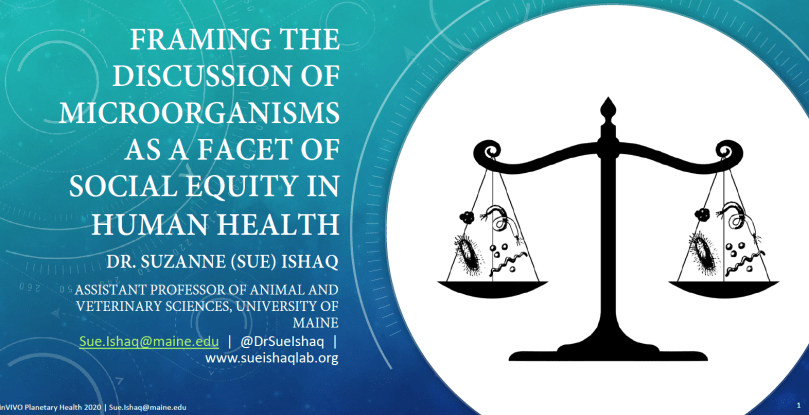
Ishaq*, S.L.”Framing the discussion of microorganisms as a facet of social equity in human health”, inVIVO Planetary Health 2020 meeting. (revised to virtual) Amsterdam, Netherlands. Dec 2020.
Yeoman*, C., Lachman, M., Ishaq, S., Olivo, S., Swartz, J., Herrygers, M., Berarddinelli, J. “Development of Climactic Oral and Rectal Microbiomes Corresponds to Peak Immunoglobin Titers in Lambs.” Conference of Research Workers in Animal Diseases (CRWAD) 2020. (revised to virtual) Dec 5, 2020.
Ishaq*, S.L., Hotopp, A., Silverbrand, S., MacRae, J., Stock, S.P., Groden, E. “Can a necromenic nematode serve as a biological Trojan horse for an invasive ant?” Entomological Society of America 2020. (revised to virtual). Nov 15-25, 2020.
Menalled*, F.D., Seipel, T., Ishaq, S.L. “Agroecosystem resilience is modified by management system via plant–soil feedbacks.” Ecological Society of America (ESA) 2020. (revised to virtual) Salt Lake City, UT. Aug 2020.
[meeting cancelled] Horve*, P.F., Dietz, L., Ishaq, S.L., Fretz, M., Van Den Wymelenberg, K. “Characterization of Viable Microbial Communities on Healthcare Associated Window Components.” American Society for Microbiology Microbe 2020, Chicago, IL. Jun 2020.
[meeting cancelled] Horve*, P.F., Dietz, L., Ishaq, S.L., Fretz, M., Van Den Wymelenberg, K. “Characterization of Viable Microbial Communities on Healthcare Associated Window Components.” 2020 Microbiology of the Built Environment (MoBE) Gordon Research Conference, Andover, NH. Jun 2020.
Zeng*, H., Safratowich, B.D., Liu, Z., Bukowski, M.R., Ishaq, S.L. “Supplementation of calcium and vitamin D reduces colonic inflammation and beta-catenin signaling in C57BL/6 mice fed a western diet.” American Society for Nutrition 2020. (revised to virtual) Seattle, WA. June 2020.
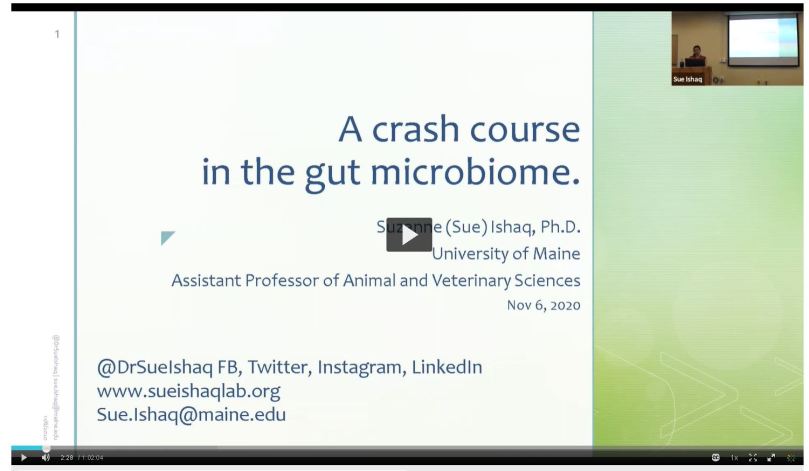
Last Friday, I gave a seminar on “A crash course in the gut microbiome” to the University of Maine Institute of Medicine as part of their fall seminar series. You can find the previous seminars in that series here.
I was delighted to have the opportunity to share my science to researchers around Maine, and to have so many engaging questions!
You can find my seminar recording here, and a pdf of the slides with my presenter notes as annotated comments can be found here: