

Congratulations to Riya Sharma for leading this paper, “Microbiome changes following immigration: Rethinking ‘westernization’ as an explanatory concept”, which is now available open-access from Gut Microbes, and can be read here.
The paper examines how researchers use social and population descriptors to define populations of people for statistical comparisons in research. However, some terms, like “western”, “westerinzation”, and “industrialized” are used to mean different things, and this plasticity in their definition means that research results can’t always be directly compared across studies – especially when looking at the effect of geographic area, diet, lifestyle, and migration on the gut microbiome and health.
This interrogation of how scientists do science is part of the broader scope of Dr. Kieran O’Doherty, my long-time collaborator, member of the MSE Board of Director, lead of the Microbiome Stewardship research group, and lead of the “Discourse, Science, Publics” lab in the Department of Psychology at the University of Guelph. Kieran has been looking at how microbiome research is conducted, applied to the real world, and affected policy for over a decade, and has published on navigating the social acceptability and regulatory challenges of therapies like fecal microbiota transplantations, investigating the links between microbial exposure and health, establishing guidelines for microbiome stewardship, as well as many other topics biomedicine and public policy.
When Kieran mentioned Riya’s project to me in spring 2025, I suggested that Dr. Lola Holcomb and I could contribute some proof-of-concept data from human gut microbiome metagenomics samples, which had been labeled with “western” status based on the country from which the samples originated. Lola and I randomly re-assigned which samples were labelled as “Western” or “Non-Western” and found that often, these random comparisons yielded significant results, which indicates that there are other, more meaningful biological and social factors which underlie these vague categories which would yield more direct links to differences in gut microbiomes. For example, from other literature, we noticed that age and height have a stronger effect on the gut microbiome than country of origin does.
Microbiome changes following immigration: Rethinking ‘westernization’ as an explanatory concept
Riya Sharma1, Lola E. Holcomb2, Suzanne L. Ishaq3, Kieran O’Doherty4
- 1Department of Psychology, University of Guelph, Ontario, Canada.
- 2Graduate School of Biomedical Science and Engineering, University of Maine, Orono, Maine, USA, 04469.
- 3School of Food and Agriculture, University of Maine, Orono, Maine, USA 04469.
- 4Department of Psychology, University of Guelph, Ontario, Canada
Abstract
An emerging focus in microbiome science is on changes to people’s microbiomes following immigration, particularly to so-called Western countries like the USA, Canada, Australia. Moving to these regions has been linked to microbiome changes that may increase immigrants’ susceptibility to health problems, including obesity and Inflammatory Bowel Disease. The term “Westernization” (and adjacent terminology) is frequently used to describe changes in diet, lifestyle, and built environment- and the consequent microbiomes shifts- associated with immigration. However, what Westernization means in this context, and whether it is an appropriate descriptor, is often unclear. The purpose of this article is to provide a review of the diverse meanings associated with the terms “West”, “Western”, “Westernization” (and similar) across microbiome-related research and broader uses. We argue that these terms can obscure the specific structural, environmental, and cultural factors shaping microbiome changes. We discuss the consequences of this imprecision and provide recommendations for future research. Avoiding oversimplified conclusions about what impacts immigrants’ microbiome and health can contribute to more accurate targets for public health interventions for these groups in the long term.
Keywords: Microbiome changes, Immigration, Westernization, Health
Meet the authors
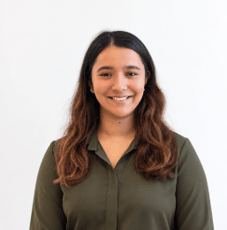
Riya Sharma (she/her) is a PhD Candidate in the Applied Social Psychology program. Her research interests are dis/ability justice, inclusive education, health equity, and qualitative methods. Her PhD thesis explores how neurodivergent high school youth and their parents navigate the Ontario education system, a project supported by the Dean’s Graduate Research Fund. As a research assistant in the DSP lab, she worked on research projects on microbiome stewardship and pandemic narratives. She pursued her Master’s in Developmental and Social Psychology from the University of Delhi (India). Outside of her academic work, she enjoys painting, dancing, and exploring quirky corners of Reddit.

Dr. Lola Holcomb, B.S., PhD., is currently a PostDoctoral Researcher at the University of New England. Lola was formerly a graduate student in the Ishaq lab, entered as a rotating first-year student in March 2022 in the Graduate School of Biomedical Sciences and Engineering program, and declared the Ishaq Lab her dissertation lab soon after, and starting in fall of 2022 was accepted into the NRT funded for One Health in the Environment program. Lola performed 16S and metagenomic analysis to compare gut microbiomes of mouse models of Inflammatory Bowel Disease with broccoli sprouts as a dietary treatment, human gut microbiomes following broccoli sprout diets, and various projects related to gut microbiomes. In addition to research, she instructed a graduate-level Genetics course, tutored several Biology undergraduate students, and served as a GSBSE senator in the Graduate Student Government at UMaine. She obtained her PhD in May 2025
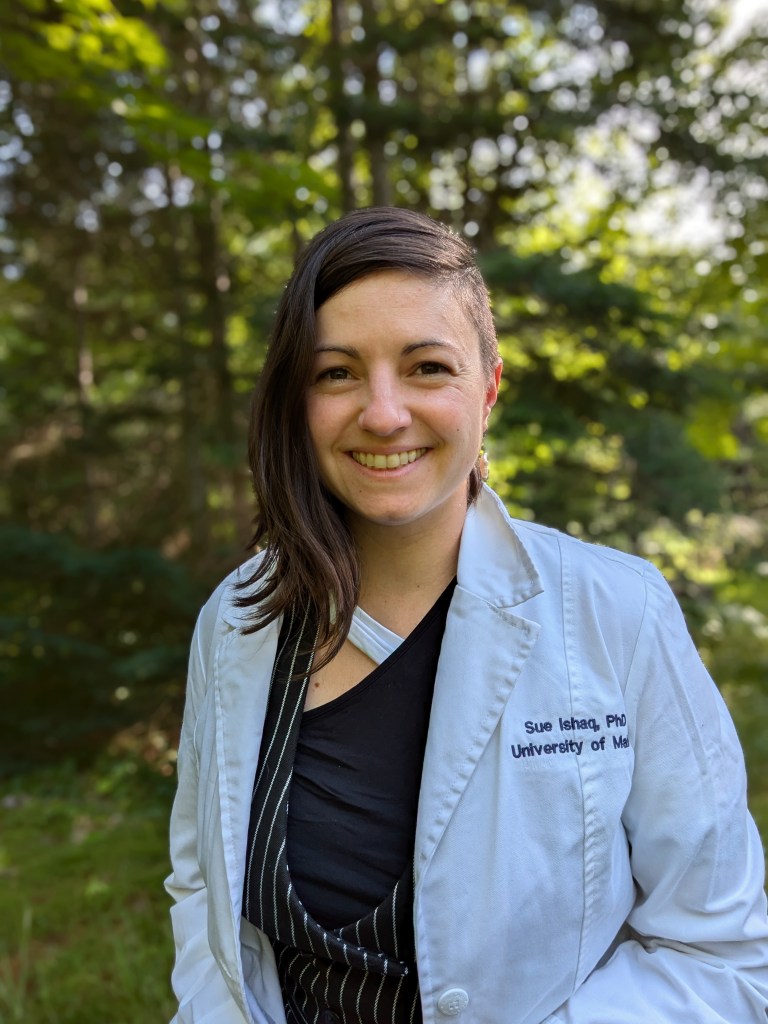
Dr. Sue Ishaq, PhD., is an Associate Professor of Microbiomes, University of Maine; and founded MSE in 2020. Over the years, her research has gone from wild animal gut microbiomes, to soils, to buildings, and back to the gut. Since 2019, her lab in Maine focuses on host-associated microbial communities in animals and humans, and in particular, how host and microbes interact in the gut and can be harnessed to reduce inflammation. She is also the early-career At Large member of the Board of Directors for the American Society for Microbiology, 2024- 2027.

Dr. Kieran C. O’Doherty, PhD., is professor in the department of psychology at the University of Guelph, where he directs the Discourse, Science, Publics research Group. His research focuses on the social and ethical implications of science and technology and public engagement on science and technology. He has published on such topics as data governance, vaccines, human tissue biobanks, the human microbiome, salmon genomics, and genetic testing. A particular emphasis of his research is on theory and methods of public deliberation, in which members of the public are involved in collectively developing recommendations for the governance of science & technology. Recent edited volumes include Psychological Studies of Science and Technology (2019) and The Sage Handbook of Applied Social Psychology (2019). He was editor of Theory & Psychology from 2017 to 2024.

