
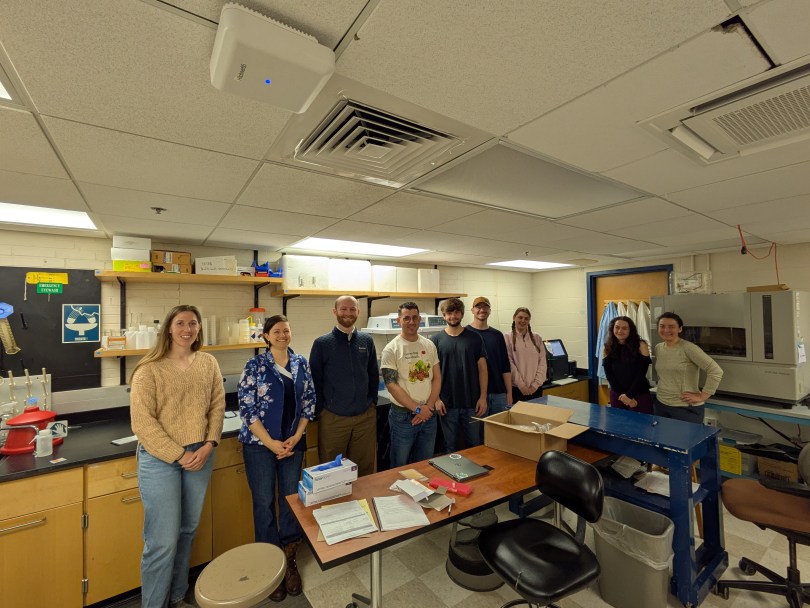

Last week, we completed our third sequencing workshop with Illumina, and we are grateful to Katherine Sullivan, Cameron Robertson, Curtis Provencher, and Michelle Benitez for their patience, expertise, and encouragement. Their sponsorship provided the opportunity for 7 students, plus me, and Alex and Megan at UMaine CORE, to learn how to prepare their samples for sequencing.
We are also grateful to Alex Sacco, Genomics Facility Manager at UMaine, as well as UMaine CORE, for helping to organize the workshop and ensure that students had access to specialized equipment and supplies. Alex and I have been co-organizing a series of workshops, and we hope to make these a regular part of genomics education at UMaine.
We saved the most challenging type of sequencing for last: RNA sequencing. Unlike the double-stranded and protein-secured format of most DNA, RNA is single stranded which makes it susceptible to breaking or damage from high temperatures, freezing and thawing too quickly, acid or base, and the many enzymes that cells make to break RNA back down. RNA is the short-term copy of DNA that cells make as a carbon copy to take over to ribosomes to have them translate the RNA code and make a protein. Cells use RNA when they need to get things made, because proteins are how the cell accomplishes most of its functions, and when there is a demand they will make many RNA copies of the same gene to get many copies made into proteins. But once the cell needs something else, it recycles the RNA, and it is because RNA is a disposable tool that it is so easily damaged can be extremely tricky to obtain. RNA is also a very valuable source of information about how a cell is acting or reacting, so it’s worth the trouble. As such, the lab work needed to extract RNA from cells has more steps and requires more delicacy than the process to extract DNA from a cell.
Illumina sequencing platforms can be used for RNA or DNA, and they sell kits that contain the supplies and reagents needed to target specific types of RNA, such as the ones that animals make versus the ones that microbes make. In this way, researchers can figure out how animal or human cells act and how their microbial communities are acting. Illumina helped us learn how to isolate host RNA, using intestinal tissues from mice from a recent neuroinflammation and broccoli sprouts trial, as well as tissues from several organs on a squid!
Graduate and undergraduate students in agriculture, microbiology, and ecology gathered to learn the process of extracting, cleaning, preserving, sequencing, and of course, troubleshooting, over a two-and-a-half day workshop led by experts Katherine, Cameron, Curtis, and Michelle. Their infinite patience was greatly appreciated, as our students and I were all very new to working with RNA and we all had a lot to learn. We can’t wait to see what the data looks like, and to use it to fine-tune our workflow for going back to process the rest of the intestine tissues to make sure we succeed in getting the RNA we are looking for.
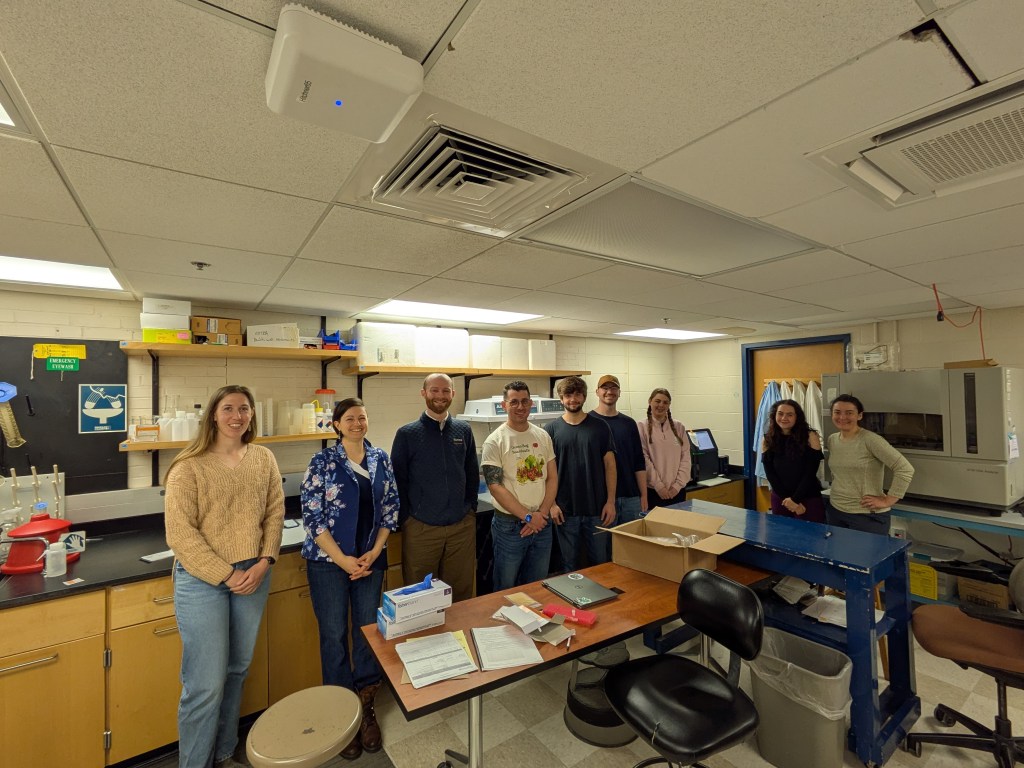
Illumina will join us again at the 2nd NNE Microbiome Symposium in June!

