A collaborative study on virulent Streptococcus got published!

Dr. Benfang Lei is an associate professor here at Montana State University in the Department of Microbiology and Immunology, who has previously collaborated with my previous post-doc advisor, Dr. Carl Yeoman.  As a lab member at the time, I consulted with Dr. Lei about the whole-genome shotgun sequencing that his lab group had performed on several Streptococcus pyogenes isolates.  S. pyogenes is pathogenic in humans and, among other symptoms, causes fever for which it is named.  Some of Dr. Lei’s isolates were much more virulent than others, and his study was to identify differences in the genome that would account for this.  I helped perform some of the genome processing and analysis, and am happy to be a small part of such an interesting study.

Wenchao, Feng, Dylan Minor, Mengyao Liu, Jinquan Li, Suzanne Ishaq, Carl Yeoman, and Benfang Lei. 2016. Null Mutations of Group A Streptococcus Orphan Kinase RocA: Selection in Mouse Infection and Comparison with CovS Mutations in Alteration of in vitro and in vivo Protease SpeB Expression and Virulence. Infection and Immunity.

My first soil microbial ecology paper was just published!

After a long year of data analysis and interpretation, my first paper on soil microbial ecology was just published in Microbial Ecology, found here.  Previously, I presented the data at a poster at this summer’s ASM conference in Boston.  The project led to further collaborations and, of course, led to my current post-doc position!


 “Impact of Cropping Systems, Soil Inoculum, and Plant Species Identity on Soil Bacterial Community Structure”

Suzanne L. Ishaq, Stephen P. Johnson,Zach J. Miller, Erik A. Lehnhoff, Sarah Olivo, Carl J. Yeoman, Fabian D. Menalled. 2016. Microbial Ecology: 1-18.

Abstract

Farming practices affect the soil microbial community, which in turn impacts crop growth and crop-weed interactions. This study assessed the modification of soil bacterial community structure by organic or conventional cropping systems, weed species identity [Amaranthusretroflexus L. (redroot pigweed) or Avena fatua L. (wild oat)], and living or sterilized inoculum. Soil from eight paired USDA-certified organic and conventional farms in north-central Montana was used as living or autoclave-sterilized inoculant into steam-pasteurized potting soil, planted with Am. retroflexus or Av. fatua and grown for two consecutive 8-week periods to condition soil nutrients and biota. Subsequently, the V3-V4 regions of the microbial 16S rRNA gene were sequenced by Illumina MiSeq. Treatments clustered significantly, with living or sterilized inoculum being the strongest delineating factor, followed by organic or conventional cropping system, then individual farm. Living inoculum-treated soil had greater species richness and was more diverse than sterile inoculum-treated soil (observed OTUs, Chao, inverse Simpson, Shannon, P  < 0.001) and had more discriminant taxa delineating groups (linear discriminant analysis). Living inoculum soil contained more Chloroflexi and Acidobacteria, while the sterile inoculum soil had more Bacteroidetes, Firmicutes, Gemmatimonadetes, and Verrucomicrobia. Organically farmed inoculum-treated soil had greater species richness, more diversity (observed OTUs, Chao, Shannon, P  < 0.05), and more discriminant taxa than conventionally farmed inoculum-treated soil. Cyanobacteria were higher in pots growing Am. retroflexus, regardless of inoculum type, for three of the four organic farms. Results highlight the potential of cropping systems and species identity to modify soil bacterial communities, subsequently modifying plant growth and crop-weed competition.

Keywords

16S rRNA, Avena fatua, Amaranthus retroflexus, Conventional farming, Illumina MiSeq, Organic farming, Soil microbial diversity

Preparing for my first greenhouse trial

As the 2016 growing season comes to a close in Montana, here in the lab we aren’t preparing to overwinter just yet.  In the last few weeks, I have been setting up my first greenhouse trial to expand upon the work we were doing in the field.  My ongoing project is to look at changes in microbial diversity in response to climate change.  The greenhouse trial will expand on that by looking at the potential legacy effects of soil diversity following climate change, as well as other agricultural factors.

First, though, we had to prep all of our materials, and since we are looking at microbial diversity, we wanted to minimize the potential for microbial influences.  This meant that the entire greenhouse bay needed to be cleaned and decontaminated.  To mitigate the environmental impact of our research, we washed and reused nearly 700 plant pots and tags in order to reduce the amount of plastic that will end up in the Bozeman landfill.

We also needed to autoclave all our soil before we could use it, to make sure we are starting with only the microorganisms we are intentionally putting in.  These came directly from my plots in the field study, and are being used as an inoculum, or probiotic, into soil as we grow a new crop of wheat.

This is trial one of three, each of which has three phases, so by the end of 2016 I’ll have cleaned and put soil into 648 pots with 648 tags; planted, harvested, dried and weighed 11,664 plants; and sampled, extracted DNA from, sequenced, and analyzed 330 soil and environmental samples!

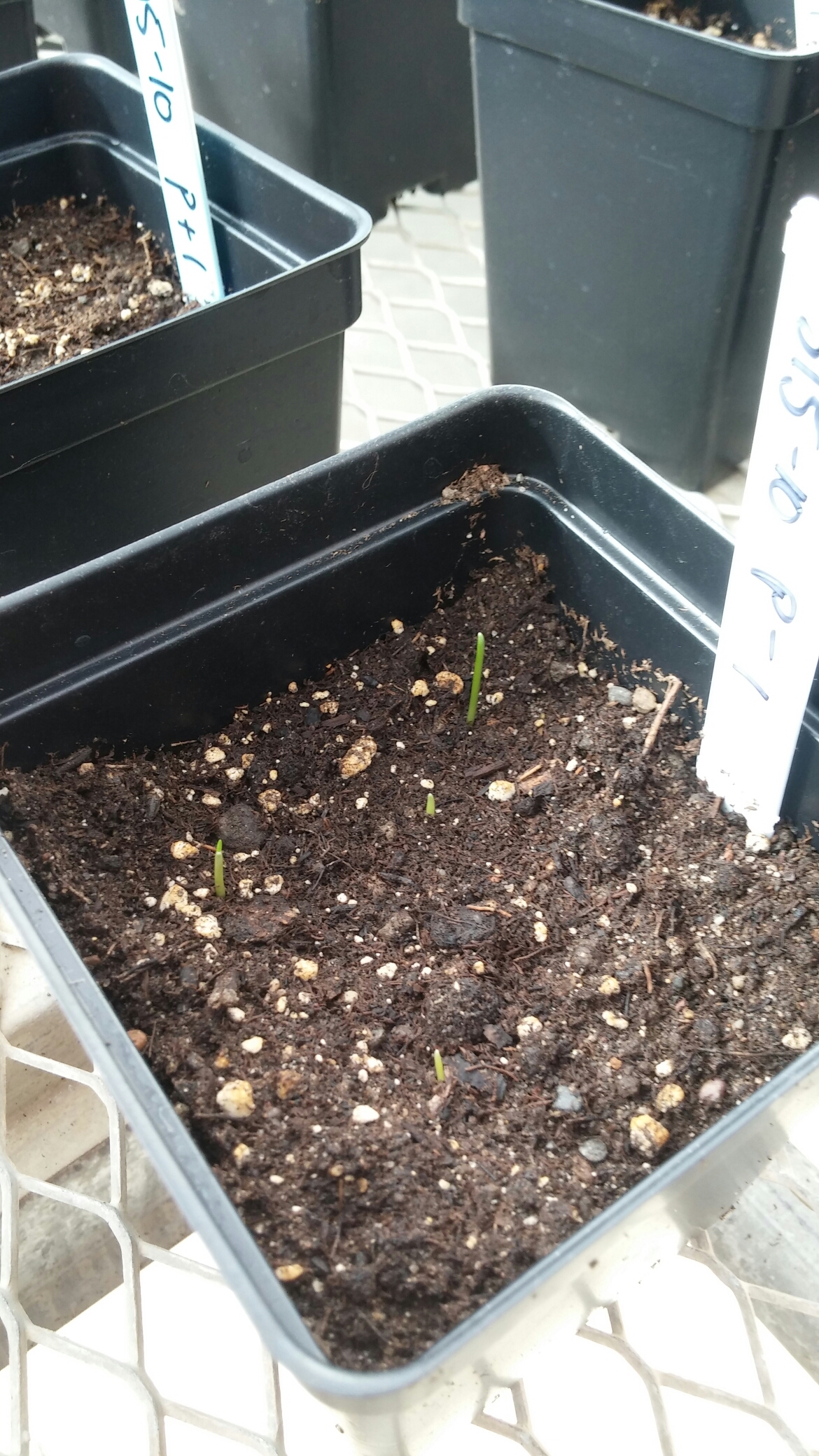
After only a few days, seedlings are beginning to emerge.

 Stay tuned for more updates and results (eventually) from this and my field study!

Citizen Science: year 2 of the Gallatin Microplastic Initiative

The Gallatin Microplastics Initiative is beginning its second year of sample collection along the Gallatin river in Montana.  Volunteers organized by Adventurers and Scientists for Conservation gathered this weekend for our training and first sampling of the year.  ASC brings together local adventurers to help collect difficult animal or environmental samples for large-scale research projects.  While some of their projects are location-specific, some like the Global Microplastics Initiative are open for anyone to participate.

Last year, Lee and I went to Deer Creek in September, December, March, and June to collect water samples to look for microplastics.  This year, we are collecting samples from Storm Castle.  New year, new location, let’s begin a new adventure!

This slideshow requires JavaScript.


What I do for a living Part 4: Teaching

In addition to my post-doctoral research, I also do a small amount of teaching.  Last fall, I taught the laboratory section of a course on Host-Associated Microbiomes at Montana State University.  I redesigned the lab to focus on teaching students how to process and analyze sequencing data, which they had no previous experience in.  Starting with raw data from mock samples, students had to assemble sequences into contigs, pass them through quality assurance steps, align and classify them based on a reference database of their choosing, and statistically compare diversity between samples.  This culminated in a final scientific manuscript, which presented the student’s findings and gave them experience with scientific writing.

This fall, in addition to teaching the lab section, I’m very pleased to announce that I’ll also be teaching some of the class lecture portion.  Most of that will be presenting an introduction to microbial ecology, theory, terminology, and technology.  This will give a base of knowledge for the rest of the course on microbiomes.  Scientific discovery is inextricably linked to the ability and accuracy of the technology available at the time.  To understand how we went from discovering there were microscopic organisms living in water to being able to sequence the entire genome of that organism to understand how it interacts with medications in the human body, we need to understand the technological steps in between.  That way, we can better understand how scientists worked through microbial theories of the past (like disproving Spontaneous Generation), so that we can learn how to work through the microbial theories of the present (like Hygiene Theory).

BIOM405class_9-12_SpeciesDivergence

Summary of JAM conference

The Joint Annual Meeting brings together the American Society of Animal Science, the American Dairy Science Association, the Canadian Society of Animal Science, and this year, the Western Section of ASAS.  Or I should say, JAM did bring these together, as this was the last year that all the societies would be meeting jointly for some time.  The meetings bring together researchers, students, educators, animal producers, and animal feeds and industry together to discuss issues facing animal production and how to best solve them.

After patiently waiting for the recordings of my presentations to be made available, I find that they are not available to the public for a year!  So, here are links to the written abstracts for my presentations, and I’ll upload the videos next year.  By that time, hopefully both these projects will already have published manuscripts!

Abstract 1768.  Ground redberry juniper and urea in DDGS-based supplements do not adversely affect ewe lamb rumen microbial communities.

S.L. Ishaq, C.J. Yeoman, and T.R. Whitney. 2016.


Abstract 1522.  Influence of colostrum on the microbiological diversity of the developing bovine intestinal tract.

S.L. Ishaq, E. Bichi, S.K. Olivo, J. Lowe, C.J. Yeoman, and B.M. Aldridge. 2016.


Wrapping up summer projects

After a hot, dry summer growing season in Montana, the samples have all been collected and the crop harvested for my project investigating wheat production under farming system (organic vs. conventional), climate change (hot or hot and dry), disease (wheat streak virus), and weed competition (cheatgrass) conditions.  We collected wheat and weed biomass from every subplot, totaling 108 bags of wheat and an estimated 500 bags of weeds!  This will be weighed to determine production, and diversity (number of different weed species) will be assessed.

wheat in the office.jpg
The biomass bags were temporarily stored in my office until we could find enough shelf space in the lab.

At the end of July, we also collected our final soil samples, which required over 500 grams of aseptically collected of soil in each subplot.  With the extremely dry, clay-containing soil on the farm, this was no quick undertaking, and it took 6-7 lab members a total of 9 hours to collect all 108 samples!  Those soil samples will be used for DNA sequencing to determine what microorganisms are present, and compared to other time points to see how they changed over the summer in response to our treatment conditions.  The soil will also be measured for essential nutrients, such as nitrogen and carbon content, and saved to be used in a greenhouse experiment to look at the legacy effects of microbial change.

20160725_093113

The samples might be collected, but we aren’t done yet.  This was year one of a two-year project, and as winter wheat and cheatgrass need to be sown soon, before it gets cold, we have a lot of prep work to do.  This includes resetting our data collection tools, including gypsum blocks for soil moisture and ibuttons for soil temperature.  We will also need to set up our climate chamber equipment in all new subplots, since we are interested in third-year winter wheat that is part of a five-year crop rotation.  We also plan to start a greenhouse experiment looking at the legacy effects of our soil this fall.  Not to mention all of data to analyze over the winter months!

Catch my upcoming presentations!

I’m here at the Joint Annual Meeting in Salt Lake City, Utah!  JAM brings together the American Society of Animal Science (ASAS), the American Dairy Science Association (ADSA), the Western Section of the American Society of Animal Science (WSASAS), and the Canadian Society of Animal Science (CSAS).

I’ll be presenting “Influence of colostrum on the microbiological diversity of the developing bovine intestinal tract” in the Ruminant Nutrition section on Saturday morning, and “Ground redberry juniper and urea in DDGS-based supplements do not adversely affect ewe lamb rumen microbial communities” in the Small Ruminant section on Wednesday morning.


What I do for a living Part 3: Soil Ecology and Weed Management

In May, 2016, I started a post doctoral position in a laboratory that focuses on weed management in agricultural systems, especially organic farms which don’t use chemical fertilizer or herbicide. My role is to integrate microbial ecology. For example, is the soil microorganism diversity different in fields that compete better against weeds than in fields that can’t? Are there certain microorganisms that make it easier for weeds to grow, and how do they do that? Can we suppress weeds by manipulating bacteria or fungi in the soil?

So far, I’ve been doing field work for my project, as well as assisting other lab members in their own projects, as many large scale greenhouse or field experiments require large groups of helpers to accomplish certain tasks. I’m also new to weed ecology, and I wanted to learn as much as possible. Thus, I put on some sunscreen and one of those vendor t-shirts you get when you order a certain dollar amount, and got to work.

Some of our projects investigate the link between crop health and climate change.  To simulate climate change, we create rain-out shelters to mimic dry conditions, and plastic shielding to mimic hotter conditions.

One of the treatments is to infect crops with wheat streak mosaic virus, to determine whether climate change will affect the plant’s ability to fight infection, and whether it will change soil microbiota. To do this, we needed to infect our crops, which meant growing infected plants in the laboratory and selectively spreading them in the field as a slurry.


A similar project is using mites as a virus transmission vector, so we attached mite-infected wheat to healthy wheat.


Another project is collecting data about ground beetle diversity in organic versus conventionally farmed soil. For this, we planted pitfalls traps in fields to collect and identify beetles.


Throughout many of the ongoing lab projects, I’ll be investigating the effect of treatments on soil health and diversity.

My project is part of a larger experiment, which also involves assessing crop and weed communities.  For this, we need to randomly sample plants in the field and collect all above-ground plant material (to measure biomass as weight), as well as the biomass of each individual weed species to measure diversity (number of different weed species) and density (how large the plants are actually growing).

This slideshow requires JavaScript.

And, of course, there is plenty of weed species identification!

Field bindweed study sampling

Field bindweed (Convolvulus arvensis) is an invasive plant related to morning glories.  Their winding vines grow into a tangled mass which can strangle other plants, and a single plant can produce hundreds of seeds.  The plants can also store nutrients in the roots which allow them to regrow from fragments, thus it can be very difficult to get rid of field bindweed.  It will return even after chemical or physical control (tilling or livestock grazing), but it does not tolerate shade very well.  Thus, a more competitive crop, such as a taller wheat which will shade out nearby shorter plants, reduce the viability of bindweed.

First seen in the US in 1739, Field bindweed is native to the Mediterranean. By 1891, it had made its way west and was identified in Missoula, Montana.  As of 2016, it has been reported from all but two counties in Montana, where it has been deemed “noxious” by the state department (meaning that it has been designated as harmful to agriculture (or public health, wildlife, property).  In the field, this can be visually striking, as pictured below.  In the foreground, MSU graduate student Tessa Scott (lead researcher on this project) is standing in a patch of wheat infested with bindweed. Just seven feet away in the background, undergraduate Lazarro Vinola is standing in non-infested wheat, with soil core samplers used for height reference.
IMGP4316.JPG
In agricultural fields, bindweed infestations severely inhibit crop growth and health.


13528348_10102568882121500_6561542261269786988_o

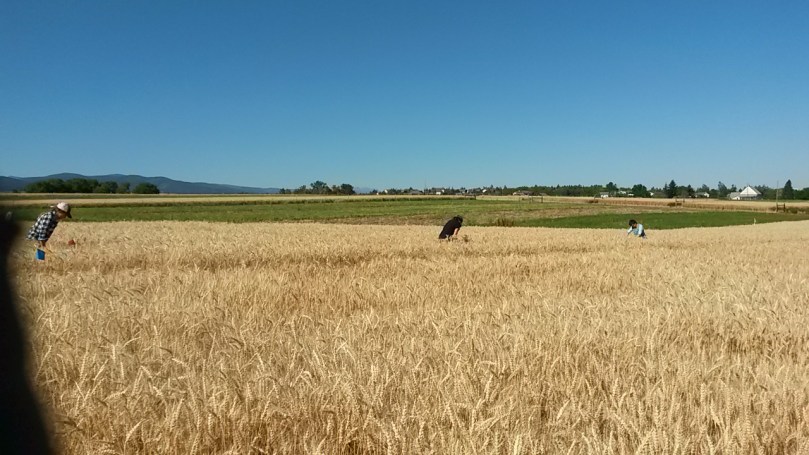
Last week, Tessa, Lazarro, and I went to several farms in and around Big Sandy and Lewistown, Montana in order to sample fields battling field bindweed. To do so, we harvested wheat, field bindweed, and other weed biomass by cutting all above-ground plant material inside a harvesting frame.  These will be dried and weighed, to measure infestation load and the effect on wheat production.

The sampling locations are consistent with previous years to track how different farm management practices influence infestations.  This means using GPS coordinates to hike out to spots in the middle of large fields.

This slideshow requires JavaScript.

It also means getting very dirty driving and walking through dusty fields!