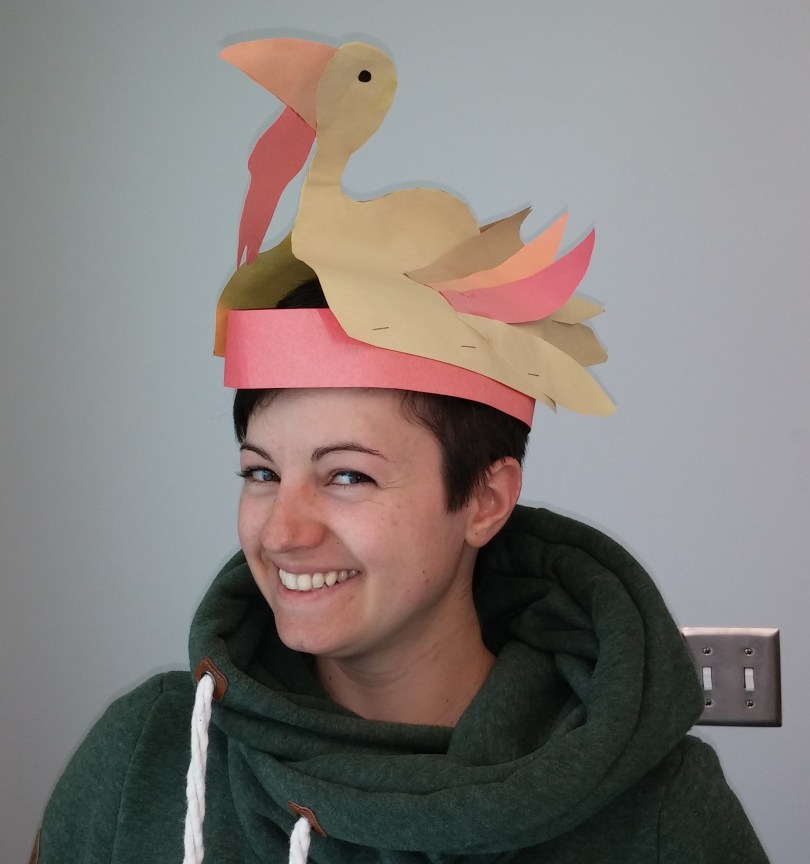
In addition to the poster I’ll be presenting at ASM Microbe in Boston, I’ll be presenting two oral presentations at the Joint Annual Meeting in Salt Lake City, Utah in July. JAM brings together the American Society of Animal Science (ASAS), the American Dairy Science Association (ADSA), the Western Section of the American Society of Animal Science (WSASAS), and the Canadian Society of Animal Science (CSAS).
I’ll be presenting “Influence of colostrum on the microbiological diversity of the developing bovine intestinal tract” in the Ruminant Nutrition section, and “Ground redberry juniper and urea in DDGS-based supplements do not adversely affect ewe lamb rumen microbial communities” in the Small Ruminant section. Both projects are collaborations with the Yeoman Lab. Check back to my calendar in a few weeks to get more details on my presentations!
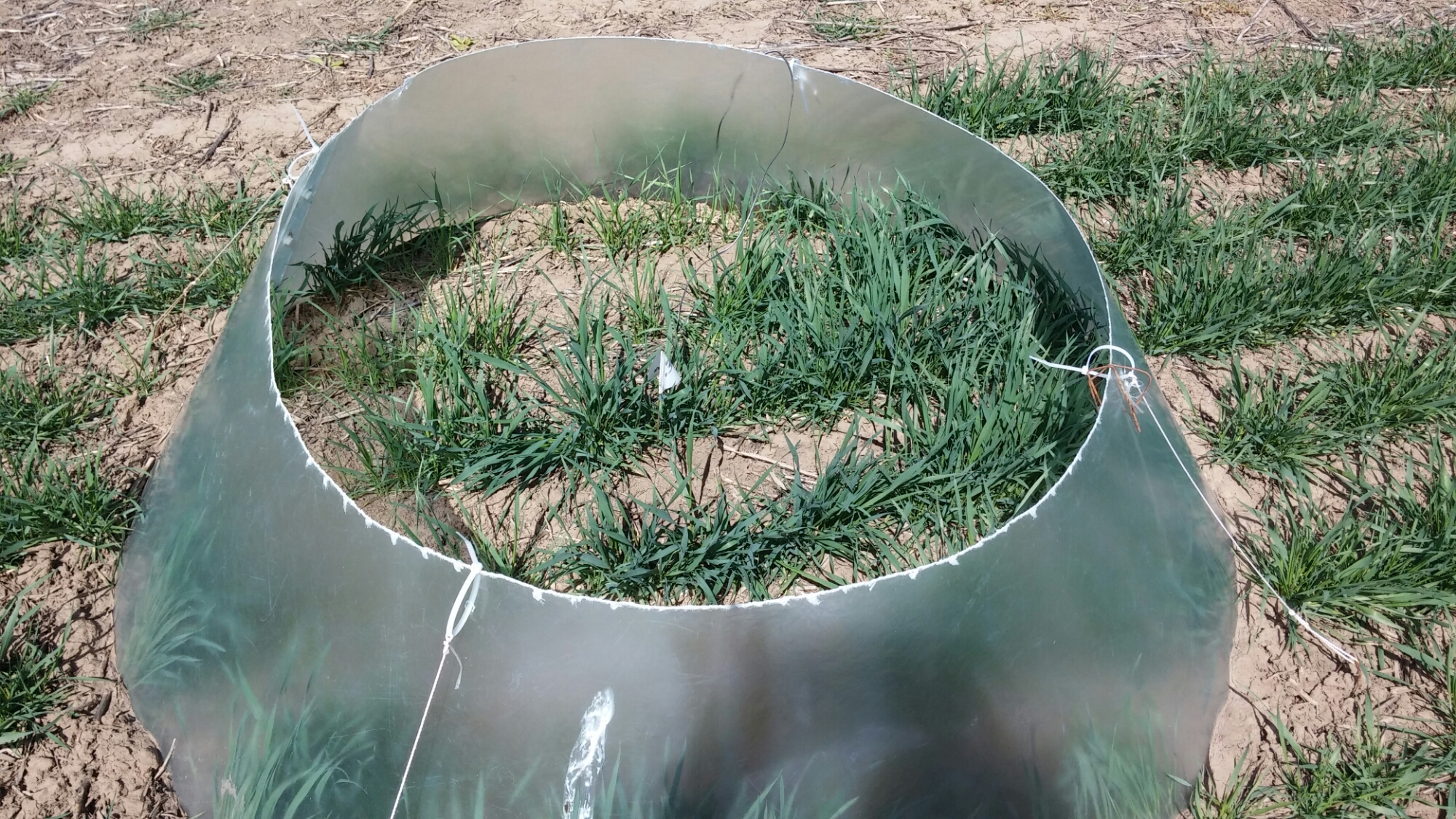
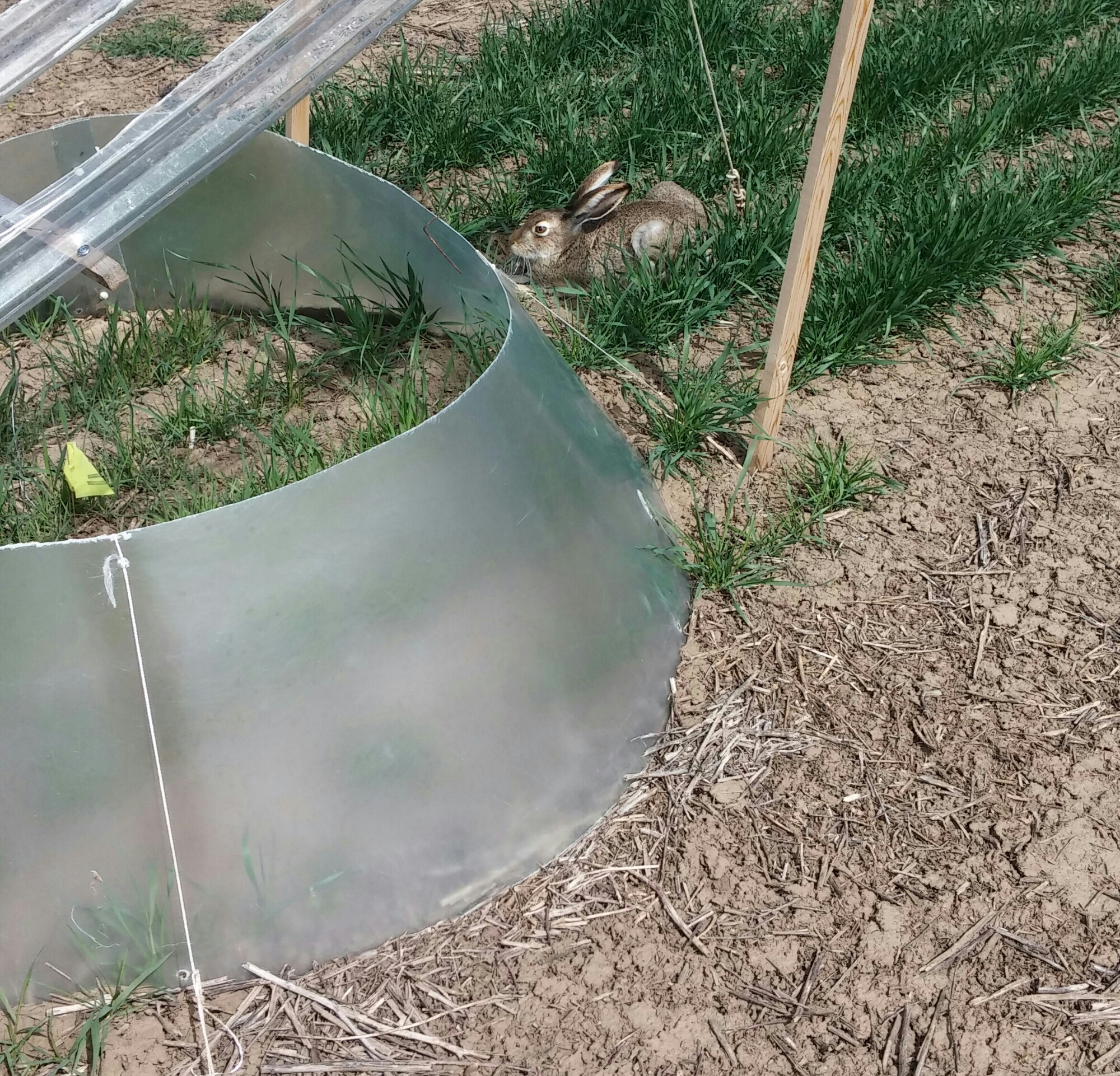
Today I went to the MSU Post Farm, one of the several agricultural farms affiliated with MSU Bozeman, along with several other members of the Menalled lab. We were going to count seedlings of the agricultural crop winter wheat, and a competitive weed, cheat grass.
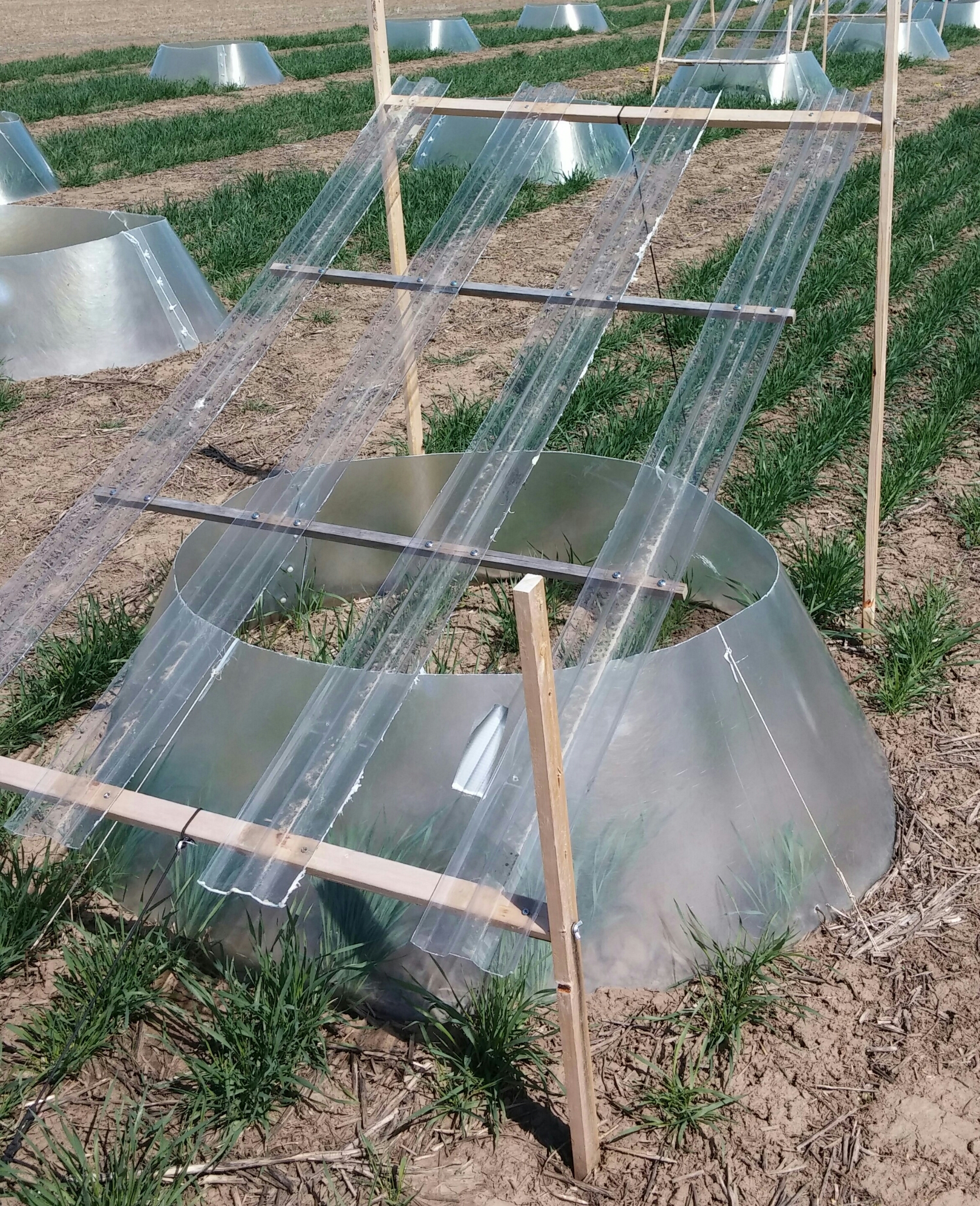
The plots are left out in the field for ambient rain and temperature conditions, or put into one of two treatments, or both combined, to mimic climate change: increased temperatures and reduced rainfall. This is similar to the project I will be working on, so it’s good job training. And, those study cards that my mentee made me last week really did come in handy!
As my current post-doctoral position winds down in the Yeoman Lab in the Department of Animal and Range Sciences, I am pleased to announce that I have accepted a post-doctoral position in the Menalled Lab in the Land Resources and Environmental Sciences Department! Dr. Menalled’s work focuses on agricultural weed ecology and management, particularly with respect to plant-plant interactions, changing climate (water and temperature changes), and now plant-microbe interactions!
I’ll primarily be working on a new two-year project that recently got funded through the USDA, entitled “Assessing the vulnerability and resiliency of integrated crop-livestock organic systems in water-limited environments under current and predicted climate scenarios”, but I’ll also be working collaboratively on several other similar projects in the lab.
A little pre-job job training: I’m helping to make structures to keep rain out (rain-out shelters) of plots to simulate drier climate conditions. Photo: Tim Seipel
My new responsibilities will include comparing agronomic performance and weed-crop-pathogen interactions between organic-tilled and organic-grazed systems, evaluating the impact of management and biophysical variables on soil microbial communities, and collaborating in modeling the long-term consequences of these interactions under current and predicted climate scenarios. It’ll mean a lot more field work, and a lot of new skills to learn! In fact, to help me study for my new job working with agricultural plants, my mentee and her friend made me flash cards:
My mentee made my study cards so I could learn to identify common crop and weed species.
In addition to my new skills, I’ll be integrating my background in microbial ecology and bioinformatics, in order to study agricultural ecosystems more holistically and measure plant-microbe interactions. In the same way that humans eat probiotics to promote a healthy gut microbiome, plants foster good relationships with specific soil microorganisms. The most exciting part is that I will act as an interdisciplinary bridge between the agroecology of the Menalled lab and the microbial ecology of the Yeoman lab, which will allow for more effective collaborations!
Encouraging girls to go into STEM fields is really important; studies show that female STEM high-school teachers and even online mentors increase the probability of female students following a STEM education. Moreover, any child benefits academically and psychologically from having positive role models in their life, especially when they were role models that they interacted with as opposed to celebrity role models. And the benefits don’t just extend to children, adults benefit from positive rolemodels, too. Certainly I have benefited from strong female role models in my life, from high school art teachers, to undergraduate lecturers, to family (happy birthday, Mom!).
This past fall I started putting my money where my mouth was- I started mentoring an elementary school-aged girl in Bozeman, MT through the Thrive Child Advancement Project (CAP). So far, we have mostly been making art projects and talking about archaeology. But we have been talking about trying to learn the Java programming language together!
There are lots of opportunities to mentor kids, either through CAP programs, Big Brother/Big Sister, Girls and Boy Scouts, etc., just a quick internet search brings up dozens of local options. For less of a time commitment, you can also volunteer for community workshops, like the Girls for a Change summit in Bozeman or the Girls-n-Science in Billings.
A year ago today I gave the public defense of my PhD dissertation! It was a stressful day, especially because my laptop crashed just 10 minutes beforehand while I was practicing and making last minute adjustments! Luckily, I had prepared by bringing the presentation on a flash drive, and by putting it on an online cloud drive as well. My parents brought enough potato salad, cookies, cake, and Italian meatballs to feed the dozens of attendees and then some. I really appreciated the friends and family that showed up to support me, some had even driven to Burlington, VT from Massachusetts just for me! You can watch my full defense presentation on YouTube.
After a long hour of presenting my work and answering questions from the crowd, my graduate committee and I left for the closed-door portion. For the next two and a half grueling hours, 5 field-leading researchers asked me questions about everything I had done, and what I might have done differently. Finally, they asked me to step into the hallway while they made their final deliberations, where I nervously ate cookies as fast as I could because I hadn’t eaten in hours. They came back out 5 minutes later smiling, and announced that I had passed! You can read my full thesis here.
Sampling in September, when the stream wasn’t frozen and we could see the trail.
Yesterday was the winter sampling time point for a large research project I’m volunteering for: Adventurers and Scientists for Conservation is managing sample collection for the ASC Gallatin Microplastics Initiative in the Gallatin Valley watershed. The project samples various streams and lakes, both where they converge with the Gallatin River and at their headwaters. The project is part of a much larger project looking at microplastics in water around the world, the ASC Worldwide Microplastics Initiative. ASC recruits volunteers who have the outdoors-man skills (like hiking, tracking, or boating) and enthusiasm to get to hard to reach places to collect samples, then trains them in how to collect water samples and metadata (like weather, temperature, what we’re wearing during collection), coordinates sample collection times, and makes sure to safely send the samples back to a laboratory in Maine.
Digging down through the snow to find the headwaters of Deer Creek.
Our intrepid, fuzzy researcher stuck by our side the whole way.
A lovely view of the Spanish Peaks.
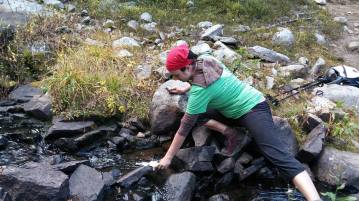
Lee and I sample Deer Creek, just north of Big Sky, Montana. To do this, we hike 13 miles round trip to Moon Lake, with a 3,288 foot elevation gain up to around 9,000 ft above sea level. This time, the trail was covered in 1-2 feet of undisturbed snow, luckily we had snowshoes that kept us from sinking into all but the most soft of snowdrifts. On the way up it was snowing heavily, though visibility was fine, and on the way down it was raining. In many areas of the trail, drifts meant that the trail was at a 45 degree angle, and we had to break our own trail for nearly all of it. Despite the arduous trek, the views were beautiful, it was wonderful to be out of the office, and it was fun helping a large coordinated study. You can get involved in studies like this through organizations like ASC, or through research universities- volunteers are always needed for all different types of studies.
Lee showing what he was wearing, in case our clothing contaminated the sample.
The trail was very steep and uneven thatnks to snow drifts.
“I was married to Margaret Joan Howe in 1940. Although not a scientist herself she has contributed more to my work than anyone else by providing a peaceful and happy home.” – Dr. Frederick Sanger – From Les Prix Nobel. The Nobel Prizes 1980, Editor Wilhelm Odelberg, [Nobel Foundation], Stockholm, 1981
Lee holding “Laura Jr.” during his daily weighing. Laura Jr. loved to cuddle.
Happy birthday and thank you to my partner and best supporting contributor, Lee. Dr. Sanger was absolutely correct when he attributed his success at work to the support his wife gave him at home. I don’t mean that our partners should run the entire household because we are too important (I’m all for egalitarian chore wheels). What I mean is that it takes a special (and patient) type of person to emotionally support us and our work. As researchers and/or academics, we lead busy work lives, have variable schedules, have sudden deadlines that crop up and glue us to our laptops, we can’t always take vacation during the school year and if we do take a vacation it always seems to coincide with a scientific conference we are presenting at. We can be cranky without regular coffee infusions, and sometimes we come home smelling of whatever it is we were working on. And, sometimes we can never find enough undergraduate students to help us and ask you to help us clean sheep pens with no compensation.
Lee helping catch sheep in a pasture under the hot July sun. Generally, all my sheep liked him and would walk right up to him.
Our jobs can also require us to move often, or to hard-to-reach locations. Roughly a year ago, I accepted a job (my current post-doc position) in Bozeman, MT, a place I had never been to 2,600 miles from where I was living in Vermont. I asked Lee to drop everything and relocate with me- something that every partner of a graduate student, post-doc, or tenure-track professor has been asked at least once. Relocating with a researcher is no small proposition- it usually comes with a variable-length timeline; you might have to move again in a year or three or you might get stuck there and have to put down roots. I am delighted to say that Lee came with me, we drove all 2,600 miles across country to Montana, and we have been having a wonderful time under the Big Sky since! Happy birthday Lee, and to everyone else: go home and thank your partner, parents, coworkers, friends, pets, house plants, or whatever else for giving you the emotional support you need to be your best scientist.
Great news! I’ll be presenting a poster this year at the American Society for Microbiology’s (ASM) Microbe Conference in Boston, MA this June 16th-20th. I’ll have a date and time later this month, and will of course post the full abstract and poster after the presentation.
“Farming Systems Modify The Impact Of Inoculum On Soil Microbial Diversity”
Suzanne L. Ishaq¹, Stephen P. Johnson², Zach J. Miller³, Erik A. Lehnhoff4, Carl J. Yeoman¹, Fabian D. Menalled²
1 Montana State University, Department of Animal and Range Science, Bozeman, MT 2 Montana State University, Department of Land Resources & Environmental Sciences, Bozeman, MT 3 Montana State University, Western Agriculture Research Center, Bozeman, MT 4 New Mexico State University, Department of Entomology, Plant Pathology and Weed Science, Las Cruces, NM
A year ago today, I submitted my doctoral dissertation to my committee: 315 pages, 10 chapters, 73,009 words, 376 total citations (202 of which in the literature review). It was the culmination of almost 5 years of research, over two months of writing, and the entire Buffy the Vampire series in reruns. It seems fitting that the last two months of this year I have been equally busy writing a handful of grants, though without the help of old TV scifi dramas.
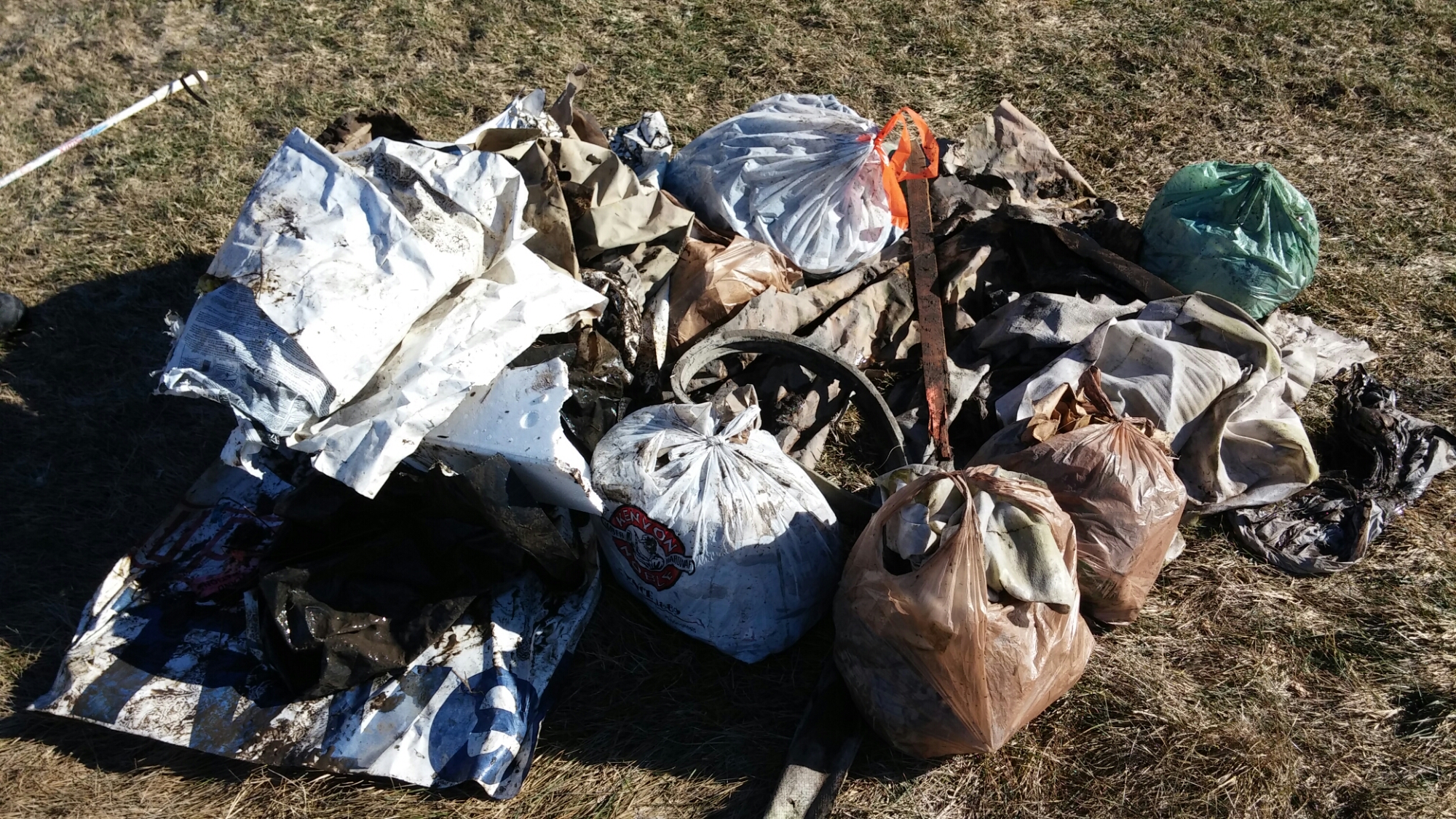
Today I spent a few hours picking trash out of some steams bordering my housing development. It’s very windy on the plains of Montana, and wind storms contribute to pollution by spreading trash. These steams are home to ducks, fish, musk rats, snakes, and frogs, and they link to larger water systems which run through local farms and provide water to cattle. Since the water table isn’t very deep here, any pollution can have far reaching effects. In just two and a half hours, I managed to pull all this out using only a ski pole, proving that one person can make a difference. As an environmental scientist, it’s important to me to give back. Next time you’re looking for something to do, why not try some green up?