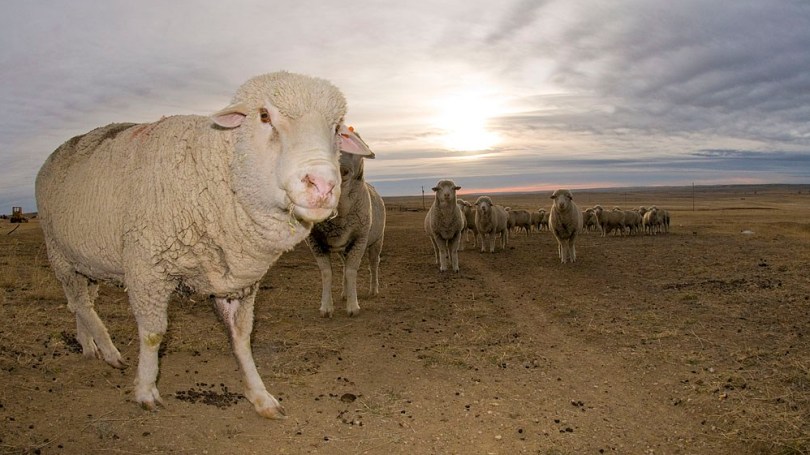
A collaborative paper on zinc and rumen bacteria in sheep got published!

Zinc is an important mineral in your diet; it’s required by many of your enzymes and having too much or too little can cause health problems. We know quite a bit about how important zinc is to sheep, in particular for their growth, immune system, and fertility.  We also know that organically- versus inorganically-sourced zinc differs in its bio-availability, or how easy it is for cells to access and use it.  Surprisingly, we know nothing about how different zinc formulations might affect gut microbiota, despite the knowledge that microorganisms may also need zinc.

This collaborative study was led by Dr. Whit Stewart and his then-graduate student, Chad Page, while they were at Montana State University (they are now both at the University of Wyoming).   Chad’s work focused on how different sources of zinc affected sheep growth and performance (previously presented, publication forthcoming), and I put together this  companion paper examining the effects on rumen bacteria.

The pre-print is available now for Journal of Animal Science members, and the finished proof should be available soon. JAS is the main publication for the American Society of Animal Science, and one of the flagship journals in the field.


Zinc amino acid supplementation alters yearling ram rumen bacterial communities but zinc sulfate supplementation does not.

Ishaq, S.L., Page, C.M., Yeoman, C.J., Murphy, T.W., Van Emon, M.L., Stewart, W.C. 2018. Journal of Animal Science. Accepted. Article.

Abstract

Despite the body of research into Zn for human and animal health and productivity, very little work has been done to discern whether this benefit is exerted solely on the host organism, or whether there is some effect of dietary Zn upon the gastrointestinal microbiota, particularly in ruminants. We hypothesized that 1) supplementation with Zn would alter the rumen bacterial community in yearling rams, but that 2) supplementation with either inorganically-sourced ZnSO4, or a chelated Zn amino acid complex, which was more bioavailable, would affect the rumen bacterial community differently. Sixteen purebred Targhee yearling rams were utilized in an 84 d completely-randomized design, and allocated to one of three pelleted dietary treatments: control diet without fortified Zn (~1 x NRC), a diet fortified with a Zn amino acid complex (~2 x NRC), and a diet fortified with ZnSO4 (~2 x NRC). Rumen bacterial community was assessed using Illumina MiSeq of the V4-V6 region of the 16S rRNA gene. One hundred and eleven OTUs were found with > 1% abundance across all samples. The genera PrevotellaSolobacteriumRuminococcusButyrivibrioOlsenellaAtopobium, and the candidate genus Saccharimonas were abundant in all samples. Total rumen bacterial evenness and diversity in rams were reduced by supplementation with a Zn-amino-acid complex, but not in rams supplemented with an equal concentration of ZnSO4, likely due to differences in bioavailability between organic and inorganically-sourced supplement formulations. A number of bacterial genera were altered by Zn supplementation, but only the phylum Tenericutes was significantly reduced by ZnSO4 supplementation, suggesting that either Zn supplementation formulation could be utilized without causing a high-level shift in the rumen bacterial community which could have negative consequences for digestion and animal health.

Featured Image Source: Wikimedia Commons

Introduction to Mammalian Microbiomes

Since the end of September, I’ve been teaching a course for the UO Clark Honors College; Introduction to Mammalian Microbiomes.   And in a novel challenge for me – I’m teaching the idea of complex, dynamic microbial ecosystems and their interaction with animal hosts … to non-majors.  My undergraduate students almost entirely hail from the humanities and liberal arts, and I couldn’t be more pleased. So far, it’s been a wonderful opportunity for me to pilot a newly developed course, improve my teaching skills, and flex my creativity, both in how I explain concepts and how I design course objectives.

I enthusiastically support efforts towards science communication, especially in making science more accessible to a wider audience.  My students likely won’t be scientific researchers themselves, but some will be reporting on science publications, or considering funding bills, and all of them are exposed to information about human-associated microbial communities from a variety of sources. To navigate the complicated and occasionally conflicting deluge of information online about the human microbiome, my students will need to build skills in scientific article reading comprehension, critical thinking, and discussion.  To that end, many of my assignments are designed to engage students in these skills.

I feel that it’s important to teach not only what we know about the microbial community living in the mouth or the skin, but to teach the technologies that provide that knowledge, and how that technology has informed our working theories and understanding of microbiology over centuries.  Importantly, I hope to teach them that science, and health sciences, are not static fields, we are learning new things every day.  I don’t just teach about what science has done right, but I try to put our accomplishments in the context of the number of years and personnel to achieve publications, or the counter-theories that were posited and disproved along the way.

And most of, I want the course to be engaging, interesting, and thought provoking.  I encouraged class discussions and student questions as they puzzle through complex theories, and I’ve included a few surprise additions to the syllabus along the way.  Yesterday, University of Oregon physics Ph.D. student Deepika Sundarraman taught us about her research in Dr. Parthasarathy’s lab on using light sheet fluorescence microscopy to visualize bacterial communities in the digestive tract of larval zebra fish! Stay tuned for more fun in #IntroMammalianMicrobiomes!


I am now an Academic Editor at PLOS ONE!

I am pleased to announce I have joined the PLOS ONE journal editorial team as an Academic Editor! I am particularly pleased to have joined with PLOS ONE, as the journal is dedicated to open-access publication and is readily accessible to the general public.

As I discussed previously, the effort of many individuals goes into a scientific manuscript, including ad-hoc reviewers and editorial staff at journals.  As an Academic Editor, I will now interface between scientific reviewers and higher-level editorial staff to manage the peer-review process; including evaluating manuscript submissions for applicability to the journal, selecting reviewers, and assessing reviewer comments to making editorial decisions on publishing.

My subject areas include: Biology and life sciences, Agriculture, Animal products, Agricultural production, Animal management, Ecology, Microbial ecology, Microbiology, Applied microbiology, Bacteriology, Microbial ecology, Molecular biology, Molecular biology techniques, Molecular genetics.


Where Art Meets Science

The Nature Lab at Rhode Island School of Design is presenting an exhibition on the interface of biology and art; Biodesign: From Inspiration to Integration.  Curated in collaboration with William Myers, the show is part of their 80th anniversary celebrations. The exhibition runs from Aug 25—Sept 27 at the Woods Gerry Gallery, and will feature photos and sampling equipment from the Biology and the Built Environment Center.


Biodesign: From Inspiration to Integration

OPENING RECEPTION

An exhibition curated by William Myers and the RISD Nature Lab, this show features the following works:

Hy-Fi and Bio-processing Software—David Benjamin / The Living
Mycelium architecture, made in collaboration with Ecovative and 3M.

Zoa—Natalia Krasnodebska / Modern Meadow
Leather grown using yeasts that secrete collagen, and grown completely without animal derivatives.

The Built Environment Microbiome—BioBE Center / Jessica Green, Sue Ishaq and Kevin Van Den Wymelenberg
The BioBE conducts research into the built environment microbiome, mapping the indoor microbiome, with an eye towards pro-biotic architecture.

Zea Mays / Cultivar Series—Uli Westphal
Newly commissioned corn study, this project highlights maize’s evolution through interaction with humans.

Harvest / Interwoven—Diana Scherer
Artist coaxes root systems plant root systems into patterns.

Fifty Sisters & Morphogenesis—Jon McCormack
Artist algorithmically generates images that mimic evolutionary growth, but tweaks them to include aesthetics of the logos of global petroleum producing corporations.

Organ on a Chip—Wyss Institute
Wyss Institute creates microchips that recapitulate the functions of living human organs, offering a potential alternative to animal testing.

AgroDerivatives: Permutations on Generative Citizenship—Mae-Ling Lokko
This project proposes labor, production criteria and circulation of capital within agrowaste/bioadhesive upcycling ecosystems.

New Experiments in Mycelium—Ecovative
Ecovative makes prototypes of mycelium items such as insulation, soundproofing tiles, surfboards, lampshades.

Bistro in Vitro—Next Nature Network
Performance with speculative future foods samples. The installation will include video screens and a cookbook on a table display.

Raw Earth Construction—Miguel Ferreira Mendes
This project highlights an ancient technique that uses soil, focusing on how soil is living.

Burial Globes: Rat Models—Kathy High
This project presents glass globes that hold the ashes of the five HLA-B27 transgenic rats, each one named and remembered: Echo, Flowers, Tara, Matilda, Star.

To Flavour Our Tears—Center for Genomic Gastronomy
Set up as an experimental restaurant, this project places humans back into the foodchain — investigating the human body as a food source for other species.

Blood Related—Basse Stittgen
A series of compressed blood objects—inspired by Hemacite objects made from blood/sawdust compressed in a process invented in the late 19th century—highlights bloodwaste in the slaughterhouse industry.

Silk Poems—Jen Bervin
A poem made from a six-character chain represents the DNA structure of silk, it refers to the silkworm’s con-structure of a cocoon, and addresses the ability of silk to be used as a bio sensor, implanted under people’s skin.

Zoe: A Living Sea Sculpture—Colleen Flanigan
Zoe is an underwater structure, part of coral restoration research, that regenerates corals in areas highly impacted by hurricanes, human activity and pollution.

Aquatic Life Forms—Mikhail Mansion
Computationally generated lifeforms animated using motion-based data captured from Arelia aurita.

Algae Powered Digital Clock—Fabienne Felder
By turning electrons produced during photosynthesis and bacterial digestion into electricity, algae will be used to power a small digital clock.

A Place for Plastics—Megan Valanidas
This designer presents a new process of making bioplastics that are bio-based, biodegradable AND compostable

Data Veins & Flesh Voxels—Ani Liu
This project explores how technology influences our notion of being human from different points of view, with a focus on exploring the relationship between our bodies as matter and as data.

Pink Chicken Project—Studio (Non)human (Non)sense/ Leo Fidjeland & Linnea Våglund
By changing the color of chickens to pink, this project rejects the current violence inflicted upon the non-human world and poses questions of the impact and power of synthetic biology.

August 24
5:30 pm – 7:30 pm
Woods Gerry Gallery, 62 Prospect Street, Providence, RI 02903

500 Women Scientists Eugene featured on local news!

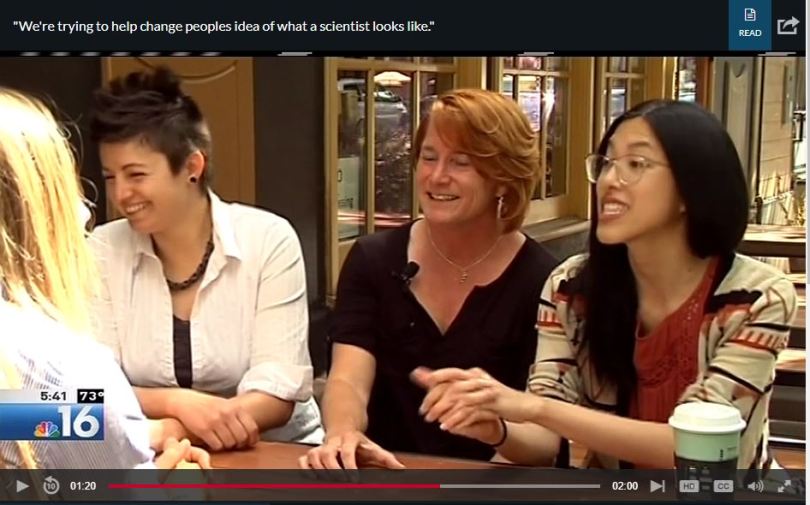
500 Women Scientists Eugene Pod Coordinators Leslie Dietz, Theresa Cheng and I sat down with KMTR reporter Kelsey Christensen today to about 500 Women Scientists in Eugene, and the Science Salons we’ve been hosting monthly since March.  You can find the video clip in the link below.

“We’re trying to help change peoples idea of what a scientist looks like.”

You can catch up with the Eugene Pod and find our schedule of events online:

Facebook | Twitter | Website

34

Yeoman lab in the news!


JUNE 25, 2018

Press release 

Summer outlook

I’ve got quite a busy summer ahead!  You’ll be able to find me at:

June 22, 2018: The HOMEChem Open House at the UT Austin Test House , University of Texas at Austin’s J.J. Pickle Research Campus.  I’ll be meeting with BioBE collaborators to discuss pilot projects exploring the link between indoor chemistry and indoor microbiology.

July 15 – 20, 2018: The Microbiology of the Built Environment (MoBE) Gordon Research Conference, University of New England in Biddeford, ME.  BioBE’s Dr. Jessica Green is meeting Vice Chair.

July 22 – 28, 2018: Indoor Air 2018 Conference in Philadelphia, PA.  I’ll be presenting some of the work I’ve been part of, exploring the effect of weatherization on bacteria indoors.

August 12 – 18, 2018: The 17th International Society for Microbial Ecology (ISME17) in Leipzig, Germany.  Here as well, I’ll be presenting some of the work I’ve been part of, exploring the effect of weatherization on bacteria indoors.


USDA AFRI NIFA Agricultural Production Systems grant awarded to Menalled et al.

In 2016, I was a post-doc in the Menalled Lab, which studies plant and weed ecology in the context of agricultural production and sustainability.  There, I assessed soil bacterial communities under different farming management practices and climate scenarios.  I also helped to develop a grant proposal, which was just accepted by the USDA AFRI NIFA Agricultural Production Systems!  Leading this project is Dr. Fabian Menalled (as Principal Investigator, or PI), along with a number of other PIs; Dr. Amy Trowbridge, Dr. David Weaver, Dr. Tim Seipel, Dr. Maryse Bourgault, and Dr. Carl Yeoman, and collaborators Dr. Darrin Boss, Dr. Kate Fuller, Dr. Ylva Lekberg, and myself as a subaward PI.  I will again be providing microbial community analysis for this project, and collectively the project investigators will bring expertise in plant ecology, agronomy, economics, soil and plant chemistry, microbial ecology, agroecosystems, and more.

This research and extension project focuses on the needs of dryland agricultural stakeholders and it was designed in close collaboration with the NARC Advisory Board. While I was only able to attend one meeting, other team members regularly meet with Montana producers to discuss current issues and identify locally-sourced needs for agricultural research.  During this project, we will continue to meet with the NARC Advisory Board to share our results, evaluate implications, and better serve the producer community.

Diversifying cropping systems through cover crops and targeted grazing: impacts on plant-microbe-insect interactions, yield and economic returns.

Project summary

The semi-arid section of the Northern Great Plains is one of the
largest expanses of small grain agriculture and low-intensity livestock
production. However, extreme landscape simplification, excessive reliance on
off-farms inputs, and warmer and drier conditions hinder its agricultural
sustainability. This project evaluates the potential of diversifying this region
through the integration of cover crops and targeted grazing. We will complement
field and greenhouse studies to appraise the impact of system diversity,
temperature, and precipitation on key multi-trophic interactions, yields, and
economic outputs. Specifically, we will 1) Assess ecological drivers as well as
agronomic and economic consequences of integrating cover crops and livestock
grazing in semi-arid systems, 2) Evaluate how climate variability modify the
impacts of cover crops and livestock grazing on agricultural outputs. Specifically,
we will 2.1) Compare the effect of increased temperature and reduced moisture
on agronomic and economic performance of simplified and diversified systems,
2.2.) Assess the impact of climate and system diversity on associated biodiversity
(weeds, insect, and soil microbial communities) and above- and belowground
volatile organic (VOC) compound emissions, and 2.3) Evaluate how changes in
microbially induced VOCs influence multitrophic plant-insect interactions.

Objectives

  1. Assess key ecological drivers as well as agronomic and economic consequences of integrating cover crops and livestock grazing in semi-arid production systems
    • Compare the agronomic and economic performance of simplified and diversified systems
    • Assess the impact of cover crops and livestock grazing on the associated biodiversity (weeds, insects, and the soil microbiota)
  2. Evaluate how climate conditions modify the impacts of cover crops and livestock grazing on semi-arid production systems
    • Compare the effect of temperature and soil moisture on agronomic and economic performance of simplified and diversified systems
    • Assess the impact of climate and system diversity on associated biodiversity and above- and belowground volatile organic compound (VOC) emissions
    • Evaluate how changes in VOCs emissions influence important multitrophic interactions such as resistance to wheat stem sawfly and natural enemy host location cues
  3. Integrate the knowledge generated into an outreach program aimed at improving producers’ adoption of sustainable diversified crop-livestock systems

Spring Updates

It’s been a really busy spring so far, so much so that I haven’t had much chance to write about it!  Here is a brief overview of what I’ve been up to.

Research

This past year has easily produced the largest number of research topics I have been working on concurrently.  In addition to publishing a paper on the rumen in cattle last September, I have been working on a paper on the rumen of yearling rams which is currently in preparation and due to be submitted to a scientific journal for review soon.  I still have several small projects in development from my post-doc in the Yeoman lab, as well as a number of grad-student-led papers that are still pending, and was invited to contribute to a scientific review which is also in preparation.

I’ve been working through the large dataset of soil samples from my post-doc in the Menalled lab.  That large project has blossomed into four papers thus far, two of which I’m writing on the soil bacteria, and one of which I am co-authoring on the legacy effects of climate change.  Those four are also due for submission to scientific journals for review soon.  The Menalled lab just received a grant award from USDA AFRI NIFA, on which I am a (subaward) PI and to which I will be contributing soil bacterial community analysis.

The rumen and soil work over the past year has been entirely in my spare time, however, as my position in the Biology and the Built Environment Center has kept me delightful busy.  I have been collaboratively processing a large and complex dataset on weatherization, home operation and lifestyle, indoor air quality, and microorganisms in dust, which I will be presenting at two (possibly three) conferences this summer.  I have also been collaboratively writing grant proposals, and while those are still in development or pending review, they span everything from light, to chemistry, to plants and living machines, to hospitals, to social networks in buildings.  I hope to further develop some of these collaborations with a short trip at the end of June to the University of Austin, Texas’ Test House.

In addition, I have been assisting in the planning, development, and launch of the University of Oregon’s Institute for Health in the Built Environment.  The Institute will facilitate collaboration and information sharing between researchers and industry professionals, with the goal of researching, building, and promoting healthier built environments.  The Institute just hosted its #BuildHealth2018 Consortium meeting in Portland, OR, at which I presented some of the results from that large weatherization study regarding indoor plants.  The meeting was fantastic, and spurred in-depth discussion on problems facing industry professionals, innovative research goals, and a wealth of new possibilities.

Outreach

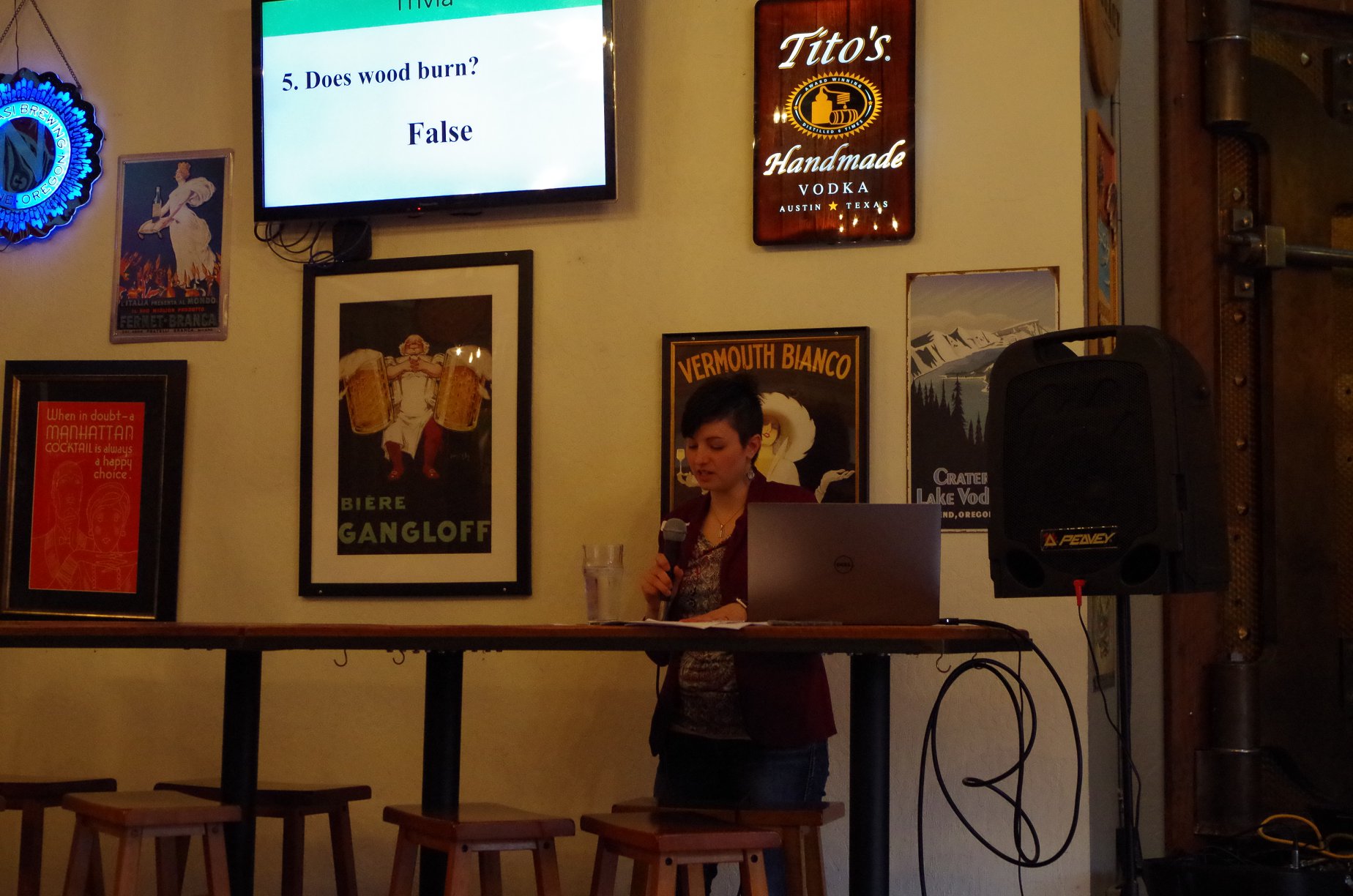
In the past few months, I’ve spent a lot of my spare time helping to develop the Eugene Pod of 500 Women Scientists, an organization created to promote diversity, equity, and inclusion in science, and to promote education and interactive between scientists and the general public.  We have focused on hosting monthly Science Salon events, four to date, to do just that.  I presented at the first one, and have helped organize and MC the others.  The Eugene Pod’s activities were just featured on the central 500 WS page, as Pod of the Week, and you can also follow our updates and events on our Facebook page.

29351793_356599468080862_2462754110013482735_o
Running trivia on fire and fungi.


While it has been a struggle to maintain regular contributions, I still maintain Give Me the Short Version, along with a few intrepid contributors, which summarizes scientific articles for easier consumption.  This spring, I spent several days judging STEM and robotics competitions for several local Eugene middle and high schools, which has been a lot of fun.  The student projects are enthusiastic and creative, and I appreciate the chance to assist in these programs in some small way.


I have continued to mentor UO students.  The post-bac student from the BioBE lab that was learning bioinformatics with me, Mitch Rezzonico, was accepted to the University of Oregon’s Bioinformatics and Genomics Master’s Program!  Mitch wrapped up his work this spring to prepare for the intensive program, and with his interest in health research, BioBE hopes to work with him again in the future.  BioBE recently hired an undergraduate student for science communication, Mira Zimmerman.  Mira has been making some upgrades to the BioBE and ESBL websites which will continue to be rolled out over the next few months.  In addition, she will be helping me develop informative blog posts on the built environment, and helping to grow our information dissemination capabilities.  Hiring a student as a science communicator was something I had been hoping to test out, and so far it’s been a smashing success.

Teaching

My course proposal for “Introduction to Mammalian Microbiomes” was accepted by the University of Oregon Clark Honor’s College for the fall term!

In April, I gave a guest lecture to Mark Fretz’s Design the Unseen course at the University of Oregon, on the Indoor Microbiome.  The class was populated by architecture students, who were learning about integrating health considerations into design strategies.  As a final project, students design a brief field experiment or intervention strategy for a design assistance project with Portland firms. I assisted one group in designing a small experiment on natural daylighting in an office and the effect on E. coli growth on culture plates – more on those results soon!


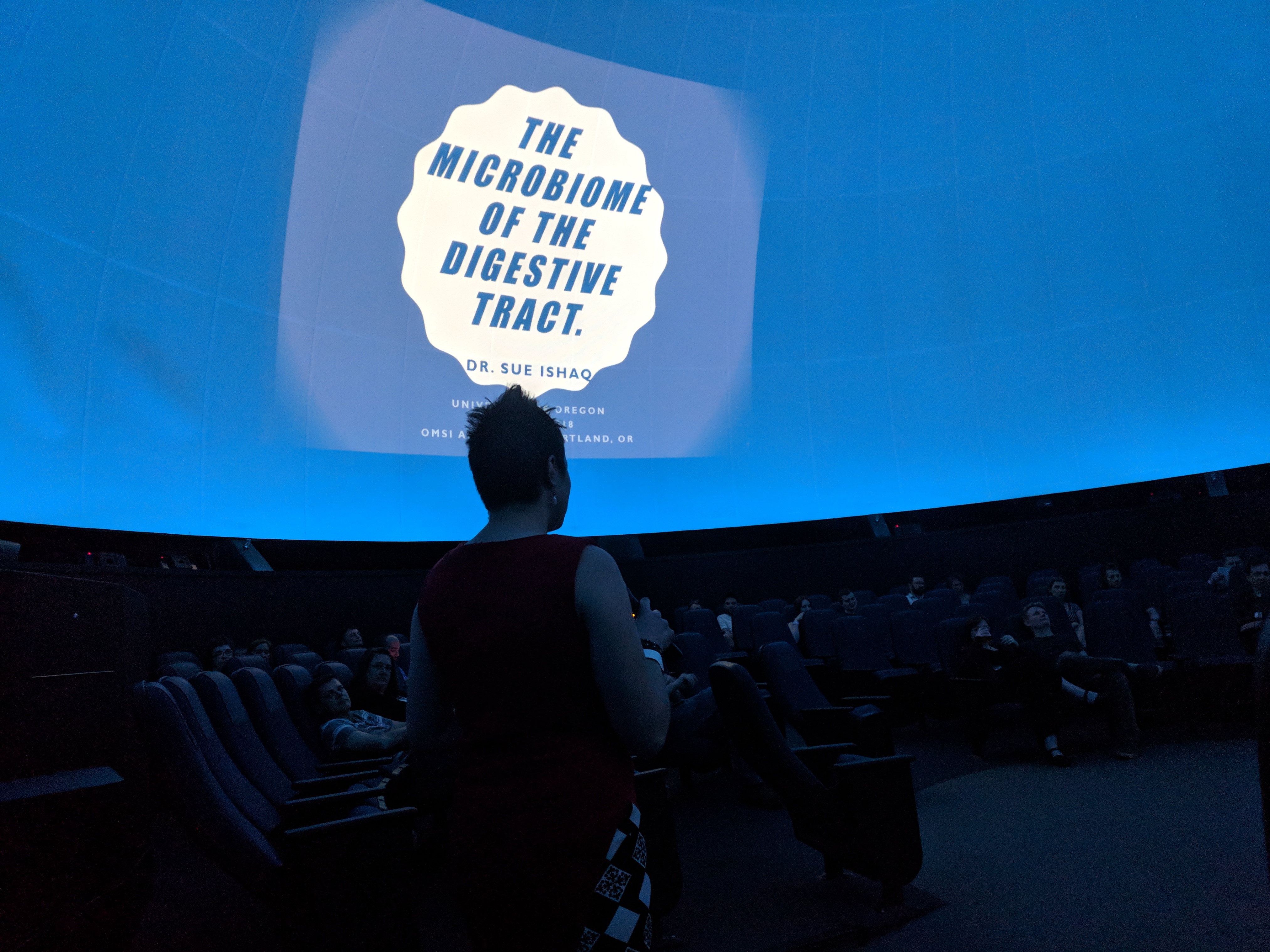
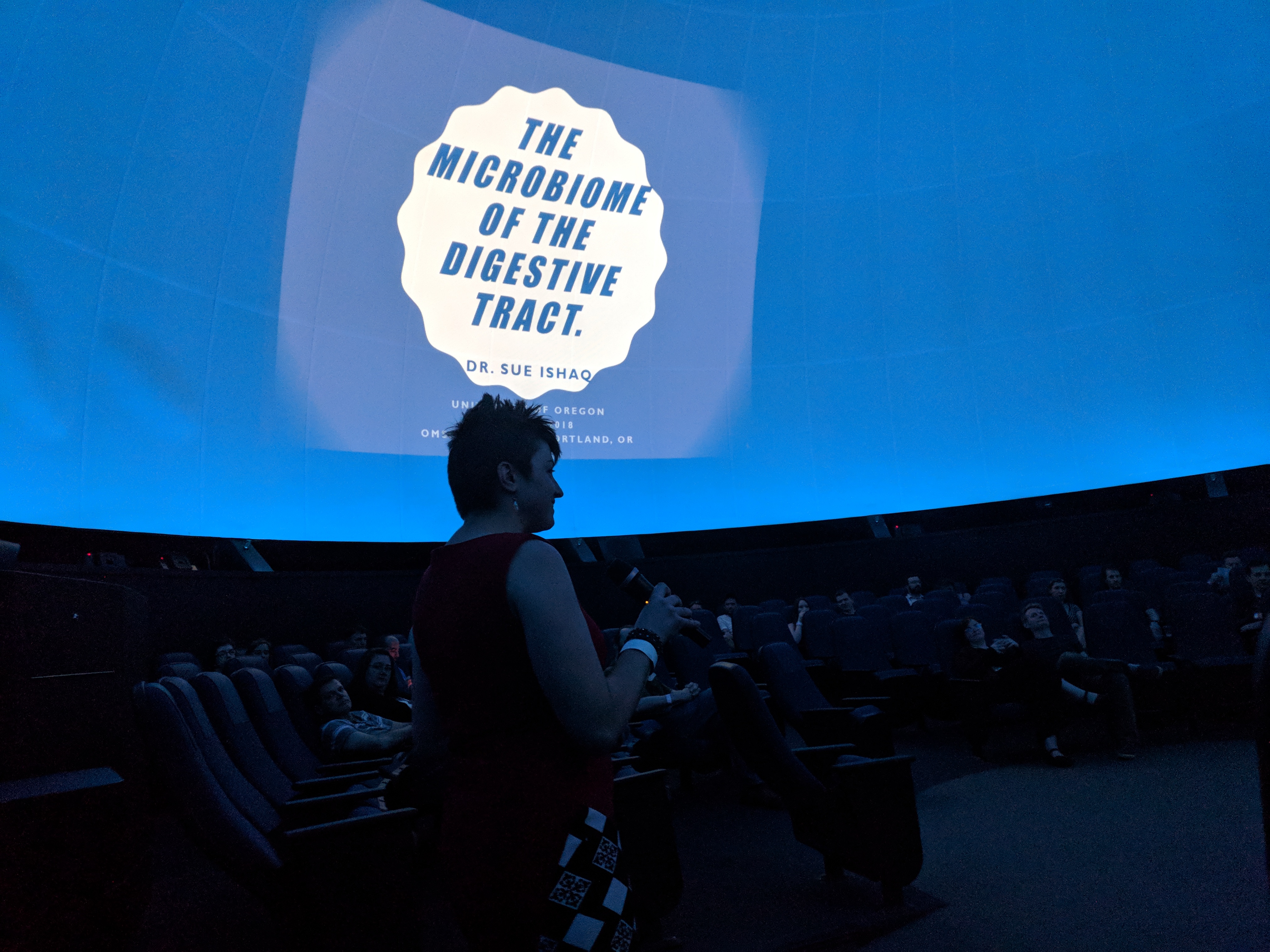
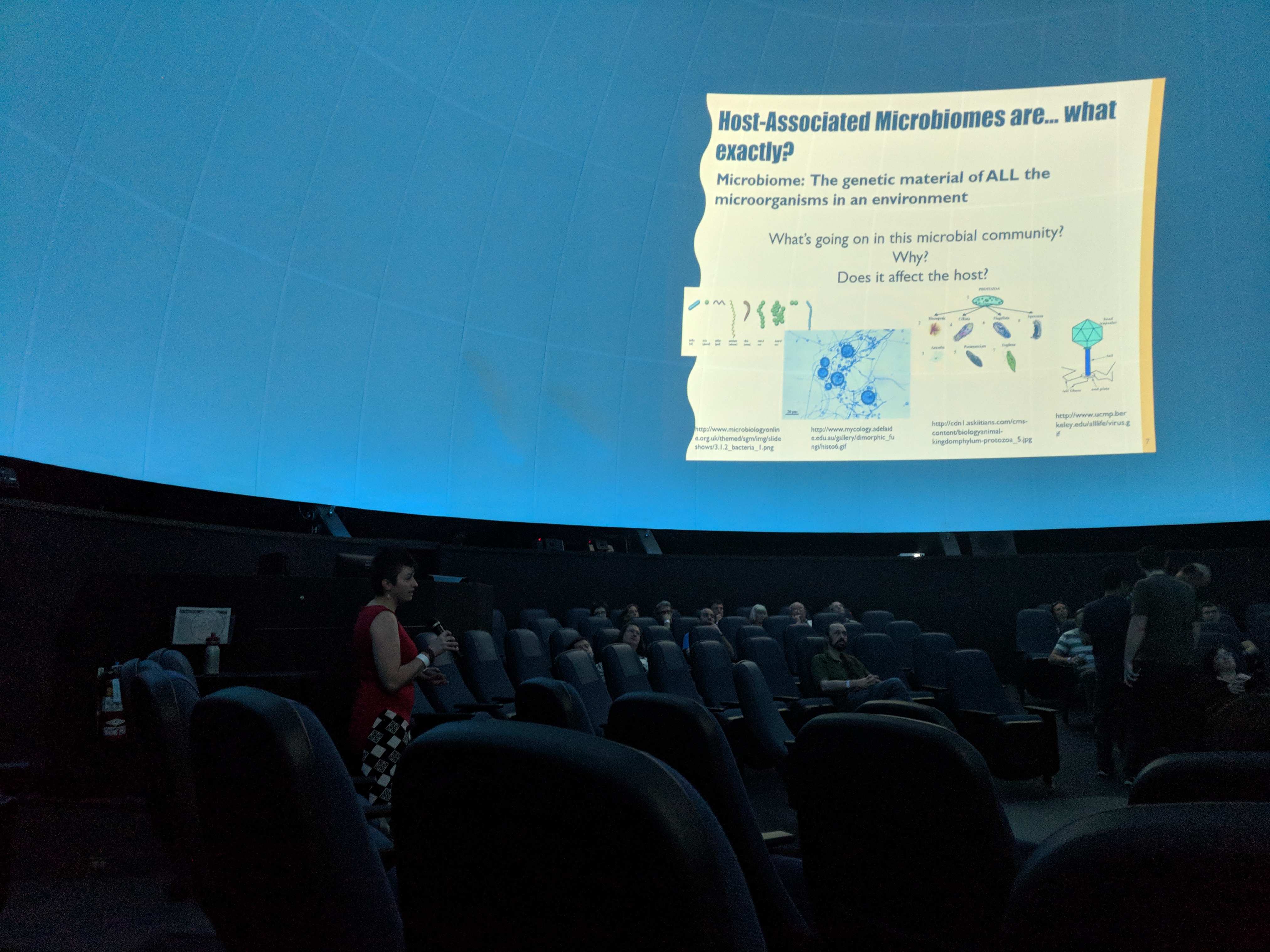
Later that same day, I have a lecture at the Oregon Museum of Science and Industry in Portland, as part of their OMSI After Dark series which opens the museum after-hours to adults for hands-on activities and lectures.  The lecture was on the gut microbiome, and I was able to present in the Planetarium!


OMSI After Dark Presentation on the gut microbiome

Last night I participated in the Oregon Museum of Science and Industry (OMSI) After Dark event: “It’s Alive! (Mind and Body)”.  OMSI regularly puts on After Dark events, where adults can check out the museum, listen to lectures in the planetarium, and engage in interactive science experiments and activities, all while enjoying an open bar.  Last night, I had a great time giving a short presentation on “Ishaq OMSI After Dark 20180425“!