Celebrating student achievements in 2026

As the academic year draws to a close (for the students), a flurry of awards ceremonies recognize their dedication and ingenuity. This year, as every year, the Ishaq Lab is grateful for all we have to celebrate! Only about a third of the lab was able to make it to our end of the semester good-bye party, but I look forward to their celebrating their continued successess in the lab and beyond.
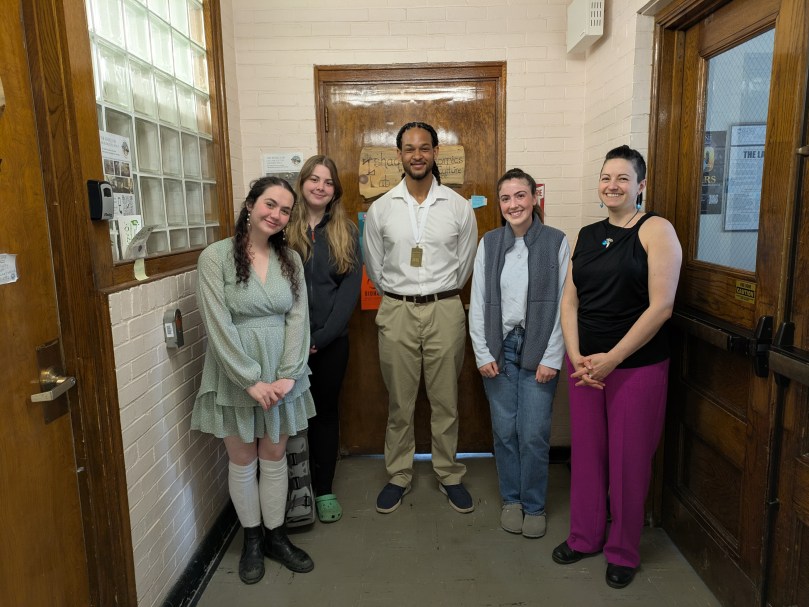
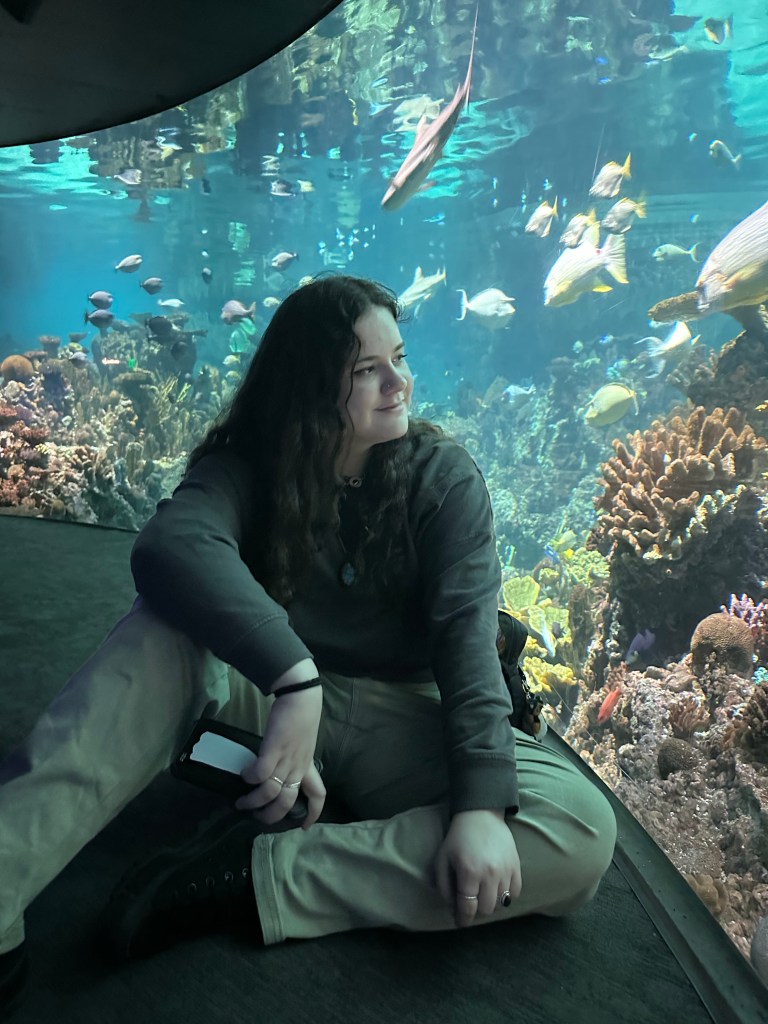
Alexandra Ruff, Bella Murphy, Aaron Williams, Ashleys Reynolds, and Sue

Doctors

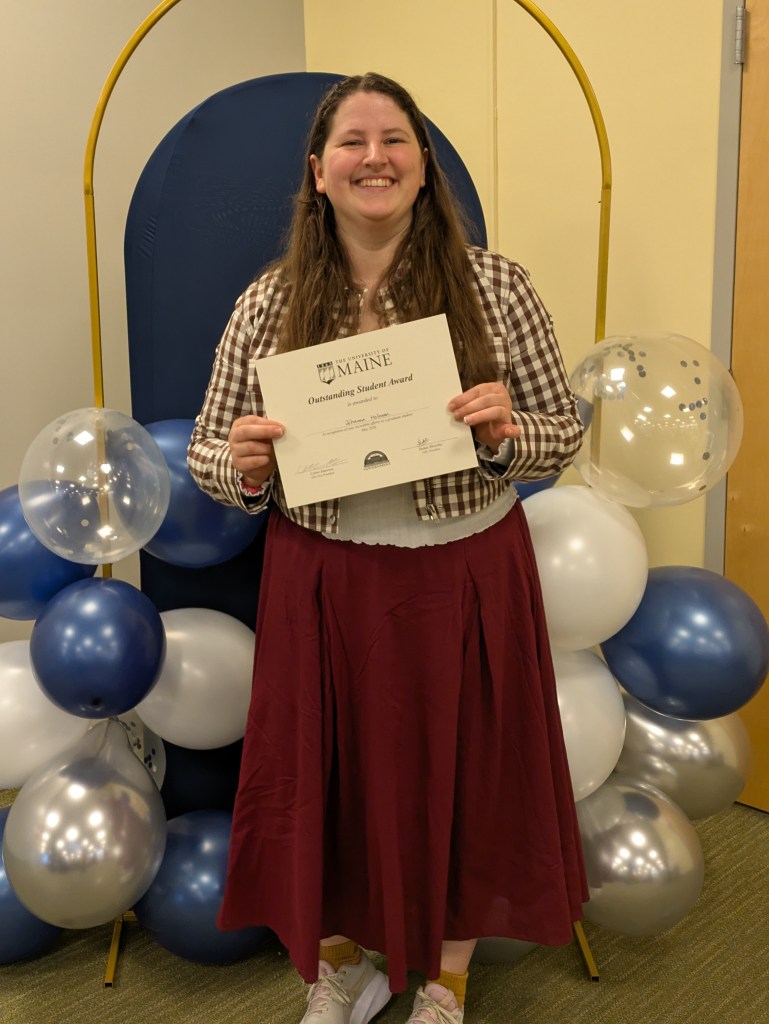
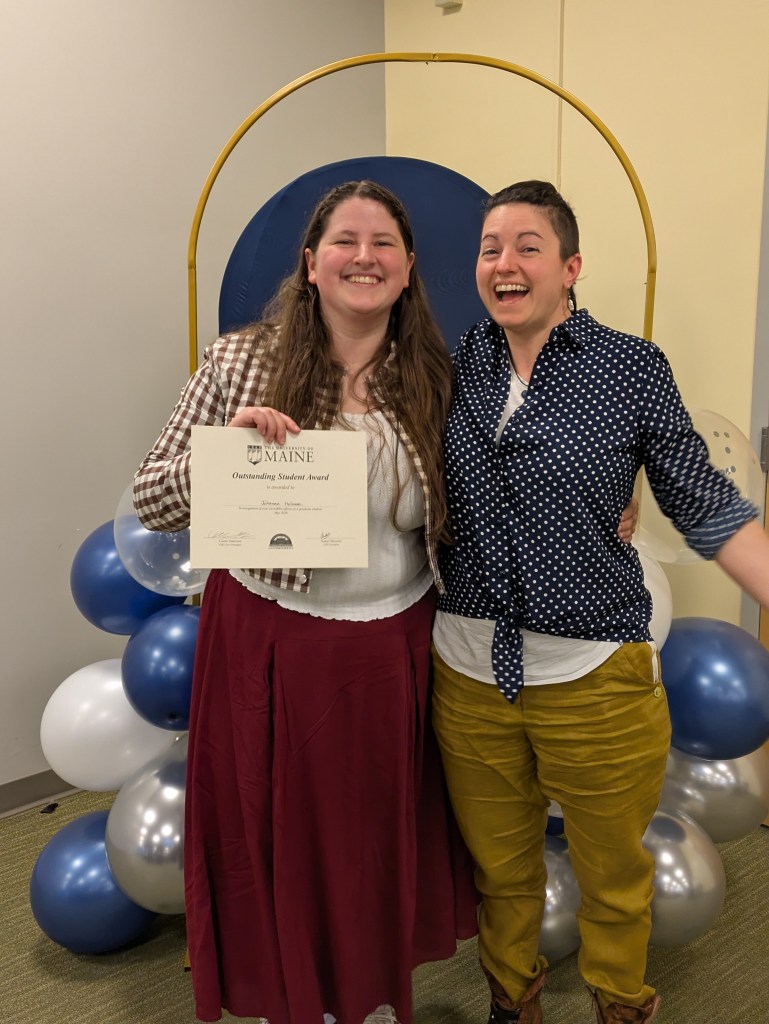
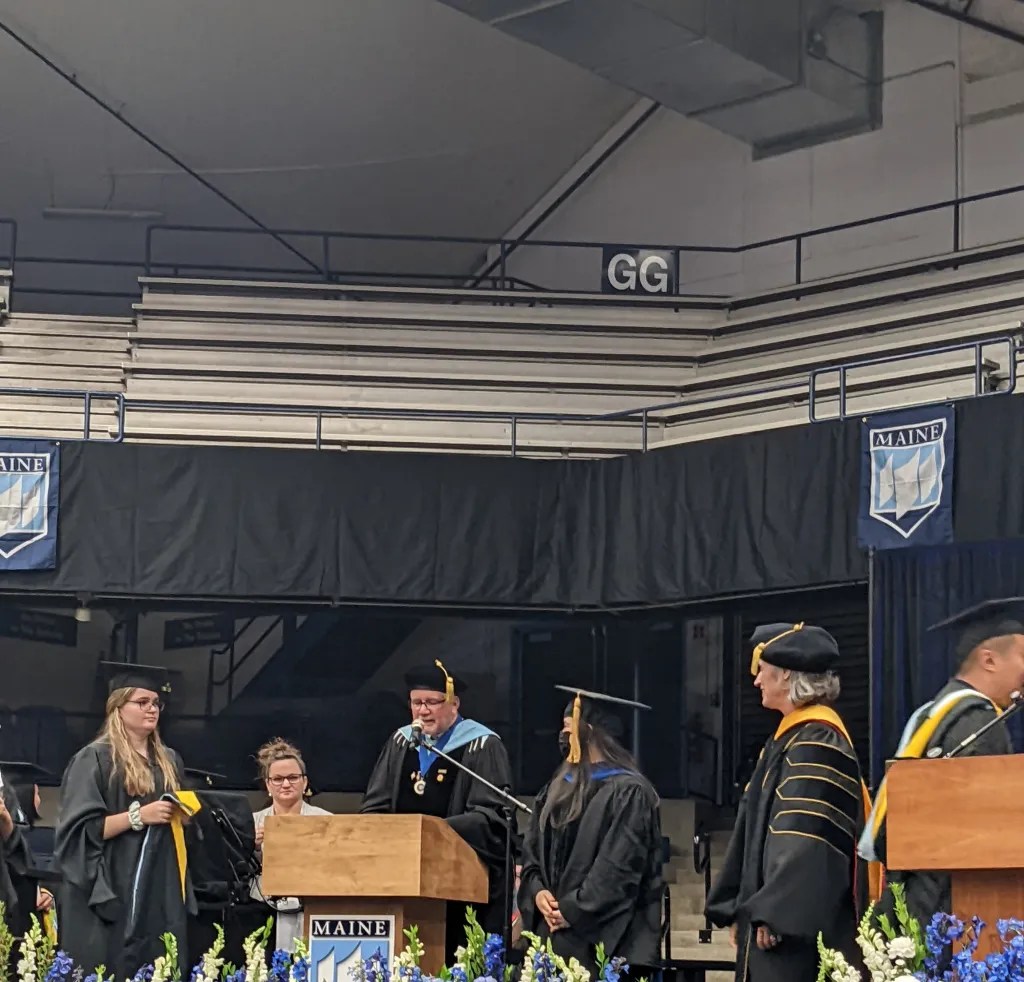
Johanna Holman, PhD., was recognized as an Outstanding Graduating Student for 2026 by the UMaine Graduate Student Government, and received her doctorate in Microbiology! This was actually her FOURTH award during her graduate studies. Johanna wasn’t able to have her doctoral hood bestowed at the UMaine graduate student graduation, as she just flew to Birmingham, England to start a postdoc position in the lab of Dr. Lindsay Hall, who focuses on early life microbial exposure and health.

Future Doctors

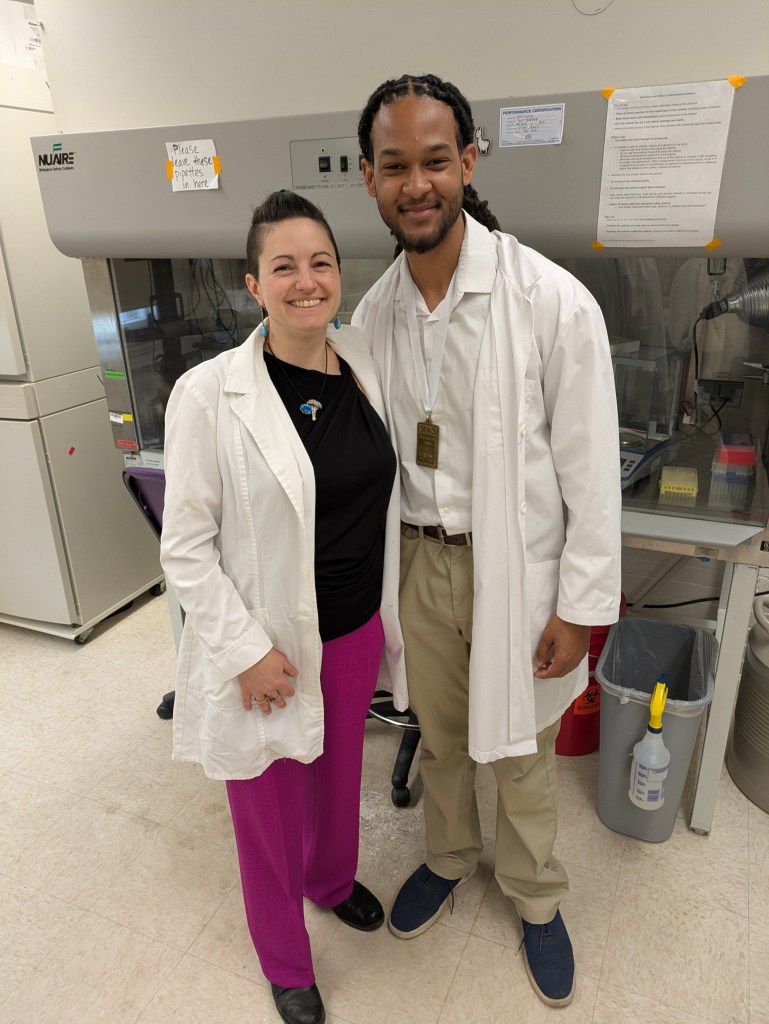
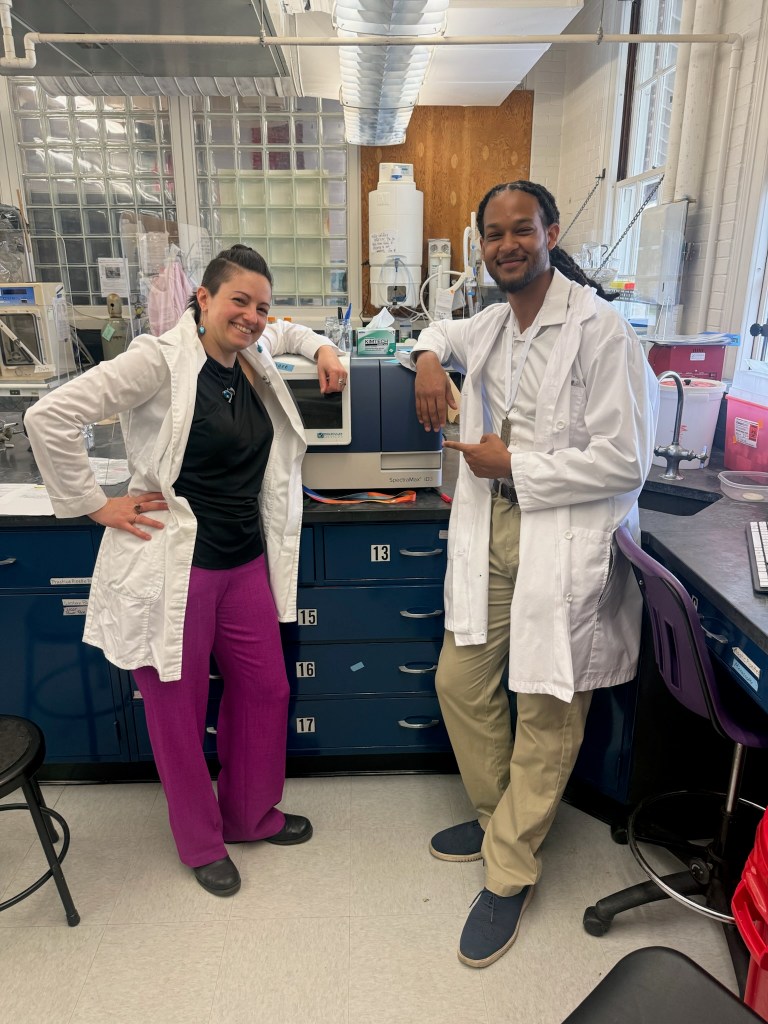
Aaron Williams, B.S. Zoology, was awarded Honors for his thesis! Aaron started in the lab for a bit his first year, and came back in his last two years to complete his Honors research thesis on bacterial metabolism of glucoraphanin as a means of surviving acidic conditions, as well as effect on the byproducts produced. Here we are posing with the spectrophotometer that played a critical role in generating very large spreadsheets of data. Aaron is heading to Tufts Veterinary College in the fall!
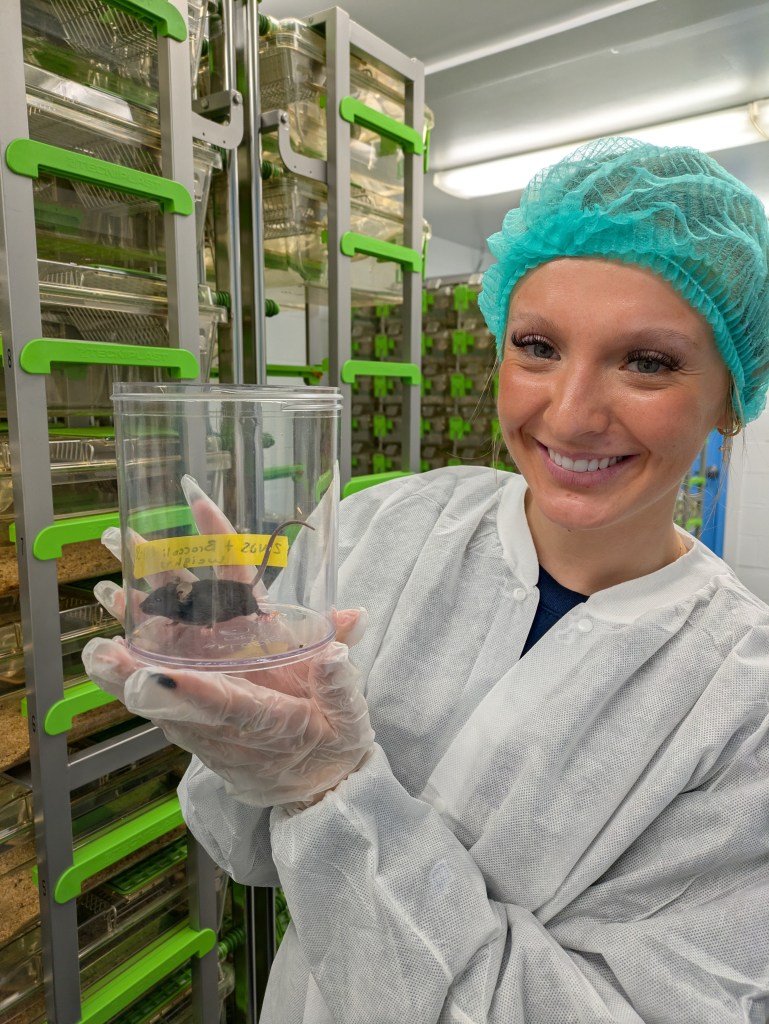
Mia Poirier, B.S. Biology (Pre-Med Concentration) and Madison Ringuette, B.S. Animal and Veterinary Science (Pre-Vet Concentration), and Miri Talalay, B.S. Zoology and Veterinary Studies, are also graduating. Mia and Madison are both taking a year to gain medical and research experience before diving back into college for medical and veterinary programs, respectively. Over the last semester, Mia and Madison helped with two mouse trials investigating the effect of broccoli sprout diets on the gut microbiome, which can use the diet to make anti-inflammatories to reduce symptoms. The first was a pilot project testing our two of our bacterial cultures as probiotics, which is part of Alexis Kirkendall’s work, and the second was a project investigating the efficacy of broccoli sprout diets for resolving gut and neuroinflammation in young adult mice, which is part of Ashley Reynold’s work. Mis was awarded funding for her work in the lab: 2025/2026 Undergraduate Research Award from the UMaine Center for Undergraduate Research and the UMaine Institute of Medicine. Miri had been working us since her first year at UMaine! Miri worked on a variety of projects, helping provide key technical support on some of our years-long culturing projects. This included the screening of hundreds of bacterial cultures for their ability to metabolize glucoraphanin, and whether they would be able to use glucoraphanin and its byproducts to survive in acidic conditions (which Aaron also focused on).

All four Future Doctors will be featured as authors and contributors on our manuscript in development, led by Johanna, which will present the culturing work we’ve done over the last four years! We hope to get that submitted for peer review this summer.

Catch of the day: lots and lots of microbiology

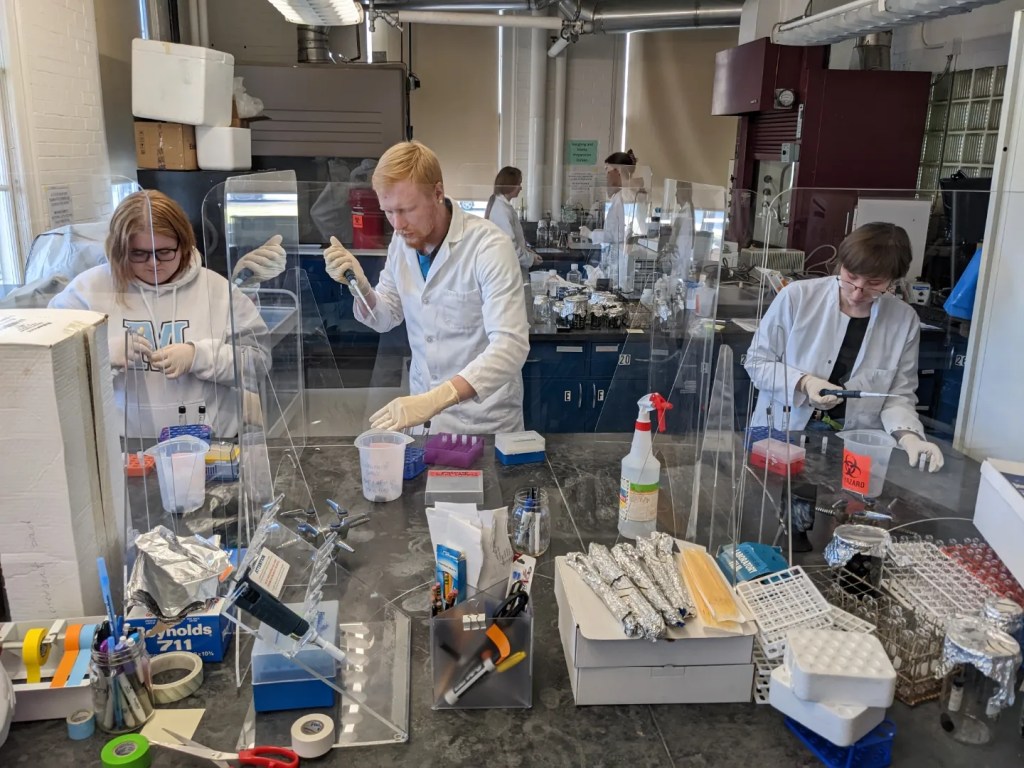
Over the past few months, a large team of undergraduate, graduate, and postdoctoral researchers, and I, have been processing hundreds of samples from our scallop hatchery microbiome project. As 2022 winds down, so does the first phase of our lab work, and we are taking a well-deserved break over the holidays before we launch additional lab work, data analysis, and manuscript writing in 2023.

In 2021, the Ishaq Lab, collaborators at UMaine, and collaborators at the Downeast Institute ran a pilot project to investigate the bacteria that associate with sea scallop larvae in hatcheries, and how this is develops in relation to bacteria in hatchery tanks over time. For that project, we collected hundreds of culture plates with a specialized media that selects for certain species of bacteria.

When tanks are drained and cleaned every two days, cotton swabs are rolled across part of the bottom or side of the tank and used to inoculate bacteria onto these culture plates. This is part of a routine screening for pathogens, and don’t worry, we aren’t finding bacteria that causes disease in humans. But, these screening plates creates a useful starting point for our research on bacterial community dynamics.

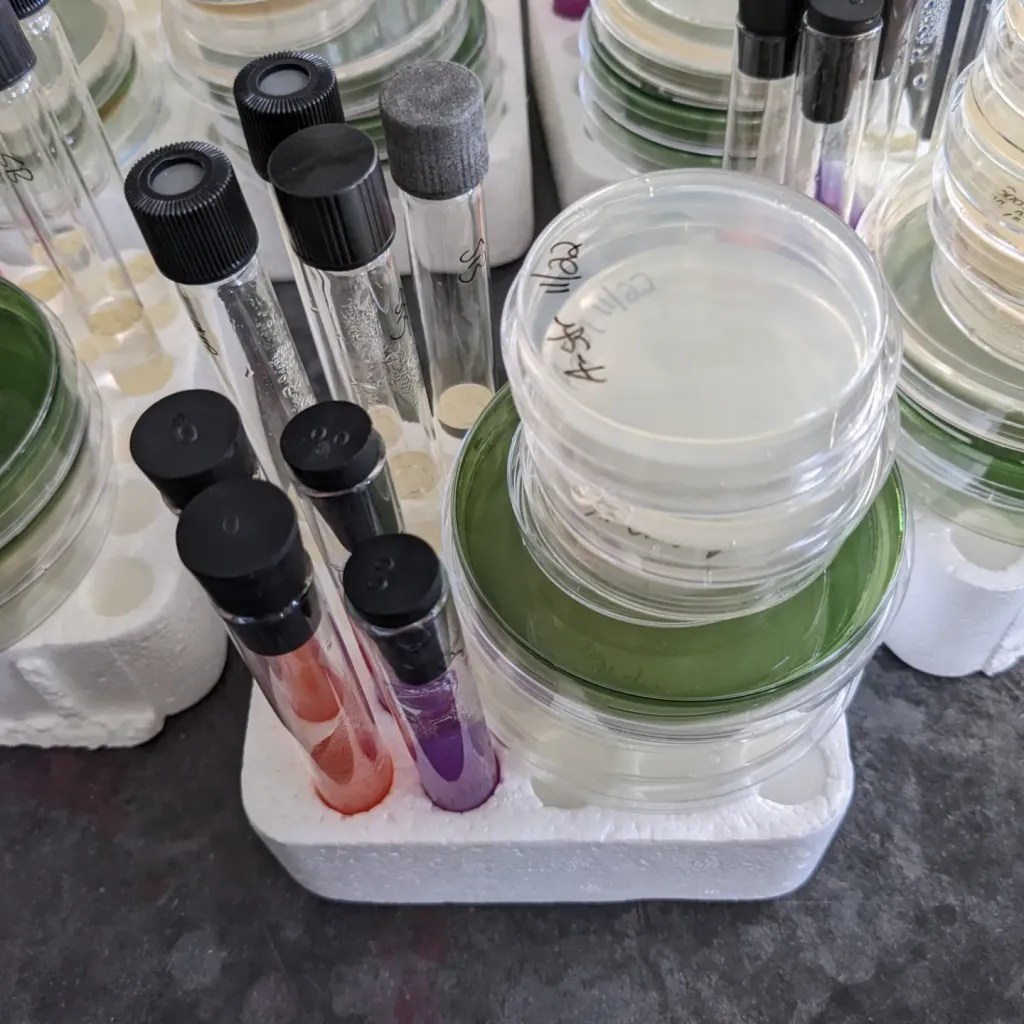
Tank swab samples are used to inoculate TCBS plates to screen for Vibrio and similar bacteria

We received over 200 of these TCBS culture plates, and from them we isolated 140 bacteria in 2021 and early 2022 which we archived at -80 degrees Celsius. This was part of Sarah Hosler’s master’s of science thesis in August of 2022, and has since been passed to Ayodeji Olaniyi for part of his master’s of science thesis.

This fall, we were able to recover 115 of these isolates from the deep freeze, and tested them on 12 different media in duplicate, which created >1800 cultures plates and tubes, and 230 microscope slides!

This massive undertaking would not have been possible without a large team helping with the lab work, including rockstars Ayodeji Olaniyi, Sydney Shair, Keagan Rice, and Lacy Mayo who put in hours and hours leading the efforts on this. We are also grateful to Alaa Rabee, Aaron Williams, Lily Robbins, Ash VanNorwick, and Rebecca Kreeger who provided assistance with media making, inoculating, and the large amount of cleanup (we used glass or autoclavable plastic where possible, and sterilized some single-use plastics to be used as training tools for student education). We were also assisted by Bryanna Dube, who is working on creating outreach/education materials based on our results.

Now, our team will focus on analyzing the results of all these microbiology tests and look for trends. Some will also be heading to the Perry Lab to learn how to perform quantitative polymerase chain reactions (qPCR), in which we use a modified version of DNA replication to count the copies of specific genes. We will use this to look for genes which confirm the identity of our bacteria.

Beginning in summer 2022, the Ishaq Lab has also been part of a state-wide research and commercial collaboration to understand and improve sea scallop production in hatcheries and farms. As part of that project, we received 1500 DNA samples from different hatchery tanks or larvae over the summer/fall rearing season.

Gloria Adjapong is a Postdoctoral Fellow at the UMaine Cooperative Extension Veterinary Diagnostics Lab, and she has been graciously extracting these samples as part of her cross-training in the Ishaq Lab. We will use the extracted DNA to sequence the bacterial communities to identify which bacteria are present, and when, to understand microbial community dynamics over time and in relation to scallop health.

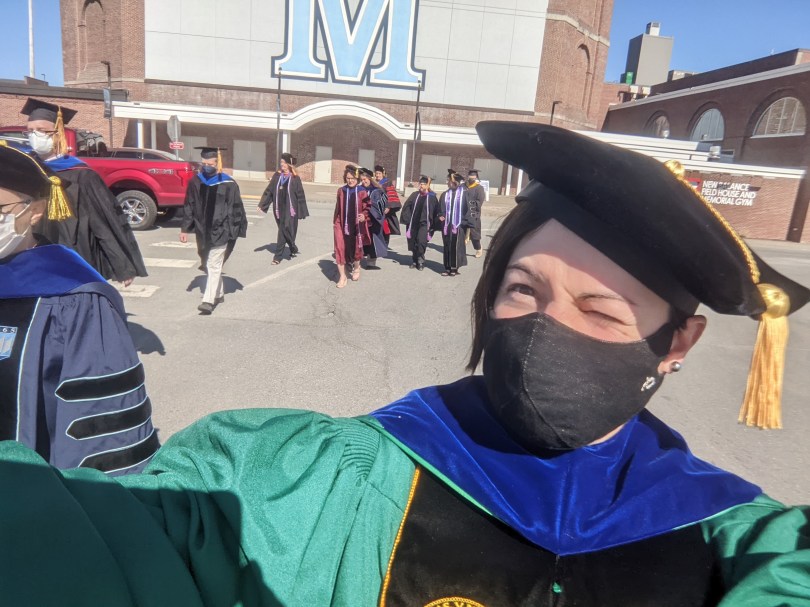
Sue talking a selfie in the UMaine parking lot in full regalia.

2022 graduating students

UMaine and many other universities are having in-person graduation ceremonies, and welcoming students who are graduating this year, as well as those who finished in 2021 and 2020 who were not able to walk in a regular ceremony. I made it to the ceremony for the graduates, so I could cheer on Sarah, where over 400 of the more 600 total graduate students matriculating got hooded and recognized for their achievement.

This year, many Ishaq Lab members walked across the stage and off into the next step in their life.

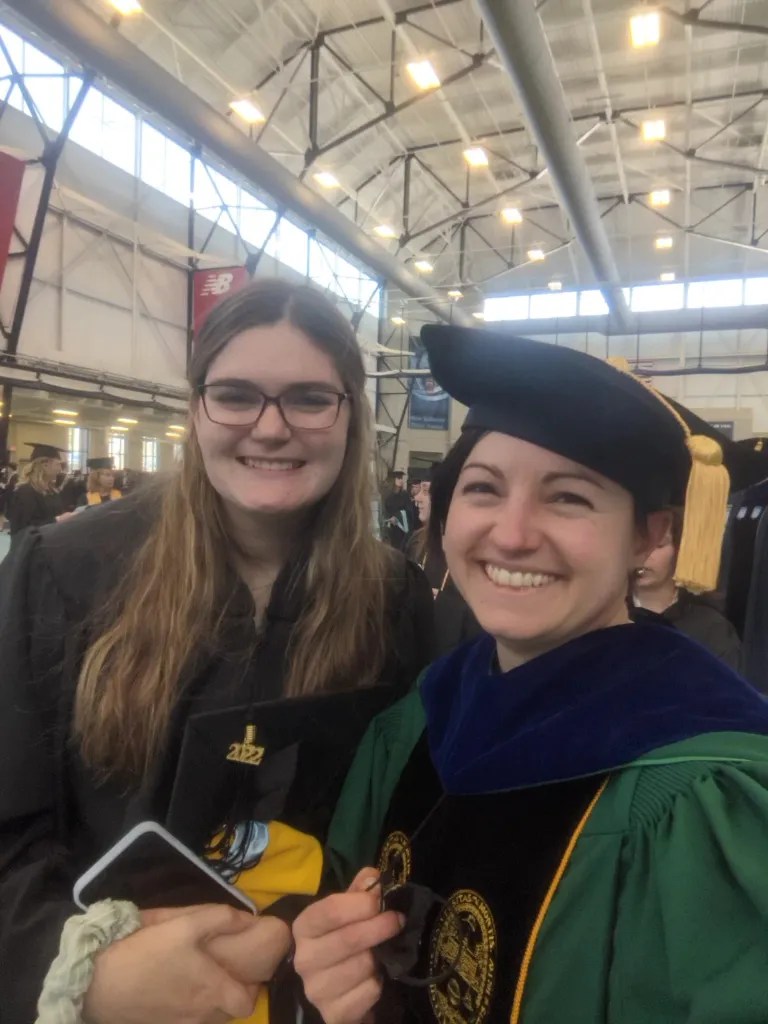
A graduate student and a faculty member, both in full graduation regalia, posing for a photo in a gymnasium.

Sarah Hosler, Animal and Veterinary Science Master’s of Science student, who will be defending her thesis this summer and is considering her next career step.

Person in a research facility holding up their arm with a mouse on it. Person is wearing a hairnet, nitrile gloves, surgical mask, and a surgical gown. They are holding their left arm up to the camera to show off a mouse with dark brown fur sitting on their arm. In the background is a metal shelf with containers of research materials.

Johanna Holman, Food Science and Nutrition Master’s of Science student, who will be defending her thesis this summer and returning this fall for a PhD!

A woman in a lab coat wearing a face mask and latex gloves is using a thin yellow swab to spread bacteria on a culture media plate. She is sitting at a biosafety cabinet with the glass door pulled down.

Rebecca French, AVS undergrad who did her Capstone project as part of the squirrel pilot project I ran this past year. Rebecca won a research grant for this work. She is heading to vet school in Long Island!

Morgan Rocks, AVS undergrad who did her Capstone project as part of the squirrel pilot project I ran this past year. She is heading to vet school in the midwest!

Natalie Sullivan, AVS undergrad who did her Capstone project as part of the Cryptosporidium pilot project we are running. She is planning to work for a year before pursuing vet school.

Woman standing on the ocean shoreline.

Jade Chin, AVS undergrad who defended her Honor’s Thesis in 2021 and was awarded High Honors for it, has been in Glasgow, Scotland, for her senior year/first year of veterinary school there.

Myra Arshad

Myra Arshad, an REU student who is graduating from Stoney Brook University. She’s taking a year to work in research before pursuing a graduate degree.

In addition, we had a handful of other undergraduate students who performed their independent research for their Capstone projects in the Ishaq Lab graduate this year.