
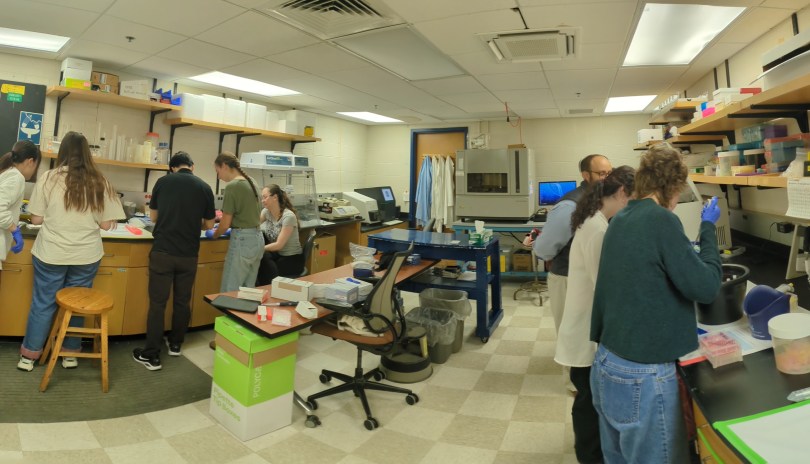
Today was a blast at the Microbiome Workshop on Long-Read Amplicon Library Generation, the second in a series of hands-on workshops this spring that I have been coorganizing with Alex Sacco, Genomics Facility Manager at UMaine! This one was led by Alex, who is a genius at sorting out the complex math and coordination to combine multiple projcts with multiple targets onto one Oxford Nanopore Technology flow cell!!
Today we used materials generously provided by New England Biolabs, whos sponsorship provided the opportunity for 11 students to learn how to prepare their samples for sequencing. We are grateful to Siva Chavadi and Heidi Iuvino from NEB for their time, expertise, and support! NEB will be joining us on campus in June, too, for the Microbiome Symposium at UMaine.
We are also grateful to UMaine CORE, for helping to organize these workshops and ensure that students had access to specialized equipment and supplies.
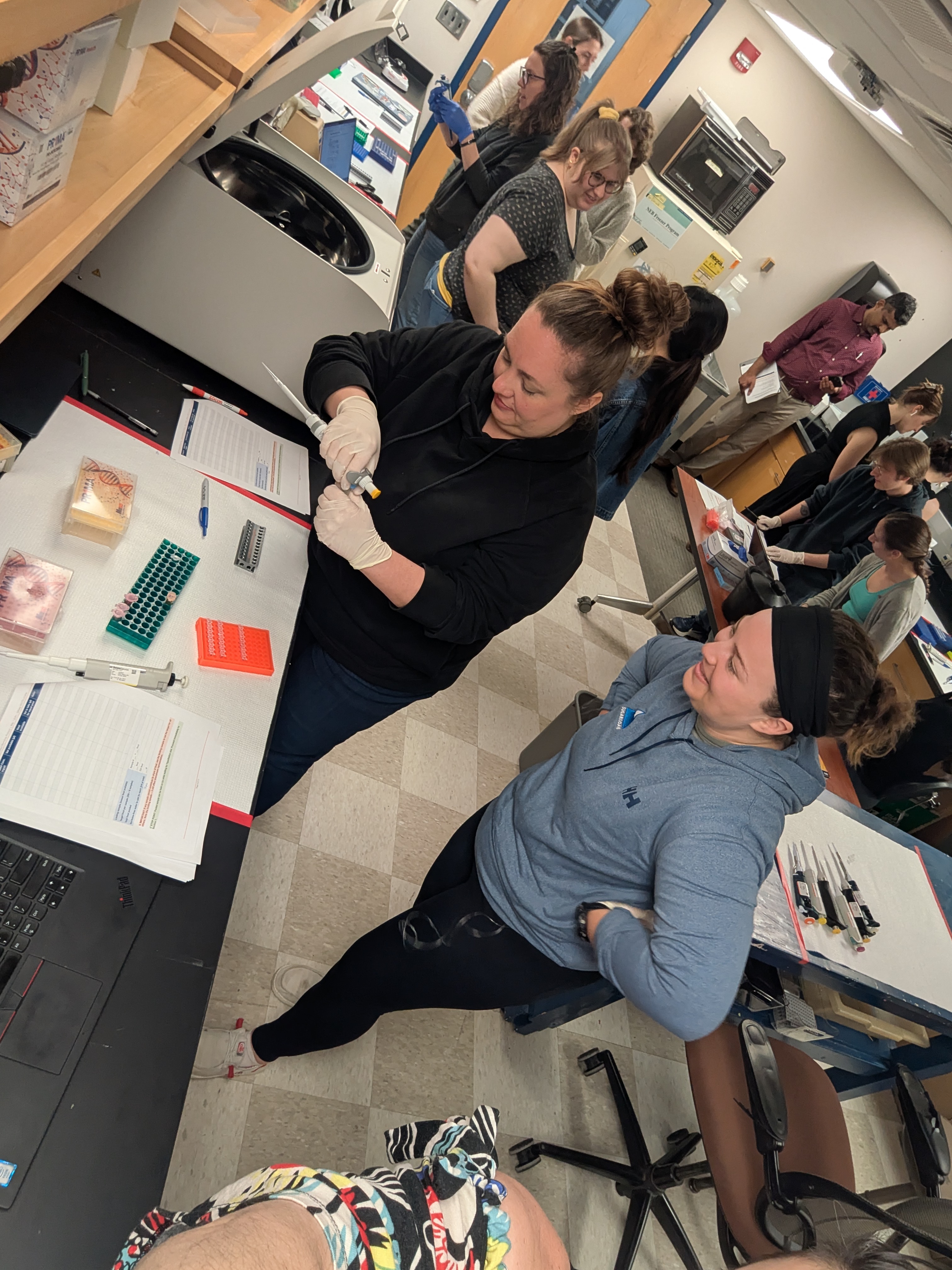
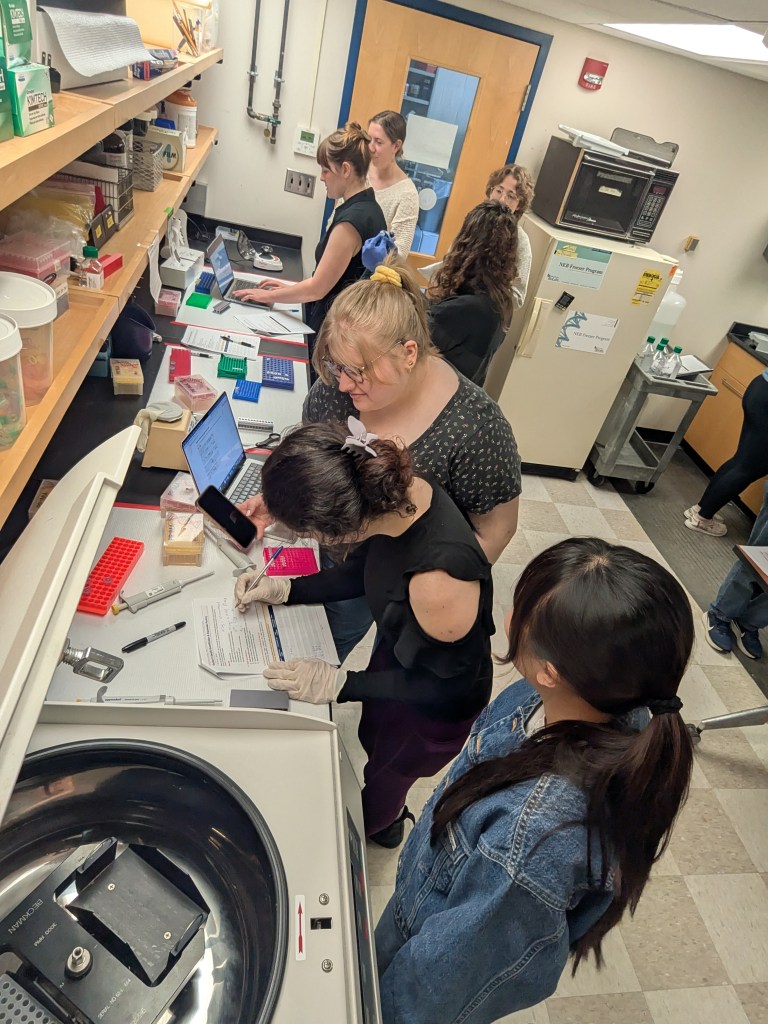
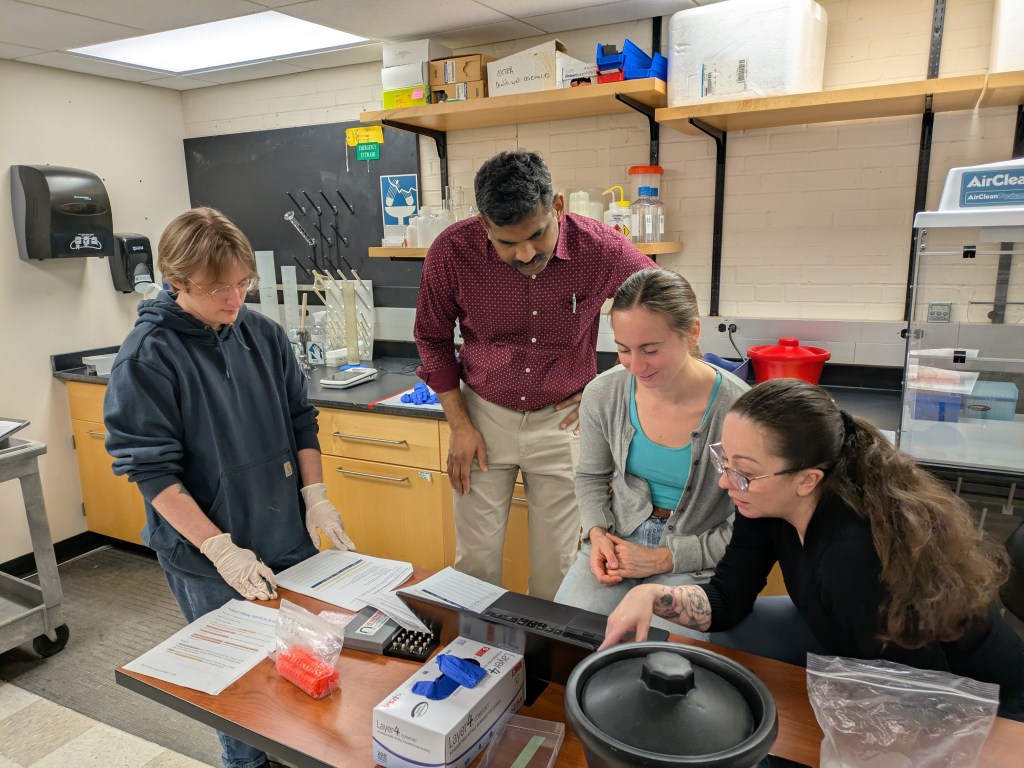
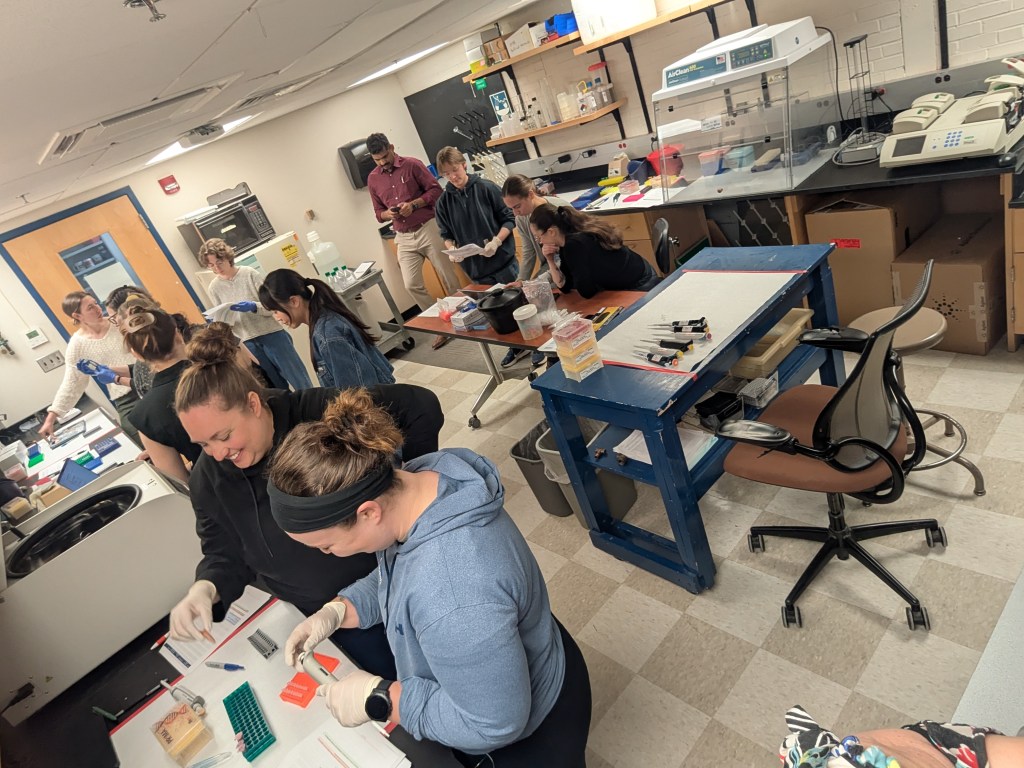
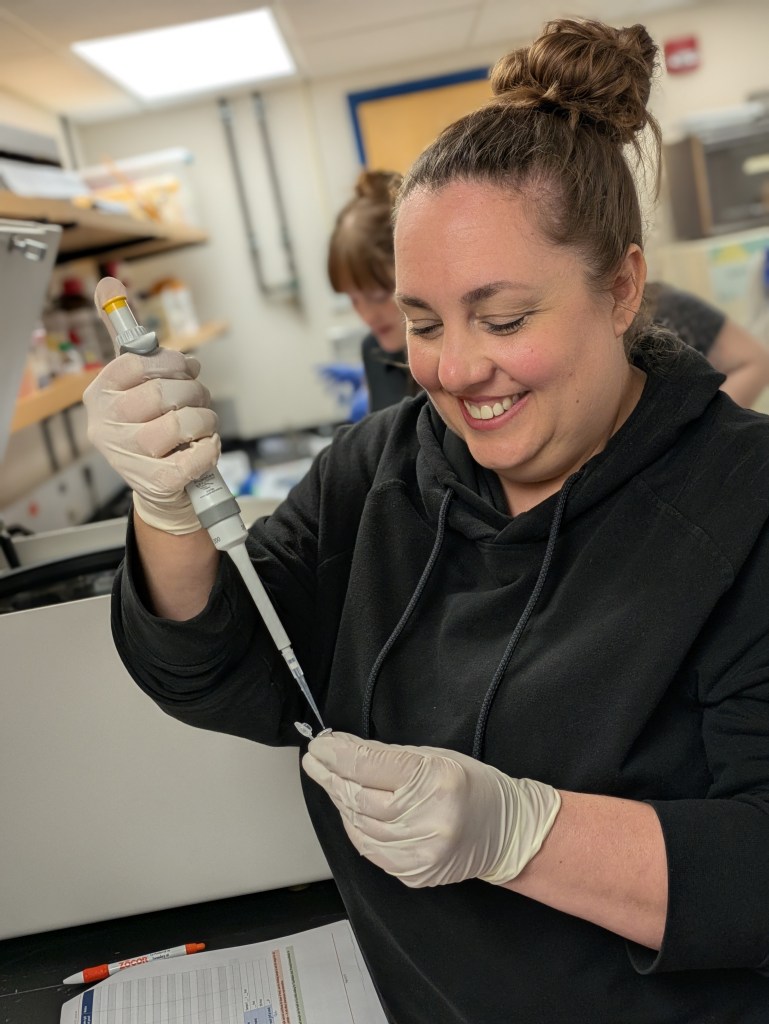
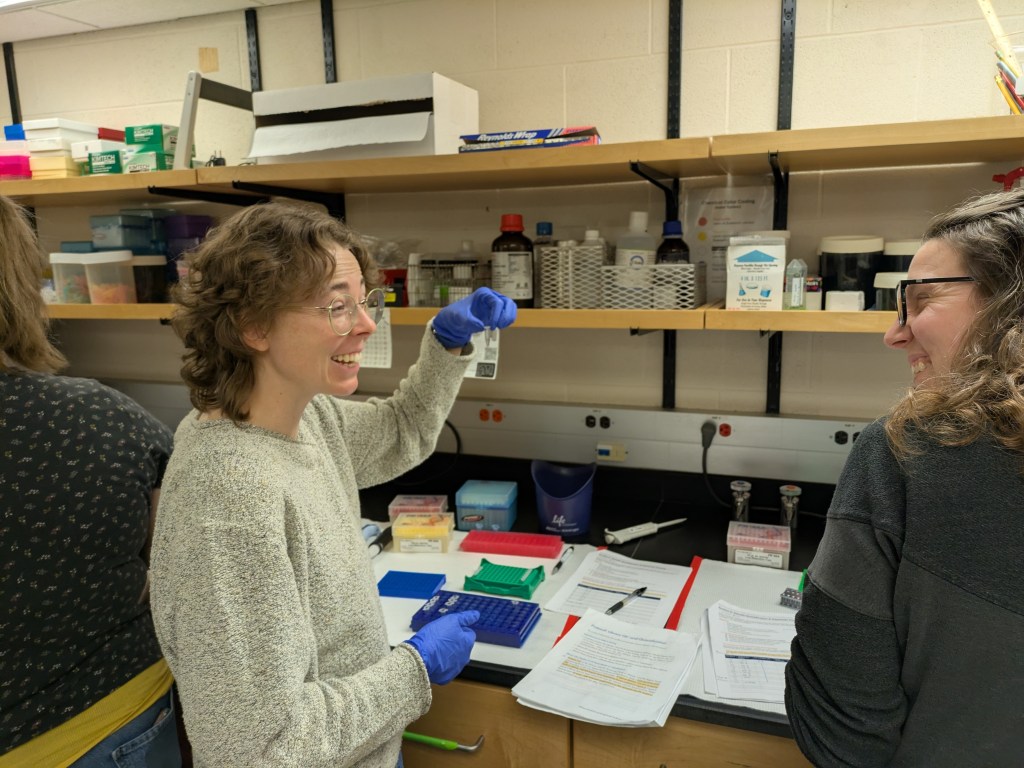
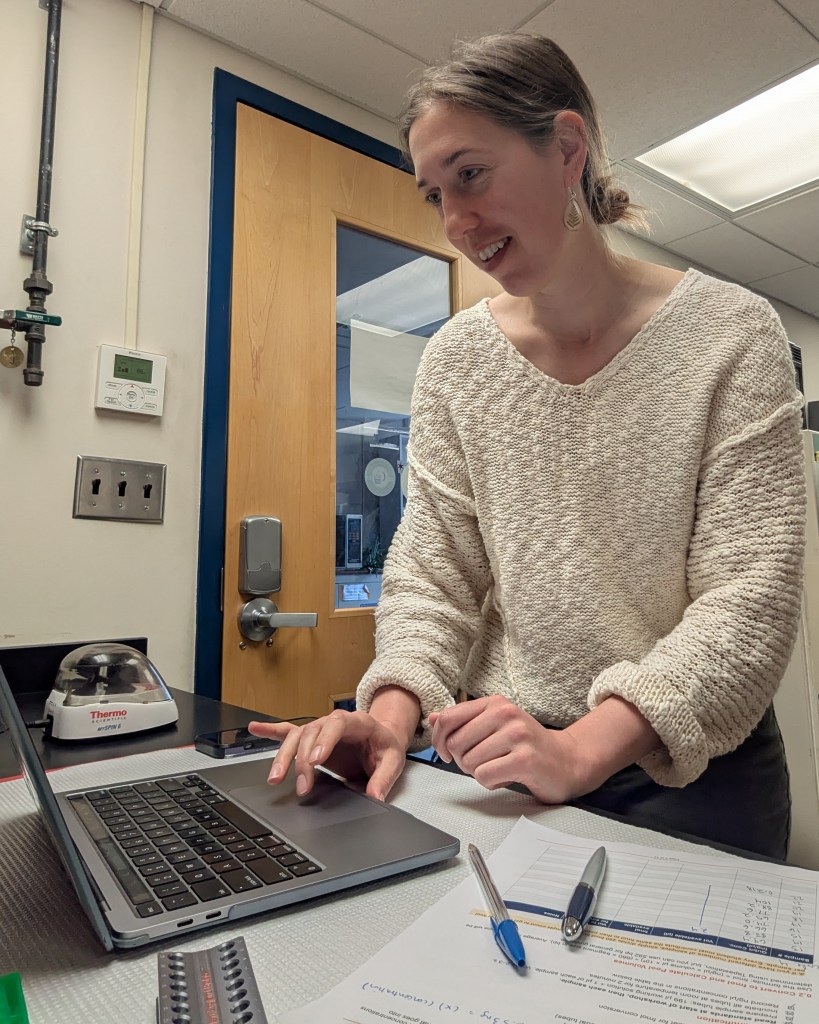
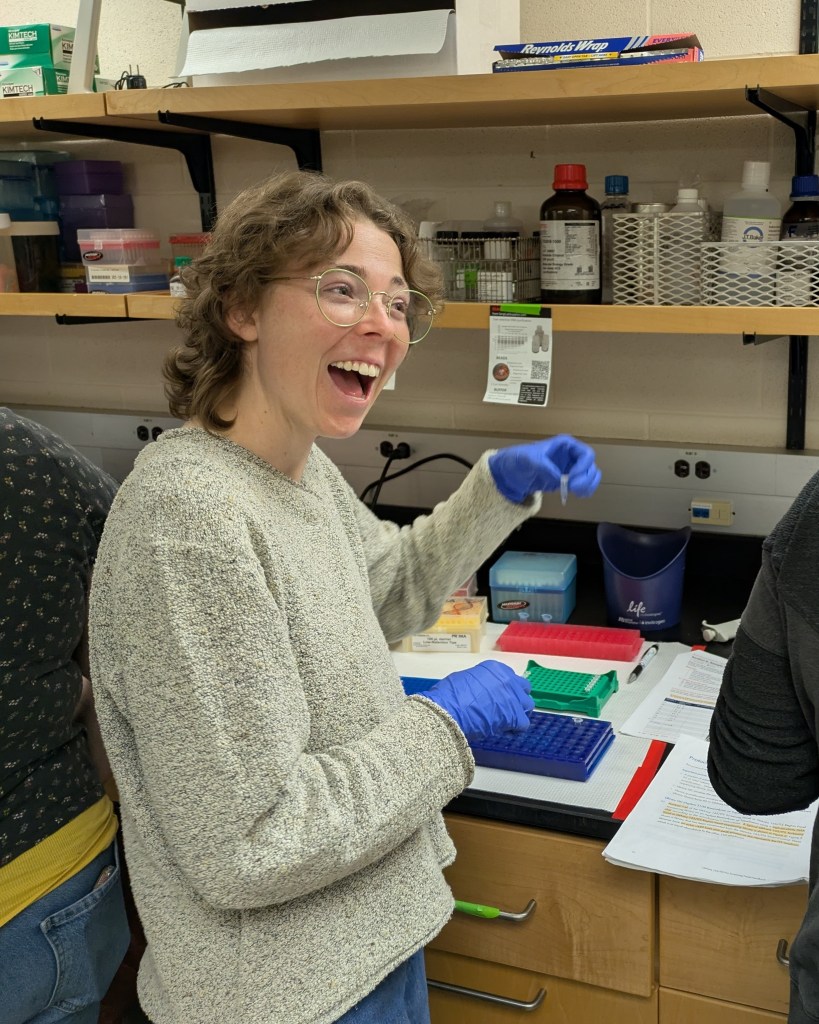
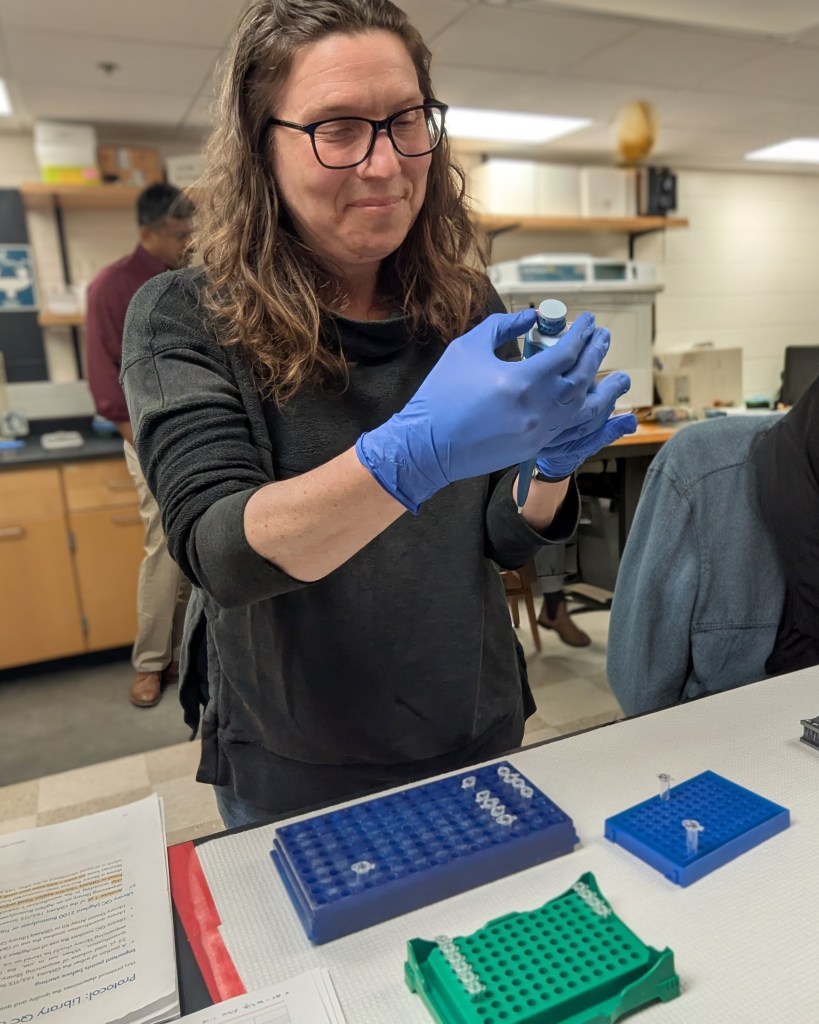
During today’s workshop, students investigated the diversity of microbial communities by preparing sequencing libraries targeting bacterial, archaeal, and fungal marker genes. Using extracted microbial DNA which had been amplified with PCR, students learned how to ligate barcodes and combine samples into a pool for using the Oxford Nanopore MinION Nanopore Sequencing Student Workshop Protocol.
By amplifying and sequencing these variable regions, students generated data that can be used to compare microbial community composition across different sample types. Students who were at both workshops will also be able to compare the two sequencing strategies we have focusd on, which use different technology and provide unique perspectives during data analysis and interpretation.

