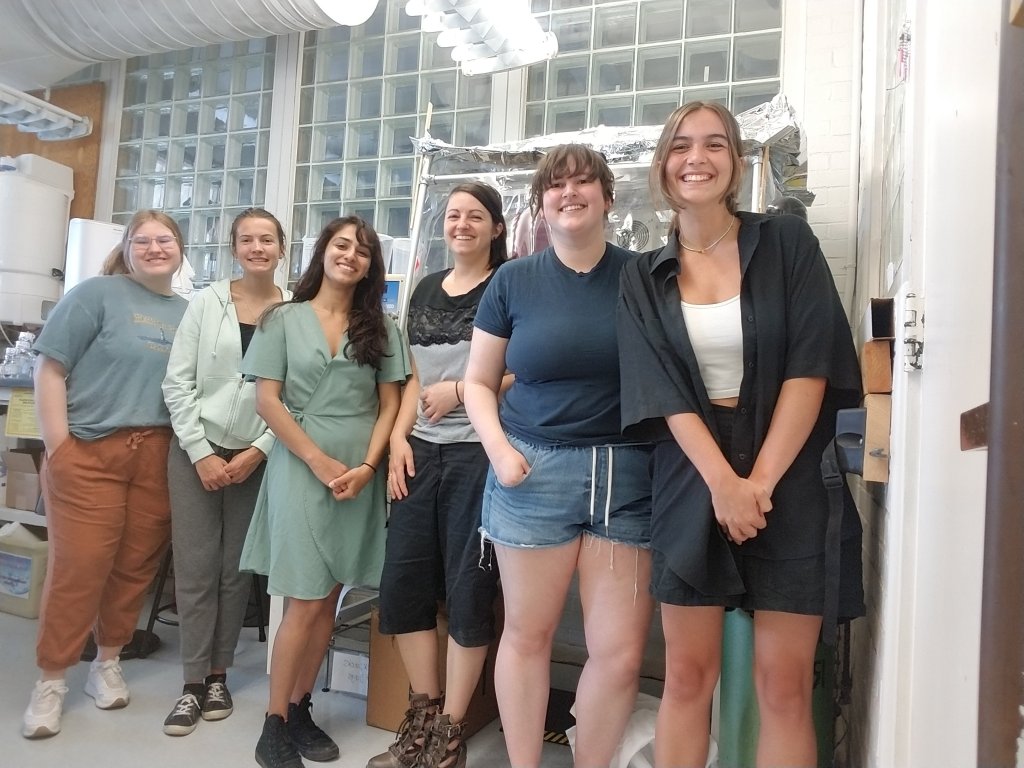
Congratulations to Heather Richard for starting a job in environmental conservation in Maine!

Congratulations to Heather Richard on starting her post-graduate career in conservation with Scarborough Land Trust as Marsh Project Director! Heather has been a grad student working with me, mycologist Pete Avis, ecologists Andy Rominger and Brian McGill, engineer Jean MacRae, and geochemist Tomoko Komada, for the past few years to study Maine coastal salt marshes.

Long before she joined my lab to work on microbial communities in some of Maine’s coastal salt marshes, Heather was an ecologist, educator, and bioinformatician. Over her career, she’s used hands-on experiences in nature (a.k.a. living labs or nature’s classroom) to inspire a love of the natural world while teaching the process of scientific inquiry to students of all ages. Her enthusiasm for environmental science similarly helped her unite people during public outreach and policy work towards common goals of information sharing and evidence-based conservation strategies to benefit communities and the ecosystems around them. And, her unwavering fascination with nature and her dedication to understanding (i.e. science) led her along a path of scientific inquiry to solve problems. In fact, her PhD program was just one leg of her lifelong journey in conservation. As she is coming to the end of her PhD project and looking for her next opportunity, Heather landed a position at Scarborough Land Trust where she will oversee the management and coordination of various restoration and science projects with multiple interest groups starting this fall, as she wraps up her dissertation and resulting scientific manuscripts.

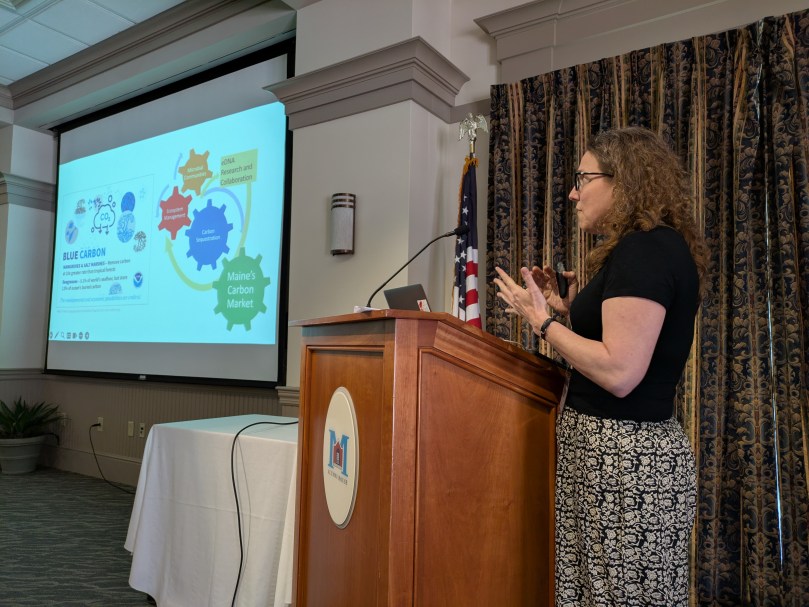
Heather’s focus at UMaine has been to catalogue the microbiomes associated with coastal salt marsh ecosystems in Maine. There are approximately 800 locations in Maine where roads and bridges cross tidal creeks, which requires culverts or other infrastructure to direct the flow of water, and 90% of these structures are considered undersized. These restrictive crossings impound freshwater upstream of the restriction site, keeping it flooded and lowering salinity. This disrupts the native vegetation and soil microbes adapted to salty conditions, making the marshes highly vulnerable to invasive plants. Healthy salt marshes act as blue carbon ecosystems by trapping and storing large amounts of atmospheric carbon in their soils. However, tidal restrictions disrupt this process and can turn these areas into major hotbeds for potent greenhouse gas production. Understanding how microbes react to restrictions in marshes, and whether they can still sequester carbon instead of losing chemical resources from the marsh, can help us learn how to more effectively use infrastructure that does not negatively impact water flow, native plants, or microbes. Microbial communities can be viewed as an integrated response to environmental conditions over time, whereas variables such as salinity and carbon flux are instantaneous measurements that capture only a snapshot of a dynamic system. That means these methods can potentially be very useful and informative for those who protect, monitor and restore salt marsh habitats.

Heather studied soil/sediment as these areas host a high diversity of microbes, which are responsible for a majority of the chemical processing that happens there, such as breaking down the plant, animal, or chemical waste into simpler compounds or elements which can be sequestered into the soil, taken up by the plants, or fuel more microbial activity. The bacteria, archaea, and fungi that live in the sediment of marshes are somewhat specific to the plants, animals, chemicals, environment, and humans around the marsh, thus each marsh must be “microbially mapped” to know which microbes are present and where specifically, and what they are doing. This is important for knowing how microbes are affected by change: will they sequester carbon or release methane if the community is changed by a storm, or by the installation of a culvert? What will the microbes do if the marsh dries out or gets flooded?
To answer some of these questions, Heather has explored whether bacterial, archaeal, and fungal communities would have different members present and/or would make different products if they were located up- or downstream from a restriction site, like a culvert under a roadway placed in the waterway of the marsh. The marshes she chose to study because of their level of restriction, including marshes that had natural water flow and no infrastructure/restrictions, some which has been restored to their natural water flow by the removal of infrastructure/restrictions, and some which had their waterflow altered such as by too-small culverts which affected the tidal flow of seawater and caused the marsh to be too dry or too flooded.

Heather has been analyzing the data for a few years, including hundreds of marsh sediment samples with information on microbial communities, each of which contains hundreds of bacteria, archaea, and fungi, as well as data on the chemical composition of those hundreds of samples, and environmental characteristics of each site.

Heather discovered too much to name here, but here are some highlights: The microbiomes found in the regularly flooded marsh adjacent to tidal channels at depths within the rhizosphere (plant roots) are likely to be particularly sensitive to hydrology alterations because of the low elevation in these areas and close proximity to tidal creeks. Hydrologic restrictions that increase water residence time can prolong anoxic conditions and reduce tidal flushing, promoting environments that favor methanogenic and other anaerobic microorganisms while suppressing aerobic processes. These changes may also reduce the capacity of the marsh plant Spartina alterniflora to oxygenate the rhizosphere under highly reduced conditions and, where sulfide accumulates, may further reinforce redox-driven shifts in microbial community composition. The presence of natural marsh microbial communities at some restricted sites should not be interpreted as evidence that these tidal restrictions have no ecological impact: restrictions at sites with less freshwater influence that reduce tidal inundation upstream without impounding freshwater may have similar oxygen and salinity conditions as the natural sites in the lower/downstream part of marshes while increasing aerobic carbon mineralization at deeper depths and increasing salinity stress in the higher/upstream part of the marshes.

Now that she’s wrapping up, Heather will condense what she learned and how she did it into a dissertation, the chapters of which will be formed into several manuscripts. This will include one with the information about the microbial communities present and which environmental conditions were associated with certain taxa or biochemical pathways, one on a particular marsh before and after it was restored, and one on the process of setting up a collaborative marsh-conservation network across multiple states and institutions to facilitate evidence-based restoration strategies.
These papers exemplify what Heather’s new job will entail, and this position is a wonderful embodiment of what she wants to use her degree to accomplish. The Ishaq Lab wishes Heather the best of luck, and is excited to see how she’ll help Maine communities in her new position!

Welcome back (again) to Alexis Kirkendall – now a grad student in the lab!!

The Ishaq Lab is ecstatic to welcome Alexis Kirkendall for the third time — this time as a PhD student of Microbiology!!

Alexis Kirkendall originally joined the lab in summer 2022 for ten weeks through the Research Experience for Undergraduates program through the NRT Initiative for One Health & the Environment. During that time, she learned various laboratory techniques related to microbiology and genomics, and participated in several projects which investigated the microbes associated with several species of livestock. Alexis picked these up so quickly that she acted as project manager for one of them and trained other undergraduates and a graduate student in the lab. Within a few weeks of arriving here, Alexis was working independently in the lab, and we began talking about her joining the lab for a graduate program.

Over the 2022/2023 academic year, Alexis continued to work with me remotely as she went back to continue her bachelor’s at Heidelberg College. This included data analysis and visualization of RNA transcriptomic data from the rumen of camels, as well as presenting results from her summer work at the UMaine REU student symposium, the Heidelberg College student research symposium, and a national conference:

  • Kirkendall*, A., Ishaq, S. Taking on Multiple Research Projects in a NSF Research Experience for Undergraduates (REU) Summer Program as a Disabled Undergraduate Student. ABRCMS annual meeting, Anaheim, CA, November 9-12, 2022.

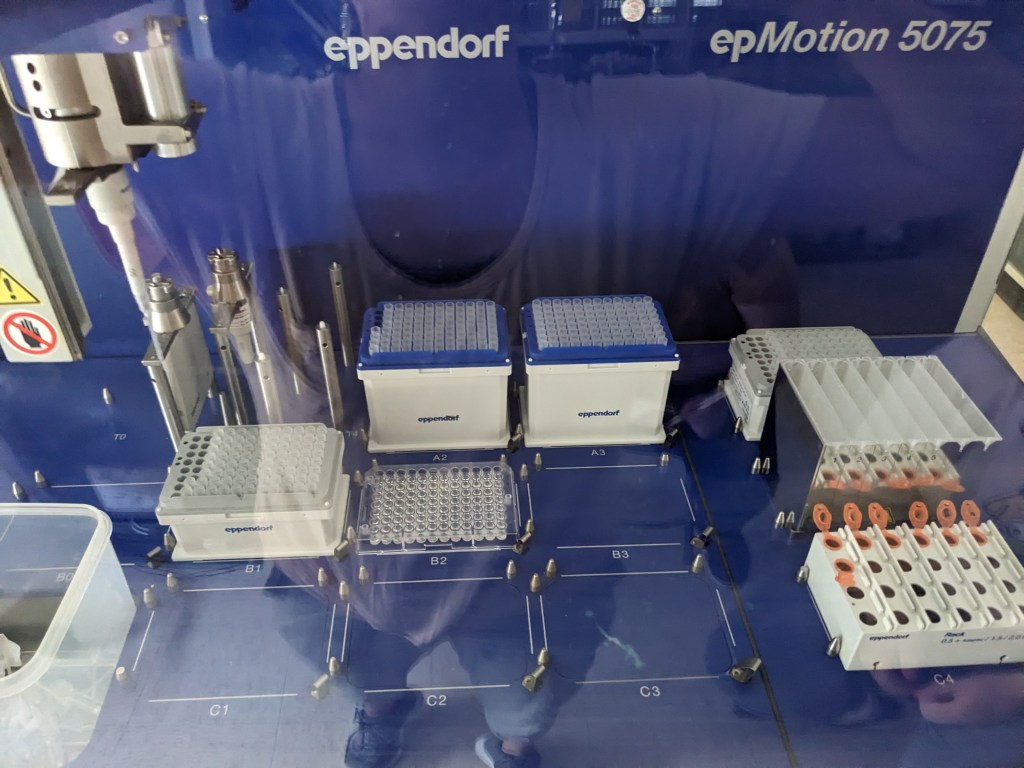
In summer 2023, she again joined the lab as an undergraduate research assistant, where she worked with a team of undergraduate and graduate students working on anaerobic culturing and growth trials for bacteria isolated from mice consuming a broccoli sprout diet, to determine their activity for converting a dietary compound into an anti-inflammatory to resolve Inflammatory Bowel Disease. She got our robotic liquid handler programmed for that project, too! The summer work laid the groundwork for the dissertation work she’ll be completing with me.

Alexis graduated early (Dec 2023) and is rejoining #TeamBroccoli to work on how different cooking preparations affects the way gut microbes turn an inactive component into an ani-inflammatory in the intestines, as a way to reduce symptoms in Inflammatory Bowel Disease. We have been benchmarking some of those gut microbes for their capacity for GLR metabolism to produce SFN, and our long-term goal is to develop a dietary preparation of broccoli sprouts and a probiotic which have therapeutic effects against IBD in humans.

In addition to the lab work and research, Alexis has also been heavily involved in the Microbes and Social Equity working group. She participated in MSE’s symposium in 2022 and 2023, acting as a notetaker to facilitate discussions between invited speakers, MSE members, and other audience members, and organizing of the meeting by helping to create agendas and notes documents on behalf of the session organizers. In 2024, she’ll continue to help me curate events and develop content for MSE.

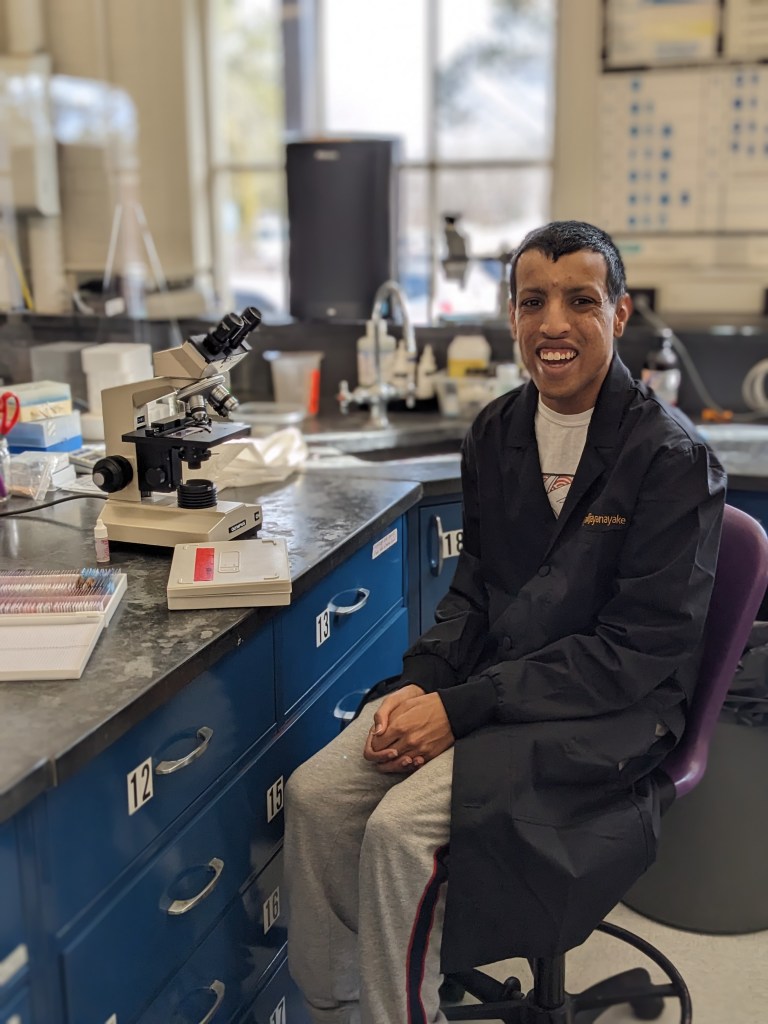
The Ishaq Lab welcomes grad student Ryan Wijayanayake!

The Ishaq Lab is pleased to welcome Ryan Wijayanayake as a Master’s of Professional Studies student in Animal Science, who joined the lab in January 2023!

Ryan has a background in research from his undergraduate program at St. Francis Xavier University in Nova Scotia, and as a research assistant at Tenza, a biotechnology company in Boston. In addition, he has a background in robotics and robotics competitions.

He is joining ‘Team Broccoli‘ to investigate the 806 bacteria we isolated from the digestive tracts of mice eating a broccoli sprout diet, in a previous experiment on broccoli sprouts, microbes, and resolving colitis.

In addition, Ryan has been helping ‘Team Scallop’, including helping organize culturing work for the undergraduate research crew.

The Ishaq Lab welcomes a new grad student, Marissa Kinney!

The Ishaq Lab is pleased to welcome Marissa Kinney as a Master’s of Science student in Microbiology, beginning in January 2023! She’ll be joining ‘Team Broccoli‘ to investigate the 806 bacteria we isolated from the digestive tracts of mice eating a broccoli sprout diet, in a previous experiment on broccoli sprouts, microbes, and resolving colitis.

Marissa is a recent graduate of the UMaine Microbiology bachelor’s program, where she was part of an interdisciplinary research group and was the first author on a scientific publication this year: Suppression of Methicillin-Resistant Staphylococcus aureus and Reduction of Other Bacteria by Black Soldier Fly Larvae Reared on Potato Substrate.

Marissa Kinney

Marissa Kinney 

Master of Science student, Microbiology and Animal and Veterinary Sciences

Blurb: Marissa is a Masters student who loves learning and bench microbiology. She completed her undergraduate at the University of Maine in 2021, earning a BS in Microbiology and a BS in Cellular/Molecular Biology. She devoted a large portion of her time in undergrad to research in the laboratories of Dr. Julie Gosse and Dr. Edward Bernard. Since graduating, she worked in the field of public health at UMaine’s Margaret Chase Smith Policy Center, collecting and processing data about violent and drug-related deaths in Maine. While her role at the Center was one she loved dearly, she feels a big pull towards laboratory work and academic research. She recently joined the Ishaq lab and is excited by the new opportunities this position brings. 

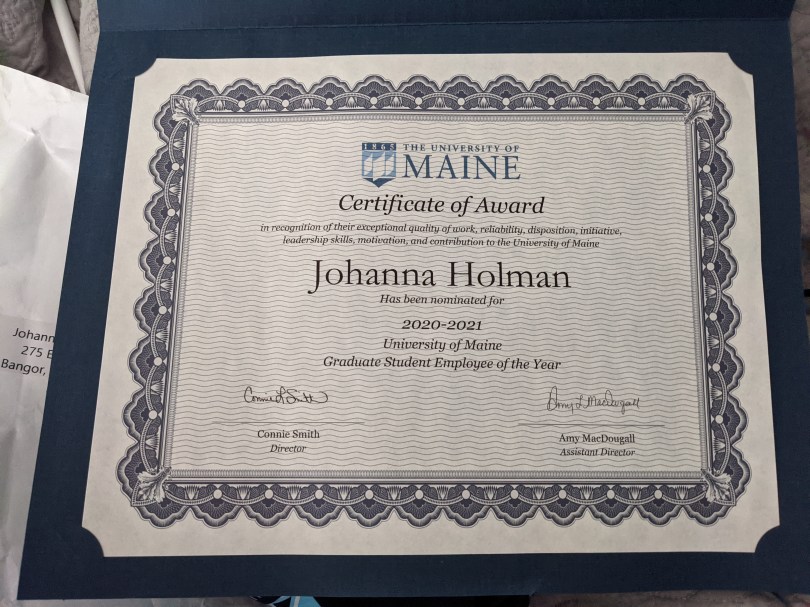
Johanna Holman is awarded UMaine Grad Student Employee of the Year!

Johanna Holman, Master’s of Nutrition student in the Ishaq Lab has been awarded the 2020-2021 University of Maine Graduate Student Employee of the Year!!!!

I met Johanna in the fall of 2019, when I was just establishing myself as a new Assistant Professor in the School of Food and Agriculture, and she was looking for an advisor for a graduate degree.  Right away, she impressed me with her background and enthusiasm for research.  I learned that Johanna began her undergraduate study as an art student before transitioning fluidly to science.  I see this is an asset – the ability to design visual aid and graphical representations of data is hugely important to science and sadly, not always a skill that scientists are trained to do. Johanna also had a number of service industry jobs, and initially in that first meeting, she was somewhat apologetic for not having been devoted to science jobs from the start.  I countered that I was pleased to see that she has worked in other industries, specifically in difficult service-related jobs.  It is often more important to have patience, dedication, and strong interpersonal skills, such as those gained by working in customer-facing jobs.  I believe that Johanna has and will continue to succeed because of her varied education and experience.

Once she became a science student during her undergraduate study, she worked in the laboratories of Drs. Yanyan Li, Associate Professor (of nutrition) in the College of Science and Humanities, and Tao Zhang, Assistant Professor of Basic Pharmaceutical Sciences, both of Husson University in Bangor.  There, she has performed nutritional biochemistry, worked with mouse models, and developed an idea of what she wanted to study in graduate school and pursue as a career. 

Johanna officially joined my lab and started as a Master’s Student of Nutrition at UMaine in fall 2020, and immediately got to work.  Not only did she begin preparations for the massive undertaking that is part of her project, but she began mentoring several undergraduates on and off campus, and started as a first time teaching assistant for the Chemistry department, which required navigating virtual labs.

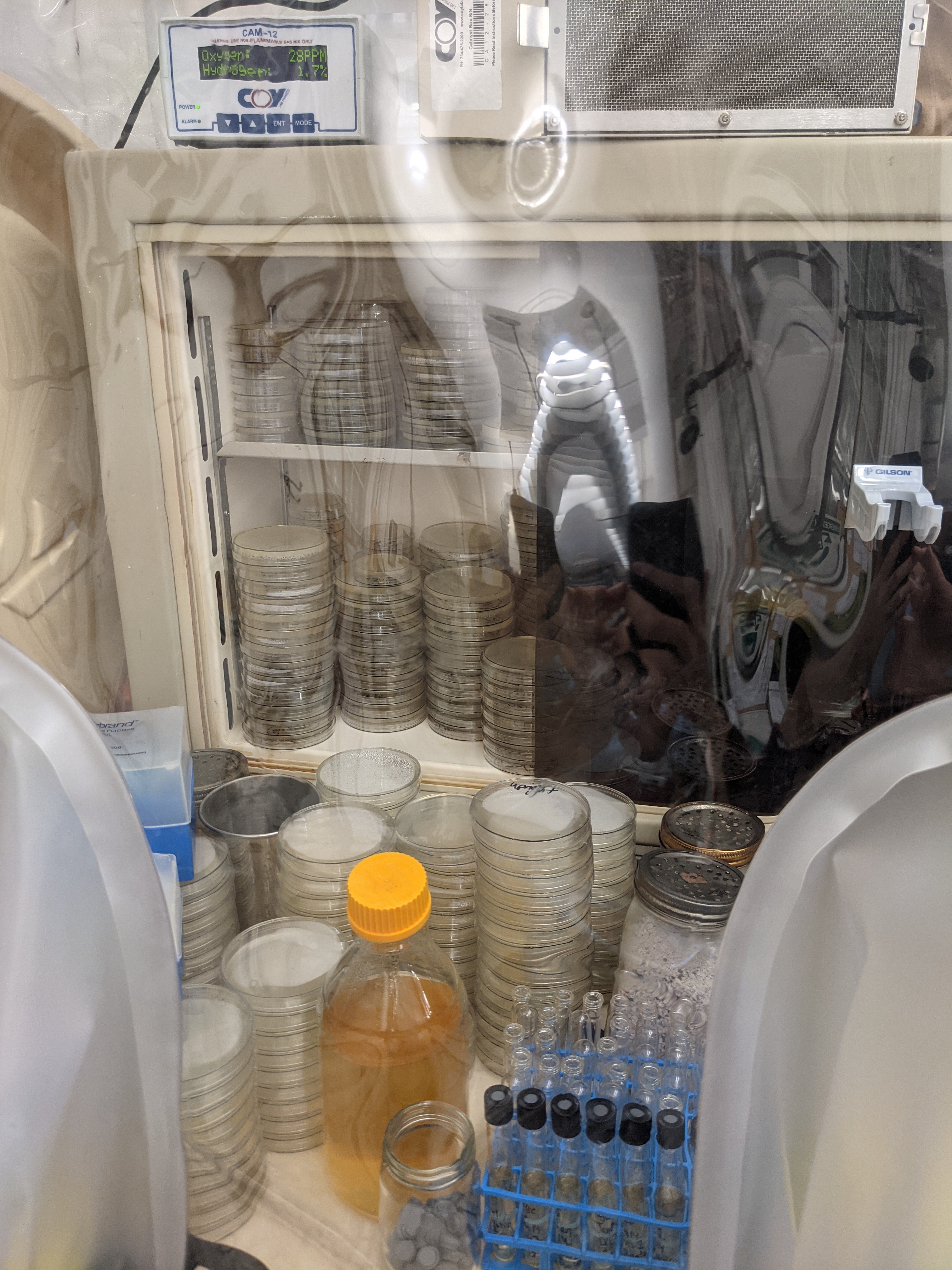
Johanna’s project focuses on whether consumption of specific broccoli sprout preparations will elicit changes in the gut microbiota, to the effect of improving the production of microbiota-specific bioactives that have local anti-inflammatory effects, and promoting intestinal homeostasis by reducing dysbiosis. This project is a continuation of previous research on bioactive compounds in broccoli, completed in the labs of Drs. Yanyan Li and Tao Zhang at Husson University in Bangor.  While some of the work may be similar, the skill set is entirely new.  For the winter break, Johanna was managing a 40-mouse study for 5 weeks, which has resulted in hundreds of samples collected, hundreds of data time points, and enough follow-up laboratory and analysis work to keep her occupied for an entire year.  She has learned how to culture bacteria in an anaerobic chamber, which is a notoriously fussy machine that requires regular attention, as well as to grow them under different conditions for biochemical analysis and enzyme activity.  She will be learning DNA extraction, DNA sequencing library preparation, DNA sequence analysis, and will lead the generation of a large manuscript on the results.

It might seem too early to recommend a graduate student for this award after just one semester, but it is remarkable that a new master’s student could achieve all of this in their first semester during a pandemic.  I have informally mentored graduate and undergraduate students for years, and it is easy to spot the ones who will go far in science. Johanna has a highly successful career ahead of her, and I am honored to be one stop on that path.  This award will not only acknowledge the incredible amount of work she has accomplished, but it will support an early career researcher who has every quality to make research a hospitable and collaborate place.