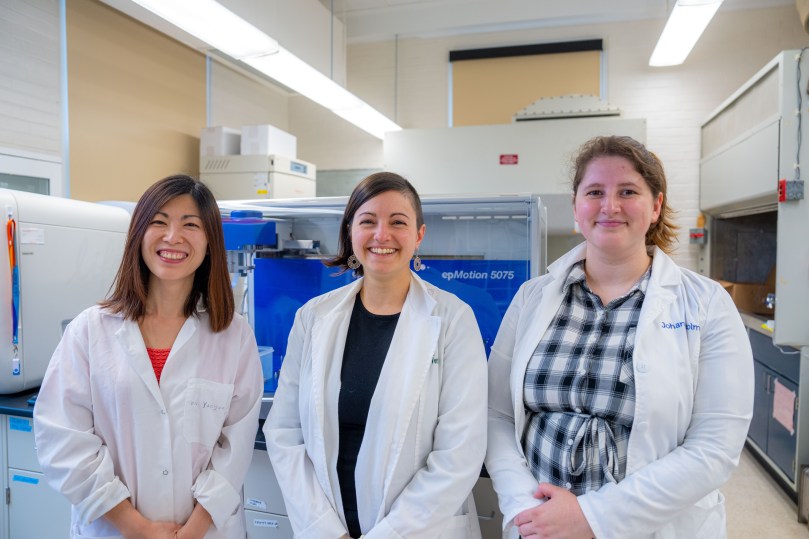
I'm an assistant professor of animal and veterinary studies at the University of Maine, Orono, studying how animals get their microbes. I am also the Founder and Lead of the Microbes and Social Equity working group.
I was invited to give three talks on the west coast in March, which aligned so well I was able to string them together into a mini “speaking tour”. I was looking forward to seeing work-related and non-work-related friends, and using a few of the days to visit more of the incredible ecosystems.
Grove of the Titans in the Redwood National Forest.
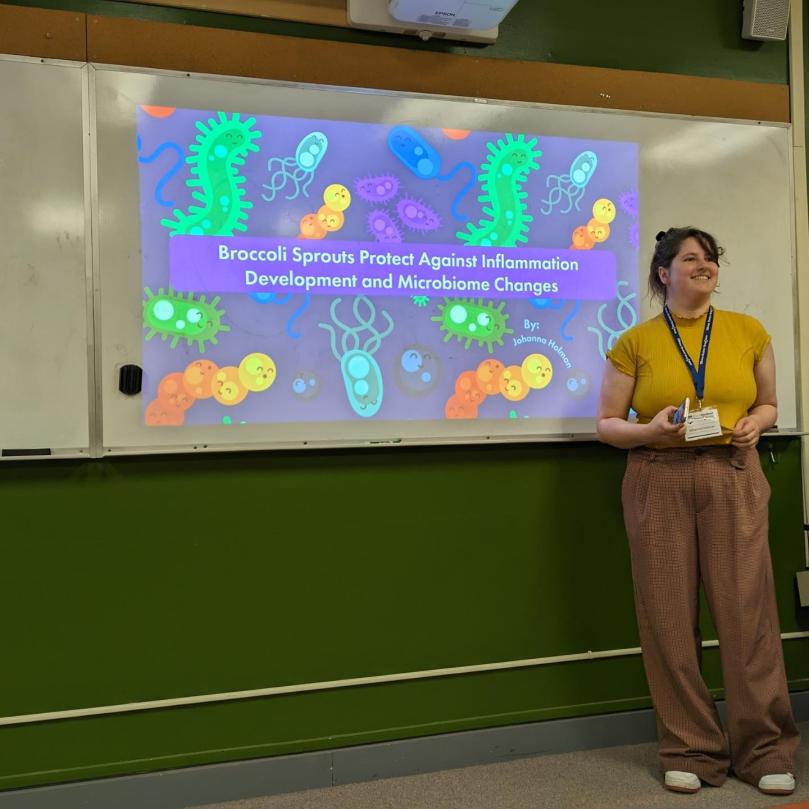
I presented three versions of a talk called “Place and time matter for gut microbes making anti-inflammatories from broccoli sprouts”, to tailor it to the audiences and time slots at each location. The talk incorporated various amounts of the #BroccoliProject and work with the Microbes and Social Equity working group.
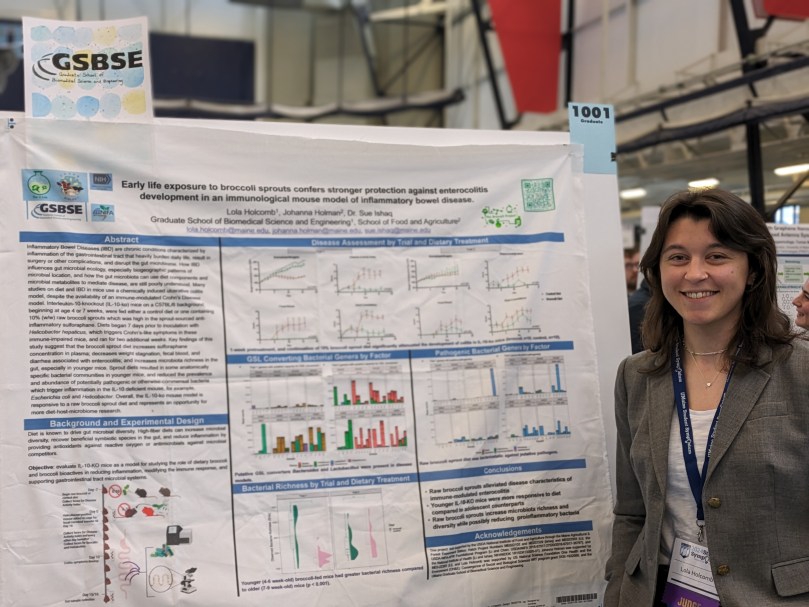
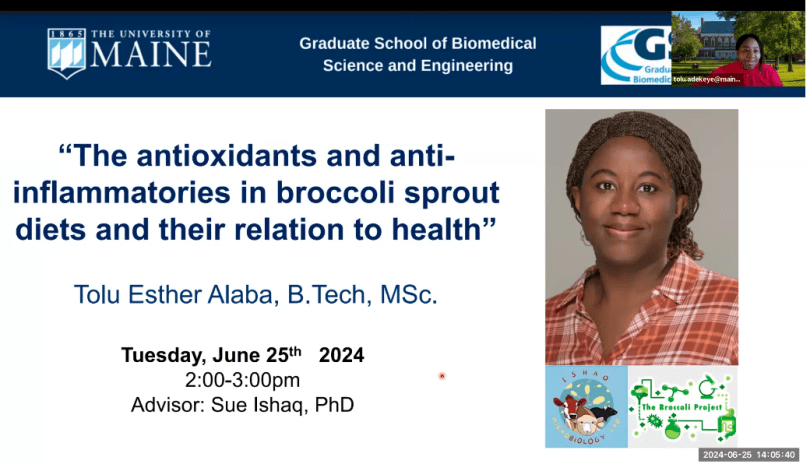
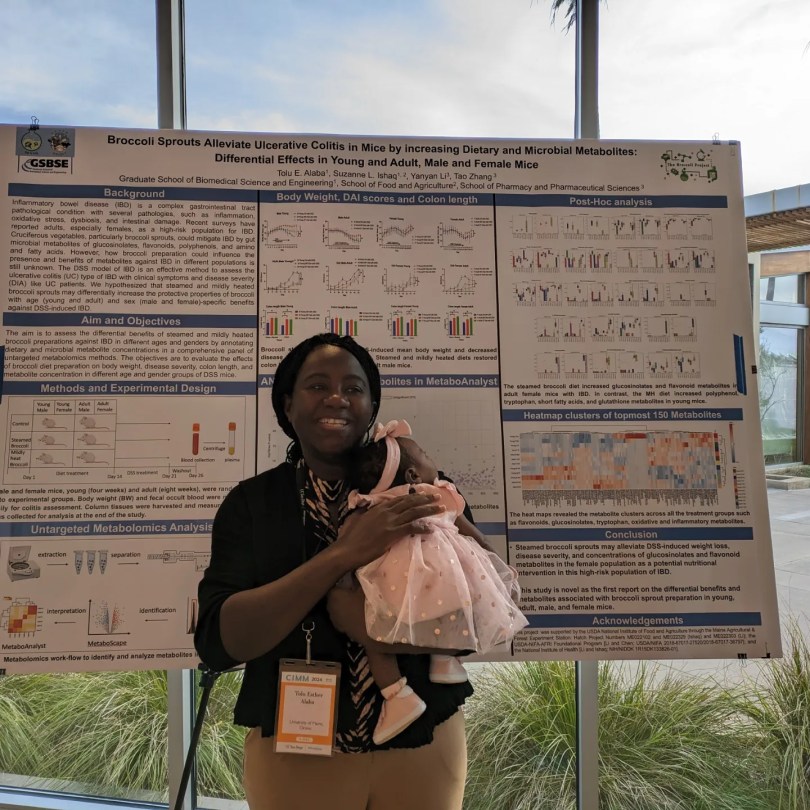
Lola Holcomb and Tolu Alaba, both PhD candidates working on broccoli sprouts and gut microbes, presented posters at CIMM. This conference features microbiome research in the contexts of health, agriculture, and environments.
A sunset in La Jolla.The view from La Jolla cliffs.Jotham Suez and I found time to check out the cherry blossoms at the Japanese Friendship Garden.Lola Holcomb presented her work on broccoli sprouts and Crohn’s Disease models.Tolu Alaba with her poster on metabolomics and new baby!
I presented my research and my work on the Microbes and Social Equity working group to students, faculty, and the DEI committee.
The views of Puget Sound are beautiful.There are glass sculptures in the garden near the base of the side needle.I visited the incredible Chihuly Glass Museum.Sean Gibbons and I went to the opening night of One Thousand Pieces.
Ayodeji Olaniyi defended his Master’s of Animal Science thesis today!! His project focused on cultures of bacteria that were isolated from the biofilms in scallop larvae hatchery tanks, to understand how they might be impacting larvae or microbial community dynamics in the tank. This was part of a series of studies and a larger collaboration on scallop health in Maine. He has previously presented at the 2024 NACE/MAS aquaculture conference for which he won a travel award from the UMaine Aquaculture research Insitute, and the 2023 UMaine Student Research Symposium where he won an award for his poster. He joined my lab in early 2022 to increase his technical research skills, and has been investigating the bacteria isolated from biofilms associated with different scallop hatchery tank systems.
He is originally from Nigeria, where he studied animal science and gathered a lot of practical experience in animal production and proper farm maintenance. He obtained a Bachelor of Science from Federal University of Agriculture in Abeokuta, Nigeria, and worked as a veterinary assistant and as a technical advisor at AlphaSage services, in Ibadan, Nigeria.
He has already begun the next phase of his career, as he started working as a research technician at a health lab in Indiana, where he has been combining his microbiology and animal health skills with molecular genetics, and adding to the list of animal systems he has worked with. And, his thirst for knowledge is still growing – we can’t wait to see where his passion for research takes him!
Events will be hosted January – December, 2024, on the last Friday of every month, 12:00 – 14:00 pm ET. Presented over Zoom.
After each talk, we will continue the discussions in an informal social meeting with MSE. All speakers and members of the audience are welcome to join the social meeting.
Hosted by: Sue Ishaq, MSE, and finacially supported by the University of Maine Institute of Medicine and the UMaine Cultural Affairs/Distinguished Lecture Committee.
Professor Jack A Gilbert earned his Ph.D. from Unilever and Nottingham University, UK in 2002, and received his postdoctoral training at Queens University, Canada. From 2005-2010 he was a senior scientist at Plymouth Marine Laboratory, UK; and from 2010-2018 he was Group Leader for Microbial Ecology at Argonne National Laboratory, a Professor of Surgery, and Director of The Microbiome Center at University of Chicago. In 2019 he moved to University of California San Diego, where he is a Professor in Pediatrics and the Scripps Institution of Oceanography, Associate Vice Chancellor for Marine Science, and Director of both the Microbiome and Metagenomics Center and the Microbiome Core Facility. Dr. Gilbert uses molecular analysis to test fundamental hypotheses in microbial ecology.
He cofounded the Earth Microbiome Project and American Gut Project. He has authored more than 450 peer reviewed publications and book chapters on microbial ecology. He is the founding Editor in Chief of mSystems journal. In 2014 he was recognized on Crain’s Business Chicago’s 40 Under 40 List, and in 2015 he was listed as one of the 50 most influential scientists by Business Insider, and in the Brilliant Ten by Popular Scientist. In 2016 he won the Altemeier Prize from the Surgical Infection Society, and the WH Pierce Prize from the Society for Applied Microbiology for research excellence. In 2017 he co-authored “Dirt is Good”, a popular science guide to the microbiome and children’s health. In 2018, he founded BiomeSense Inc to produce automated microbiome sensors. In 2021 Dr Gilbert became the UCSD PI for the National institutes of Health’s $175M Nutrition for Precision Medicine program. In 2023 he became President of Applied Microbiology International, and won the 2023 IFF Microbiome Science Prize.
Today I’ll be visiting the University of New Hampshire to present my work on diet and gut microbes, and the creation of the Microbes and Social Equity working group, and engage in discussions with faculty and students. If you’ll be on campus, come say hello and eat pizza!
Ashley Reynolds passed the exam last week to become a Registered Dietician!! She has been working towards a research career that combines health, nutriton, and now: microbes! Ashley been a PhD student with Yanyan Li and I since September 2023 working on #TeamBroccoli, and being the participant manager for the diet trial we are conductng. Prior to joining as a PhD student, she completed several degrees and training programs in nutrition:
Ashley Reynolds, M.S., R.D.
Doctor of Philosophy student, Human Nutrition and Food Sciences. Ashley is being co-advisor by Dr. Yanyan Li.
Ashley began her academic journey at the University of Maine completing her undergraduate degree in Food Science and Human Nutrition in 2021 as a Maine Top Scholar. Ashley then pursued a Master’s degree in Food Science and Human Nutrition at the University of Maine. Ashley’s master’s degree research focused on exploring intuitive eating in college students. This research aimed to understand and promote a healthy relationship with food among this demographic. She also took on the role of a teaching assistant for several nutrition classes while completing that degree. In 2023, Ashley successfully completed a dietetic internship and shortly after passed her RD exam to become a registered dietitian. Currently, Ashley is back at the University of Maine, pursuing her Ph.D. in Food Science and Human Nutrition. She is incredibly interested in nutrition therapy and is beginning her research looking into the microbiome and metabolomic pathways in the context of IBD. The current research uses both human and mouse data to determine the effects broccoli sprouts has in individuals with IBD.
I was interviewed by Dr. Mark Martin for the Microbial Matters podcast! Mark is a renowned microbiologist who has long has a presence online making science accessbile to everyone. The show features exciting and fun conversations with researchers about their work on tiny organisms with a global impact.
I’ve linked to the Youtube video version below, but you can download the video/audio for my episode, link to podcast services, and find the show notes by clicking here.
Lola Holcomb and Tolu Alaba, both PhD candidates working on broccoli sprouts and gut microbes, will be presenting posters at CIMM. This conference features microbiome research in the contexts of health, agriculture, and environments.
Alexis Kirkendall began her PhD with research funds awarded in her very first month!! Over the fall, she drafted a proposal to evaluate the probitoic potential of bacteria the we previously isolated from a broccoli sprout diet study. The funds were awarded from the Crohn’s and Colitis Foundation, and will help launch the research for Alexis’ dissertation!!
Alexis Kirkendall processing microscope slides.
Alexis Kirkendall, Jaymie Sideaway, Aakriti Sharma, Johanna Holman, and Lilian Nowak.
Logo designed by Johanna Holman.
Alexis Kirkendall processing microscope slides.
Effect of probiotic candidates on intestinal epithelium barrier function.
Summary
Broccoli sprouts contain precursors to anti-inflammatories which increase beneficial gut bacteria and reduce pathogens, and confer protective effects against colitis. Gut microbiota are critical to converting the precursor to the anti-inflammatory sulforaphane to sites of intestinal inflammation. We are currently investigating hundreds of bacterial isolates for their capacity to produce sulforaphane using gut microbiota samples from different parts of the intestines in broccoli sprout-fed mice. We are benchmarking these 806 isolates against standard strains with GSLs-metabolism. We hypothesize that previous broccoli sprout entrainment of bacteria can improve their capacity for GLR metabolism in the new hosts. Our immediate goal is to test the capacity of these isolates to produce SFN and reduce inflammation, and our long-term goal is to develop a dietary preparation of broccoli sprouts and a probiotic which have therapeutic effects against IBD in humans.
Relevance to IBD
Broccoli sprouts contain plant secondary compounds, especially glucoraphanin, which is transformed into sulforaphane, an anti-inflammatory, by gut-microbiota-sourced enzymes. High fiber diets may reduce inflammation and cancer risk, and improve quality of life for colitis patients. Our research investigates a prevention/management approach which has the potential to restore host-microbial homeostasis, but also is more affordable and accessible than a dietary supplement or medical treatment. We found that certain gut microbiota metabolizing broccoli sprout glucoraphanin to anti-inflammatories such as sulforaphane, and that a broccoli sprout-supplemented diet results in sulforaphane accumulation systemically and in gut tissues, reduced inflammatory cytokines, and beneficial changes to gut microbiota. We found that these interactions between gut microbiota and broccoli sprouts reduce susceptibility of mice to chemically induced colitis and immunologically associated enterocolitis.
Investigating the activity of bacteria isolated from tank biofilms in a hatchery system for sea scallop, Placopecten magellanicus, larvae
Adwoa Dankwa, Postdoctoral research in the Perry Lab at UMaine
Identification of bacterial communities and their association with larval mortality in Atlantic sea scallops (Placopecten magellanicus) hatchery system
Kyle Brennan, Master’s student in the Bowden Lab at UMaine
Probiotics and pathogens
Jaypee Samson, PhD Student in the Gomez-Chiarri Lab at URI
Isolation, Screening, And Selection Of Potential Pathogenic And Probiotic Bacteria From Bivalve Shellfishes
Sydney Avena, Master’s student at the Darling Marine Center
“Cracking the shell”: Lessons learned from a collaborative approach to developing hatchery production of the Atlantic sea scallop, Placopecten magellanicus
Tara Riley, Shellfish and Aquatic Resources Manager for Nanucket, MA
Saving The Seed: Nantucket Bay Scallop Seed Management Of 2023
The speaker list for the session.
Session: Coastal Systems& Scallops
Chairs: Sue Ishaq and & Phoebe Jekielek
Friday, 1:30 pm in the Newport/Washington room
Samuel Gurr
Developmental mismatch of pCO 2 levels in a second generation of northern bay scallops
Christopher Noren
Comparing growth of ear hung and lantern net cultured sea scallops, Placopecten magellanicus, over a complete grow-out cycle to determine optimal harvest timing
Phoebe Jekielek
A comparative study of sea scallop (Placopecten magellanicus) energy investment strategies in farmed and wild environments
Caitlin Cleaver
Understanding wild sea scallop (Placopecten magellanicus) larval spatial and temporal distribution in Maine to support culture and capture fisheries
Paul Rawson
Predicting larval dispersal and population connectivity of Sea Scallops, Placopecten magellanicus, in Downeast Maine.
Griffin Harkins
Review of Nantucket Island’s Bay Scallop Spat Bag Program
Speakers for the session
Ay and Sue at NACEKyle BrennanSydney AvenaAyodeji Olaniyi
Events will be hosted January – December, 2024, on the last Friday of every month, 12:00 – 14:00 pm ET. Presented over Zoom.
After each talk, we will continue the discussions in an informal social meeting with MSE. All speakers and members of the audience are welcome to join the social meeting.
Hosted by: Sue Ishaq, MSE, and the University of Maine Institute of Medicine.
Summary:
Microorganisms are critical to many aspects of biological life, including human health. The human body is a veritable universe for microorganisms: some pass through but once, some are frequent tourists, and some spend their entire existence in the confines of our body tissues. The collective microbial community, our microbiome, can be impacted by the details of our lifestyle, including diet, hygiene, health status, and more, but many are driven by social, economic, medical, or political constraints that restrict available choices that may impact our health. Access to resources is the basis for creating and resolving social equity—access to healthcare, healthy foods, a suitable living environment, and to beneficial microorganisms, but also access to personal and occupational protection to avoid exposure to infectious disease. This speaker series explores the way that microbes connect public policy, social disparities, and human health, as well as the ongoing research, education, policy, and innovation in this field.
Professor Jack A Gilbert earned his Ph.D. from Unilever and Nottingham University, UK in 2002, and received his postdoctoral training at Queens University, Canada. From 2005-2010 he was a senior scientist at Plymouth Marine Laboratory, UK; and from 2010-2018 he was Group Leader for Microbial Ecology at Argonne National Laboratory, a Professor of Surgery, and Director of The Microbiome Center at University of Chicago. In 2019 he moved to University of California San Diego, where he is a Professor in Pediatrics and the Scripps Institution of Oceanography, Associate Vice Chancellor for Marine Science, and Director of both the Microbiome and Metagenomics Center and the Microbiome Core Facility. Dr. Gilbert uses molecular analysis to test fundamental hypotheses in microbial ecology.
He cofounded the Earth Microbiome Project and American Gut Project. He has authored more than 450 peer reviewed publications and book chapters on microbial ecology. He is the founding Editor in Chief of mSystems journal. In 2014 he was recognized on Crain’s Business Chicago’s 40 Under 40 List, and in 2015 he was listed as one of the 50 most influential scientists by Business Insider, and in the Brilliant Ten by Popular Scientist. In 2016 he won the Altemeier Prize from the Surgical Infection Society, and the WH Pierce Prize from the Society for Applied Microbiology for research excellence. In 2017 he co-authored “Dirt is Good”, a popular science guide to the microbiome and children’s health. In 2018, he founded BiomeSense Inc to produce automated microbiome sensors. In 2021 Dr Gilbert became the UCSD PI for the National institutes of Health’s $175M Nutrition for Precision Medicine program. In 2023 he became President of Applied Microbiology International, and won the 2023 IFF Microbiome Science Prize.
Dr. Sonny Lee, PhD., Assistant Professor at Kansas State University. His lab website is here; “In our laboratory, computational biology approaches result in identification of functional potentials in both individual microbial organism and communities.”
“TBD”
Dr. Stephan Van Vliet, Phd.
Apr 26, 2024 12:00 PM Eastern Time
Dr. Stephan Van Vliet, Phd., Assistant Professor of Nutrition Science at Utah State University. Faculty profile here; “Dr. van Vliet’s research is performed at the nexus of agricultural and human health. He routinely collaborates with farmers, ecologists, and agricultural scientists to study critical linkages between agricultural production methods, the nutrient density of food, and human health.”
“The human microbiome and cancer risk: Opportunities for prospective studies”
Dr. Emily Vogtmann, PhD, MPH
May 31, 2024 12:00 PM Eastern Time
Dr. Emily Vogtmann is an Earl Stadtman Investigator in the Metabolic Epidemiology Branch of the Division of Cancer Epidemiology & Genetics in the National Cancer Institute. She received her B.S. in biochemistry and molecular biology and B.A. in Spanish from Michigan State University, M.P.H. in international health epidemiology from the University of Michigan, and Ph.D. in epidemiology in 2013 from the University of Alabama at Birmingham. Dr. Vogtmann’s research focuses on the association between the human microbiome and cancer risk and the evaluation of methods for collection, storage, and processing of samples and data for study of the human microbiome.
“Antimicrobial chemicals, antimicrobial resistance, and the indoor microbiome”
Dr. Erica Hartmann, PhD.
Jun 28, 2024 12:00 PM Eastern Time
Dr. Erica Hartmann, PhD., Associate Professor at Northwestern University. Dr. Erica Marie Hartmann is an environmental microbiologist interested in the interaction between anthropogenic chemicals and microorganisms, as well as bio-inspired mechanisms for controlling microbial communities.
Her career began at the Johns Hopkins Bloomberg School of Public Health, where she worked on mass spectrometry-based methods for detecting microbial enzymes necessary for bioremediation. She then moved to Arizona State University where she was the first graduate of the interdisciplinary Biological Design PhD program. She then moved to France on a Fulbright, studying microbes that degrade carcinogenic pollutants at the Commission for Atomic Energy. She began leading studies on antimicrobial chemicals and microbes found in indoor dust at the Biology and the Built Environment Center at the University of Oregon. She is currently continuing that work, as well as developing novel non-chemical antimicrobials, as an assistant professor at Northwestern University. She was recently awarded an NSF CAREER to support her work on antimicrobial textiles.
Dr. Kelly Baker, PhD., Associate Professor at the University of Iowa. Faculty page here; “Dr. Baker is a microbiologist and epidemiologist whose research aims to generate evidence on household- and community-level environmental causes of enteric pathogen transmission between humans, animals, and the environment to improve the prioritization of interventions and policies that can reduce global enteric disease burden.”
“TBD”
Dr. Davida Smyth, PhD
Aug 30, 2024 12:00 PM Eastern Time
Dr. Davida Smyth, PhD., Associate Professor at Texas A&M University – San Antonio. Her lab website is here; they research microbiology, sustainability, pedagogy, and inclusion.
“TBD”
Mary Coughter, PhD Candidate
Sep 27, 2024 12:00 PM Eastern Time
Mary Coughter, PhD Candidate at Virginia Commonwealth University.
“Fungal responses to global climate change and potential impacts to our ecosystems and public health”
Dr. Adriana Romero-Olivares, PhD.
Oct 25, 2024 12:00 PM Eastern Time
Dr. Adriana Romero-Olivares, PhD., Assistant Professor at New Mexico State University. She is a soil microbiologist who works at the intersection of ecosystem ecology and evolution with an emphasis on fungi. She did her bachelor’s degree in Biology and master’s degree in Molecular Ecology at the Autonomous University of Baja California. Dr. Romero-Olivares completed her PhD in the University of California Irvine, where she investigated the effects of global warming on the soil fungal communities of boreal forests in Alaska and consequences for decomposition and the carbon cycle. As a postdoctoral scholar in the University of New Hampshire, she studied fungal communities in temperate forests in New England experiencing long-term simulated warming and nitrogen pollution and impacts to the cycling of carbon.
Dr. Romero-Olivares is now an Assistant Professor in New Mexico State University. In her lab, they are interested in understanding how fungi respond and adapt to environmental stress. Their overall research goal is to better understand and plan for ecosystem-scale effects of global climate change.