
Last week in Guelph, Ontario, Canada, I had the unique please of “nerding out” with long-time colleagues (who I was meeting in-person for the first time) about microbial ecology questions that we wanted to answer, the science fiction we were reading, which metal band to listen to for the winter holidays, how to perform large-scale research on a tight budget, and whether the next season of whatever show had piqued our interest would be any good. The nerds-in-question are the Microbiome Stewardship research group, led by the intrepid Kieran O’Doherty, that I’ve been a part of for the past few years (and longer, counting the time we’ve collaborated through the Microbes and Social Equity working group).
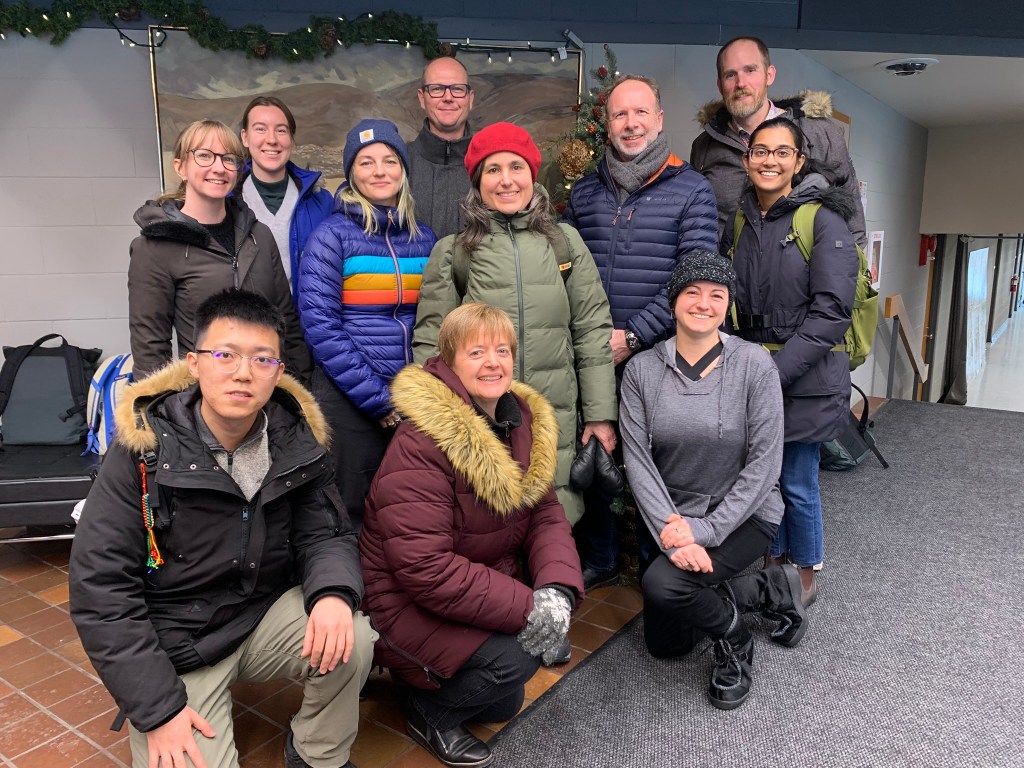
Over two days, my microbiome stewardship colleagues and I (both original team and expansion pack researchers) shaped our concept of what it means to share microbes between individuals, communities, and ecosystems; what it would mean to consider microbes as a natural resources to which everyone had an innate right to; and how it would look for public and planetary health to reduce the harm of human industry and consumerism to live more sustainably and regain all the benefits that the microbial world can provide us. Our of this meeting, we imagined what the focus of our next year or two of research will look like, as individual researchers and as a group, as we embark on the next phase of our multi-year project: case studies of how microbiome stewardship could be tailored, implemented, and evaluated. These studies will be published as they are completed and pass peer review, in a scientific journal online (announcement forthcoming).
This research ideation meeting followed two years of conversation, presentations, a symposium (sessions can be viewed here), journal articles, and a whole lot of research-, personnel-, and travel-coordination on the part of our research wrangler, Mikaela Beijbom, who has been helping us to organize our words and activities for the past 8 months.
As this tumultuous and combative year comes to a close, and as I prepare to end the “break” which was my semester-long sabbatical and return to 50-hour work weeks, the precious opportunity to let our minds wander – through work, life, and play – was a brief return to the pure joy of scientific discovery which drew us all to our careers. This year, scientists have faced hurdle after hurdle placed by the very public research institutions which were created to help us seek knowledge on behalf of the public good. Funding cuts have reduced the scientific workforce; lost precious time, expertise, and data; and disrupted the innovation and ideation process which research forges. Yet, the time I spent with colleagues last week was a reminder that knowledge generation, public good, scientific inquiry, and collaboration are values which cannot be defunded, banned, or curtailed so easily. As for our group, we’ll keep meeting (virtually, at least) throughout 2026 and beyond, for the love of science.
 The Ishaq Lab