I was invited to present a seminar in to the spring to The Wildlife Society Nutritional Ecology seminar series, and I’m honored to be part of an all-star line-up!! The talks being given from November through March, and you can find more info the TWS’ seminar announcement, which I have quoted below:
Please join The Wildlife Society’s Nutritional Ecology Working Group for our winter webinar series (https://wildlife.org/newg/webinar-series/). We will host virtual webinars at Noon (Mt Standard Time) on the second Wednesday of every month from 10 November 2021 – 9 March 2022.
This year’s webinar theme is “The digestive biome and the influence of these organisms on nutrition and condition of wildlife.” Our list of speakers this year are very diverse across many taxa!
Nutrition is vitally important for every life process of every living creature—from optimizing growth and reproduction to decreasing susceptibility to disease, predation, and death. The science of nutritional ecology links food resources available to an animal with individual- and population-level performance, as well as to habitat- and landscape-level dynamics. With data collected on nutritional requirements, food availability and quality, foraging and life history strategies under different environmental conditions, and body mass and condition, managers can predict how changes in one will impact the other. This provides a clear path for managing food resources in a way that optimizes population performance, or alternatively, for managing animal populations to optimize the health of ecosystems. As global issues such as climate change, loss of habitat, and the spread of disease and parasites increasingly impact wildlife populations, the need for understanding the degree to which populations are limited by nutrition, and how we can best manage for nutrition, increases as well.
All webinars will be held at 12:00 pm Mountain Standard Time. A flyer with zoom link will be sent out ahead of each webinar.
November 10th, 2021 – Jennifer Forbey – Boise State University. “Manipulating metabolites & microbes to manage wild herbivores”
December 8th, 2021 – Kevin Kohl – University of Pittsburgh. “Who’s in charge here?: Microbial contributions to animal physiology, ecology, and evolution”
January 12th, 2022 – Denise Dearing – University of Utah “Metabolic enabling and detoxification by gut microbes”
February 9th, 2022 – Candace Williams – San Diego Zoo Wildlife Alliance. “Gut microbiota and their role in rhinoceros infertility”
March 9th, 2022 – Sue Ishaq – University of Maine. “Moose rumen microbes and you”
Olivia Choi, a doctoral candidate in the Kamath lab at the University of Maine, has had her first scientific paper accepted for which she is the first author – a position indicative of the amount of work and organization that she put into developing this work and wrangling the large research team involved. Olivia’s graduate work is winding down as she concentrates on writing up papers and her dissertation, and she is planning on defending her PhD and looking for a postdoc in 2022 in wild animal microbiomes and ecology.
Olivia brought this 16S rRNA dataset to use in my AVS590 data analysis class back in spring 2020, of bacterial communities in different locations on birds of different species, which had been sampled as part of her dissertation work on bird migration and range changes, microbial carriage, and risk of transmission of microbes to other animals. I mentored her through analysis and preliminary manuscript writing as part of that course. The research team generously invited me to join the author team, and I continued to provide mentorship as Olivia worked through the complex task of melding various types of microbiology data.
Studies in both humans and model organisms suggest that the microbiome may play a significant role in host health, including digestion and immune function. Microbiota can offer protection from exogenous pathogens through colonization resistance, but microbial dysbiosis in the gastrointestinal tract can decrease resistance and is associated with pathogenesis. Little is known about the effects of potential pathogens, such as Salmonella, on the microbiome in wildlife, which are known to play an important role in disease transmission. Recent studies have expanded the traditional use of 16S rRNA gene amplicon data from high-level characterization of host-associated microbial communities (i.e., the microbiome) to detection of specific bacteria. Few studies, however, have evaluated the ability of high-throughput 16S rRNA gene sequencing data to detect potential bacterial pathogensin comparison with laboratory culture-based methods. To address this knowledge gap, we evaluated the utility of 16S rRNA gene sequencing for potential pathogen detection and explored the relationship between potential pathogens and microbiota. First, we compared the detection of Salmonella spp. in barn swallows (Hirundo rustica) using 16S rRNA data with standard culture techniques. Second, we examined the prevalence of Salmonella using 16S rRNA data and examined the relationship between Salmonella presence or absence and individual host factors. Lastly, we evaluated host-associated bacterial diversity and community composition in Salmonella present versusabsent birds. Out of 108 samples, we detected Salmonella in 6 (5.6%), 25 (23.1%), and 3 (2.8%) samples based on culture, unrarefied 16S rRNA gene sequencing data, and both techniques, respectively. In addition, we found that Salmonella presence and absence differed between birds based on migratory status and weight and that bacterial community composition and diversity differed between Salmonella present versus absent birds, with eleven bacterial taxa differentially abundant between the two groups. The results of this study highlight the value of high-throughput 16S rRNA gene sequencing data for bacterial pathogen detection and for examining relationships between potential pathogens and host-associated microbial communities. Further, this study emphasizes an approach using 16S rRNA gene sequencing data for simultaneously monitoring multiple pathogens in wild avian reservoirs, which is important for prediction and mitigation of disease spillover into livestock and humans.
This work was presented at a recent scientific conference:
Mark your calendars – I have been invited to give two presentations on microbes and social equity in general, and the MSE group in particular, this winter! Both events require prior registration.
You can also catch up with our recent publication as well as the other awesome work in the mSystems Special Series: Social Equity as a Means of Resolving Disparities in Microbial Exposure.
This year’s theme is “Project Earthrise:From Healing to Flourishing for People, Places and Planet”
1-7 December2021. Virtual conference, with on-demand and live-stream content. Registration is required.
From the event site: “The meeting will bring together a tremendous network of like-minded people from diverse fields whose interests span from planetary/population/ environmental health to microbial ecology/ systems biology and the deep biological mechanisms—all aiming to work in a more integrated systems framework as we seek to improve personal, environmental, economicand societal health alike. As always, our emphasis on meaningful collaborations and productive friendships as on the data and opportunities we generate.”
14 January, 2022. In person. Registration is required.
From the event site: “The goal of this symposium is to promote microbiome and microbial research in Rhode Island and the Northeast by bringing together researchers from state universities and hospitals who currently work on microbiome research or who are interested in starting microbiome research. We hope this symposium will stimulate networking and result in new collaborations, grant proposals and manuscripts. While the scope is broad to encourage participation, the general focus will be on microbiome research relevant to the State of Rhode Island such as ocean health, aquaculture and precision medicine initiatives.”
Dr. Suzanne Ishaq University of Maine School of Food and Agriculture
Title: Microbes at the Nexus of Environmental, Biological, and Social Research
Invited Keynote Speaker
Dr. Ishaq received her doctorate in Animal, Nutrition and Food Science from the University of Vermont in 2015 where her graduate study focused on the rumen microbiology of the moose. She held post-doctoral positions at Montana State University, and a research faculty position at the University of Oregon. Since 2019, her lab in Maine focuses on host-associated microbial communities in animals and humans, and, how host and microbes interact in the gut.
In addition to her research on gut microbes, Dr. Ishaq is the founder of the Microbes and Social Equity working group. This group formed to examine, publicize, and promote a research program on the reciprocal impact of social inequality and microbiomes, both human and environmental. Membership is free and open to all.
Dr. Anne Lichtenwalner graciously accepted my request to act as my mentor for the program, which formalizes the mentorship and guidance she has voluntarily offered me without hesitation in my first two years at UMaine. Anne and I have also co-mentored four undergraduate students through their senior Capstone Experience research project in Animal and Veterinary Science. Over the next year, we will meet regularly to discuss and develop my research proposals related to animal health and microbiomes.
It’s a new school year, and that means new members have joined the Ishaq Lab team – primarily undergraduates in Animal and Veterinary Sciences who are participating in research in fulfillment of their Capstone Experience senior projects. Over the next few months, we’ll be sharing more details about our new team members and their projects.
While UMaine is back on campus, not all of our students are local, so we had a hybrid meeting of in-person and Zoom attendees. We have members at Husson University in Bangor, Maine; Tufts University in Medford, Massachusetts; and Stony Brook University in Stony Brook, New York!
We use collaborative file sharing such as Google Drive, virtual meeting spaces like Zoom, and messaging platforms such as Slack for a few projects to facilitate our research and keep track of information. To help us connect more easily, and especially to help get everyone in my office on screen together, we’ll be adding more virtual conferencing equipment, too.
Most of the Ishaq Lab Fall 2021 team were able to make it to a Welcome Meeting recently.
Microbes are found everywhere, including on our skin or in our digestive tract, and the ones that hang out with us are called “host-associated”. Microbes interact with us in many different of ways, for better or for worse. To describe some common host-microbe interactions, the AVS254 Intro to Animal Microbiomes students collaborated on some playlists! Check them out on Spotify, and please note some songs are rated E for ‘explicit’ language.
Pathobiont: Ever had a microbe that you thought loved you only to have it turn on you? This playlist takes you from besties to bacteriosis.
Symbiont: Sometimes you just can’t live without your microbes. Welcome to your happily ever after, even if it is a tiny one.
Exogenous: Sometimes hosts and microbes are like ships passing in the night. This playlist tells you about the microbe that got away.
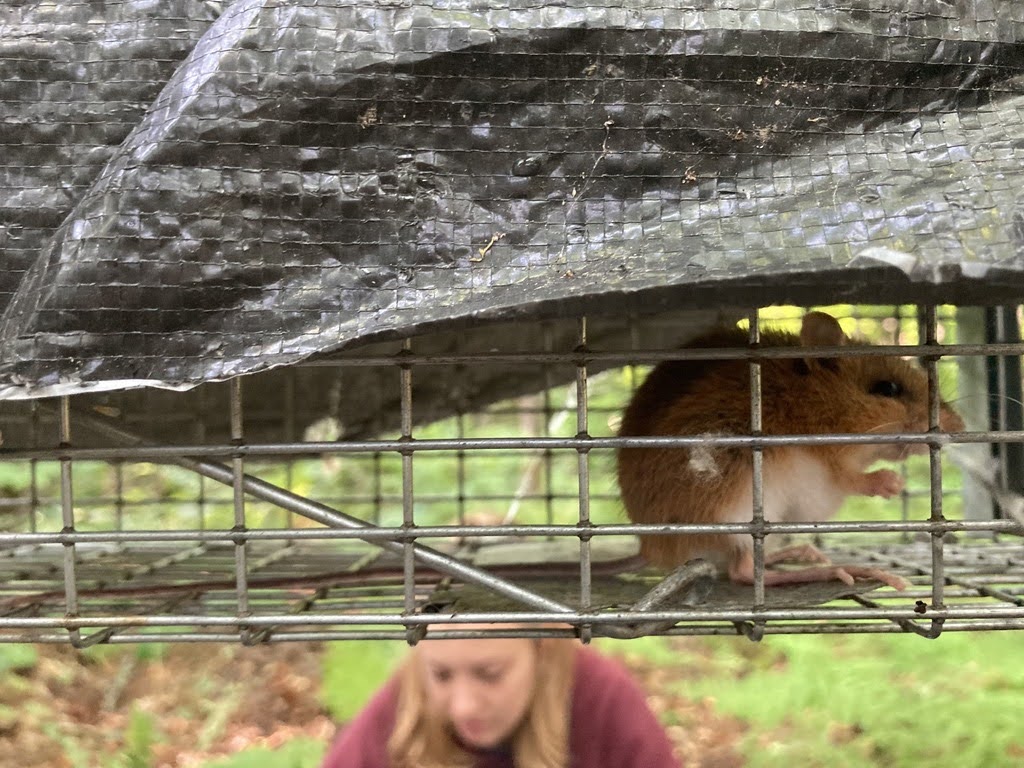
Funded by the University of Maine Rural Health and Wellbeing Grand Challenge Grant Program, this project assesses pathogen carriage by mice and flying squirrels on or near farms in several locations in Maine. We live-capture mice and flying squirrels in traps, collect the poop they’ve left in the trap, and conduct a few other health screening tests in the field before releasing them. To maximize the information we collect while minimizing stress and interference to the animals, information is being collected for other projects in the Levesque Lab at the same time. We will be collecting samples for another few weeks, and then working on the samples we collected in the lab over the fall and winter.
One of the major goals of the funding program, and this project, is to engage students in research. After a few months on the project, some of our students describe their role and their experiences so far…
Marissa Edwards
Undergraduate in Biology
Levesque Lab
Hi! My name is Marissa Edwards and I am an undergraduate research assistant with Danielle Levesque. This summer, my role has been to set traps, handle small mammals, and collect fecal and tissue samples from deer mice.
One of the skills I’ve learned this summer is how to properly ear tag a mouse. To catch mice, we set traps across UMaine’s campus as well as other parts of Maine, including Moosehead Lake, Flagstaff Lake, and Presque Isle.
During our trip to Moosehead Lake, I saw a marten for the first time (it was in one of our traps). I did not know martens existed and initially thought it was a fisher cat. It was both a cool and terrifying experience!
Elise Gudde
Master’s Student of Ecology and Environmental Sciences
Levesque Lab
Hello, my name is Elise Gudde, and I am currently a master’s student at the University of Maine in the Ecology and Environmental Sciences program. I work in Dr. Danielle Levesque’s lab studying small mammal physiology in Maine.
This summer, as a part of the squirrel project, I work to trap small mammal species in Maine, such as white footed mice, deer mice, and flying squirrels in order to determine which species have shifted their range distributions as a result of climate change. Being a part of the research team, this summer has brought me all over Maine! I have been able to travel to Orono, Greenville, New Portland, and Aroostook County to study many interesting mammals. I even got to handle an Eastern chipmunk for the first time! As a member of the animal-handling side of the research team, I also collect fecal and tissue samples from the animals. These samples are then handed off for other members of the team to research in the lab!
Rebecca French
Undergraduate in Animal and Veterinary Sciences
Ishaq Lab
In the beginning of this project, I had no idea what I was getting myself into when I began researching flying squirrels and mice. I came into it with almost no in-person lab experience, so I had a lot to learn.
So far, I have been focusing on making media on petri dishes for culturing bacterial growth and after plating fecal bacteria on said plates; discerning what that growth can be identified as.
We are using media with specific nutrients, and colored dyes, and certain bacteria we are interested in will be able to survive or produce a color change. I have also been performing fecal flotations and viewing possible eggs and parasites under a microscope. What I’ve found most fun about this project is putting into practice what I have learned only in a classroom setting thus far. It is also very satisfying to be a part of every step of the project; from catching mice, to making media, to using that media to yield results and then to be able to have a large cache of information to turn it all into a full fledged project.
Some of the media used to culture bacteria from the feces of mice and squirrels.
Joe Beale
Undergraduate in Animal and Veterinary Sciences
Kamath Lab
Hello! My name is Joseph Beale, and I am an undergraduate at the University of Maine working on the squirrel project as a part of my capstone requirement for graduation. My primary responsibility in this project is the molecular testing of samples obtained from the field. Primarily I will be working with ear punch samples taken from flying squirrels and field mice. DNA extracts from these field samples will be run via qPCR. The results of this qPCR will tell us if these squirrels are carrying any pathogens.
The pathogens we will be testing for are those found in Ixodes ticks. The qPCR panel which we will be running the extracted DNA from the ear punches on tests for Borrelia burgdorferi, the causative agent of Lyme disease, Anaplasma phagocytophilum, the causative agent of anaplasmosis, and Babesia microti, the causative agent of Babesiosis. These pathogens and respective diseases discussed are all transmitted through Ixodes ticks. Deer ticks are the most common and famous of the Ixodes genus. The Ixodes genus encapsulates hard-bodied ticks. Along with deer ticks, Ixodes ticks found in Maine include: woodchuck ticks, squirrel ticks, mouse ticks, seabird ticks, and more. Mice and squirrel are ideal hosts for these Ixodes ticks, therefore becoming prime reservoirs for these diseases. In our research, we are interested in determining the prevalence of these diseases in squirrels and mice as these hosts can spread these diseases to humans and other animals in high tick areas.
qPCR, quantitative polymerase chain reaction, allows for the quantification of amplified DNA in samples. This will help tell us if these pathogens are present in samples and in what capacity. In qPCR provided DNA strands are added to the reaction. These strands match with the genome of the intended pathogens. If the pathogens are present in our samples, the provided DNA strands will bind to the present pathogen DNA. PCR will then work to manufacture billions of copies of this present pathogen DNA.
When not working on this project, I also work in the University of Maine Cooperative Extension Diagnostic Research Laboratory as a part of the Tick Lab. In this position I have honed the molecular biology skills that I will in turn use for the squirrel project.
Hello everyone! My name is Yvonne Booker and I am a rising senior, animal and poultry science major at Tuskegee University in Tuskegee, Alabama. I am interested in animal health research, with a particular focus in veterinary medicine. I’ve always wanted to be a veterinarian, but as I progressed throughout college, I became interested in learning more about animal health and how I might help animals on a much larger and impactful scale–which led me to the REU ANEW program. Currently climate change is causing an increase in global temperatures, putting pressure on animals’ ability to interact and survive within their environment. Consequently, scientists are now attempting to understand not just how to prevent climate change, but how these creatures are adapting to this emerging challenge.
My research experience this summer is geared toward addressing this global issue. I am currently working in Dr. Danielle Levesque’s Lab, which aims to study the evolutionary and ecological physiology of mammals in relation to climate. My project involves conducting a literature review of the microbiome of mammals, to learn more about how their microbial community plays a role in how they adapt in a heat-stressed environment.
Our knowledge of vertebrate-microbe interactions derives partly from research on ectotherms. While this research paves the path for a better understanding of how organisms react to temperature changes, fewer studies have focused on how mammals deal with these extreme temperature shifts—specifically, the abrupt surge in climate change. The ability of endotherms to thermoregulate alters our knowledge of (1) how mammals create heat tolerance against these environmental challenges and (2) how this internal process alters mammals’ adaptability and physiology over time. We suggest that the microbiome plays an essential part in understanding mammals’ heat tolerance and that this microbial community can help researchers further understand the various processes that allow mammals to survive extreme temperatures.
As a student of the REU ANEW program my goal was to go out of my comfort zone and study animals in an applied fashion that would impact animal health on an environmental and ecological scale; and this program was just that! My mentor, Dr. Levesque was wonderful in guiding me through conducting this research, while giving me the independence to create my own voice. The program directors, Dr. Anne Lichtenwalner and Dr. Kristina Cammen, have also been extremely supportive throughout this entire program equipping students with the tools they need to succeed as researchers. Although research was my primary focus this summer, some of my favorite memories involved building community with the students and the staff. From weekly check-ins on zoom to virtual game nights of complete smiles and laughter, this program has been one for the books! The One Health and the Environment approach to this Research Experience for Undergraduate students has encouraged me to build on my curiosity within the field of science, and I’m looking forward to applying what I’ve learned to my career in the future.
The Microbes and Social Equity Working Group was featured in on the American Society for Microbiology (ASM) blog in a piece today: “Microbes and social equity“. The blog post describes the global rise of research, education, and policy surrounding microbiomes and how social policy can influence our exposure to them – for better or worse.
You can read more using the link below to the growing list of contributions to the special collections featured by the scientific journal mSystems; “Special Series: Social Equity as a Means of Resolving Disparities in Microbial Exposure.”
Did you know that camels have three stomach chambers or that they have to throw up their own food in order to digest their food properly? Have you felt excluded from science spaces before? Then this blog post is for you!
Allow me to introduce myself.
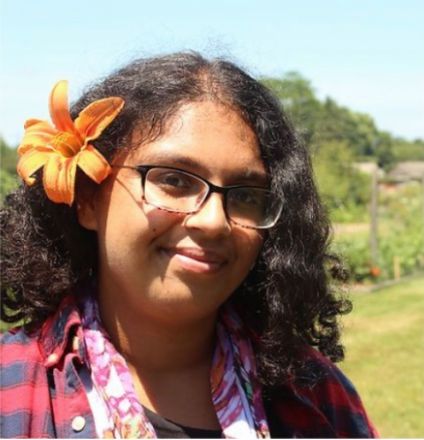
My name is Myra, and I am a rising senior at SUNY Stony Brook University, where my major is Ecosystems and Human Impact, with a biology minor. In a nutshell, my major is interdisciplinary with a focus on conservation and ecology within human societies.
If I were to describe my college experience in one word I’d pick “surprises”. I never actually saw myself being a scientist in my middle and high school years. I found it hard to care about abstract concepts or theories that felt so far removed from humanity, particularly minority communities. But, during college I found myself falling in love with environmental studies, and along with it, the beautiful complexities that come with being human in our increasingly anthropogenic world.
At UMaine, we focus on the One Health Initiative, which views the health of humans, animals, and the environment as interconnected. When COVID-19 caused everyone to go into lockdown, I was fortunate to find this farm was looking for crew members, with a focus on food security. While certainly not how I planned to spend the summer of 2020, farming for underserved communities is where I saw how impactful One Health was. Organic farmers commonly use plastic mulch as a popular alternative to pesticides for weed suppression. At my home institution, I lead a project on the impacts of microplastics on earthworm health, an Ecotoxicology lab (students of the lab affectionately gave it the nickname “the Worm lab”). We use earthworm health as an indicator of soil health, which in turn is crucial for crop flourishment. The Worm Lab and farming emboldened me to pursue science and, ergo, look for this REU!
At UMaine, I am a member of the Ishaq Lab where I work on the camel metagenome project. Basically, scientists in Egypt raised camels on different diets, then used samples from their feces to sequence their microbial genome. These microbes live in the camel rumen (part of the camel stomach), and help the camel digest their food. What I do with Dr. Ishaq’s lab is, I perform data analysis on these sequences to see how the microbial gene profile changes with different diets. Camels are essential for transportation and food for the communities that rely on them, so finding the most efficient feed for them is important. Camels also release methane depending on their diet so it’s possible humans could control methane production of camels through their diet.
Being a part of the REU ANEW program for 2021 definitely has been an interesting experience, since it is the first time this program has been conducted virtually. Even though I would have loved to have seen everyone in person and spent time in lovely Orono, Maine, I’m glad for the research opportunity as it has further solidified my love of research and the One Health initiative.
Myra’s poster for the REU Research Symposium, virtual, Aug 13, 2021.
Live discussion date: “Thursday, August 5th, 2021”
Live discussion time: 9:30 AM – 10:30 AM Pacific Time
Microbiomes — environmental, human and other organismal symbionts — are increasingly seen as critical physiological, developmental and ecological mediators within and among living things, and between the latter and our abiotic environments. Therefore, it is no surprise that microbial communities may be altered, depleted or disrupted by social and economic determinants. Social inequality entails concrete alterations and differentiation of microbial communities among social groups, by way of such factors as nutritional access, environmental pollutants or green space availability, often to the detriment of human and ecosystem health. This special session will be organized as a panel discussion with break-out groups in order to provide participants the opportunity to discuss the ways in which social inequity interacts with microbiomes, and how we might intervene as scientists and communities to promote favorable microbiomes while advancing social equality. We hope to generate research questions and actionable items.Panel speakers: Michael Friedman, Naupaka Zimmerman, Justin Stewart, Monica Trujillo, Sue Ishaq, Sierra Jech, Jennifer Bhatnagar, and Ariangela Kozik ESA meeting program: https://www.esa.org/longbeach/
Registration to the ESA meeting is required to attend this event.






 The Ishaq Lab