Today there is another installment in the spring 2022 Microbes and Social Equity speaker series! Each week, we’ll hear from a researcher who will share their work and perspective on how microbes are involved in all aspects of our lives, and how those microbes can affect individuals, communities, and ecosystems.
This series will run from Jan 19 – May 4, Wednesdays at 12:00 – 13:00 EST. These are presented over Zoom, and open to researchers, practitioners, students, and the public. Registration is free, and required for each individual seminar you would like to attend. You can find the full speaker list, details, and registration links for each seminar in the series here.
“Antimicrobial Resistance: Our Next Epidemic of Inequality?”
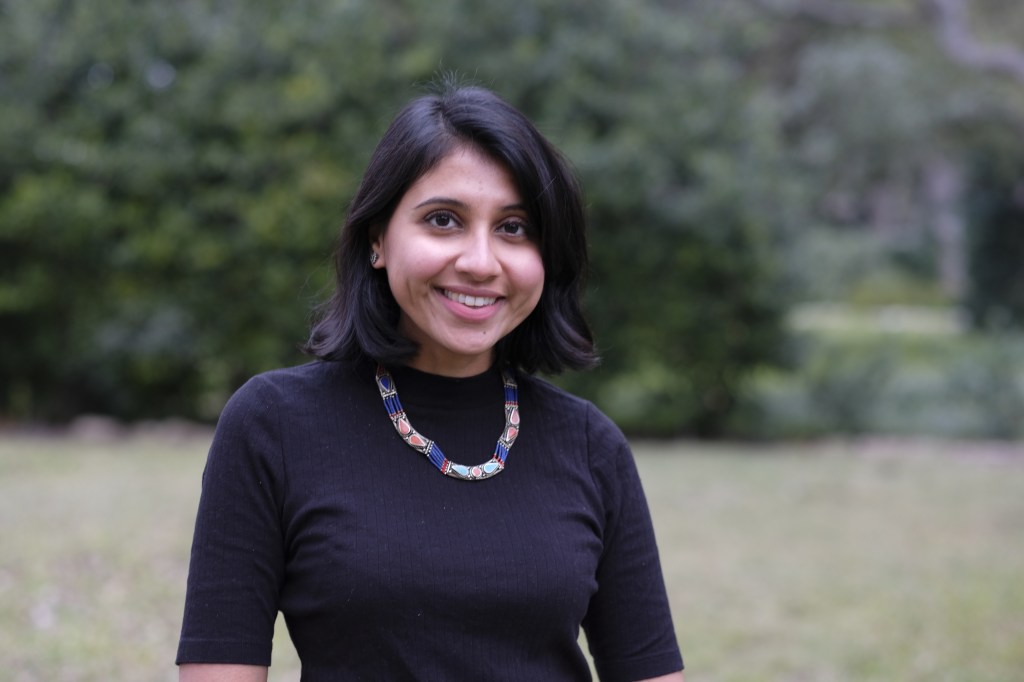
Dr. Maya Nadimpalli. Photo courtesy of Dr. Nadimpalli.
About the speaker: Dr. Maya Nadimpalli is a Research Assistant Professor in the Department of Civil and Environmental Engineering at Tufts University, and a core faculty member at Tufts’ Stuart B. Levy Center for the Integrated Management of Antimicrobial Resistance. She received her B.A. & Sc. in Environment from McGill University, Canada, and her M.S. and Ph.D. at the Gillings School of Global Public Health at the University of North Carolina at Chapel Hill. She uses genomic and epidemiological approaches to understand how exposures to food, animals, and the environment can impact human colonization and infection with antibiotic-resistant bacteria, particularly in low-resource settings. She has led research studies in rural North Carolina and in Southeast Asia, and is currently leading two studies focused on children’s health in urban informal settlements of Lima, Peru. She will be joining Emory University’s Rollins School of Public Health as an Assistant Professor this May.
I sat down with Professor and Designer John Thackara a few weeks ago to talk about microbes, social equity, and how designers can become practitioners of microbial stewardship. You can watch/listen to our conversation and join in here: “Microbes, social equity, and how designers can help.”
Today there is another installment in the spring 2022 Microbes and Social Equity speaker series! Each week, we’ll hear from a researcher who will share their work and perspective on how microbes are involved in all aspects of our lives, and how those microbes can affect individuals, communities, and ecosystems.
This series will run from Jan 19 – May 4, Wednesdays at 12:00 – 13:00 EST. These are presented over Zoom, and open to researchers, practitioners, students, and the public. Registration is free, and required for each individual seminar you would like to attend. You can find the full speaker list, details, and registration links for each seminar in the series here.
“20 important questions in microbial exposure and social equity + recent work on urban greenspace microbiomes”
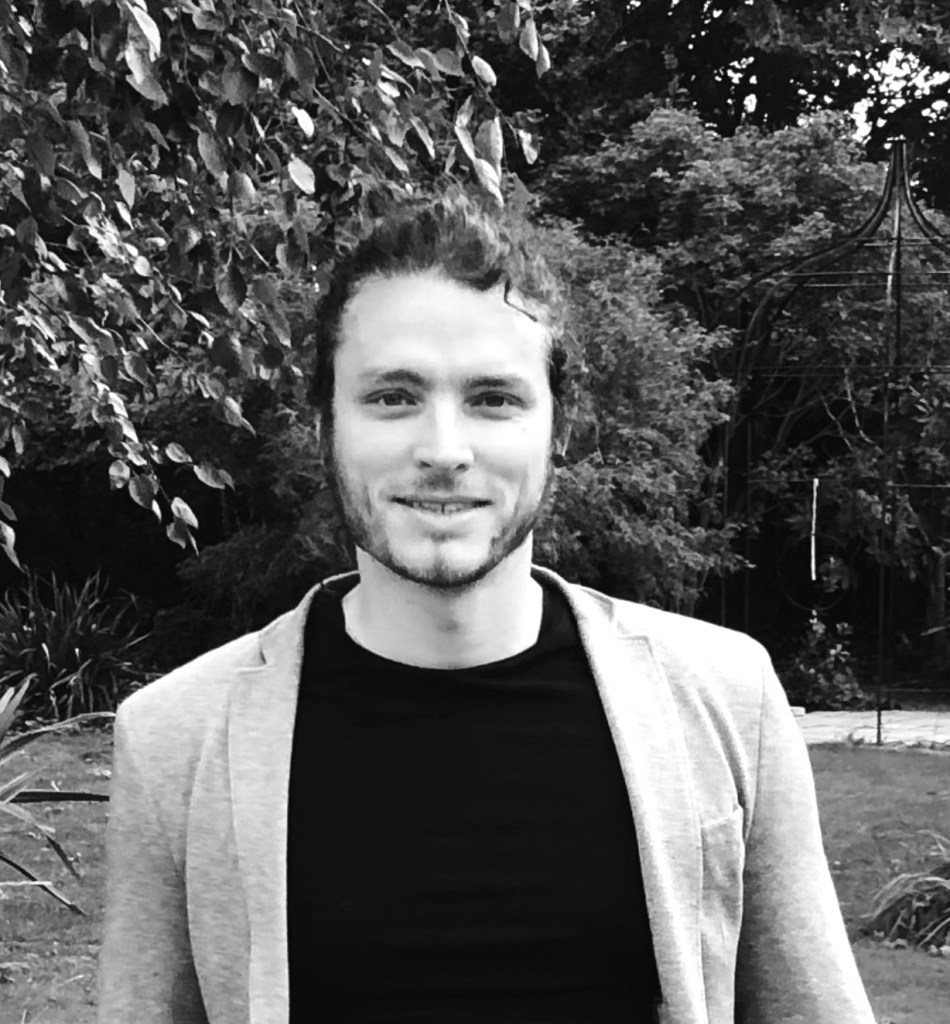
About the speaker: Dr. Jake Robinson is an ecologist and researcher. He recently completed a PhD at the University of Sheffield, UK. His academic interests lie at the intersection of microbial ecology, ecosystem restoration and social research. He will soon be publishing a book called Invisible Friends, which is all about our extraordinary relationship with microbes, and how they shape our lives and the world around us.
The Ishaq Lab is welcoming a new master’s of science student this month: Ayodeji Olaniyi! He has a background in animal science and production, and adding research skills in animal health. While still under development, Ayo’s master’s project will involve protozoal pathogens, the gut microbiome, health, and management conditions in livestock.
Ayodeji Olaniyi
Ayodeji Olaniyi, B.S.
Master’s of Science, Animal Science
Ayodeji is a graduate student in the animal science department. An aspiring and self-motivated student, with practical experience in animal production and proper farm maintenance. Spurred by the needs to improve the production of meat/livestock in Africa and ensure good health and environmental conditions for animals. Also an Animal Science Enthusiast that seeks acquisition of knowledge and the practical use of such knowledge to bridge the gap between research findings and solving Animal production challenges. He joined the lab in 2022 tracking the trends in the spread of Cryptosporidium parvum at the Witter farm. Ayodeji is an international student from Nigeria and he is looking forward to all UMaine has to offer in this next phase of his life.
Today there is another installment in the spring 2022 Microbes and Social Equity speaker series! Each week, we’ll hear from a researcher who will share their work and perspective on how microbes are involved in all aspects of our lives, and how those microbes can affect individuals, communities, and ecosystems.
This series will run from Jan 19 – May 4, Wednesdays at 12:00 – 13:00 EST. These are presented over Zoom, and open to researchers, practitioners, students, and the public. Registration is free, and required for each individual seminar you would like to attend. You can find the full speaker list, details, and registration links for each seminar in the series here.
“Diet, Microbial Metabolites, and Cancer Disparities”.
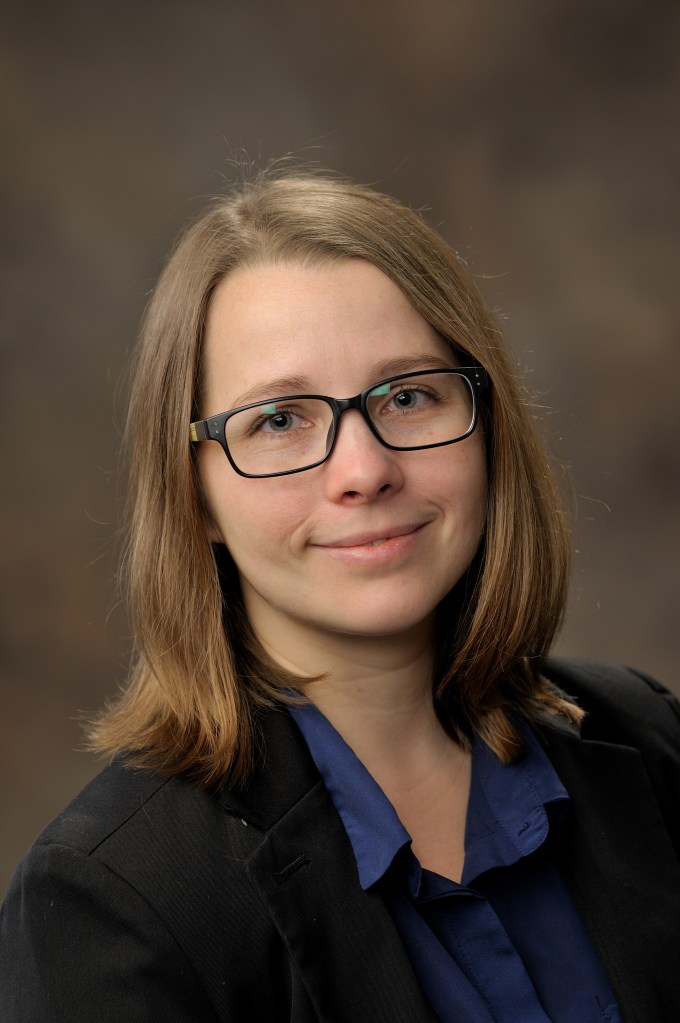
About the speaker: Dr. Wolf completed her PhD in Nutritional Sciences with a focus on microbial sulfur metabolism at the University of Illinois at Urbana-Champaign in December 2018. During her graduate training, she simultaneously completed the Didactic Program in Dietetics and became a Registered Dietitian Nutritionist. Since that time, she has been a postdoctoral fellow at the Cancer Education and Career Development Program NCI T32 at the University of Illinois at Chicago. Her research investigates microbial mechanisms of cancer health disparities related to inequitable food access and quality. To do so, she uses techniques in molecular microbiology and novel enzyme characterization to understand the metabolic capacity of the human gut microbiome. With her expertise in nutrition and dietetics, she then examines whether dietary intake shifts microbial ecology and function toward the formation of deleterious microbial metabolites contributing to cancer risk. Given that dietary behaviors are shaped by the social and structural environment, her future work will explore relationships between the neighborhood food environment and microbial metabolism in order to mitigate the inequitable burden of cancer in certain groups.
Colleagues of mine at Montana State University are looking for a graduate student in agricultural weed ecology! Details of the project, application, and contact information can be found in the file below.
Please note, this position IS NOT in the Ishaq Lab, I am distributing it on their behalf.
This Wednesday there is another installment in the spring 2022 Microbes and Social Equity speaker series! Each week, we’ll hear from a researcher who will share their work and perspective on how microbes are involved in all aspects of our lives, and how those microbes can affect individuals, communities, and ecosystems.
This series will run from Jan 19 – May 4, Wednesdays at 12:00 – 13:00 EST. These are presented over Zoom, and open to researchers, practitioners, students, and the public. Registration is free, and required for each individual seminar you would like to attend. You can find the full speaker list, details, and registration links for each seminar in the series here.
“The role of microbiomes in sustainable agriculture and food systems integrated with human health”.
Dr. Franck Carbonero. Photo borrowed from WSU faculty page.
About the speaker: Dr. Frank Carbonero, PhD, is an Assistant Professor in the Department of Nutrition and Exercise Physiology at Washington State University Elson S. Floyd College of Medicine.
He received his Bachelor’s of Science in Biology from Universite Joseph Fourier, in France, his Master’s of Science degree in Ecology from Universite Blaise Pascal, in France, and his Ph.D. degree in Microbiology from the University of Warwick, in the United Kingdom. After that, he was a Postdoctoral Research Associate at the University of Illinois Urbana-Champaign for three years, and has served as an Assistant Professor in the Department of Food Science at the University of Arkansas since 2013. His research program is focused on nutrition and its impact on the human and animal gut microbiome, with focus on dietary bioactives, including from berries.
Today there is another installment in the spring 2022 Microbes and Social Equity speaker series! Each week, we’ll hear from a researcher who will share their work and perspective on how microbes are involved in all aspects of our lives, and how those microbes can affect individuals, communities, and ecosystems.
This series will run from Jan 19 – Apr 27, Wednesdays at 12:00 – 13:00 EST. These are presented over Zoom, and open to researchers, practitioners, students, and the public. Registration is free, and required for each individual seminar you would like to attend. You can find the full speaker list, details, and registration links for each seminar in the series here.
About the speaker: Dr. Katherine (Katie) Amato is an Assistant Professor of Anthropology at Northwestern University. From her faculty profile page: “Katie Amato is a biological anthropologist studying the gut microbiota in the broad context of host ecology and evolution. She is particularly interested in understanding how changes in the gut microbiota impact human nutrition and health in populations around the world, especially those with limited access to nutritional resources.”
Talk summary: The talk explores how the microbiome is likely to be a mediating pathway that translates disparities in people’s environments to disparities in health outcomes. It outlines the current state of the literature in this area and broadly suggests ways to move forward. Dr. Amato’s recent publication on this topic can be found here.
Today kicks off the spring 2022 Microbes and Social Equity speaker series! Each week, we’ll hear from a researcher who will share their work and perspective on how microbes are involved in all aspects of our lives, and how those microbes can affect individuals, communities, and ecosystems.
This series will run from Jan 19 – Apr 27, Wednesdays at 12:00 – 13:00 EST. These are presented over Zoom, and open to researchers, practitioners, students, and the public. Registration is free, and required for each individual seminar you would like to attend. You can find the full speaker list, details, and registration links for each seminar in the series here.
“Microbes at the nexus of environmental, biological, and social research”
About the speaker: Dr. Sue Ishaq is an Assistant Professor of Animal and Veterinary Science at the University of Maine, in the School of Food and Agriculture. She received her doctorate in Animal, Nutrition and Food Science from the University of Vermont in 2015 where her graduate study focused on the rumen microbiology of the moose. She held post-doctoral positions at Montana State University, and a research faculty position at the University of Oregon. Since 2019, her lab in Maine focuses on host-associated microbial communities in animals and humans, and in particular, how host and microbes interact in the gut. In addition to her research on gut microbes, Dr. Ishaq is the founder of the Microbes and Social Equity working group. This group formed to examine, publicize and promote a research program on the reciprocal impact of social inequality and microbiomes, both human and environmental.
Registration is now open for the Microbes and Social Equity speaker series, which is in its second year this spring. Hurry, the first seminar is on Wednesday, Jan 19th!
Microorganisms are critical to many aspects of biological life, including human health. The human body is a veritable universe for microorganisms: some pass through but once, some are frequent tourists, and some spend their entire existence in the confines of our body tissues. The collective microbial community, our microbiome, can be impacted by the details of our lifestyle, including diet, hygiene, health status, and more, but many are driven by social, economic, medical, or political constraints that restrict available choices that may impact our health.
Access to resources is the basis for creating and resolving social equity—access to healthcare, healthy foods, a suitable living environment, and to beneficial microorganisms, but also access to personal and occupational protection to avoid exposure to infectious disease. This speaker series explores the way that microbes connect public policy, social disparities, and human health, as well as the ongoing research, education, policy, and innovation in this field.
“The Microbes and Social Equity Speaker Series 2022”
Spring 2022; Jan 19 – Apr 27, Wednesdays at 12:00 – 13:00 EST
Presented over Zoom. Registration is free, and required for each seminar.
Hosting Organization: MSE and the University of Maine Institute of Medicine
“Microbes at the nexus of environmental, biological, and social research”
About the speaker: Dr. Sue Ishaq is an Assistant Professor of Animal and Veterinary Science at the University of Maine, in the School of Food and Agriculture. She received her doctorate in Animal, Nutrition and Food Science from the University of Vermont in 2015 where her graduate study focused on the rumen microbiology of the moose. She held post-doctoral positions at Montana State University, and a research faculty position at the University of Oregon. Since 2019, her lab in Maine focuses on host-associated microbial communities in animals and humans, and in particular, how host and microbes interact in the gut. In addition to her research on gut microbes, Dr. Ishaq is the founder of the Microbes and Social Equity working group. This group formed to examine, publicize and promote a research program on the reciprocal impact of social inequality and microbiomes, both human and environmental.
Dr. Katie Amato. Photo borrowed from Northwestern University
About the speaker: Dr. Katherine (Katie) Amato is an Assistant Professor of Anthropology at Northwestern University. From her faculty profile page: “Katie Amato is a biological anthropologist studying the gut microbiota in the broad context of host ecology and evolution. She is particularly interested in understanding how changes in the gut microbiota impact human nutrition and health in populations around the world, especially those with limited access to nutritional resources.”
Talk summary: The talk explores how the microbiome is likely to be a mediating pathway that translates disparities in people’s environments to disparities in health outcomes. It outlines the current state of the literature in this area and broadly suggests ways to move forward. Dr. Amato’s recent publication on this topic can be found here.
About the speaker: Dr. Jake Robinson is an ecologist and researcher. He recently completed a PhD at the University of Sheffield, UK. His academic interests lie at the intersection of microbial ecology, ecosystem restoration and social research. He will soon be publishing a book called Invisible Friends, which is all about our extraordinary relationship with microbes, and how they shape our lives and the world around us.
About the speaker: Dr. Douglas Call is a Regents Professor at the Paul G. Allen School for Global Health, in Molecular Epidemiology, and the Associate Director for Research and Graduate Education, at Washington State University.
Dr. Kristina Lyons. Photo reused from the University of Pennsylvania faculty page.
About the speaker: Dr. Kristina Lyons is an Assistant Professor of Anthropology and with the Penn Program in Environmental Humanities at the University of Pennsylvania. She also holds affiliations with the Center for Experimental Ethnography and the Center for Latin American and Latinx Studies. Kristina’s current research is situated at the interfaces of socio-ecological conflicts, science, and legal studies in Colombia and Latin America. Her manuscript, Vital Decomposition: Soil Practitioners and Life Politics (Duke 2020), was awarded honorable mention by the Bryce Wood Book Award committee from the Latin American Studies Association. She has also collaborated on the creation of soundscapes, street performances, photographic essays, graphic novels, popular education audiovisual projects, community radio programs, digital storytelling platforms, and various forms of literary writing.
Talk summary: How does attention to and stewardship of soils point to alternative frameworks for living and dying? Dr. Lyons explores the way life strives to flourish in the face of violence, criminalization, and poisoning produced by militarized, growth-oriented development in the midst of the U.S.-Colombia war on drugs.
Title TBD
Dr. Travis J. De Wolfe, PhD
Date TBD, 2022, 12:00 – 13:00 EST.
About the speaker: Dr. Travis J. De Wolfe, Ph.D. is a Postdoctoral Research Fellow in the Department of Pediatrics at the University of British Columbia.
About the speaker: Dr. Maya Hey is a postdoctoral researcher with the Future Organisms project as part of an international trans-disciplinary team investigating Responsible Research and Innovation (RRI). She brings a humanities and social science perspective to the life sciences, calling upon feminist, intersectional, and multispecies approaches to map out human response-ability in a more-than-human world. She is vested in questions related to fermentation, particularly as they relate to discourses of health, the rhetoric of microbiomes, and how we come to know microbial life.”





 The Ishaq Lab