2024 Year in Review

The Ishaq Lab celebrated 5 years at UMaine this fall, which coincided with many achievements for lab members and early tenure for me! Here are some highlights, but you can check out previous blog posts in the archives for more detail. As usual, I have divided the summary into sections: Team, Research, Publications, Presentations, MSE, Teaching, Website, and Looking Ahead.

Team
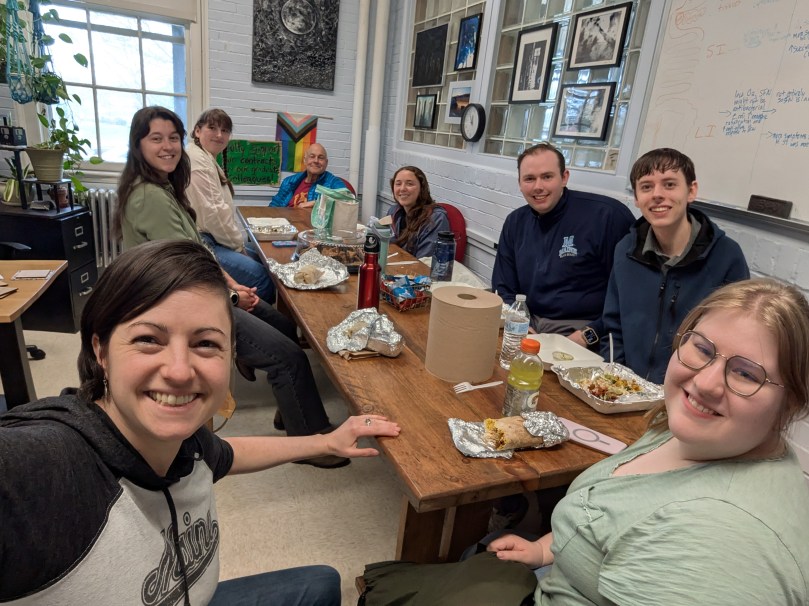
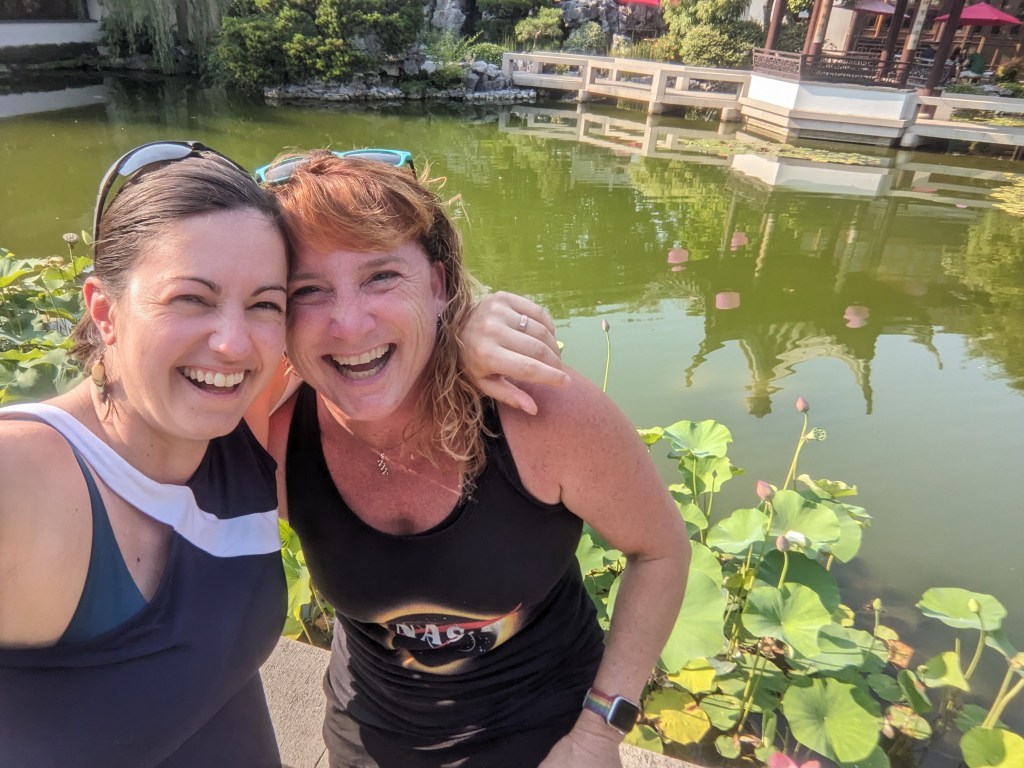
  • Sue Ishaq and Alexis Kirkendall posing for a photo in a stairwell.
  • Tolu Esther Alaba is standing in front of a science conference poster, smiling, and holding her infant.

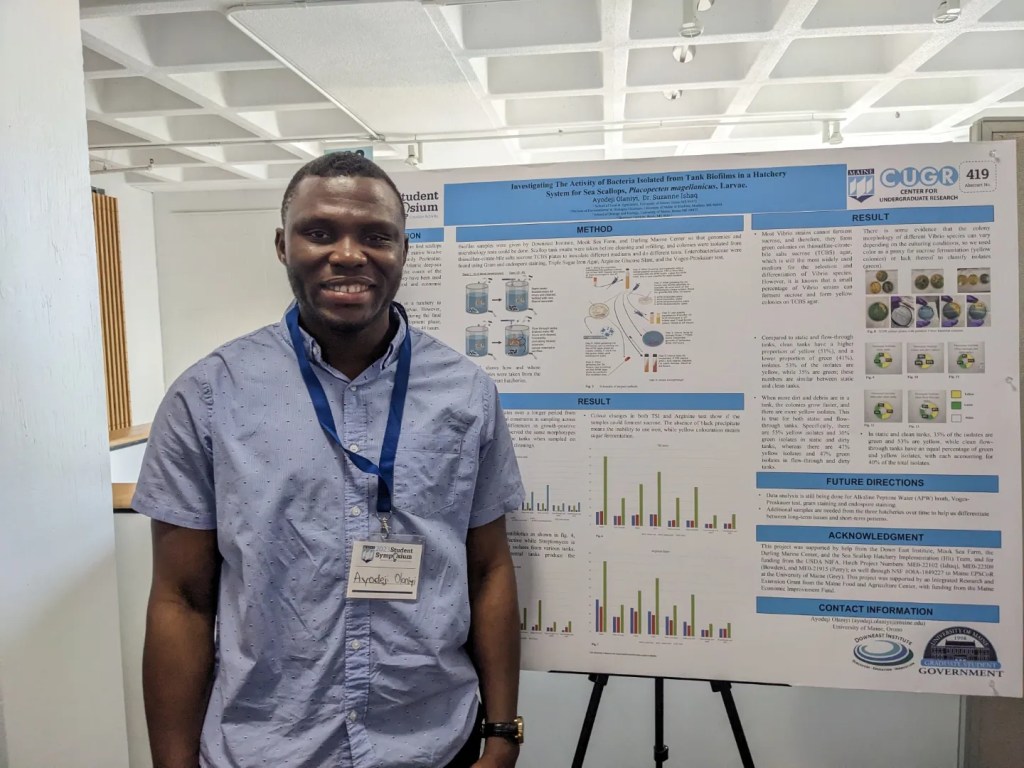
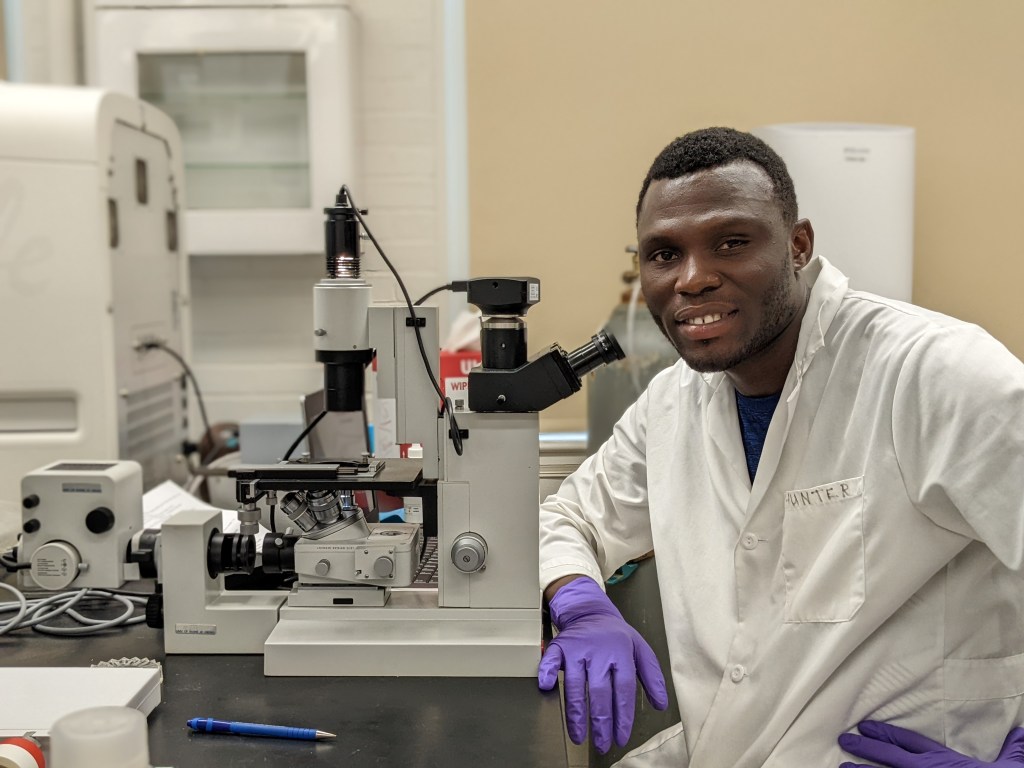
Ayodeji Olaniyi defended his Master’s of Animal Science on bacteria in scallop hatchery tanks in February, and has been working in lab-based research ever since.

Tolu Alaba defended her PhD in Biomedical Science over the summer, after her first review with the lab was published. She presented her work several times over the year, and continues to collaborate with the lab on several more manuscripts in preparation. Tolu recently began a postdoctoral position at a research lab at Cedars-Sinai, and continues to research how diet can be used to resolve disease.

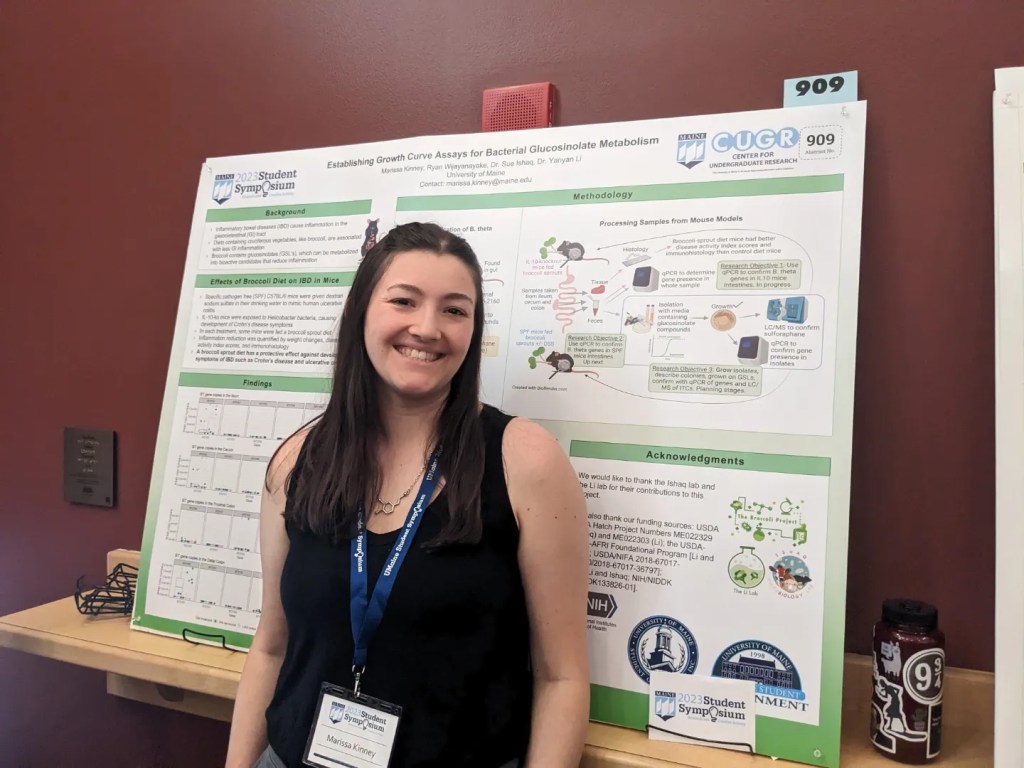
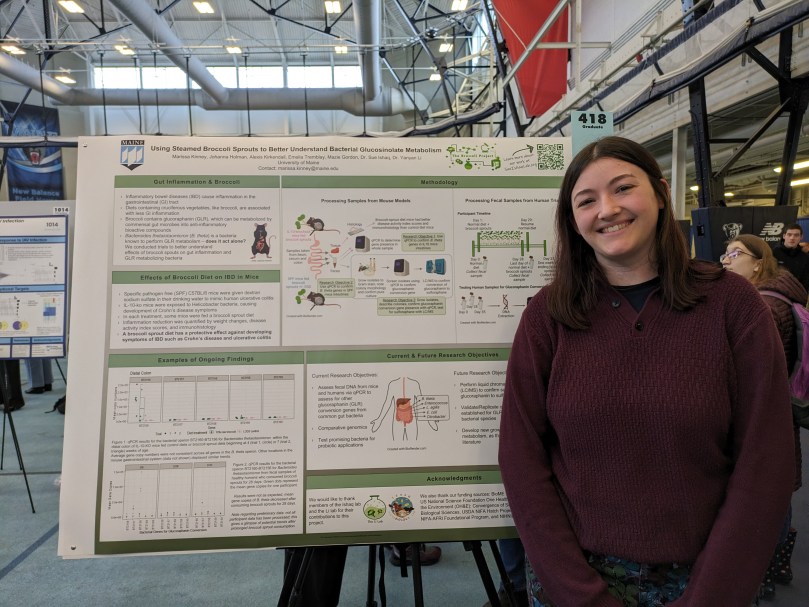
Marissa Kinney just defended her Master’s of Microbiology a few weeks ago, and is looking for lab-based microbiology research positions here in Maine. She’ll also continue to collaborate with the lab on several manuscripts in preparation.

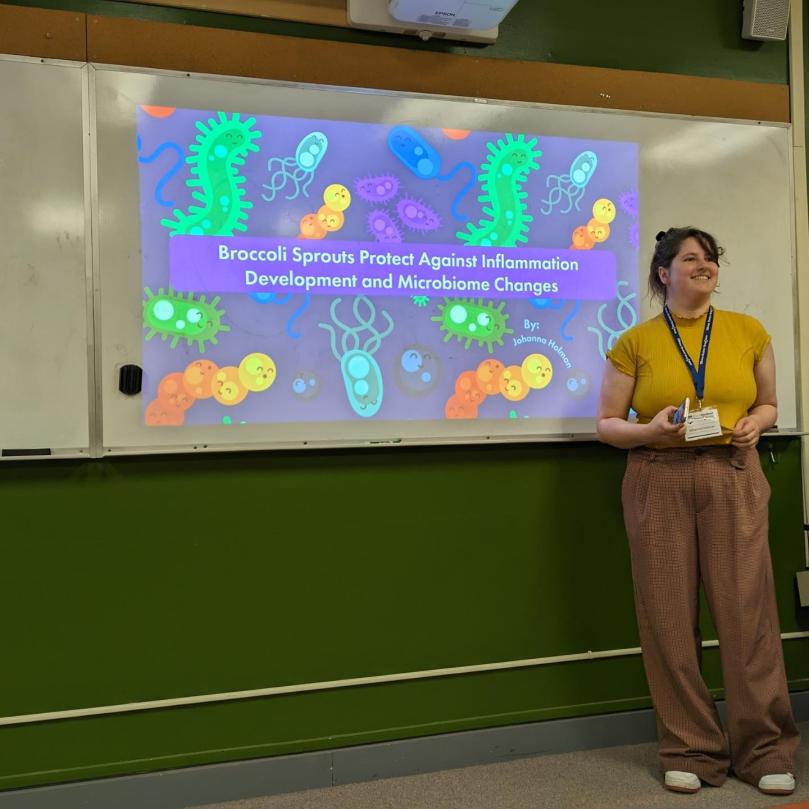
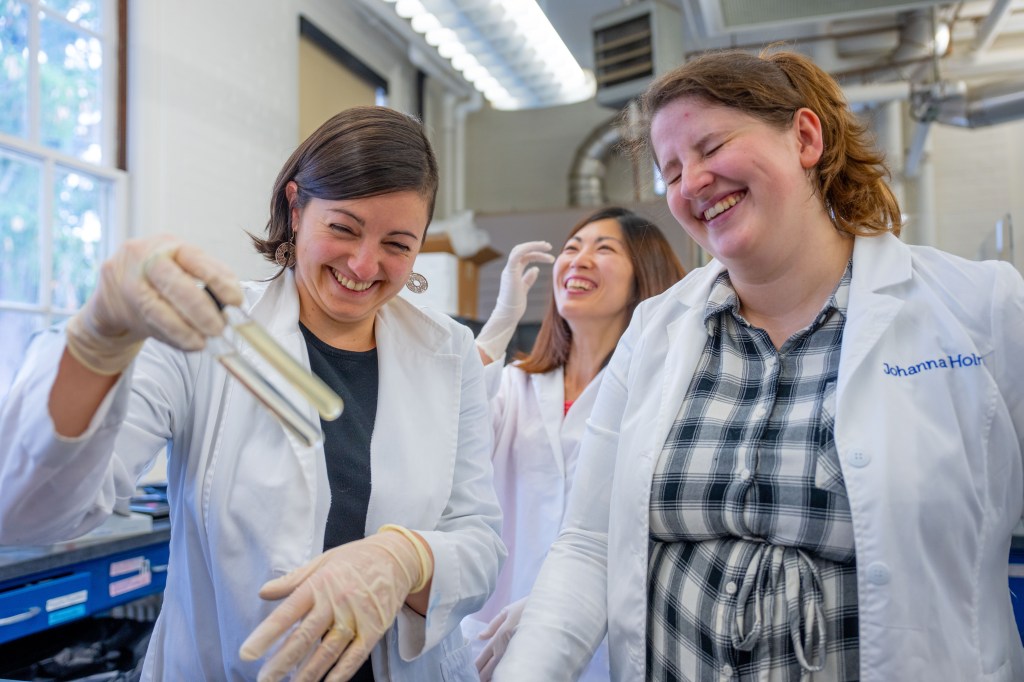
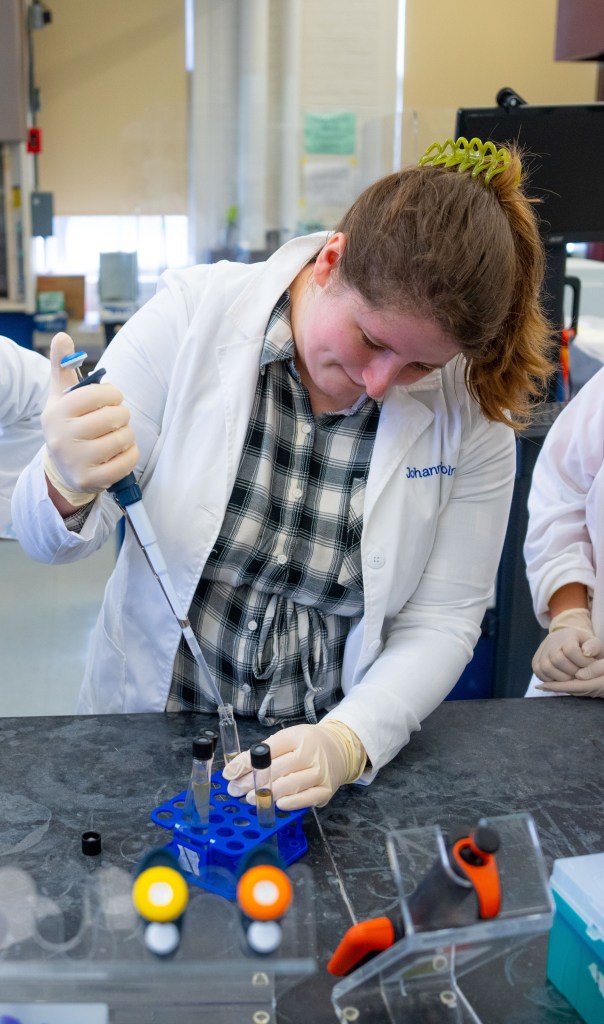
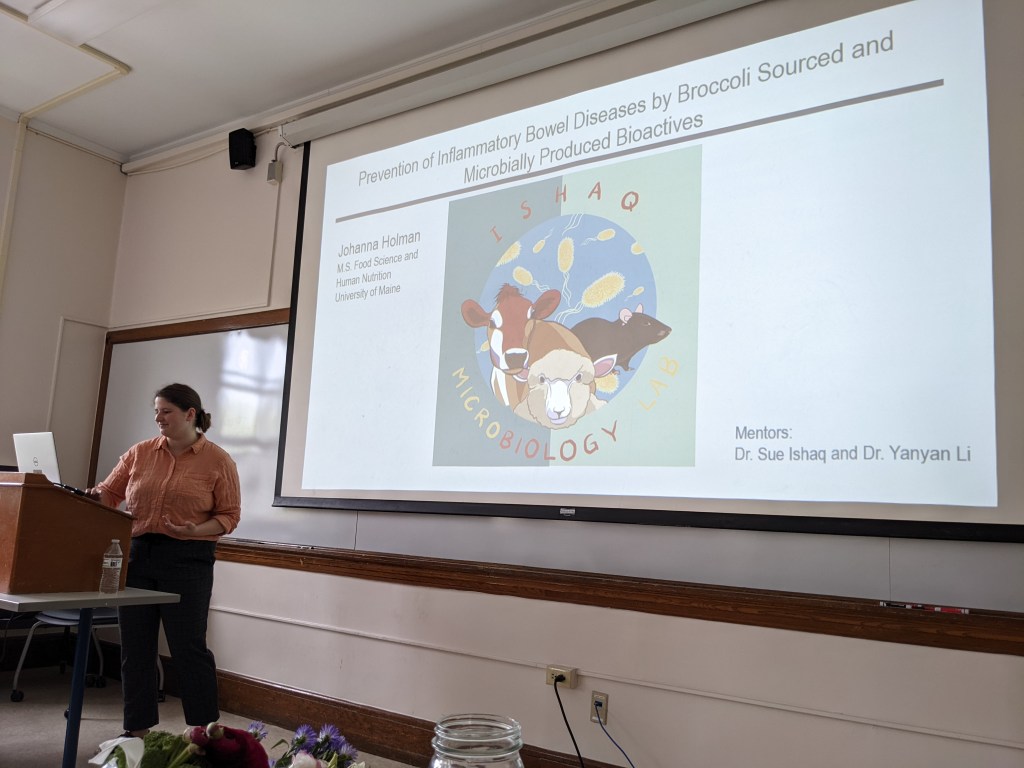
Johanna Holman advanced from being a PhD student to being a PhD candidate in the Microbiology program, when she passed her comprehensive exam this fall. She presented her work several times this year, and creatively modified her poster to fit a smaller-than-expected board – but it caught a lot of passerby’s attention! This year, Johanna wrote two versions of a research proposal which are under review for federal funding – keep your fingers crossed!

Heather Richard is preparing for her comprehensive exam next month, in order to advance to PhD candidacy in the Ecology and Environmental Sciences program. She’s been analyzing sequencing data from hundreds of samples from salt marsh sediments in Maine to understand how microbial communities affect carbon sequestration.

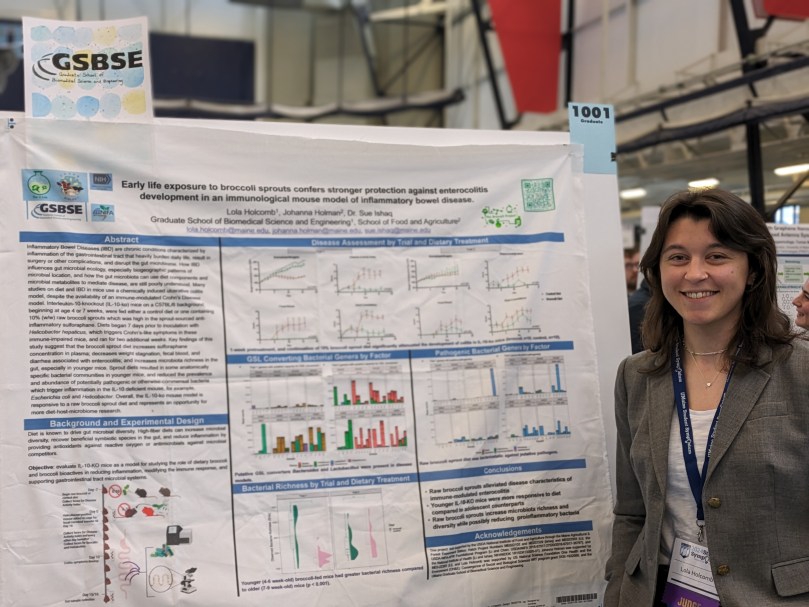
Lola Holcomb, PhD candidate in the GSBSE program, was featured in UMaine news, and won a graduate student research award from the Bioscience Association of Maine!! Over the next few months, she’ll focus on characterizing candidate anti-inflammatory bacterial species and genes in the gut microbiome, using whole genome sequence data from bacteria we previously isolated during a broccoli sprout diet study. Lola also wrote two different research proposals this year, one of which is still under review, but has accelerated her timeline and is planning to defend her dissertation in April!

Alexis Kirkendall started her first year as a PhD student in the Microbiology Program, but she has already won two research awards: a Student Research Award from the Crohn’s and Colitis Foundation in 2024, and a Graduate Student Research Award from the Bioscience Association of Maine for 2025!! Over the next year, she’ll focus on culturing bacteria that we previously isolated from mice consuming a steamed broccoli sprout diet, to test their capacity to grow amongst the gut pathogen Helicobacter pylori and produce the anti-inflammatory sulforaphane under different conditions.

Ashley Reynolds, PhD student in Food and Human Nutrition program, passed her exam to become a Registered Dietician! In her second year, Ashley has been developing her thesis proposal and is exploring adding a new facet to the lab’s collaborative research on broccoli sprouts by investgiating the effect on inflammation in other parts of the body.

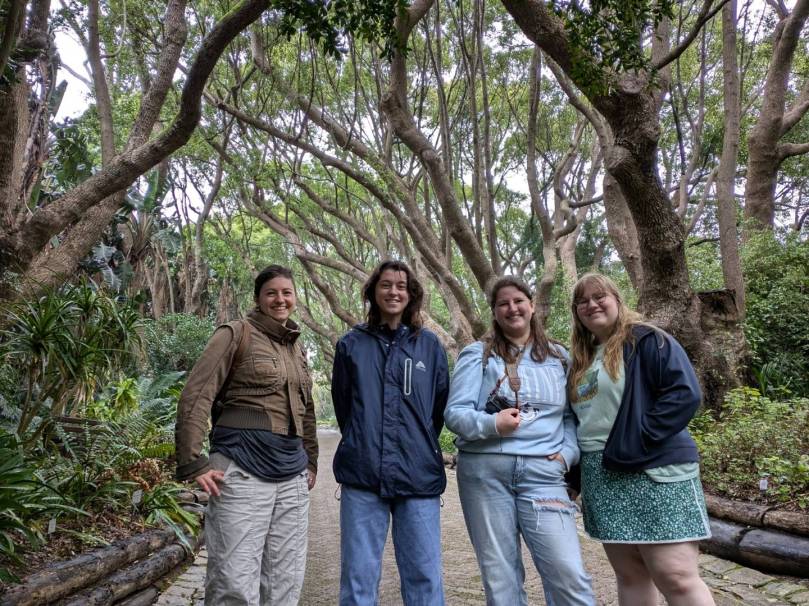
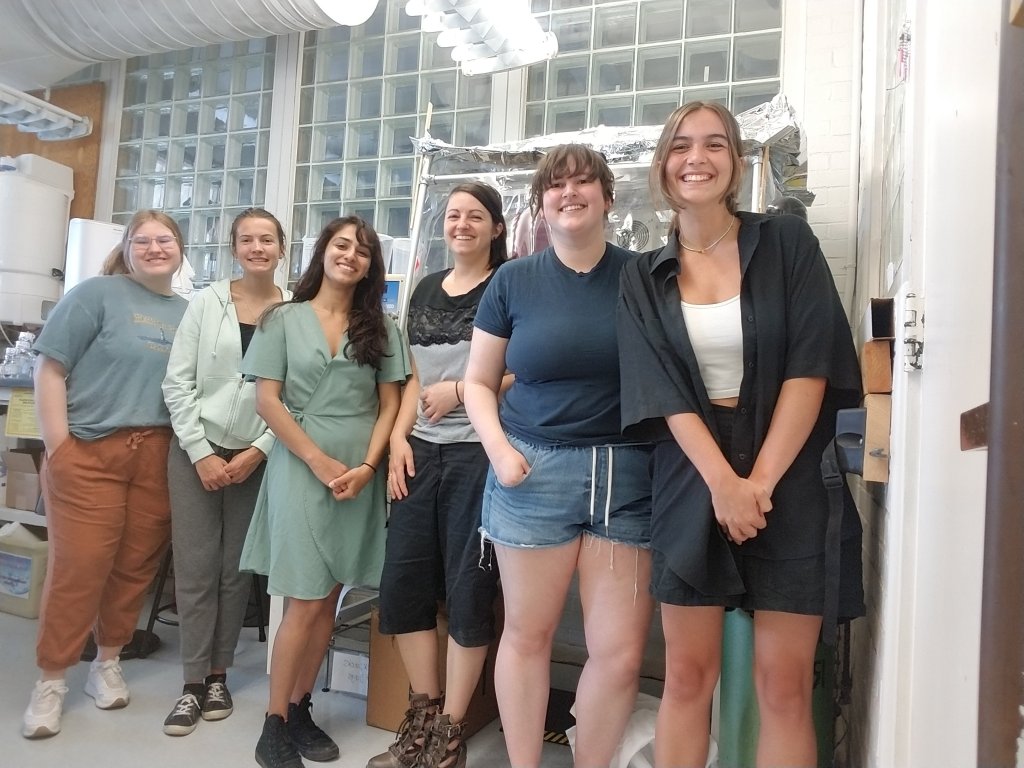
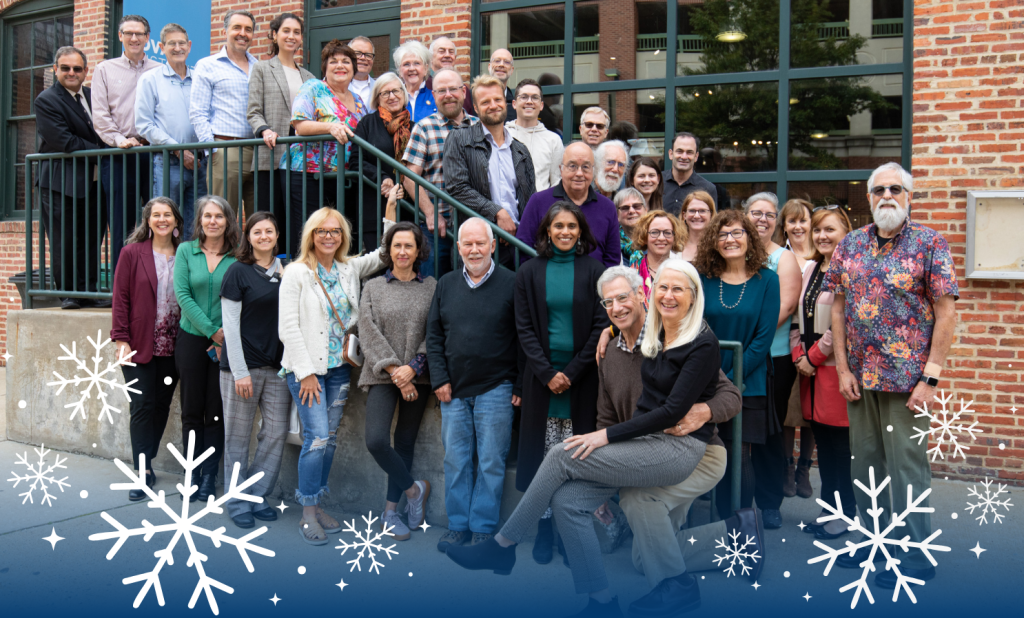
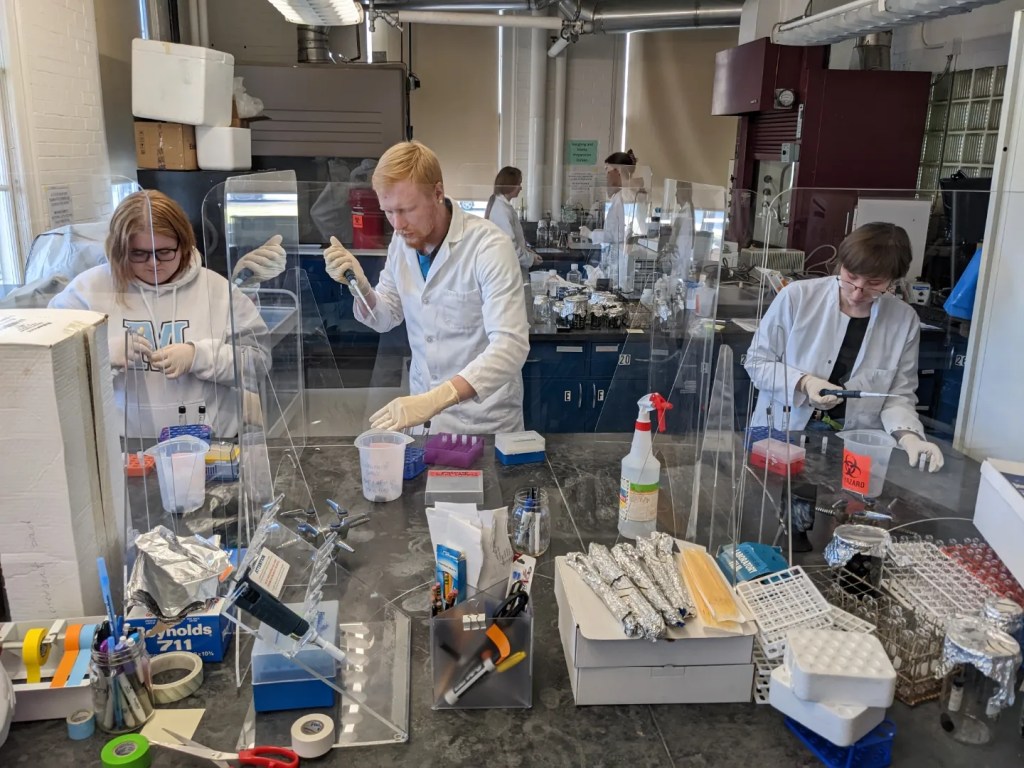
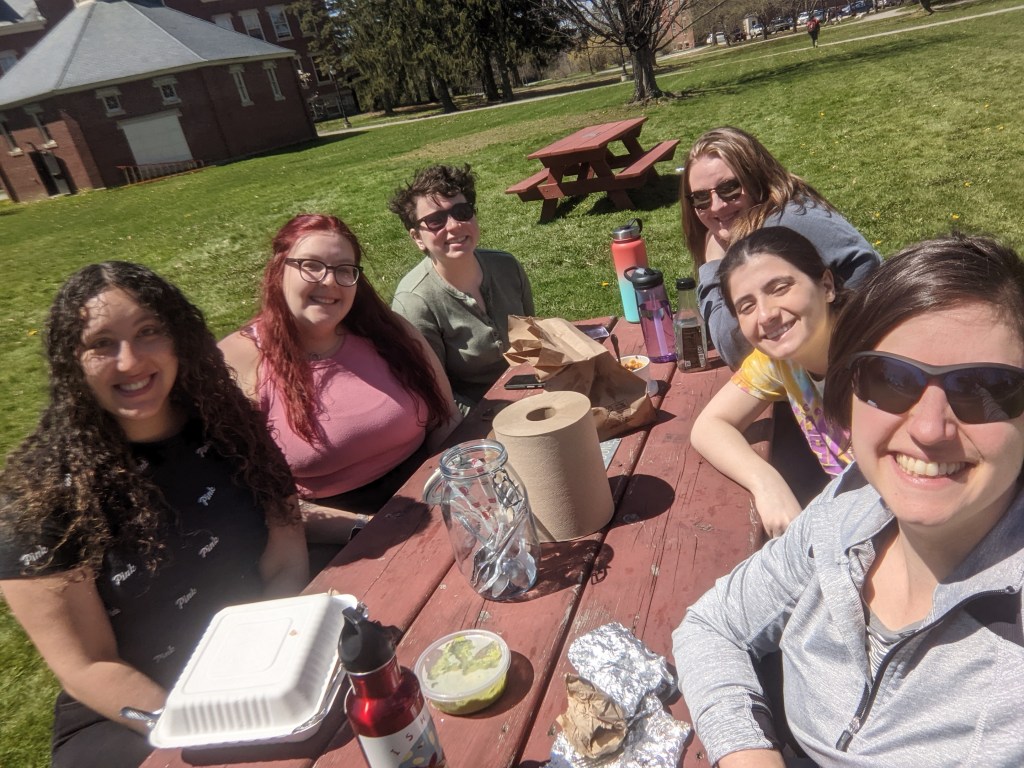
Seven undergraduates (some of whom are in the group photos above and listed on the Team page) worked in the lab over the summer and fall on various broccoli sprout projects, with a few others who joined the lab in spring to complete their Capstone project on other topics. Collectively, the undergraduates contributed to a large-scale bacterial culturing project, a comparative gene project, and the adminstrative/organizational work required to keep a research lab running.

I was awarded tenure this year (I went up a year early)! This means that I am now an Associate Professor on a permanent contract, although I still get reviewed every few years, and will still have to apply for advancement to (full) Professor in the future. I celebrated all year with family, friends, and colleagues!

I also began my three-year term as the At-Large Early Career member of the Board of Directors of the American Society for Microbiology, which currently has >37,000 members around the world. I’ll be sharing more of that experience next year, but so far it’s been an exciting opportunity to learn about strategic planning to support microbiological sciences on an international scale.

Publications

We had a quieter year than usual for publications, with two papers being accepted in scientific journals. I was also part of a white paper that recently was published, and we have five manuscripts which have been undergoing peer review for months.

  1. Costigan2, E., Bouchard, D. Ishaq, S.L., MacRae, J.D. 2024. Short-term effects of abrupt salinity changes on aquaculture biofilter performance and microbial communities. Water 16(20), 2911.
  2. Alaba2, T.E., Holman2, J.M., Ishaq, S.L., Li, Y. 2024. Current knowledge on the preparation and benefits of cruciferous vegetables as relates to in vitro, in vivo, and clinical models of Inflammatory Bowel DiseaseCurrent Developments in Nutrition: 102160.
  3. Weissman, JL, Chappell, C.R., Rodrigues de Oliveira, B.F., Evans, N., Fagre, A.C., Forsythe, D.,  Frese, S.A., Gregor, R., Ishaq, S.L., Johnston, J., Bittu, K.R., Matsuda, S.B., McCarren, S., Ortiz Alvarez de la Campa, M., Roepkw, T.A., Sinnott-Armstrong, N., Stobie, C.S., Talluto, L., Vargas-Muñiz, J., Advancing Queer and Trans Equity in Science (AQTES). Running a queer- and trans-inclusive faculty hiring process. EcoEvoRvix repository 6791, DOI: https://doi.org/10.32942/X2J310

Presentations

We had a more active year for presentations than usual! I was invited to give several guest lectures and seminars, and a group of us were able to travel to Cape Town, South Africa in August for the International Society for Microbial Ecology conference!!

  • Tolu Esther Alaba is standing in front of a science conference poster, smiling, and holding her infant.
  1. Alaba2*, T. Steamed broccoli sprouts alleviated Inflammatory Bowel Disease via increased anti-inflammatory, antioxidant, and gut protective metabolites in DSS-mice. Functional Food Centre Symposium, San Diego, CA. Oct 2, 2024.
  2. Holcomb2*, Lola, Johanna Holman, Molly Hurd, Brigitte Lavoie, Louisa Colucci, Gary M. Mawe, Peter L. Moses, Emma Perry, Allesandra Stratigakis, Tao Zhang, Grace Chen, Suzanne L. Ishaq, Yanyan Li. Early life exposure to broccoli sprouts confers stronger protection against enterocolitis development in an immunological mouse model of inflammatory bowel disease. 19th International Symposium on Microbial Ecology (ISME), Cape Town, South Africa, Aug 19, 2024.
  3. Holman2*, Johanna .M., Lola Holcomb, Louisa Colucci, Dorien Baudewyns, Joe Balkan, Grace Chen, Peter L. Moses, Gary M. Mawe, Tao Zhang, Yanyan Li, Suzanne L. Ishaq. Steamed broccoli sprouts alleviate gut inflammation and retain gut microbiota against DSS-induced dysbiosis. 19th International Symposium on Microbial Ecology (ISME), Cape Town, South Africa, Aug 19, 2024.
  4. Kirkendall2*, A., Holman2, J., Kinney2, M., Sharma1, A., Nowak1, L., Adjapong, G., Li, Y., Ishaq, S.L. Characterizing Gut Bacteria Associated with Sulforaphane Production. 19th International Symposium on Microbial Ecology (ISME), Cape Town, South Africa, Aug 19, 2024.
  5. Ishaq, S. Place and Time Matter for Gut Microbes Making Anti-Inflammatories from Broccoli Sprouts. Northern New England Microbiome Symposium. Burlington, VT, June 3, 2024.
  6. Marissa Kinney, Johanna Holman, Alexis Kirkendall, Emelia Tremblay, Mazie Gordon. Using Steamed Broccoli Sprouts to Better Understand Bacterial Glucosinolate Metabolism. UMaine Student Research Symposium, Orono Maine, April 12, 2024.
  7. Holman, J., Holcomb, L., Colucci, L. Baudewyns, D., Balkan, J., Chen. G., Moses, P.,  Mawe, G.M.,  Zhang, T., Li, Y., Ishaq, S.L. Steamed broccoli sprouts alleviate gut inflammation and retain gut microbiota against DSS-induced dysbiosis. UMaine Student Research Symposium, Orono Maine, April 12, 2024.
  8. Holcomb, L., Holman, J., Hurd, M., Lavoie, B., Colucci, L.,Moses, P., Mawe, G.M., Perry, E., Stratigakis, A., Zhang, T., Ishaq, S.L., Li, Y. Early life exposure to broccoli sprouts confers stronger protection against enterocolitis development in an immunological mouse model of inflammatory bowel disease. UMaine Student Research Symposium, Orono Maine, April 12, 2024.
  9. Ishaq, S. “Place and time matter for gut microbes making anti-inflammatories from broccoli sprouts”, Institute for Systems Biology, Seattle, WA. March 15, 2024.
  10. Alaba*, T.E., Ishaq, S.L., Li, Y., Zhang, T. “Broccoli sprouts alleviate ulcerative colitis in mice by increasing dietary and microbial metabolites: differential effects in young and adult, male and female mice. 4th CMI International Microbiome Meeting (CIMM), La Jolla, CA, March 12th – 14th, 2024.
  11. Holcomb*, L., Holman, J., Hurd, M., Lavoie, B., Colucci, L., Moses, P., Mawe, G.M., Perry, E., Stratigakis, A., Zhang, T., Ishaq, S.L., Li, Y. Early life exposure to broccoli sprouts confers stronger protection against enterocolitis development in an immunological mouse model of inflammatory bowel disease. 4th CMI International Microbiome Meeting (CIMM), La Jolla, CA, March 12th – 14th, 2024.
  12. Ishaq, S. “Place and time matter for gut microbes making anti-inflammatories from broccoli sprouts”, 4th CMI International Microbiome Meeting (CIMM), La Jolla, CA. March 12, 2024. (invited)
  13. Ishaq, S. “Place and time matter for gut microbes making anti-inflammatories from broccoli sprouts”, Oregon State University microbiology departmental series. Corvalis, OR. March 5, 2024.
  14. Interviewed by Mark Martin on the Matters Microbial podcast, “Episode #27: Broccoli Sprouts, Gut Health, and Microbes for All with Sue Ishaq”, Feb 9, 2024.
  15. Ishaq, S. “Place and time matter for gut microbes making anti-inflammatories from broccoli sprouts”, Translational Biobehavioral and Health Disparities Virtual Microbiome Series. Virtual. Feb 2, 2024.
  16. Olaniyi*, A., Ishaq, S. Investigating the activity of bacteria isolated from tank biofilms in a hatchery system for sea scallop, Placopecten magellanicus, larvae. Northeast Aquaculture Conference & Exposition (NACE) and the 43rd Milford Aquaculture Seminar (MAS). Portland, Maine, January 10-12, 2024.
  17. Ishaq, S. Bacterial community trends associated with sea scallop, Placopecten magellanicus, larvae in a hatchery system. Northeast Aquaculture Conference & Exposition (NACE) and the 43rd Milford Aquaculture Seminar (MAS). Portland, Maine, January 10-12, 2024.

I also gave three interviews on podcasts and webinars this year:

  1. “How a rumen microbiologist got into social equity”, ASM Undergraduate and Graduate Student Webinar series, hosted by Ragini Reddyvari, Oct 9, 2024.
  2. Save the microbes, save the world“, GW Integrative Medicine Podcast, Interviewed by Dr. Leigh Frame, Aug 28, 2024.
  3. Episode #27: Broccoli Sprouts, Gut Health, and Microbes for All with Sue Ishaq”, Matters Microbial podcast, interviewed by Mark Martin, Feb 9, 2024.

Research

Broccoli sprouts once again dominated our research agenda with a handful of ongoing projects. Most of those are still in progress, so we don’t have detailed information to share yet, but here are some summaries.

Logo that reads "The Broccoli Project" and shows cartoons of broccoli, a microscope, a bacteria, and a digestive tract.

We concluded the diet intervention trial in which we asked people to eat a large quantity of steamed broccoli sprouts every day for a month, and spent most of the summer and fall creating personalized reports to share data with each participant. We are still processing the samples to generate more data on metabolites and bacterial genes, but we hope to weave that into a manuscript next year.

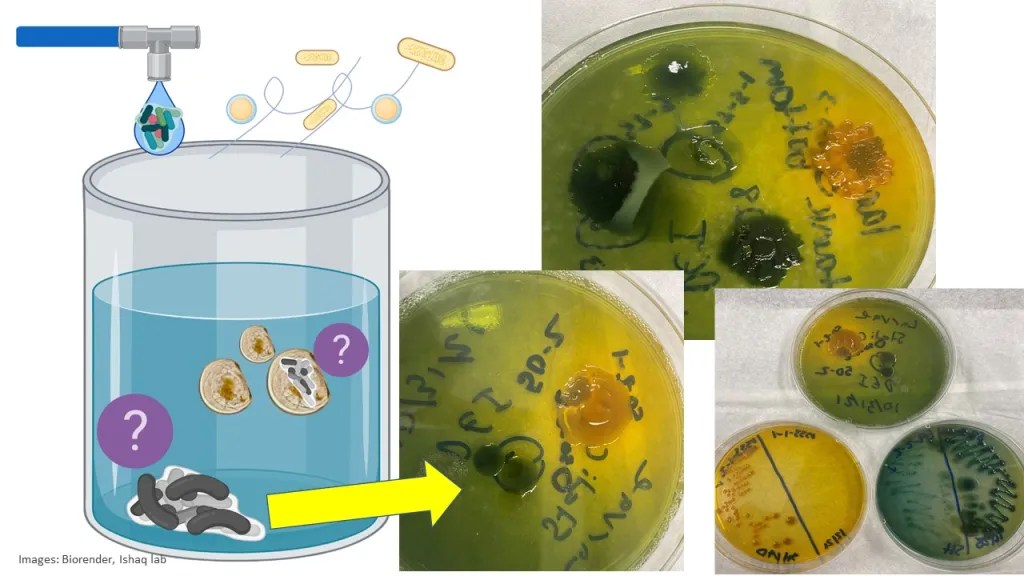
We spent much of the year in the lab working on a 24-hour plate-based assay to screen >330 bacteria for growth in the presence of glucoraphanin under different conditions. This required the help of many of the graduates and undergraduates, and me! Now that we have identified which bacteria are of interest to us, we can proceed with whole-genome sequencing as part of Lola’s BioME research project, as well as different culturing trials as part of Alexis’ BioME research project.

Here I am making up a plate for the bacterial culturing trial.

I have also been busy with conceptual research (not lab-based) this year. Along with three different research groups, I have been writing manuscripts, giving presentations, and designing workshops broadly around improving the process of science.

The first is the Microbiome Stewardship working group, funded by the Canadian Institute for Health Research, and featuring Drs. Kieran O’Doherty, Rob Beiko, Emma Allen-Vercoe, Mallory Choudoir, and Diego Silva, as well as Lola Holcomb. Over several years, out working group will generate a working definition and framework for the concept of microbiome stewardship, which is essentially that we should use policy and practice to ensure we don’t degrade the microbial ecosystems which are critical to life on earth. We will also foster case studies on how other researchers have integrated their microbiome science with equity, education, or policy to make a bigger impact. We have a prospective piece under review, and hope to publish our working definition in late 2025.

In July 2025, the Stewardship group, along with the Microbes and Social Equity working group, will be hosting a research summit on microbiome stewardship at UMaine in Orono! The summit will combine presentations from experts with guided group activities which stimulate critical thinking and planning. The goal is for summit attendees to discuss the concept of microbiome stewardship, and contribute to creating a consensus definition of it.

Some of these group activities that I’ve been designing for the Stewardship summit were inspired by the working meeting hosted by the Nova Institute for Health which I’ve attended the past two years in Baltimore as an Invited Faculty Fellow. Their meeting facilitates creative thought on health research, education, policy, and communications, and brings researchers, practitioners, journalists, and artists together to collaborate.

The second group is the newly formed Advancing Queer and Trans Equity in Science (AQTES) working group, which wants to improve the field of research by making it fair and welcoming for everyone. The group coalesced around the writing of a recently published white paper, in which we give suggestions on how to host a job search that is better for everyone. We provide examples and advice on how to write job adverts, create the agenda and atmosphere for the job search, how to make the interview process more accessible for everyone by remembering that we are humans and not robots, and how to support your new faculty. We recently presented these efforts, and hosted a panel discussion on research culture, at the MSE speaker series.

Microbes and Social Equity working group

The MSE group has more than 350 members, and about 150 additional people just subscribed to our newsletter. New this year, we added an elected Board of Directors, who spent much of the year drafted By-Laws for group governance, a Code of Conduct, and the beginnings of a Strategic Plan. In 2025, the MSE group will provide feedback prior to Board votes to enact these.

In 2024, we tried a monthly seminar series instead of weekly, which helped to reduce administrative burden. The series drew >300 live attendees and >1660 registrations, and some of the seminar recordings can be viewed here.

Population Descriptors and the study of Human Microbiomes: Implications for Appropriate Participant Categorization based on recommendations from the NASEM report.
Precision Microbiome for Health
Don’t Stop Believin’: Managing student motivation on the journey from descriptive to mechanism
Linking Plant, Animal, and Human Health in Livestock Systems: a Metabolomics Approach.
The human microbiome and cancer risk: Opportunities for prospective studies
Antimicrobial chemicals, antimicrobial resistance, and the indoor microbiome
What microbes can teach us about the built environment
The PATHOME Study: Leveraging contrasts in urban socio-economic living conditions and pathogen diversity in humans, animals, and the environment to prioritize intervention policy in Kenya
Examining antibiotic resistance in biofilm and planktonic bacterial communities along an urban river
Building multifunctional agricultural landscapes – from microbes to people
Advancing Queer and Transgender Equity in Science (AQTES)

Teaching

This was a busy year for teaching, as I teach 2 courses in the fall and 2 in the spring, which total ~150-180 students per year. I also taught a handful of students lab research for their Capstone projects via independent study courses. Thanks to some strategic changes to the format of some of my courses, I successfully reduced my workload while improving engagement in the courses. For example, in spring 2024, I “flipped the classroom” for AVS 401 Capstone I in which I teach students how to be researchers and write research proposals, which means that many of the lectures were recorded and we used classroom time for active learning through activities and problem-solving.

In fall 2024, I added an asynchronous section to my AVS 254 Intro to Animal Microbiomes course, allowing for a record 94 students to enroll while maintaining a smaller in-person section with lots of in-class activities and problem solving. I plan to take a sabbatical in fall 2025, and for my teaching professional development goals, I plan to flip that classroom as well, which will take months of revisions to the existing lectures and assignments.

There is too much material on my teaching to go into detail here, but I recommend checking out my previous posts on listening to your microbes (a creative assignment), responsible conduct of research (something I integrated into coursework), moving to suggested deadlineschoosing a graduate school, and how departments decide on their curricula.

Social Media

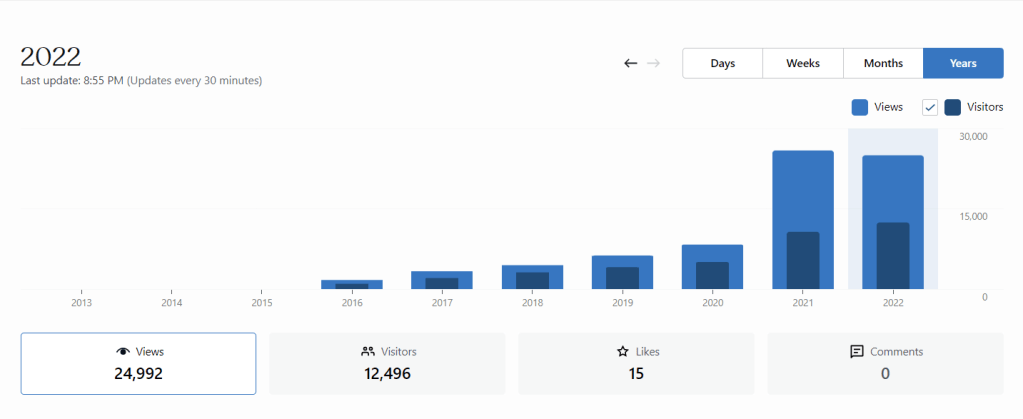
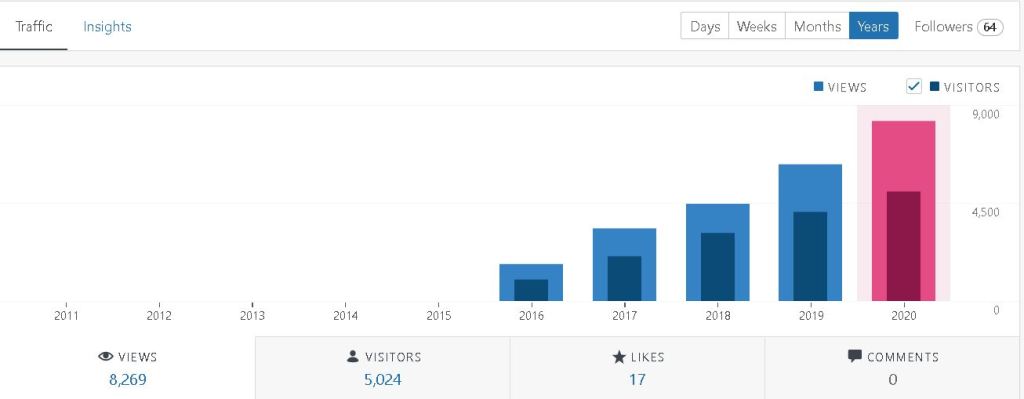
I expanded the social media reach of the lab by joining two new platforms: The Nova Integration Hub as I have been a member of the Nova Network for the past two years, and Bluesky. This expanded the number of followers >5,150 across those platforms and twitter, facebook, instagram, linked in, mastodon, and subscribers to my blog. The website attracted >10,000 visitors and >18,000 views, bringing it to >64,000 total visitors and >118,000 total views since 2016.

In 2024, I wrote >22,000 words across 53 blog posts, although many of these were event posts for the Microbes and Social Equity speaker series. My most popular post of the year is still the one on academic tenure.

Looking ahead to 2025

The lab already has a lot planned for 2025! Lola intends to defend her PhD dissertation and graduate, Heather will be taking her comprehensive exam to advance to candidacy and likely Ashley will as well. Undergraduates Benjamin Hunt, Timothy Hunt, and Emelia Tremblay will all be graduating in May and going on to bigger and brighter opportunities. We expect at least three new manuscripts on our current research to be submitted for peer review to scientific journals, and already have presentations planned at the UMaine Student Research Symposium.

I’ll be presenting my work in February at the University of Vermont as part of a research symposium session honoring collaborations with the late Dr. Gary Mawe, as well as part of the Distinguished Lectures in Microbiology Series at the University of Wisconsin -Madison. In May I’ll be heading to San Diego to be part of a Microbe Specialist Group at a special meeting to make recommendations on conservation to the Species Survival Commission (SSC) of the International Union for Conservation of Nature (IUCN). In June I’ll be heading to LA to attend the annual Microbe meeting of the American Society for Microbiology, and in July I’ll be hosting the Microbiome Stewardship summit at UMaine.

Other than all that, I’m looking forward to a spring semester that is less hectic than my fall semesters always are, some time off this summer, and sabbatical in the fall which will provide teaching-release so I can focus on professional development.

Happy New Year!

2023 Year in Review

This was year 4 for the Ishaq Lab at UMaine, and we celebrated all of 2023 with new students (some of whom are mentioned here), new projects, new publications, and exciting results! Here are some highlights, but you can check out previous blog posts in the archives for more detail. As usual, I have divided the summary into sections: Team, Research, Publications, Presentations, MSE, Teaching, Website, and Looking Ahead.

Team
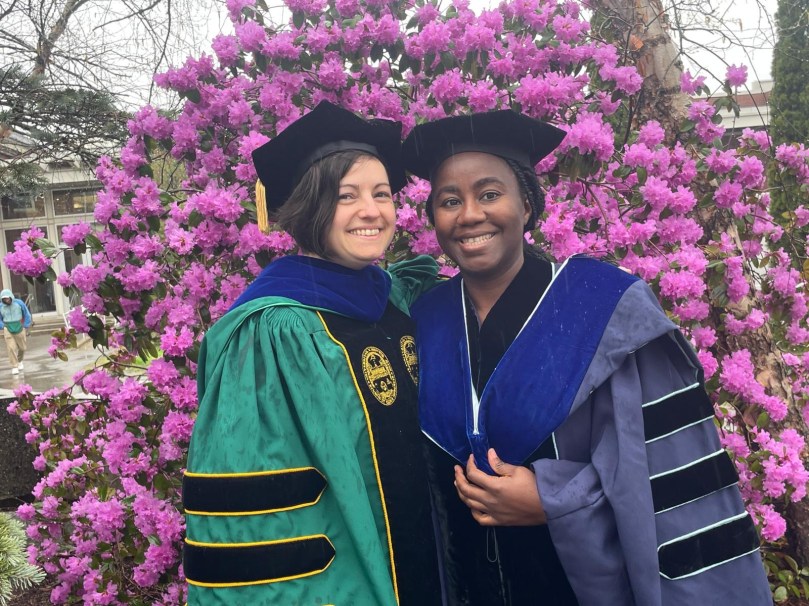
Johanna Holman completed her first year and a half of her PhD, starting when she completed her master’s in August 2022. She’s been managing multiple projects and teams this year, including a large-scale culturing assay of bacteria, a diet study in people, contributing to a literature review on oxidative stress and cruciferous veggies in the diet, leading a literature review on fiber intake and global distribution of inflammatory bowel diseases, and preparing for two large-scale mouse trials in 2024!!

Johanna was lead author on a very exciting publication about feeding steamed broccoli sprouts to young mice which had symptoms similar to ulcerative colitis, as a means of introducing anti-inflammatories into the intestines at the site of inflammation. The steamed sprouts were very effective in mice, especially in certain locations in the gut, which we are currently exploring in more detail. And, she was second author on Lola’s paper which makes two papers published for Johanna this year! Johanna is planning her comprehensive exam early in 2024, after which she’ll be eligible to apply for doctoral fellowships and funding.

Lola Holcomb passed her PhD qualifying exam this year and advanced to candidacy! The exam in the GSBSE program requires students to write a research proposal in the style of an NIH graduate fellowship on a topic which is different from their primary focus, but which uses similar methods or approach to what they have been learning. By requiring a new topic, the dissertation committee can assess a student’s ability to synthesize new information into a plan.

In addition to the written experimental design and accessory documents (about 20 pages), Lola presented her proposal to the committee in an hour-long presentation and then answered questions about experimental design and analysis for both the exam topic and the dissertation research topic. Lola passed easily, because she’s amassed research experiences in her undergraduate and graduate degrees and has a keen mind for bioinformatics. Now that she is a PhD candidate, Lola will proceed with her research into bacterial biogeography in the gut and how it affects human or animal health.

Lola was lead author on a very exciting publication on feeding raw broccoli sprouts to young mice which had symptoms similar to Crohn’s Disease, as a means of introducing anti-inflammatories into the intestines at the site of inflammation in mice where the immune system plays a large role in the progession of the disease. The raw sprouts were very effective in young juvenile mice, but only mildly effective in adolescent mice, which we are currently exploring in more detail. Lola won a travel award from GSBSE to present this research at microbiome conferences in 2024, and she was second author on Johanna’s paper which makes two papers for her this year! She also submitted her first large-scale funding proposal as a principal investigator, fingers crossed that is awarded!

Ayodeji Olaniyi is wrapping up his master’s thesis in Animal Science, and is planning to defend in January before starting a new job as a researcher! He has been working on the scallop tank bacterial culturing project for which we processed 140 bacterial isolates last fall and into this spring. We hope to have a manuscript submitted for publication in early 2024.
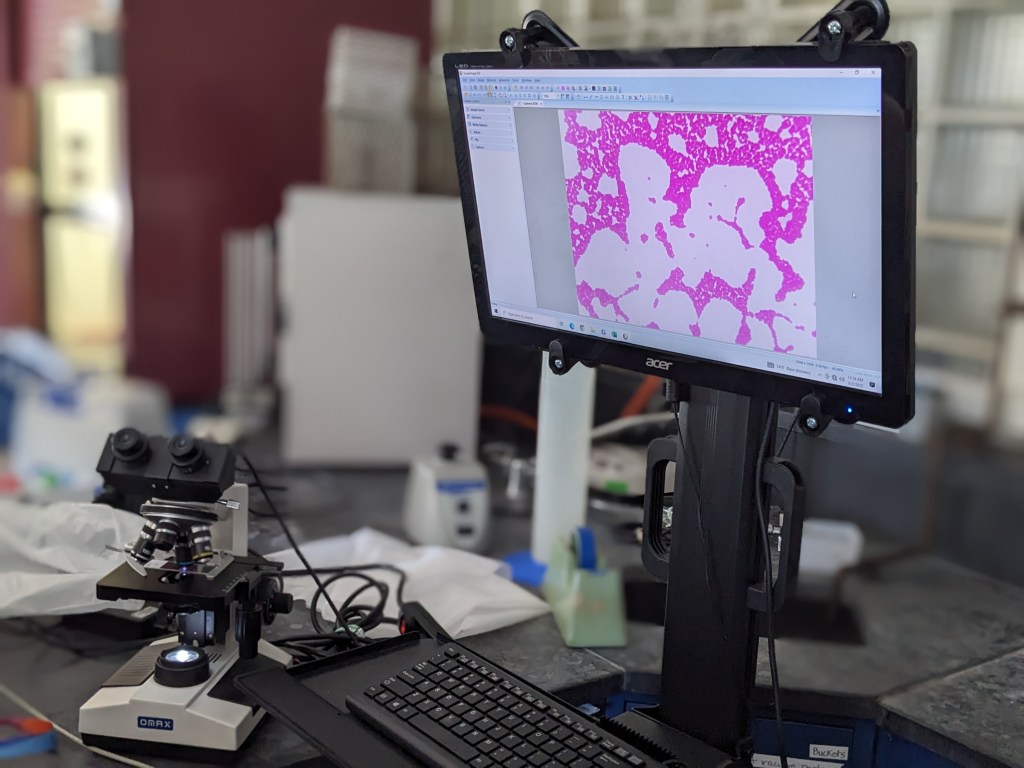
There was a team of undergraduates helping us on this project, discussed more below. Ayo won a Graduate Student Research Award for this work at the UMaine Student Symposium, and a 2023 Travel award from the University of Maine Aquaculture Research Institute Rapid Response Fund to present this work at the NACE/MAS conference in January.

Marissa Kinney joined in January for her Master’s of Science in Microbiology, and has been involved in four of the broccoli projects already!! She contributed qPCR data and analysis to both Johanna’s and Lola’s papers, which makes two papers for her this year! She was awarded a One Health and the Environment NRT Fellowship 2023 – 2024 at UMaine, and was recently awarded research support from the Biomedical Association of Maine!!

Marissa has been providing labwork for several projects trying to quantify glucosinolate-metabolism genes in bacteria from the gut of mice and humans, as well as preparing multiple DNA libraries for sequencing. In early 2024, she’ll be an intern at the UMaine DNA Sequencing Facility where she will learn to generate sequencing data, and she’s been learning to perform the complex analysis of this data in my sequencing analysis class this fall. After her internship, Marissa will be running her own lab experiement, as well as helping on Johanna’s mouse trials.

Three graduate students joined the lab during 2023, Hannah Horecka as a master’s student through the Darling Marine Center working on aquatic animal health, as well as two students on #TeamBroccoli, Ashley Reynolds and Tolu Alaba. Ashley Reynolds is a PhD student in Nutrition/Microbiology who has been working on the broccoli sprout diet trial in humans and is learning the microbiology portion to participate in other projects soon.

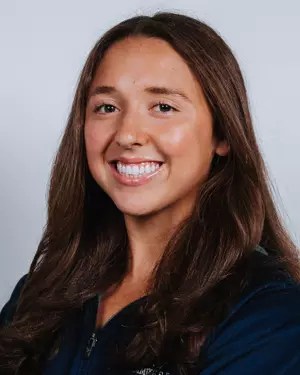
Headshot for Esther Alaba, PhD Candidate in Biomedical Sciences

Tolu (Esther) Alaba is a PhD candidate in the GSBSE program, and added her considerable expertise in nutrigenomics, and using dietary phenols to reduce oxidative stress and inflammation, to the lab starting in late September. She has been analyzing data on metabolites, metabolomics, and nutritional patterns in mice and humans. Even though she only recently joined the lab, she has already completed a literature review on oxidative stress and cruciferous vegetables in the diet which is currently in review, and she is helping to prepare two other manuscripts!

Alexis Kirkendall rejoined the lab in summer 2023 to work on bacterial isolates for the broccoli projects, and had been working remotely since she first joined the lab in summer 2022 as an REU student. She just completed her bachelor’s degree at Heidelburg College, and she’s rejoined the lab once again as a PhD student in Microbiology!! In addition to helping Johanna with the mouse trials and learning genomics from Marissa, Alexis will be working on understanding some of the enzymatic pathways that bacteria use to turn the inactive compound in broccoli/sprouts into anti-inflammatories.

Benjamin Hunt

Benjamin and Timothy Hunt have been working on several metanalyses and literature reviews on the translatability of mouse studies of Inflammatory Bowel Disease to human health, as well as data analysis for our collaborators at the University of Vermont. They both contributed bioinformatic analysis to both Johanna’s and Lola’s papers, which makes two papers for them this year!

In 2024, they will continue the data analysis on a small project run by our UVM collabotors, as well as continue working on their literature review. They are in the third year of their undergraduate studies, and are planning for medical school next.

Dr. Gloria Adjapong has continued to support the lab as a postdoctoral researcher at the UMaine Cooperative Extension Veterinary Diagnostics Laboratory on a two year fellowship, and has been generously lending a hand in the lab to help us with >700 DNA extractions and sequencing library preparations to investigate bacterial communities in scallop hatcheries. She recently passed a certification exam that will support her research career.

My dog, Izzy, has been dutifully coming to campus this fall to attend classes and entertain and calm the students, distract Zoom meetings by trying to climb out the window behind me, and help catalogue all the squirrels on campus. We threw her a 10th birthday party in class in April!

Two members of the Ishaq Lab added a “lab trainee” to their family in 2023, and a third lab member will be welcoming a “trainee” in 2024!! We haven’t found any infant-sized lab coats that are certified for the type of work we do, but we will keep shopping 🙂

Publications

A stack of papers facedown on a table.

We had a productive year for peer-reviewed journal publications – with 7 published! Several of these have been in development since prior to 2023, several are the first publications for students, and all of which are thanks to my fabulous research collaboration team that spans the globe. There are a handful more papers in peer review at scientific journals, and others which are in preparation that which we hope to submit for review in 2024. Below in bold; 1 undergraduate student I mentored, 2 graduate student I mentored for this project, some of whom are primarily mentored in other labs.

  1. Hotopp2, A., Oslen, B., Ishaq, S.L., Frey, S., Kovach, A., Kinnison, M., Gigliotti, F., Roeder, M., Cammen, K. 2023. Plumage microbial communities of tidal marsh sparrows. iScience, Accepted 11/17/2023.
    • Alice is a lab affiliate, and is in Kristina Cammen and Brian Olsen’s labs working on swamp sparrow ecology. I contributed mentoring on DNA extraction and library preparation for amplicon sequencing, as well as bioinformatics analysis of the microbial community dataset.
  2. Holcomb2, L., Holman2, J., Hurd, M., Lavoie, B., Colucci1, L., Hunt1, B., Hunt1, T., Kinney2, M., Pathak2, J., Moses, P., Mawe, G.M., Perry, E., Stratigakis, A., Zhang, T., Ishaq, S.L., Li, Y. 2023. Early life exposure to broccoli sprouts confers stronger protection against enterocolitis development in an immunological mouse model of inflammatory bowel disease. mSystems: 00688-23.
  3. Brostow, D.P., Donovan, M., Penzenik, M., Stamper, C.E., Spark, T., Lowry, C.A., Ishaq, S.L., Hoisington, A.J., Brenner, L.A. 2023. Food desert residence has limited impact on Veteran fecal microbiome composition: A United States-Veteran Microbiome Project (US-VMP) Study. mSystems: 00717-23.
  4. Ishaq, S.L., Hosler2, S., Dankwa, A., Jekielek, P., Brady, D.C., Grey, E., Haskell, H., Lasley-Rasher, R., Pepperman, K., Perry, J., Beal, B., Bowden, T.J. 2023. Bacterial community trends associated with sea scallop, Placopecten magellanicus, larvae in a hatchery system. Aquaculture Reports 32: 101693.
  5. Holman2, J., Colucci1, L. Baudewyns1, D., Balkan1, J., Hunt1, T., Hunt1, B., Kinney2, M., Holcomb2, L., Stratigakis, A., Chen. G., Moses, P.,  Mawe, G.M.,  Zhang, T., Li, Y., Ishaq, S.L. 2023. Steamed broccoli sprouts alleviate DSS-induced inflammation and retain gut microbial biogeography in mice. mSystems: 00532-23.
  6. Betiku, O., Yeoman, C., Gaylord, T.G., Ishaq, S., Duff, G., Sealey, W. 2023. Evidence of a Divided Nutritive Function in The Rainbow Trout (Oncorhynchus mykiss) Mid- and Hind-Gut Microbiomes by Whole Shotgun Metagenomic Approach. Aquaculture Reports 30: 101601.
    • This one dates way back to 2016 when I was a postdoc in Carl Yeoman’s lab in Montana! Omalola was a PhD student at the time, and is currently an Assistant Professor in Florida.
  7. Ishaq, S.L., Turner, S.M., Lee1, G., Tudor, M.S., MacRae, J.D., Hamlin, H., Bouchard, D. 2023. Water temperature and disease alters bacterial diversity and cultivability from American Lobster (Homarus americanus) shells. iScience 26(5): 106606.
    • News articles run in Knox County, Maine (in The Courier-Gazette) and Ellsworth, Maine (in the Ellsworth American)
  8. This one was published online in 2022 and got its official citation in early 2023: Holman2, J., Hurd, M., Moses, P.,  Mawe, G.,  Zhang, T., Ishaq*, S.L., Li*, Y. 2023. Interplay of Broccoli/Broccoli Sprout Bioactives with Gut Microbiota in Reducing Inflammation in Inflammatory Bowel Diseases. Journal of Nutritional Biochemistry 113:109238. * authors contributed equally

Presentations

The Ishaq lab and our collaborators gave in-person and virtual presentations this year to scientific audiences, to students and faculty as guest seminars, and as media/news interviews. Students Johanna Holman, Lola Holcomb, Marissa Kinney, Ayodeji Olaniyi, Sydney Shair, and Keagan Rice gave or contributed to presentations in 2023. Undergrads that I mentored for their Capstone also presented at the UMaine Student Symposium, including Zach Inniss, Kurt Jancsy, and Ellie Pelletier.

  1. Holcomb*, L., Holman, J., Hurd, M., Lavoie, B., Colucci, L.,Moses, P., Mawe, G.M., Perry, E., Stratigakis, A., Zhang, T., Ishaq, S.L., Li, Y. Early life exposure to broccoli sprouts confers stronger protection against enterocolitis development in an immunological mouse model of inflammatory bowel disease. American Society for Nutrition annual meeting, Boston, MA. July 22-25, 2023.
  2. Holman*, J., Holcomb, L., Colucci, L. Baudewyns, D., Balkan, J., Chen. G., Moses, P.,  Mawe, G.M.,  Zhang, T., Li, Y., Ishaq, S.L. Steamed broccoli sprouts alleviate gut inflammation and retain gut microbiota against DSS-induced dysbiosis. American Society for Nutrition annual meeting, Boston, MA. July 22-25, 2023.
  3. Toney*, A., Wolf, P., Ishaq, S. Broadening Perspectives by Situating Nutrition Education in Broader Social Contexts: A Study Protocol. American Society for Nutrition annual meeting, Boston, MA. July 22-25, 2023. (poster)
  4. Holcomb, L. Early Life Exposure to Broccoli Sprouts Confers Stronger Protection against Enterocolitis Development in an Immunological Mouse Model of Inflammatory Bowel Disease. UMaine Student Symposium, Orono, ME. April 14, 2023.
  5. Kinney, M. Establishing Growth Curve Assays for Bacterial Glucosinolate Metabolism. UMaine Student Symposium, Orono, ME. April 14, 2023.
  6. Shair, S., Rice, K. Assessment of the Association of Sea Scallop Larvae Mortality and Vibrio spp. in Hatchery Systems. UMaine Student Symposium, Orono, ME. April 14, 2023.
  7. Olaniyi, A. Investigating The Activity of Bacteria Isolated from Tank Biofilms in a Hatchery System for Sea Scallops, Placopecten magellanicus, Larvae. UMaine Student Symposium, Orono, ME. April 14, 2023.
  8. Wijayanayake, R. Utilizing Sulforaphane from Broccoli to Treat IBD. UMaine Student Symposium, Orono, ME. April 14, 2023.
  9. Inniss, Z., Jancsy, K. The Veterinary Immersion Plan: An Innovative Solution to Address Non Predictive Barriers to Entering the Field of Veterinary Medicine. UMaine Student Symposium, Orono, ME. April 14, 2023.
  10. Pelletier, E. Assessing the Small Animal Veterinary Needs of Rural Maine and Implementing an Effective Management Plan. UMaine Student Symposium, Orono, ME. April 14, 2023.

I received several invitations to speak this year!

  1. Ishaq, S. 9th Annual Southern California Microbiome Summit. Riverside, CA, September 22, 2023. (invited)
  2. Ishaq, S. “Scallop microbes and sustainable aquaculture: host-microbe dynamics situated in environmental and social context.” Ecological Society of America (ESA) annual meeting. Inspire session: Microbes as Tools to Solve Ecological Problems for All. Portland, OR, August 6-11, 2023. (invited)
  3. Ishaq, S. “Microbes and Social Equity: what is it and how do we do it?” Boston University Microbiome. July 12, 2023. (invited keynote).
  4. Ishaq, S. “Microbes and Social Equity: what is it and how do we do it?” Harvard Chan-NIEHS Center for Environmental Health’s “Environmental Health in Action” colloquium series. Boston, MA, May 10, 2023. (invited)

Research

This year has seen various topics come through the lab, and there’s too much to include here, but I encourage you to check through the Blog page to find older research posts which provide updates. These and other projects have been successful thanks to hard work and dedication from students and collaborators.

A cartoon of three gastrointestinal tracts showing the locations of inflammation in ulcerative colitis, crohn's disease, or healthy tissue. At the bottom are cross-sections showing thickening of the intestinal wall in patients with Crohn's, and ulcers in patients with colitis.

The collaborative work we’ve been doing on broccoli sprouts, gut microbes, and Inflammatory Bowel Disease had plenty to celebrate this year. We published two major research papers, presented across the country, and doubled the size of #TeamBroccoli.

In December 2020 and January 2021, we (Drs. Yanyan Li and Tao Zhang and I) ran a mouse trial that generated hundreds of samples. This year, Johanna has been leading a team of students (Alexis Kirkendall, Lilian Nowak, Aakriti Sharma, and Jaymie Sideaway) on a culturing project to screen hundreds of bacterial isolates that were collected from the gastrointestinal tracts of mice eating broccoli sprouts. We are testing them for their capacity to metabolize different glucosinolates into anti-inflammatory compounds, as well as grow on different media types. In the process, we found that the bacteria we are using as a positive control likes to move from one test well to another when its favorite media is available — but not when glucose is present.

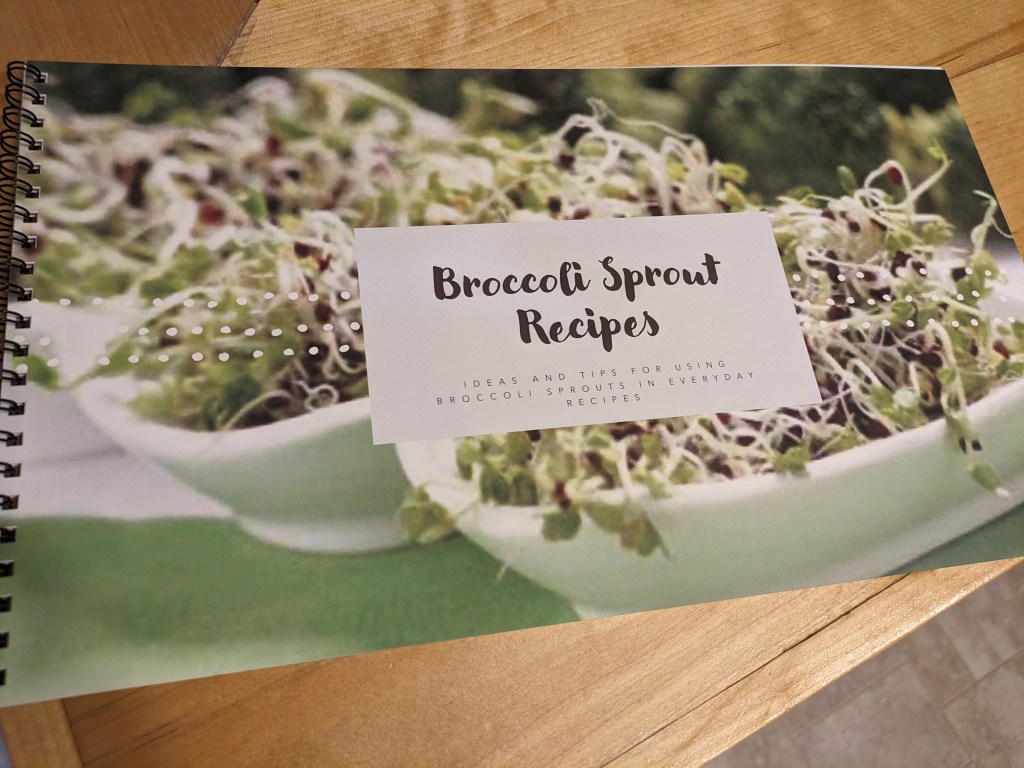
We are also running a small pilot project in 2023-2024 looking at broccoli sprout diets in humans, for which we designed a recipe book, stickers, and spent a lot of time revising protocols and instruction materials to make them more user-friendly. Johanna has been leading the project, and this fall, Ashley, Marissa, and Tolu joined the project to add their expertise in community nutrition, qPCR of bacterial genes, and nutrigenomics, respectively.

The Ishaq Lab has also been very busy working on projects to investigate how, when, and from where Atlantic sea scallops get their microbes.

In 2021, a pilot study got funded to begin collaborative research with a team at UMaine (Drs. Erin Grey, Jen Perry, Tim Bowden) and the Downeast Institute (Dr. Brian Beal). We collected a few hundred samples from scallops and the biofilms growing in hatchery tanks. Last fall and this spring, we spent several months processing ~140 bacterial isolates through >1800 plates and tubes, thanks to a lot of work from students Ayodeji Olaniyi, Sydney Shair, Keagan Rice, and Lacy Mayo, and a few others who dropped in to help.

I went to the Ecological Society of America annual meeting in Portland, OR in August to present some of the companion work to the Vibrio project, on scallop larval rearing tanks and the bacterial communities we found there. That included an unexpected effect of coastal water dynamics and the phase of the moon. That work has recently been published.

Microbes and Social Equity

The Microbes and Social Equity working group turned 4 years old in December, and is currently at >300 members plus ~130 newsletter subscribers (you can join either list here)! We ran a seminar series and a symposium, and continued to add to the special collection in mSystems. You can check out the brand new Microbes and Social Equity working group webpage for their end of 2023 updates, as well as the program-in-development for our 2024 speaker series.

Teaching

This was a busy year for teaching, as I teach 2 courses in the fall and 2 in the spring, which total ~150-180 students per year. This year, to accommodate disruptions to student schedules over the past few years, I also taught a handful of independent study versions of the Capstone courses for students who could not fit them into their schedule in the recommended semesters. These are considered part of my assigned workload since I taught students who otherwise would have taken this with me during a scheduled course offering, but they did add to my long list of demands for my time this year. There is too much material on my teaching to go into detail here, but I recommend checking out my previous posts on listening to your microbes (a creative assignment), responsible conduct of research (something I integrated into coursework), moving to suggested deadlines, choosing a graduate school, and how departments decide on their curricula.

Website and social media stats

The website continued to host a phenomenal amount of traffic, once again largely due to MSE, and with just a few days left in the year we clocked nearly 15,000 visitors (the most ever!) and nearly 25,000 views (almost the most ever)!

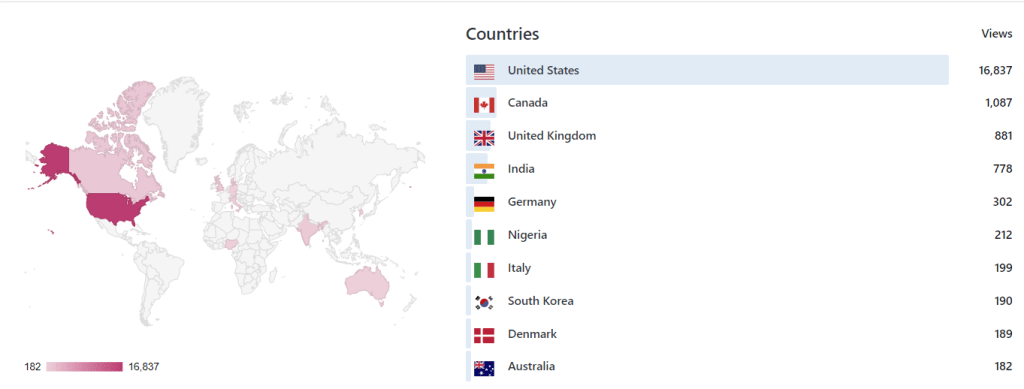
We had visitors from 125 countries around the globe, with the top 10 listed in the graphic below!

I published 70 blog posts, including this one, but this included a few dozen that were just promoting events for MSE and did not have unique content.

I wrote more than 41,400 words in posts this year, which is more than last year!

Looking ahead to 2024

Projects: The Ishaq Lab has several major projects lined up for 2024, including the ongoing broccoli sprout diet pilot project with volunteers from the Bangor area, screening >800 bacteria for their ability to produce anti-inflammatories which we isolated from a mouse study using the broccoli sprout diet, investigating how the age of mice alters the effectiveness of the broccoli sprout diet, identifying 140 bacteria isolated from scallop hatchery tanks, and using >700 DNA samples collected from scallop tanks over a 3 month period to investigate what happens to the bacterial communities in tanks during a larvae rearing trial.

Conferences: I’ll be traveling a lot to present my work in 2024, including chatting with the Microbial Matters podcast, hosting a session on scallops and microbes at NACE/MAS in January, presenting the broccoli work to the Microbiology seminar series at Oregon State University in Corvalis, Center for Microbiome Innovation International Microbiome meeting in La Jolla, and the Institute for Systems Biology in Seattle, hosting a session on food sovereignty and the gut microbiome at ISME 2024 in Cape Town, and more!

Leadership: In 2024 I will be starting my three-year term as the At Large Early Career member of the Board of Directors for the American Society for Microbiology, a 36,000-member international organization!

Tenure: I applied for tenure in the fall of 2023, and will hear back about the university’s decision in 2024. I look forward to celebrating my promotion to tenured Associate Professor 🙂

Work-life balance: My workload in 2022 far exceeded what I should be taking on, and in 2023 I had to set firmer limits on requests for my time, turn down opportunities, and catch up on work during my personal time to an excessive degree. In 2023, it was still too much – I worked well over 40 hours per week, even during one month in the summer that I was off contract. Despite this, I managed to enforce time off for myself which is critical to scientific progress. As part of this effort, I made it a point to add personal travel days to my work trips, as I traveled to sunny locations and met with incredible friends and colleagues.

  • Two women laughing and posing for a photo in front of a koy pond.
  • Sean Gibbons, Sue, and Jotham Suez posing on rock path in front of bright pink blooming cherry trees at a Japanese Garden.

In support of healthy restraints on my working hours, I will have to continue to limit requests for my time in 2024 to those which build on my existing directions of teaching and research. Unfortunately, this means turning down many potential collaborations in completely new areas of research for me, to facilitate my focus on the wealth of research and teaching I currently have which fill my days (and weekends) with novelty, surprise, and joy.

Happy New Year!!

MSE’s 2022 year in review

The Microbes and Social Equity working group turned 3 years old in December, and we currently have 170 members from around the globe, as well ~100 newsletter-only subscribers (you can join either list here)! MSE continues to grow and shape the future of research, education, and policy thanks to the enthusiasm and support of our members, and we are grateful to have you with us!

We grew so much that in 2022 we added Directors to the Leadership Team, to support our administration and communication needs. In particular, our Directors and other communications specialists helped MSE to improve the way we share information across platforms and within the organization. In 2023, we will continue to improve how members connect with each other, and how people can connect with MSE. Our mailing list is the primary way to reach our members, but we also have public pages on Facebook and Twitter, as well as group pages on LinkedIn and Slack.

Speaker series

Early in 2022, we hosted our second annual spring seminar series, which was organized by Sue Ishaq, Mustafa Saifuddin, Emily Wissel, Melissa Manus, Francisco Parada, and the University of Maine Institute of Medicine. The series had 411 attendees and 901 registrants total across the 14 talks, which is more than the 2021 series had. These and previous talks have been used for teaching materials at several colleges and universities. In case you missed it or want to relive the moments, you can find links to the talks here.

The talks also garnered more attention in the UMaine community this year. Patricia Kaishian’s April 13 talk was promoted as part of the University of Maine Impact Week, and journalist Samantha Sudol of the MaineCampus wrote summaries on talks by Jake Robinson and Patricia Wolf.

Summer symposium 

Our symposium in 2022 was a little different than the first version, in that our 5 themed days focused on “Developing transformative research skills”, organized by Sue Ishaq, Ari Kozik, Ashley Toney, Emily Wissel, Kieran O’Doherty, Mallory Choudoir, Mustafa Saifuddin, Erin Eggleston, Carla Bonilla, Monica Trujillo, and Cecile Ferguson (UMaine Institute of Medicine). Our themes this year were  “Context-aware experimental designs”, “Blending biological, social, and humanities writing”, “Transforming your research for policy engagement”, “Community engagement and collaboration”, and “MSE Education Practices and Curriculum design”. 

This year’s symposium featured 20 speakers across 5 themed days with 3 plenary-style talks/day, followed by 90 min of small-group discussion led by speakers and MSE members. Participants were encouraged to “problem solve” a suggested topic or one of their own choosing to create action items that were meaningful to them, such as ideas for curricula development, identifying research needs or best practices, suggestions for engaging research in policy, and more. The symposium hosted 220 participants (460 registrations) overall and 121 across the breakout room discussions. Registrants were from 23 countries, students and researchers from various fields and career levels, Maine State legislators, and the public. The symposium led to 16 drafted resources documents written by participants.

Our symposium from 2021 led to an invited perspective piece in 2022 on organizing interdisciplinary working groups and conferences to Challenges, the journal for the inVIVO Planetary Health group: Designing the Microbes and Social Equity Symposium, a novel interdisciplinary virtual research conference based on achieving group-directed outputs.

Special collection of research articles at mSystems

The MSE special collection in the mSystems Journal has published nearly half of the anticipated contributions so far.  The inaugural piece was written by a group of MSE members, and has since been joined by 10 other articles and an editorial. 

ASM and ESA

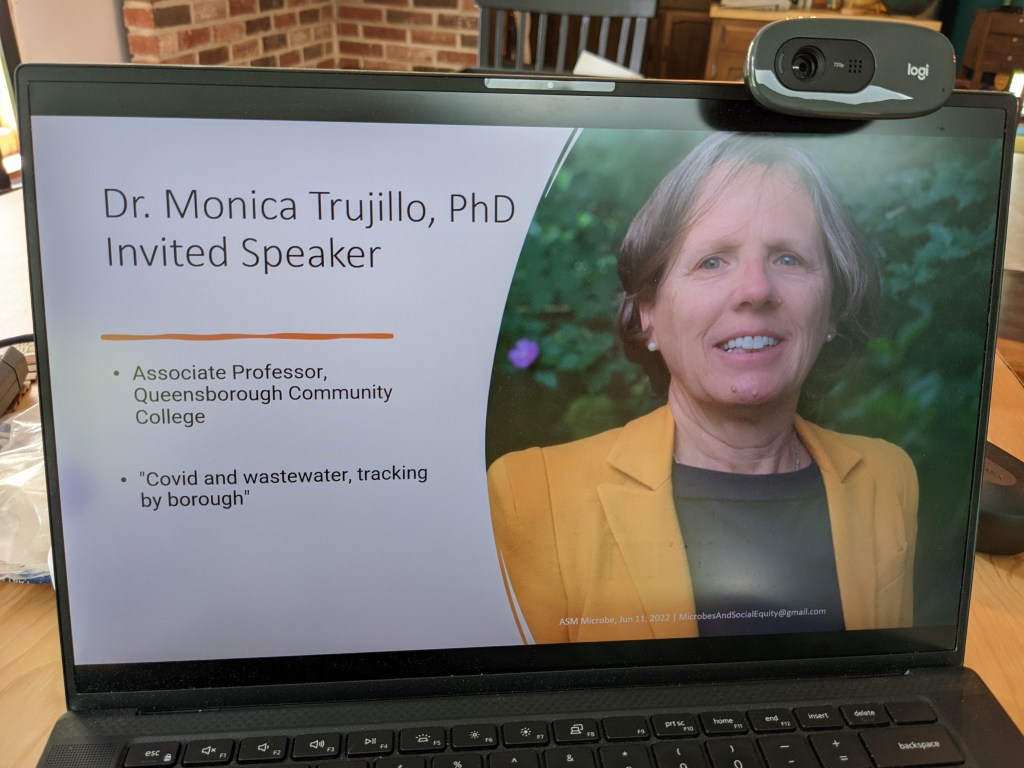
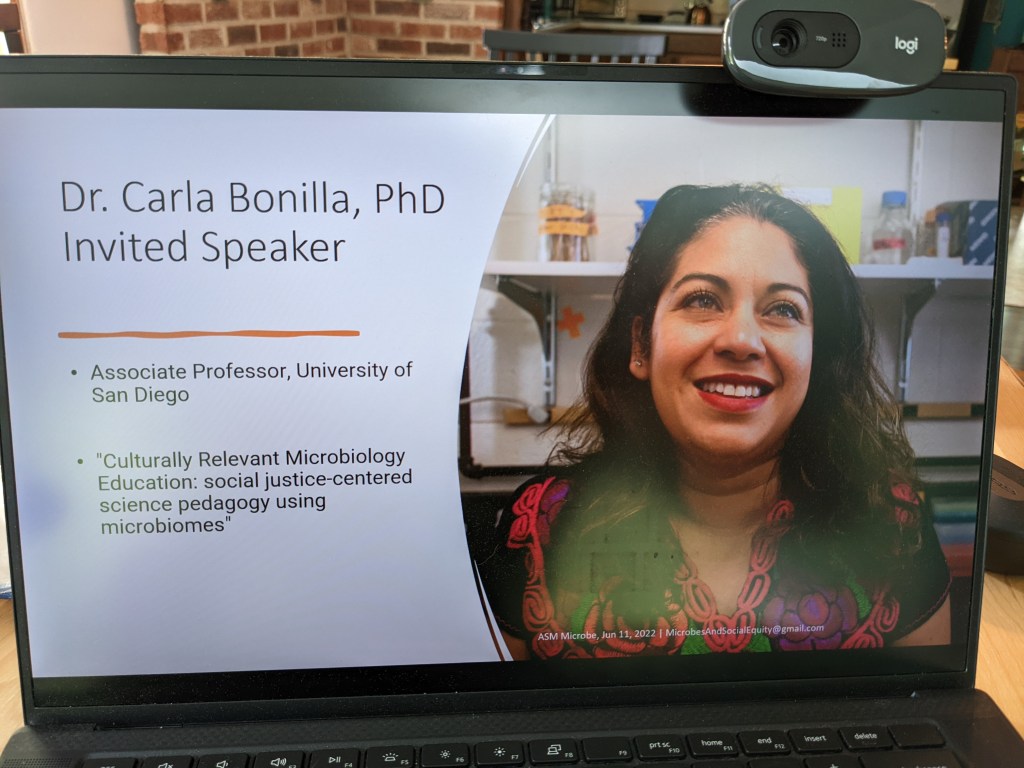
MSE held special sessions at two scientific conferences in 2022.  At ASM Microbe, Monica Trujillo, Ariangela Kozik, Carla Bonilla, and Sue Ishaq hosted a panel discussion: Microbes and Social Equity: the Microbial Components of Social, Environmental, and Health Justice. The panelists covered many aspects important to MSE from using collaborative, real-life science in microbiology teaching labs, questioning social inequities and disparities in health outcomes, and practicing critical pedagogy in microbiology education using a social equity lens. The panel was highlighted in an article published by ASM and drew an engaged audience eager to learn and share their experiences and vision for microbiology research.

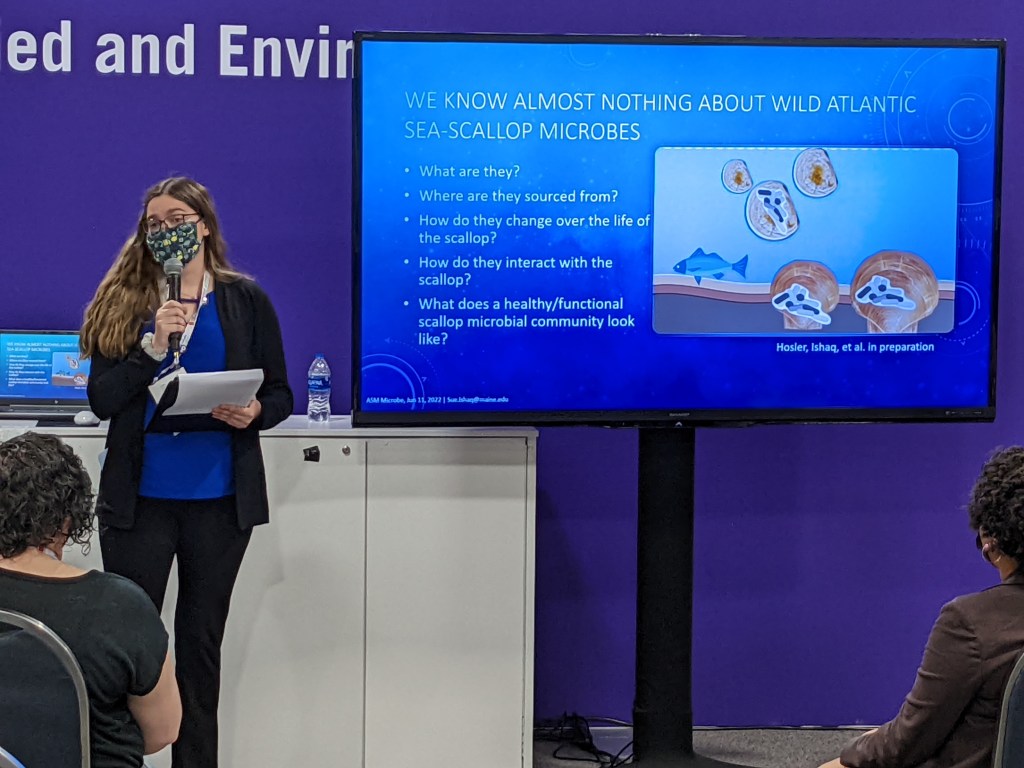
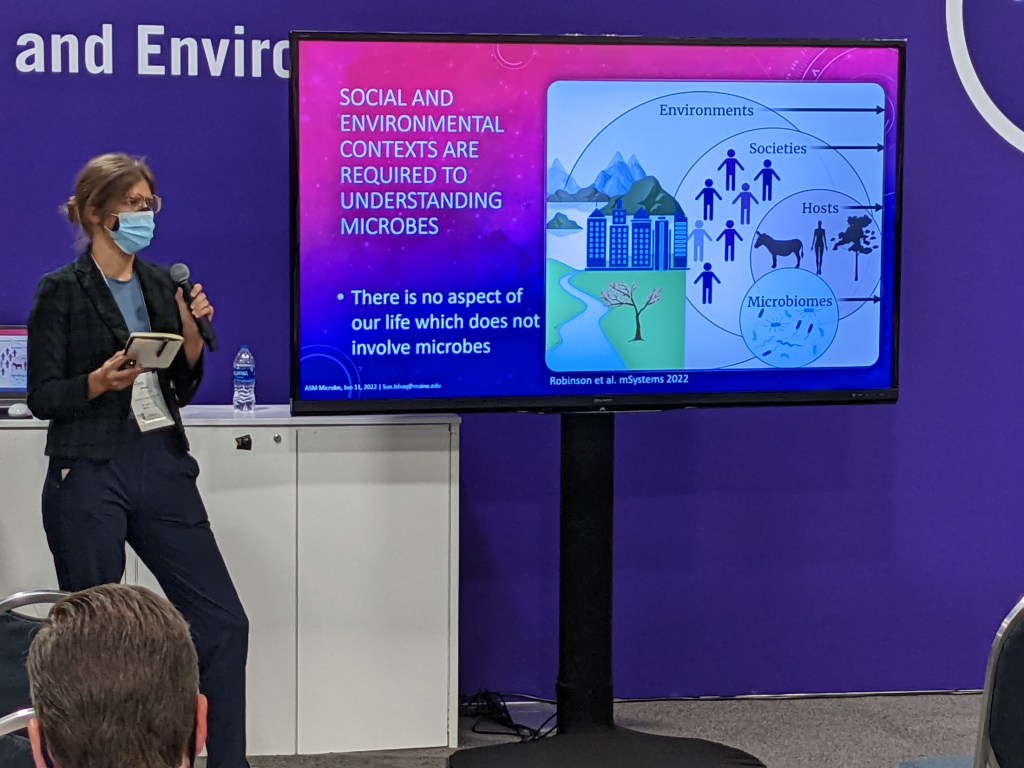
 Additionally at ASM Microbe, Emily Wissel, Johanna Holman, and Sarah Hosler were kind enough to give Sue’s presentation on “Microbes and Social Equity: what is it and how do we do it?” for the Field Work and DEI track hub.

Mallory Choudoir and Naupaka Zimmerman hosted the special session “Adding social contexts to environmental microbiomes” at the 2022 Ecological Society for America meeting in Montreal. A full room gathered to learn about the MSE working group. We drew a diverse crowd (over 40 participants), most were “microbial ecology” graduate students from public research universities, all aiming to learn new information about microbiology and social justice. We held a lively group discussion considering the human dimensions of our research projects and the perceived barriers to broadening our work to explicitly address social and environmental equity. It was fantastic to see so many smiling faces behind masks!

What are we doing in 2023?

In 2023, we will be hosting a speaker series starting in mid January, and this year we will be mixing it up by featuring speakers on a theme for a few weeks and then bringing them back for a panel discussion. We will be sharing the full line-up soon. Also new this year, one link to register them all!

MSE is planning our third annual summer symposium, which is still under development. This will be held virtually, and have a format similar to previous years where we combine plenary talks and discussions. We are hoping to add short talks/posters by students, post docs, and early career researchers this year!

As always, members are encouraged to give presentations or special sessions about MSE at scientific conferences this year, and we have previous session proposals or teaching materials which we can share to facilitate this. We also encourage members to get in touch with MSE with questions about resources, networking, or initiatives you would like to suggest.

MSE is continuing to add the rest of the contributions to the mSystems special collection in the first half of 2023, and as always we are enthusiastic about our members connecting and sparking collaborative projects! 

Happy 2023!!

2022 Year in Review

This was year 3 for the Ishaq Lab at UMaine, and we celebrated all of 2022 with new students, new projects, new funding, and exciting results! Here are some highlights, but you can check out previous blog posts in the archives for more detail. As per usual, I have divided the summary into sections: Team, Research, Publications, Presentations, MSE, Teaching, Website, and looking to the year ahead.

Team

The Ishaq Lab had its first and second graduate student thesis defense this summer, with Sarah Hosler and Johanna Holman passing their defenses in the same week! They both gave hour-long presentations of their work, answered difficult questions from their committees for another hour, and published all their work to date as a thesis. Johanna’s master’s focused on “Prevention of Inflammatory Bowel Disease by Broccoli-sourced and Microbially-produced Bioactives“, and she has continued with Yanyan Li and I to do her PhD on this. Sarah’s thesis was broader; “Weaving an Interdisciplinary Microbiome Career Using Threads From Different Ecosystems“, and she has taken a job at her undergraduate institution coordinating science education and lab experience for high school students. All of the work from their theses is being written up into manuscripts. Johanna’s literature review was recently published, and will have her other two chapters in review soon, discussed more below. Sarah’s literature review is in review, and her chapters are being added to in preparation for submission to review in early 2023.

Early in 2022, two graduate students joined the Ishaq Lab. Lola Holcomb is a PhD student in the Graduate School of Biomedical Science and Engineering, is based in Portland as GSBSE hosts remote students around Maine. Lola has been focusing on data analysis to understand microbes, health, and social equity. She began first as a rotation student for 10 weeks, and it was such a good match that we promptly assigned her to my lab for the next 4-ish years. Ayodeji Olaniyi is a MS student in Animal Science, and has been assisting on several projects to gain lab experience. He most recently has taken over the scallop tank bacterial culturing project this fall for which we have been processing 150 bacterial isolates through over a dozen culturing tests, which results in hundreds of plates and tubes to make, process, and clean every week for the past two months! There has been a team of undergraduates helping us on this project, discussed more below.

The Ishaq Lab has also been host to two visiting researchers who have been cross-training on our protocols while performing their own research. Dr. Alaa Rabee has been visiting for the last six months on a fellowship from the Cultural Affairs and Missions Sector and Ministry of Higher Education and Scientific Research of Egypt, to study fibrolytic microbes from animals and how the microbes could be used to digest plant biomass for energy production. Dr. Gloria Adjapong is a postdoctoral researcher at the UMaine Cooperative Extension Veterinary Diagnostics Laboratory on a two year fellowship, and has been generously lending a hand in the lab to help us with >700 DNA extractions and sequencing library preparations to investigate bacterial communities in scallop hatcheries.

My dog, Izzy, has been dutifully coming to campus this fall to attend classes and entertain and calm the students, distract Zoom meetings by trying to climb out the window behind me, and help catalogue all the squirrels on campus.

This year, the Ishaq lab said hello as well as good-bye to students, as we have been around long enough that students are matriculating (graduating) out and moving on to the next stage of their life. Sarah Hosler defended her master’s thesis and is currently developing and hosting high school research programs at Albright College. Undergraduates Rebecca French, Morgan Rocks, Natalie Sullivan, Sophia S., and Izzy S. graduated in May and went on to vet school, lab research, animal medical care, and more. Ellie Pelletier is graduating in May, but has completed her research project and all but one of her courses early so we are counting her as outgoing.

Publications

A stack of papers facedown on a table.

We had a productive year for peer-reviewed journal publications – with 7 published! Several of these have been in development since prior to 2022, several are the first publications for students, and all of which are thanks to my fabulous research collaboration team that now spans the globe. There are a handful more papers in peer review at scientific journals, and others which are in preparation and which we hope to submit for peer review in 2023. Below; 1 undergraduate student I mentored, 2 graduate student I mentored for this project

  1. Ishaq, S.L., Turner, S.M., Lee1, G., Tudor, M.S., MacRae, J.D., Hamlin, H., Bouchard, D. 2022. Warmer water temperature and epizootic shell disease reduces diversity but increases cultivability of bacteria on the shells of American Lobster (Homarus americanus). In review, preprint available.
  2. Hosler2, S., Kamath, P.L., Ishaq, S.L. 2022.  A review of technological advances and gaps in detecting and understanding Cryptosporidium protozoan parasites in ruminant livestock. In review.
  3. Four more are on the cusp of submission for review!

  1. Holman2, J., Hurd, M., Moses, P.,  Mawe, G.,  Zhang, T., Ishaq*, S.L., Li*, Y. 2022. Interplay of Broccoli/Broccoli Sprout Bioactives with Gut Microbiota in Reducing Inflammation in Inflammatory Bowel Diseases. Journal of Nutritional Biochemistry. * contributed equally
  2. Ouverson2, T., Boss, D., Eberly, J., Seipel, T.,  Menalled, F.D., Ishaq, S.L. 2022. Soil  bacterial community response to cover crops, cover crop termination, and predicted climate conditions in a dryland cropping system. Frontiers in Sustainable Food Systems. 911199.
  3. Ishaq, S.L., Wissel2, E.F., Wolf, P.G., Grieneisen, L., Eggleston, E.M., Mhuireach, G., Friedman, M., Lichtenwalner, A., Otero Machuca, J.,  Weatherford Darling, K.,  Pearson, A., Wertheim, F.S., Johnson, A.J., Hodges, L., Young, S., Nielsen, C.C., Kozyrskyj, A.L.,  MacRae, J.D., McKenna Myers, E., Kozik, A.J., Tussing-Humphreys, L.M., Trujillo, M., Daniel, G.A., Kramer, M.R., Donovan, S.M., Arshad 1, M., Balkan1, J., Hosler2, S. 2022. Designing the Microbes and Social Equity Symposium, a novel interdisciplinary virtual research conference based on achieving group-directed outputs. Challenges, 13(2), 30.
    • Invited contribution to Challenges, the journal for the inVIVO Planetary Health research group.
  4. Sepiel, T. Ishaq, S.L., Larson, C., Menalled, F. 2022. Weed communities in winter wheat: responses to cropping systems and predicted warmer and drier climate conditionsSustainability 14(11), 6880.
  5. Ishaq, S.L., Turner, S.M., Tudor, M.S., MacRae, J.D., Hamlin, H., Kilchenmann, J., Lee1, G., Bouchard, D. 2022. Many questions remain unanswered about the role of microbial transmission in epizootic shell disease in American lobsters (Homarus americanus). Frontiers in Microbiology 13: 824950.
    • Invited contribution to special collection: The Role of Dispersal and Transmission in Structuring Microbial Communities
    • This is the first all-female author team I have published with.
  6. Rabee, A.E., Sayed Alahl, A.A., Lamara, M., Ishaq, S.L. 2022. Fibrolytic rumen bacteria of camel and sheep and their applications in the bioconversion of barley straw to soluble sugars for biofuel production. PLoS ONE 17(1): e0262304. 
    • Impact 3.24.
    • Dr. Rabee will be joining my lab as a Visiting Research in 2022.
  7. Robinson, J.M., Redvers, N., Camargo, A., Bosch, C.A., Breed, M.F., Brenner, L.A., Carney, M.A., Chauhan, A., Dasari, M., Dietz, L.G., Friedman, M., Grieneisen, L., Hoisington, A.J., Horve, P.F., Hunter, A., Jech, S., Jorgensen, A., Lowry, C.A., Man, I., Mhuireach, G., Navarro-Pérez, E., Ritchie, E.G., Stewart, J.D., Watkins, H., Weinstein, P., and Ishaq, S.L. 2022. Twenty important research questions in microbial exposure and social equity. mSystems 7(1): e01240-21. 

Editorials published

  1. Ishaq, S., and Gilbert, J. Introducing the “Microbiomes and Social Equity” Special Collection. mSystems Aug 29, 2022.

Presentations

The Ishaq lab and our collaborators gave in-person and virtual presentations this year to scientific audiences, to students and faculty as guest seminars, and as media/news interviews. Students Sarah Hosler, Johanna Holman, Lola Holcomb, Alice Hotopp, Alexis Kirkendall Rebecca French, and Ellie Pelletier gave or contributed to presentations in 2022.

  1. Kirkendall1*, A., Ishaq, S. Taking on Multiple Research Projects in a NSF Research Experience for Undergraduates (REU) Summer Program as a Disabled Undergraduate Student. Annual Biomedical Research Conference For Minoritized Scientists (ABRCMS) annual meeting, Anaheim, CA, November 9-12, 2022.
  2. Hotopp*2, A., Ishaq, S., Frey, S., King, B., Kinnison, M., Kovach, A., Olsen, B., Cammen, K. 2022. Microbial communities of tidal marsh sparrow plumage. Association of Field Ornithologists conference, Plymouth, MA, October 17 – 21, 2022.
  3. Wissel*2, E., Holman*2, J., Hosler*2, S., Ishaq, S. Microbes and Social Equity: what is it and how do we do it? Part of Track Hub: ‘Field Work & DEI Part 1: Fostering Equitable Partnerships with the Communities in Your Field Work Location’. American Society for Microbiology (ASM) Microbe 2022, Washington, DC (USA), June 9-13, 2022.
  4. Holman, J. M., S. Ishaq, Y. Li, T. Zhang, G. Mawe, L. Colucci, J. Balkan. Prevention of Inflammatory Bowel Disease by Broccoli Sourced and Microbially Produced Bioactives.  American Society for Microbiology (ASM) Microbe 2022, Washington, DC (USA), June 12, 2022.
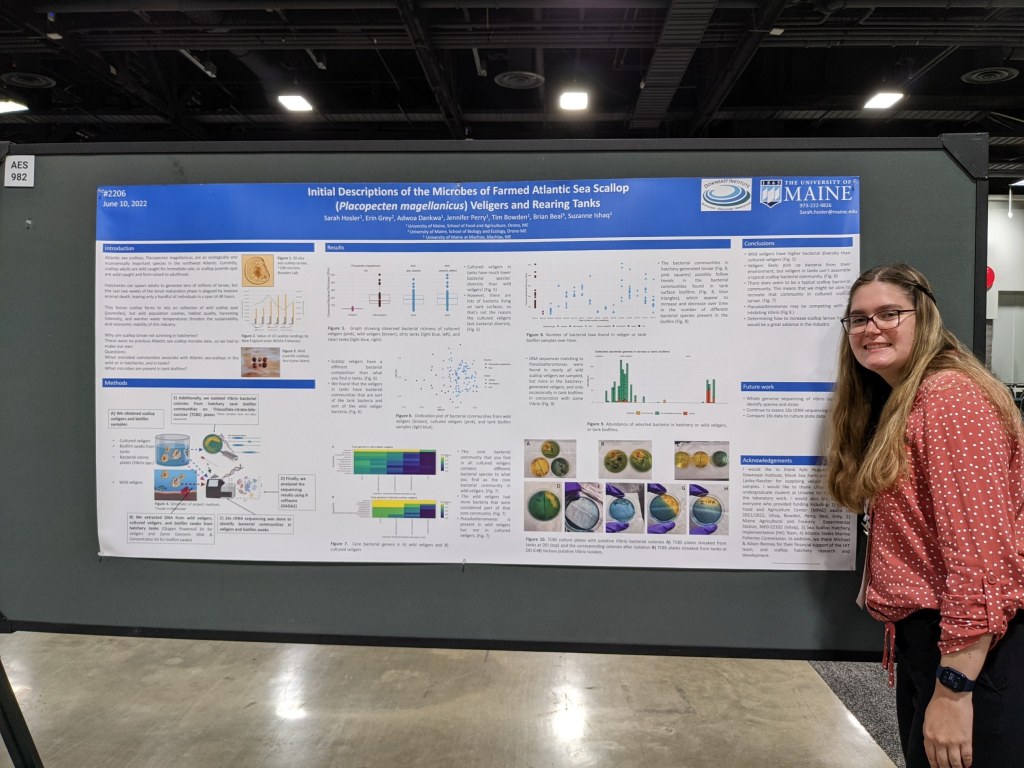
  5. Hosler2*, S., Grey, E., Dankwa, A., Perry, J., Bowden, T., Beal, B., Ishaq, S. Initial descriptions of  the microbes of farmed Atlantic sea scallop (Placopecten magellanicus) veligers and rearing tanks. American Society for Microbiology Microbe 2022 meeting. Washington, D.C.. June 9-13, 2022.
  6. Hosler2*, S., Grey, E., Ishaq, S. Comparing the microbiome of wild and farmed Atlantic sea scallop (Placopecten magellanicus) veligers. Northeast Aquaculture Conference & Exposition (NACE) and the 41st Milford Aquaculture Seminar (MAS). Portland, Maine. POSTPONED to April 27-28, 2022
  7. Ishaq, S., Li, Y., Holman*2, J., Zhang, T., Chen, G. “Biogeography may be key to microbial anti inflammatory production using dietary precursors.” Maine Biological and Medical Sciences Symposium, Bar Harbor, ME, April 22-23, 2022. (invited, canceled due to time conflict, graduate student presented in my place)
  8. French1*, R., Beale, J., Ishaq, S. Abstract 0402. Climate Change Affects Wild Mammal Ranges and Health; Will That Also Affect Infectious Disease Exposure Risk at Maine Farms? UMaine Student Symposium (virtual presentation). April 15, 2022.
  9. Holcomb2*, Coffman, J., Harrison, B., Tucker, K., Ishaq, S. Abstract 1080. An Overview of Three Biomedical Science Projects across Three Research Institutes. UMaine Student Symposium (virtual presentation). April 15, 2022.
  10. Hosler2*, S., Grey, E., Dankwa, A., Perry, J., Bowden, T., Beal, B., Ishaq, S. Abstract 0816. Initial descriptions of the microbes of farmed Atlantic sea scallop (Placopecten magellanicus) veligers and rearing tanks. UMaine Student Symposium (virtual presentation). April 15, 2022.
  11. Pelletier1*, E., Taylor, T., Ishaq, S. Abstract 830. Assessing the Veterinary Needs of Rural Maine and Implementing an Effective Management Plan. UMaine Student Symposium (poster presentation). April 15, 2022.
  12. Ishaq, S. “Microbes at the nexus of environmental, biological, and social research.” Iowa State University Spring Microbiology Graduate Student Organization retreat. (virtual). April 14, 2022 (invited co-plenary).
  13. Ishaq*, S., Li, Y., Holman2, J., Zhang, T., Mawe, G., Hurd, M., Lavoie, B. Baudewyns1, D., Colucci1, L., Balkan1, J., Chen, G, Moses, P. “Biogeography may be key to microbial anti inflammatory production using dietary precursors.”  Congress of Gastrointestinal Function (CGIF), virtual. April 11 – 13, 2022.
  14. Ishaq*, S., Li, Y., Holman2, J., Zhang, T., Mawe, G., Hurd, M., Lavoie, B. Baudewyns1, D., Colucci1, L., Balkan1, J., Chen, G, Moses, P. “Biogeography may be key to microbial anti inflammatory production using dietary precursors.”  Dartmouth Molecular Microbiology and Pathogenesis (M2P2), February 24 – 25, 2022. (invited)
  15. Ishaq, S. ​”Microbes at the nexus of environmental, biological, and social research.” 2nd Rhode Island Microbiome Symposium, virtual, University of Rhode Island Kingston, RI, January 14, 2022. (invited plenary)
  16. Ishaq, S. “Moose rumen microbes and you.” The Wildlife Society Nutritional Ecology Working Group Webinar series, (virtual), March 9, 2022.
  17. Ishaq, S. “Microbes at the nexus of environmental, biological, and social research” The Microbes and Social Equity 2022 speaker series, virtual, University of Maine and the Microbes and Social Equity working group. January 19, 2022.

Media Interviews

  1. Can broccoli sprouts be used to treat IBD? UMaine researchers investigate”, Carly D’Eon, News Center Maine, Nov 22, 2022.
  2. UMaine researchers studying whether broccoli sprouts can help prevent and treat inflammatory bowel disease”, Marcus Wolf, UMaine News.
  3. Egyptian scientist visits UMaine“, Alaa Rabee and Sue Ishaq, interview by Matthew Jaroncyk, Fox 22 Bangor, Jun 27, 2022.
  4. Featured as a woman in microbiome science for Women’s History Month by the National Microbiome Data Collaborative, Twitter, Mar 30, 2022
  5. Interviewed for “Invisible Friends”, Dr. Jake Robinson, book in production, 2022.

Research

This year has seen varied topics come through the lab, and there’s too much to include here, but I encourage you to check through the Blog page to find older research posts which provide updates. These and other projects have been successful thanks to hard work and dedication from students and collaborators.

A cartoon of three gastrointestinal tracts showing the locations of inflammation in ulcerative colitis, crohn's disease, or healthy tissue. At the bottom are cross-sections showing thickening of the intestinal wall in patients with Crohn's, and ulcers in patients with colitis.

The collaborative work we’ve been doing on broccoli sprouts, gut microbes, and Inflammatory Bowel Disease has had plenty to celebrate this year. In addition to defending her master’s thesis, Johanna authored her first first-authored publication: a review on broccoli anti-inflammatories and current research into how gut microbes can help.

We are also continuing our collaborative investigations into the gut microbiome related to Inflammatory Bowel Disease using mouse models, looking at how dietary components can be used by gut microbes to produce anti-inflammatory compounds that can help the host reduce the symptoms of colitis. In December 2020 and January 2021, we (Drs. Yanyan Li and Tao Zhang and I) ran a mouse trial that generated hundreds of samples, and we have been processing them all year! Over the fall in 2021, our collaborators at the University of Vermont (Dr. Gary Mawe, Molly Hurd, Brigitte Lavoie) ran two more small mouse trials to test some exciting new things. We are days away from submitting both of these for review at a scientific journal.

We are also preparing to run a small pilot project in 2023 looking at broccoli sprout diets in humans, as well as follow up with previously isolated bacteria from mice. We’ll need to screen over 800 bacteria for certain enzyme capabilities and usefulness in producing anti-inflammatories. And, we received funding to continue our investigations into how location in the gut, age, and cooking preparation affects the interaction between diet, gut microbes, and host health! Marissa Kinney will be joining #TeamBroccoli as a Master’s of Science student in Microbiology soon, to help us with all these exciting projects.

The Ishaq Lab has also been very busy working on projects to investigate how, when, and from where Atlantic sea scallops get their microbes.

In 2021, a pilot study got funded to begin collaborative research with a team at UMaine (Drs. Erin Grey, Jen Perry, Tim Bowden) and the Downeast Institute (Dr. Brian Beal). We collected a few hundred samples from scallops and the biofilms growing in hatchery tanks. Over this year, we have been processing the bacterial community sequencing data and hope to submit a manuscript for peer review and publication soon. This fall, we spent several months processing 115 bacterial isolates through >1800 plates and tubes, thanks to a lot of work from students Ayodeji Olaniyi, Sydney Shair, Keagan Rice, and Lacy Mayo who put in hours and hours leading the efforts on this. We are also grateful to Alaa Rabee, Aaron Williams, Lily Robbins, Ash VanNorwick, and Rebecca Kreeger who provided assistance with media making, inoculating, and the large amount of cleanup (we used glass or autoclavable plastic where possible, and sterilized some single-use plastics to be used as training tools for student education). We were also assisted by Bryanna Dube, who is working on creating outreach/education materials based on our results.

Lobster was back on the menu this year as I finished up a data analysis I had been picking away at for two years. This study is available as a preprint (a research article that is currently being peer-reviewed but isn’t finalized yet).

I’ve been collaborating with a few researchers at the Aquaculture Research Institute, where I have an affiliation. This collaborative project on lobster shell disease and warming ocean waters was begun by researchers at the Aquaculture Research Institute: Debbie Bouchard, Heather Hamlin, Jean MacRae, Scarlett Tudor, Sarah Turner, and Grace Lee.

Microbes and Social Equity

The Microbes and Social Equity working group turned 3 years old in December, and is currently at >170 members plus ~100 newsletter subscribers (you can join either list here)! We grew so much that in 2022 that we wrote a separate end of year summary for the group, which will be published soon.

Teaching

This was a busy year for teaching, as I teach 2 courses in the fall and 2 in the spring, which total ~180 students per year. This year, to accommodate disruptions to student schedules over the past few years, I also taught a handful of independent study versions of the Capstone courses for students who could not fit them into their schedule in the recommended semesters. These are considered part of my assigned workload since I taught students who otherwise would have taken this with me during a scheduled course offering, but they did add to my long list of demands for my time this year. There is too much material on my teaching to go into detail here, but I recommend checking out my previous posts on listening to your microbes (a creative assignment), responsible conduct of research (something I integrated into coursework), moving to suggested deadlines, choosing a graduate school, and how departments decide on their curricula.

Website and social media stats

The website gained a phenomenal amount of traffic this year, largely due to MSE, and with just a few days left in the year we clocked nearly 12,500 visitors and nearly 25,000 views!

We had visitors from 125 countries around the globe, with the top 10 listed in the graphic below!

I published a record 82 blog posts, but this included a few dozen that were just promoting events for MSE.

I wrote more than 34,900 words in posts this year!

The page on the 2021 MSE speaker series was the most popular for visitors this year, with MSE symposia and the 2022 series also being popular.

People shared this content on a variety of social media outlets.

Looking ahead to 2023

The Ishaq Lab has several major projects lined up for 2023, including a broccoli sprout diet pilot project with volunteers from the Bangor area, screening >800 bacteria for their ability to produce anti-inflammatories which we isolated from a mouse study using the broccoli sprout diet, investigating how the age of mice alters the effectiveness of the broccoli sprout diet, identifying 150 bacteria isolated from scallop hatchery tanks, and using >700 DNA samples collected from scallop tanks over a 3 month period to investigate what happens to the bacterial communities in tanks during a larvae rearing trial.

This past year, I was busier than I expected to be, in part because pandemic disruptions began to manifest in students needing much more time with advising to sort out their schedules within tight time constraints with fewer course overrings to choose from, and from faculty and staff taking the early retirement incentive from UMaine to reduce budget deficits which shifted their workload to remaining faculty. This is in addition to the ongoing supply shortages and delays that we are all still facing, which causes disruptions to project timelines and makes sorting out annual budgets that much more time consuming. But, I also had a few extra pilot projects or side projects running, which require more effort and communications in the early stages to get things moving.

Collectively, my workload in 2022 far exceeded what I should be taking on, and I had to set firmer limits on requests for my time, turn down opportunities, and catch up on work during my personal time to an excessive degree. In giving a talk to undergraduates in STEM fields, I urged them to build skills in time management, scheduling in advance, learning when they are able to say no (which is less frequent than you would think), and learning how to prioritize activities when they are unable to say no to requests for their time. My advice to them was that if you are forced to work during your personal time, then you should be working on the activities which benefit you the most. This is particularly important in academia where no matter how many hours I work, I can’t earn bonuses or renegotiate my planned salary increases, but yet there is an ever-increasing need for more productivity and effort. Thus, when I have been working overtime I selected activities which benefit me in other ways, and usually takes the form of writing manuscripts (which I enjoy), proposals (a Sisyphean but necessary task), or blog posts.

In support of healthy restraints on my working hours, I will have to continue to limit requests for my time in 2023 to those which build on my existing directions of teaching and research. Unfortunately, this means turning down many potential collaborations in completely new areas of research for me, to facilitate my focus on the wealth of research and teaching I currently have which fill my days (and weekends) with novelty, surprise, and joy.

Happy New Year!!

A close-up picture of petri dishes containing a light yellow film of microbes.

2020 Year In Review

As has become a New Year’s Eve tradition, here is the Ishaq Lab’s Year in Review for 2020! In previous years, I remarked on difficult and delightful times alike, but 2020 has been a year full of intense loss for so many, and some have unfairly borne more of that heavy weight. In reflecting on whether to go ahead with the post for this year, I chose to do so and to include a tone of optimism and hope because, for the first time in the Ishaq Lab, I am not writing the story of me, I am writing the story of we. Even though we couldn’t all be together this year, the Ishaq Lab has tried to do our best to stay connected, and I have had the pleasure of watching my new lab team work together and grow as scientists. I am proud of how they have handled this year, and I wanted to share their triumphs.

Research

2020 was the year for launching the first official projects of the Ishaq Lab, including a field project, a mouse project, and a handful of data analysis or microbial community projects.

A screenshot from a virtual lab meeting, featuring 5 women.

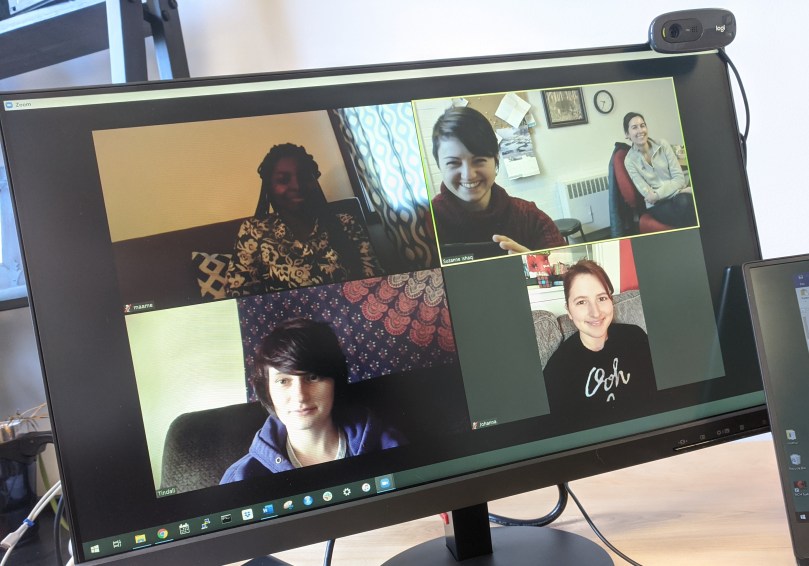
Early in the year, students began joining the lab, and we had our very first lab meeting, featuring Adwoa Dankwa (UM Perry lab), Alex Fahey (in the office with me), Tindall Ouverson (MSU, Menalled/Seipel lab), and Johanna Holman. Ironically, we had our first lab meeting over Zoom to facilitate students in multiple geographic areas, not suspecting we would only have virtual lab meetings this year.

The first field project was a literal one – a soil project! Because of the pandemic response in the spring and early summer, laboratory work was reduced until we could do so safely in enclosed spaces. But, we were able to launch a field project because the samples could be collected and processed by one person alone over the summer. Undergrad Nick Hershbine, who is majoring in Ecology and Environmental Sciences, has been investigating the microbial community in blueberry soil from farms around Maine. This is part of a larger project led by Dr. Lily Calderwood, and is supported by the  Wild Blueberry Commission of Maine (“Exploration of Soil Microbiota in Wild Blueberry Soils“). Nick is in the process of data analysis and interpretation, and we hope to write up the preliminary results over the winter.


The Ishaq Lab also launched its first mouse project! This is my first time managing mice, and luckily I have expert collaborators at Husson University and a stellar grad student taking the lead on those portions. I’ll be overseeing the microbial ecology aspects, done by master’s student Johanna Holman for her graduate work. Joe Balkan, a Biology undergrad at Tufts University, has been reviewing previous literature for culturing protocols, and will be joining us for two weeks over break to help with some bacterial work. Undergrad Evan Warburton, who started in the fall semester, will pick up that microbiology work from Joe at the beginning of the spring semester.

The Ishaq Lab also had its first student presentation this year, by master’s student Sarah Hosler giving a graduate seminar on her proposed research for her degree, which involves host-microbial interactions in ruminants. The first portion of laboratory work for her project will take place starting in winter break. We’re not ready to share any details, but first we will be trying out some new methodology, as well as recreating some older methodology which has fallen out of fashion.

As part of that first step, Sarah will be assisting with the Capstone project of undergrad Emily Pierce, who was awarded a UMaine CUGR undergrad fellowship to fund her work this spring. Emily will be investigating host-microbe interactions during Cryptosporidium parvum infections, something which routinely devastates newborn livestock. We had anticipated running this experiment last summer, but postponed it for safety. Emily and master’s of professional studies Alex Fahey have made good use of that delay, however, and have been spending the time reading scientific manuscripts, assembling experimental protocols, and designing their project. Alex does not need to complete a thesis for her degree, it’s more about assembling a variety of skills, so she has participated in a number of supportive activities this year.

Undergrad Jade Chin has been working on her Honor’s Thesis project, the scope of which has had to nimbly pivot over the past year as we weren’t sure what we would be able to accomplish during the pandemic. For example, we spent two months waiting for DNA extraction kits to arrive due to supply shortages and the federal disruption of the postal service. Those kits are critical to the very first step of the experimental procedures and one we could not skip. Jade will defend her Honors thesis in spring 2021, including a written thesis, an oral presentation, and even a short interview with her thesis committee, although it will be less formal and less strenuous than a graduate-level defense.

Grace Lee, an undergrad at Bowdoin College, has been working on data analysis of microbial communities associated with lobster in aquaculture, which is part of a larger project by Drs. Debbie Bouchard, Jean MacRae, and Heather Hamlin. The dataset is a large and complicated one, though with an elegant experimental design. We anticipate writing up the results beginning this winter and continuing through the spring. Grace will be joined by an undergrad who I have been mentoring in my AVS 401 Capstone class, who will be contributing a literature review for the manuscript.


Three papers were published this year, which were all part of previous projects at former positions. This included the culmination of my post-doc work in the Menalled Lab from back in 2016, and one of the small projects I participated in while at BioBE from 2017 to mid 2019.

  1. Horve, P.F., Dietz, L., Ishaq, S.L., Kline, J., Fretz, M., Van Den Wymelenberg, K. 2020. Viable bacterial communities on hospital window components in patient rooms. PeerJ 8: e9580. Article.
  2. Ishaq, S.L., Seipel, T., Yeoman, C.J., Menalled, F.D. 2020. Dryland cropping systems, weed communities, and disease status modulate the effect of climate conditions on wheat soil bacterial communities. mSphere 5:e00340-20. Article.
  3. Ishaq, S.L., Seipel, T., Yeoman, C.J., Menalled, F.D. 2020. Soil bacterial communities of wheat vary across the growing season and among dryland farming systems. Geoderma 358(15):113989. Article. This was accepted in 2019 but not officially published till 2020.

It’s very common to have a slump in publications when starting a new position, and particularly when that involves moving to a new institution and establishing a new lab group. Research can take awhile to gain momentum, especially when you need to recruit and train new lab members. Or, when those lab members have to pause their lab work for global public health reasons. The Ishaq lab isn’t worried, we’ll make up for it in 2021. With all the ongoing projects, we anticipate a handful of other papers being developed next year. I’ve also got four manuscripts that have been in review for months, a process which has also been (understandably) delayed because of the pandemic.

Five stickers advertising the Ishaq Lab, with different photos of lab equipment, bacterial culture plates, and sheep.
We tried out some designs for Ishaq Lab stickers!

Teaching

I taught three new classes this year; one that was new to me and two that I developed myself. In spring 2020, I taught a special topics version of my DNA sequencing data analysis class, which means that I got provisional approval to teach it as a one-off while I completed the full course approval. Because the data analysis class is cross-listed for undergraduate seniors and for graduate students, it needed to go through two different curricula approval processes, and curricula must be approved a certain amount of time before the first instance of the class. That class has now been formally approved as AVS 454/554. From the spring version, two scientific manuscripts are in review, and a third is in preparation while more data are added. We managed to achieve a lot in the spring class, considering halfway through the semester we switched to remote instruction only as the early throes of the pandemic descended.

The other two new classes I taught this fall, including the first part of the Animal and Veterinary Sciences Capstone Experience, AVS 401, which instructs students on writing and presenting research proposals and matches students with a research mentor to try and complete the project. It was particularly challenging to do that this fall, when many researchers still had their work on pause because of the pandemic. I’ll be continuing this class in the spring as AVS 402, in which students present what they’ve done. While only a few AVS students will pursue research as a career, they will all need to implement the scientific method and the ethos of research into their lives no matter where they end up. Being able to find, assess, and critique information are all critical skills which this Capstone Experience helps them to develop.

I taught AVS 254, Introduction to Animal Microbiomes. I’ve previously taught some of this material, but to very different student audiences, which required a lot of course development on the fly over the semester. Even with the previous material, I still needed to revise all my previous lectures to adapt to a new lecture length, add new ones to make up about half the semester, and, as our understanding of host-associated microbiomes evolves over time, the course materials needed to be updated (annually) to present up-to-date knowledge. The last lecture of the semester was a compiled video of ‘science journeys‘, featuring researchers in host-associated microbiology sharing what they work on and how they got here. You can watch the video, too!

I also spent a lot of time this fall curating the Teaching Statement portion of my tenure packet, some of which I shared as a series of posts this fall. Next spring I will have my third-year review, which will be the first official hurdle and where I get more substantive feedback from my peer committee about the trajectory of my teaching, research, and outreach as I develop my packet to apply for tenure in ~ year 5. In 2021, I have a planned blog post describing the history and process of tenure, and I will likely share other portions of my tenure packet, such as my research statement.

Presentations from my couch

As I recently posted, 2020 has been The Year of The Virtual Conference. Many conference in spring and summer of 2020 were outright cancelled, but some managed to revise their format and be held virtually later in the year. This was achieved with a combination of live-streaming and pre-recorded content, all of which became on-demand during the conference. Viewers could ask questions through a chat function, or by posting questions directly to the presentation page. While early attempts to host large virtual meetings with researchers in multiple time zones faced a steep learning curve, overall, I think many people realized the potential provided by a virtual platform. For example, without travel costs, more students and early career researchers could afford to attend, and researchers with family care, health, or other constraints could participate on their own time.

Seven of the eight planned scientific presentations of my work took place in 2020, listed here with some links to video content.

Outreach

Screenshot from an online seminar. The video of the speaker is in the upper right corner, and the title slide is the rest of the image. The seminar is "A crash course in the gut microbiome" by Sue Ishaq at the University of Maine.

Similarly, seven of the eight planned public presentations took place, with some links to video content in the list below:

  1. University of Maine Medicine seminar series (virtual), “A crash course in the gut microbiome” , Nov 6, 2020. pdf of slides with annotated comments: ishaq-ummed-gut-crash-course-20201106
  2. Genomes to Phenomes (G2P) group, University of Maine. Co-hosted a session with grad student Alice Hotopp, on gut microbes and survival of reintroduced animals. Oct 30, 2020.
  3. University of Maine Cooperative Extension Oxford County 4-H Teen Science Cafe (virtual), “Gut microbes on the farm”, Oct 15, 2020. 
  4. BioME (Bioscience Association of Maine) Virtual Coffee Hour, “What is a microbiome and where can I get one?” Oct 14, 2020. I introduced myself and my research to 65 participants, who are biomedical professionals and state representatives in Maine. 
  5. University of Maine Cooperative Extension Oxford County 4-H Jamboree (virtual), “Gut microbes on the farm”, Aug 13, 2020. Video.
  6. Invited to lead Journal Club with the Fogler Library, August 4, 2020. led a 1 hour discussion on gut microbes and survival of reintroduced animals.
  7. Albright College Science Research Institute summer program 2020, which engages grades 5-12 in research.  “A crash course in the gut microbiome”, virtual presentation, Aug 4, 2020.

I’ve also been endeavoring to promote the AVS Capstone Experience projects, in part by sharing student-written project summaries on social media and UMaine news outlets. I will do something similar at the end of the spring 2021 semester when projects are complete. And, the online conferences have gotten me thinking about how to create an on-demand virtual symposium that is open to the public…

Blog

I published 45 posts this year, including this one, and was much chattier this year with over 26,000 words total. The most popular post this year was What is academic Outreach/Extension, a sleeper post from 2017 which finally ended the popularity reign of Work-Life Balance: What Do Professors Do?. A number of posts were tied for the least popular this year with one view each, but at the bottom of that possibly-arbitrary list, was A collaborative project got published on the biogeography of the calf digestive tract!, a publication announcement from 2018.

My site had its most popular year, with just over 5,000 visitors taking >8,250 views from 112 countries, as shown in the image below. This November had a record number of visitors, with >1,100! In total, my site has had >15,200 visitors and just under 24,000 views since January 2016, more than I had imagined possible when I began. The website visitors are joined by 64 wordpress followers, 100 on Instagram, 113 on Facebook, nearly 1200 on Twitter, and 0 on Tumblr, which I set up because wordpress will auto-reblog to there, just in case anyone still uses Tumblr.

Life

I picked up a new hobby this year – axe throwing! I tried it at an axe bar last winter and instantly took a shine to it. We made wood targets at home and bought a few throwing axes, and while I haven’t become the maverick I had hoped, it is a lot of fun. I’ve also picked up an arguably more useful skill, basic electrical work to change outlets and light switches! We’ve been slowly updating and renovating our house, and I’m looking forward to learning drywalling and flooring next near.

Looking Ahead

2021 is anticipated to be an exciting year, and will be a combination of wrapping up current projects so some of my students can graduate, as well as progressing the graduate work of Johanna and Sarah. In my “free time”, I’ll continue to fine-tune my curricula, and it’ll be back to the writing table as I revise the research proposals that I submitted this year which were not awarded funding. Of the twelve proposals I submitted in 2020, two were awarded, one is already revised and back in review, at least two will be revised and resubmitted, and at least two new ones are planned.

I’ll be part of my first graduate thesis defense as part of the committee, as Tindall Ouverson is expected to defend her master’s in 2021 from Montana State University. Tindall’s first paper on soil bacteria in agricultural fields is currently in review, and the data analysis for two more (one of which is not on soil microbes) is underway.

I’ll also be leading the committee for Jade’s Honors thesis defense in March. Alex won’t be giving a defense to finish her degree, but she’ll still be informally meeting her committee to reflect on her academic journey and if she’s prepared for a professional career. Johanna and Sarah will soon be inviting faculty to their committees, and next year I will be chairing those meetings.

I’ll be teaching the AVS 402 Capstone class for the first time, but as I already spent the fall semester with AVS seniors in AVS 401, it shouldn’t be any trouble. Just a LOT of revising papers and giving feedback. I’ll be teaching my DNA analysis class again, and will spend the next few weeks updating the materials from last spring when I taught the special topics version. I’ll also be compiling datasets for my students to work on, and hopefully, to turn into scientific manuscripts by the end of the semester.

A number of events developed by the Microbes and Social Equity working group will come to fruition in 2021, and I will finally be able to tell you about them in detail! Stay tuned for information on a speaker series running from February through April, a hybrid (virtual and in person) symposium in June, and a public announcement of a scientific journal special collection.

I’m also pleased to say that one of my cousins will be joining the website behind-the-scenes in 2021, to add alternative text to my website images to make them more inclusive. This and other work will serve as part of the requirement for science/service hours for membership to the Science National Honor Society! I’ll leave it to my cousin to make a formal introduction in a blog post on science accessibility, but welcome to the team!


See you next year!

2019 Year In Review

Notwithstanding the different reasons, 2019 has left us reeling, myself included. Early in the year, I was left scrambling to keep my science career going in the face of unsteady funding resources. Through a combination of collaboration, long hours of writing, a strong support network, a lot of luck, and a pragmatic demeanor, I landed a tenure-track faculty position and pulled off one of the best years of my career, to date. I deeply appreciate all of the concern, assistance, coffee, revisions in a timely manner, coffee, and support provided by so many individuals in the last year.

Research

My momentous research activity of 2019 was joining the faculty of the University of Maine, Orono, School of Food and Agriculture as an Assistant Professor of Animal and Veterinary Sciences, beginning in September. In August, my partner, our patient dog, and I drove from the west coast to Maine on a 9-day adventure that would begin a new (and more permanent) phase of our life. From our education in Vermont, to my post-docs in Oregon, to my research faculty position in Oregon, to Maine, we loved the opportunity to live in various states, but are looking forward to having an address for longer than 2 years and more stable income forecasting.

The first few months of my faculty position have been busy! Notably, it’s involved a LOT of training, paperwork, getting acquainted with campus resources, and making connections. Some of these have involved seeking approval to take on graduate students, not just from my department, but students from other departmental programs that want their research to center around my lab’s specialties. UMaine strives to provide interdisciplinary opportunities for students, and as such, encourage multiple cooperating positions. In addition to being able to bring on grad students through the School of Food and Agriculture, I have just been approved as faculty in the Graduate School for Biomedical Sciences and Engineering, and have another cooperating position pending.


My work now spans three major research priorities. My lab will focus on the gut microbiome of livestock, and how microbes can be used to promote animal health and production. This will take shape in a variety of ways, including through global collaborations (more on those as they develop, but many of my previous rumen collaborations that began at Montana State are included in that). I’ll be taking on several graduate and undergraduate students in 2020 for these projects.

Through ongoing collaboration on projects led by Drs. Fabian Menalled and Tim Seipel at Montana State University, I’ll be participating in research to understand climate change and farming practices on wheat production and soil microbes. I am a graduate committee member for Tindall Ouverson, who is completing her master’s at MSU.

I’ll also be collaborating with researchers on microbes in the human gut. Through ongoing collaborations with researchers at the Institute for Health in the Built Environment (primarily those at BioBE) at the University of Oregon, I’ll be looking at infectious disease transmission and building design. And I’m currently developing new collaborations with researchers at Husson University, University of Maine, University of Vermont, and other institutions, which will investigate the interaction between diet, gut microbes, and human health. I’ll be taking on several graduate and undergraduate students in 2020 for these projects.


I published a record 10 papers this year! I don’t expect to achieve this again anytime soon: over the spring and summer I was only working half-time, and with the rest of my time I was doggedly writing up previous project results, overseeing undergraduate authors, and emailing co-authors for revisions. Writing or managing the writing of a manuscript takes a significant amount of work. Even when experiments or field trials are completed within days, weeks, or months, it may takes years to process, analyze, and measure the samples you collect, as well as complete the statistical analysis. You might encounter technical problems, or need to validate a method for use with your research. After all, much of what researchers do is trying new things, as there isn’t always a well-validated protocol to follow and you need to come up with something new. Thus, at least half of the publications from 2019 were wrapping up experiments that had occurred as far back as 2014!

Because of the time span, it meant I published on a variety of topics, from the effect of diet on rumen bacteria in sheep, to the effect of farming practices on bacteria in soil, to the effect of chemicals from vinyl floors on bacteria in dust. It meant a LOT of reading for me, to appraise and condense the relevant literature for each project: my citations list might contain up to 100 other papers!

A stack of papers facedown on a table.

Teaching

Over the summer, I taught “Microbes and Social Equity” at The University of Oregon for the Clark Honors College. In just four weeks, the students, a few guest speakers, and I collectively wrote a paper to introduce the topic. We submitted it to the journal PloS Biology, and it was accepted for publication in their special call, Microbiomes Across Ecosystems. You can read it here. In the first month, it’s been viewed nearly 5,000 times!

I am developing new coursework for the University of Maine, including AVS 254 Introduction to Animal Microbiomes, which will be taught annually beginning in Fall 2020. This spring, I’ll be teaching a ‘special topics’ class, which will be the preliminary version of a class I am currently developing: DNA Sequence Data Analysis Lab, which will teach students the programming and analysis required to understand complex DNA sequence data, including amplicon, whole-genome, and metagenomics datasets. The special topics version is limited enrollment, and a way to beta-test the class before spending the significant amount of time required to develop a new course. I’ll be sharing more info about the classes as they develop.

Presentations and Travel

In May, I again presented my BioBE research to the Institute for Health in the Built Environment

Consortium meeting in Portland, OR. It was a quiet summer for me, but I did attend the Gordon Research Conference on Animal-Microbe Symbioses in Vermont, which showcased fascinating research on the ways that humans and animals interact with the microbes that inhabit our bodies. In October, I had a whirlwind week-long trip which involved giving a presentation in Monterrey, Mexico, then a different presentation in Reno, NV the following day, then heading to Bozeman, MT to catch up with collaborators and teach bioinformatics to Tindall. All of the meetings, seminars, and training was very valuable, but the best part, hands-down, was going to Matacanes canyon.

Sue rappelling down through a waterfall into a cave.
Rappelling down through a waterfall into a cave.

Outreach

Over 2019, I gave more than ten (not all have been published) interviews on my research! This included a live radio interview, and two podcasts: all new experiences for me.

  1. UMaine prof: Inequity is creating a gut microbe gap.” Mike Tipping and Ben Chin, Maine People’s Alliance. Dec 20, 2019.
  2. Women in Science – Implicit Bias“. Ida Hardin. Dec 13, 2019.
  3. Inequity takes a toll on your gut microbes, too.” Sue Ishaq,  The Conversation, Dec 4, 2019.
    1. Picked up by The Telegraph, Alton, Illinois, and other agencies
    2. Included on UMaine news
  4. All people have a right to healthy gut microbes.” Paige Jarreau and Signe Asberg, Lifeapps. Dec 3, 2019.  
  5. Rich People Have Access to Better Microbes Than Poor People, Researchers Say.” Becky Ferreira, Vice. Nov 26, 2019.
  6. Microbiome is a Human Right.” Heather Smith, Sierra. Nov 26, 2019.
  7. Life, liberty—and access to microbes?” Press release for Plos Biology. Nov 19, 2019.
  8. Study finds season an important factor in soil microbe sampling.” Erin Miller, University of Maine.  Nov 6, 2019.
  9. cUriOus: Buildings Have Microbiomes, Too!” The Jefferson Exchange with Geoffrey Riley. Mar 8, 2019.
  10. ” The Great Indoors: Interior Ecology Under the Looking Glass.” Alex Notman, University of Oregon College of Design. Jan 14, 2019.

Blog

I published 30 posts this year, including this one, although with ~11,000 words total, I had less to talk about. I anticipate that will change when my lab gets rolling. The most popular post this year continues to be Work-Life Balance: What Do Professors Do?, self explanatory, and the least popular this year is I Accepted a New Position in Soil Microbiology and Agroeconomy!, which makes sense as it was an announcement from 2016 about a post-doc position I’d accepted.

My site had its most popular year, with >4,000 visitors taking >6,000 views, represented by 109 countries. In total, my site has had > 10,000 visitors and >15,000 views since Jan 2016

Map of the globe with countries colored by number of visitors to this website.
Website visitors in 2019.

Life

If you’ve read this far, you can probably guess how hectic my life has been this year. At the same time, it’s been gorgeously complex. I finally made it down to see Crater Lake in Oregon, went powder skiing in the Rockies in Utah, drove through the dramatic beauty of the Rockies in Alberta, made my first visit to Mexico and was immersed in the isolated beauty of a mountain canyon in Matacanes.

Crater Lake, Oregon.
Sue with her dog, Izzy.

I read the debut science-fiction novel of one very dear friend of mine and non-debut science non-fiction novel of another dear friend, and took an excessive amount of selfies with my dog.

Sue and Lee in front of a log cabin.

And… we bought our very first house!!

Looking Ahead

This Year in Review, I have the clearest idea of where my 2020 is heading. With a new lab and new classes, I’ll be happily well-occupied. I’ll be obtaining 3+ quotes to buy each piece of lab equipment (if it cost more that $6,000) and then waiting two months for it to arrive, troubleshooting R problems and revising scientific manuscripts written by first-time authors, I’ll be training my new brood of students in the lab, and I’ll be sharing my experiences here! Stay tuned!


Featured Image: Cookies from Mug Buddy Cookies