The Microbes and Social Equity working group and The University of Maine Institute of Medicine present an inaugural symposium on:
“Microbes, Social Equity, and Rural Health”
June 14 – 18th, 2021
Format: virtual meeting, Zoom platform.
Program and Registration
Registration, a full speaker list and program, and details of each day can be found here.
Registration will occur for each (day) section individually, so participants can select which topics to participate in, or all of them.
Registration is free and open to the public.
Summary
Microorganisms are critical to many aspects of biological life, including human health. The human body is a veritable universe for microorganisms: some pass through but once, some are frequent tourists, and some spend their entire existence in the confines of our body tissues. The collective microbial community, our microbiome, can be impacted by the details of our lifestyle, including diet, hygiene, health status, and more, but many are driven by social, economic, medical, or political constraints that restrict available choices that may impact our health.
Many human clinical conditions or diseases have been established as being related to the state of the human microbiome. It is known that collective social inequity can drive the prevalence, morbidity, and mortality of some of these diseases or conditions. When access to a nutritious diet and healthcare are impeded by social inequity, these disparities can also affect the human microbiome; this can further contribute to reduced or poorly functioning microbiomes.
Access to resources is the basis for creating and resolving social equity—access to healthcare, healthy foods, a suitable living environment, and to beneficial microorganisms, but also access to personal and occupational protection to avoid exposure to infectious disease. The emergence of the SARS-CoV2 (COVID-19) pandemic has dramatically altered our daily lives and the availability and ability to access essential resources, which has been worsened by pre-existing social inequity. Yet, the pandemic has also highlighted the inherent social disparity among those more likely to be exposed to infectious diseases.
This meeting highlights recent investigations into beneficial and detrimental instances of microbial exposure, in the context of how social policy may mediate or deepen disparities between and within populations. In addition to invited presentations on thematic sections, each section will involve a discussion session using smaller breakout groups, to facilitate conversations and brainstorming between attendees. These groups will be arranged around smaller themes or research questions, and group members will identify knowledge gaps for future research, as well as list actionable steps that can be taken using existing research to promote equitable social policy. Ideally, meeting attendees will gain knowledge, collaborators and connections, and a path forward for turning their research into evidence-based policy to support public health.
Meeting dynamics
Unlike traditional symposium formats, this meeting will present some plenary-style talks by experts in the field, including biological scientists, social scientists, practitioners or policy makers, as well as facilitate discussion among participants. Each thematic section will feature 90 minutes of talks, which will be recorded and made publicly available after the live session. After each plenary session, there will be 90 minutes of discussion in groups led by speakers and MSE group members, and assisted by notetakers, with ~10 participants per breakout room. Participants will be encouraged to “problem solve” a suggested topic or one of their own choosing. The goal is to create action items that are meaningful for group participants, such as ideas for curricula development, identifying research needs or best practices, suggestions for engaging research in policy, and more.
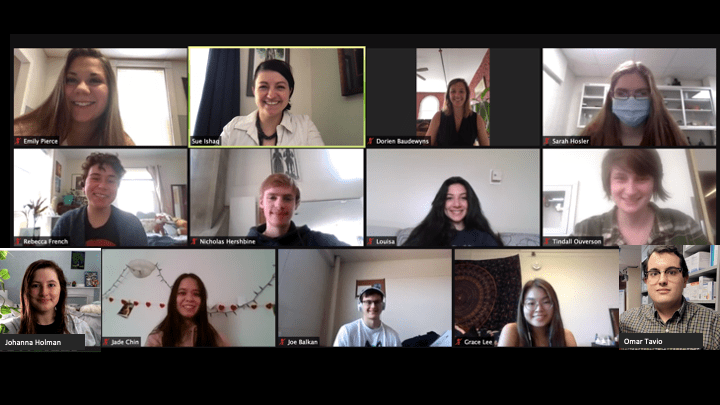
We finally managed it: from 5 different universities in 4 different geographic locations across two time zones, the core Ishaq Lab team took a group photo despite having been around for over a year. And, just in time, as several of our members (and selected associated members) will be matriculating soon!
Tindall, at Montana State University, is planning to defend her master’s thesis in May and moving forward with her planned career in sustainable agriculture in the Great Plains. Emily, our first undergrad researcher at Maine, will be graduating and heading to Kansas State University School of Veterinary Medicine to prepare for her dream career at her dream school. Jade will be defending her undergraduate honor’s thesis in May in preparation for heading to Glasglow, Scotland for her senior year, as part of a 7 year (undergrad + veterinary school) program between UMaine and veterinary schools there. Grace is graduating with her bachelor’s and will be working in research for a bit before deciding on a graduate program, and in the meantime, will be writing up the results from a data analysis project into a scientific manuscript for publication (her first!). Dorien is also about to graduate with her bachelor’s, and will be working in research before matching with a graduate program in psychology.
It has been an honor to work with these students as they develop their professional skills and share my research journey for a bit, and the Ishaq Lab wishes them continued success on their next phase!
I’m pleased to announce that I’m leading a research project this year that was just funded by the University of Maine Rural Health and Wellbeing Grand Challenge Grant Program! This is a collaborative project developed by myself, Danielle Levesque, UMaine; Pauline Kamath, UMaine; and Jason Johnston, UMPI.
The project will provide preliminary data for a larger collaboration, and will support up to 5 undergraduate researchers over the next year, including Rebecca French and Catie Sullivan who have recently joined the Ishaq Lab team. Those 5 students will be mentored across the four labs on two different campuses, and will be involved in the project management experimental design, sample collection and processing, writing, presenting, and social media outreach aspects of the project to give them an interdisciplinary and holistic experience in research.
The full program announcement can be found on the UMaine site:
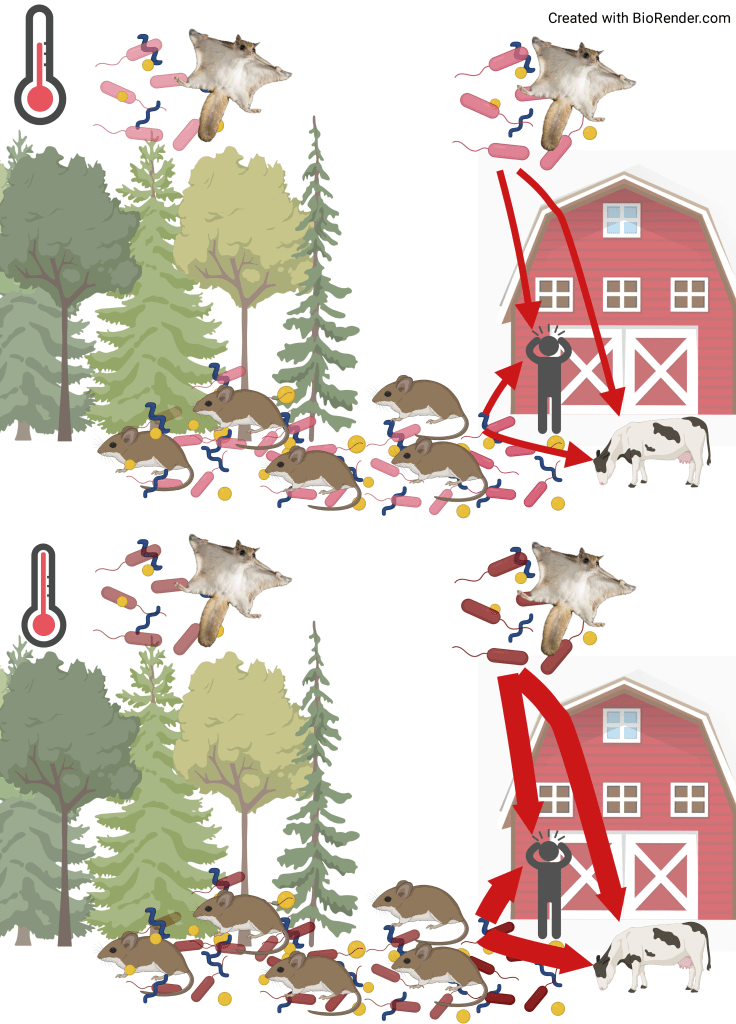
Abstract: Climate change alters the range distribution of wild animals, often causing species to move further north in Maine, and two recent examples include the Southern flying squirrel (Glaucomys volans) and the white-footed mouse (Peromyscus leucopus). Such movements bring new parasites and endemic pathogens north, as well, which may cause significant disease in native wildlife and local livestock who are naive to these microorganisms. Further, heat stress affects the physiology of mammals and humans, increasing their susceptibility to infections originating in the gut, increasing parasite shedding, or altering zoonotic infectious disease risk by affecting animals, humans, and microorganisms. Collectively, this begs the question, if climate change affects wild mammal health and infectious disease susceptibility; will that also affect infectious disease exposure risk at Maine farms?
Figure 1: a schematic of our research question, drawn somewhat facetiously.
Tindall is a master’s of science in Land Resources and Environmental Sciences at Montana State University, working with advisers Drs. Fabian Menalled and Tim Seipel. Tindall and I have been working closely over the past three-ish years on soil microbiomes, and she is preparing to defend her thesis this May.
Nick Hershbine, undergraduate student majoring in Ecology and Environmental Sciences in the Ishaq Lab has been awarded a 2020-2021 University of Maine Undergraduate Student Employee of the Year!!!!
Nick began working with me in summer 2020, on a collaborative project looking at microbes in the soil around low bush blueberry plants. At the time, he was early in his undergraduate program and having no prior laboratory skills. In addition, because of the pandemic, we have minimized interactions between students, such that Nick has primarily been working independently with occasional meetings with me to discuss his progress. Despite all of that, he has exceeded my expectations for his capacity to handle this tricky project, and more than that, to have the independence to make it his own and contribute to protocol development. Nick has had a positive impact on the lab, within the confines of the limited interactions between students allowed at this time. He is kind and friendly, and makes the lab a welcoming place to work. Congrats on the award!!
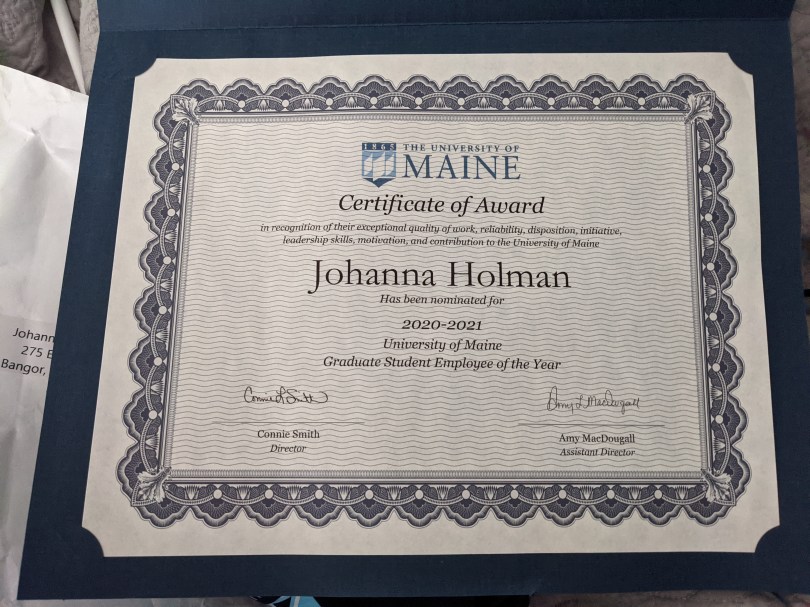
Johanna Holman, Master’s of Nutrition student in the Ishaq Lab has been awarded the 2020-2021 University of Maine Graduate Student Employee of the Year!!!!
I met Johanna in the fall of 2019, when I was just establishing myself as a new Assistant Professor in the School of Food and Agriculture, and she was looking for an advisor for a graduate degree. Right away, she impressed me with her background and enthusiasm for research. I learned that Johanna began her undergraduate study as an art student before transitioning fluidly to science. I see this is an asset – the ability to design visual aid and graphical representations of data is hugely important to science and sadly, not always a skill that scientists are trained to do. Johanna also had a number of service industry jobs, and initially in that first meeting, she was somewhat apologetic for not having been devoted to science jobs from the start. I countered that I was pleased to see that she has worked in other industries, specifically in difficult service-related jobs. It is often more important to have patience, dedication, and strong interpersonal skills, such as those gained by working in customer-facing jobs. I believe that Johanna has and will continue to succeed because of her varied education and experience.
Once she became a science student during her undergraduate study, she worked in the laboratories of Drs. Yanyan Li, Associate Professor (of nutrition) in the College of Science and Humanities, and Tao Zhang, Assistant Professor of Basic Pharmaceutical Sciences, both of Husson University in Bangor. There, she has performed nutritional biochemistry, worked with mouse models, and developed an idea of what she wanted to study in graduate school and pursue as a career.
Johanna officially joined my lab and started as a Master’s Student of Nutrition at UMaine in fall 2020, and immediately got to work. Not only did she begin preparations for the massive undertaking that is part of her project, but she began mentoring several undergraduates on and off campus, and started as a first time teaching assistant for the Chemistry department, which required navigating virtual labs.
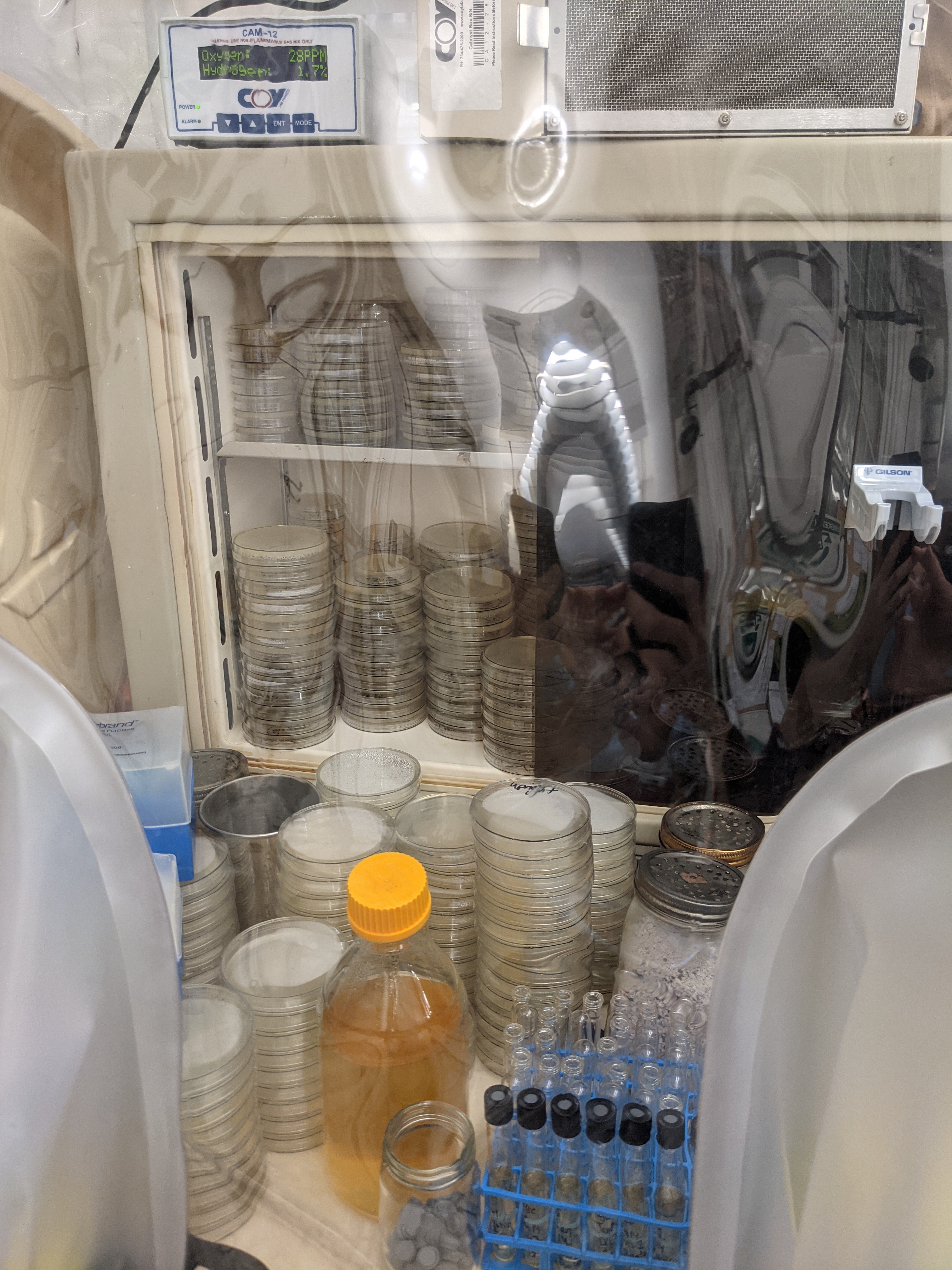
Johanna’s project focuses on whether consumption of specific broccoli sprout preparations will elicit changes in the gut microbiota, to the effect of improving the production of microbiota-specific bioactives that have local anti-inflammatory effects, and promoting intestinal homeostasis by reducing dysbiosis. This project is a continuation of previous research on bioactive compounds in broccoli, completed in the labs of Drs. Yanyan Li and Tao Zhang at Husson University in Bangor. While some of the work may be similar, the skill set is entirely new. For the winter break, Johanna was managing a 40-mouse study for 5 weeks, which has resulted in hundreds of samples collected, hundreds of data time points, and enough follow-up laboratory and analysis work to keep her occupied for an entire year. She has learned how to culture bacteria in an anaerobic chamber, which is a notoriously fussy machine that requires regular attention, as well as to grow them under different conditions for biochemical analysis and enzyme activity. She will be learning DNA extraction, DNA sequencing library preparation, DNA sequence analysis, and will lead the generation of a large manuscript on the results.
It might seem too early to recommend a graduate student for this award after just one semester, but it is remarkable that a new master’s student could achieve all of this in their first semester during a pandemic. I have informally mentored graduate and undergraduate students for years, and it is easy to spot the ones who will go far in science. Johanna has a highly successful career ahead of her, and I am honored to be one stop on that path. This award will not only acknowledge the incredible amount of work she has accomplished, but it will support an early career researcher who has every quality to make research a hospitable and collaborate place.
The University of Maine Cooperative Extension invites applications for a full-time, fiscal-year, continuing contract eligible faculty appointment as Assistant Extension Professor and Assistant Professor of Animal Science.
This position is an 85% appointment with UMaine Extension and a 15% teaching appointment through the University of Maine School of Food and Agriculture.
The successful candidate will be located on the campus of the University of Maine in Orono, Maine.
The faculty member in this position will develop and lead educational outreach and applied research with an emphasis on dairy science; work with other UMaine faculty and professionals, advisory boards and volunteers to offer off-campus programs addressing the educational needs of the Maine dairy industry and other agricultural industries; teach undergraduate courses in the School of Food and Agriculture (SFA).
Search Timeline is as follows: Review of applications to begin: April 15, 2021 Screening interviews to begin no earlier than: April 30, 2021 On-site (or virtual visit) interviews to begin no earlier than: May 15, 2021 Tentative start date: July 1, 2021
About the speaker: After studying Psychology and Neuroscience in Chile, I moved to the USA to pursue my Ph.D. in Cognitive Psychology and Neural Sciences at the Department of Psychological & Brain Sciences, Indiana University-Bloomington. During this period I was able to work on neural signal processing, brain networks, and embodiment within the context of social cognition. After continuing my development through postdoctoral work at the Department of Psychiatry at Harvard Medical School I came back to Chile as a tenured professor of Psychology at Universidad Diego Portales (UDP). At UDP I funded the Center for Human Neuroscience & Neuropsychology (CEHNN), a multi-PI research center and day clinic for brain lesion survivors dedicated to the development of the transdisciplinary 4E cognition research program.
About the speaker: Dr. Kishana Taylor is a virologist and Co-founder and president of the Black Microbiologists Association. Dr. Taylor holds a bachelors degree in animal science, a masters of public health microbiology and emerging infectious disease and a doctorate in interdisciplinary biomedical science. Dr. Taylor is currently a postdoctoral fellow at Carnegie Mellon University in the lab of Dr. Elizabeth Wayne. Her current NSF funded research focuses on the role of monocytes and macrophages in SARS-CoV2 infection and subsequent development of COVID-19. Dr. Taylors research interest include arboviruses, zoonotic viruses and their epidemiology, ecology and evolution.
About the seminar: Much like previous pandemics, the COVID-19/SARS-CoV-2 pandemic, especially in the U.S., has brought to the forefront pre-existing social and structural inequalities that affect access to quality healthcare and perpetuate viral spread. As we begin to think toward the future and the next inevitable pandemic, it is important to incorporate the lessons learned from this pandemic, and others, in an attempt to mitigate similar patterns of inequity in the future.
Social and ethical implications of human microbiome research.
About the speaker: Dr. Kieran C. O’Doherty is professor in the department of psychology at the University of Guelph, where he directs the Discourse, Science, Publics research Group. His research focuses on the social and ethical implications of science and technology. In this context, he has published on such topics as data governance, vaccines, human tissue biobanks, salmon genomics, and genetic testing. A particular emphasis of his research has been on the social and ethical aspects of human microbiome research. Kieran’s research also emphasizes public deliberation on science and technology. In this regard, he has designed and implemented deliberative forums in which members of the public engage in in-depth discussion about ethical aspects of science and technology and collectively develop recommendations for policy. Recent edited volumes include Psychological Studies of Science and Technology (2019) and The Sage Handbook of Applied Social Psychology (2019). Kieran’s research has been funded by the Canadian Institutes of Health Research, The Office of the Privacy Commissioner of Canada, the Ontario Ministry of Research & Innovation, Genome Canada and Genome British Columbia. He is editor of Theory & Psychology.
About the seminar: There are many social and ethical implications of human microbiome research. In this presentation, I will focus on 3 types of ethical implications. The first type are ethical considerations that should be taken into account when conducting research on the human microbiome. Key points here include issues relating to information privacy, ownership of samples and data, and the rights of Indigenous and other identifiable communities from whom microbiome samples might be obtained. The second type of ethical implications relates to the consequences of specific technologies and applications developed using microbiome science. Examples here include the consequences of strategic engineering of microbes and their use in human and animal populations. The third kind of ethical implications I will discuss relates to problems that are already present, but have only become visible, or perhaps just more obvious, as a result of knowledge generated by human microbiome research. An example here is damage to vaginal microbiomes that is caused by vaginal cleansing products promoted to women to feel “Clean & Fresh.” In this context, I argue that clinical applications of human microbiome science, while valuable, are too narrow when considering the damage that is being done our collective microbiomes as a society and a species. I conclude by reiterating calls for recognition of the microbiome as a common good and the need for stewardship of microbiomes.
Investigating social determinates of health and social equity among a homeless population; a United States-Veteran Microbiome Project
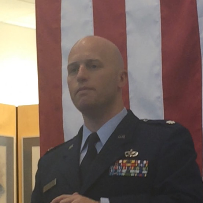
About the speaker: Lieutenant Colonel Andrew Hoisington is currently an adjunct Associate Professor at the Air Force Institute of Technology as he serves on active duty Air Force rebuilding Tyndall AFB after hurricane Michael. Lt Col Hoisington received his PhD in 2013 from the University of Texas, studying the indoor microbiome. In 2015 he was one of four founding members of the Military and Veterans Microbiome Consortium for Research and Education, an organization to advance microbiome science and education to benefit military personnel, Veterans, and their families.
About the seminar: In 2019, over half a million people in the United States did not have a place to call home. Research suggests that homeless individuals have higher rates of diet deficiencies, physical and mental health disorders (e.g., infectious diseases, depression), and inadequate health care when compared to those who are stably housed. From a social equity perspective, risk for homelessness is impacted by a range of social determinants including socioeconomic status and race/ethnicity. Here we present the results 16S rRNA and metagenomics analysis from a US Military Veterans who are currently or were previously homeless. To the best of our knowledge, these preliminary results are the first known study of the microbiome among those with a history of homelessness and will likely contribute to a better understanding of interactions among social determinates of health, social equity, the human microbiome, and human health.
Physiological Implications of Pre-Existing Inflammatory Co-Morbidities when the Body is Introduced to Novel Infectious Processes
About the speaker: Dr. Saber is an Assistant Professor in the School of Nursing at the University of Maine where she teaches pathophysiological and critical care concepts to upper-level undergraduate nursing students. She also holds a joint position at Northern Light Eastern Maine Medical Center where she directs the program development for nursing research and evidence-based practice. As a practicing intensive care registered nurse (RN) with over 25 years of patient care nursing experience, she has cared for patients infected with multidrug-resistant organisms (e.g., methicillin-resistant Staphylococcus aureus (MRSA), vancomycin-resistant Enterococcus (VRE), multidrug-resistant tuberculosis) and diseases from outbreaks that include human immunodeficiency virus (HIV) and H1N1. Dr. Saber’s research focuses on microbial movement in the healthcare setting as this relates to the use personal protective equipment (PPE) and resulting solid waste.
About the seminar: This seminar will focus on findings from the literature that emphasize the vulnerability of populations with preexisting health conditions that impact their ability to defend against infectious diseases. We will discuss common co-morbid conditions, the role of the inflammatory processes in infectious processes, and how social inequity can predispose vulnerable populations to novel infectious processes.
Missing Microbes and Missing Out: microbes and social equity in the context of youth in detention.
Dr. Ally Hunter, PhD. and Christina Bosch, M.A., M.Ed.
Ally Hunter, PhD Science Education, MS Biology (Micro & Molecular) Postdoctoral Fellow Center for Youth Engagement NSF Project RAISE (Reclaiming Access to Inquiry Science Education for Incarcerated Learners) NSF Project INSITE (INtegrating STEM Into Transition Education for Incarcerated Youth) University of Massachusetts, Amherst
Christina Anderson Bosch Doctoral Candidate at University of Massachusetts, Amherst M.A., Special Education: Learning Disabilities M. Ed., Mind, Brain and Education NSF Project RAISE (Reclaiming Access to Inquiry Science Education for Incarcerated Learners)
About the seminar: In the US, incarcerated youth are a population that are vulnerable to a variety of poor outcomes that include disrupted or incomplete education, unemployment, homelessness, health disparities, and incarceration as adults. Through the lens of microbiome health we can envision additional poor outcomes for incarcerated youth: loss of access to nutrition and diet education, loss of access to diets that support microbiome health, loss of access to beneficial microbes, and over-exposure to harmful microbes.
This presentation will discuss the potential for microbial inequity for incarcerate youth and highlight current educational responses that could serve to mitigate some of these disparities.
Using our experiences as educational researchers and curriculum developers on STEM education initiatives for incarcerated youth, we will present background information on this particularly vulnerable population. We will discuss our work on developing biology curriculum for juvenile justice settings and where we see a need for further development of microbiology, nutrition and basic health curriculum. Then, we will facilitate a group discussion to engage the scientific community with this understudied and underserved population in the context of microbial inequity.









 The Ishaq Lab