
Congratulations to Ashley Reynolds and Ethan Glenn for their first publication!! This extensive literature review was the result of more than a year of dedicated researching, writing, and revising to synthesize existing knowledge on how diet can affect neuroinflammation and how gut microbes are involved. Titled “Plant-Derived Bioactives, the Gut–Brain Axis, and Neurodegenerative Diseases: Mechanistic Roles of Diet–Microbiota Interactions“, the review is available open-access here in the journal Frontiers in Neuroscience!
Lab work on diet and neuroinflammation
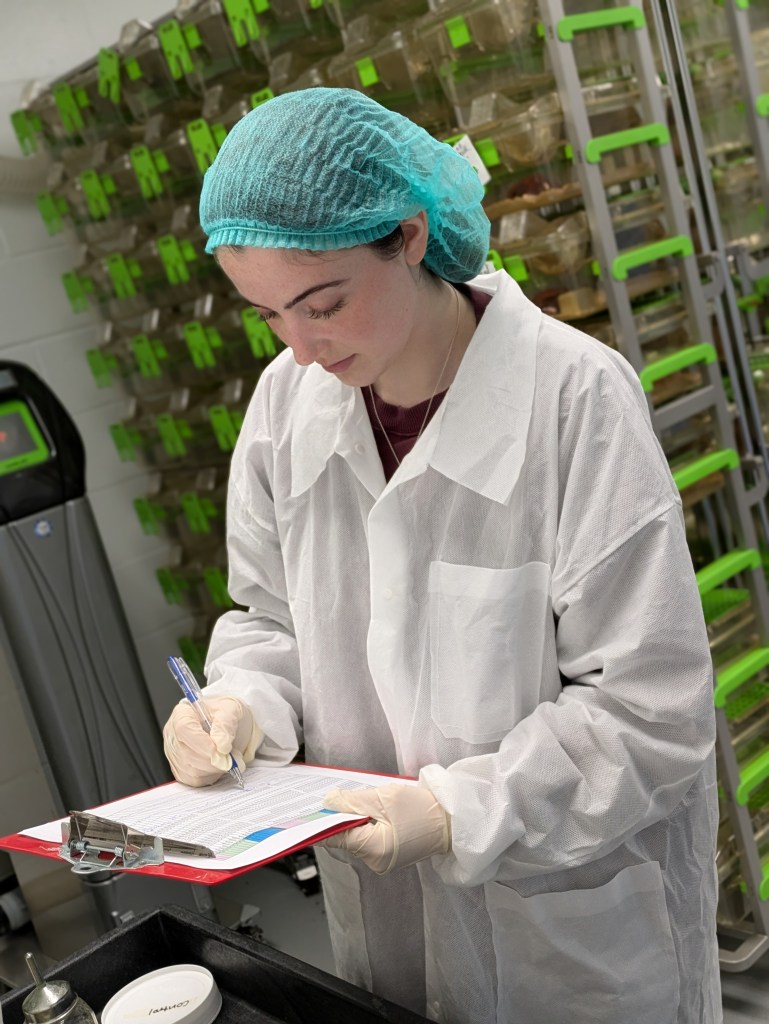
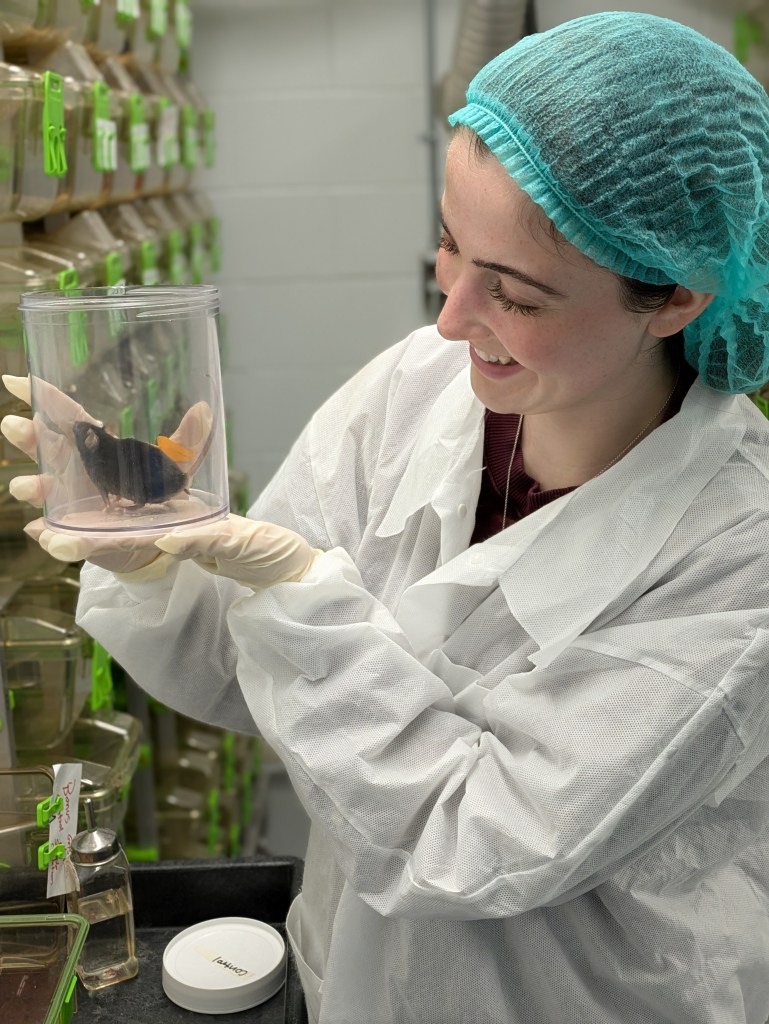
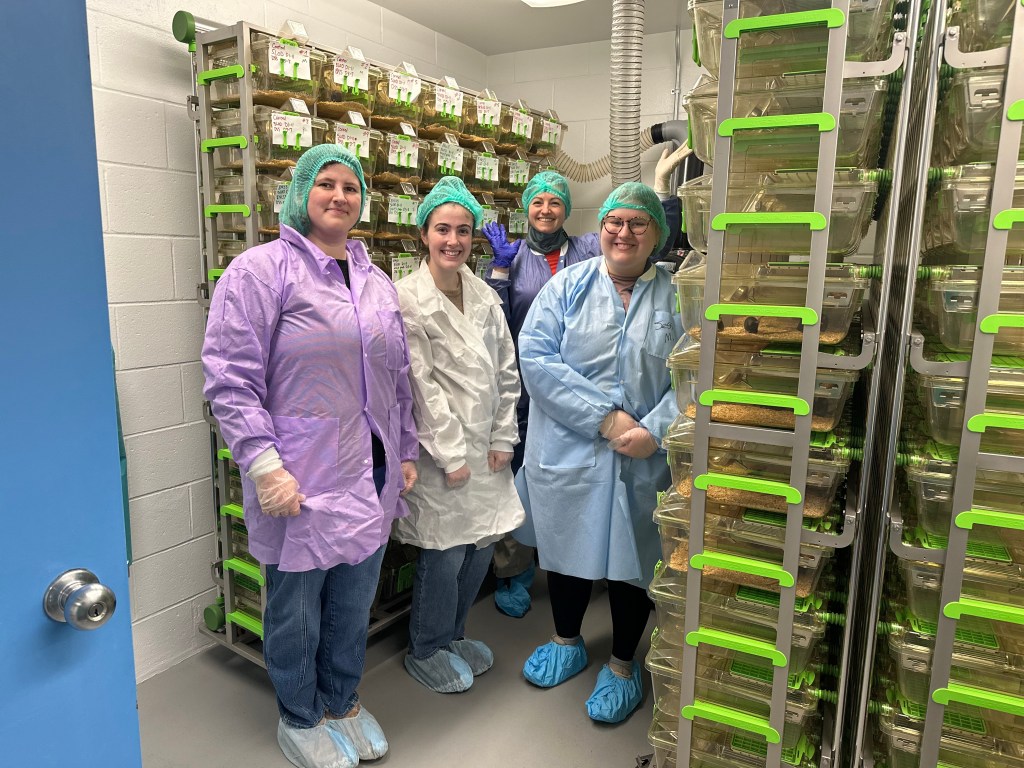
Ashley and Ethan’s review was a precursor to some of the lab work they’ve been doing in my and Yanyan’s lab, respectively, as well as in collaboration with Brigitte Lavoie at UVM, with whom we have worked for several years on mouse models of inflammation.
Ashley has an extensive background in nutrition and dietetics (bio is below), and joined our labs to understand how dietary metabolites and gut microbiome metabolites could be used to improve health, and reduce inflammation in the gut and the brain (neuroinflammation). She is a Doctor of Philosophy candidate in Human Nutrition and Food Sciences, and previously completed her undergraduate degree in Food Science and Human Nutrition in 2021 as a Maine Top Scholar, her Master’s degree in Food Science and Human Nutrition with Jade McNamara, at UMaine on intuitive eating in college students, and completed a dietetic internship and shortly after passed her RD exam to become a registered dietitian in 2023. She is incredibly interested in nutrition therapy and is beginning her research looking into the microbiome and metabolomic pathways in the context of IBD.
Ethan Glenn is a master’s student at SUNY Binghamton University School of Pharmacy in Yanyan Li’s Lab. Ethan has been helping to develop several models of neuroinflammation to use for testing the efficacy of different preparations of broccoli sprouts in delivering bioactives.
Ashley and Ethan have been collaborating on protocol design and testing, sample processing, and data analysis for several projects, including one we recently completed which will form the basis of Ashley’s dissertation.
Plant-Derived Bioactives, the Gut–Brain Axis, and Neurodegenerative Diseases: Mechanistic Roles of Diet–Microbiota Interactions
Ashley Reynolds1, Ethan Glenn2, Brigitte Lavoie3, Suzanne L. Ishaq1,*, Yanyan Li2,*
- 1 School of Food and Agriculture, University of Maine, Orono, Maine, USA 04469
- 2 School of Pharmacy and Pharmaceutical Sciences, SUNY Binghamton University, Binghamton, New York, USA 13902
- 3 Dept. of Neurological Sciences, University of Vermont College of Medicine, Burlington, Vermont, USA 05405
Abstract
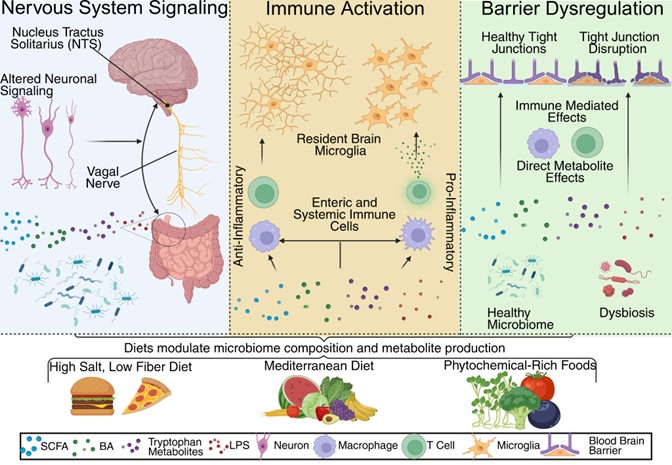
Diet is increasingly recognized as a potential upstream modulator of the gut-brain axis (GBA) through its effects on the microbiome, microbial metabolites, and host immune and endocrine responses. The GBA is a complex, bidirectional network connecting the gastrointestinal tract and central nervous system, with diet influencing microbial community structure and metabolic output. Plant-based diets, such as Mediterranean and MIND, have been associated with increased production of anti-inflammatory microbial metabolites and improved barrier function, while high calorie/low nutrient diets are often linked to increased immune activation and barrier dysfunction. However, while microbial metabolites, especially short-chain fatty acids, indoles, bile acids, and isothiocyanates, have been proposed as mediators of neuroprotective effects, their role in neurodegenerative diseases remains an area of active investigation, with evidence largely derived from preclinical and associative human studies. Cruciferous vegetables, especially broccoli sprouts, are an emerging focus of research for their bioactive compound sulforaphane, which activates Nrf2-centered cytoprotective pathways. Animal and early human studies suggest sulforaphane can improve cognitive and behavioral outcomes, though larger clinical trials are needed. Personalized, microbiota-targeted dietary interventions may offer scalable strategies for managing neuroinflammatory and neurodegenerative conditions, and we emphasize the need for integrated research across diet, microbiome, and brain health.
Citation: Reynolds A, Glenn E, Lavoie B, Ishaq SL and Li Y (2026). Plant-derived bioactives, the gut–brain axis, and neurodegenerative diseases: mechanistic roles of diet–microbiota interactions. Front. Neurosci. 20:1815972.

