The IUCN Microbe Specialist Group will be convening at the International Society for Microbial Ecology meeting in Auckland in August!

Sometimes dreams do come true – I am finally getting a chance to visit New Zealand, thanks to my new role as co-Vice-Chair of the Ethics, Conservation and Management Planning Working Group (other Co-Vice Chair is Louis-Patrick Haraoui) of the new Microbial Conservation Specialist Group of the IUCN Species Survival Commission (IUCN SSC MCSG ECMP). While the number of words in that group’s formal name implies that it’s going to take a long time to accomplish anything, the new MCSG group is actually a nimble collaboration of researchers and policy makers who are working on conserving the microbial communities that allow us to thrive on this planet.

Created in 2025 and led by Drs. Jack Gilbert and Raquel Peixoto, the MCSG is the first IUCN body dedicated to protecting all microbial ecosystems, including those which are at risk or already losing microbial diversity because of degradation and human activities, and those ecosystems where human activities have not yell fully changed the microbial communities.  The group is working to integrate microbial biodiversity into mainstream conservation frameworks by developing new tools for assessment, advancing policy inclusion, coordinating action across ecosystems, and developing strategies to bring attention to the need to consider microbes in the health of organisms and ecosystems.

This August, the global microbial ecology community is converging on Auckland, New Zealand, for the International Society for Microbial Ecology (ISME) conference. You might remember my last visit two years ago to the ISME conference in Cape Town, South Africa, when I was fortunate enough to have the federal funding to bring much of my lab group. New Zealand hosts stunning landscapes, and not just because of the geography: New Zealand is one of the global leaders in environmental, animal, and plant conservation thanks to its deeply rooted Indigenous conservation practices. Auckland will provide the perfect backdrop for discussing the microscopic worlds that keep our planet alive. Attending ISME is always a highlight for me, and I’m excited to hear about wild animal microbiomes, and generally about the effects of environments on host microbiomes while I’m there.

Beyond the main conference sessions, the highlight of this trip will be participating in the meetings of the Microbial Conservation Specialist Group. While historic conservation efforts were constrained by resources and public attention to focus on visible and adorable wildlife like mammals and birds, protecting microbial diversity is just as critical for maintaining ecosystem stability and resilience. Engaging with this specialist group offers a vital platform to advocate for the inclusion of fungi, bacteria, and archaea in global conservation policies and frameworks. This journey promises to be a powerful blend of cutting-edge science and meaningful advocacy, and I cannot wait to bring these insights back to the research collaborations I have developed over the past few years on Microbiome Stewardship, how to go about it, and the practicality of protecting microbes at different scales.

  1. Please visit the MCSG website for more information, and if you are at ISME20, reach visit the Applied Microbiology International publications display table to learn more and join an information session.
  2. Subscribe to the MCSG newsletter here.
  3. If you will be attending ISME20 and would like to meet with me for coffee to learn more about the MCSG group, please email me at sue.ishaq@maine.edu!

Of course, I will also be representing the MSE group at ISME. While I did not have time to prepare a formal event there, if you are part of MSE and would like to meet for coffee, or if you are curious about the group and would like to learn more (also while drinking coffee), please let me know at sue.ishaq@maine.edu!

Gilbert, J., Scholz, A., Dominguez-Bello, M.G., Korsten, L., Berg, G., Singh, B., Boetius, A., Wang, F., Greening, C., Wrighton, K., Bordenstein, S., Jansson, J., Lennon, J., Souza, V., Allard, S.M., Thomas, T., Cowan, D., Crowther, T., Nguyen, N., Harper, L., Haraoui, L-P., Ishaq, S., McFall-Ngai, M., Redford, K.H., Peixoto, R. 2025. Safeguarding Microbial Biodiversity: Microbial Conservation Specialist Group (MCSG) within the Species Survival Commission of the International Union for Conservation of Nature (IUCN). Editorial Published in multiple journals simultaneously, including mSystems, Sustainable Microbiology, the ISME Journal, and FEMS Microbial Ecology.

Gilbert, J., Peixoto, R., Scholz, A., Dominguez-Bello, M.G., Korsten, L., Berg, G., Singh, B., Boetius, A., Wang, F., Greening, C., Wrighton, K., Bordenstein, S., Jansson, J., Lennon, J., Souza, V., Thomas, T., Cowan, D., Crowther, T., Nguyen, N., Harper, L., Haraoui, L-P., Ishaq, S., Redford, K. 2025. Launching the IUCN Microbial Conservation Specialist Group as a global safeguard for microbial biodiversity. Nature Microbiology 10:2359–2360. (correspondence)

The IUCN Microbe Specialist Group published our prospective goals for the conservation of microbes to support planetary health.

The new IUCN Microbe Specialist Group, led by Drs. Jack Gilbert and Raquel Peixoto, has published a prospectus which outlines our goals and activities for the next few years, as well as steps for recruiting research and policy expertise!

Gilbert, J., Scholz, A., Dominguez-Bello, M.G., Korsten, L., Berg, G., Singh, B., Boetius, A., Wang, F., Greening, C., Wrighton, K., Bordenstein, S., Jansson, J., Lennon, J., Souza, V., Allard, S.M., Thomas, T., Cowan, D., Crowther, T., Nguyen, N., Harper, L., Haraoui, L-P., Ishaq, S., McFall-Ngai, M., Redford, K.H., Peixoto, R. 2025. Safeguarding Microbial Biodiversity: Microbial Conservation Specialist Group (MCSG) within the Species Survival Commission of the International Union for Conservation of Nature (IUCN). Editorial Published in multiple journals simultaneously, including mSystems, Sustainable Microbiology, the ISME Journal, and FEMS Microbial Ecology.

The IUCN Microbe group is led by Drs. Jack Gilbert and Raquel Peixoto, who are internationally famous for their research into environmental microbiomes as well as their contributions to conservation. The group recently announced its formation in an editorial:

Gilbert, J., Peixoto, R., Scholz, A., Dominguez-Bello, M.G., Korsten, L., Berg, G., Singh, B., Boetius, A., Wang, F., Greening, C., Wrighton, K., Bordenstein, S., Jansson, J., Lennon, J., Souza, V., Thomas, T., Cowan, D., Crowther, T., Nguyen, N., Harper, L., Haraoui, L-P., Ishaq, S., Redford, K. 2025. Launching the IUCN Microbial Conservation Specialist Group as a global safeguard for microbial biodiversity. Nature Microbiology 10:2359–2360. (correspondence)

Now that the Microbe Group has been assembled and set our goals, we will begin setting up international working groups for implementing conservation, and opening the group for global supporting membership.

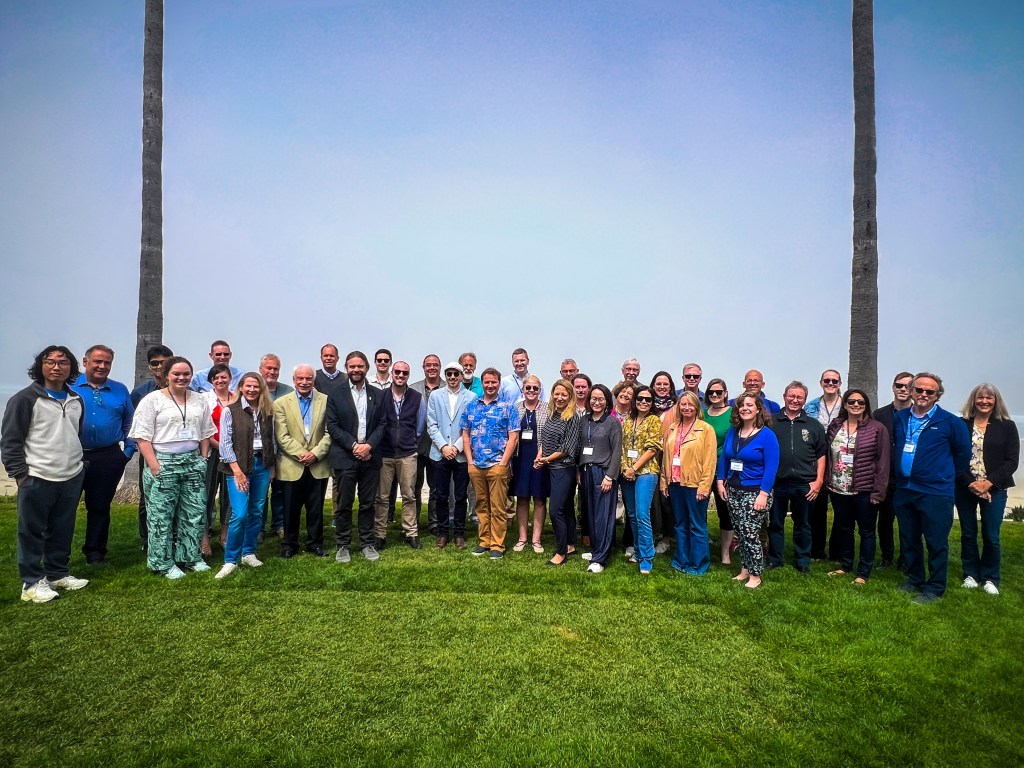
Back in May, I had the honor of attending a three-day workshop on “Conservation in a Microbial World“, which gathered researchers, innovators, and policy makers to discuss the concept, need, logistics, and possibility of formally making microorganisms part of the considerations of the International Union for the Conservation of Nature (IUCN), the global organization which coordinates the protection of species and ecosystems. The meeting was to provide guidance to the IUCN Species Survival Commission (SSC) on microbial ecology, ecosystems which are at risk or already losing microbial diversity because of degradation and human activities, as well as strategies to bring attention to the need to consider microbes in the health of organisms and ecosystems.

Attendees of the 2025 Conservation in a Microbial World meeting, Scripps, La Jolla.

“Launching the IUCN Microbial Conservation Specialist Group as a global safeguard for microbial biodiversity”- paper published and group assembled!

I’m delighted to announce the publication of “Launching the IUCN Microbial Conservation Specialist Group as a global safeguard for microbial biodiversity” — a short publication in Nature, written by the new IUCN Microbe Group, of which I am a part! The paper introduces the need for a Specialist Group focused on microorganisms, microbial communities, and the connection between microbes and health of environments and all other organisms.

The new IUCN Microbe group is being led by Drs. Jack Gilbert and Raquel Peixoto, who are internationally famous for their research into environmental microbiomes as well as their contributions to conservation. Now that the Microbe Group has been assembled, we have been working on creating a prospectus for the group which outlines our goals and activities for the next few years, as well as steps for recruiting research and policy expertise, as needed, setting up international working groups for implementing conservation, and opening the group for global supporting membership.

Gilbert, J., Scholz, A., Dominguez-Bello, M.G., Korsten, L., Berg, G., Singh, B., Boetius, A., Wang, F., Greening, C., Wrighton, K., Bordenstein, S., Jansson, J., Lennon, J., Souza, V., Thomas, T., Cowan, D., Crowther, T., Nguyen, N., Harper, L., Haraoui, L-P., Ishaq, S., Redford, K. 2025. “Launching the IUCN Microbial Conservation Specialist Group as a global safeguard for microbial biodiversityNature

Back in May, I had the honor of attending a three-day workshop on “Conservation in a Microbial World“, which gathered researchers, innovators, and policy makers to discuss the concept, need, logistics, and possibility of formally making microorganisms part of the considerations of the International Union for the Conservation of Nature (IUCN), the global organization which coordinates the protection of species and ecosystems. The meeting was to provide guidance to the IUCN Species Survival Commission (SSC) on microbial ecology, ecosystems which are at risk or already losing micobial diversity because of degradation and human activities, as well as strategies to bring attention to the need to consider microbes in the health of organisms and ecosystems.

Attendees of the 2025 Conservation in a Microbial World meeting, Scripps, La Jolla.

Conservation in a Microbial World meeting

Two weeks ago, I had the honor of attending a three-day workshop on “Conservation in a Microbial World“, which gathered researchers, innovators, and policy makers to discuss the concept, need, logistics, and possibility of formally making microorganisms part of the considerations of the International Union for the Conservation of Nature (IUCN), the global organization which coordinates the protection of species and ecosystems. The meeting was to provide guidance to the IUCN Species Survival Commission (SSC) on microbial ecology, ecosystems which are at risk or already losing micobial diversity because of degradation and human activities, as well as strategies to bring attention to the need to consider microbes in the health of organisms and ecosystems. It was wonderful to reconnect with old friends and make new ones!

Attendees of the 2025 Conservation in a Microbial World meeting, Scripps, La Jolla.

Happening today, ‘Session 3: Transforming your research for policy engagement’ at the July 2022 MSE virtual symposium!

Today is the third day of the July 2022 MSE virtual symposium, but don’t worry, you still have time to register for the session. Today’s session is focused on “Transforming your research for policy engagement”. This session will feature three talks featuring researchers who have experience bringing research to the public and to legislative bodies. So often, the positive outcomes of research are limited because it can be difficult to get the word out to people who can put our results into practice. Our hope is that attendees for this session learn from different perspectives how to write their research to inform the general public, professionals in healthcare, or policy makers.


Session 3: “Transforming your research for policy engagement”

Wednesday, July 20th, 12:30 ~ 16:00 EST. Post updated: watch the recorded talks here.

Section leaders:

Mallory Choudoir, Ph.D. Soil microbial ecologist. Postdoctoral Researcher at University of Massachusetts Amherst. Assistant Professor and Extension Specialist at North Carolina State University September 2022. 

Mustafa Saifuddin, Ph.D., Staff Scientist, Sustainable Food and Farming Program at Earthjustice

Mustafa Saifuddin, Ph.D., Staff Scientist, Sustainable Food and Farming Program at Earthjustice

Amali Stephens, PhD Student, Interdepartmental Microbiology, Iowa State University

Scope: Microbiomes drive processes in all environments and are intimately intertwined with all aspects of our lives. Despite the central role of microbes in shaping systems, microbial researchers are often detached from shaping policies related to conservation, public health, land use, environmental justice, climate and other areas of intersection. Policy engagement is not typically included in the academic training of microbiome researchers, and there is a need for greater coordination between policy needs and microbial research. This session will explore integrated, collaborative approaches to research and policy making.

Learning Objectives of Session: Attendees will discuss 1) how to develop research in collaboration with policy needs, 2) policy levels and types (government, private), 3) how to identify stakeholders, and 4) how to communicate your research to policymakers.

Format of talks:  Three 30-min lecture-style talks will describe interdisciplinary research outcomes which transcend typical academic endpoints and engage in shaping policy.

Format of breakout rooms: Each room will create a policy brief outline or ideas list around a particular topic area (e.g. environmental restoration) to help audience members group by discipline.

Session Speakers: In development, details provided soon!

Dr. Caitlyn Hall

Dr. Caitlyn Hall, PhD., Assistant Professor of Practice, University of Arizona

“The Elephant in the Lab: How can scientists engage in policy and advocacy?”

Dr. Kathleen Treseder

Dr. Kathleen Treseder, PhD., Howard A. Schneiderman Endowed Chair and Professor of Biology at the University of California Irvine; Climate Activist; Irvine City Council Candidate

“My experience advocating for environmental policy with local policy makers: What worked, what didn’t.”

Dr. Sonja Birthisel

Dr. Sonja Birthisel, Ph.D., Faculty Associate, University of Maine School of Forest Resources and Ecology & Environmental Sciences Program; Director, The Wilson Center at the University of Maine; Councilor, Orono Maine Town Council

“Public Policy Engagement & Personal Sustainability: What’s Your “Sparkle Zone”?”

12:30 – 14:15 Introduction and Speakers

14:15 – 14:30 Break

14:30 – 16:00 Breakout room discussions based on skills development, in smaller groups

  • How to talk to your politicians about science
  • How scientists get involved with policy
  • Curriculum for science policy
  • Environmental microbial policy issues
  • Microbial conservation
  • Soil carbon & climate justice issues
  • Agricultural antibiotic use
  • Microbial exposures (residential, worker exposure)

Prior to this session, you may want to watch these recorded talks:

You might also be interested in:

Dr. Monica Trujillo, Associate Professor, MSE member, and Symposium session leader, will be at #ASMhillday on July 26th to educate policymakers on microbiology, climate change, and policy.

One week until ‘Session 3: Transforming your research for policy engagement’ at the July 2022 MSE virtual symposium!

We are a week away from the third day of the July 2022 MSE virtual symposium, which is focused on “Transforming your research for policy engagement”. This session will feature three talks featuring researchers who have experience bringing research to the public and to legislative bodies. So often, the positive outcomes of research are limited because it can be difficult to get the word out to people who can put our results into practice. Our hope is that attendees for this session learn from different perspectives how to write their research to inform the general public, professionals in healthcare, or policy makers.


Session 3: “Transforming your research for policy engagement”

Wednesday, July 20th, 12:30 ~ 16:00 EST. Register for this session, it’s free and held over Zoom.

Section leaders:

Mallory Choudoir, Ph.D. Soil microbial ecologist. Postdoctoral Researcher at University of Massachusetts Amherst. Assistant Professor and Extension Specialist at North Carolina State University September 2022. 

Mustafa Saifuddin, Ph.D., Staff Scientist, Sustainable Food and Farming Program at Earthjustice

Mustafa Saifuddin, Ph.D., Staff Scientist, Sustainable Food and Farming Program at Earthjustice

Amali Stephens, PhD Student, Interdepartmental Microbiology, Iowa State University

Scope: Microbiomes drive processes in all environments and are intimately intertwined with all aspects of our lives. Despite the central role of microbes in shaping systems, microbial researchers are often detached from shaping policies related to conservation, public health, land use, environmental justice, climate and other areas of intersection. Policy engagement is not typically included in the academic training of microbiome researchers, and there is a need for greater coordination between policy needs and microbial research. This session will explore integrated, collaborative approaches to research and policy making.

Learning Objectives of Session: Attendees will discuss 1) how to develop research in collaboration with policy needs, 2) policy levels and types (government, private), 3) how to identify stakeholders, and 4) how to communicate your research to policymakers.

Format of talks:  Three 30-min lecture-style talks will describe interdisciplinary research outcomes which transcend typical academic endpoints and engage in shaping policy.

Format of breakout rooms: Each room will create a policy brief outline or ideas list around a particular topic area (e.g. environmental restoration) to help audience members group by discipline.

Session Speakers: In development, details provided soon!

Dr. Caitlyn Hall

Dr. Caitlyn Hall, PhD., Assistant Professor of Practice, University of Arizona

“The Elephant in the Lab: How can scientists engage in policy and advocacy?”

Dr. Kathleen Treseder

Dr. Kathleen Treseder, PhD., Howard A. Schneiderman Endowed Chair and Professor of Biology at the University of California Irvine; Climate Activist; Irvine City Council Candidate

“My experience advocating for environmental policy with local policy makers: What worked, what didn’t.”

Dr. Sonja Birthisel

Dr. Sonja Birthisel, Ph.D., Faculty Associate, University of Maine School of Forest Resources and Ecology & Environmental Sciences Program; Director, The Wilson Center at the University of Maine; Councilor, Orono Maine Town Council

“Public Policy Engagement & Personal Sustainability: What’s Your “Sparkle Zone”?”

12:30 – 14:15 Introduction and Speakers

14:15 – 14:30 Break

14:30 – 16:00 Breakout room discussions based on skills development, in smaller groups

  • How to talk to your politicians about science
  • How scientists get involved with policy
  • Curriculum for science policy
  • Environmental microbial policy issues
  • Microbial conservation
  • Soil carbon & climate justice issues
  • Agricultural antibiotic use
  • Microbial exposures (residential, worker exposure)

Prior to this session, you may want to watch these recorded talks:

Speaker lineup confirmed for ‘Session 4: Community engagement and collaboration’ at the July 2022 MSE virtual symposium!

The speaker lineup is set for the fourth day of the July 2022 MSE virtual symposium, which is focused on “Community engagement and collaboration”. This session will feature three talks featuring researchers who have experience creating research with communities. This session will explore different styles of interdisciplinary collaborations centered on community needs, such as community advisory boards, community partnerships, community-led research design, and how to implement this into microbiome research. Our hope is that attendees for this session learn from different perspectives how foster their own community connections which would benefit their work.

The program for the July 2022 MSE virtual symposium, “Developing transformative Research Skills”, is beginning to take shape as we continue to confirm speakers for the 5 sessions, the full program for which can be found here.

Session 4: “Community engagement and collaboration”

Thursday, July 21st, 12:30 ~ 16:00 EST. Register for this session.

Session leaders:

Portrait of Mustafa Saifuddin, Ph.D.,

Mustafa Saifuddin, Ph.D., Staff Scientist, Sustainable Food and Farming Program at Earthjustice

Ashley M. Toney, Ph.D., Postdoctoral Research Fellow, UTHealth School of Public Health, El Paso. Translational/Clinical Nutrition Researcher focused on Latine Health Disparities.

Scope: Due to the interconnectedness of microbial processes and social justice, many types of microbial research could benefit from closer collaborations with communities impacted directly by the public health, environmental and climate justice implications of microbiomes. Some styles of microbiome research would yield more positive outcomes if the collaboration was built around mutual long-term goals, instead of specific projects, and if it was initiated during project conceptualization instead of after the project has been designed. This session will explore different styles of interdisciplinary collaborations centered on community needs, such as community advisory boards, community partnerships, community-led research design, and how to implement this into microbiome research.

Learning Objective of Session: Attendees will learn 1) approaches to community-centered collaborations, 2) how to leverage community professionals (e.g. health workers) in a ‘train the trainer model’, 3) how to start ethical conversations around environmental samples & broader experimental design, and 4) how to emphasize collaborations – including public health, government, policy makers, etc. as a collaborator and how to ask for their help/mindful collaborations.

Format of talks: Three 30-min lecture-style talks from researchers who have successfully built research collaborations with communities.

Format of breakout rooms: Each room creates a plan for engagement, and each room has a designated topic area (e.g. environmental restoration) to help audience members group by research discipline.

Session Speakers:

Dr. Pajau (PJ) Vangay, PhD. Science Community Manager, National Microbiome Data Collaborative, Lawrence Berkeley National Laboratory.

“Advancing microbiome science, in partnership with communities”

Dr. Arbor Quist, PhD., Postdoctoral Fellow in Environmental Justice & Community-Driven Epidemiology at the University of Southern California.

Dr. Rosie Alegado, PhD., Associate Professor of Oceanography & Sea Grant College Program at  University of Hawaiʻi at Mānoa

12:30 – 14:15 Introduction and Speakers

14:15 – 14:30 Break

14:30 – 16:00 Breakout room discussions based on skills development, in smaller groups

  • Topics in development

Prior to this session, you may want to watch these recorded talks:

Speaker lineup confirmed for ‘Session 3: Transforming your research for policy engagement’ at the July 2022 MSE virtual symposium!

The speaker lineup is set for the third day of the July 2022 MSE virtual symposium, which is focused on “Transforming your research for policy engagement”. This session will feature three talks featuring researchers who have experience bringing research to the public and to legislative bodies. So often, the positive outcomes of research are limited because it can be difficult to get the word out to people who can put our results into practice. Our hope is that attendees for this session learn from different perspectives how to write their research to inform the general public, professionals in healthcare, or policy makers.

The program for the July 2022 MSE virtual symposium, “Developing transformative Research Skills”, is beginning to take shape as we continue to confirm speakers for the 5 sessions, the full program for which can be found here.


Session 3: “Transforming your research for policy engagement”

Wednesday, July 20th, 12:30 ~ 16:00 EST. Register for this session, it’s free and will be held over Zoom.

Section leaders:

Mallory Choudoir, Ph.D. Soil microbial ecologist. Postdoctoral Researcher at University of Massachusetts Amherst. Assistant Professor and Extension Specialist at North Carolina State University September 2022. 

Mustafa Saifuddin, Ph.D., Staff Scientist, Sustainable Food and Farming Program at Earthjustice

Mustafa Saifuddin, Ph.D., Staff Scientist, Sustainable Food and Farming Program at Earthjustice

Amali Stephens, PhD Student, Interdepartmental Microbiology, Iowa State University

Scope: Microbiomes drive processes in all environments and are intimately intertwined with all aspects of our lives. Despite the central role of microbes in shaping systems, microbial researchers are often detached from shaping policies related to conservation, public health, land use, environmental justice, climate and other areas of intersection. Policy engagement is not typically included in the academic training of microbiome researchers, and there is a need for greater coordination between policy needs and microbial research. This session will explore integrated, collaborative approaches to research and policy making.

Learning Objectives of Session: Attendees will discuss 1) how to develop research in collaboration with policy needs, 2) policy levels and types (government, private), 3) how to identify stakeholders, and 4) how to communicate your research to policymakers.

Format of talks:  Three 30-min lecture-style talks will describe interdisciplinary research outcomes which transcend typical academic endpoints and engage in shaping policy.

Format of breakout rooms: Each room will create a policy brief outline or ideas list around a particular topic area (e.g. environmental restoration) to help audience members group by discipline.

Session Speakers: In development, details provided soon!

Dr. Caitlyn Hall

Dr. Caitlyn Hall, PhD., Assistant Professor of Practice, University of Arizona

“The Elephant in the Lab: How can scientists engage in policy and advocacy?”

Dr. Kathleen Treseder

Dr. Kathleen Treseder, PhD., Howard A. Schneiderman Endowed Chair and Professor of Biology at the University of California Irvine; Climate Activist; Irvine City Council Candidate

“My experience advocating for environmental policy with local policy makers: What worked, what didn’t.”

Dr. Sonja Birthisel, Ph.D., Director, The Wilson Center at the University of Maine; Councilor, Orono Maine Town Council; Faculty Associate, University of Maine School of Forest Resources

“Public Policy Engagement & Personal Sustainability: What’s Your “Sparkle Zone”?”

12:30 – 14:15 Introduction and Speakers

14:15 – 14:30 Break

14:30 – 16:00 Breakout room discussions based on skills development, in smaller groups

  • How to talk to your politicians about science
  • How scientists get involved with policy
  • Curriculum for science policy
  • Environmental microbial policy issues
  • Microbial conservation
  • Soil carbon & climate justice issues
  • Agricultural antibiotic use
  • Microbial exposures (residential, worker exposure)

Prior to this session, you may want to watch these recorded talks: