Investigating the activity of bacteria isolated from tank biofilms in a hatchery system for sea scallop, Placopecten magellanicus, larvae
Adwoa Dankwa, Postdoctoral research in the Perry Lab at UMaine
Identification of bacterial communities and their association with larval mortality in Atlantic sea scallops (Placopecten magellanicus) hatchery system
Kyle Brennan, Master’s student in the Bowden Lab at UMaine
Probiotics and pathogens
Jaypee Samson, PhD Student in the Gomez-Chiarri Lab at URI
Isolation, Screening, And Selection Of Potential Pathogenic And Probiotic Bacteria From Bivalve Shellfishes
Sydney Avena, Master’s student at the Darling Marine Center
“Cracking the shell”: Lessons learned from a collaborative approach to developing hatchery production of the Atlantic sea scallop, Placopecten magellanicus
Tara Riley, Shellfish and Aquatic Resources Manager for Nanucket, MA
Saving The Seed: Nantucket Bay Scallop Seed Management Of 2023
The speaker list for the session.
Session: Coastal Systems& Scallops
Chairs: Sue Ishaq and & Phoebe Jekielek
Friday, 1:30 pm in the Newport/Washington room
Samuel Gurr
Developmental mismatch of pCO 2 levels in a second generation of northern bay scallops
Christopher Noren
Comparing growth of ear hung and lantern net cultured sea scallops, Placopecten magellanicus, over a complete grow-out cycle to determine optimal harvest timing
Phoebe Jekielek
A comparative study of sea scallop (Placopecten magellanicus) energy investment strategies in farmed and wild environments
Caitlin Cleaver
Understanding wild sea scallop (Placopecten magellanicus) larval spatial and temporal distribution in Maine to support culture and capture fisheries
Paul Rawson
Predicting larval dispersal and population connectivity of Sea Scallops, Placopecten magellanicus, in Downeast Maine.
Griffin Harkins
Review of Nantucket Island’s Bay Scallop Spat Bag Program
Speakers for the session
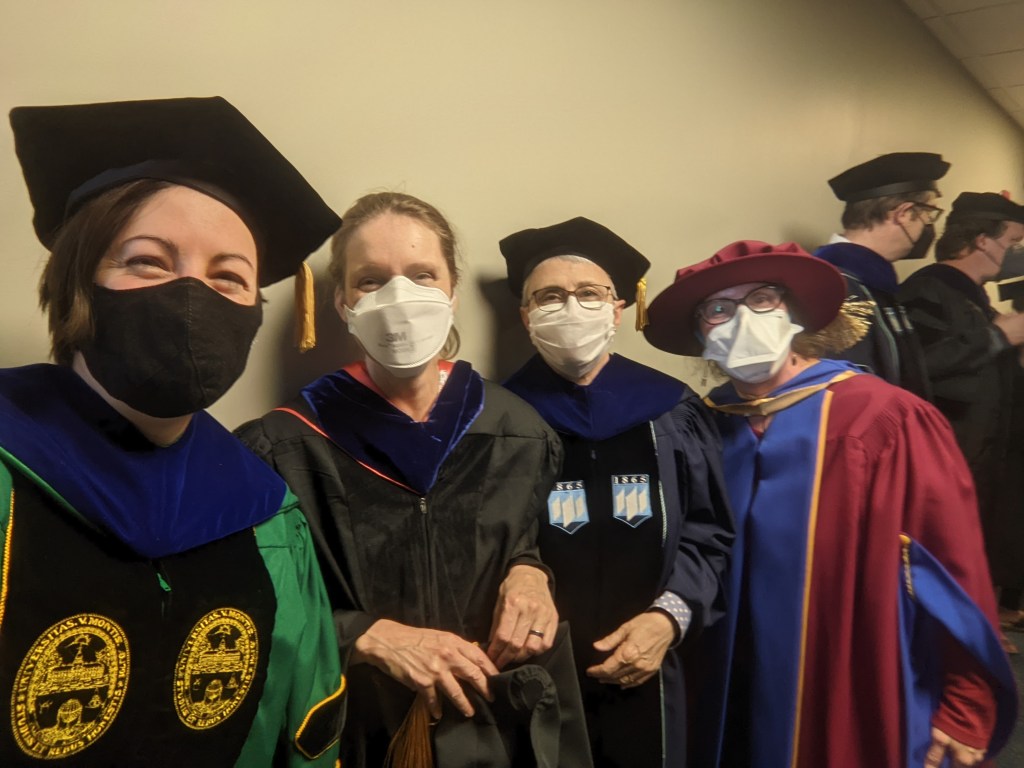
Ay and Sue at NACEKyle BrennanSydney AvenaAyodeji Olaniyi
Our paper was published in Aquaculture Reports, on identifying the bacteria associated with wild and hatchery-raised Atlantic sea scallop larvae, and the biofilms in larval tanks in a hatchery! For the past few years, I’ve been part of a state-wide collaboration between researchers, industry professionals, and educators all working together to understand and improve Atlantic sea scallop hatchery production. To our knowledge, this is the first study to identify bacteria in Atlantic sea scallops, and even though it was a very small project we hope it will lead to a much larger, mult-year project to investigate this in more detail.
Sarah Hosler, ASM 2022.
Scallops are a diverse animal group of marine bivalve mollusks (family Pectinidae) with global distribution in coastal waters, and Atlantic deep-sea scallops, Placopecten magellanicus, are found along the eastern coast of the United States and Canada. Scallops’ reproductive potential and industry demand make them a prime target for hatchery- and farm-based production, and this has been successfully achieved in bay scallops, but not in sea scallops. Currently, hatcheries collect wild sea scallop adults, or maintain cultured broodstocks, and spawn them in their facilities with the intention of forming a plentiful population to grow to adulthood, spawn, and sell to create a sustainable production cycle while also reducing disruption to the scallops’ natural habitat.
Unfortunately, in sea scallop hatcheries the last two weeks of the larval maturation phase, the veliger-stage, is plagued by large mortality events, going from 60 million sea scallop larvae down to several thousand individuals in a span of 48 hours. Survival of clutches to maturity remains very low, with an industry-standard rate around 1%. This drastic winnowing of larvae reduces the availability of cultured sea scallop spat for farmers, forcing sea scallop farms to rely almost exclusively on sea scallop spat collected from wild populations for stock and is seen as a bottleneck for growth of the industry and achieving sustainable harvests. Hatchery larval die-off is well-demonstrated not to be caused by inadequate diet, lighting, temperature, or atmospheric pressure in aquaculture facilities compared to wild conditions.
This project wanted to know if there was any clue in the bacteria that associate with larvae, or with the tanks they are in. In particular, hactcheries are worried about certain species of bacteria in the genus Vibrio, as they can cause disease to scallops and/or people, but it is tricky to study them because there are many species which do nothing at all. This project is part of another experiment to examine some of the Vibrio we found in tanks.
We sampled from some wild larvae, hatchery larvae, and from tank biofilms to indentify what was there. There were two styles of tank setup, and we collected from used tanks as well as tanks after they had been cleaned and refilled with filtered seawater.
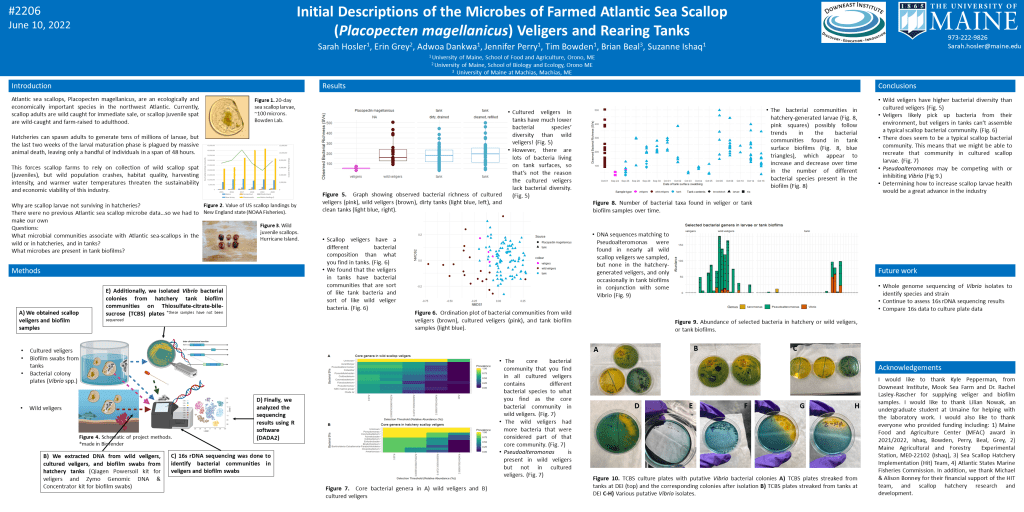
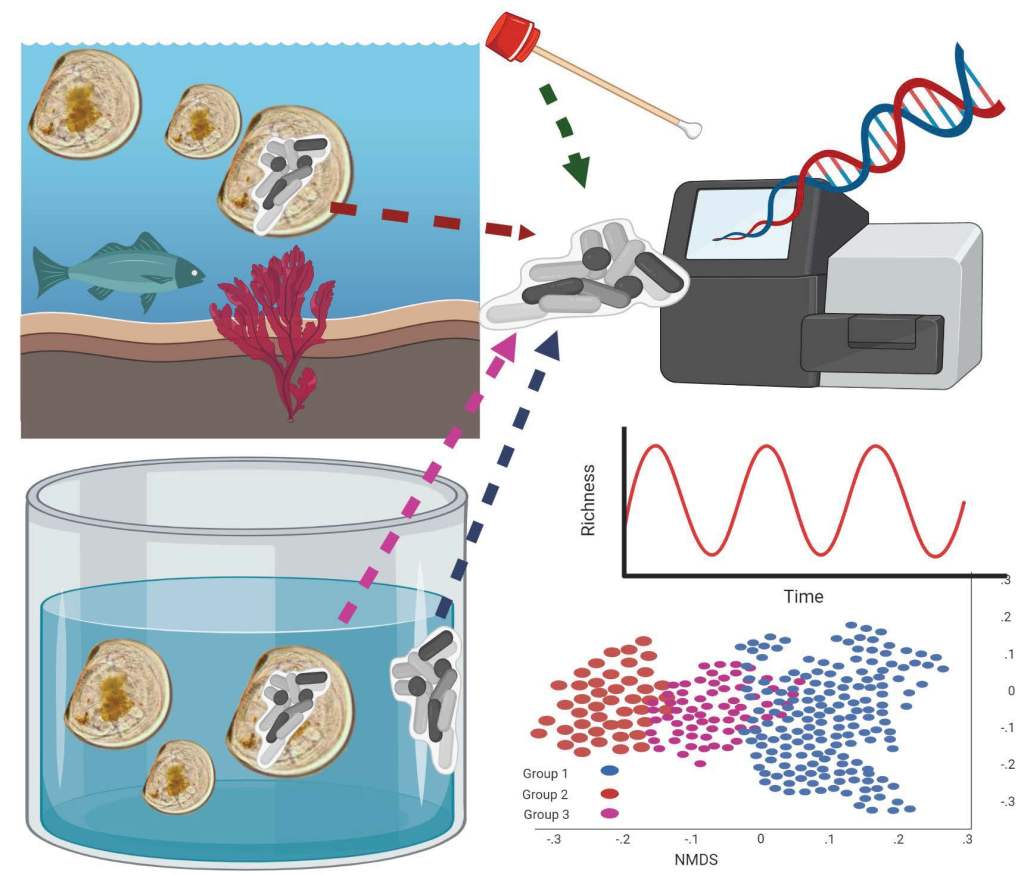
Veliger-stage Atlantic sea scallop larvae (Placopecten magellanicus) were obtained from hatchery tanks in Beals, Maine and from the wild off the coast of Cape Elizabeth, Maine. Swabs of hatchery tank biofilms were collected before and after tank cleaning. Bacterial communities were identified using DNA extraction and 16S rDNA sequencing on wild veligers, hatchery veligers and biofilm swabs. Image created with biorender.
One of the surprising things we found, was that the bacterial communities in biofilms along the sides of larvae tank were more similar to each other (clustering) when samples were collected during the same phase of the lunar cycle. Bacterial richness and community similarity between tank samples fluctuated over the trial in repeated patterns of rise and fall, which showed some correlation to lunar cycle where richness is high when the moon is about 50% and richness is low during new and full moon phases. This may be a proxy for the effects of spring tides and trends in seawater bacteria and phages which are propagated into hatchery tanks. The number of days since the full moon was significantly correlated with bacterial community richness in tanks: low during the full moon, peaking ~ 21 days after the full moon, and decreasing again at the next full moon.
Fig. 7. Constrained ordination of bacterial communities in tank samples. Each point represents the bacterial community from one sample.Similarity between samples was calculated using Distance-based Redundancy Analysis (dbDRA), and significant model factors (anova, p < 0.01) are displayed with arrow lengths relative to their importance in the model (f value). The shape of points indicates whether swabbing was either immediately after filtered seawater has been used to fill the tank (cleaned, refilled) or 48 hours after (dirty, drained). Tank setup indicates if water was static, constantly filtered and recirculated in a flow-through system, or setup information was not available (n/a).
These results along with future work, will inform hatcheries on methods that will increase larval survival in these facilities, for example, implementing additional filtering or avoiding seawater collection during spring tides, to reduce certain bacterial taxa of concern or promoting a more diverse microbial community which would compete against pathogens.
Authors: Suzanne L. Ishaq1*, Sarah Hosler1, Adwoa Dankwa1, Phoebe Jekielek2, Damian C. Brady3, Erin Grey4,5, Hannah Haskell6, Rachel Lasley-Rasher6, Kyle Pepperman7, Jennifer Perry1, Brian Beal8, Timothy J. Bowden1
Affiliations:1School of Food & Agriculture, University of Maine, Orono ME 044692 Ecology and Environmental Sciences, University of Maine, Orono ME 044733 School of Marine Sciences, Darling Marine Center, University of Maine, Walpole ME 045734 School of Biology and Ecology, University of Maine, Orono ME 044695 Maine Center for Genetics in the Environment, University of Maine, Orono ME 044696 Department of Biological Sciences, University of Southern Maine, Portland ME 041037 Downeast Institute, Beals, ME 046118 Division of Environmental & Biological Sciences, University of Maine at Machias, Machias, ME 04654
Abstract
Atlantic sea scallops, Placopecten magellanicus, are the most economically important marine bivalves along the northeastern coast of North America. Wild harvest landings generate hundreds of millions of dollars, and wild-caught adults and juvenile spat are increasingly being cultured in aquaculture facilities and coastal farms. However, the last two weeks of the larval maturation phase in hatcheries are often plagued by large mortality events. Research into other scallop- and aquacultured-species point to bacterial infections or altered functionality of microbial communities which associate with the host. Despite intense filtering and sterilization of seawater, and changing tank water every 48 hours, harmful microbes can still persist in biofilms and mortality is still high. There are no previous studies of the bacterial communities associated with the biofilms growing in scallop hatchery tanks, nor studies with wild or hatchery sea scallops. We characterized the bacterial communities in veliger-stage wild or hatchery larvae, and tank biofilms using the 16S rDNA gene V3-V4 region sequenced on the Illumina MiSeq platform. Hatchery larvae had lower bacterial richness (number of bacteria taxa present) than the wild larvae and tank biofilms, and hatchery larvae had a similar bacterial community (which taxa were present) to both wild larvae and tank biofilms. Bacterial richness and community similarity between tank samples fluctuated over the trial in repeated patterns of rise and fall, which showed some correlation to lunar cycle that may be a proxy for the effects of spring tides and trends in seawater bacteria and phages which are propagated into hatchery tanks. These results along with future work, will inform hatcheries on methods that will increase larval survival in these facilities, for example, implementing additional filtering or avoiding seawater collection during spring tides, to reduce bacterial taxa of concern or promote a more diverse microbial community which would compete against pathogens.
Acknowledgements
The authors would like to thank the staff at the Downeast Institute for supporting the development and implementation of this project, as well as for financially supporting the DNA sequencing; Meredith White of Mook Sea Farm for sharing her expertise and collecting biofilm samples; the Darling Marine Center for sharing their expertise and collecting biofilm samples; and the Sea Scallop Hatchery Implementation (Hit) Team for their expertise, review of this work, and funding support, who are financially supported by the Atlantic States Marine Fisheries Commission and Michael & Alison Bonney. The authors thank Lilian Nowak for assistance with related lab work to this project, and the Map Top Scholars Program for related financial support. The authors also thank Nate Perry for helping us collect wild scallop larvae. All authors have read and approved the final manuscript. This project was supported by the USDA National Institute of Food and Agriculture through the Maine Agricultural & Forest Experiment Station, Hatch Project Numbers: ME0-22102 (Ishaq), ME0-22309 (Bowden), and ME0-21915 (Perry); as well through NSF #OIA-1849227 to Maine EPSCoR at the University of Maine (Grey). This project was supported by an Integrated Research and Extension Grant from the Maine Food and Agriculture Center, with funding from the Maine Economic Improvement Fund.
A collaborative paper on lobster shell bacteria has just been published in the journal iScience: “Water temperature and disease alters bacterial diversity and cultivability from American Lobster (Homarus americanus) shells.” This paper investigates what happens to bacterial communities on healthy and sick lobsters as they experience different water temperatures for a year.
I joined this project back in the summer of 2020, towards the end of my first year at UMaine, when I was given a large 16S rRNA gene sequence dataset of bacterial communities from the shells of lobsters. I had been asking around for data as a training opportunity for Grace Lee, who at the time was an undergraduate at Bowdoin College participating in the abruptly cancelled summer Research Experience for Undergrads program at UMaine in summer 2020. Instead, Grace joined my lab as a remote research assistant and we worked through the data analysis over the summer and fall. Grace has since graduated with her Bachelor’s of Science in Neuroscience, obtained a Master’s of Science at Bowdoin, and is currently a researcher at Boston Children’s Hospital while she is applying to medical school.
My first point of contact on the project was Jean MacRae, an Associate Professor of Civil and Environmental Engineering at UMaine, who was the one to lend me the data and who had been working on bacterial community sequencing on other projects which I’ve been involved in. Jean has been involved with MSE, and this is our fourth publication together making her the collaborator at UMaine I have co-authored with the most (although it is a tight race 🙂 ).
Jean introduced me to the original research team, including Debbie Bouchard, who is the Director of the Aquaculture Research Institute and was researching epizootic shell disease in lobsters for her PhD dissertation several years ago; Heather Hamlin, Professor and Director of the School of Marine Sciences; Scarlett Tudor (not pictured), the Education and Outreach Coordinator at the ARI; and Sarah Turner (not pictured), Scientific Research Specialist at ARI. The ARI team is involved in a lot of large-scale aquaculture research, education, and outreach to the industry here in Maine, and the collaborative work I have been doing with them has been a new an engaging avenue of scientific study for me.
In 2022, the research team, along with social science Masters student Joelle Kilchenmann, published a perspective/hypothesis piece which explored unanswered questions about how the movement of microbes, lobsters, and climate could affect the spread of epizootic shell disease in lobsters off the coast of Maine. That perspective paper was a fun exercise in hypothesis generation and asking ‘what if’?
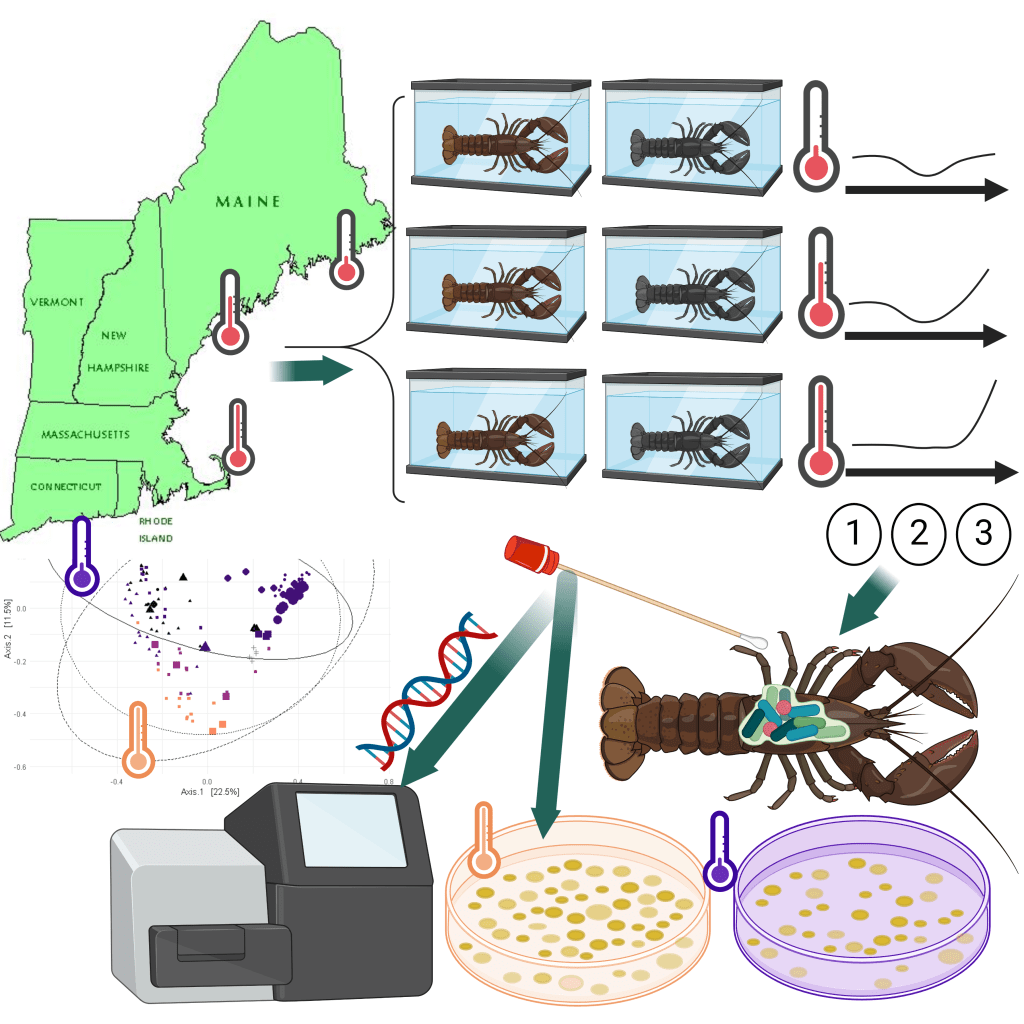
This manuscript is more grounded, and features work that was started in 2016. It examines bacterial communities on the shells of lobsters which were captured off the coast of Southern Maine and maintained in aquarium tanks for over a year. The lobsters were split into three treatment groups: those which were kept in water temperatures that mimicked what they would experience in Southern Maine, colder water to simulated what they would experience in Northern Maine, and hotter water to simulate what they would experience in Southern New England over that year. The original project team wanted to know if temperatures would make a different to their health or microbial communities.
Figure S8. Water temperature regimes, related to STAR Methods. A. Temperatures were obtained through the National Oceanographic Data Center (NODC). NODC temperatures reflect those recorded near Eastport, ME (A); Portland, ME (B); and an average of temperatures from Woods Hole, MA (C) and New Haven, CT (D) was used to represent Southern New England. B. Annual temperature cycles used in this project to represent Southern New England (SNE), Southern Maine (SME) and Northern Maine (NME).
The original project team swabbed lobster shells to obtain bacteria to try and grow in the lab, as well as DNA to sequence and identify whole bacterial communities. Grace and I performed the data analysis to identify which taxa were present in those communities, what happened over time or when the water temperature changed, and what bacteria were present or not in lobsters which died during the study.
Figure S11. Lobster carapace sampling using a sterile cotton swab to obtain bacterial communities from the shell surface, related to STAR Methods. The right side of the dorsolateral area of the cephalothorax was sampled for the baseline sampling, the left side for the Time 1, and the right side again for Time 2.
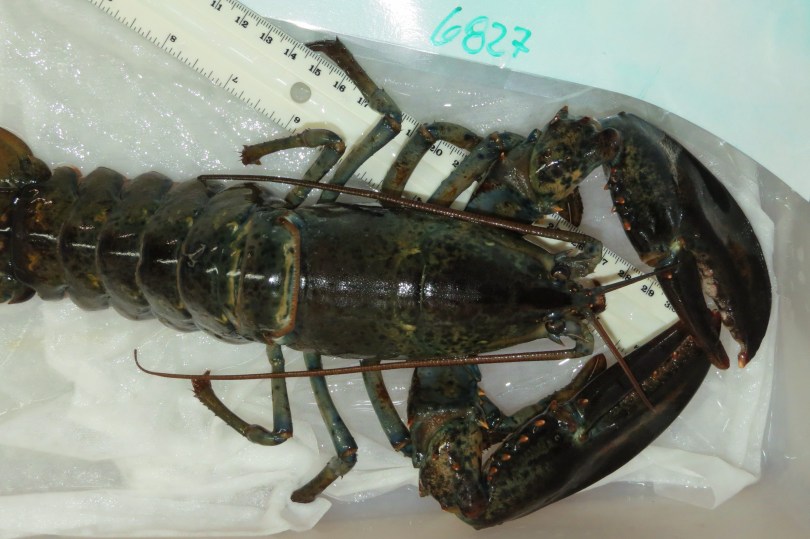
In addition to wanting to know about temperature, we wanted to know specifically how temperature would affect the bacteria if the lobsters had epizootic shell disease. It is not known what causes epizootic shell disease (which is why it is called ‘epizootic’), but it manifests as pitting in the shells of lobsters. Over time, the pitting can weaken shells and make it difficult for the lobster to molt, or make the lobster susceptible to predators or microbial infections. This type of shell disease had been a huge problem in Southern New England over the past few decades, and in Maine we have seen more cases over time.
Figure S10. Examples of lobster shell disease indices, related to STAR Methods. A) 0, no observable signs of disease, B) 1+, shell disease signs on 1-10% of the shell surface, C) 2+, shell disease signs on 11-50% of the shell surface, D) 3+, shell disease signs on > 50% of the shell surface.
The highlights of this project are here, but you can click the link below to read the entire study and what happened to lobster health and lobster microbes over time.
Shell bacteria from healthy lobsters, often overlooked, were included in the study.
Hotter and colder water temperatures affected shell bacterial communities.
Epizootic shell disease reduced bacterial diversity on lobster shells.
Epizootic shell disease could be induced or exacerbated by the loss of commensal bacteria from shells.
Suzanne L. Ishaq1,2,, Sarah M. Turner2,3, Grace Lee4,5,M. Scarlett Tudor2,3, Jean D. MacRae6, Heather Hamlin2,7, Deborah Bouchard2,3
1 School of Food and Agriculture; University of Maine; Orono, Maine, 04469; USA.
2 Aquaculture Research Institute; University of Maine; Orono, Maine, 04469; USA.
3 Cooperative Extension; University of Maine; Orono, Maine, 04469; USA.
4 Department of Neuroscience, Bowdoin College, Brunswick, ME 04011; USA.
5 Boston Children’s Hospital, Boston, MA 02115; USA.
6 Department of Civil and Environmental Engineering; University of Maine; Orono, Maine, 04469; USA.
7 School of Marine Sciences; University of Maine; Orono, Maine, 04469; USA.
Summary
The American lobster, Homarus americanus, is an economically valuable and ecologically important crustacean along the North Atlantic coast of North America. Populations in southern locations have declined in recent decades due to increasing ocean temperatures and disease, and these circumstances are progressing northward. We monitored 57 adult female lobsters, healthy and shell-diseased, under three seasonal temperature cycles for a year, to track shell bacterial communities using culturing and 16S rRNA gene sequencing, progression of ESD using visual assessment, and antimicrobial activity of hemolymph. The richness of bacterial taxa present, evenness of abundance, and community similarity between lobsters was affected by water temperature at the time of sampling, water temperature over time based on seasonal temperature regimes, shell disease severity, and molt stage. Several bacteria were prevalent on healthy lobster shells but missing or less abundant on diseased shells, although some bacteria were found on all shells regardless of health status.
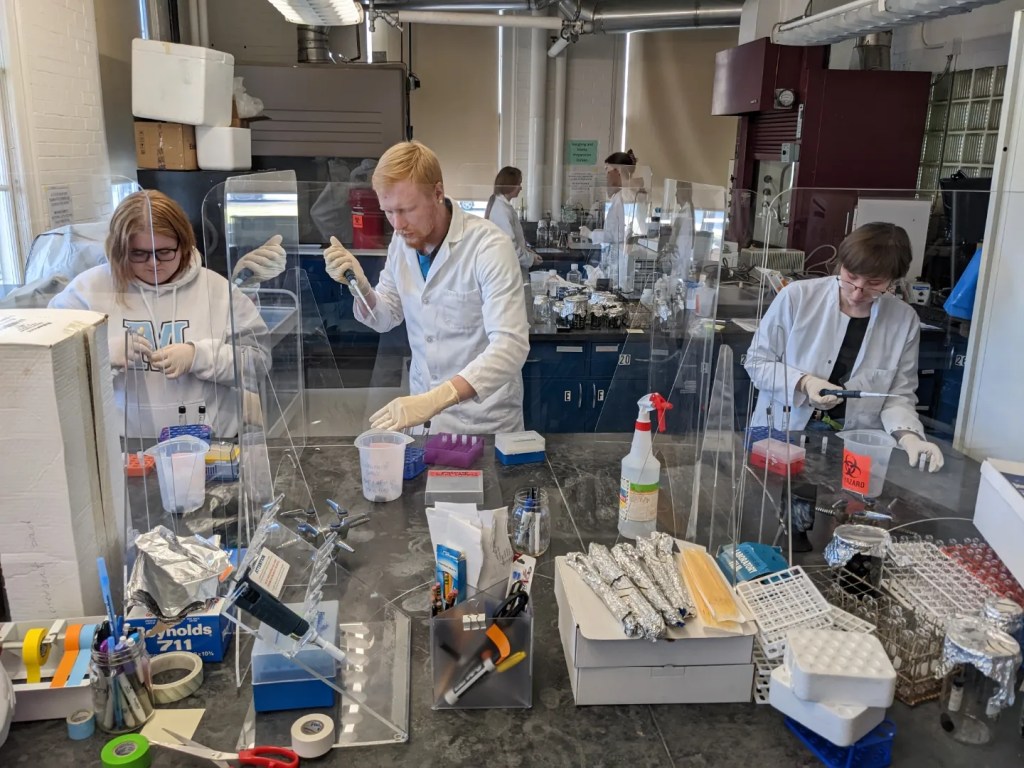
Over the past few months, a large team of undergraduate, graduate, and postdoctoral researchers, and I, have been processing hundreds of samples from our scallop hatchery microbiome project. As 2022 winds down, so does the first phase of our lab work, and we are taking a well-deserved break over the holidays before we launch additional lab work, data analysis, and manuscript writing in 2023.
In 2021, the Ishaq Lab, collaborators at UMaine, and collaborators at the Downeast Institute ran a pilot project to investigate the bacteria that associate with sea scallop larvae in hatcheries, and how this is develops in relation to bacteria in hatchery tanks over time. For that project, we collected hundreds of culture plates with a specialized media that selects for certain species of bacteria.
When tanks are drained and cleaned every two days, cotton swabs are rolled across part of the bottom or side of the tank and used to inoculate bacteria onto these culture plates. This is part of a routine screening for pathogens, and don’t worry, we aren’t finding bacteria that causes disease in humans. But, these screening plates creates a useful starting point for our research on bacterial community dynamics.
Tank swab samples are used to inoculate TCBS plates to screen for Vibrio and similar bacteria
We received over 200 of these TCBS culture plates, and from them we isolated 140 bacteria in 2021 and early 2022 which we archived at -80 degrees Celsius. This was part of Sarah Hosler’s master’s of science thesis in August of 2022, and has since been passed to Ayodeji Olaniyi for part of his master’s of science thesis.
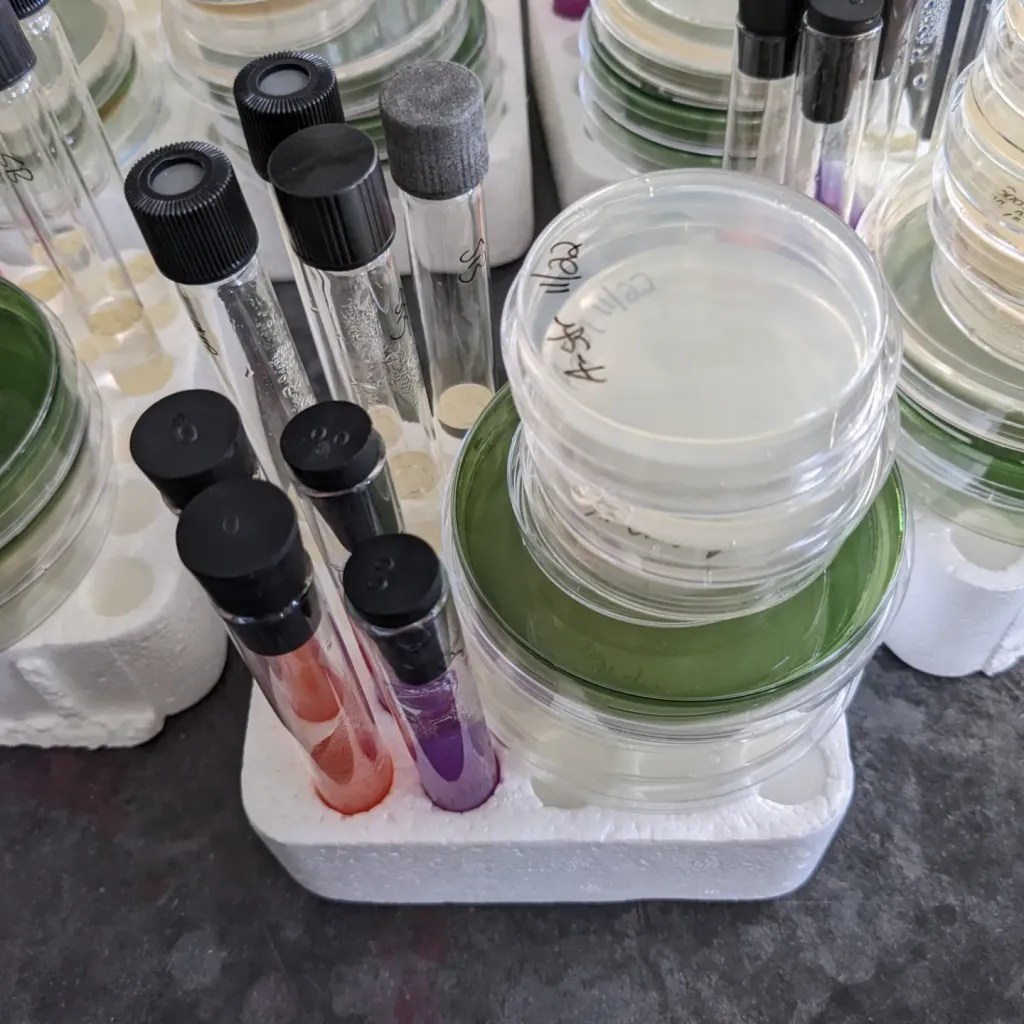
This fall, we were able to recover 115 of these isolates from the deep freeze, and tested them on 12 different media in duplicate, which created >1800 cultures plates and tubes, and 230 microscope slides!
This massive undertaking would not have been possible without a large team helping with the lab work, including rockstars Ayodeji Olaniyi, Sydney Shair, Keagan Rice, and Lacy Mayo who put in hours and hours leading the efforts on this. We are also grateful to Alaa Rabee, Aaron Williams, Lily Robbins, Ash VanNorwick, and Rebecca Kreeger who provided assistance with media making, inoculating, and the large amount of cleanup (we used glass or autoclavable plastic where possible, and sterilized some single-use plastics to be used as training tools for student education). We were also assisted by Bryanna Dube, who is working on creating outreach/education materials based on our results.
Now, our team will focus on analyzing the results of all these microbiology tests and look for trends. Some will also be heading to the Perry Lab to learn how to perform quantitative polymerase chain reactions (qPCR), in which we use a modified version of DNA replication to count the copies of specific genes. We will use this to look for genes which confirm the identity of our bacteria.
Beginning in summer 2022, the Ishaq Lab has also been part of a state-wide research and commercial collaboration to understand and improve sea scallop production in hatcheries and farms. As part of that project, we received 1500 DNA samples from different hatchery tanks or larvae over the summer/fall rearing season.
Gloria Adjapong is a Postdoctoral Fellow at the UMaine Cooperative Extension Veterinary Diagnostics Lab, and she has been graciously extracting these samples as part of her cross-training in the Ishaq Lab. We will use the extracted DNA to sequence the bacterial communities to identify which bacteria are present, and when, to understand microbial community dynamics over time and in relation to scallop health.
It’s been a few years in the making, but our draft manuscript on lobster shell microbes, epizootic shell disease, and climate change is available online as a preprint (not yet peer reviewed)! You can read the preprint here, and the summary is below.
I joined this project back in the summer of 2020, when I was given a large 16S rRNA gene sequence dataset of bacterial communities from the shells of lobsters by a research group at UMaine who had been studying lobster health for some time. My first point of contact on the project was Jean MacRae, an Associate Professor of Civil and Environmental Engineering at UMaine, who had been working on bacterial community sequencing on other projects which I’ve been involved in, and who has been involved with MSE, and this will be our fourth publication together!
Jean introduced me to the original research team, including Debbie Bouchard, who is the Director of the Aquaculture Research Institute and was researching epizootic shell disease in lobsters for her PhD dissertation; Heather Hamlin, Professor and Director of the School of Marine Sciences; Scarlett Tudor, the Education and Outreach Coordinator at the ARI; and Sarah Turner, Scientific Research Specialist at ARI.
I used the data as a training opportunity for Grace Lee, who at the time was an undergraduate at Bowdoin College participating in the abruptly cancelled summer Research Experience for Undergrads program at UMaine in summer 2020. Instead, Grace joined my lab as a remote research assistant and we worked through the data analysis over the summer and fall. Grace has since graduated with her Bachelor’s of Science in Neuroscience, obtained a Master’s of Science at Bowdoin, and is currently a researcher at Boston Children’s Hospital while she is applying to medical school.
Earlier this year, the research team, along with social science Masters student Joelle Kilchenmann, published a perspective/hypothesis piece which explored unanswered questions about how the movement of microbes, lobsters, and climate could affect the spread of epizootic shell disease in lobsters off the coast of Maine.
Suzanne L. Ishaq1,2,, Sarah M. Turner2,3, Grace Lee4,5,M. Scarlett Tudor2,3, Jean D. MacRae6, Heather Hamlin2,7, Deborah Bouchard2,3
1 School of Food and Agriculture; University of Maine; Orono, Maine, 04469; USA.
2 Aquaculture Research Institute; University of Maine; Orono, Maine, 04469; USA.
3 Cooperative Extension; University of Maine; Orono, Maine, 04469; USA.
4 Department of Neuroscience, Bowdoin College, Brunswick, ME 04011; USA.
5 Boston Children’s Hospital, Boston, MA 02115; USA.
6 Department of Civil and Environmental Engineering; University of Maine; Orono, Maine, 04469; USA.
7 School of Marine Sciences; University of Maine; Orono, Maine, 04469; USA.
Summary
The American lobster, Homarus americanus, is an economically valuable and ecologically important crustacean along the North Atlantic coast of North America. Populations in southern locations have declined in recent decades due to increasing ocean temperatures and disease, and these circumstances are progressing northward. We monitored 57 adult female lobsters, healthy and shell-diseased, under three seasonal temperature cycles for a year, to track shell bacterial communities using culturing and 16S rRNA gene sequencing, progression of ESD using visual assessment, and antimicrobial activity of hemolymph. The richness of bacterial taxa present, evenness of abundance, and community similarity between lobsters was affected by water temperature at the time of sampling, water temperature over time based on seasonal temperature regimes, shell disease severity, and molt stage. Several bacteria were prevalent on healthy lobster shells but missing or less abundant on diseased shells, although putative pathogens were found on all shells regardless of health status.
A collaborative pilot project was funded by the Maine Food and Agriculture Center (MFAC) to investigate Vibrio bacteria in scallop hatcheries in Maine! This will support some ongoing work by a collaborative research team at UMaine and the Downeast Institute, as we develop a long-term, larger-scale project investigating scallop health and survival in hatcheries, something which will be critical to supporting sustainable and economically viable aquaculture productions.
“Investigating microbial biofilms in Maine hatchery production of sea scallop, Placopecten magellanicus.”
Principal Investigator: Sue Ishaq
Co-Investigators:
Dr. Tim Bowden, Associate Professor of Aquaculture, University of Maine
Dr. Jennifer Perry, Assistant Professor of Food Microbiology, University of Maine
Dr. Brian Beal, Professor of Marine Ecology, University of Maine at Machias; and Research Director/Professor, Downeast Institute
Dr. Erin Grey, Assistant Professor of Aquatic Genetics, University of Maine
Project Summary: Atlantic deep-sea scallops, Placopecten magellanicus, are an economically important species, generating up to $9 million in Maine alone. Despite their potential to the aquaculture industry, hatchery-based sea scallop production cannot rely on the generation of larvae to produce animals for harvest. In hatcheries, the last two weeks of the larval maturation phase is plagued by massive animal death, going from 60 million scallop larvae down to a handful of individuals in a span of 48 hours. This forces farmed scallop productions to rely on collection of wild scallop spat (juveniles), but wild population crashes, habitat quality, harvesting intensity, and warmer water temperatures threaten the sustainability and economic viability of this industry. The reasons for sea scallop larvae death remain unknown, but other cultured scallop species are known to suffer animal loss from bacterial infections, including from several bacterial species of Vibrio and Aeromonas. At the Downeast Institute in Beals, Maine, biofilms appear on tank surfaces within 24 hours. Routine screening for the presence of Vibrio sp. in tanks at DEI reveals no obvious signs of colonies in scallop tanks. Preliminary culturing and genetic identification from these biofilms suggests a species of Pseudoalteromonas, known biofilm formers which outcompete or inhibit other microorganisms. Our goal is to investigate the dynamics of tank surface biofilms in bivalve aquaculture facilities. Our long-term goals are to understandmicrobial community assembly and animal health during scallop hatchery production, and to standardize management practices to enhance the success of cultured scallop production.
Experimental design schematic for this project. Our objectives are to 1) Identify the microbial community members involved in tank biofilms, and if it is a repeated or novel community assembly, and 2) Test for biofilm antagonism in vitro, using competing microorganisms, chemical treatments, and environmental conditions.













 The Ishaq Lab