I'm an assistant professor of animal and veterinary studies at the University of Maine, Orono, studying how animals get their microbes. I am also the Founder and Lead of the Microbes and Social Equity working group.
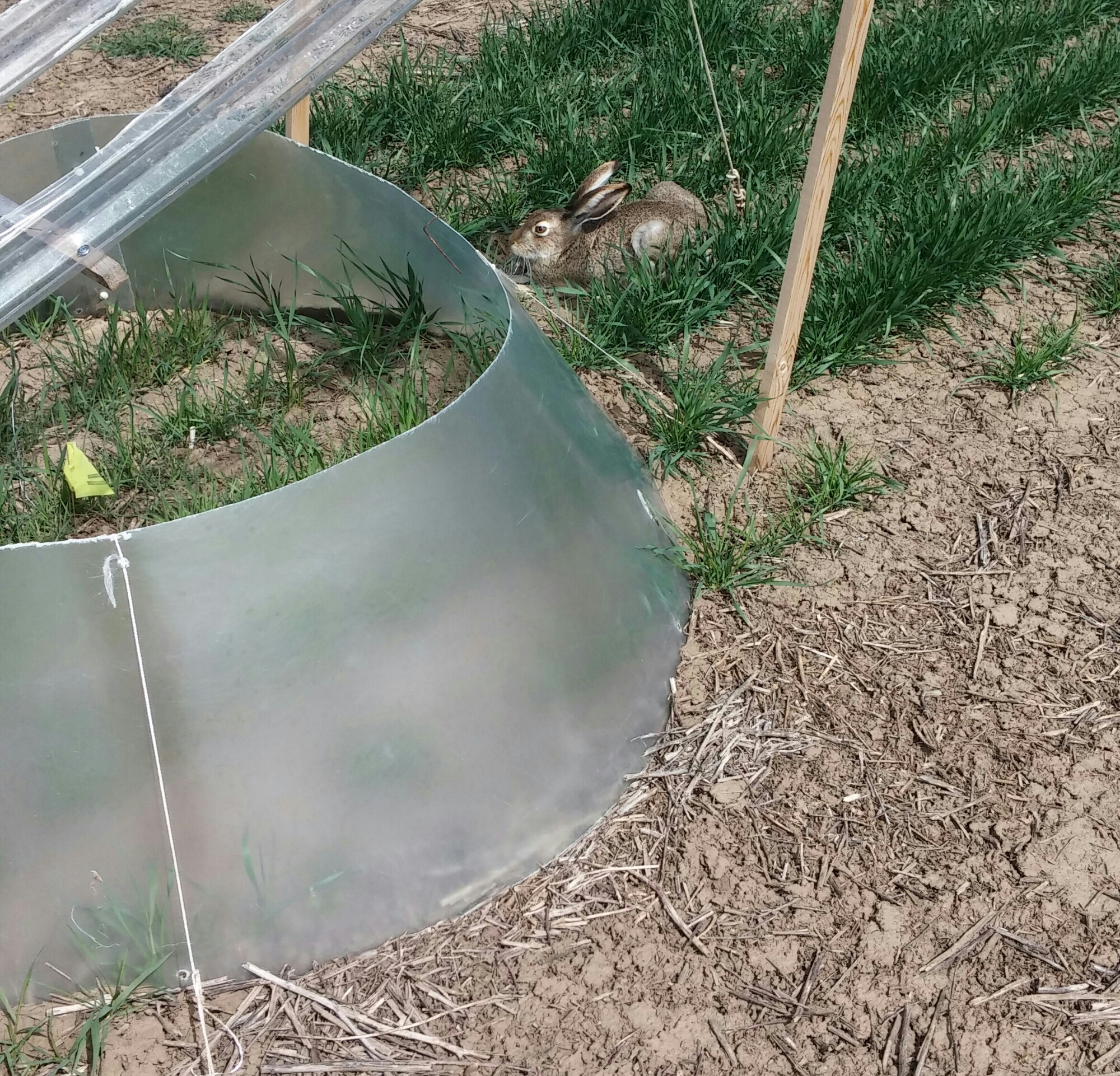
Today I went to the MSU Post Farm, one of the several agricultural farms affiliated with MSU Bozeman, along with several other members of the Menalled lab. We were going to count seedlings of the agricultural crop winter wheat, and a competitive weed, cheat grass.
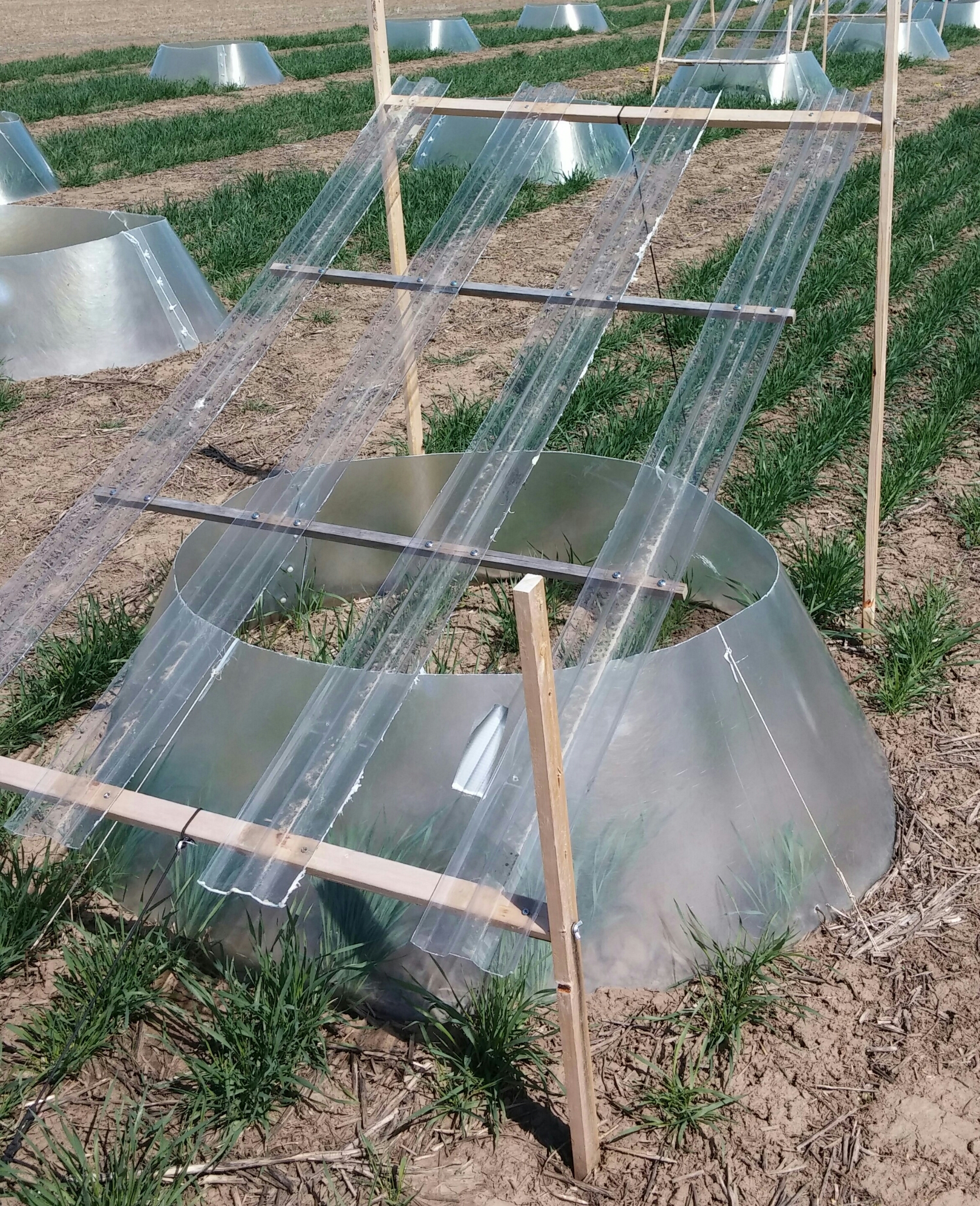
The plots are left out in the field for ambient rain and temperature conditions, or put into one of two treatments, or both combined, to mimic climate change: increased temperatures and reduced rainfall. This is similar to the project I will be working on, so it’s good job training. And, those study cards that my mentee made me last week really did come in handy!
As my current post-doctoral position winds down in the Yeoman Lab in the Department of Animal and Range Sciences, I am pleased to announce that I have accepted a post-doctoral position in the Menalled Lab in the Land Resources and Environmental Sciences Department! Dr. Menalled’s work focuses on agricultural weed ecology and management, particularly with respect to plant-plant interactions, changing climate (water and temperature changes), and now plant-microbe interactions!
I’ll primarily be working on a new two-year project that recently got funded through the USDA, entitled “Assessing the vulnerability and resiliency of integrated crop-livestock organic systems in water-limited environments under current and predicted climate scenarios”, but I’ll also be working collaboratively on several other similar projects in the lab.
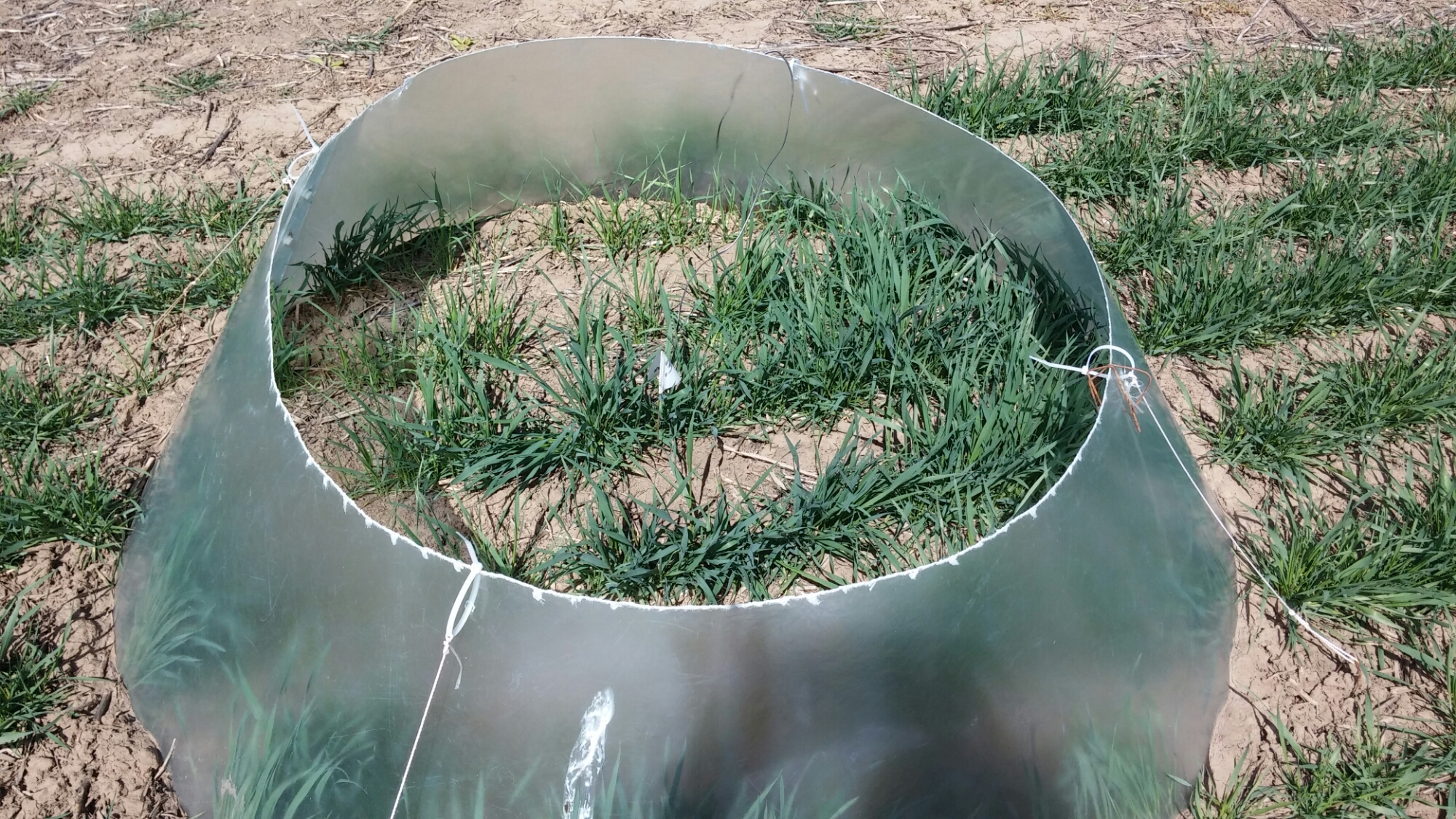
A little pre-job job training: I’m helping to make structures to keep rain out (rain-out shelters) of plots to simulate drier climate conditions. Photo: Tim Seipel
My new responsibilities will include comparing agronomic performance and weed-crop-pathogen interactions between organic-tilled and organic-grazed systems, evaluating the impact of management and biophysical variables on soil microbial communities, and collaborating in modeling the long-term consequences of these interactions under current and predicted climate scenarios. It’ll mean a lot more field work, and a lot of new skills to learn! In fact, to help me study for my new job working with agricultural plants, my mentee and her friend made me flash cards:
My mentee made my study cards so I could learn to identify common crop and weed species.
In addition to my new skills, I’ll be integrating my background in microbial ecology and bioinformatics, in order to study agricultural ecosystems more holistically and measure plant-microbe interactions. In the same way that humans eat probiotics to promote a healthy gut microbiome, plants foster good relationships with specific soil microorganisms. The most exciting part is that I will act as an interdisciplinary bridge between the agroecology of the Menalled lab and the microbial ecology of the Yeoman lab, which will allow for more effective collaborations!
Because you play another round until your number wins!
Manuscript writing seems like it should be a straightforward ordeal. You explain the current body of research on the subject and identify the knowledge gap that your hypothesis fills, explain the rationale and objectives for the study, describe all the methods you used, present the data results, and then interpret them in the discussion. Oh and don’t forget the bibliography. Simple!
Oh contraire. Many manuscripts grow and then end up splitting into two or more, or you add a collaborative project on after the fact using the samples you’ve already collected. Sometimes you just say “let’s test these and see what happens”, and you don’t have a specific hypothesis except for “it could be cool”. Moreover, when you work in a very novel, difficult, unpopular, or boring field, there often isn’t a lot of previous research for you to read up on. It makes it more challenging to write what should be the easiest section, the Introduction, because you don’t have much background to introduce. While this does justify your work and the need for more research, it also makes it difficult to plan an experiment because you don’t know what outcomes or problems will crop up, and it can make your interpretation of the data problematic.
Methods: probably the worst section.
Sometimes you end up with more or less data than you planned. And most often, you didn’t just use commercial kit instructions, you probably had to piece together methods from two to ten different journal articles, many of which were not verbosely described to maintain a sort of proprietary hold on the procedures, until you end up with a heavily-citationed Frankenstein’s monster of a Methods section. Not to mention that you probably had to mess around with procedures to find just the right settings on your equipment, so you have to go back through your lab notebook and try to tease apart what you did months or years ago. My suggestion: write the Methods while you are running the experiment. Whenever you finish a procedure that worked, type it up, especially if you are stuck waiting for something to process or grow anyway.
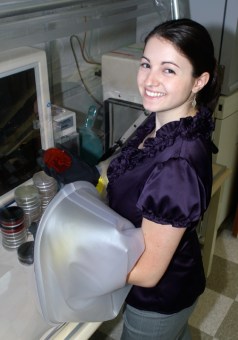
In 2015, I worked on the DNA sequencing section of a project that had begun four years earlier when the original animal feeding trials were run, and which had been sequenced nearly a year prior to my taking over the data. Not only did the original Principal Investigator (PI) have trouble digging up the project files from four years ago, but the technician who had sequenced the data was no longer a member of the lab. Between the two, it was very difficult to track down what had been done, and which sequencing file name corresponded to which sheep sample. Even if you think the project will never be published, TAKE GOOD NOTES. Really specific, legible ones, trust me- you’ll thank me later.
Results and Discussion: Let’s be honest, the only two sections anyone actually reads.
Exopolysaccharide production (white) prevents colonies from being ctained by red dye in the media.
Results is the easiest section to write, but possibly the most difficult to make appealing and understandable to a general scientific audience. Naturally, you need to know how to properly summarize your data and how to graph it. Seems easy: something about means and standard deviations, liberally sprinkle in some p-values… But in reality, there are lots of ways to statistically validate or measure something, and most of these are minor variations on each other to accommodate slightly different data or situations. Maybe your data has a bell-curve normal distribution like people’s height in North America; maybe it’s heavily skewed to one side, like my preference for maple-frosted donuts over celery. Or you need an ordination plot that takes non-Euclidean distance samples and graphs their relationship to each other by plotting one point, then rotating the axis and plotting another until you’ve plotted all your points. No matter how sophisticated your presentation techniques, if someone can’t look at your graph and the graph summary out of context and understand what you are measuring, you haven’t done your job well. I’ve heard many scientific authors complain that a reviewer demanded changes to the manuscript because they did not under the results or statistical analysis. That can be frustrating, and sometimes it feels like the reviewer is just being obtuse, but as scientific authors it’s our job to properly explain what we did.
Acid production from different carbohydrates by Streptococcus gallolyticus shown by a pink color change.
The Discussion section is always my favorite, because now you interpret your results into the context of other findings and speculations- in short, you finally get to tell the story of what is happening and why in a more interesting way.
The rest is just details. The Conflict of Interest section is always very interesting. Here you must disclose any conflicts you have, anything from a funding source that paid for your work and may or may not have had input in the experimental design (sometimes commercial companies will contract researchers to do a specific experiment that they more-or-less designed), or that the commercial lab you sent your samples to be tested at has you on the payroll. The Conflict of Interest is usually blank for studies coming out of academic universities, but it’s a good way to track down researchers who might be biased towards or against something.
You have an acknowledgements section where you can thank personnel that may have assisted you in some small way, someone who you bounced ideas off of in planning and interpretation, someone who gave you samples to work with free of charge. In my case, I most often thanked the hunters who had dutifully collected a jar of rumen (stomach) contents, and sometimes colon contents, from moose while they were field dressing. Or the numerous undergrads that helped feed my newborn lambs five times a day until they were weaned.
Last but not least, the Bibliography or References Cited. Sounds easy enough. But you’d be surprised how pesky it can be. Different journals often want different formatting for your submission, some want authors lists to look like “Last, First; Last, First”, or maybe “Last, F., Last, F.”, or even “Last F, Last F”. Some want years in parentheses, others don’t. Some want issue number, or the journal name to be abbreviated, or a certain part of the reference to be bolded. Trying to reformat 50-100 references for submission to a different journal can be a nightmare. Luckily, there are plenty of citation managers that will create a digital library for your references, and allow you to search for citations while you are writing. Then, you hit “Insert Bibliography” and it numbers or alphabetizes it, and puts them into the desired format. That is, assuming you had put all the correct bibliographic information in. I like Mendeley because I can import references from my web browser; however, on older PDFs sometimes it can’t pick up the info it needs and you have to do it manually. I’ve gotten some interesting inputs for authors’ names when it gets confused.
Manuscript writing can take months, especially with complicated projects or those with many co-authors, as all co-authors need to approve the final version before it can be submitted. Once submitted, a Journal Editor will send the manuscript out to two or three Journal Reviewers, who are researchers in academia or industry that are in that field of expertise and can opt to volunteer to read and review the article. Nearly always, the authors do not know who the reviewers are, and in many cases the reviewers do not know who the authors are, although it is helpful for reviewers to see the authors’ names. If they have a conflict of interest with the author, such as they don’t get along personally, they might be married, or they are currently working on another project together (anything that might bias them for or against), the reviewers are supposed to decline to review. Reviewers have two to four weeks, depending on the journal, but some will submit their reviews late. The Editor considers all the reviews and makes their final decision to accept as is, accept with minor revisions, accept with major revisions, decline with major revisions (authors may edit and submit a new manuscript for consideration), or decline. It takes a few weeks to find reviewers, several more to get the revisions in, and another one or two for the editor to make a decision, so this can take anywhere from six weeks to four months.
Often journals will decline without reviewing if they are not interested in the subject material or feel it is outside the scope of the journal. If you have revisions, some journals request that you submit two new versions of the manuscript- one with the changes highlighted. Additionally, you need to address each reviewer comment by explaining what you did. For spelling mistakes, this is as simple as writing “corrected” after the comment. For more complex things, you need to explain the change along with quoting the new text, or explain why you aren’t changing things. If the Editor and Reviewers do not feel that you made all the changes, they may reject the re-submission or send you more edits. Usually they send you more edits that they didn’t notice the first time.
Eventually, a journal might accept your manuscript, and then you only have to approve the author proofs – unless your figures don’t have a high enough resolution, and then you need to remake them or figure out how to increase your dpi. Typically it takes between six months to a year to complete the whole peer-review process, depending on the study results and the journal’s internal process.
While tedious and arduous, the manuscript peer-reviewing procedure works very well. Experts in your field can assess the validity of your work, and experts in related fields can give you an outside perspective, especially when you have gotten used to using a very specific jargon or not completely explaining things. Most importantly, it improves the quality of the writing and presentation, and it maintains a standard of integrity and excellence. By the end of the submission process, you are dizzy and you want to get off the ride. But by the time you get through the next project, or eat a soft pretzel, you’ll be ready to climb back on that carousel horse.
Encouraging girls to go into STEM fields is really important; studies show that female STEM high-school teachers and even online mentors increase the probability of female students following a STEM education. Moreover, any child benefits academically and psychologically from having positive role models in their life, especially when they were role models that they interacted with as opposed to celebrity role models. And the benefits don’t just extend to children, adults benefit from positive rolemodels, too. Certainly I have benefited from strong female role models in my life, from high school art teachers, to undergraduate lecturers, to family (happy birthday, Mom!).
This past fall I started putting my money where my mouth was- I started mentoring an elementary school-aged girl in Bozeman, MT through the Thrive Child Advancement Project (CAP). So far, we have mostly been making art projects and talking about archaeology. But we have been talking about trying to learn the Java programming language together!
There are lots of opportunities to mentor kids, either through CAP programs, Big Brother/Big Sister, Girls and Boy Scouts, etc., just a quick internet search brings up dozens of local options. For less of a time commitment, you can also volunteer for community workshops, like the Girls for a Change summit in Bozeman or the Girls-n-Science in Billings.
The convention of changing your last name from your family name to your husband’s last name after marriage is still overwhelmingly popular. Several surveys estimate that 65% of US women still opt to change it, and it is something that is actually more popular now than in the late 1990s. There are also persistent perceptions about women who do take their husbands last name being less competent, and they end up making lower salaries. This debate takes on an extra dimension, though, when your last name will be tied to intellectual property, like works of art, music, publications, or businesses.
There are lots of reasons to change your name, and just as many to keep it. In 2008, I changed from my family name to my husband’s last name. At the time, I had graduated with a baccalaureate under my family name, and while I was intending to go to graduate school I had not yet published anything. My married name was shorter and easier to spell than my famly name, which I’d had to spell all the time growing up, so at the very least I thought it would save time when talking to customer service personnel. Seriously, on one phone call I made, the customer service employee thought I was spelling my name with 3 L’s in a row (is there any last name with a triple L??). I considered that I might have to keep my married name once I’d published even if I divorced, but at the time I was not attached to any last name, and did not think I would have any strong emotions tied one or the other, while taking his name meant a lot to my husband.
In 2014, when I divorced, I reconsidered my position. For one thing, I was just about to graduate with a doctorate, I had several publications under Ishaq, and colleagues knew me that way. For another, and this was a big one, it would make it harder to associate all of my materials, even online. I would essentially be reinventing my professional self, at least for several years until the name change had permeated. While some sites are dedicated to getting around this, however, you can still expect your h-index to be incorrectly low as your publications don’t compile.
At first, I made the decision to keep my married name, and over the course of a year realized that I did have strong emotions tied to my last name and my identity, such that I changed it. Staying with my family name from the beginning would have certainly made things simpler. All of my degrees, publications, professional self, and personal self would have been tied to a single name that predated my married life. It would have saved me A LOT of paperwork, as well. It’s fairly easy to change your name when you get married. When you divorce; however, you may have to prove that you are allowed to return to your family name, as many states include that as a stipulation of the proceedings. My ex-husband had to sign off giving me permission to return to my family name. I had to include my divorce papers with every request to change my name at the social security office, and on credit cards, bank accounts, passports, insurance accounts, loan, etc.
I didn’t return to my family name, instead I legally became a new combination and continued to publish as Suzanne Lynn Ishaq. This makes things awkward, because MSU, grant funding agencies, and many scientific societies require and use my legal name, and list me in directories that way. Thus, I still have the problem of having two professional identities. And now I have the additional burden of having to explain my situation to clarify my different monikers to new colleagues that have never known me to be married. To be clear, this isn’t a rant, a pitch, or a warning. Just something to consider. I don’t have any advice for this one, except to think it through.
A year ago today I gave the public defense of my PhD dissertation! It was a stressful day, especially because my laptop crashed just 10 minutes beforehand while I was practicing and making last minute adjustments! Luckily, I had prepared by bringing the presentation on a flash drive, and by putting it on an online cloud drive as well. My parents brought enough potato salad, cookies, cake, and Italian meatballs to feed the dozens of attendees and then some. I really appreciated the friends and family that showed up to support me, some had even driven to Burlington, VT from Massachusetts just for me! You can watch my full defense presentation on YouTube.
After a long hour of presenting my work and answering questions from the crowd, my graduate committee and I left for the closed-door portion. For the next two and a half grueling hours, 5 field-leading researchers asked me questions about everything I had done, and what I might have done differently. Finally, they asked me to step into the hallway while they made their final deliberations, where I nervously ate cookies as fast as I could because I hadn’t eaten in hours. They came back out 5 minutes later smiling, and announced that I had passed! You can read my full thesis here.
Sampling in September, when the stream wasn’t frozen and we could see the trail.
Yesterday was the winter sampling time point for a large research project I’m volunteering for: Adventurers and Scientists for Conservation is managing sample collection for the ASC Gallatin Microplastics Initiative in the Gallatin Valley watershed. The project samples various streams and lakes, both where they converge with the Gallatin River and at their headwaters. The project is part of a much larger project looking at microplastics in water around the world, the ASC Worldwide Microplastics Initiative. ASC recruits volunteers who have the outdoors-man skills (like hiking, tracking, or boating) and enthusiasm to get to hard to reach places to collect samples, then trains them in how to collect water samples and metadata (like weather, temperature, what we’re wearing during collection), coordinates sample collection times, and makes sure to safely send the samples back to a laboratory in Maine.
Our intrepid, fuzzy researcher stuck by our side the whole way.
Digging down through the snow to find the headwaters of Deer Creek.
A lovely view of the Spanish Peaks.
Lee and I sample Deer Creek, just north of Big Sky, Montana. To do this, we hike 13 miles round trip to Moon Lake, with a 3,288 foot elevation gain up to around 9,000 ft above sea level. This time, the trail was covered in 1-2 feet of undisturbed snow, luckily we had snowshoes that kept us from sinking into all but the most soft of snowdrifts. On the way up it was snowing heavily, though visibility was fine, and on the way down it was raining. In many areas of the trail, drifts meant that the trail was at a 45 degree angle, and we had to break our own trail for nearly all of it. Despite the arduous trek, the views were beautiful, it was wonderful to be out of the office, and it was fun helping a large coordinated study. You can get involved in studies like this through organizations like ASC, or through research universities- volunteers are always needed for all different types of studies.
The trail was very steep and uneven thatnks to snow drifts.
Lee showing what he was wearing, in case our clothing contaminated the sample.
“I was married to Margaret Joan Howe in 1940. Although not a scientist herself she has contributed more to my work than anyone else by providing a peaceful and happy home.” – Dr. Frederick Sanger – From Les Prix Nobel. The Nobel Prizes 1980, Editor Wilhelm Odelberg, [Nobel Foundation], Stockholm, 1981
Lee holding “Laura Jr.” during his daily weighing. Laura Jr. loved to cuddle.
Happy birthday and thank you to my partner and best supporting contributor, Lee. Dr. Sanger was absolutely correct when he attributed his success at work to the support his wife gave him at home. I don’t mean that our partners should run the entire household because we are too important (I’m all for egalitarian chore wheels). What I mean is that it takes a special (and patient) type of person to emotionally support us and our work. As researchers and/or academics, we lead busy work lives, have variable schedules, have sudden deadlines that crop up and glue us to our laptops, we can’t always take vacation during the school year and if we do take a vacation it always seems to coincide with a scientific conference we are presenting at. We can be cranky without regular coffee infusions, and sometimes we come home smelling of whatever it is we were working on. And, sometimes we can never find enough undergraduate students to help us and ask you to help us clean sheep pens with no compensation.
Lee helping catch sheep in a pasture under the hot July sun. Generally, all my sheep liked him and would walk right up to him.
Our jobs can also require us to move often, or to hard-to-reach locations. Roughly a year ago, I accepted a job (my current post-doc position) in Bozeman, MT, a place I had never been to 2,600 miles from where I was living in Vermont. I asked Lee to drop everything and relocate with me- something that every partner of a graduate student, post-doc, or tenure-track professor has been asked at least once. Relocating with a researcher is no small proposition- it usually comes with a variable-length timeline; you might have to move again in a year or three or you might get stuck there and have to put down roots. I am delighted to say that Lee came with me, we drove all 2,600 miles across country to Montana, and we have been having a wonderful time under the Big Sky since! Happy birthday Lee, and to everyone else: go home and thank your partner, parents, coworkers, friends, pets, house plants, or whatever else for giving you the emotional support you need to be your best scientist.
Stereotyping is a social adaptation which evolved to help individuals classify stimuli, and to make judgements about new, untested stimuli. After all, once a crocodile ate your family, it was conducive to your survival to assume that all crocodiles were probably dangerous. However, social interactions and the human sense of self is so much more nuanced today that stereotyping is no longer a valid social tool. People make assumptions about others based on just about any aspect of their person, and this has very real repercussions for diversity and interactions in the workplace, though here I am focusing on preconceived notions of women.
Women often face a paradoxical set of rules for their personality and productivity, especially at work. Sometimes we are perceived as being too talkative and willing to talk over others, yet a recent study showed that men do most of the talking in work meetings, and are much more likely to interrupt a woman and than man. Women are perceived by men to be worse at problem solving, as being unreliable if they are working mothers, and as being worse team leaders or executives. This is contrary to other studies which show women to be more effective leaders. In that study, women were more likely to take charge, undergo professional development, be honest, and were better at communicative and collaborative skills. Many women who were surveyed attributed their success to having to work much harder than their male counterparts in order to prove their competence.
Women are encouraged to be more feminine from many angles, such as societal norms, or product marketing and advertising, often with the perception that you will be more attractive and better liked if you exhibit predominantly feminine qualities (warmth, nurturing, patience). However, the perception of working women used to be (in 1984) that they were more masculine, and prior to that working women were seen as selfish, unfeminine, and cold. While in 2014, working women were categorized as equally feminine and masculine, being more “masculine” (self-confident, self-promoting) is shown to increase your chance of promotion. Women are also often expected to do workplace “chores” or to be altruistic (staying late, helping other employees, etc. at no personal gain) in ways that men are not.
Another problem is the perception of working women and their relation to their family, which has improved in the last century but still lags behind the times. It’s still assumed that women will at some point temporarily or permanently leave work to raise a family, and working mothers are commonly perceived to be unreliable in terms of performance and time spent at work. There can still be negative attitudes towards women who work instead of staying home to raise children, even though countless studies across the globe have shown that working mothers (who want to be working) have a more positive attitude, act as role models, and reduce gender inequality in future generations (data from here and summarized here).
This also ties into theories about whether or not a woman should earn more that her man (arguments which ignore same-sex couple earning dynamics). However, this leads to the idea that women don’t work to financially support their families, but to feed an ambition, yet why can’t both be true? Men responded that when jobs are scarce, men have more right to them than women, and were less likely to respond that a job was the best way for a woman to be independent. Thus, women’s careers are incorrectly perceived as superfluous to supporting a family and leads to the idea that we don’t need to make as much as a man, who may be supporting his family.
I can personally attest to this. For several years, I was financially supporting my ex-husband during his arduous job search following the 2008 recession. It didn’t bother me, as I was applying to graduate school and preparing for the financial tables to turn once I transitioned to a student stipend. However, our financial roles came as a surprise to many people, in that the thought hadn’t occurred to them that I was the prevailing breadwinner. This was again reflected in people’s perceptions about what we would do after I graduated. When I announced my interest in finding a post-doctoral position on the opposite US coast or internationally, people were surprised that I would ask my man to give up his job, start over in a new place, and move away from his family. However, I would have been expected to do the same if our career roles had been reversed.
Luckily, attitudes about female bosses are changing, even if our paychecks aren’t. Today fewer men responded that they would prefer a male boss to a female boss, and more had no preference, than they did 50 years ago. Only 23% of Americans polled preferred a woman, which is and has always been lower than the number of respondents preferring a male boss. Gender preference was also linked to the gender of your current boss, so it likely that people are as unsure of change in hierarchy as they are of specific genders in charge. Surprisingly, women were 13% more likely to want a male boss, which may be a reaction to fierce competition to become the “token woman” at a company or working group, as women or other minorities who advocate hiring another woman or minority are penalized. There is also the perception among women that a female boss less likely to promote you over herself, as she doesn’t want competition, known as Queen Bee Syndrome. This too, has been refuted, as women are shown to be more likely to mentor and develop female employees lower down on the ladder (discussed here). Interestingly, companies with higher numbers of women in leadership roles consistently do better financially than companies with low number of women in leadership roles.
So how do we act more confidently without being arrogant or dominating, prove that we are great at math and science without being narcissistic, or have a family but not make a big deal of it? The best way to change public misconceptions is to prove them wrong. My advice, for women, for everyone: just be yourself. Be your best self. Be friendly and open, but judiciously say “no” to demands on your time. Remember who you are, where you want to go, and be comfortable in your skin. Feel free to be feminine, masculine, or whatever (just remember to be professional). As you work your way through your career, you should remember to be humble; after all, there is always someone out there that knows more than you do, but you also need to remember that you are intelligent, hard working, and you deserve to be where you are.
Great news! I’ll be presenting a poster this year at the American Society for Microbiology’s (ASM) Microbe Conference in Boston, MA this June 16th-20th. I’ll have a date and time later this month, and will of course post the full abstract and poster after the presentation.
“Farming Systems Modify The Impact Of Inoculum On Soil Microbial Diversity”
Suzanne L. Ishaq¹, Stephen P. Johnson², Zach J. Miller³, Erik A. Lehnhoff4, Carl J. Yeoman¹, Fabian D. Menalled²
1 Montana State University, Department of Animal and Range Science, Bozeman, MT 2 Montana State University, Department of Land Resources & Environmental Sciences, Bozeman, MT 3 Montana State University, Western Agriculture Research Center, Bozeman, MT 4 New Mexico State University, Department of Entomology, Plant Pathology and Weed Science, Las Cruces, NM