I'm an assistant professor of animal and veterinary studies at the University of Maine, Orono, studying how animals get their microbes. I am also the Founder and Lead of the Microbes and Social Equity working group.
I’m excited to announce that I’ll be giving a presentation at the American Fisheries Society and The Wildlife Society 2019 Joint Annual Conference this September. I was invited to participate in a symposium: Utility of Microbiomes for Population Management. I’ll be returning to my roots and presenting on moose microbes. See you in Reno!
Abstract 36407 – “Moose Rumen Microbes and Their Relevance to Agriculture and Health”
Continuously in science, you find yourself with more ideas than you can possibly put into action, and more tasks on your daily to-do list than you can possibly complete in one day. Spring has been, predictably, busier than anticipated – so much so that I haven’t posted in over a month! Here are some of the highlights, and I hope to be posting more over the summer as papers get published and courses get taught.
Over the past few months I’ve been focusing on wrapping old projects; those large and small things that carry over even after a scientific position has run out of funds to pay you. Scientific research, and especially the interpretation and writing of results, takes a long time and often outlives short-term student, post-doc, or non-tenured faculty postings. Eventually everyone who collaborated on a project has moved on and it is increasingly more difficult to finalize and publish that work. And, most of the undergraduate students I’ve been working with at BioBE are graduating in June and need to finish their projects so they can cleanly begin the next phase of their life.
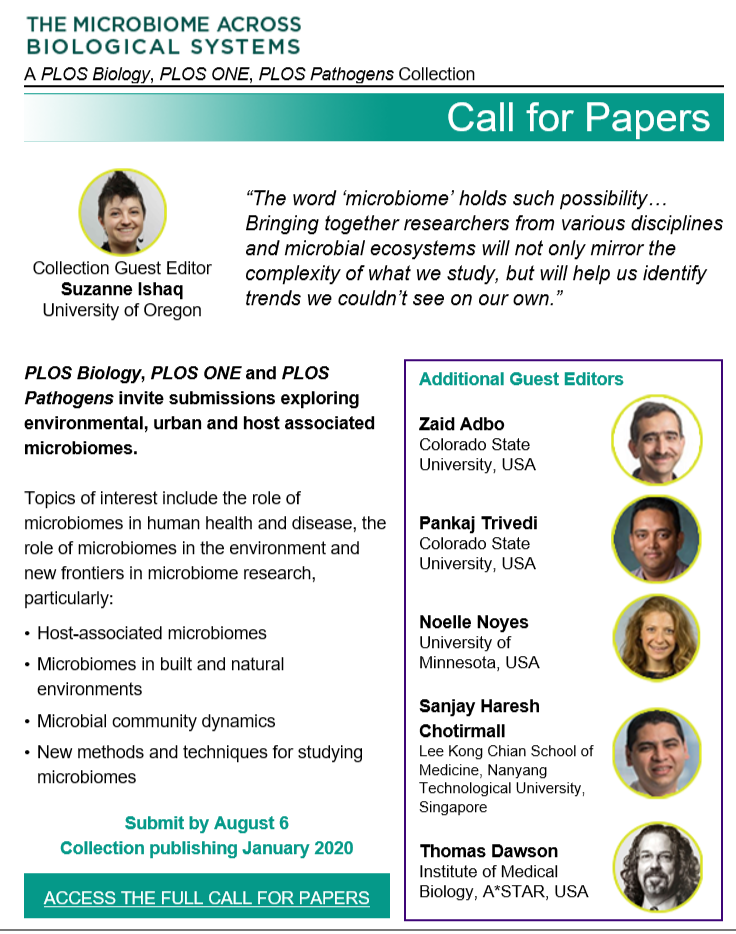
For the most part, wrapping these projects has involved writing up manuscripts, getting the authors to agree on a final draft (which can take weeks or years), and submitting it to a scientific journal for review. I currently have seven manuscripts in review; 4 scientific articles and 3 scientific reviews, some of which have been in review for months. And I still have at least four more papers that need to get finished and written up. I’m also a guest editor on a special call for papers through PloS One on the Microbiome Across Biological Systems, which to date has required communication and brainstorming from me but which will soon include quite a bit of editing and oversight.
February was generally absorbed by grant proposal writing, and it looks like May is shaping up similarly. Grant proposal writing is an arduous process requiring a lot of planning and coordination between contributing parties. The majority of proposals don’t get funded on their first round, which means you may sink a lot of time into developing something with a very delayed payoff. I am in the process of developing several highly-collaborative proposals which have been maturing into increasingly-finer wine.
Equity is not a term that’s typically associated with microbes, yet. The work this spring that I’ve been (happily) most absorbed in has been development of the summer course I’m teaching for the UO Clarks Honors College, Microbes and Social Equity. It’s only four weeks long, but will be four days a week, and I’m hoping to cover a number of different topics and coordinate several guest speakers, so there are a lot of lectures to make and emails to send.
Engagement on social media from me has been slim the past few months, but other science communications have been thriving. I gave a print interview with the UO College of Design and a radio interview with Jefferson Exchange. Most recently, I presented at the Institute for Health in the Built Environment 2019 Build Health event, where I connected with a dozen or so of my ongoing and future collaborators.
I am pleased to announce that several PLoS journals are teaming up for a special issue, titled “Microbiome Across Biological Systems”, and the call for submissions is open!
PLoS (Public Library of Science) is a non-profit publisher that fosters open-access and accessibility in science, with a variety of subject-specific journals, as well as the interdisciplinary journal, PLoS ONE. I spend a lot of my time with interdisciplinary science which doesn’t quite fit with any one field, and I appreciate journals which are interested in that intersectionality. In fact, that’s what this call is about: looking at whole microbial communities at the intersection of ecosystems, at multiple trophic levels, and where the science is interdisciplinary.
I am currently an Academic Editor at PLoS One. I’m acting as a guest editor on this open call, and I look forward to curating this exciting upcoming issue! Submit online by August 6th.
Image Source: Wikimedia Commons, 2017-09-09 Oregon Ducks vs. Nebraska Cornhuskers
The picture is just one instant in an event involving hundreds or thousands of organisms that were all doing a lot of different things, sometimes for just a few seconds. How would you describe it?
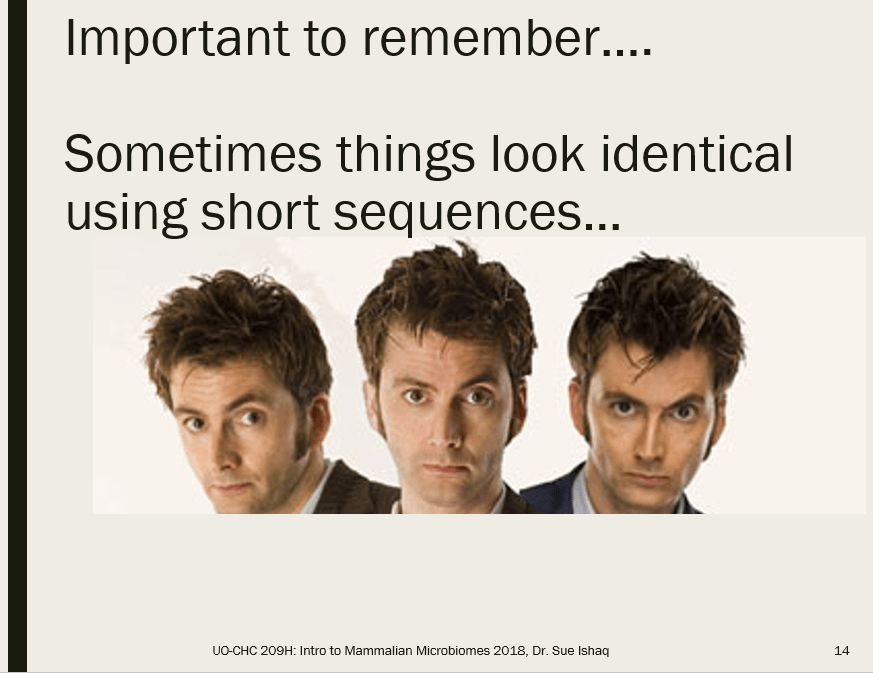
Maybe using the number of members present in this community? Or a list of names of attendees? The 16S rRNA gene for prokaryotes, or the 18S rRNA or ITS genes for eukaryotes, for examples, would tell us that. Those genes are found in all types of those organisms, and is a pretty effective means of basic identification. But, it’s only as good as how often that gene is found in the organisms you are looking for. There is no one gene that’s found exactly the same in all organisms, so you might need to target multiple different identification genes to look at all the different types of microorganisms, such as bacteria, fungi, protozoa, or archaea. Viruses don’t share a common gene across types, to look at viruses you’d need something else.
From our identification genes we could identify all the organisms wearing yellow; ex. phylogenetic Family = Ducks. That wouldn’t tell us if they were always found in this ecosystem (native Eugene population) or just passing through (transient population), but we could figure that out if we looked at every home game of the season and found certain community members there time and again.
But knowing they are Ducks doesn’t tell us anything else about that community member. What will they do if it starts raining? Are they able to go mountain biking? Perhaps we could identify their potential for activity by looking at the objects they are carrying? That would be akin to metagenomics, identifying all the DNA present from all the organisms, which tells us what genes are present, but not if they are currently or ever used. It can be challenging to interpret: think of sequencing data from one organism’s genome as one 1,000,000-piece puzzle and all the genomes in a community as 1,000 1,000,000-piece puzzles all dumped in a pile. In the crowd, metagenomics would tell us who had a credit card that was specifically used to buy umbrellas, but not whether they’d actually use the umbrella if it rains (ex. Eugeneans would not).
We could describe what everyone is doing at this moment. That would be transcriptomics, identifying all the RNA to determine which genes were actively being transcribed into proteins for use in some cellular function. If we see someone in the crowd using that credit card for an umbrella (DNA), the receipt would be the RNA. RNA is a working copy you make of the DNA to take to another part of the cell and use as a blueprint to make a protein. You don’t want your entire genome moving around, or need it to make one protein, so you make a small piece of RNA that will only hang around for a short period before degrading (i.e. you crumpling that RNA receipt and throwing it away because who keeps receipts anymore).
Using transcriptomics, we’d see you were activating your money to get that umbrella, but we wouldn’t see the umbrella itself. For that, we’d need metabolomics, which uses chemistry and physics instead of genomics, in order to identify chemicals (most often proteins). Think of metabolomics as describing this crowd by all the trash and crumbs and miscellaneous items they left behind. It’s one way to know what biological processes occurred (popcorn consumption and digestion).
Image Source: Wikimedia Commons, Metabolomics
From a technical standpoint, researching a microbiome might mean looking at all the DNA from all the organisms present to know who they are and of what they are capable. It might also mean looking at all the RNA present, which would tell you what genes were being used by “everyone” for whatever they were doing at a particular moment. Or you might also add metabolomics to identify all the chemical metabolites, which would be all the end products of what those cells were doing, and which are more stable than RNA so they could give you data about a longer frame of time. Collectively, -omics are technology that looks at all of a certain biological substance to help you understand a dynamic community. However, it’s important to remember that each technology gives a particular view of the community and comes with its own limitations.
This colloquium course introduces
students to current knowledge on selected host-associated or human-associated microbiomes,
and uses that base knowledge to discuss their relevance to human health in the
context of social equity. Example topics
include the effect of diet on the microbial community in the gut and the
importance of nutrient composition of free school lunches; maternal stress and
the effect on offspring physiology, immune development, and host-microbial
interactions; microbial communities in air, air quality, and income-based
housing; building quality, indoor microbiology, and enforced occupancy (ex. prisons
or public schools); and more. Guest lectures from relevant experts will be
included as possible.
Some background in microbial
ecology, genetics, anatomy, immunology, or sociology would be helpful, but is
not required. While difficult concepts
will be discussed, the course is intended to teach students about the basic
principles and how to apply them to contemporary social issues: what is a
microbiome? How does host anatomy and health drive microbial ecology? How does environmental microbiology and building
microbiology contribute to or impinge on health? When we read about
host-associated microbiomes in the news, especially regarding health, how can
we assess if the study is rigorous and how should we interpret the scope of the
findings?
The skill-set objectives include learning to review
scientific journal articles, distilling their findings while understanding
their limitations, and developing science communication skills via written
assignments and in-class discussions.
I’ll be speaking with the Jefferson Exchange crew on their live radio show about my work on microbiology in the built environment! I’ll be on March 11th, at about 8:30 am PST.
If you are local to the west coast, you can find a station to tune into. Otherwise, you can stream the segment live on jeffexchange.org.
Over the fall 2018 term, BioBE and ESBL undergrads made a project video explaining a recent publication on the effect of different daylight treatments on bacteria in dust. The post and video can be found here!
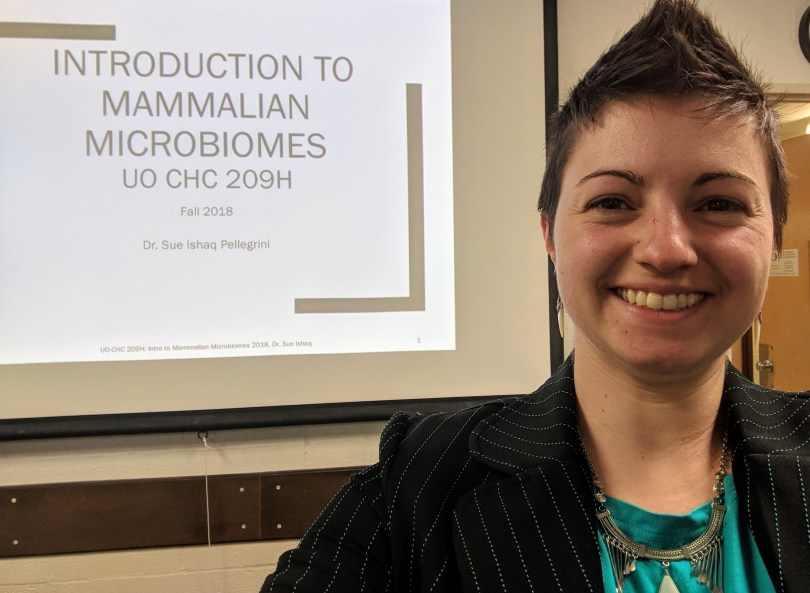
This fall, I developed and taught a course called Introduction to Mammalian Microbiomes for the University of Oregon Clark Honors College. The course objectives were to:
introduce students to basic concepts, laboratory techniques, historical background, terminology, and technology related to microbial ecology in or on mammals,
familiarize students with online resources, including sequence repositories, scientific databases, and analysis tools,
discuss how host-associated microbiomes are shaped by the anatomy and lifestyle of the host, and how the microbiome can reflect onto the health and performance of the host, and
review current literature on host-associated microbial ecology.
As always, include plenty of humor.
Keeping it fresh
While I’ve taught similar material at Montana State University, and have plenty of teaching experience from my graduate teaching assistant days at the University of Vermont, I’ve learned that each student population is different, with a unique core knowledge base and interests. Thus, I developed this course from scratch, and constantly revised it during the semester to adjust to the pace and learning style of my students. A draft syllabus, as well as an example of a student’s final project, can be found on my GitHub.
To improve engagement, I tried to make the course (which did not have a lab section) more interactive. I offered a tour of the molecular biology lab I work in, I brought agar plates to class so students could try culturing their own microbiota, and I dressed up like a dead cat.
I brought culture plates to class to give students a chance to try growing microbes.I lectured about the discovery of DNA and the work of Rosalind Franklin while wearing a t-shirt with her face on it.What better way to learn about host microbiota than an anatomically-correct, dissected-cat costume?
These students were not science majors, and had had very little science since high school. Even if they had been science majors, I wanted to give a broader look at the field of science than just giving an overview of current knowledge. At the end of some lectures, I facilitated class discussions on various topics in science: the role of scientists in communicating science and whether we should report only or have an obligation to convince the public; elitism, recognition, and credit for intellectual property in a highly-collaborative working environment; the transfer of maternal microbiota and health status to offspring and how we approach prenatal care and parental leave; air quality (and air microbiota), residential zoning in urban areas, and income inequality; should we eat dirt?, etc. The students enthusiastically participated in class discussions, and — to my surprise — requested more (see below).
Phone a friend
I wanted to highlight current research in host-associated microbiomes, and hosted three mini-lectures from guest researchers; Deepika Sundarraman, a graduate students in UO physics, Dr. Candace Williams, a postdoctoral researcher who Skyped in from Vienna, and Dr. Edward Pajarillo, a postdoctoral researcher who Skyped in from Florida.
Deepika Sundarraman, using physics to visualize gut microbesDr. Candace Williams, examining the effect of diet on gut microbesDr. Edward Pajarillo, improving piglet health with probiotics
Feedback
I really enjoyed teaching this group of students, and I got regular feedback from them about how the course was going and what was working. More formally, I volunteered the class to participate in a pilot evaluation for my midterm and end of term review, which asked more probing questions of students than typical teaching evaluations. For the midterm, only 4 of 15 students responded, but for the final, 13 of 15 responded.
Students wanted more in-class discussions, and more group-based work, which was surprising to me as science students tend to prefer fewer of these, or at least the option to opt out. I am already considering additional topics for discussion next year. While there was an option on the final to submit a group project, no one chose to pursue that. Similarly, students were able to work collaboratively on journal article summaries to improve their comprehension, provided each student submitted a unique response. Perhaps this option simply needs to be reiterated.
What surprised me most about the evaluations was that several students replied that (the second half of) the course was not challenging enough. The course content was entirely new to them, and while the assignments drew on skills from their core competency as humanities students (reading and writing), they were required to distill large amounts of scientific information and be able to explain it back to me. It’s a challenge to serve the learning speed and style of all students in a class, and I try to manage this by varying the format of assignments, as well as to teach skills in the first part of the class which can be refined with successive assignments.
An example of this was the final project, for which the students needed to create a public outreach presentation in the format of their choice (essay, poster, pamphlet, presentation), which covered a particular topic or discussion point on host-associated microbial communities. Students were able to draw from scientific article summaries they had previously written, or even material from their exams (take-home essays), provided it was more developed and presented in a new and creative way. This flexibility allowed students to choose topics that they were passionate about, and to focus on the message rather the format. I felt this would help them find their voice, and judging by the final projects I received, it was effective.
That being said, if humanities students thought the material too easy, I take credit for communicating it well. I’m pleased with how the course turned out, as well as with the feedback I received from students. I’ve already begun implementing upgrades to my curricula, and have proposed this course again to the Honors College. Pending approval, I’ll be back at it next year!