Paper by former colleagues published on rainbow Trout (Oncorhynchus mykiss) midgut and hindgut microbiomes using whole shotgun metagenomics

As a postdoc at Montana State University in 2015/2016 with Carl Yeoman’s lab, I consulted on a project led by then-PhD student Lola Betiku on a metagenomics dataset from two locations from the digestive tract of trout. Lola is now an Assistant Professor at Florida A&M University, and has been kind enough to continue working on this project to get it published. It was just accepted in the journal Aquaculture Reports!

Citation

Betiku, O., Yeoman, C., Gaylord, T.G., Ishaq, S., Duff, G., Sealey, W. 2023. Evidence of a Divided Nutritive Function in The Rainbow Trout (Oncorhynchus mykiss) Mid- and Hind-Gut Microbiomes by Whole Shotgun Metagenomic Approach. Aquaculture Reports 30: 101601.

Highlights

  • •Animal and plant protein diets were fed to rainbow trout in a commercial setting.
  • •Shotgun metagenomic analysis of the mid-GIT and hind-GIT was carried out.
  • •Diets influenced microbial compositions in the two GIT sections.
  • •Animal protein-based diet provided metabolites for microbial protein fermentation.
  • •Plant-based diet enhanced amino acid catabolism in the mid-GIT section.

Abstract

The nutritive role and ecology of gut-dwelling microbes in rainbow trout remain enigmatic. To improve our understanding of the rainbow trout gastrointestinal tract (GIT) microbiome, we performed whole shotgun metagenomic analyses on the assembled contigs from luminal contents from both mid- and hind-GIT regions for taxonomic and functional classifications of fish-fed animal and plant protein dietary sources. Our study revealed that trout respond well to the two diets containing animal and plant protein sources when supplemented with essential amino acids to meet the requirements of the fish. Microbes present were predominantly bacteria (89.9%) and mainly of the phyla Tenericutes, Firmicutes, Fusobacteria, and Proteobacteria. Eukaryotic (8.8%) microbes were mainly from phyla Ascomycota and Basidiomycota, while Archaea (<1%) were also present and predominantly from the phylum Euryarchaeota. Comparisons of genus-level classifications and functional profiles revealed compositional differences in these GIT locations that appear modulated by differences in the dietary treatments. The functional analysis provided evidence of amino acid biosynthesis/catabolism and methane production in the mid-GIT, while in the hind-GIT, proteolytic hydrolysis and butyrate metabolism were expressed in the trout fed with plant protein diet. The animal protein-based diet provided metabolites for microbial protein fermentation in the hind-GIT. Our report highlights and identifies the potential nutritive contributions of GIT microbes to trout and a potentially crucial functional division along the GIT. Finally, the plant-based diet enhanced amino acid catabolism in the midgut section, while the hindgut section supports evidence of methanogen fermentation.

The 2023 MSE Summer Symposium is just three weeks away!

The Microbes and Social Equity working group, and The University of Maine Institute of Medicine are presenting a virtual symposium on:

“Living in a Microbial World”

June 5 – 9th, 2023.

Register here! It is free, and required.

Format: virtual meeting, Zoom platform.

You can find the event page here. We update this with speaker information, changes to the schedule, and helpful links on a regulate basis.

Sessions format:

  • 5 min intro to the session and speakers
  • 3 consecutive 20-minute plenary style talks
  • 15 min break
  • 45 min panel discussion with speakers
  • 15 min break 
  • 60 minutes of breakout room discussions

Draft Program:

Session 1: Reconsidering ‘One Health’ Through Microbes

Monday, June 5th, 11 am – 2:30 pm EST.

Microbes and Social Equity concepts are based on the idea that microbes connect individuals, societies, and ecosystems. One Health & the Environment concepts are based on similar ideas of connectivity. This session will explore the connections between MSE and One Health, how microbiome research connects to One Health, and how we can broaden our own research to include other disciplines. The primary goals for this session are 1) to convene researchers in multiple disciplines and envision ways to work together, and 2) to collaboratively generate definitions of One Health & the Environment with respect to microbiomes.

Hosts and organizers:

Dr. Tiff Mak (they/she), PhD, Postdoctoral Research Fellow at the Novo Nordisk Foundation Center for Biosustainability at DTU. They work at the intersection of Microbial Ecology, Fermentation and Integrated Food Systems, and are interested in community interaction dynamics and relationality, from the scale of the microbial to the planetary.

Dr. Sue Ishaq, PhD, Assistant Professor of Animal and Veterinary Science, School of Food and Agriculture, University of Maine. Animal microbiomes, diet and gut, microbes and social equity.

Speakers:

Rob Beiko, PhD

Dr. Rob Beiko, PhD., is a Professor and Head of the Algorithms and Bioinformatics research cluster in the Faculty of Computer Science at Dalhousie University. His research aims to understand microbial diversity and evolution using machine learning, phylogenetics, time-series algorithms, and visualization techniques. His group is developing software tools and pipelines to comprehensively survey genes and mobile genetic elements in bacterial genomes, and understand how these genomes have been shaped by vertical inheritance, recombination, and lateral gene transfer. He is also a co-founder of Dartmouth Ocean Techonlogies, Inc., a developer of environmental DNA sampling devices.

Marta Scaglioni

Dr. Marta Scaglioni, PhD. is a Cultural Anthropologist and holds a PostDoc position at Cà Foscari University of Venice (Italy) within the frame of the ERC Project HealthXCross. She is interested in how microbiome research operates in the African continent and how microbial data, knowledge, and funding travel across national boundaries and across a Global North/Global South axis.

Dr. Lucilla Barchetta, PhD., is a Cultural Anthropologist and PhD in Urban Studies. She currently works as Postdoctoral Fellow within the ERC project Health X Cross based at the University Ca’ Foscari of Venice, where she studies One Health epistemologies and open data governance in multidisciplinary data-centric science and collaboration.

Related to this session, here are recorded talks from previous MSE events:


Session 2: Microbiomes and climate justice

Tuesday, June 6th, 11 am – 2:30 pm EST.

Social and economic activities have impacted microbes vital to the carbon cycle, while climate change has already begun to alter environmental microbiota. How do these reciprocal anthropogenic effects affect our health? How will such impacts follow our socio-economic fault-lines? This session will explore how we can use these links to inform communities, conservation movements, and policy.

Hosts and organizers:

Dr. Mike Friedman, PhD, MPH. Recently-retired Researcher and Lecturer in Ecology, Evolutionary Biology, and Health.

Dr. Erin Eggleston, PhD, Assistant Professor of Biology, Middlebury College. Molecular microbial ecology, cyanobacterial harmful algal blooms, T. gondii detection in shellfish, coral holobiont thermal resilience, environmental microbes and social equity, and microbial community members involved in mercury methylation in St. Lawrence River wetland sediments

Speakers:

Dr. Arpita Bose, PhD., Associate Professor of Biology, Washington University.

Dr. Mallory Choudoir, PhD, Assistant Professor & Soil Microbiome Extension Specialist, Department of Plant & Microbial Biology, North Carolina State University. The goal of my research program is to translate microbiome science to sustainable agriculture and to develop microbial-centered solutions to agroecosystem challenges. 

TBD

Related to this session, here are recorded talks from previous MSE events:


Session 3: Integrating the food systems through microbes

Wednesday, June 7th, 11 am – 2:30 pm EST.

Microorganisms tie food systems together, from soil to food processing to gut to waste products, and microbes can be used to create sustainable food production while working with the natural ecosystem. Traditional ecological knowledge, place-based food systems, and food sovereignty endeavors have long known that integrated food systems require a broader definition of “health”. This session will explore how microbiota can be used to sustain and integrate food, communities, and ecosystems.

Hosts and organizers:

Dr. Tiff Mak (they/she), PhD, Postdoctoral Research Fellow at the Novo Nordisk Foundation Center for Biosustainability at DTU. They work at the intersection of Microbial Ecology, Fermentation and Integrated Food Systems, and are interested in community interaction dynamics and relationality, from the scale of the microbial to the planetary.

Dr. Sue Ishaq, PhD, Assistant Professor of Animal and Veterinary Science, School of Food and Agriculture, University of Maine. Animal microbiomes, diet and gut, microbes and social equity.

Speakers:

Dr. Aviaja Lyberth Hauptmann

Dr. Aviaja Lyberth Hauptmann (she/her/hers) PhD., is an Inuk microbiologist from Kalaallit Nunaat (Greenland). After finishing her PhD in microbial metagenomics at the Technical University of Denmark in 2017 she returned to her birth-town Nuuk, to lead the research project the Greenland Diet Revolution. Her research centers the animal-sourced Indigenous diet of Inuit. The focus of the research is the human and microbial culture of Inuit foods, and how these foods connect our inside to our outside. Dr. Hauptmann is currently an assistant professor at Ilisimatusarfik – the University of Greenland and a part-time assistant professor at The University of Copenhagen.

Dr. Nina Moeller, PhD, Associate Professor Research, Centre for Agroecology, Water and Resilience, Coventry University. Currently Associate Professor of Political Ecology and People’s Knowledge at Coventry University (UK) and a researcher in Sustainability Transitions at the University of Southern Denmark (SDU), she has a mixed academic background in philosophy, sociology and anthropology. Her research interests comprise the dynamics of sustainability transitions, including their unintended socio-ecological effects; diversity of knowledge and value systems; and more-than-human relations. Her interest in plant medicine, fermentation, traditional health and food systems goes beyond research and has been shaped in significant ways through friendships and exchanges with indigenous Amazonians and subsistence farmers across the world. She has worked in Latin America and Europe – as academic as well as consultant to indigenous federations, NGOs and the UN’s Food and Agriculture Organization

Kolawole Banwo

Dr. Kolawole Banwo, PhD. is a Lecturer and Researcher in the Food Microbiology, Biotechnology and Safety Unit of the Department of Microbiology, University of Ibadan, Nigeria, where he teaches undergraduate and postgraduate courses on food microbiology, safety assessment, quality control and usefulness of food grade microorganisms. He mentors young academics in the area of food safety and quality assurance in his Department and University, and is passionate about food safety and volunteers on food safety education to artisanal fermented food producers and handlers. His current areas of research are exploration of the food microbiome of traditional fermented foods to increase potentials in bioactive components and the production of functional foods and the detoxification of mycotoxin and metabolites profile from traditional fermented foods in Nigeria using lactic acid bacteria and yeasts in collaboration with the Aflasafe Unit of the International Institute of Tropical Agriculture (IITA), Ibadan, Nigeria. Kolawole is passionate about food safety and volunteers on food safety education to artisanal fermented food producers and handlers. Dr Banwo holds a B.Sc and M.Sc degrees in General Microbiology, while his Ph.D. degree was in Food Microbiology from the University of Ibadan, Nigeria. He is a recipient of many awards locally and internationally. He was on a brief collaborative research visit in 2019 to the Department of Plant Sciences, North Dakota State University, Fargo, USA. He is a member of several microbiology professional bodies.

Related to this session, here are recorded talks from previous MSE events:


Session 4: Elevating human nutrition and microbiome practice

Thursday, June 8th, 11 am – 2:30 pm EST.

Human nutrition research and practice provides a unique opportunity to provide equitable health and microbiome care, to engage with various communities, and to foster interdisciplinary research and educational programs. Given the complexity and nuance of evidence-based nutrition delivery, the guiding ideas of MSE can provide a conceptual structure. This session will present research and case studies which create a professional development framework, such that attendees can envision and learn to apply the framework to their own project / professional development.

Hosts and organizers:

Dr. Ashley M. Toney, Ph.D., Postdoctoral Research Fellow, Cleveland Clinic Lerner Research Institute. Translational/Clinical Nutrition Researcher focused on Latine Health Disparities.

Dr. Patricia Wolf, PhD, RD, Assistant Professor at Purdue University. Microbial Metabolism, Health Disparities Research, Nutrition and Dietetics

Dr. Sue Ishaq, PhD, Assistant Professor of Animal and Veterinary Science, School of Food and Agriculture, University of Maine. Animal microbiomes, diet and gut, microbes and social equity.

Speakers:

Dr. Annabel Biruete, PhD, RD, is an Assistant Professor and Registered Dietitian in the Department of Nutrition Science at Purdue University and an Adjunct Assistant Professor in the Division of Nephrology at the Indiana University School of Medicine. Her broad clinical interest is nutrition in kidney diseases. Annabel’s research aims to study the effects of nutritional and pharmacological therapies for chronic kidney disease on the gastrointestinal tract and gut microbiome. Additionally, Annabel is interested in improving outcomes in the Hispanic/LatinX community living with chronic kidney disease, using language- and culturally-concordant lifestyle interventions.

Dr. Babajide A. Ojo, PhD, Postdoc in the Pediatric Gastroenterology department at Stanford Medicine

TBD

Related to this session, here are recorded talks from previous MSE events:


Session 5: MSE Member Research Showcase

Friday, June 9th, 11 am – 2:30 pm EST.

Session hosts and organizers: Emily Wissel, Curtis Tilves

Session Scope: MSE members will be sharing their own work in short presentations to showcase the variety of disciplines of our members’ work. The presentation list will include students and non-researchers, and research on microbiomes, people, ecosystems, and more even if it is not related to microbes and/or social equity.

Abstracts will be made available in late May.


Planning committee:

  • Sue Ishaq (Lead Organizer), Tiff Mak, Ashley Toney, Gwynne Mhuireach, Rachel Gregor, Carla Bonilla, Erica Gardner, Emily Wissel, Kieran O’Doherty, Erin Eggleston, Mike Friedman, McK Mollner, Erica Diaz-Almeyda, Curtis Tilves, Patrick Horve, Leslie Dietz.
  • Organizing administrative support: Cecile Ferguson, UMaine Institute of Medicine 

The Microbes and Social Equity Working Group is grateful to the University of Maine and the UMaine Institute of Medicine for providing financial and material support for this virtual meeting.

Upcoming presentations at the American Society for Nutrition conference

The Ishaq Lab will be presenting at a few research conferences this summer, with a few more in the works for the fall.

Broccoli sprouts in a tray

American Society for Nutrition meeting, July 22-25, 2023, Boston, Massachusetts

Steamed broccoli sprouts alleviate gut inflammation and retain gut microbiota against DSS-induced dysbiosis.

Poster, abstract P20-022-23, July 23

Authors: Johanna M. Holman*1, Lola Holcomb2, Louisa Colucci3, Dorien Baudewyns4, Joe Balkan5, Grace Chen6, Peter L. Moses7,8, Gary M. Mawe7, Tao Zhang9, Yanyan Li1, Suzanne L. Ishaq1

Affiliations: 1 School of Food and Agriculture, University of Maine, 2 Graduate School of Biomedical Sciences and Engineering, University of Maine, 3 Department of Biology, Husson University, 5 Department of Chemical and Biological Engineering, Tufts University, 6 Department of Internal Medicine, University of Michigan Medical School, 7 Departments of Neurological Sciences and of Medicine, Larner College of Medicine, University of Vermont, 8 Finch Therapeutics, 9 School of Pharmacy and Pharmaceutical Sciences, SUNY Binghamton University.

Objectives: Inflammatory Bowel Diseases (IBD) are devastating conditions of the gastrointestinal tract with limited treatments, and dietary intervention may be effective, affordable, and safe for managing symptoms. Ongoing research has identified inactive compounds in broccoli sprouts, like glucoraphanin, and that mammalian gut microbiota play a role in metabolizing it to the anti-inflammatory sulforaphane. The objectives were to identify biogeographic location of participating microbiota and correlate that to health outcomes. 

Methods: We fed specific pathogen free C57BL/6 mice either a control diet or a 10% steamed broccoli sprout diet, and gave a three-cycle regimen of 2.5% dextran sodium sulfate (DSS) in drinking water over a 40-day experiment to simulate chronic, relapsing ulcerative colitis. We monitored body weight, fecal characteristics, fecal lipocalin, and sequenced bacterial communities from the contents and mucosa in the jejunum, cecum, and colon. 

Results: Mice fed the broccoli sprout diet while receiving DSS performed better than mice fed the control diet while receiving DSS for all disease parameters, including significantly more weight gain (2-way ANOVA, p < 0.05), lower Disease Activity Index scores (2-way ANOVA, p < 0.001), and higher bacterial richness in all gut locations (linear regression model, p < 0.01 for all locations measured). Bacterial communities were assorted by gut location except in the mice receiving the control diet and DSS treatment (Beta-diversity, ANOVA, p < 0.05 for each). Importantly, our results suggested that broccoli sprout feeding completely abrogated the effects of DSS on gut microbiota, as bacterial communities were similar between mice receiving broccoli sprouts with and without DSS. 

Conclusions: Spatially resolved microbial communities provide greater insight when investigating host-microbe interactions. Here, we show that a 10% broccoli sprout diet protects mice from the negative effects of dextran sodium sulfate induced colitis, that colitis erases biogeographical patterns of bacterial communities in the gut, and that the cecum is not likely to be a significant contributor to colonic bacteria of interest in the DSS mouse model of ulcerative colitis. 

Funding Sources: This work was funded by the NIH, USDA, NSF NRT, and UMaine GSBSE.


Early life exposure to broccoli sprouts confers stronger protection against enterocolitis development in an immunological mouse model of inflammatory bowel disease.

Poster, abstract P20-021-23, July 23

Authors: Lola Holcomb*1, Johanna Holman2, Molly Hurd3, Brigitte Lavoie3, Louisa Colucci4, Gary M. Mawe3, Peter L. Moses3,5, Emma Perry6, Allesandra Stratigakis7, Tao Zhang7, Grace Chen8, Suzanne L. Ishaq1, Yanyan Li1

1 Graduate School of Biomedical Sciences and Engineering, University of Maine, 2 School of Food and Agriculture, University of Maine, 3 Larner College of Medicine, University of Vermont, 4 Department of Biology, Husson University, 5 Finch Therapeutics, 6 Electron Microscopy Laboratory, University of Maine, 7 School of Pharmacy and Pharmaceutical Sciences, SUNY Binghamton University, 8 Department of Internal Medicine, University of Michigan Medical School.

Objectives: Inflammatory Bowel Diseases (IBD) are chronic conditions characterized by inflammation of the gastrointestinal (GI) tract that burden daily life, result in complications, and disrupt the gut microbiome. Many studies on diet and IBD in mice use an ulcerative colitis model, despite the availability of an immune-modulated Crohn’s Disease model. The objective of this study was to establish IL-10 deficient mice as a model for studying the role of dietary broccoli and broccoli bioactives in reducing inflammation, modifying the immune response, and supporting GI tract microbial systems. 

Methods: Interleukin-10-knockout (IL-10-ko) mice on a C57BL/6 background, beginning at age 4 or 7 weeks, were fed either a control diet or one containing 10% raw broccoli sprouts. Diets began 7 days prior to inoculation with Helicobacter hepaticus, which triggers Crohn’s-like symptoms in these immune-impaired mice, and ran for 2 additional weeks. 

Results: Broccoli sprouts decreased (p < 0.05), fecal lipocalin (LCN2), a biomarker for intestinal inflammation, and fecal blood, diarrhea, and overall Disease Activity Index. Sprouts increased gut microbiota richness, especially in younger mice (p < 0.004), and recruited different communities in the gut (B-diversity, ANOVA, p < 0.001), especially in the colon (B-diversity, ANOVA, p = 0.03). The control group had greater prevalence and abundance of otherwise commensal bacteria which trigger inflammation in the IL-10-ko mice. Helicobacter was within the top-5 most prevalent core genera for the control group, but was not within the top-5 for the broccoli group. Disease parameters and microbiota changes were more significant in younger mice receiving broccoli.

Conclusions : A diet containing 10% raw broccoli sprouts may be protective against negative disease characteristics of Helicobacter-induced enterocolitis in IL-10-ko mice, and younger age is the most significant factor (relative to diet and anatomical location) in driving gut bacterial community richness and similarity. The broccoli diet contributes to prevalence and abundance of bacterial genera that potentially metabolize dietary compounds to anti-inflammatory metabolites in the gut, are bacteriostatic against pathogens, and may ease disease severity.

Funding Sources: This work was funded by the NIH, USDA, NSF NRT, and UMaine GSBSE.

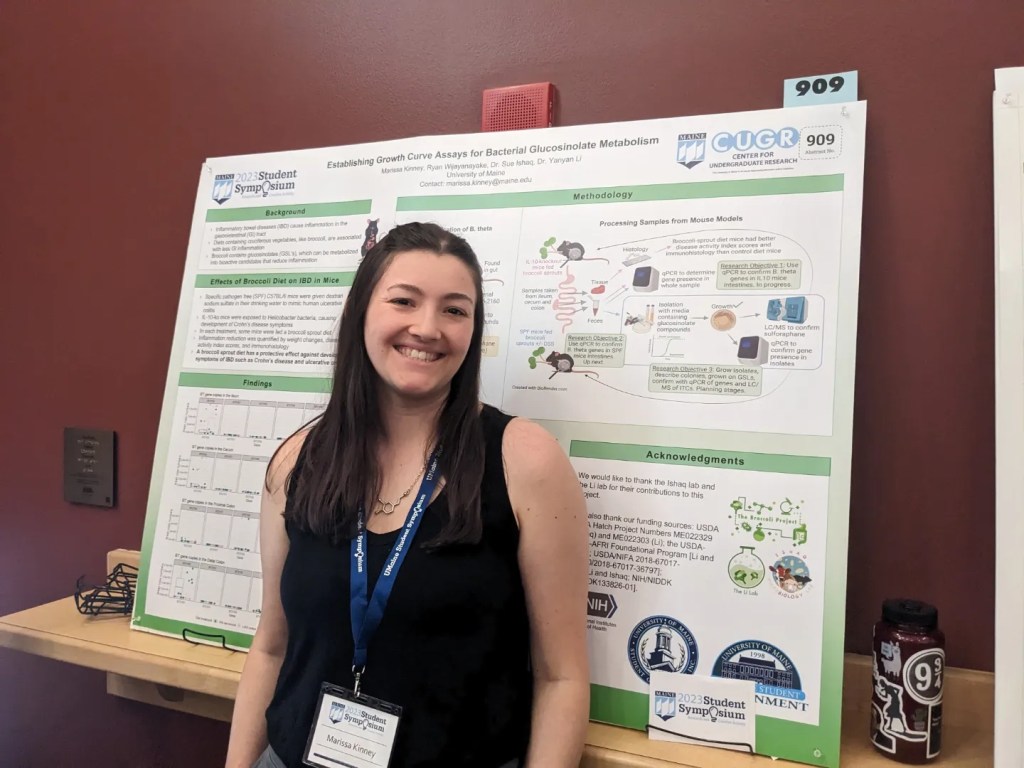
Establishing Growth Curve Assays for Bacterial Glucosinolate Metabolism: A Study Protocol

Poster, abstract P22-030-23, July 23

Marissa Kinney*1, Ryan Wijayanayake1, Johanna Holman1, Timothy Hunt2, Benjamin Hunt 2, Tao Zhang3, Grace Chen4, Yanyan Li1 , Suzanne L. Ishaq1

1School of Food and Agriculture, University of Maine, Orono, Maine, USA 04469; 2 School of Biology and Ecology, University of Maine, Orono, Maine, USA 04469; 3 School of Pharmacy and Pharmaceutical Sciences, SUNY Binghamton University, Johnson City, New York, USA 13790; 4 Department of Internal Medicine, University of Michigan Medical School, Ann Arbor, Michigan, USA 48109 

Objective: Inflammatory bowel diseases (IBD) cause dysfunction of the gastrointestinal (GI) tract and can result in hospitalization, suffering and disruption to overall health. Recent work has demonstrated the anti-inflammatory capacity of a broccoli sprout-diet in artificially-induced GI inflammation in pathogen free C57BL/6 mice. Microbiota samples obtained from the GI tract of these mice will be used to study the presence and activity of broccoli glucosinolate hydrolysis to create microbial-sourced bioactives, to further understand the relationship between broccoli-diets and inflammation reduction. It is imperative to validate or replicate qPCR protocols which have been established for glucosinolate metabolism in Bacteroides thetaiotaomicron (B. theta), in other bacterial species. Additionally, this project will focus on developing new growth curve assays for glucosinolate metabolism, as these methods are lacking in published literature. 

Methods: Pathogen free C57BL/6 mice were given dextran sodium sulfate (DSS) into their drinking water to create a disease profile similar in development and morphology to human ulcerative colitis (UC), a type of IBD. DSS and a steamed broccoli sprout diet were administered. Samples were taken from the digesta, jejunum, cecum, and colon of mice fed broccoli diets. About 806 bacterial isolates will be grown up/cultured anaerobically on minimal/selective media containing glucosinolate-related compounds (glucoraphanin, sinigrin) to determine hydrolysis activity via spectroscopy to measure optical density of growth in competent isolates. Successful isolates will be further analyzed with LC/MS to confirm production of bioactive products, and with qPCR using the B. theta positive control genome to help identify gene targets (α-1,6-mannanase, glycosyl hydrolase, nicotinamide-dependent oxidoreductase, and transcriptional regulator protein) for glucosinolate conversion in isolates. 

Results  N/A

Conclusions: In the initial study from which these samples are sourced, mice fed a broccoli diet had less inflammation than those fed a control diet and DSS, and had higher bacterial diversity in their gut. We expect that bacteria isolated from the GI of broccoli-fed mice will contain more glucosinolate-metabolizing genes.

Funding: NIH (Li and Ishaq) and USDA (Li). 

Broadening Perspectives by Situating Nutrition Education in Broader Social Contexts: A Study Protocol

Poster, abstract number 1490287, July 23

Authors: Ashley Toney*1, Patricia Wolf*2, Sue Ishaq*3

Affiliations: 1Dept. of Cardiovascular and Metabolic Sciences, Cleveland Clinic Lerner Research Institute, 2 Department of Nutrition Science, Purdue University, 3 School of Food and Agriculture, University of Maine

Objectives: The Microbes and Social Equity (MSE) Working Group connects microbiology with social equity research, education, policy, and practice to understand the interplay of microorganisms, individuals, societies, and ecosystems. Given the complexity and nuance of evidence-based nutrition delivery, MSE sought to provide a conceptual structure. The goals are 1) convene diverse researchers, educators, learners, and practitioners, 2) publish and present evidence-based information within socio-cultural contexts, and 3) teach audiences to define ways for integrating equity into their work.

Methods: MSE hosted a 14-week speaker series in 2021, 2022, and 2023, with researchers from various disciplines (e.g., nutrition, gut microbes, food security). The series lead into a 5-day symposium of speakers and guided discussions to generate co-written documents identifying research needs and resources. We use targeted and non-targeted event promotion to attract audiences, and reach/impact is evaluated through registration, attendance, social media views, or attendee feedback. The series provides learning sessions that build concepts over time, guiding attendees past the conceptual roadblock of being new to interdisciplinary research and grappling with grand challenges. This extended period to learn stimulates participation in activity-based collaboration during symposia, even from new members or students. 2023 symposium attendees will be surveyed on their impressions on the event, how it impacted their perspective on experimental design, whether attendees started with the series and followed up with the symposium, and whether having the preface of the series aided in being able to create actionable outputs in a guided co-working session.

Results: n/a

Conclusions: Benefits include nuanced knowledge/perspective sharing, establishing and nurturing interdisciplinary collaboration, and sparking conversations on critical topics in policy, sustainability, host and microbial metabolism, etc. In the last 3 years, MSE published 4 papers together, with ~ 50 independent papers from members. Event recordings are used as curriculum in nutrition, microbiology, and pre-med biology.

Funding Sources: NIH/NIDDK, Allen Foundation (Ishaq); National Dairy Council (Toney)

2023 MSE speaker series is wrapped for the season!

Thank you to our speakers, attendees, and organizers for our most popular MSE speaker series yet! We had ~600 attendees and nearly 3,000 registrations!!

You can catch up on the entire 2023 series, the event page has links to the recordings.

Similarly, you can find recordings from our 2022 series, our 2021 series, and from our 2022 symposium, by checking out our Past Events pages.

If you’d like to continue these conversations, MSE is hosting its 2023 symposium, “Living in a Microbial World” virtually on June 5-9. It’s free and all are welcome to attend.

Last MSE seminar today! on “Religion, Race and the Microbe: Theological Analysis of Public Health Resistance in the Pandemicine” by Dr. Aminah Al-Attas Bradford

You can find up to date details on the event page for all the talks in this series.

Spring 2023; January 18 – May, Wednesdays from 11:00 AM – 12:00 PM EST.

Presented over Zoom. Registration is free!

Hosting Organizations: MSE and the University of Maine Institute of Medicine.


The environment, microbes, and us

Anthropology Theme organized by Katherine Daiy and Kieran O’Doherty, and Environmental Theme organized by Mallory Choudoir, Mustafa Saifuddin, and Hannah Holland-Moritz.

“Religion, Race and the Microbe: Theological Analysis of Public Health Resistance in the Pandemicine”

Dr. Aminah Al-Attas Bradford, PhD.

May 3, 2023; Wednesday,11:00 AM – 12:00 PM EST. This event has passed, watch the recording here.

Dr. Bradford is a research scholar in NC State’s Public Science Lab for Ecology, Evolution and Biodiversity of Humans and Food where she draws together interdisciplinary engagement of microbes, exploring fermentation, probiotic health and pathogens. Dr. Bradford is also a college Chaplain at Salem Women’s College, and Director of the Center for Contemporary Practice and Wellbeing. Working at the intersections of religion, microbiology, ecology and race, Dr. Bradford’s research investigates the historical entanglement of disease theories, public health strategy, Christian thought, and coloniality to cultivate ecological wisdom, scientific engagement and the pursuit of environmental justice in religious contexts. She asks questions like, how have the historical entanglement of epidemiology, coloniality and Christian teaching contributed to the disease of both body and planet, the disproportionate effects of which are born by black and brown communities? How has demonizing the microbe paved the way for oppression of those deemed sub-human? And how might microbiome science reform Christian thought that often disrupts engagement of science and is complicit in exploitative and exclusionary ways of being?


Logo designed by Alex Guillen

Marissa Kinney awarded an NSF NRT graduate fellowship from the UMaine Initiative for One Health and the Environment!

Masters of Science in Microbiology student, Marissa Kinney, will be joining the 2023/2024 cohort of graduate students in the Initiative for One Health and the Environment group at UMaine, as she was awarded a fellowship through the group’s NSF NRT funding. She’ll be using this fellowship to cross-train in other research disciplines, and explore the economic and social factors concerning people with Inflammatory Bowel Diseases, alongside One Health co-mentor Dr. Mario Teisl, Director and Professor of the School of Economics.

Marissa joins fellow Ishaq Lab grad student, Lola Holcomb, who was awarded a fellowship by the group and started with the 2022/2023 cohort.

Marissa Kinney

Marissa Kinney 

Master of Science student, Microbiology and Animal and Veterinary Sciences

Blurb: Marissa is a Masters student who loves learning and bench microbiology. She completed her undergraduate at the University of Maine in 2021, earning a BS in Microbiology and a BS in Cellular/Molecular Biology. She devoted a large portion of her time in undergrad to research in the laboratories of Dr. Julie Gosse and Dr. Edward Bernard. Since graduating, she worked in the field of public health at UMaine’s Margaret Chase Smith Policy Center, collecting and processing data about violent and drug-related deaths in Maine. While her role at the Center was one she loved dearly, she feels a big pull towards laboratory work and academic research. She recently joined the Ishaq lab and is excited by the new opportunities this position brings. 

Marissa was awarded a One Health and the Environment NRT Fellowship 2023 – 2024 at UMaine.

Now, working in my lab, Marissa is focusing on the microbial communities in the gastrointestinal tract, and particularly in the context of broccoli sprouts in the diet and how certain gut bacteria can use them to create an anti-inflammatory compound of interest. She has been developing new protocols for using growth curve analyses and genomic assays (quantitative PCR) to identify bacteria with the capacity to use broccoli sprouts to create anti-inflammatories along different location in the gut, and under difference health or disease states. Over the next few years, she’ll also be learning DNA sequencing library preparation and data analysis, working with human subjects in a diet trial, performing experiments using mice as a model for humans, and a variety of microbiology, genomic, and biochemical laboratory techniques. Marissa’s project is part of a much larger collaborative on the use of dietary broccoli sprouts to resolve symptoms in Inflammatory Bowel Disease patients.  As part of that larger collaboration, Marissa will be meeting regularly with the various parts of the project team, including students and researchers at 4 different institutions, and helping on three different projects in the lab to build her skillset. This requires a high degree of organization and coordination, and Marissa immediately stepped into her role.

To expand the lab’s existing work on human gut microbiomes, Marissa will use the NRT training and knowledge base as an opportunity to learn techniques in social sciences and economics. IBD is highly impactful on the wellbeing of people experiencing it acutely or chronically, and there is a large social and economic burden, as well. While any IBD patient could already consume broccoli to potentially receive benefit, nuances in how gut microbes respond to diet, and fears about exacerbating symptoms, preclude this. Being able to understand dietary behaviors, and assess the economic impact of a whole-food palliative strategy, would allow us to better implement our dietary intervention.

Last MSE seminar this Wednesday on “Religion, Race and the Microbe: Theological Analysis of Public Health Resistance in the Pandemicine” by Dr. Aminah Al-Attas Bradford

You can find up to date details on the event page for all the talks in this series.

Spring 2023; January 18 – May, Wednesdays from 11:00 AM – 12:00 PM EST.

Presented over Zoom.

Hosting Organizations: MSE and the University of Maine Institute of Medicine.


The environment, microbes, and us

Anthropology Theme organized by Katherine Daiy and Kieran O’Doherty, and Environmental Theme organized by Mallory Choudoir, Mustafa Saifuddin, and Hannah Holland-Moritz.

“Religion, Race and the Microbe: Theological Analysis of Public Health Resistance in the Pandemicine”

Dr. Aminah Al-Attas Bradford, PhD.

May 3, 2023; Wednesday,11:00 AM – 12:00 PM EST. This event has passed, watch the recording here.

Dr. Bradford is a research scholar in NC State’s Public Science Lab for Ecology, Evolution and Biodiversity of Humans and Food where she draws together interdisciplinary engagement of microbes, exploring fermentation, probiotic health and pathogens. Dr. Bradford is also a college Chaplain at Salem Women’s College, and Director of the Center for Contemporary Practice and Wellbeing. Working at the intersections of religion, microbiology, ecology and race, Dr. Bradford’s research investigates the historical entanglement of disease theories, public health strategy, Christian thought, and coloniality to cultivate ecological wisdom, scientific engagement and the pursuit of environmental justice in religious contexts. She asks questions like, how have the historical entanglement of epidemiology, coloniality and Christian teaching contributed to the disease of both body and planet, the disproportionate effects of which are born by black and brown communities? How has demonizing the microbe paved the way for oppression of those deemed sub-human? And how might microbiome science reform Christian thought that often disrupts engagement of science and is complicit in exploitative and exclusionary ways of being?


Logo designed by Alex Guillen

MSE seminar today is a panel discussion on soil microbiomes and conservation, featuring speakers from “The environment, microbes, and us” theme

You can find up to date details on the event page for all the talks in this series.

Spring 2023; January 18 – May 3, Wednesdays from 11:00 AM – 12:00 PM EST.

Presented over Zoom. Registration is free!

You can register for any or all of the events from the same link here.

Hosting Organizations: MSE and the University of Maine Institute of Medicine.


Anthropology Theme organized by Katherine Daiy and Kieran O’Doherty, and Environmental Theme organized by Mallory Choudoir, Mustafa Saifuddin, and Hannah Holland-Moritz.

Panel Discussion on the Soil and Microbial Conservation

April 26, 2023; Wednesday,11:00 AM – 12:00 PM EST. This event has passed and was not recorded.

This week, we’ll be bringing some speakers back to engage in a panel discussion together on the importance of environmental microbiomes and specifically on soil conservation.

Panel will be hosted by Mallory Choudoir, Mustafa Saifuddin, and Hannah Holland-Moritz.

Please note, this session will only be featured live in real-time and will not be recorded.


Logo designed by Alex Guillen

MSE seminar this Wednesday is a panel discussion on soil microbiomes and conservation, featuring speakers from “The environment, microbes, and us” theme

You can find up to date details on the event page for all the talks in this series.

Spring 2023; January 18 – May 3, Wednesdays from 11:00 AM – 12:00 PM EST.

Presented over Zoom. Registration is free!

You can register for any or all of the events from the same link here.

Hosting Organizations: MSE and the University of Maine Institute of Medicine.


Anthropology Theme organized by Katherine Daiy and Kieran O’Doherty, and Environmental Theme organized by Mallory Choudoir, Mustafa Saifuddin, and Hannah Holland-Moritz.

Panel Discussion on the Soil and Microbial Conservation

April 26, 2023; Wednesday,11:00 AM – 12:00 PM EST. This event has passed and was not recorded.

This week, we’ll be bringing some speakers back to engage in a panel discussion together on the importance of environmental microbiomes and specifically on soil conservation.

Panel will be hosted by Mallory Choudoir, Mustafa Saifuddin, and Hannah Holland-Moritz.

Please note, this session will only be featured live in real-time and will not be recorded.


Logo designed by Alex Guillen

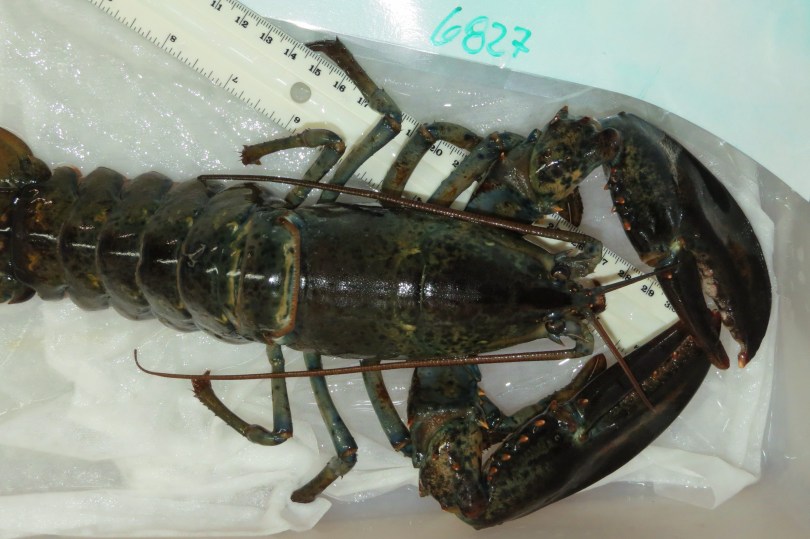
An American lobster on a countertop next to a ruler.

Lobster shell microbes, epizootic shell disease, and climate change manuscript is published!

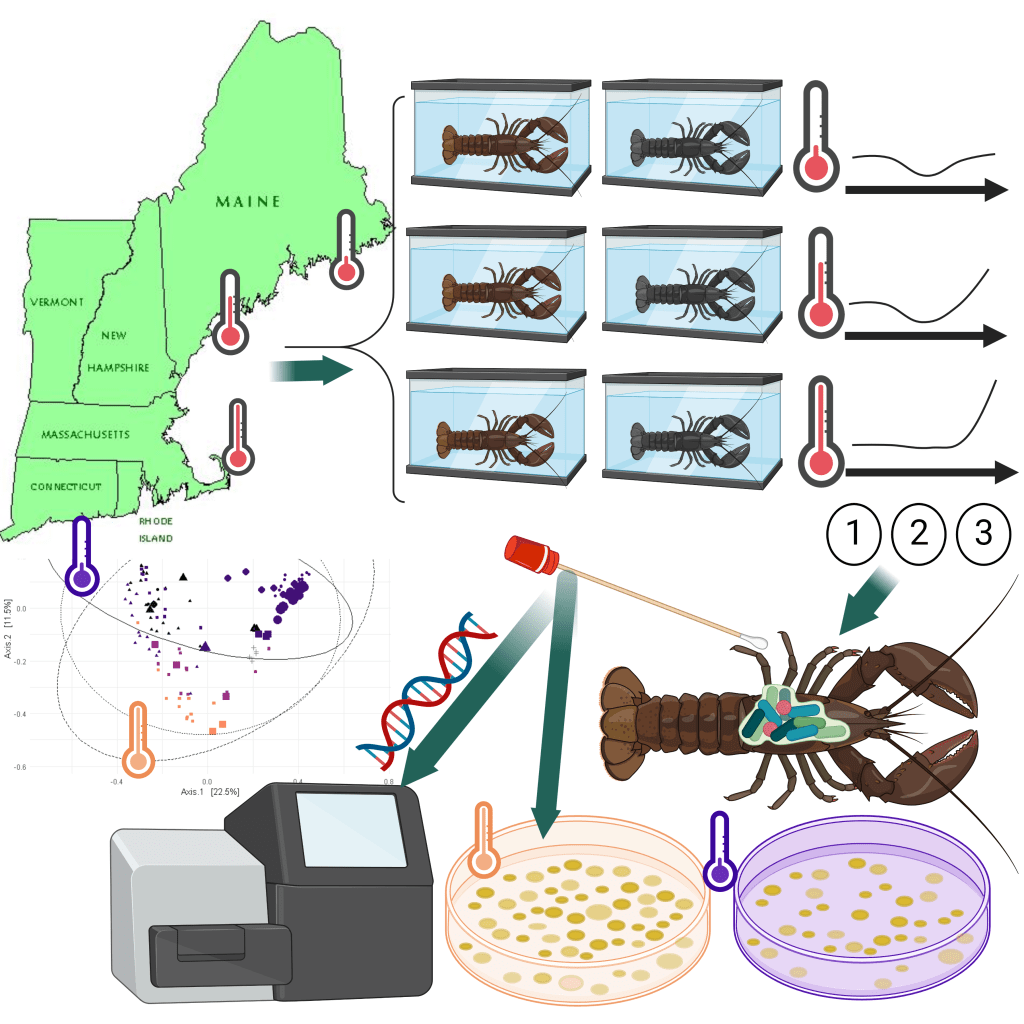
A collaborative paper on lobster shell bacteria has just been published in the journal iScience: “Water temperature and disease alters bacterial diversity and cultivability from American Lobster (Homarus americanus) shells.” This paper investigates what happens to bacterial communities on healthy and sick lobsters as they experience different water temperatures for a year.

You can read the paper here.

Woman sitting outside.

I joined this project back in the summer of 2020, towards the end of my first year at UMaine, when I was given a large 16S rRNA gene sequence dataset of bacterial communities from the shells of lobsters. I had been asking around for data as a training opportunity for Grace Lee, who at the time was an undergraduate at Bowdoin College participating in the abruptly cancelled summer Research Experience for Undergrads program at UMaine in summer 2020. Instead, Grace joined my lab as a remote research assistant and we worked through the data analysis over the summer and fall. Grace has since graduated with her Bachelor’s of Science in Neuroscience, obtained a Master’s of Science at Bowdoin, and is currently a researcher at Boston Children’s Hospital while she is applying to medical school.

My first point of contact on the project was Jean MacRae, an Associate Professor of Civil and Environmental Engineering at UMaine, who was the one to lend me the data and who had been working on bacterial community sequencing on other projects which I’ve been involved in. Jean has been involved with MSE, and this is our fourth publication together making her the collaborator at UMaine I have co-authored with the most (although it is a tight race 🙂 ).

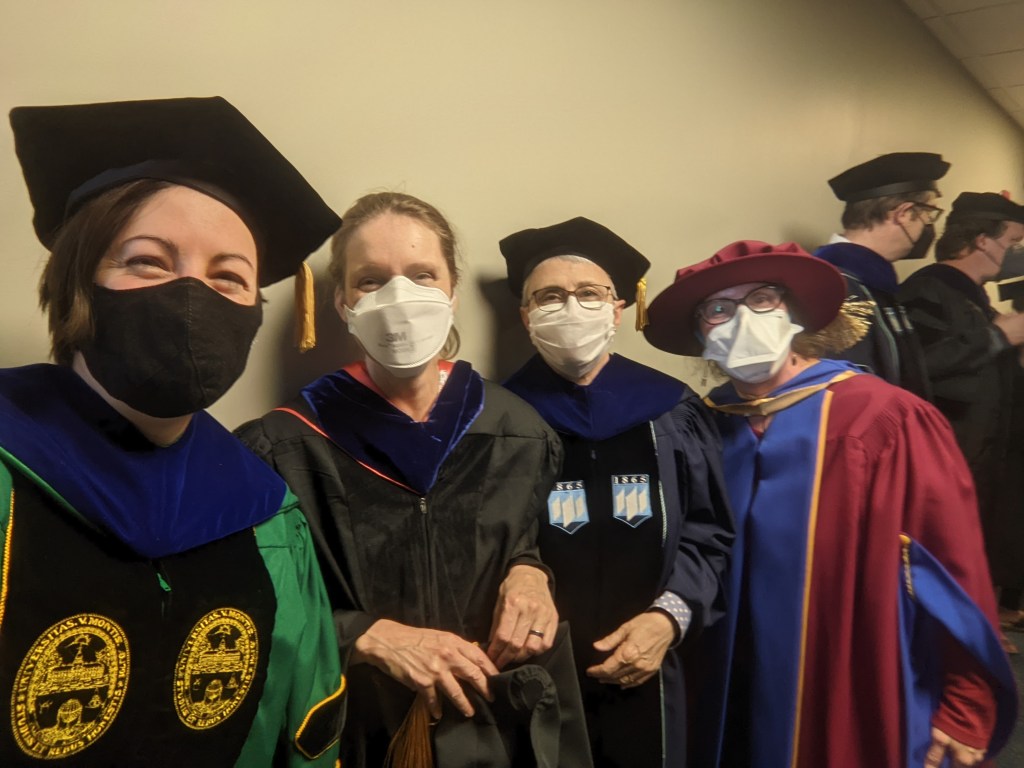
Four professors wearing full regalia, as well as face masks, posing for a photo in a hallway.

Jean introduced me to the original research team, including Debbie Bouchard, who is the Director of the Aquaculture Research Institute and was researching epizootic shell disease in lobsters for her PhD dissertation several years ago; Heather Hamlin, Professor and Director of the School of Marine Sciences; Scarlett Tudor (not pictured), the Education and Outreach Coordinator at the ARI; and Sarah Turner (not pictured), Scientific Research Specialist at ARI. The ARI team is involved in a lot of large-scale aquaculture research, education, and outreach to the industry here in Maine, and the collaborative work I have been doing with them has been a new an engaging avenue of scientific study for me.

In 2022, the research team, along with social science Masters student Joelle Kilchenmann, published a perspective/hypothesis piece which explored unanswered questions about how the movement of microbes, lobsters, and climate could affect the spread of epizootic shell disease in lobsters off the coast of Maine. That perspective paper was a fun exercise in hypothesis generation and asking ‘what if’?

A steamed lobster on a plate.

This manuscript is more grounded, and features work that was started in 2016. It examines bacterial communities on the shells of lobsters which were captured off the coast of Southern Maine and maintained in aquarium tanks for over a year. The lobsters were split into three treatment groups: those which were kept in water temperatures that mimicked what they would experience in Southern Maine, colder water to simulated what they would experience in Northern Maine, and hotter water to simulate what they would experience in Southern New England over that year. The original project team wanted to know if temperatures would make a different to their health or microbial communities.

Figure S8. Water temperature regimes, related to STAR Methods. A. Temperatures were obtained through the National Oceanographic Data Center (NODC). NODC temperatures reflect those recorded near Eastport, ME (A); Portland, ME (B); and an average of temperatures from Woods Hole, MA (C) and New Haven, CT (D) was used to represent Southern New England. B. Annual temperature cycles used in this project to represent Southern New England (SNE), Southern Maine (SME) and Northern Maine (NME).

The original project team swabbed lobster shells to obtain bacteria to try and grow in the lab, as well as DNA to sequence and identify whole bacterial communities. Grace and I performed the data analysis to identify which taxa were present in those communities, what happened over time or when the water temperature changed, and what bacteria were present or not in lobsters which died during the study.

Figure S11. Lobster carapace sampling using a sterile cotton swab to obtain bacterial communities from the shell surface, related to STAR Methods. The right side of the dorsolateral area of the cephalothorax was sampled for the baseline sampling, the left side for the Time 1, and the right side again for Time 2.

In addition to wanting to know about temperature, we wanted to know specifically how temperature would affect the bacteria if the lobsters had epizootic shell disease. It is not known what causes epizootic shell disease (which is why it is called ‘epizootic’), but it manifests as pitting in the shells of lobsters. Over time, the pitting can weaken shells and make it difficult for the lobster to molt, or make the lobster susceptible to predators or microbial infections. This type of shell disease had been a huge problem in Southern New England over the past few decades, and in Maine we have seen more cases over time.

Four panels of lobsters showing the progression of a healthy lobster to ones with more and more pitting in their shells.
Figure S10. Examples of lobster shell disease indices, related to STAR Methods. A) 0, no observable signs of disease, B) 1+, shell disease signs on 1-10% of the shell surface, C) 2+, shell disease signs on 11-50% of the shell surface, D) 3+, shell disease signs on > 50% of the shell surface.

The highlights of this project are here, but you can click the link below to read the entire study and what happened to lobster health and lobster microbes over time.

  • Shell bacteria from healthy lobsters, often overlooked, were included in the study.
  • Hotter and colder water temperatures affected shell bacterial communities.
  • Epizootic shell disease reduced bacterial diversity on lobster shells.
  • Epizootic shell disease could be induced or exacerbated by the loss of commensal bacteria from shells.

Water temperature and disease alters bacterial diversity and cultivability from American Lobster (Homarus americanus) shells.

Suzanne L. Ishaq1,2,, Sarah M. Turner2,3, Grace Lee4,5,M. Scarlett Tudor2,3, Jean D. MacRae6, Heather Hamlin2,7, Deborah Bouchard2,3

  • 1 School of Food and Agriculture; University of Maine; Orono, Maine, 04469; USA.
  • 2 Aquaculture Research Institute; University of Maine; Orono, Maine, 04469; USA.
  • 3 Cooperative Extension; University of Maine; Orono, Maine, 04469; USA.
  • 4 Department of Neuroscience, Bowdoin College, Brunswick, ME 04011; USA.
  • 5 Boston Children’s Hospital, Boston, MA 02115; USA.
  • 6 Department of Civil and Environmental Engineering; University of Maine; Orono, Maine, 04469; USA.
  • 7 School of Marine Sciences; University of Maine; Orono, Maine, 04469; USA.

Summary

The American lobster, Homarus americanus, is an economically valuable and ecologically important crustacean along the North Atlantic coast of North America. Populations in southern locations have declined in recent decades due to increasing ocean temperatures and disease, and these circumstances are progressing northward. We monitored 57 adult female lobsters, healthy and shell-diseased, under three seasonal temperature cycles for a year, to track shell bacterial communities using culturing and 16S rRNA gene sequencing, progression of ESD using visual assessment, and antimicrobial activity of hemolymph. The richness of bacterial taxa present, evenness of abundance, and community similarity between lobsters was affected by water temperature at the time of sampling, water temperature over time based on seasonal temperature regimes, shell disease severity, and molt stage. Several bacteria were prevalent on healthy lobster shells but missing or less abundant on diseased shells, although some bacteria were found on all shells regardless of health status.