
I’ll be on the road and in the air frequently this spring, as I was graciously invited on two international trips, I am participating in an international conference here in the US, and I am fostering microbiome events in Maine!
Ghent, Beligum
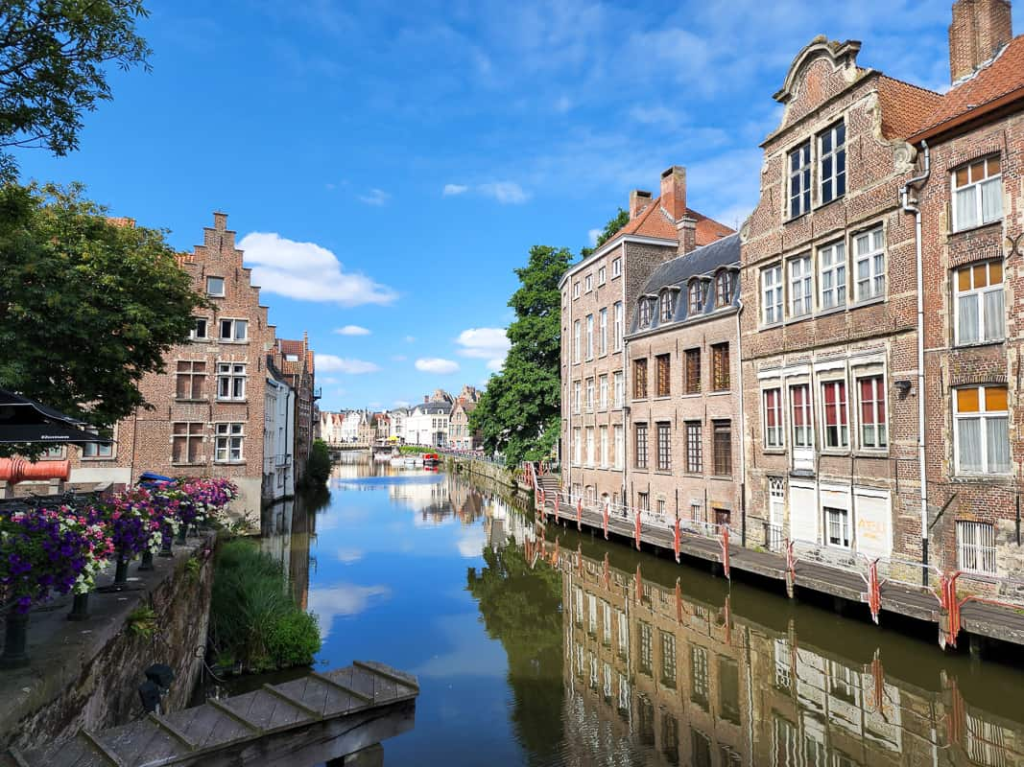
In May, I’ll be visiting Belgium for my first time, as I present my research at a seminar at Ghent University, and meet with health researchers and students!
Ghent is brimming with art, history, and science, and I’m looking forward to being steeped in these as I tour the canals a bit.
“A recipe for health: a bit of diet, a dash of microbes, and plenty of social equity“
- Presented by: Sue Ishaq, University of Maine
- When: 21-05-2026 from 16:00 to 17:30
- Where: MS Teams and Auditorium A – Campus Ghent University Hospital, Corneel Heymanslaan 10, 9000 Ghent
- Language: English
- Organizer: The Interdisciplinary Medical and Health Seminar of May 2026 is co-organized by the Department of Public Health and Primary Care and the Department of Internal Medicine and Pediatrics.
Trento, Italy
Immediately after my trip to Ghent, I’ll travel to Trento, Italy, to speak at a microbiome workshop focused on combining qualitative and quantitative data.
Nestled in the Alps in northern Italy, Trento is likewise a hub for art, history, and science, and I can’t wait to learn from my colleagues while reveling in this view. I’ll finally get to spend time with Dr. Roberta Rafetta in person, as we’ve been colleagues for several years through MSE but only online.

Scope of the workshop: While always challenging to combine data with very different types, scopes, and timeframes, being able to combine complex (and often qualitative) social science data with quantitative microbial data is key to understanding the human microbiome. The workshop is led by my colleague Roberta, as well as the Segata Lab, who are leading a collaboration on the microbiome of people living in Antarctica.
“Reconciling time-averaged diet history, time-specific microbiome data, and time-independent feelings about diet and health.”
Presented by: Sue Ishaq, University of Maine
Abstract: Cruciferous vegetables, and the microbial metabolites that they stimulate in the gut, are sources of antioxidants and anti-inflammatories. For example, broccoli sprouts contain inactive glucosinolates (GSL), especially glucoraphanin (GLR), which some bacteria convert into bioactive sulforaphane (SFN) (i.e., GSL conversion). Broccoli sprout diets robustly reduce gut inflammation and other symptoms in mouse models of colitis, and GSL conversion is achieved in people using diet or GLR supplementation, with some evidence that regular consumption trains bacteria for GSL conversion over time. However, conversion efficiency is variable and unpredictable in people, and little is known about the specific bacteria, genes, or metabolic pathways responsible for GSL conversion. This study evaluated the impact of a 4- week steamed broccoli sprout dietary intervention, which is rich in GLR, on gut microbiome entrainment for GLR conversion (qPCR, metagenomics), gut microbial community structure or
function (16S rRNA and metagenomics), gut metabolites (LC/MS-MS metabolite and untargeted metabolomics), and how diet made people feel (open-ended survey), as well as the correlation of GLR conversion and gut microbiota with self-reported diet (survey) and healthy eating index via the 2023 daily guidelines for Americans (diet history). While each data set provides results, the combination of datasets should yield information on why we saw these results. This presentation will focus on the conceptual and statistical challenges of combining radically distinct types of data to understand objective and subjective health information.
Washington, DC
In June, I’ll be heading back to D.C. for the ASM Microbe conference, to present my work as well as to engage in strategic planning and science advocacy as part of responsibilities as a member of the board.
“Making Microbial Anti-Inflammatories from Plant Secondary Compounds in Broccoli Sprouts, from Culture to Gut“
Authors: S. Ishaq, J. Holman, A. Kirkendall, L. Holcomb, A. Reynolds; University of Maine, Orono, ME, United States.
Inactive glucoraphanin (GLR) is found in broccoli, broccoli sprouts, and supplements, and specific gut bacteria are critical to biosynthesizing it into antioxidant and anti-inflammatory sulforaphane (SFN) in the colon, where it directly resolves colitis. GLR conversion in people is highly variable, and certain people lack some/all high-performing GLR-converting bacteria. Little is known about which gut bacteria/gene pathways are competent; if conversion can be induced/increased by introducing a probiotic; and if a probiotic would persist and remain active during acute gut inflammation when many taxa perish.
We previously identified that different preparations of broccoli sprouts fine-tunes the dispersal of dietary and microbially mediated metabolites in the gut, and induces gut-location-specific changes in bacterial communities. Using different parts of the intestines in broccoli sprout-fed mice, we isolated ~330 bacterial strains from 9 distinct morphologies using selective media and anaerobic culturing. We identified 16 bacterial candidates which grew better with GLR and metabolized it (confirmed with LC-MS/MS), which included pure-strain isolates, especially Enterobacter asburiae, and multi-species communities, especially Enterobacter asburiae, Bacillus sp., Paenibacillus sp., Clostridium farciminis, Enterococcus faecalis, that were stable across a dozen culturing passages.
While our isolated bacteria and our mixed colony strains all possess glycoside hydrolases CAZyme families which are implicated in GLR-conversion, only some strains used them. We performed RNA transcriptomics analysis on our probiotics with and without GLR in nutritious broth. In the mixed bacterial culture samples grown with GLR, all strains are active, but Clostridium and Bacillus dominate. But, with GLR, the Enterobacter asburiae in the mixed community dominates the transcriptome at the 12-hour and 24-hour time point when literature confirms that similar species have peak GLR-metabolizing activity. This matches our growth trial data, in which our GLR-metabolizing bacteria show a second bump in growth at 12 or 16 hours when cultured with GLR compared to media alone.
Finally, we piloted the use of our isolated strain, Enterobacter asburiae, and our mixed community as probiotics, with or without a 10% steamed broccoli sprout diet, as a means of abrogating the effects of chemically induced ulcerative colitis in a mouse model.
Funder: This work was supported by the NIH NIDDK, Biomedical Association of Maine, and the University of Maine Small Animal Research Facility.
Orono, Maine
Scattered across April, May, and June, are several workshops and a symposium at the University of Maine that I am co-organizing.
Sequencing Workshops for UMaine students and postdocs
Alex Sacco, CORE Genetics Facility Manager, and Sue Ishaq, Assoc. Prof. of Microbiomes, are organizing a series of hands-on workshops for graduate and undergraduate students to learn how to generate sequencing libraries for microbial communities or host genomes!
Microbiome Workshop 1: 16S and ITS Amplicon Library Generation with QIAGEN, April 15, 2026. Students will prepare amplicon sequencing libraries using QIAGEN kits for the 16S rRNA gene from bacteria and archaea, and the ITS region of fungi. This includes attaching barcodes/indexes and sequencing adapters, and quality control checks. Then, students will set up a sequencing run using Illumina chemistry. The sequencing reagents, and lunch, are generously provided by Qiagen, one of our Future Microbiome Researcher Sponsors for the Northen New England Microbiome Symposium.
Microbiome Workshop 2: Long-read amplicon analysis with New England Biolabs and Oxford Nanopore, May 1. Students will prepare amplicon sequencing libraries using NEB for whole-length 16S rRNA gene from bacteria and archaea, and the ITS region of fungi. This includes attaching barcodes/indexes and sequencing adapters, and quality control checks. Then, students will set up a sequencing run using Oxford nanopore chemistry. The sequencing reagents, and lunch, are generously provided by New England Biolabs, one of our Future Microbiome Researcher Sponsors for the Northen New England Microbiome Symposium.
Microbiome Workshop 3: RNA-Seq with Illumina, May 11-15, 2026. Students will prepare RNA sequencing libraries (for microbial or host RNA) using Illumina kits and workflows. This includes attaching barcodes/indexes and sequencing adapters, and quality control checks. Student will also set up a sequencing run using samples from the group using Illumina chemistry. The sequencing reagents, and lunch, are generously provided by Illumina, one of our Future Microbiome Researcher Sponsors for the Northen New England Microbiome Symposium.
The 2nd Northern New England Microbiome Symposium
Whether we are interested in the way coastal wetlands sequester carbon, how diet affects us differently, or how public and environmental health are inextricably linked – research on the microbiome can reveal how systems connect. Join us for two days to learn about how microbial communities impact ecosystems, food production, health, and more; to hear from experts researching these issues in New England and beyond; and discuss the technology and data analysis which can boost your own research.
UMaine Buchanan Alumni House, 160 College Ave, Orono, ME 04473
 The Ishaq Lab