

Our collaborative team of researchers (bioethicists (Kieran and Diego), bioinformaticians (Rob), host microbial ecologists (Sue and Emma), and soil microbial ecologists (Mallory), had our first co-authored paper published in mSystems! Our paper is a commentary on the concept and need for microbiome stewardship, and outlines the research and policy priorities that are the focus of our ongoing research.
Microbiome stewardship is the broad idea that when we think about the relevance of healthy microbiomes for public health, we need to consider ecosystem-level factors such, as environmental pollutants, built environments, industrial food processing that affect interactions between microbes and human health. Microbiomes are highly dynamic and complex systems, composed of bacteria, archaea, protozoa, fungi, and viruses; and our personal microbiomes are derived from larger shared, collective microbial resources.
Microbiome scientists are increasingly demonstrating the importance of microbial ecologies for human and environmental health. In spite of this, no protections are in place to ensure the health of microbiomes. In other words, there are no policies protecting microbiomes, which in turn are foundational to the health of all environmental and host ecosystems. We built our research team to develop a framework and definition for microbiome stewardship, guiding principles for its implementation, and tools for assessment. Last year, we were awarded funding from the Canadian Institutes for Health Research (CIHR) for a four-year project investigating how our collective microbiomes (the diverse microbes we share between humans and our environments) impact health!
The publication of this commentary also sets the stage for a Summit on Pathways to Microbiome Stewardship which the research team is organizing for July 7-10, 2025.
Commentary
Choudoir, M., Ishaq, S., Beiko, R., Silva, D., Allen-Vercoe, E., O’Doherty, K. 2025. The case for microbiome stewardship: What it is and how to get there. mSystems. 0:e00062-25. https://doi.org/10.1128/msystems.00062-25
Abstract:
Microbiomes are essential for human, animal, plant, and ecosystem health. Despite widespread recognition of the importance of microbiomes, there is little attention paid to monitoring and safeguarding microbial ecologies on policy levels. We observe that microbiomes are deteriorating owing to practices at societal levels such as pesticide use in agriculture, air and water pollution, and overuse of antibiotics. Potential policy on these issues would cross multiple domains such as public health, environmental protection, and agriculture. We propose microbiome stewardship as a foundational concept that can act across policy domains to facilitate healthy microbiomes for human and ecosystem health. We examine challenges to be addressed and steps to take toward developing meaningful microbiome stewardship.

Acknowledgments: We thank Lola Holcomb for their helpful feedback and organizational contributions to this manuscript.
Funding:
United States Department of Agriculture National Institute of Food and Agriculture Hatch Project Accession 7004439 (MJC)
United States Department of Agriculture National Institute of Food and Agriculture through the Maine Agricultural & Forest Experiment Station: Hatch Project ME022329 (SLI)
National Institute of Health (NIH/NIDDK 1R15DK133826-01) (SLI)
Canadian Natural Sciences and Engineering Research Council (RGB)
Canada Research Chairs program (EA-V)
Canadian Institutes of Health Research (Funding Reference Number: 191753) (KCO)
University of Guelph Institute for Environmental Research (KCO)
Meet the Team

Dr. Kieran C. O’Doherty, PhD., is professor in the department of psychology at the University of Guelph, where he directs the Discourse, Science, Publics research Group. His research focuses on the social and ethical implications of science and technology and public engagement on science and technology. He has published on such topics as data governance, vaccines, human tissue biobanks, the human microbiome, salmon genomics, and genetic testing. A particular emphasis of his research is on theory and methods of public deliberation, in which members of the public are involved in collectively developing recommendations for the governance of science & technology. Recent edited volumes include Psychological Studies of Science and Technology (2019) and The Sage Handbook of Applied Social Psychology (2019). He is editor of Theory & Psychology.

Dr. Rob Beiko, PhD., is a Professor and Head of the Algorithms and Bioinformatics research cluster in the Faculty of Computer Science at Dalhousie University. His research aims to understand microbial diversity and evolution using machine learning, phylogenetics, time-series algorithms, and visualization techniques. His group is developing software tools and pipelines to comprehensively survey genes and mobile genetic elements in bacterial genomes, and understand how these genomes have been shaped by vertical inheritance, recombination, and lateral gene transfer. He is also a co-founder of Dartmouth Ocean Technologies, Inc., a developer of environmental DNA sampling devices.

Dr. Sue Ishaq, PhD., is an Associate Professor of Microbiomes, University of Maine; and founded MSE in 2020. Over the years, her research has gone from wild animal gut microbiomes, to soils, to buildings, and back to the gut. Since 2019, her lab in Maine focuses on host-associated microbial communities in animals and humans, and in particular, how host and microbes interact in the gut and can be harnessed to reduce inflammation. She is also the early-career At Large member of the Board of Directors for the American Society for Microbiology, 2024- 2027.
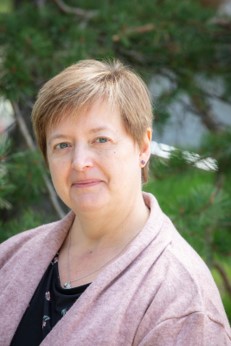
Dr. Emma AllenVercoe, PhD, is a Professor of Microbiology at the University of Guelph, and a Tier 1 Canada Research Chair in Human Gut Microbiome Function and Host Interactions. Her research portfolio is broad, encompassing host-pathogen interplay, live microbial products as therapeutic agents, gut microbiome and anaerobic culture (humans and animals), and the study of ‘missing gut microbes’ i.e. those that are present in hunter-gatherer societies but missing in the industrialized world. She has developed the Robogut – a culture system that allows for the growth of gut microbial communities in vitro, and is currently busy a centre for microbiome culture and preservation at the University of Guelph.

Dr. Mallory Choudoir, PhD, is an Assistant Professor & Soil Microbiome Extension Specialist in the Department of Plant & Microbial Biology at North Carolina State University. The goal of her applied research and extension program is to translate microbiome science to sustainable agriculture. She aims to develop microbial-centered solutions for optimizing crop productivity, reducing agronomic inputs, and enhancing agroecosystem resilience to climate change.

Diego Silva, PhD, is a Senior Lecturer in Bioethics at Sydney Health Ethics and the University of Sydney School of Public Health. His research centers on public health ethics, particularly the application of political theory in the context of infectious diseases and health security, e.g., tuberculosis, COVID-19, antimicrobial resistance, etc. He is currently the outgoing Chair and a member of the Public Health Ethics Consultative Group at the Public Health Agency of Canada and works with the World Health Organization on various public health ethics topics on an ad hoc basis.
 The Ishaq Lab