
2025 MSE Summit: Pathways to Microbiome Stewardship
Summary of the event: This summit will convene experts in microbiology, policy, public and environmental health, and social justice, to discuss, deliberate, amend, and expand the draft working definition and guiding principles of microbiome stewardship. A core concept of the Microbes & Social Equity (MSE) group is recognizing the links between microbiomes, social equity, and environmental health. Our ability to develop practices and advocate for policy reform that address societal inequities is limited without a strong microbiome stewardship framework. Led by MSE and the Microbiome Stewardship working group, participants will co-develop a framework, and use it to plan a pathway to bring their own work in line with principles of conservation and stewardship. Participants will design case studies or future research which provide tangible and meaningful endpoints relevant to their area of focus.
Registration open soon!
Session 1: Human-centric Microbiome Stewardship
Date: July 7-8, 2025, time TBD
Location: Online only — the removal of US federal funding leaves us unable to host this in person.
Webinar presentations:
- The Concept of Microbiome Stewardship,
- Kieran O’Doherty, PhD, Professor, University of Guelph; MSE
- The political economy ofemerging digital data collection platforms and applications with microbial stewardship,
- Roberta Raffaetà, PhD, Associate Professor of Sociology and Medical Anthropology, Ca Foscari
- Wildlife conservation through the microbiome, and One Health epidemiology,
- Candace Williams, PhD, Oxford Nanopore
- Case study in racism in vaginal microbiome work as studies use small group sizes and incomparable comparisons,
- Ari Kozik, PhD, Assistant Professor of Molecular, Cellular, and Developmental Biology, Michigan State University
- Indigenous food systems and colonial food policy,
- Aviaja Hauptmann, PhD, Assistant Professor, Institute of Health and Nature, University of Greenland
- Public Health and Epidemiology,
- Susie Hota, MD, MSc, FRCPC, Clinician Investigator, Toronto General Hospital Research Institute (TGHRI)
- Indigenous perspectives on microbiome stewardship and public health,
- Nicole Redvers, DPhil, ND, MPH, Associate Professor, Western Research Chair & Director, Indigenous Planetary Health; Schulich School of Medicine & Dentistry, Schulich Interfaculty Program in Public Health, University of Western Ontario
- Bioethics,
- Nicolae Morar, PhD, Professor of Ethics, University of Oregon
Session 2: Environment-centric Microbiome Stewardship
Date: July 9-10, 2025, Time TBD
Location: Online only — the removal of US federal funding leaves us unable to host this in person.
Webinar Presentations:
- The Concept of Microbiome Stewardship,
- Mallory Choudoir, PhD, Assistant Professor and Soil Microbiome Extension Specialist, North Carolina State University; MSE
- Built environment and microbial exposures,
- Jennifer Kuzma, PhD, Professor, School of Public and International Affairs; Co-Director, Genetic Engineering & Society Center; Associate Director, Precision Microbiome Engineering Center (PreMiEr, NSF-ERC); North Carolina State University
- Kristen Landreville, PhD, Senior Research Scholar, Societal and Ethical Implications (SEI) Core in the PreMiEr Engineering Research Center, North Carolina State University
- Biodiversity and microbial stewardship in agriculture.
- Soil health and environmental data stewardship.
- Conservation of microbiota
- Antimicrobial resistance, wastewater, and redlining urban centers.
Sessions 3 and 4, in development

Group activity 1: Create your discussion group (45 min.) Use the white boards to list broad topics around the room, then assemble into loose groups by topic. Draw network maps on the boards, in which word bubbles are made to list your collective expertise. Use the maps to identify common interests, and subdivide into groups of 3 – 6 people.
| Group activity 2: Identify topics important to your group and missing expertise (30 min., and 15 min. for groups to share with the full summit audience). Resolving “grand challenges” is complicated, and identifying knowledge gaps, problems facing society, and barriers to solutions can help us map a pathway to solutions. What problems exist in your field? What barriers prevent implementing research or policy solutions? What kind of expertise is lacking from your group that might help you solve these challenges? Discussion 1 (Introductions & Foundations). What is your name and what kind of research do you do? How might the connection between microbiomes and health (human and non-human) relate with your work? What kind of research questions might you be interested in investigating that involve the connection between microbiomes and health? What interests you about the topic of microbiomes, health, and environments? Discussion 2 (Interdisciplinary Connections). To achieve goals of microbiome stewardship, what interdisciplinary partnerships do we need to develop? What kind of research programs need to be developed? |
| Group activity 3: Generate definitions of Microbiome Stewardship (1 hour, and 1 hour for groups to share with the full summit audience). What does ‘microbiome stewardship’ mean to you? What needs to be stewarded/protected in your area of expertise? What types of policies, practices, products, or other solutions would help steward microbiomes in your area of expertise? |
Day 2 Activities in the afternoon, for both sessions

Group activity 4: Create your path to microbiome stewardship. Groups will organize by broad topics, and generate case studies related to individuals’ work which includes microbiome stewardship. During your activity, participants will consider the two discussion prompts:
Discussion 3 (Policy Connections). What are the policy domains we need to target for protection of microbial ecosystems to ensure positive health outcomes? What kind of policies could be effective in helping to maintain microbiome health? What agencies or organizations might oversee regulations for the protection of microbial ecosystems? How could one begin to advocate for microbiome health in various policy domains?
Discussion 4 (Getting Microbiome Stewardship onto the Agenda). How can we raise awareness about the importance of microbial ecologies in human and planetary health? How can we get the protection of microbial ecosystems onto policy maker agendas? What initiatives currently exist with whom we can seek partnerships?
Continue Group activity 4: Share your path to microbiome stewardship (groups will share to full summit audience)
What is “microbiome stewardship”?
Microbiomes are essential to human and environmental health; all organisms on our planet rely on the microbial ecologies that inhabit and surround us. There is increasing evidence that modern societal practices are harming essential microbiomes, and thereby threatening the health of the larger organisms and ecosystems that exist in symbiotic relationship with them. In spite of scientific recognition of the importance of microbiomes and of the threats they face, there is very little collective societal action to protect and conserve essential microbiomes. Pesticide use, pollution, industrialized food production, and many other societal practices that are damaging our collective microbiomes can only be addressed at the level of policy. Microbiome stewardship is the broad idea that we need to consider ecosystem-level factors when we think about public health, as our environment, behaviors, and public policy affects interactions between microbes and human health. Microbiomes are highly dynamic systems, featuring bacteria, archaea, protozoa, fungi, and viruses; and our personal microbiomes are derived from a larger shared, collective microbial resource.
The Microbiome Stewardship research group is currently working on creating a definition, framework, and guidelines.

Figure 1. Microbiome stewardship as a concept and framework for ensuring human and planetary health supported by microbial functions. Human microbiomes are constituted from our environment, which has determinants based largely on societal systems (e.g., agriculture and food systems, built environment, health care accessibility) that operate beyond individual choice and behavioral interventions. Figure created with BioRender.com.
Meet the Summit-Organizing Team

Dr. Sue Ishaq, PhD., is an Associate Professor of Microbiomes, University of Maine; and founded MSE in 2020. Over the years, her research has gone from wild animal gut microbiomes, to soils, to buildings, and back to the gut. Since 2019, her lab in Maine focuses on host-associated microbial communities in animals and humans, and in particular, how host and microbes interact in the gut and can be harnessed to reduce inflammation. She is also the early-career At Large member of the Board of Directors for the American Society for Microbiology, 2024- 2027.

Dr. Kieran C. O’Doherty, PhD., is professor in the department of psychology at the University of Guelph, where he directs the Discourse, Science, Publics research Group. His research focuses on the social and ethical implications of science and technology and public engagement on science and technology. He has published on such topics as data governance, vaccines, human tissue biobanks, the human microbiome, salmon genomics, and genetic testing. A particular emphasis of his research is on theory and methods of public deliberation, in which members of the public are involved in collectively developing recommendations for the governance of science & technology. Recent edited volumes include Psychological Studies of Science and Technology (2019) and The Sage Handbook of Applied Social Psychology (2019). He is editor of Theory & Psychology.

Dr. Rob Beiko, PhD., is a Professor and Head of the Algorithms and Bioinformatics research cluster in the Faculty of Computer Science at Dalhousie University. His research aims to understand microbial diversity and evolution using machine learning, phylogenetics, time-series algorithms, and visualization techniques. His group is developing software tools and pipelines to comprehensively survey genes and mobile genetic elements in bacterial genomes, and understand how these genomes have been shaped by vertical inheritance, recombination, and lateral gene transfer. He is also a co-founder of Dartmouth Ocean Technologies, Inc., a developer of environmental DNA sampling devices.
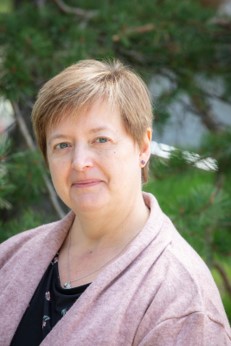
Dr. Emma AllenVercoe, PhD, is a Professor of Microbiology at the University of Guelph, and a Tier 1 Canada Research Chair in Human Gut Microbiome Function and Host Interactions. Her research portfolio is broad, encompassing host-pathogen interplay, live microbial products as therapeutic agents, gut microbiome and anaerobic culture (humans and animals), and the study of ‘missing gut microbes’ i.e. those that are present in hunter-gatherer societies but missing in the industrialized world. She has developed the Robogut – a culture system that allows for the growth of gut microbial communities in vitro, and is currently busy a centre for microbiome culture and preservation at the University of Guelph.

Dr. Mallory Choudoir, PhD, is an Assistant Professor & Soil Microbiome Extension Specialist in the Department of Plant & Microbial Biology at North Carolina State University. The goal of her applied research and extension program is to translate microbiome science to sustainable agriculture. She aims to develop microbial-centered solutions for optimizing crop productivity, reducing agronomic inputs, and enhancing agroecosystem resilience to climate change.

Diego Silva, PhD, is a Senior Lecturer in Bioethics at Sydney Health Ethics and the University of Sydney School of Public Health. His research centers on public health ethics, particularly the application of political theory in the context of infectious diseases and health security, e.g., tuberculosis, COVID-19, antimicrobial resistance, etc. He is currently the outgoing Chair and a member of the Public Health Ethics Consultative Group at the Public Health Agency of Canada and works with the World Health Organization on various public health ethics topics on an ad hoc basis.
 The Ishaq Lab