The Nature Lab at Rhode Island School of Design is presenting an exhibition on the interface of biology and art; Biodesign: From Inspiration to Integration. Curated in collaboration with William Myers, the show is part of their 80th anniversary celebrations. The exhibition runs from Aug 25—Sept 27 at the Woods Gerry Gallery, and will feature photos and sampling equipment from the Biology and the Built Environment Center.
Biodesign: From Inspiration to Integration
OPENING RECEPTION
An exhibition curated by William Myers and the RISD Nature Lab, this show features the following works:
Hy-Fi and Bio-processing Software—David Benjamin / The Living
Mycelium architecture, made in collaboration with Ecovative and 3M.
Zoa—Natalia Krasnodebska / Modern Meadow
Leather grown using yeasts that secrete collagen, and grown completely without animal derivatives.
The Built Environment Microbiome—BioBE Center / Jessica Green, Sue Ishaq and Kevin Van Den Wymelenberg
The BioBE conducts research into the built environment microbiome, mapping the indoor microbiome, with an eye towards pro-biotic architecture.
Zea Mays / Cultivar Series—Uli Westphal
Newly commissioned corn study, this project highlights maize’s evolution through interaction with humans.
Harvest / Interwoven—Diana Scherer
Artist coaxes root systems plant root systems into patterns.
Fifty Sisters & Morphogenesis—Jon McCormack
Artist algorithmically generates images that mimic evolutionary growth, but tweaks them to include aesthetics of the logos of global petroleum producing corporations.
Organ on a Chip—Wyss Institute
Wyss Institute creates microchips that recapitulate the functions of living human organs, offering a potential alternative to animal testing.
AgroDerivatives: Permutations on Generative Citizenship—Mae-Ling Lokko
This project proposes labor, production criteria and circulation of capital within agrowaste/bioadhesive upcycling ecosystems.
New Experiments in Mycelium—Ecovative
Ecovative makes prototypes of mycelium items such as insulation, soundproofing tiles, surfboards, lampshades.
Bistro in Vitro—Next Nature Network
Performance with speculative future foods samples. The installation will include video screens and a cookbook on a table display.
Raw Earth Construction—Miguel Ferreira Mendes
This project highlights an ancient technique that uses soil, focusing on how soil is living.
Burial Globes: Rat Models—Kathy High
This project presents glass globes that hold the ashes of the five HLA-B27 transgenic rats, each one named and remembered: Echo, Flowers, Tara, Matilda, Star.
To Flavour Our Tears—Center for Genomic Gastronomy
Set up as an experimental restaurant, this project places humans back into the foodchain — investigating the human body as a food source for other species.
Blood Related—Basse Stittgen
A series of compressed blood objects—inspired by Hemacite objects made from blood/sawdust compressed in a process invented in the late 19th century—highlights bloodwaste in the slaughterhouse industry.
Silk Poems—Jen Bervin
A poem made from a six-character chain represents the DNA structure of silk, it refers to the silkworm’s con-structure of a cocoon, and addresses the ability of silk to be used as a bio sensor, implanted under people’s skin.
Zoe: A Living Sea Sculpture—Colleen Flanigan
Zoe is an underwater structure, part of coral restoration research, that regenerates corals in areas highly impacted by hurricanes, human activity and pollution.
Aquatic Life Forms—Mikhail Mansion
Computationally generated lifeforms animated using motion-based data captured from Arelia aurita.
Algae Powered Digital Clock—Fabienne Felder
By turning electrons produced during photosynthesis and bacterial digestion into electricity, algae will be used to power a small digital clock.
A Place for Plastics—Megan Valanidas
This designer presents a new process of making bioplastics that are bio-based, biodegradable AND compostable
Data Veins & Flesh Voxels—Ani Liu
This project explores how technology influences our notion of being human from different points of view, with a focus on exploring the relationship between our bodies as matter and as data.
Pink Chicken Project—Studio (Non)human (Non)sense/ Leo Fidjeland & Linnea Våglund
By changing the color of chickens to pink, this project rejects the current violence inflicted upon the non-human world and poses questions of the impact and power of synthetic biology.
August 24
5:30 pm – 7:30 pm
Woods Gerry Gallery, 62 Prospect Street, Providence, RI 02903
To study DNA or RNA, there are a number of “wet-lab” (laboratory) and “dry-lab” (analysis) steps which are required to access the genetic code from inside cells, polish it to a high-sheen such that the delicate technology we rely on can use it, and then make sense of it all. Destructive enzymes must be removed, one strand of DNA must be turned into millions of strands so that collectively they create a measurable signal for sequencing, and contamination must be removed. Yet, what constitutes contamination, and when or how to deal with it, remains an actively debated topic in science. Major contamination sources include human handlers, non-sterile laboratory materials, other samples during processing, and artificial generation due to technological quirks.
Contamination from human handlers
This one is easiest to understand; we constantly shed microorganisms and our own cells and these aerosolized cells may fall into samples during collection or processing. This might be of minimal concern working with feces, where the sheer number of microbial cells in a single teaspoon swamp the number that you might have shed into it, or it may be of vital concern when investigating house dust which not only has comparatively few cells and little diversity, but is also expected to have a large amount of human-associated microorganisms present. To combat this, researchers wear personal protective equipment (PPE) which protects you from your samples and your samples from you, and work in biosafety cabinets which use laminar air flow to prevent your microbial cloud from floating onto your workstation and samples.
Fun fact, many photos in laboratories are staged, including this one, of me as a grad student. I’m just pretending to work. Reflective surfaces, lighting, cramped spaces, busy scenes, and difficulty in positioning oneself makes “action shots” difficult. That’s why many lab photos are staged, and often lack PPE.
Photo Credit: Kristina Drobny
Contamination from laboratory materials
Microbiology or molecular biology laboratory materials are sterilized before and between uses, perhaps using chemicals (ex. 70% ethanol), an ultraviolet lamp, or autoclaving which combines heat and pressure to destroy, and which can be used to sterilize liquids, biological material, clothing, metal, some plastics, etc. However, microorganisms can be tough – really tough, and can sometimes survive the harsh cleaning protocols we use. Or, their DNA can survive, and get picked up by sequencing techniques that don’t discriminate between live and dead cellular DNA.
In addition to careful adherence to protocols, some of this biologically-sourced contamination can be handled in analysis. A survey of human cell RNA sequence libraries found widespread contamination by bacterial RNA, which was attributed to environmental contamination. The paper includes an interesting discussion on how to correct this bioinformatically, as well as a perspective on contamination. Likewise, you can simply remove sequences belonging to certain taxa during quality control steps in sequence processing. There are a number of hardy bacteria that have been commonly found in laboratory reagents and are considered contaminants, the trouble is that many of these are also found in the environment, and in certain cases may be real community members. Should one throw the Bradyrhizobium out with the laboratory water bath?
Chimeras
Like the mythical creatures these are named for, sequence chimeras are DNA (or cDNA) strands which are accidentally created when two other DNA strands merged. Chimeric sequences can be made up of more than two DNA strand parents, but the probability of that is much lower. Chimeras occur during PCR, which takes one strand of genetic code and makes thousands to millions of copies, and a process used in nearly all sequencing workflows at some point. If there is an uneven voltage supplied to the machine, the amplification process can hiccup, producing partial DNA strands which can concatenate and produce a new strand, which might be confused for a new species. These can be removed during analysis by comparing the first and second half of each of your sequences to a reference database of sequences. If each half matches to a different “parent”, it is deemed chimeric and removed.
During DNA or RNA extraction, genetic code can be flicked from one sample to another during any number of wash or shaking steps, or if droplets are flicked from fast moving pipettes. This can be mitigated by properly sealing all sample containers or plates, moving slowly and carefully controlling your technique, or using precision robots which have been programmed with exacting detail — down to the curvature of the tube used, the amount and viscosity of the liquid, and how fast you want to pipette to move, so that the computer can calculate the pressure needed to perform each task. Sequencing machines are extremely expensive, and many labs are moving towards shared facilities or third-party service providers, both of which may use proprietary protocols. This makes it more difficult to track possible contamination, as was the case in a recent study using RNA; the researchers found that much of the sample-sample contamination occurred at the facility or in shipping, and that this negatively affected their ability to properly analyze trends in the data.
Sample-sample contamination during sequencing
Controlling sample-sample contamination during sequencing, however, is much more difficult to control. Each sequencing technology was designed with a different research goal in mind, for example, some generate an immense amount of short reads to get high resolution on specific areas, while others aim to get the longest continuous piece of DNA sequenced as possible before the reaction fails or become unreliable. they each come with their own quirks and potential for quality control failures.
Due to the high cost of sequencing, and the practicality that most microbiome studies don’t require more than 10,000 reads per sample, it is very common to pool samples during a run. During wet-lab processing to prepare your biological samples into a “sequencing library”, a unique piece of artificial “DNA” called a barcode, tag, or index, is added to all the pieces of genetic code in a single sample (in reality, this is not DNA but a single strand of nucleotides without any of DNA’s bells and whistles). Each of your samples gets a different barcode, and then all your samples can be mixed together in a “pool”. After sequencing the pool, your computer program can sort the sequences back into their respective samples using those barcodes.
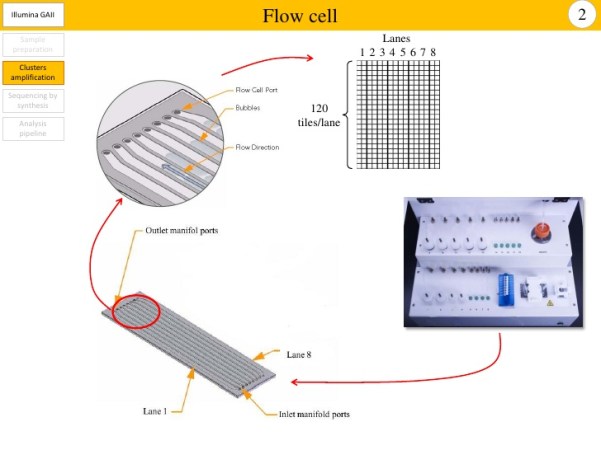
While this technique has made sequencing significantly cheaper, it adds other complications. For example, Illumina MiSeq machines generate a certain number of sequence reads (about 200 million right now) which are divided up among the samples in that run (like a pie). The samples are added to a sequencing plate or flow cell (for things like Illumina MiSeq). The flow cells have multiple lanes where samples can be added; if you add a smaller number of samples to each lane, the machine will generate more sequences per sample, and if you add a larger number of samples, each one has fewer sequences at the end of the run. you have contamination. One drawback to this is that positive controls always sequence really well, much better than your low-biomass biological samples, which can mean that your samples do not generate many sequences during a run or means that tag switching is encouraged from your high-biomass samples to your low-biomass samples.
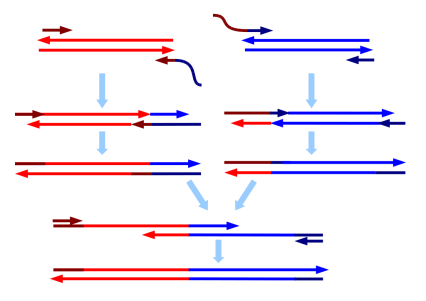
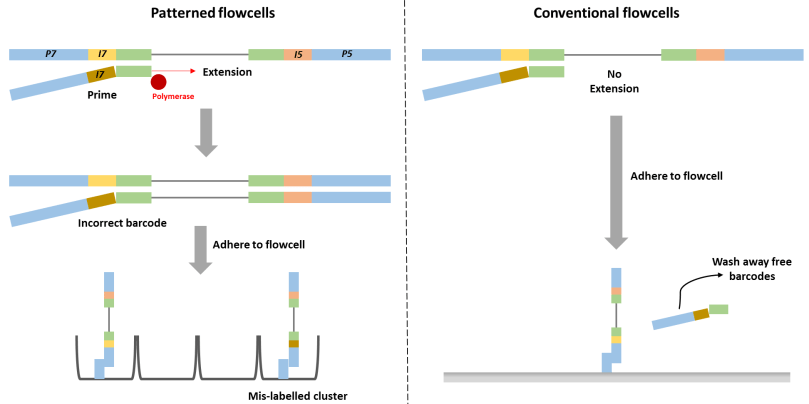
Cross-contamination can happen on a flow cell when the sample pool wasn’t thoroughly cleaned of adapters or primers, and there are great explanations of this here and here. To generate many copies of genetic code from a single strand, you mimic DNA replication in the lab by providing all the basic ingredients (process described here). To do that, you need to add a primer (just like with painting) which can attach to your sample DNA at a specific site and act as scaffolding for your enzyme to attach to the sample DNA and start adding bases to form a complimentary strand. Adapters are just primers with barcodes and the sequencing primer already attached. Primers and adapters are small strands, roughly 10 to 50 nucleotides long, and are much shorter than your DNA of interest, which is generally 100 to 1000 nucleotides long. There are a number of methods to remove them, but if they hang around and make it to the sequencing run, they can be incorporated incorrectly and make it seem like a sequence belongs to a different sample.
This may sound easy to fix, but sequencing library preparation already goes through a lot of stringent cleaning procedures to remove everything but the DNA (or RNA) strands you want to work with. It’s so stringent, that the problem of barcode swapping, also known as tag switching or index hopping, was not immediately apparent. Even when it is noted, it typically affects a small number of the total sequences. This may not be an issue, if you are working with rumen samples and are only interested in sequences which represent >1% of your total abundance. But it can really be an issue in low biomass samples, such as air or dust, particularly in hospitals or clean rooms. If you were trying to determine whether healthy adults were carrying but not infected by the pathogen C. difficile in their GI tract, you would be very interested in the presence of even one C. difficile sequence and would want to be extremely sure of which sample it came from. Tag switching can be made worse by combining samples from very different sample types or genetic code targets on the same run.
There are a number of articles proposing methods of dealing with tag switching using double tags to reduce confusion or other primer design techniques, computational correction or variance stabilization of the sequence data, identification and removal of contaminant sequences, or utilizing synthetic mock controls. Mock controls are microbial communities which have been created in the lab by mixed a few dozen microbial cultures together, and are used as a positive control to ensure your procedures are working. because you are adding the cells to the sample yourself, you can control the relative concentrations of each species which can act as a standard to estimate the number of cells that might be in your biological samples. Synthetic mock controls don’t use real organisms, they instead use synthetically created DNA to act as artificial “organisms”. If you find these in a biological sample, you know you have contamination. One drawback to this is that positive controls always sequence really well, much better than your low-biomass biological samples, which can mean that your samples do not generate many sequences during a run or means that tag switching is encouraged from your high-biomass samples to your low-biomass samples.
Incorrect base calls
Cross-contamination during sequencing can also be a solely bioinformatic problem – since many of the barcodes are only a few nucleotides (10 or 12 being the most commonly used), if the computer misinterprets the bases it thinks was just added, it can interpret the barcode as being a different one and attribute that sequence to being from a different sample than it was. This may not be a problem if there aren’t many incorrect sequences generated and it falls below the threshold of what is “important because it is abundant”, but again, it can be a problem if you are looking for the presence of perhaps just a few hundred cells.
Implications
When researching environments that have very low biomass, such as air, dust, and hospital or cleanroom surfaces, there are very few microbial cells to begin with. Adding even a few dozen or several hundred cells can make a dramatic impactinto what that microbial community looks like, and can confound findings.
Collectively, contamination issues can lead to batch effects, where all the samples that were processed together have similar contamination. This can be confused with an actual treatment effect if you aren’t careful in how you process your samples. For example, if all your samples from timepoint 1 were extracted, amplified, and sequenced together, and all your samples from timepoint 2 were extracted, amplified, and sequenced together later, you might find that timepoint 1 and 2 have significantly different bacterial communities. If this was because a large number of low-abundance species were responsible for that change, you wouldn’t really know if that was because the community had changed subtly or if it was because of the collective effect of low-level contamination.
Stay tuned for a piece on batch effects in sequencing!
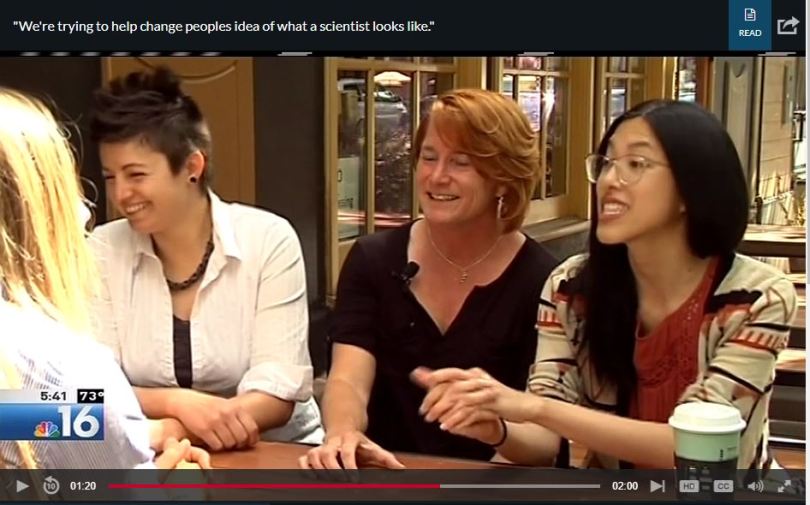
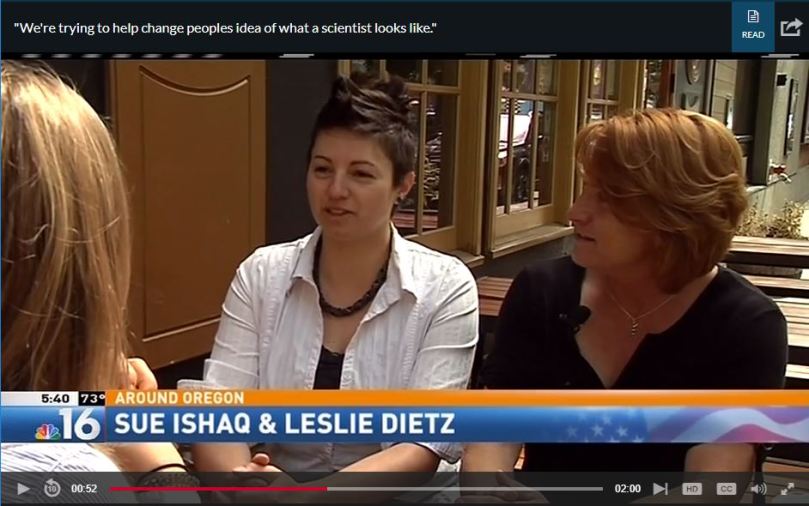
500 Women Scientists Eugene Pod Coordinators Leslie Dietz, Theresa Cheng and I sat down with KMTR reporter Kelsey Christensen today to about 500 Women Scientists in Eugene, and the Science Salons we’ve been hosting monthly since March. You can find the video clip in the link below.
Every scientist I know (myself included) underestimates how long it will take to write, edit, and submit a paper. Despite having 22 publications to date, I still set laughably-high expectations for my writing deadlines. Even though scientists go into a project with a defined hypothesis, objectives, and workflow, by the end of data analysis we often find ourselves surprised. Perhaps your assumptions were not supported by the actual observations, sometimes what you thought would be insignificant becomes a fascinating result. Either way, by the time you have finished most of the data analysis and exploration, you face the difficult task of compiling the results into a meaningful paper. You can’t simply report your data without giving them context and interpretation. I’ve already discussed the portions of scientific manuscripts and how one is composed, and here I want to focus on the support network that goes into this process, which can help shape that context that you provide to your data.
One of the best ways in which we can promote rigorous, thoughtful science is through peer-review, which can take a number of forms. It is worth noting, that peer-review also allows for professional bullying, and can be swayed by current theories and “common knowledge”. It is the journal editor’s job to select and referee reviewers (usually 2 – 4), to compile their comments, and to make the final recommendation for the disposition of the manuscript (accept, modify, reject). Reputation, and personal demographics such as gender, race, or institutional pedigree can also play a role in the quality and tone of the peer-review you receive. Nevertheless, getting an outside opinion of your work is critical, and a number of procedural changes to improve transparency and accountability have been proposed and implemented. For example, many journals now publish reviews names online with the article after it has been accepted, such that the review does not stay blind forever.
Thorough reading and editing of a manuscript takes time. Yet peer-reviewers for scientific journals almost unanimously do not receive compensation. It is an expected service of academics, and theoretically if we are all acting as peer-reviewers for each other then there should be no shortage. Unfortunately, due to the pressures of the publish-or-perish race to be awarded tenure, many non-tenured scientists (graduate students, post-docs, non-tenure track faculty, and pre-tenured tenure-track faculty) are reluctant to spend precious time on any activity which will not land them tenure, particularly reviewing. Moreover, tenured faculty also tend to find themselves without enough time to review, particularly if they are serving on a large number of committees or in an administrative capacity. On top of that, you are not allowed to accept a review if you have a conflict of interest, including current or recent collaboration with the authors, personal relationships with authors, a financial stake in the manuscript or results, etc. The peer-review process commonly gets delayed when editors are unable to find enough reviewers able to accept a manuscript, or when reviewers cannot complete the review in a timely manner (typically 2 – 4 weeks).
I have recently tried to solicit peer-review from friends and colleagues who are not part of the project before I submit to a journal. If you regularly follow my blog, you’ll probably guess that one of the reasons I do this is to catch spelling and grammatical mistakes, which I pick out of other works with hawk-like vision and miss in my own with mole-like vision. More importantly, trying to communicate my work to someone who is not already involved in the project is a great way to improve my ability to effectively and specifically communicate my work. Technical jargon, colloquial phrasing, sentence construction, and writing tone can all affect the information and data interpretation that a reader can glean from your work, and this will be modulated by the knowledge background of the reader.
I’ve learned that I write like an animal microbiologist, and when writing make assumptions about which information is common knowledge and doesn’t need a citation or to be included at all because it can be assumed. However, anyone besides animal microbiologists who have been raised on different field-specific common knowledge may not be familiar with the abbreviations, techniques, or terms I use. It may seem self-explanatory to me, but I would rather have to reword my manuscript that have readers confuse the message from my article. Even better, internal review from colleagues who are not involved with the project or who are in a different field can provide valuable interdisciplinary perspective. I have been able to apply my knowledge of animal science to my work in the built environment, and insights from my collaborators in plant ecology have helped me broaden my approach towards both animals and buildings.
No scientific article would be published without the help of the journal editorial team, either, who proof the final manuscript, verify certain information, curate figures and tables, and type-set the final version. But working backwards from submission and journal staff, before peer-review and internal peer-review, there are a lot of people that contribute to a scientific article who aren’t necessarily considered when contemplating the amount of personnel needed to compose a scientific article. In fact, that one article represents just the tip of the iceberg of people involved in that science in some way; there are database curators, people developing and maintaining open-source software or free analysis programs, laboratory technicians, or equipment and consumables suppliers. Broadening our definition of science support network further includes human resources personnel, sponsored projects staff who manage grants, building operational personnel who maintain the building services for the laboratory, and administrative staff who handle many of the logistical details to running a lab. It takes a village to run a research institution, to publish a scientific article, to provide jobs and educational opportunities, and to support the research and development which fuels economic growth. When it comes time to set federal and state budgets, it bears remembering that that science village requires financial support.
I’ve got quite a busy summer ahead! You’ll be able to find me at:
June 22, 2018: The HOMEChem Open House at the UT Austin Test House , University of Texas at Austin’s J.J. Pickle Research Campus. I’ll be meeting with BioBE collaborators to discuss pilot projects exploring the link between indoor chemistry and indoor microbiology.
July 15 – 20, 2018: The Microbiology of the Built Environment (MoBE) Gordon Research Conference, University of New England in Biddeford, ME. BioBE’s Dr. Jessica Green is meeting Vice Chair.
July 22 – 28, 2018: Indoor Air 2018 Conference in Philadelphia, PA. I’ll be presenting some of the work I’ve been part of, exploring the effect of weatherization on bacteria indoors.
In 2016, I was a post-doc in the Menalled Lab, which studies plant and weed ecology in the context of agricultural production and sustainability. There, I assessed soil bacterial communities under different farming management practices and climate scenarios. I also helped to develop a grant proposal, which was just accepted by the USDA AFRI NIFA Agricultural Production Systems! Leading this project is Dr. Fabian Menalled (as Principal Investigator, or PI), along with a number of other PIs; Dr. Amy Trowbridge, Dr. David Weaver, Dr. Tim Seipel, Dr. Maryse Bourgault, and Dr. Carl Yeoman, and collaborators Dr. Darrin Boss, Dr. Kate Fuller, Dr. Ylva Lekberg, and myself as a subaward PI. I will again be providing microbial community analysis for this project, and collectively the project investigators will bring expertise in plant ecology, agronomy, economics, soil and plant chemistry, microbial ecology, agroecosystems, and more.
This research and extension project focuses on the needs of dryland agricultural stakeholders and it was designed in close collaboration with the NARC Advisory Board. While I was only able to attend one meeting, other team members regularly meet with Montana producers to discuss current issues and identify locally-sourced needs for agricultural research. During this project, we will continue to meet with the NARC Advisory Board to share our results, evaluate implications, and better serve the producer community.
Diversifying cropping systems through cover crops and targeted grazing: impacts on plant-microbe-insect interactions, yield and economic returns.
Project summary
The semi-arid section of the Northern Great Plains is one of the
largest expanses of small grain agriculture and low-intensity livestock
production. However, extreme landscape simplification, excessive reliance on
off-farms inputs, and warmer and drier conditions hinder its agricultural
sustainability. This project evaluates the potential of diversifying this region
through the integration of cover crops and targeted grazing. We will complement
field and greenhouse studies to appraise the impact of system diversity,
temperature, and precipitation on key multi-trophic interactions, yields, and
economic outputs. Specifically, we will 1) Assess ecological drivers as well as
agronomic and economic consequences of integrating cover crops and livestock
grazing in semi-arid systems, 2) Evaluate how climate variability modify the
impacts of cover crops and livestock grazing on agricultural outputs. Specifically,
we will 2.1) Compare the effect of increased temperature and reduced moisture
on agronomic and economic performance of simplified and diversified systems,
2.2.) Assess the impact of climate and system diversity on associated biodiversity
(weeds, insect, and soil microbial communities) and above- and belowground
volatile organic (VOC) compound emissions, and 2.3) Evaluate how changes in
microbially induced VOCs influence multitrophic plant-insect interactions.
Objectives
Assess key ecological drivers as well as agronomic and economic consequences of integrating cover crops and livestock grazing in semi-arid production systems
Compare the agronomic and economic performance of simplified and diversified systems
Assess the impact of cover crops and livestock grazing on the associated biodiversity (weeds, insects, and the soil microbiota)
Evaluate how climate conditions modify the impacts of cover crops and livestock grazing on semi-arid production systems
Compare the effect of temperature and soil moisture on agronomic and economic performance of simplified and diversified systems
Assess the impact of climate and system diversity on associated biodiversity and above- and belowground volatile organic compound (VOC) emissions
Evaluate how changes in VOCs emissions influence important multitrophic interactions such as resistance to wheat stem sawfly and natural enemy host location cues
Integrate the knowledge generated into an outreach program aimed at improving producers’ adoption of sustainable diversified crop-livestock systems
It’s been a really busy spring so far, so much so that I haven’t had much chance to write about it! Here is a brief overview of what I’ve been up to.
Research
This past year has easily produced the largest number of research topics I have been working on concurrently. In addition to publishing a paper on the rumen in cattle last September, I have been working on a paper on the rumen of yearling rams which is currently in preparation and due to be submitted to a scientific journal for review soon. I still have several small projects in development from my post-doc in the Yeoman lab, as well as a number of grad-student-led papers that are still pending, and was invited to contribute to a scientific review which is also in preparation.
I’ve been working through the large dataset of soil samples from my post-doc in the Menalled lab. That large project has blossomed into four papers thus far, two of which I’m writing on the soil bacteria, and one of which I am co-authoring on the legacy effects of climate change. Those four are also due for submission to scientific journals for review soon. The Menalled lab just received a grant award from USDA AFRI NIFA, on which I am a (subaward) PI and to which I will be contributing soil bacterial community analysis.
The rumen and soil work over the past year has been entirely in my spare time, however, as my position in the Biology and the Built Environment Center has kept me delightful busy. I have been collaboratively processing a large and complex dataset on weatherization, home operation and lifestyle, indoor air quality, and microorganisms in dust, which I will be presenting at two (possibly three) conferences this summer. I have also been collaboratively writing grant proposals, and while those are still in development or pending review, they span everything from light, to chemistry, to plants and living machines, to hospitals, to social networks in buildings. I hope to further develop some of these collaborations with a short trip at the end of June to the University of Austin, Texas’ Test House.
In addition, I have been assisting in the planning, development, and launch of the University of Oregon’s Institute for Health in the Built Environment. The Institute will facilitate collaboration and information sharing between researchers and industry professionals, with the goal of researching, building, and promoting healthier built environments. The Institute just hosted its #BuildHealth2018 Consortium meeting in Portland, OR, at which I presented some of the results from that large weatherization study regarding indoor plants. The meeting was fantastic, and spurred in-depth discussion on problems facing industry professionals, innovative research goals, and a wealth of new possibilities.
Outreach
In the past few months, I’ve spent a lot of my spare time helping to develop the Eugene Pod of 500 Women Scientists, an organization created to promote diversity, equity, and inclusion in science, and to promote education and interactive between scientists and the general public. We have focused on hosting monthly Science Salon events, four to date, to do just that. I presented at the first one, and have helped organize and MC the others. The Eugene Pod’s activities were just featured on the central 500 WS page, as Pod of the Week, and you can also follow our updates and events on our Facebook page.
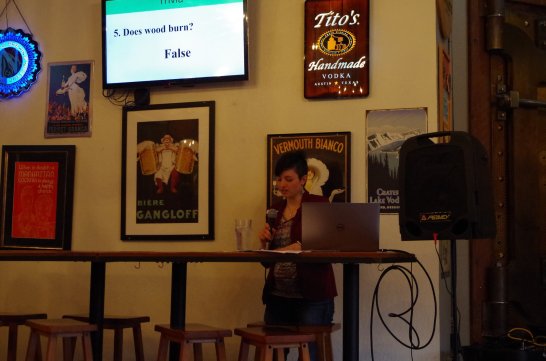
Running trivia on fire and fungi.
While it has been a struggle to maintain regular contributions, I still maintain Give Me the Short Version, along with a few intrepid contributors, which summarizes scientific articles for easier consumption. This spring, I spent several days judging STEM and robotics competitions for several local Eugene middle and high schools, which has been a lot of fun. The student projects are enthusiastic and creative, and I appreciate the chance to assist in these programs in some small way.
Today I'm judging a middle school #Robotics competition, for their #STEM research award. I'm so excited to see what these kids created! #sciencesaturday
I have continued to mentor UO students. The post-bac student from the BioBE lab that was learning bioinformatics with me, Mitch Rezzonico, was accepted to the University of Oregon’s Bioinformatics and Genomics Master’s Program! Mitch wrapped up his work this spring to prepare for the intensive program, and with his interest in health research, BioBE hopes to work with him again in the future. BioBE recently hired an undergraduate student for science communication, Mira Zimmerman. Mira has been making some upgrades to the BioBE and ESBL websites which will continue to be rolled out over the next few months. In addition, she will be helping me develop informative blog posts on the built environment, and helping to grow our information dissemination capabilities. Hiring a student as a science communicator was something I had been hoping to test out, and so far it’s been a smashing success.
Teaching
My course proposal for “Introduction to Mammalian Microbiomes” was accepted by the University of Oregon Clark Honor’s College for the fall term!
In April, I gave a guest lecture to Mark Fretz’s Design the Unseen course at the University of Oregon, on the Indoor Microbiome. The class was populated by architecture students, who were learning about integrating health considerations into design strategies. As a final project, students design a brief field experiment or intervention strategy for a design assistance project with Portland firms. I assisted one group in designing a small experiment on natural daylighting in an office and the effect on E. coli growth on culture plates – more on those results soon!
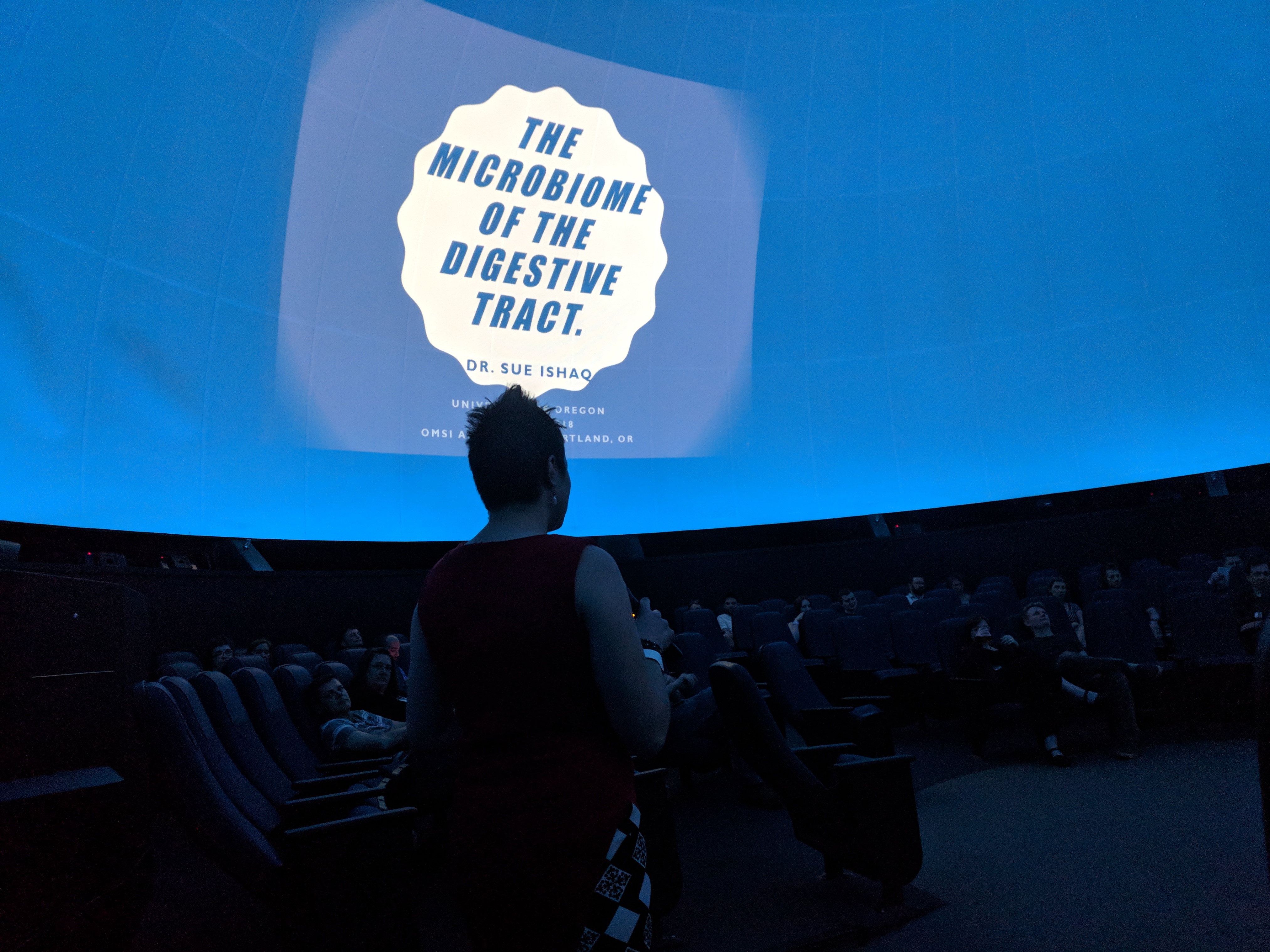
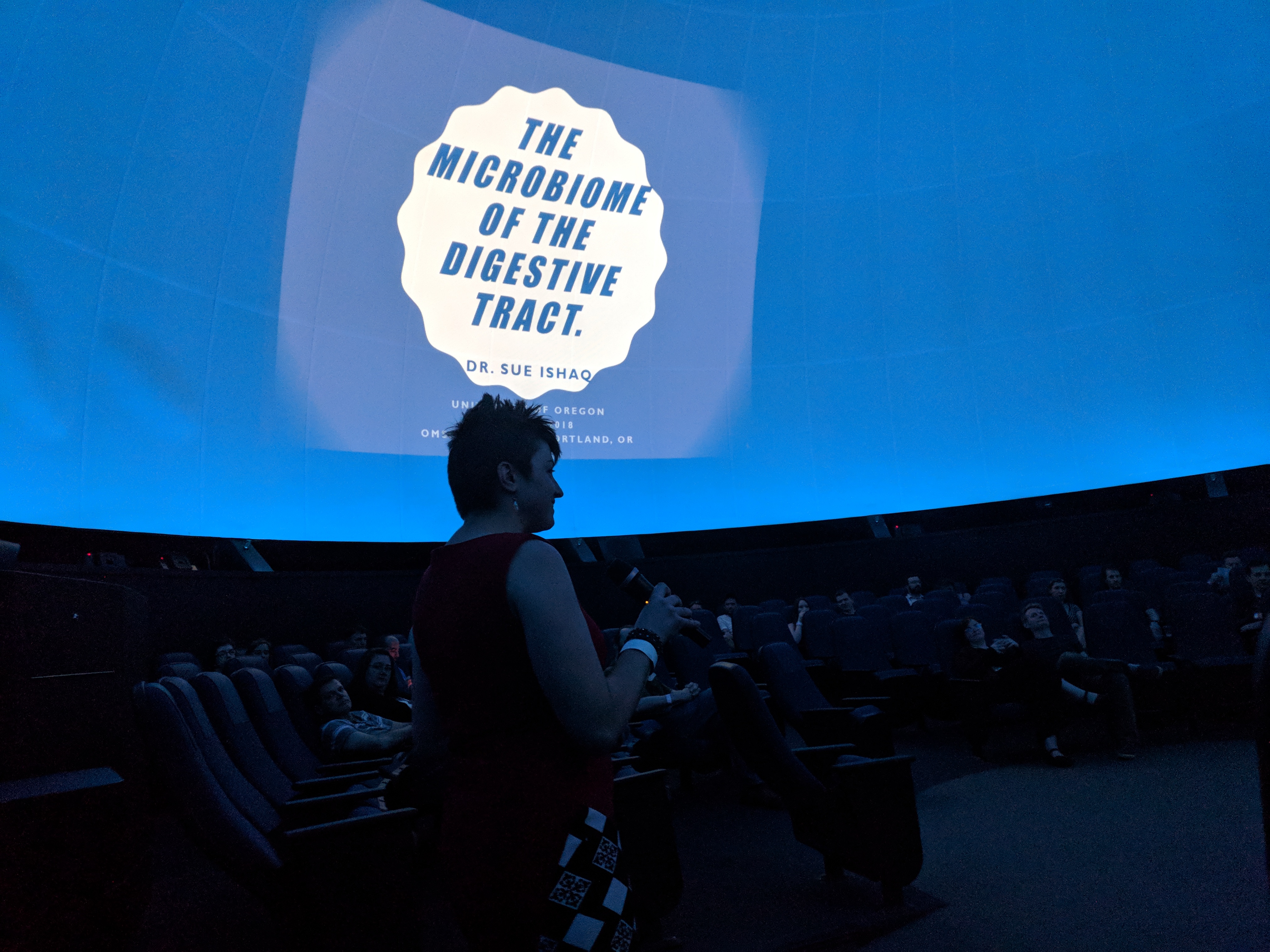
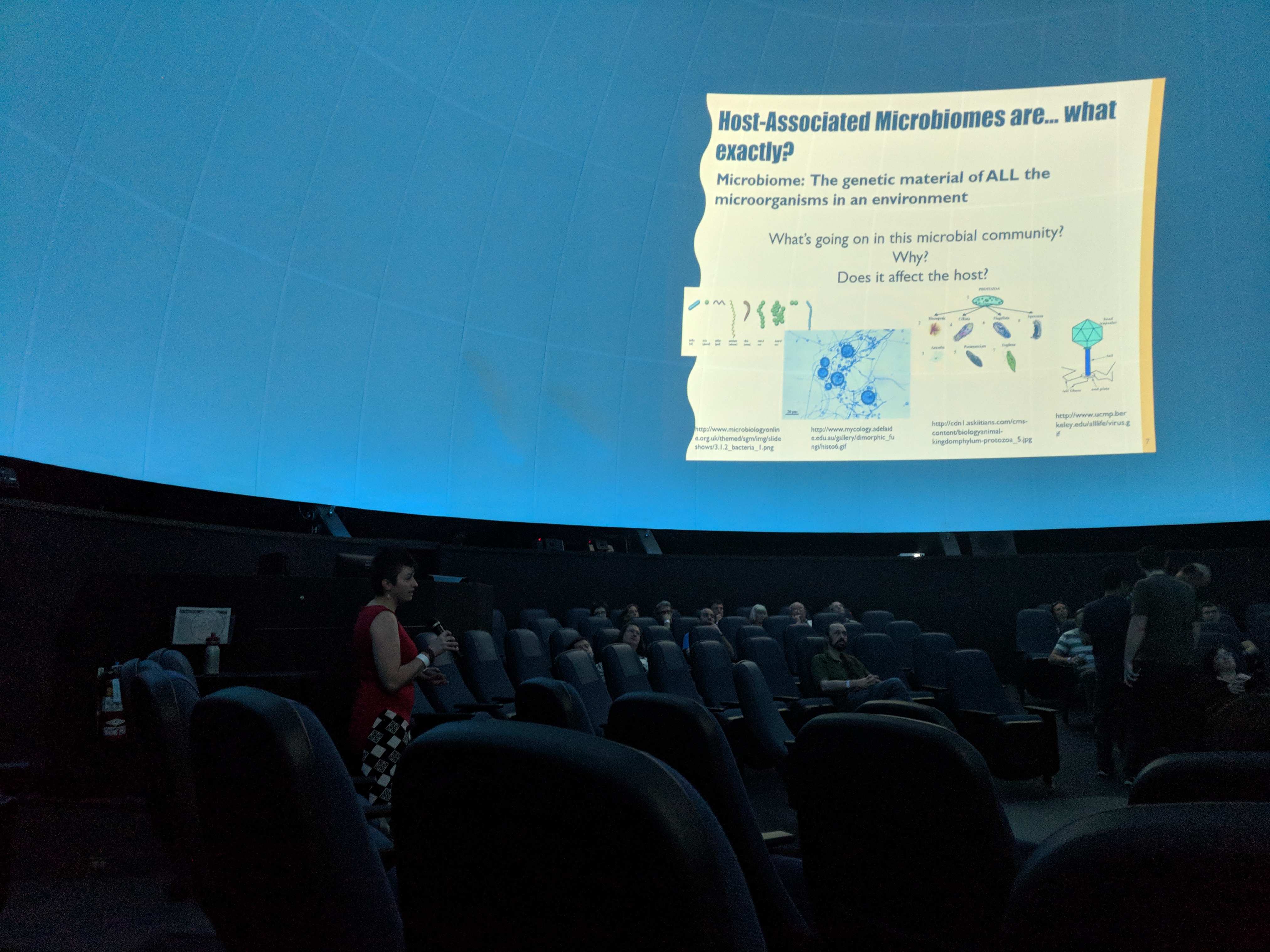
Later that same day, I have a lecture at the Oregon Museum of Science and Industry in Portland, as part of their OMSI After Dark series which opens the museum after-hours to adults for hands-on activities and lectures. The lecture was on the gut microbiome, and I was able to present in the Planetarium!
Last night I participated in the Oregon Museum of Science and Industry (OMSI) After Dark event: “It’s Alive! (Mind and Body)”. OMSI regularly puts on After Dark events, where adults can check out the museum, listen to lectures in the planetarium, and engage in interactive science experiments and activities, all while enjoying an open bar. Last night, I had a great time giving a short presentation on “Ishaq OMSI After Dark 20180425“!