New publication on rumen microbes which may have uses in biofuel production

A scientific article led by my colleague Dr. Alaa Rabee at the Desert Research Center in Egypt was just published online and is now available! Dr. Rabee and I have been collaborating remotely on projects related to the bacteria in the rumen of camels, sheep, and cows, as Dr. Rabee’s work focuses on the isolation of bacteria which can degrade plant materials efficiently and could be used to produce biofuels. He will be spending 6 months working in my lab as a visiting scholar, which was delayed until this year because of the pandemic.


Rabee, A.E., Sayed Alahl, A.A., Lamara, M., Ishaq, S.L. 2022. Fibrolytic rumen bacteria of camel and sheep and their applications in the bioconversion of barley straw to soluble sugars for biofuel production. PLoS ONE 17(1): e0262304. Article.

Abstract

Lignocellulosic biomass such as barley straw is a renewable and sustainable alternative to traditional feeds and could be used as bioenergy sources; however, low hydrolysis rate reduces the fermentation efficiency. Understanding the degradation and colonization of barley straw by rumen bacteria is the key step to improve the utilization of barley straw in animal feeding or biofuel production. This study evaluated the hydrolysis of barley straw as a result of the inoculation by rumen fluid of camel and sheep. Ground barley straw was incubated anaerobically with rumen inocula from three fistulated camels (FC) and three fistulated sheep (FR) for a period of 72 h. The source of rumen inoculum did not affect the disappearance of dry matter (DMD), neutral detergent fiber (NDFD). Group FR showed higher production of glucose, xylose, and gas; while higher ethanol production was associated with cellulosic hydrolysates obtained from FC group. The diversity and structure of bacterial communities attached to barley straw was investigated by Illumina Mi-Seq sequencing of V4-V5 region of 16S rRNA genes. The bacterial community was dominated by phylum Firmicutes and Bacteroidetes. The dominant genera were RC9_gut_group, RuminococcusSaccharofermentansButyrivibrioSucciniclasticumSelenomonas, and Streptococcus, indicating the important role of these genera in lignocellulose fermentation in the rumen. Group FR showed higher RC9_gut_group and group FC revealed higher RuminococcusSaccharofermentans, and Butyrivibrio. Higher enzymes activities (cellulase and xylanase) were associated with group FC. Thus, bacterial communities in camel and sheep have a great potential to improve the utilization lignocellulosic material in animal feeding and the production of biofuel and enzymes.

MSE special session at ASM Microbe 2022 conference

The Microbes and Social Equity working group is putting together a special session at the American Society for Microbiology’s annual Microbe meeting, which will be held in Washington, D.C. from June 9 – 13, 2022.

CTS16 (PPS). Microbes and Social Equity: the Microbial Components of Social, Environmental, and Health Justice

June 11, 2022, 1:45 PM – 3:45 PM

Room 206

DESCRIPTION

Microorganisms are critical to many aspects of biological life, including human health. The collective microbial community, our microbiome, can be impacted by the details of our lifestyle, including diet, hygiene, health status, and more, but many are driven by social, economic, medical, or political constraints that restrict available choices that may impact our health. Access to resources is the basis for creating and resolving social equity, access to healthcare, healthy foods, a suitable living environment, and to beneficial microorganisms, but also access to personal and occupational protection to avoid exposure to infectious disease. This special session explores the way that microbes connect public policy, social disparities, and human health, as well as the ongoing research, education, policy, and innovation in this field.

5 Presentations

1:45 PM – 3:45 PMMicrobes and Social Equity: the Microbial Components of Social, Environmental, and Health Justice
Suzanne Ishaq; Univ. of Maine, Orono, ME
1:45 PM – 2:15 PMInvited Speaker
Monica Trujillo; Queensborough Community Coll., New York, NY
2:15 PM – 2:45 PMInvited Speaker
Ariangela Kozik; Univ. of Michigan, Ann Arbor, MI
2:45 PM – 3:15 PMInvited Speaker
Carla Bonilla; Gonzaga Univ., Spokane, WA
3:15 PM – 3:45 PMPanel Discussion

Upon completion of this Cross-Track Symposium, the participant should be able to:

  • Recognize the connections that microbiomes have to social equity. This will be demonstrated with examples/case studies presented by speakers.
  • Discuss relevant issues in microbiomes and their connection to social equity and identify issues which could be explored further.
  • Appraise your own work for these connections between microbiomes and social equity, to designate places for professional growth and applying equitable design.

Track(s)/Subtrack(s)Host Microbe Biology

UMaine has an open position for an Assistant Professor of Integrative Avian Biology

Position Title: Assistant Professor of Integrative Avian Biology (id:73435)

Campus: Orono, Maine

Department:School of Biology & Ecology – OSBE

Bargaining Unit: AFUM

Salary Band/Wage Band: N/A

Details and Application: https://umaine.hiretouch.com/job-details?jobid=73435

Search Timeline is as follows:
Review of applications to begin: February 4, 2022
Screening interviews to begin no earlier than: March 1, 2022
On-site interviews to begin no earlier than: April 1, 2022
Tentative start date: August 29, 2022

For questions about the search, please contact search committee chair Dr. Danielle Levesque at danielle.l.levesque@maine.edu or 207-581-2511.

Statement of the Job:

The School of Biology and Ecology seeks integrative avian biologist for a 9-month academic year, full-time, tenure track position at the Assistant Professor level. We are interested in a broadly trained scientist who addresses physiological, neurobiological, immunological or endocrinological questions using birds as a study system. This position will contribute to growing departmental strengths in organismal physiology, global change biology, one health, biomedical sciences, ecology, biogeography, and evolution. 

Essential Duties & Responsibilities: This position is 50% teaching and 50% research. The successful candidate is expected to establish an externally funded research program that complements current research in organismal biology in the School of Biology and Ecology and other units in the College of Natural Sciences, Forestry and Agriculture (NSFA). We seek avian biologists who will build on existing strengths in integrative organismal biology and ecology on campus. Areas of particular interest include endocrinology, eco-immunology, and neurobiology using either field or lab-based studies. The ability to develop research relevant to Maine’s natural resource conservation, forestry, or agricultural industries is also desirable, as well as the capacity to provide assistance to stakeholders and other researchers as part of Maine’s Land Grant mission.

The successful candidate will be responsible for teaching upper-level undergraduate courses such as avian biology, animal behavior, and endocrinology. The faculty member will also be expected to contribute to the enhancement of the breadth of research areas for the growing demands of undergraduate capstone experience and honors thesis research at SBE and other departments.

MSE paper published on “Twenty important research questions in microbial exposure and social equity”

The Microbes and Social Equity working group has published its second collaborative paper together, led by Dr. Jake Robinson and featuring 25 other MSE group researchers in various fields related to microbiomes, social equity, and ecosystems. In developing this paper, we had many conversations about what had been accomplished in research related to microbial exposure, as well as what had yet to be done. We provide some background information as context, and spend the majority of the paper outlining twenty of the most poignant research directions. There are so many questions yet to be answered about the way the microbial communities interact with human lives, and how our lives impact them back. In our enthusiasm for the topics, we could have endlessly chatted about research, such that we decided to limit ourselves to twenty questions. We hope that this piece becomes a source for inspiration for others who continue this conversation and future research in these areas.

You can find a link below to read the full article, and links to the authors’ twitter feeds if you’d like to check them out on social media. You’ll be able to hear more about this publication in an upcoming seminar from Jake, as part of the 2022 MSE speaker series, which is open to all and free to attend over zoom.


Robinson, J.M., Redvers, N., Camargo, A., Bosch, C.A., Breed, M.F., Brenner, L.A., Carney, M.A., Chauhan, A., Dasari, M., Dietz, L.G., Friedman, M., Grieneisen, L., Hoisington, A.J., Horve, P.F., Hunter, A., Jech, S., Jorgensen, A., Lowry, C.A., Man, I., Mhuireach, G., Navarro-Pérez, E., Ritchie, E.G., Stewart, J.D., Watkins, H., Weinstein, P., and Ishaq, S.L. 2022. Twenty important research questions in microbial exposure and social equity. mSystems 7(1): e01240-21. Special Series: Social Equity as a Means of Resolving Disparities in Microbial Exposure

ABSTRACT

Social and political policy, human activities, and environmental change affect the ways in which microbial communities assemble and interact with people. These factors determine how different social groups are exposed to beneficial and/or harmful microorganisms, meaning microbial exposure has an important socioecological justice context. Therefore, greater consideration of microbial exposure and social equity in research, planning, and policy is imperative. Here, we identify 20 research questions considered fundamentally important to promoting equitable exposure to beneficial microorganisms, along with safeguarding resilient societies and ecosystems. The 20 research questions we identified span seven broad themes, including the following: (i) sociocultural interactions; (ii) Indigenous community health and well-being; (iii) humans, urban ecosystems, and environmental processes; (iv) human psychology and mental health; (v) microbiomes and infectious diseases; (vi) human health and food security; and (vii) microbiome-related planning, policy, and outreach. Our goal was to summarize this growing field and to stimulate impactful research avenues while providing focus for funders and policymakers.

2021 Year in Review

This has been a busy year for the Ishaq Lab, which has been at UMaine since September of 2019 and has built up significant momentum in that time, despite the ongoing challenges of trying to accomplish research and education during a pandemic.

Team

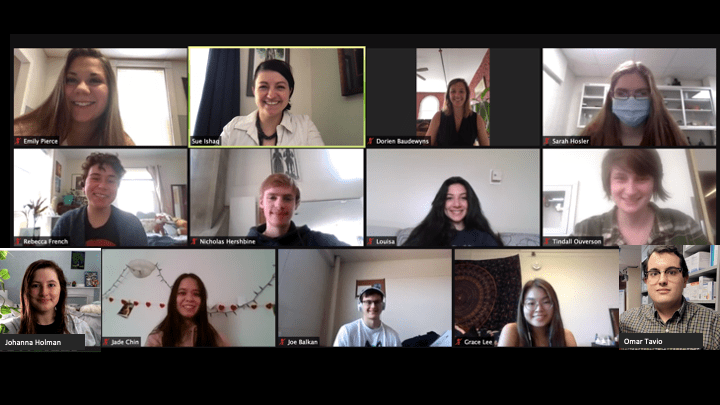
The Ishaq Lab managed to find time to get a group photo early this year.

Graduate and undergraduate students are critical members of the Ishaq Lab, where they assist with or perform their own research, and are both mentored by me or are being cross-trained by me to complement the work they perform in their primary lab. A crowd of students have been in the Ishaq Lab over the course of this year, which wasn’t apparent until I tallied them for research outcomes reporting purposes, as some are partially or entirely remote, and we’ve never all gathered in one place. Partly, because of pandemic safety precautions, and partly, because of busy schedules, the entire research group had not been able to meet in person for most of the last two years, and it was only this year that we finally got a group photo. Of course, that photo was almost immediately inaccurate as we welcomed several new members this fall to add to our collective expertise.

Students mentored09/2019-06/202007/2020 – 06/202107/2021-06/2022
Total all92824
PhD, committee member123
MS, primary mentor022
MS, committee member232
MPS, primary mentor110
Honors, primary mentor120
Honors, committee member011
Capstone11012
Top Scholar011
BS, primary mentor200
REU111
Summary of students working in or with the Ishaq Lab, by academic year.

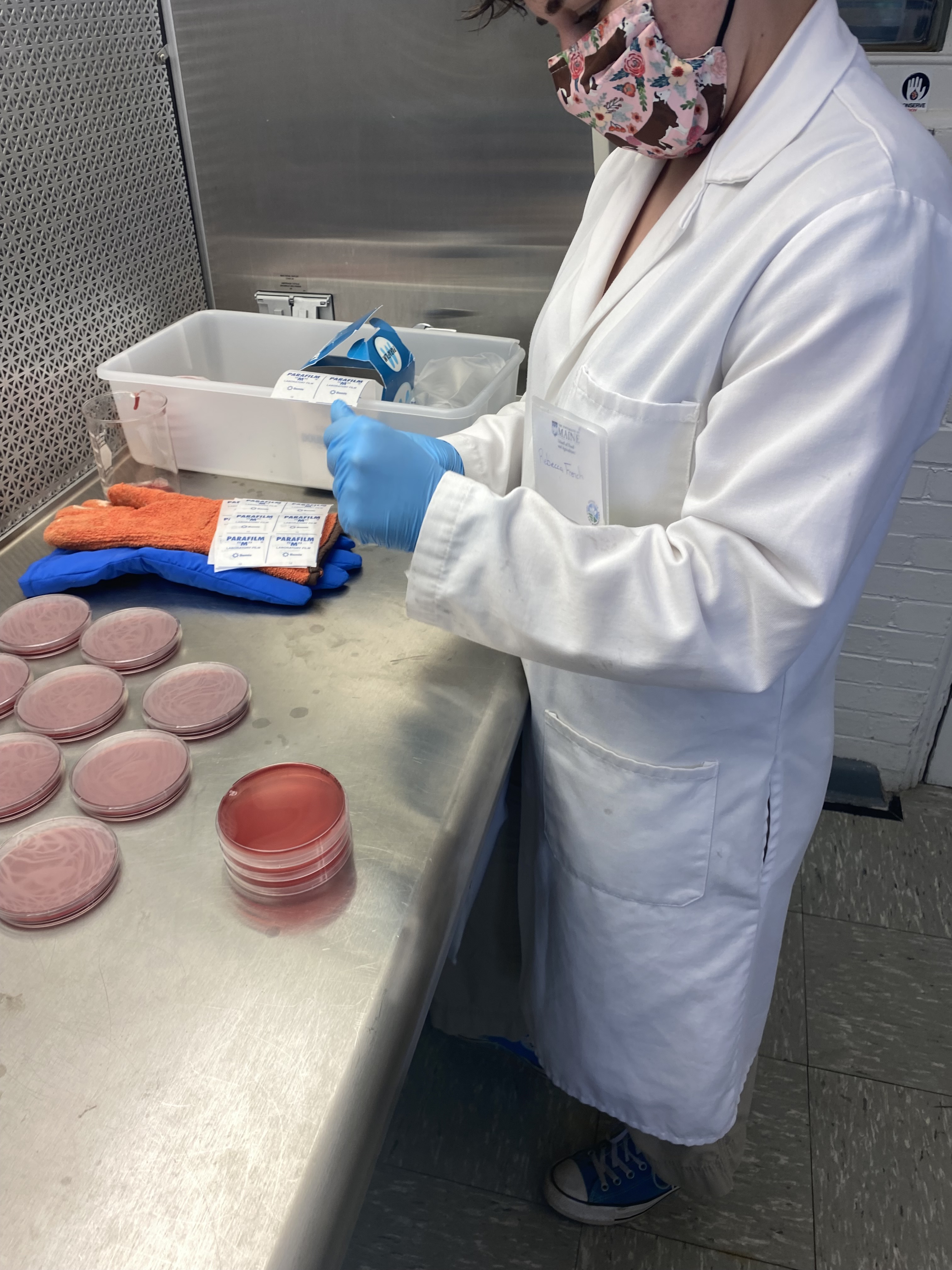
Despite the challenges of the pandemic and a busy school schedule, the students did phenomenal work. Nick Hershbine who was working on soil bacterial communities was named a 2020-2021 University of Maine Undergraduate Student Employee of the Year, and Johanna Holman who is leading the mouse microbiome diet studies was named a 2020-2021 University of Maine Graduate Student Employee of the Year. Tindall Ouverson who was working on soil bacterial communities in Montana won first prize in the graduate students poster competition at the 2021 Montana State University LRES research colloquium. Rebecca French who is part of the ‘squirrel crew’ was awarded a 2021 research award from the J. Franklin Witter Undergraduate Research Endowment Fund, and several students had their first paper published or first scientific presentation (those are listed below). Sarah Hosler has been managing three research projects, involving over a hundred samples and the training/oversight of seven undergraduate researchers.

My dog, Izzy, started coming to campus this fall to avoid some home construction, but she immediately became part of campus life. She would come to classes and entertain and calm the students, distract Zoom meetings by trying to climb out the window behind me, and helped catalogue all the squirrels on campus.

This year, the Ishaq lab said hello as well as good-bye to students, as we have been around long enough that students are matriculating (graduating) out and moving on to the next stage of their life. Emily Pierce (B.S. AVS 2021) is now attending veterinary school at Kansas State, and Jade Chin (B.S. AVS 2022) is attending Glasgow University for her senior year and veterinary school as part of their accelerated training program, while Grace Lee graduated from Bowdoin College (B.S. Neuroscience, 2021) and has been working there as a research assistant. Grace is a co-author with me on a paper currently in review, and other in preparation. Tindall defended her master’s of science thesis at Montana State University in August, and has been working as a research assistant performing more plant-soil feedback research while she finishes writing up the results from her graduate work for journal publication.

Publications

A stack of papers facedown on a table.

We had a productive year for peer-reviewed journal publications – with 8 accepted or published – the second highest total in a year I’ve ever had. Several of these have been in development since prior to 2021, several are the first publications for students, and all of which are thanks to my fabulous research collaboration team that now spans the globe. There are handful more papers in peer review at scientific journals, and others which are in preparation and which we hope to submit for peer review in 2022.

  1. Tindall’s first and first first-authored paper, on soil microbiomes:
    1. Ouverson, T., Eberly, J., Seipel, T., Menalled, F.D., Ishaq, S.L. 2021. Temporal soil bacterial community responses to cropping systems and crop identity in dryland agroecosystems of the Northern Great Plains.  Frontiers in Sustainable Food Systems.  Article. Invited submission to Plant Growth-Promoting Microorganisms for Sustainable Agricultural Production  special collection.
  2. Olivia Choi‘s first first-authored paper (Kamath lab), on Salmonella in wild birds:
    1. Choi, O., Corl, A., Lublin, A., Ishaq, S.L., Charter, M., Pekarsky, S., Thie, N., Tsalyuk, M., Turmejan, S., Wolfenden, A., Bowie, R.C.K., Nathan, R., Getz, W.M., Kamath, P.L. 2021. High-throughput sequencing for examining Salmonella prevalence and pathogen – microbiota relationships in barn swallowsFrontiers in Ecology and Evolution 9:681.
  3. A paper featuring Adwoa Dankwa (Perry lab) and Usha Humagain (lab), which came about from my AVS 454/554 class:
    1. Dankwa, A.S., U. Humagain, S.L. Ishaq, C.J. Yeoman, S. Clark , D.C. Beitz, and E. D. Testroet. 2021. Determination of the microbial community in the rumen and fecal matter of lactating dairy cows fed on reduced-fat dried distillers grains with solubles. Animal 15(7):100281. Article.
  4. A paper featuring Alice Hotopp (Cammen Lab) and Sam Silverbrand (Kinnison lab), which came about from my AVS 454/554 class:
    1. Ishaq, S.L., A. Hotopp, S. Silverbrand, J.E. Dumont, A. Michaud, J. MacRae, S. P. Stock, E. Groden. 2021. Bacterial transfer from Pristionchus entomophagus nematodes to the invasive ant Myrmica rubra and the potential for colony mortality in coastal Maine. iScience 24(6):102663. Article.
  5. A paper to which I contributed:
    1. Zeng, H., Safratowich, B.D., Liu, Z., Bukowski, , M.R., Ishaq, S.L. 2021. Adequacy of calcium and vitamin D reduces inflammation, β-catenin signaling, and dysbiotic Parasutterella bacteria in the colon of C57BL/6 mice fed a Western-style diet. Journal of Nutritional Biochemistry 92: 108613. Article.
  6. The Microbes and Social Equity working group, described below, also had a debut publication
    1. Ishaq, S.L., Parada, F.J., Wolf, P.G., Bonilla, C.Y., Carney, M.A., Benezra, A., Wissel, E., Friedman, M., DeAngelis, K.M., Robinson, J.M., Fahimipour, A.K., Manus, M.B., Grieneisen, L., Dietz, L.G., Pathak, A., Chauhan, A., Kuthyar, S., Stewart, J.D., Dasari, M.R., Nonnamaker, E., Choudoir, M., Horve, P.F., Zimmerman, N.B., Kozik, A.J., Darling, K.W., Romero-Olivares, A.L., Hariharan, J., Farmer, N., Maki, K.A., Collier, J.L., O’Doherty, K., Letourneau, J., Kline, J., Moses, P.L., Morar, N. 2021.  Introducing the Microbes and Social Equity Working Group: Considering the Microbial Components of Social, Environmental, and Health JusticemSystems 6:4. Special Series: Social Equity as a Means of Resolving Disparities in Microbial Exposure
  7. Many MSE members also put together a review and perspective piece about setting research priorities:
    1. Robinson, J.M., Redvers, N., Camargo, A., Bosch, C.A., Breed, M.F., Brenner, L.A., Carney, M.A., Chauhan, A., Dasari, M., Dietz, L.G., Friedman, M., Grieneisen, L., Hoisington, A.J., Horve, P.F., Hunter, A., Jech, S., Jorgensen, A., Lowry, C.A., Man, I., Mhuireach, G., Navarro-Pérez, E., Ritchie, E.G., Stewart, J.D., Watkins, H., Weinstein, P., and Ishaq, S.L. 2021. Twenty important research questions in microbial exposure and social equity. mSystems Accepted Dec 2021. Special Series: Social Equity as a Means of Resolving Disparities in Microbial Exposure
  8. The first paper from a two year collaboration with Dr. Rabee, a researcher in Eqypt who is planning to visit my lab in 2022 as part of a fellowship he was awarded.
    1. Rabee, A.E., Sayed Alahl, A.A., Lamara, M., Ishaq, S.L. 2022. Fibrolytic rumen bacteria of camel and sheep and their applications in the bioconversion of barley straw to soluble sugars for biofuel production. PLoS ONE Accepted Dec 2021.

Presentations

The Ishaq lab and our collaborators gave virtual presentations this year to scientific audiences, as well as to grade k-12 students, to students and faculty as guest seminars, and as media/news interviews. I particularly enjoyed my chat on “Animal Microbiomes”, hosted by Sheba A-J on the WeTalkScience podcast. Students Emily Pierce, Myra Arshad, Johanna Holman, Joe Balkan, Louisa Colucci, Olivia Choi, Alice Hotopp, Sarah Hosler, and Grace Lee also gave or contributed to presentations in 2021.

  1. Ishaq, S. Introducing the Microbes and Social Equity Working Group: Considering the Microbial Components of Social, Environmental, and Health Justice. inVIVO Planetary Health. virtual. Dec 1 – 7, 2021. (invited) 
  2. Holman* J., Ishaq S.L.., Li Y., Zhang T., Balkan J., Colucci L. Prevention of inflammatory bowel disease by broccoli-sourced and microbially-produced bioactives. Video presented at: OHS Student Led Research Panel, UC Davis; Nov 2021.
  3. Arshad*, M., Fludgate, P., Emera Rabee, A., Ishaq, S. “Preliminary results of camel rumen microbial make up”. Council on Undergraduate Research (CUR) Research Experiences for Undergraduates (REU) Symposium. (virtual). Oct 25, 2021.
  4. Choi*, O.N., Corl, A., Wolfenden, A., Lublin, A., Ishaq, S.L., Turjeman, S., Getz, W.M., Nathan, R., Bowie, R.C.K., Kamath, P.L. “High-throughput sequencing for examining Salmonella prevalence and pathogen -microbiota relationships in barn swallows.”  69th Annual – 14th Biennial Joint Conference of the Wildlife Disease Association & European Wildlife Disease Association (virtual) Aug 31 – Sept 2, 2021.
  5. The Microbes and Social Equity Working group, “Special Session 17: “Microbiomes and Social Equity” (19205).”, Ecological Society of America 2021. (virtual). Aug 5, 2021.36.
  6. Ishaq*, S.L., Lee, G., MacRae, J., Hamlin, H., Bouchard, D. “The effect of simulated warming ocean temperatures on the bacterial communities on the shells of healthy and epizootic shell diseased American Lobster (Homarus americanus).” Ecological Society of America 2021. (virtual). Aug 2-6, 2021. (accepted talk)
  7. Hotopp*, A., Silverbrand, S., Ishaq, S.L., Dumont, J., Michaud, A.,  MacRae, J.,  Stock, S.P.,  Groden, E. “Can a necromenic nematode serve as a biological Trojan horse for an invasive ant?” Ecological Society of America 2021. (virtual). Aug 2-6, 2021. (poster)
  8. Holman*, J., Ishaq, S.L., Li, Y., Zhang, T.. Prevention of Inflammatory Bowel Disease by Broccoli-sourced and Microbially-produced BioactivesASM Microbe/ISME World Microbe Forum 2021 (virtual). June 20-24, 2021. (poster)
  9. Ishaq*, S.L., Lee, G., MacRae, J., Hamlin, H., Bouchard, D. The Effect Of Simulated Warming Ocean Temperatures On The Bacterial Communities On The Shells Of Healthy And Epizootic Shell Diseased American Lobster (Homarus americanus)ASM Microbe/ISME World Microbe Forum 2021 (virtual). June 20-24, 2021. (poster)
  10. Pierce*, E., Hosler, S., Ishaq, S. Ideal Conditions for Cryptosporidium Attachment and Infection. UMaine Student Research Symposium (virtual). April 16, 2021. (poster)

Research

2021 has seen varied topics come through the lab, and there’s too much to include here, but I encourage you to check through the Blog page to find older research posts which provide updates.

I’ve been developing a number of aquaculture microbiome projects which are still trying to find funding, as well as continue the data analysis on a lobster shell microbiome dataset that is part of a larger project led by Dr. Deb Bouchard at the Aquaculture Research Institute (one of the researchers on the manuscripts in review and in preparation along with Grace Lee).

One pilot study did get funded, and a collaborative research team at UMaine (Drs. Erin Grey, Jen Perry, Tim Bowden) and the Downeast Institute (Dr. Brian Beal) got a few thousand dollars to collect about 200 samples to generate some data which will help us form a better idea of what’s going on. For that project, we are interested in a particular genus of bacteria, Vibrio, which contains many species that are found in the water or associated with marine animals. Some species of Vibrio can be pathogenic, and the team is curious about which species are present during scallop aquaculture productions, when they are present, and under which circumstances.

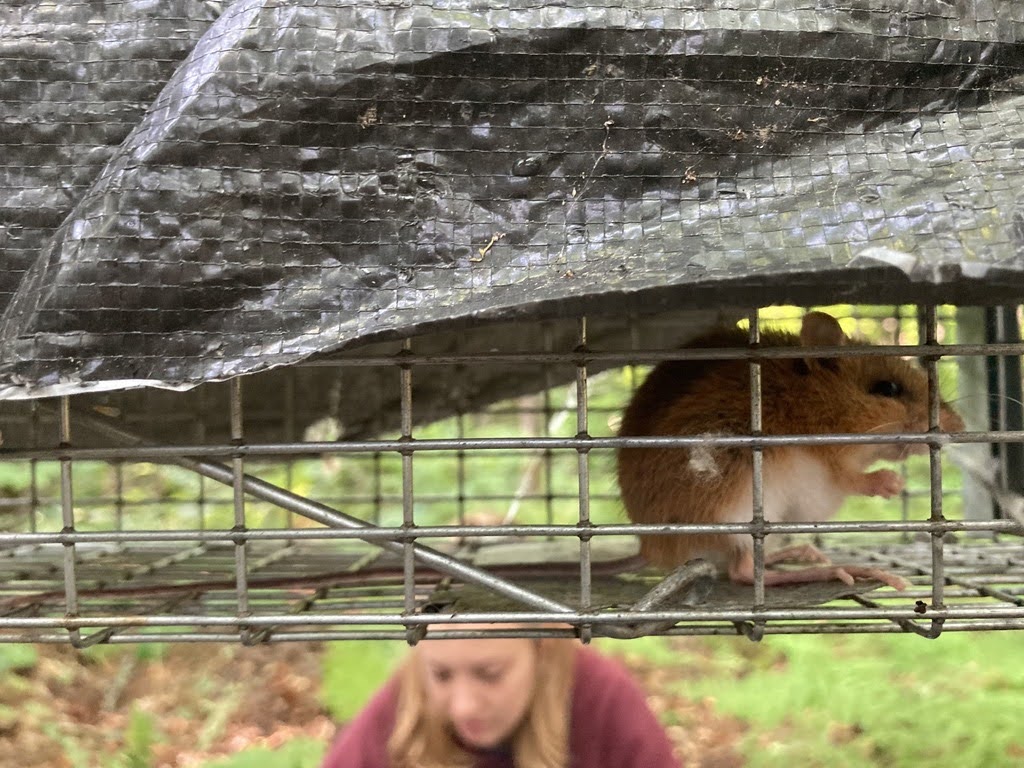
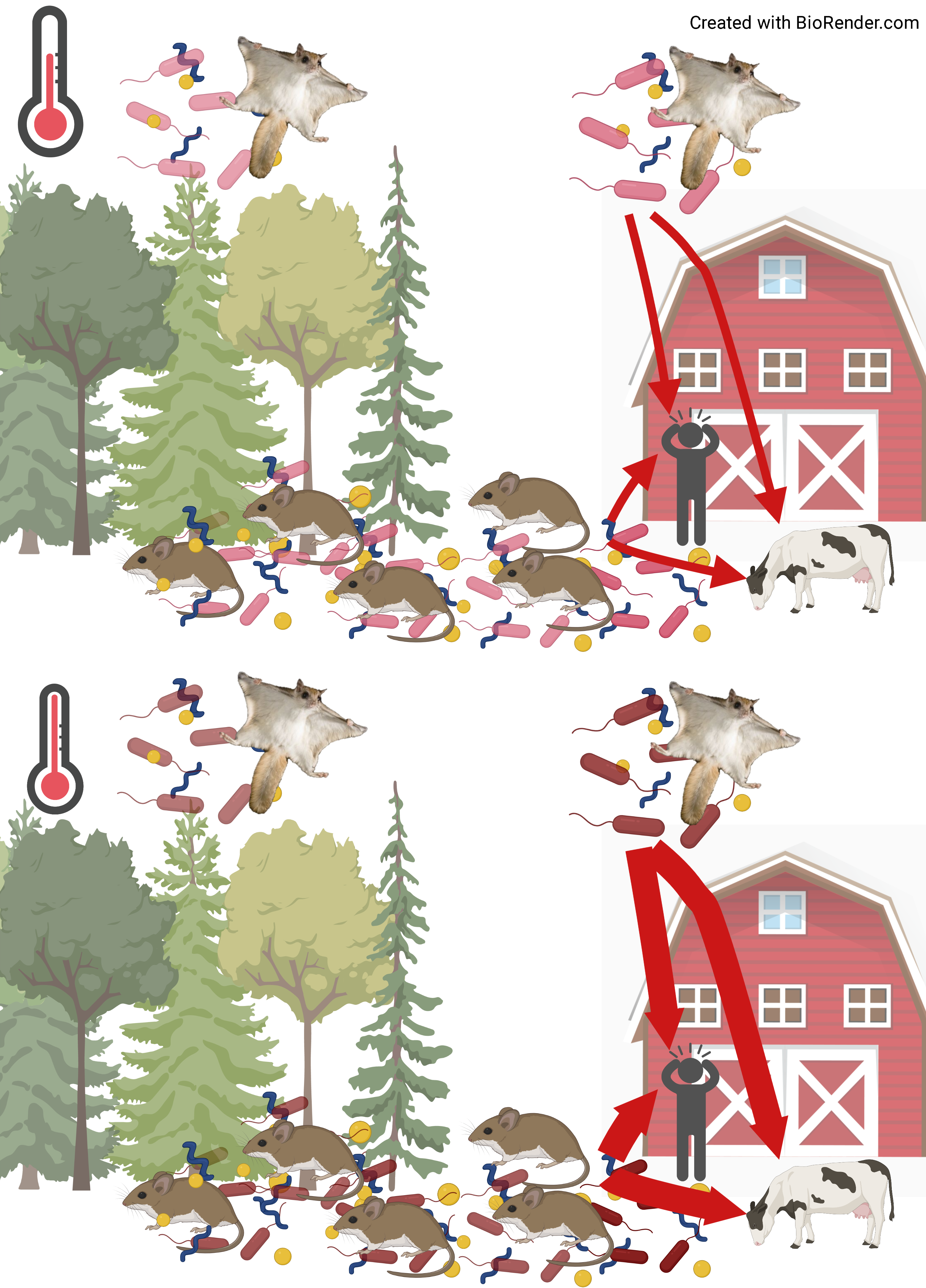
This summer and fall also saw a lot of activity on a collaborative project looking at small mammals in Maine and how climate change might be affecting the animals and the microbes they carry. This project has a whole team of undergraduate researchers working together from different labs (Drs. Danielle Levesque, Pauline Kamath, and Jason Johnston at UMPI), and we were poised to collect and measure dozens of animals and process lots of feces. Unfortunately, the mice and flying squirrels we were after outsmarted us and we caught fewer than 20 animals, which is enough for us to test our laboratory methods and streamline our workflow, but not enough from which to draw any conclusions. Even without a lot of data, we still consider the project to be successful because we trained so many students on various aspects of planning and conducting research, we gathered a lot of information from previous publications and are working on a literature review, and we have gained valuable perspective for planning a follow-up to this study.

We (Drs. Yanyan Li and Tao Zhang) are also continuing our collaborative investigations into the gut microbiome related to Inflammatory Bowel Disease using mouse models, looking at how dietary components can be used by gut microbes to produce anti-inflammatory compounds that can help the host reduce the symptoms of colitis. Last December and January we ran a mouse trial that generated hundreds of samples, and we have been processing them all year! Over the fall, our collaborators at the University of Vermont (Dr. Gary Mawe, Molly Hurd, Brigitte Lavoie) ran two more small mouse trials to test some exciting new things. We are hoping to publish the results from both studies in 2022.

Microbes and Social Equity

This was an exceptional year for the Microbes and Social Equity working group, which turned 2 years old in December, and is currently at 120 members plus several dozen newsletter subscribers! We grew so much that is was time to add Directors to the Leadership Team, to support our administration and communication needs.

In spring 2021, I organized a 14-speaker seminar series, which was attended by >300 people, and used for teaching materials at several colleges and universities. This led to a virtual symposium on “Microbes, Social Equity, and Rural Health”, June 14-18th, hosted by MSE and UMaine Medicine. This featured 15 speakers across 5 themed days with 3 plenary-style talks/day, followed by 90 min of small-group discussion led by speakers and MSE members. Participants were encouraged to “problem solve” a suggested topic or one of their own choosing to create action items that were meaningful to them, such as ideas for curricula development, identifying research needs or best practices, suggestions for engaging research in policy, and more. The symposium hosted 254 participants from 22 countries, students and researchers from various fields and career levels, Maine State legislators, and the public. 

We have also been leading the development of a journal special collection in mSystems, the scope of which was developed in summer 2020 by select members of the MSE working group, and which has welcomed its first few contributions this year. The inaugural piece was one written by 35 MSE group members which introduced the group, established our mission statement, and outlined our goals.

We hosted a panel discussion at the 2021 Ecological Society for America meeting, and plan to host more conference sessions in 2022. In 2022, we will be hosting a spring seminar series, as well as a summer symposium which is still under development. We’ll be adding the rest of the contributions to the mSystems special collection, and hopefully some collaborative projects! There will also be a few presentations at scientific conferences.

Teaching

This was a busy year for teaching, as I had many more students this year than ever before. I’ve also had the chance to teach two of my four courses twice, which has allowed me to improve upon the course materials and how they are presented. There is too much to go into detail here, but I recommend checking out my previous posts on listening to your microbes (a creative assignment), responsible conduct of research (something I integrated into coursework), moving to suggested deadlines, choosing a graduate school, and how departments decide on their curricula.

Website and social media stats

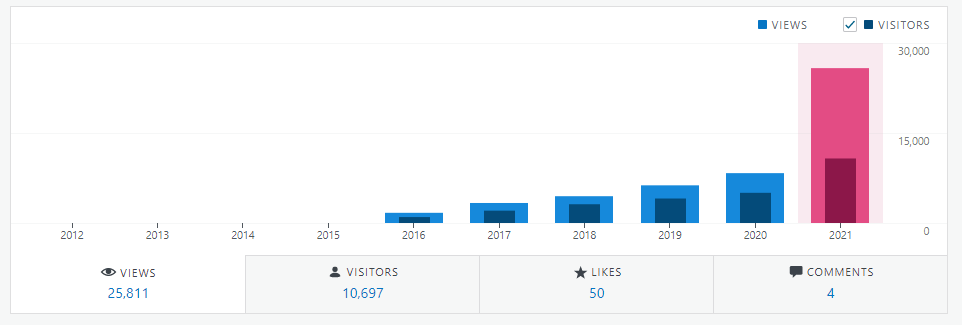
The website gained a phenomenal amount of traffic this year, largely due to MSE, with more than 10,000 visitors and more than 25,000 views! I published more than 50 blog posts, as well as a few dozen more that were advertising events.

Total visitors and views by year.

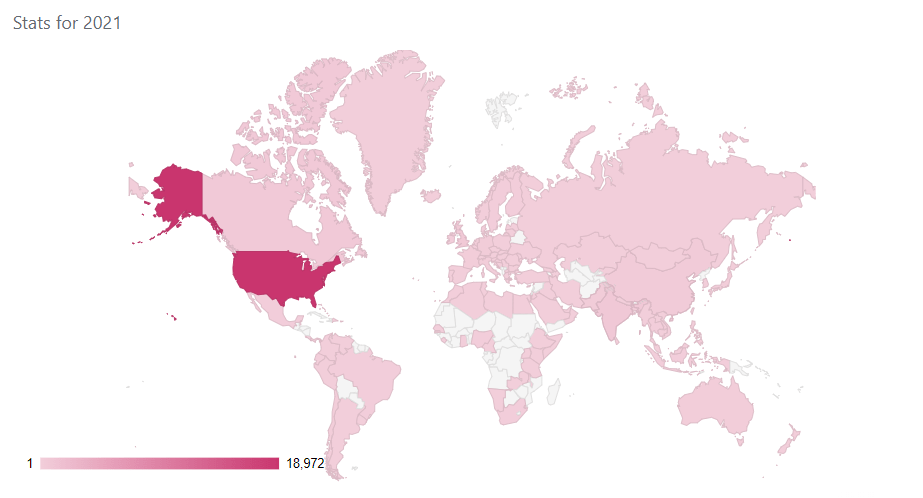
We had visitors from 125 countries around the globe!

Number of website views per country of origin.

Looking ahead to 2022

I’ll be starting 2022 early with proposal writing, drafting manuscripts, and teaching three classes (I offered to teach the third as overload because we are understaffed). I will be undergoing my third year review this spring, which is a milestone in my tenure-track journey. And, I already have a handful of presentations lined up:

  • Ishaq, S. ​”Microbes at the nexus of environmental, biological, and social research. 2nd Rhode Island Microbiome Symposium, in person, University of Rhode Island Kingston, RI, January 14, 2022. (invited plenary)
  • Ishaq, S. et al. “TBD” Dartmouth Molecular Microbiology and Pathogenesis (M2P2), February 24-25, 2021.
  • Ishaq, S. “Moose rumen microbes and you.” The Wildlife Society Nutritional Ecology Working Group Webinar, March 9, 2022.
  • Ishaq S. Microbes and Social Equity: what is it and how do we do it? Part of Track Hub: ‘Field Work & DEI Part 1: Fostering Equitable Partnerships with the Communities in Your Field Work Location’. American Society for Microbiology (ASM) Microbe 2022, Washington, DC (USA), June 9-13, 2022. (invited)
  • American Society for Microbiology (ASM) Microbe 2022 special session: “CTS16 (PPS) Cross-Track Symposium: Microbes and Social Equity: the Microbial Components of Social, Environmental, and Health Justice”. Washington, D.C. June 9-13, 2022. Organized by Ishaq, S.L. and featuring Drs. Ari Kozik, Carla Bonilla, and Monica Trujillo.

iScience Backstory on our collaborative work on ants, nematodes, and bacterial transfer

Over the summer, an article was published which featured a handful of researchers from across the US and research spanning a decade on the bacterial communities associated with invasive ants and nematodes in Maine. At the time, we were invited to also contribute a “Backstory” article to the scientific journal iScience which described the journey and the ideas.

That story authored by myself and Ellie Groden (senior researcher on the journal article) has just been published, and can be found here. I’d like to thank Dr. Sheba Agarwal, who was the editor on the paper, helped us develop our Backstory, and also spoke to me about this and other work as a guest on the WeTalkScience podcast.

Introducing the new MSE Directors Team!

As the Microbes and Social Equity group (MSE) has grown and dramatically gained members (~120 members and many more subscribed to our newsletter) in 2021, it has become time to add leadership roles in charge of different aspects of running the group! The current list of Directors are self nominated MSE group members, who have generously volunteered their time in 2022 to support the initiatives and development of this international collaboration alongside Sue Ishaq.

The MSE group logo, microbes being weighed on the scale of justice!

MSE Director of Professional Development

Dr. Srinivasan Mahalingam, PhD, searching for post-doc position

This position will focus on finding existing professional development opportunities, as well as working with MSE members to develop new professional development opportunities which may be used for existing MSE members or the general scientific community.

Srinivasan is pictured from the shoulders up, wearing a light blue and red plaid button-up collared shirt, against a beige background.

Srinivasan Mahalingam: Srinivasan is a Ph.D. student in Animal Science at Bharathidasan University (India), working under the guidance of Professor Govindaraju Archunan. His PhD research focuses on the impact of cervicovaginal mucus microbiota (bacterial diversity, volatile fatty acids, and secretory proteins) on buffalo estrus. His is particularly interested in learning more about role of microbiota and their biomolecules (bacterial generated fatty acids and proteins/peptides) on the reproductive tract and intestine. He is currently seeking post-doctoral training to advance my professional research career. The opportunities and resources are immense. People in working societies are tremendously helpful and encouraging, and networking with other scientists has led to a wealth of opportunities. As he wishes to continue his contribution towards science and humanity, he feels MSE can provide ample opportunity to extend group members research professional in an adequate way.


MSE Director of Fundraising

Dr. Ashish Pathak, J.D., LL.M, Ph.D., Adjunct Professor/Research Scientist, Florida Agricultural and Mechanical University

This position will focus on finding funding for current and future MSE initiatives, such as events, travel to conferences, professional development, and salary compensation for MSE Director or assistant roles.

Ashish Pathak standing in front of calm ocean water on an overcast day, wearing a yellow collared polo shirt.

Ashish Pathak: Ashish’s academic background includes a BS in Biology followed by an MS and PhD in Environmental Sciences from FAMU, Tallahassee. Prior to graduate school at SOE, Ashish completed a law degree (akin to JD in the US) followed by an LLM degree (Master’s in Legal Law). During the MS program in law, he researched the nexus between impoverished communities and decline in human health due to complete lack of environmental equity and related environmental justice issues. Having held post-doctoral and now a research scientist position at FAMU’ SOE, he continues to conduct research at the intersection of sustainability sciences, the nexus between Food-Energy and Water, especially surrounding racial disparities and inequity with populations of color, and accomplish 14 out of the 17 sustainability development goals adopted by the United Nations in 2016


Social Media Management Team

This team will focus on connecting our members to our social media accounts and vice versa, to streamlining our social media content, and to assist in communications within the group and to the general scientific community. This position will also help improve existing webpages and consider additional functionality (e.g. online reading lists, a group-facing or public-facing member directory)

MSE Director of Social Media

Sarah Ishak, M.S. student, Université de Sherbrooke

arah is pictured here in front of a large body of water along a green trail. She is holding up two peace signs with her hands and is wearing a blue top and grey pants with a purple jacket tied around her waist.

Sarah Ishak: Hailing from the Land Down Under (Australia), Sarah is now a Master’s student at Université de Sherbrooke in Québec, Canada. She graduated from the University of Adelaide with a Bachelor of Science (Advanced) degree, and a Bachelor of Science (Honours) degree in Ecology and Environmental Science. Her current research project is looking at the microbiome of boreal mosses from the Eeyou-Istchee region of Québec. She joined the MSE working group in the hopes of helping to provide under-represented communities the space to share their research. In conjunction with Emily Wissel and Dr. Katherine Maki, we hope to share stories and keep you updated on what the MSE Working Group has in store! You can find Sarah on twitter @microbluvrsarahvrsarah

Social Media Curator

Emily Wissel, PhD candidate, Emory University
Bio below!

Social Media Curator

Dr. Katherine Maki, PhD., Post Doc at NIH

Katherine Maki is pictures here in front of a field in a flowery blouse and a black blazer.

Katherine Maki: Katherine Maki is a postdoctoral fellow at the National Institutes of Health, Clinical Center, in the Translational Biobehavioral and Health Disparities Branch, and she is transitioning to an Assistant Clinical Investigator Position in the same department early 2022. Dr. Maki is a nurse practitioner and received her PhD from the University of Illinois at Chicago, College of Nursing. Her dissertation research examined the effects of chronic sleep disruption on the microbiome and cardiovascular system in rats. As a postdoctoral fellow, Dr. Maki worked on an interdisciplinary team on several intramural and extramural research protocols focusing on the human microbiome. She combines oral and gut microbiome analyses with biosignal and neuroimaging technology to study the gut-brain axis, and how it relates to health and disease. Dr. Maki is particularly interested in the relationship between environmental factors such as poor sleep and alcohol abuse with cardiovascular risk through microbial and metabolite mechanisms in humans.


MSE Director of Resource Dissemination

Emily Wissel, PhD candidate, Emory University

This position will work closely with Social Media and Resource Archiving Teams, and will focus on gathering information and resources to share within the group (e.g. new publications, funding opportunities). This position will facilitate resource gathering from members, and curate in-group emails to disseminate to interested members only to avoid excessively emailing group members.

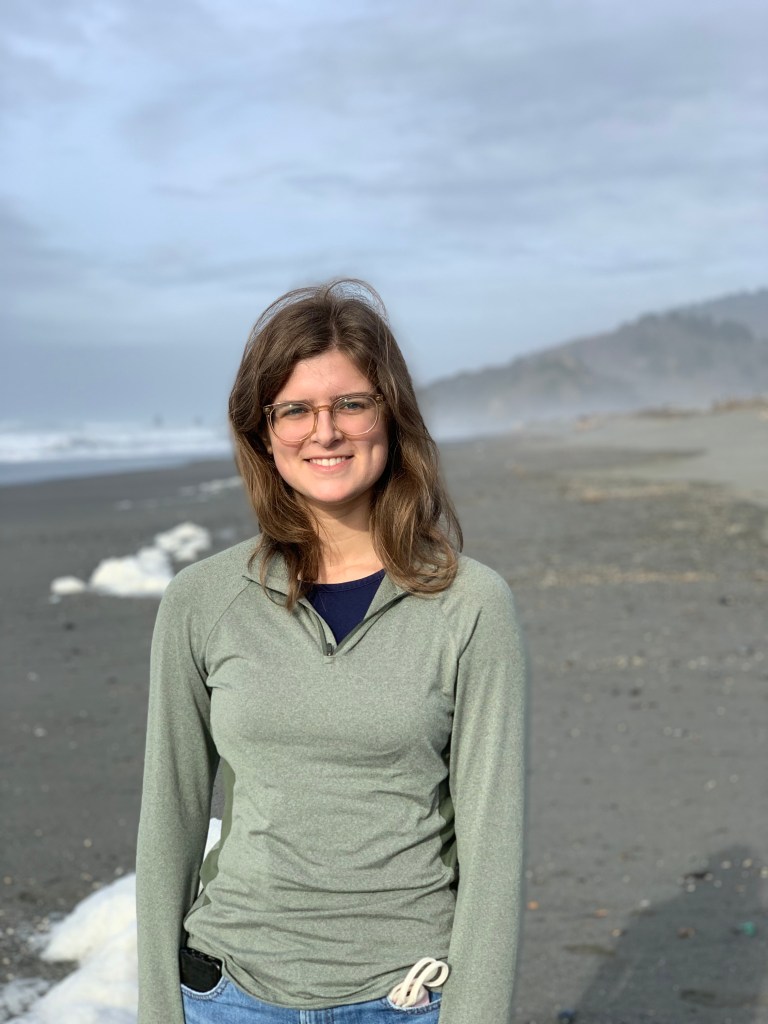
Emily Wissel on a sandy beach, with a view of the ocean and a mountainside in the background. She has glasses and is wearing a long sleeve green jacket.

Emily Wissel: Emily Wissel is a PhD candidate and NSF Graduate Research Fellow at Emory University. Her dissertation work explores how the gut and vaginal microbiome change during pregnancy and how factors like antibiotics impact that shift. Emily explores how our understanding of the microbiome can meaningfully inform health interventions and help us better understand mental health and cognition. You can find Emily on Twitter @emily_wissel


MSE Director of Resource Archiving

Patrick Horve, PhD student, University of Oregon

This position will focus on the long-term archiving of group documents, media, and other materials, including making them readily available to members, and revising working documents into a more professional draft before archiving.

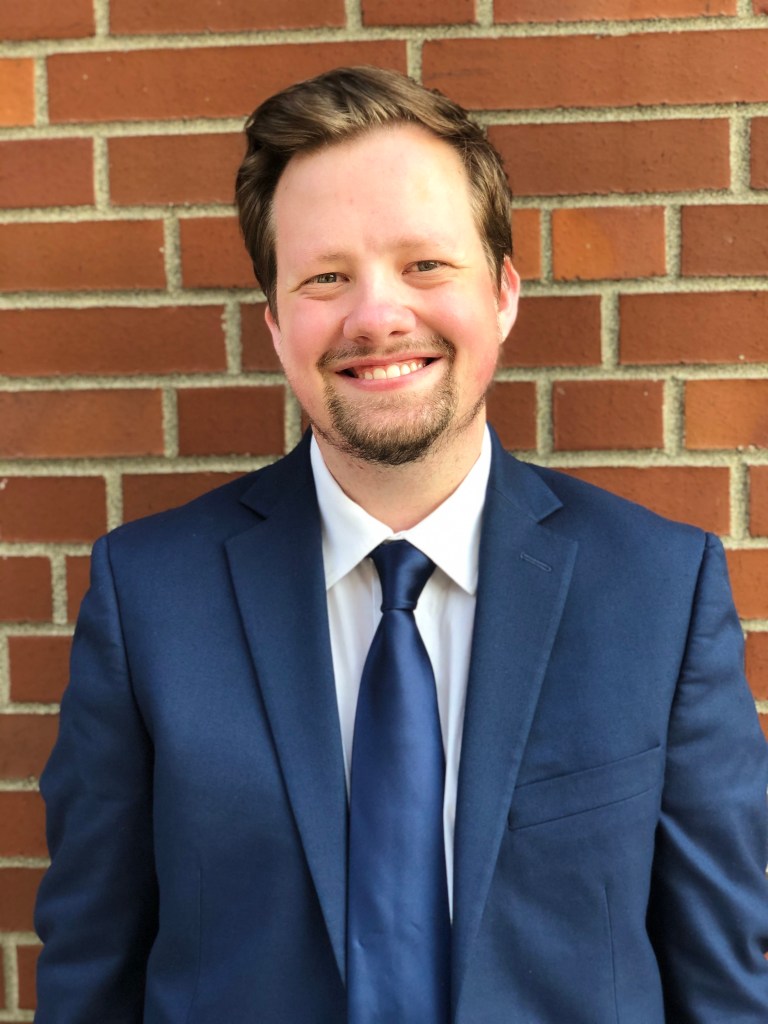
Patrick is pictured here in a navy blue suit and tie against a red brick

Patrick Horve: Patrick is currently a PhD student at the University of Oregon in Eugene, Oregon in the Institute of Molecular Biology. He is broadly interested in the interactions between microorganisms and the world around them, including the environment, other microorganisms, animals, and humans. These interactions can be both detrimental and beneficial for all of the individuals involved, making both positive and negative engagement with beneficial microbiomes through access to public resources, nutritious food, clean water and air, safe shelter, social interactions, and effective medicine a potentially (and often) inequitable process. By working with MSE, he hopes to encourage the combining of microbiology and social equity work and the promotion of evidence-based and equitable public policy. You can find him on twitter at @PatrickHorve

How does an academic department decide on their courses?

Now that I am an assistant professor, I perform scientific research, teach formal classes to undergraduate and graduate students, and I advise undergraduate students, as well as a smattering of other administrative or organizing-based activities. While I have performed nearly all of these in past job positions, the advising is a completely new aspect which has provided valuable insight into my other activities. The University of Maine serves a large number of undergraduate students, and many degree programs are specifically designed as preparation for specific career fields. Undergraduate students in my department now ask for my advice on which courses to take to best finish their degree, and this has led to some interesting discussions on why certain classes are required or not, and why certain classes are offered or not. I realized that the mechanics of course development are not well known to students, or even to academics who haven’t participated in it, and I thought I would share what I’ve learned.

Deciding on content

At the university level, courses are created and designed to offer a certain level of core material made up of basic concepts to introduce students to different fields of information; courses like introduction to biology, or general writing techniques. These may be referred to as ‘general education‘ courses and are designed for student audiences from many different programs at once. GenEd courses are taken in the first or second year of study in order to fill in any gaps from the very different high school educations students have, as well as teach the basics of information-finding and collaboration skills that they will need in other classes. GenEds are usually required before students take high-level courses in specific areas of study. Often, GenEds or introductory courses cater to hundreds of students per year, and there are several instructors to cover all the course sections, as well as teaching assistants, who provide instruction. There are additional core University requirements that each department can decide how to handle, such as the UMaine Capstone Experience requirement for students, which requires students to create a senior project related to their major. Within each academic department or unit (for example, Animal and Veterinary Sciences), there are core course requirements specific to that field of student that all students enrolled in that program need to take (for example, these requirements for Bachelor’s of Animal Science with a pre-veterinary concentration).

One factor in the decision about course content is simply which skills or knowledge students will need in order to enter the workforce related to their field of study. For example, undergraduate students who are intending to go on to a veterinary degree are often enrolled in pre-vet programs designed to prepare students for that further degree and to meet those application qualifications. As such, they will need to learn everything from anatomy to physics. Any content which is required to make the degree meaningful will also be required for students to pass in order to graduate, and means that it must be taught often enough that students have an opportunity to take it. Thus, core or required classes might be held at least annually, and sometimes multiple times a year. If the usual instructor is unable to teach it for a period of time, or there is turnover in the department, a temporary or adjunct instructor can be brought in on a short-term contract to ensure that course can be offered regularly.

Another factor is the area of expertise of the faculty instructors, who are research and/or teaching faculty with long-term contracts, such that those classes will be offered for at least as long as that person is employed. Because areas of expertise change over time, and because faculty come and go, this often drives the evolution of an academic department’s curriculum focus over decades. For example, I have a 50% research and 50% teaching appointment over a 9-month contract, which equates to 12 credits worth of teaching or formal mentoring in my department over the academic year. While I do teach some courses which were already set by the department, I had enough room in that 50% appointment to propose and teach two classes of my own design, one of which has now become a required course for animal science undergraduates specifically because my area of expertise has grown in importance and popularity in the past few decades. Departments will hire new faculty or instructors specifically because of their area of expertise and which direction they want the overall academic program to go in.

A more minor consideration on course content relates to university budget models, and whether academic departments get additional faculty or instructor salary for teaching students from outside their department – essentially a question of where tuition revenue is spent. Departmental course content is tailored to the intended student audience.  If a course is popular across the university but does not have applicability or appeal to the students within that faculty or instructor’s department, it can be difficult to justify spending time on it because most instructors or faculty are contracted to specific departments or academic unit budgets. However, a course with broad appeal could be taught outside of our contracted time, such as during winter or summer sessions, or potentially during the academic year as “overload teaching” which is above the number of credits outlined in our contact. This usually pays on top of the 9 or 12 month salaried contracts of instructors, but is restricted by the lack of free time that most faculty face.

Theory or approach to teaching

After settling on what should be taught, how, then, does a department decide how a class should be taught or constructed? How broad or specific should the information be, and how will the assignments or course requirements assess what students have learned? How will skills be taught? Broadly, this is called pedagogy: the method and practice of teaching, and is something which many faculty find themselves responsible for knowing even if we have not gotten an opportunity to develop our pedagogy in previous jobs. Prior to being an assistant professor at UMaine, I taught several different courses, including ones with pre-set materials that I re-hashed and presented in my own way, and ones with materials that I collected and decided entirely how to present (taught as electives). It wasn’t until that I was a long-term member of an academic department that I was able to participate in setting the direction of departmental courses, and to consider what we teach and how.  As part of my application to my current position, and my tenure packet (application to get a forever contract for my job), I am required to explain my teaching philosophy and how I put those ideas into practice in the classroom. I have previously shared some of those working documents.

As an example: it’s important to learn about how microbes affect animal health. Do I need to spend all my time lecturing to provide that info, or is there another format of information sharing I can use? I certainly need to lecture some, to introduce new topics or walk students through reading complicated graphs. But, it’s important that I also teach students how to find this information and assess it on their own, because they will be doing that for the rest of their life after they leave the classroom. Thus, I need to design my class materials and timeline to provide information and empower students to develop those same skills that I learned to get where I am: reading graphs, considering multiple and conflicting study results, forming questions and how to go about finding the answer. I might start a class with some lecture, followed by an assignment where students have to identity a question they have about microbiomes, then write down the expertise or people needed to find the answer from multiple perspectives, and finally outline what they thought that team could get done in one year.

Getting courses approved

There are many steps in the course approval process and, naturally, plenty of paperwork. In addition to a draft syllabus, a course proposal form is required which provides the logistical details (how many credits, lab or lecture, in person or online, and more), and describes the goals and scope of the content (introductory or experienced level), intended audience (students in which departments and which year of study), and how it will provide necessary skills or info to them. Importantly, the proposal form must describe how the new course will complement current courses that are offered at the University. Being able to show that there is a demand for this specific course, or that it is needed for professional development of the students, will support the course proposal during the approval process. This last part requires the person proposing the course to communicate with instructors of similar classes who might have students that will want to take this class. Are there aspects that you could include in your new course to make this more relevant to them, or to connect this new class to existing classes?

Once the proposal form is complete, it gets sent to the unit or departmental faculty committee for discussion, and may be returned for revisions. This committee might be made up of senior faculty in the department, or all the faculty if it is a small department. Not only can other faculty help improve the courses, but the time you spend teaching a course is time you can’t spend teaching other things that the department needs. So, your colleagues need assess whether this course is a good use of time and effort.

If the course is approved by the department, the proposal goes to the college curriculum committee which is made up of faculty from multiple different but related departments (for example, one from each department in the College of Natural Sciences, Forestry, and Agriculture). Often, faculty sitting on this committee are Undergraduate Coordinators in their own department, and have a lot of input into the scope of what undergraduates study.  After that committee, the proposal then goes on to the university curriculum committee to make sure it complies with university-wide standards and formatting. There are different forms and committees for undergraduate or graduate courses, and if you create a cross-listed course which can be taken by senior undergraduates and graduates, you’ll need to submit both forms and talk to both committee sets.

If a course is approved by the university, it will be assigned a number and will start appearing on the course catalogue. If the course is going to be required for students, though, it will usually be offered as an elective for the first year or even two before it is required for incoming students (current students can take it as an elective). Courses may also fulfil multiple requirements at once. For example, my AVS 254 Intro to Animal Microbiomes is required core subject material for AVS students, but also fills a university general education requirement to take a course that includes population and environment-scale information. In learning about the microbial communities, students also learn about microbial transmission between individuals, lifestyle choices and impact on host microbes, and interaction with the environment and affect on host microbes.

Matching faculty expectations to student experiences

An important consideration for course design is matching faculty expectations with student experiences. For example, the course materials which faculty see describe the course, but those faculty do not attend the course and experience how that information is shared. Thus, faculty may think that students are receiving information or skills, but the way that it is presented is not approachable or pertinent for students and they are unable to reuse what was presented in the course. Even faculty did audit a whole undergraduate course, we don’t have the same perspective that students do in that we might already be familiar with the material and we would not be able to identify where a lecture left out general information that would be critical for someone who is new to this. The student perspective is also driven by their need to do well in the course, not only by receiving a high grade but also by absorbing as much information which can help them in other classes or in their future career. Thus, aspects of the course which students think are interesting or important are not necessarily the same aspects that faculty identify as important.

Aligning the faculty and the student perspectives requires regular assessment of the course to make sure it is providing the necessary training and information to students. Often this assessment takes the form of faculty input and opinions, or changing needs of post-graduation industry career needs. It also relies on end of the semester evaluations of student performance (grades), and student feedback and evaluation of the courses. Student feedback can be unreliable when feedback on the course is preoccupied with comments which come from a place of personal bias or outright hostility. And, most course evaluations don’t provide enough granularity in the questions to thoroughly assess student perspectives on different aspects of the course, forcing students to give overall ratings. However, student feedback can be valuable when combined with other sources of information or asks more detailed questions.

To that end, Samantha Coombs, an AVS senior undergraduate researcher and I are designing surveys to gather student and faculty mentor perspectives for the UMaine AVS program Capstone Experiences courses, AVS 401 and 402. These courses are required for undergraduates to take to earn their bachelor’s degree, and require students to propose, conduct, and present results on research – often for the first time in their time at UMaine. If this wasn’t stressful enough, students typically work on projects which are part of faculty’s research portfolio,  and both students and faculty can be impacted by mismatches in expectations versus the reality of those collaborations. While we won’t be fully sharing the results of those surveys, we will be sharing summaries, and how the responses impacted future course materials in AVS 401 – the course in which students are first launched into research.

Improving the Curriculum for Future AVS 401 Undergraduates

Authors: Samantha Coombs and Dr. Sue Ishaq

Affiliations: School of Food and Agriculture at University of Maine, Orono

Keywords: Capstone, AVS 401, Undergraduates, Faculty, Stress, Mentor, Curriculum

Abstract

AVS undergraduates are not prepared to complete the requirements of AVS 401, before taking the course. In the AVS degree program, it is expected that undergraduates will gain knowledge, experience, and ideas to create a research project of their own. In many cases, AVS undergraduates are completing their capstones with never having performed a research project on their own. This is stress-inducing due to undergraduates having to learn both how to complete a research project, and how to write and complete a proposal. Undergraduates are given the choice to join a research project guided by a faculty mentor, but this leads to striving to meet expectations. Others struggle due to not knowing what project or path to go down. Each student needs a different situation that best fits their needs; this project will assist in trying to create a one-size-fits-all curriculum. The question I want to figure out is, can we adjust the curriculum in AVS 401 to meet the requirements of all AVS undergraduates for them to succeed in their capstone research? I hypothesize that we can create a curriculum that meets the requirements of undergraduates by surveying both faculty and undergraduates on their different expectations and experiences. Methods of research that will be conducted are, surveying AVS and other degree professors, surveying undergraduates who have taken AVS 401, reading syllabi, and reading scientific articles. The impact that this research will have is to create a class that is a one-size-fits-all for AVS 401 undergraduates. The curriculum will be adjusted due to the responses from both parties. The results will be a class that teaches undergraduates what they need to know to improve: the quality, efficiency, and reduce the stress of capstone projects.

UMaine REU ANEW program applications for undergraduates are open for summer 2022!

The University of Maine Research Experience for Undergraduates (REU) ANEW 2022 program is now open and accepting applications!  The REU program is intended to engage undergraduates in research, including those who have no or very little research experience.

Applications are currently being accepted for the REU ANEW summer 2022 program which is planned to be run in person from June 6 to August 12, 2022. Applications must be received by February 15, 2022 for full consideration. 

The website is updated with information for next year’s program and a new application form, or you can check out the attached poster:

The Microbes and Social Equity working group is turning 2!

It doesn’t seem that long ago that we were just an assorted group of interested researchers having a chat, but here we are two years later gaining international support and interest.  We greatly appreciate your interest in this group, and are pleased to share some of our recent updates.

We currently have 115 members of the Microbes and Social Equity working group, and another 33 people signed up just for the newsletter. In 2021, we ran a very successful speaker series, virtual symposium, and collectively had quite a few publications, presentations, and developments! We are excited to continue that momentum in 2022, and are planning another speaker series and virtual symposium, finalizing our journal special collection with mSystems, and furthering the collaborative projects we have begun. We will also be adding additional leadership roles for the group, to better accommodate our group and give more attention to our growing activities and initiatives.

Publications


mSystems Special Collections:

We are making great progress adding to our special collection with mSystem, with 3 papers published and several more currently in review! We will continue adding contributions through 2022. 

  1. Introducing the Microbes and Social Equity Working Group: Considering the Microbial Components of Social, Environmental, and Health Justice | mSystems 
  2. Teaching with Microbes: Lessons from Fermentation during a Pandemic | mSystems
  3. Variation in Microbial Exposure at the Human-Animal Interface and the Implications for Microbiome-Mediated Health Outcome | mSystems  


Upcoming

  • Francisco Parada’s postdoc, Dr. Ismael Palacios-García finished collecting his probiotic/lifestyle randomized trial, collecting cognitive electrophysiology (EEG+EGG), microbial (DNA from fecal samples), and phenomenological data (questionnaires) over 4+ months. They hope they will be publishing some of these results soon!  
  • Jake Robinson is working on “Invisible Friends”, a popular science book anticipated for release in 2022. From Jake’s page: “Invisible Friends is about our extraordinary relationship with microbes, and how they shape our lives, our health, and the world around us. The book aims to challenge the prevailing negative perception of microorganisms, by highlighting the weird, wonderful, and indispensable roles they play in our health, behaviour, society, and ecosystems!”

Presentations

Upcoming: 

The Microbes and Social Equity speaker series 2022 is under development! We hope to invite speakers for a virtual series running January through April, Wednesdays from 12:00 – 13:00 EST. Registration is required but the series is free to attend.

inVIVO Planetary Health, virtual conference, Dec 1-7, 2021. Register here. Several MSE group members will be giving talks there, such as:

  • Sue Ishaq, “Introducing the Microbes and Social Equity Working Group: Considering the Microbial Components of Social, Environmental, and Health Justice”
  • Ari Kozik, “The human microbiome and health disparities: restoring dysbiosis as a matter of social justice”
  • Jake Robinson, “Microbiome-inspired green infrastructure (MIGI): a bioscience roadmap for urban ecosystem health”

2nd Rhode Island Microbiome Symposium, in person conference, University of Rhode Island Kingston, RI, January 14, 2022. Register here.

  • Sue Ishaq, ​”Microbes at the nexus of environmental, biological, and social research”

American Society for Microbiology (ASM) Microbe 2022, in person conference, Washington, DC (USA), June 9-13, 2022.

  • ‘Field Work & DEI Part 1: Fostering Equitable Partnerships with the Communities in Your Field Work Location’. The session’s date is June 11, 2022 (11:45AM – 12:30PM).
    • Ishaq,”Microbes and Social Equity: what is it and how do we do it?”
  • MSE special session, “Microbes and Social Equity: the Microbial Components of Social, Environmental, and Health Justice”. The session’s date is June 11, 2022 (1:45PM – 3:45PM), and the event is under development.
    • Featuring panelists Monica Trujillo, Ari Kozik, and Carla Bonilla

Past

Mike Friedman hosted a very successful MSE Special Session (together with the Microbial Ecology section) at this year’s virtual Ecological Society of America meeting. Naupaka Zimmerman, Justin Stewart, Monica Trujillo and Sue Ishaq gave short presentations on social justice and various aspects of environmental and human microbiota. But the bulk of the session was taken up by audience discussion of issues in environmental justice and microbes, practical and suggested policies and education.