Over the summer, I taught a class on “Microbes and Social Equity” at the University of Oregon, the culmination of which was a joint paper I wrote with the class and several of the guest speakers. After soliciting several journals and modifying the scope a bit, I’ve just heard back that it has passed peer-review and been accepted for publication as an essay in PLoS Biology!
I’ll be sure to send out the link and more information when it’s online.
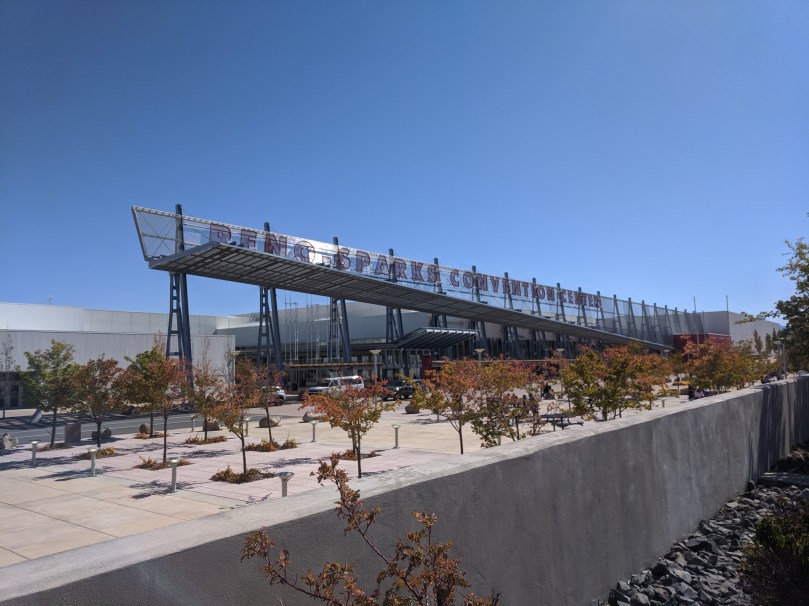
I was invited to present in a session on the “Utility of Microbiomes for Population Management”, which presented research from scientists working on clams, fish, frogs, salamanders, koalas, and moose all focused on understanding the microbiome in order better understand wildlife. I had a great time talking wildlife microbes with this group!
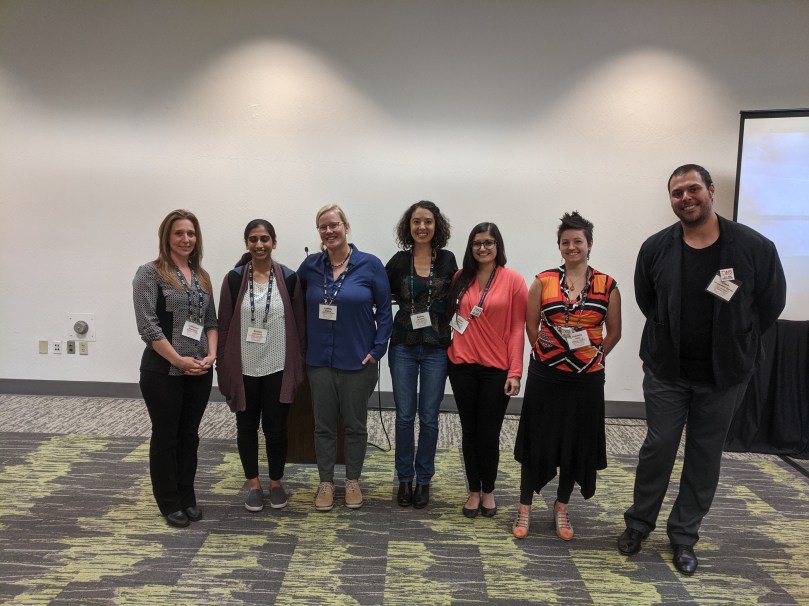
The microbiomes speaker group at TWS 2019.
Unfortunately, I won’t be staying longer in Reno, either. In a few hours I’m heading to Bozeman, Montana, to meet with collaborators and teach bioinformatics to a grad student.
For the past four days, I have been in Monterrey, Mexico, where I have been fostering international scientific relations in meetings and in the mountains. It was my very first trip to Mexico, and it was an amazing experience.
Monterrey, Mexico around the Hotel Novotel Monterrey Ville
After arriving in Monterrey, I was greeted by a research friend of mine, Dr. Jose Garcia-Mazcorro. We met a few years ago when Jose emailed me to ask questions about a recently published paper on Saccharomyces probiotic treatment in cattle, and our conversations on the ecological theory behind probiotics led to a review paper on the subject, led by Jose and I. It wasn’t until last August when Jose and I actually met in person, at the ISME conference in Leipzig, Germany.
At dinner, I had the opportunity to meet Jose’s wife,
Alecia, who is also a researcher, and their son, and discuss everything from
aflatoxin to Stephen King’s “It” (we discovered that their son and I were both
reading It when I discussed living in Maine, not far from Derry).
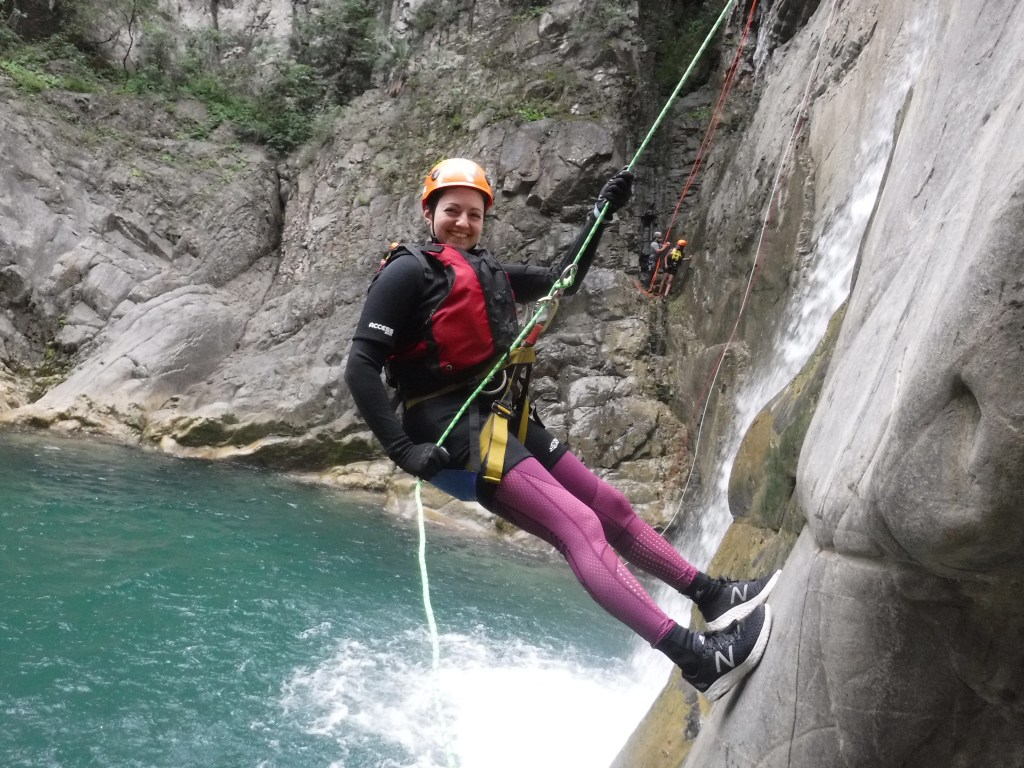
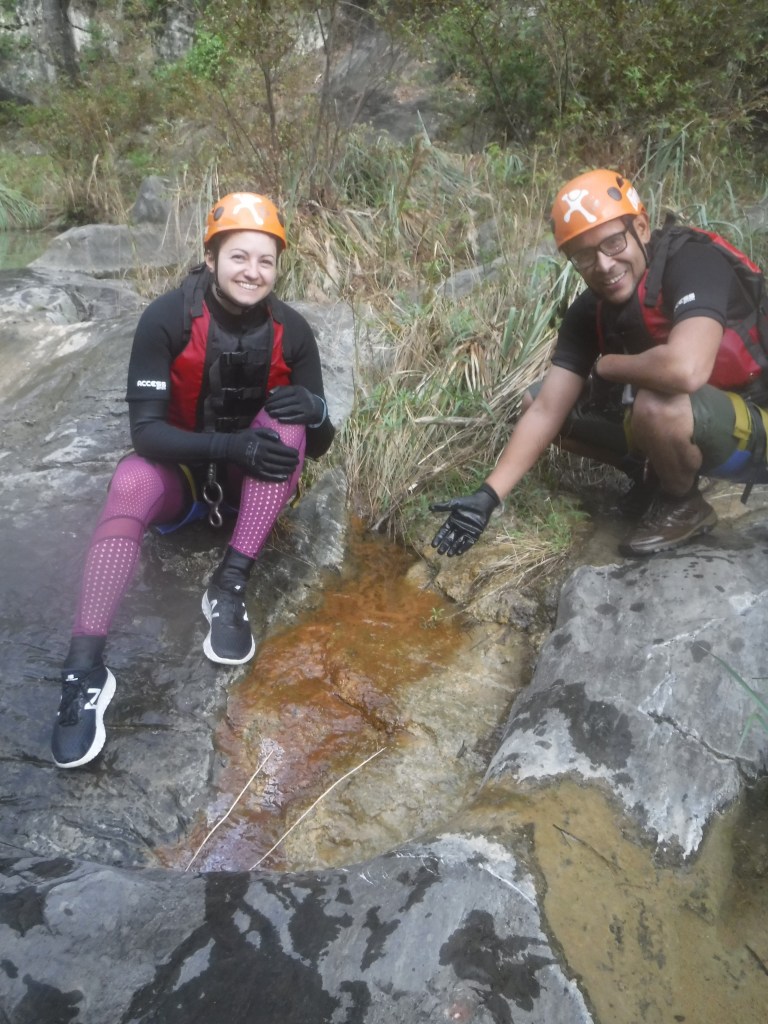
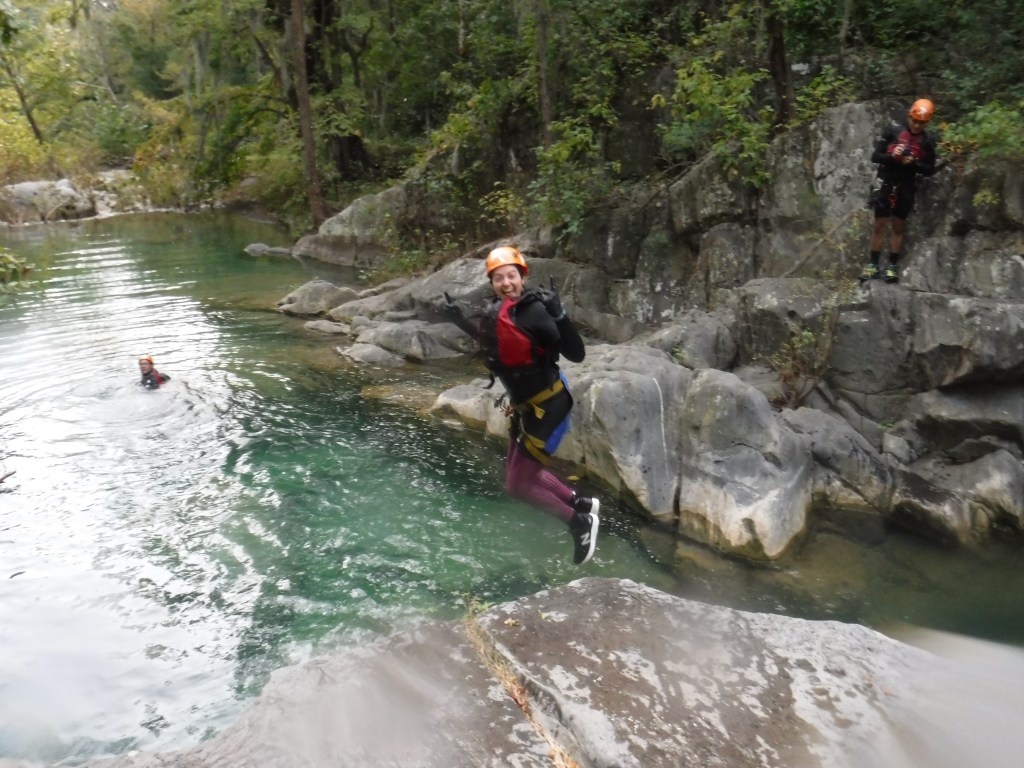
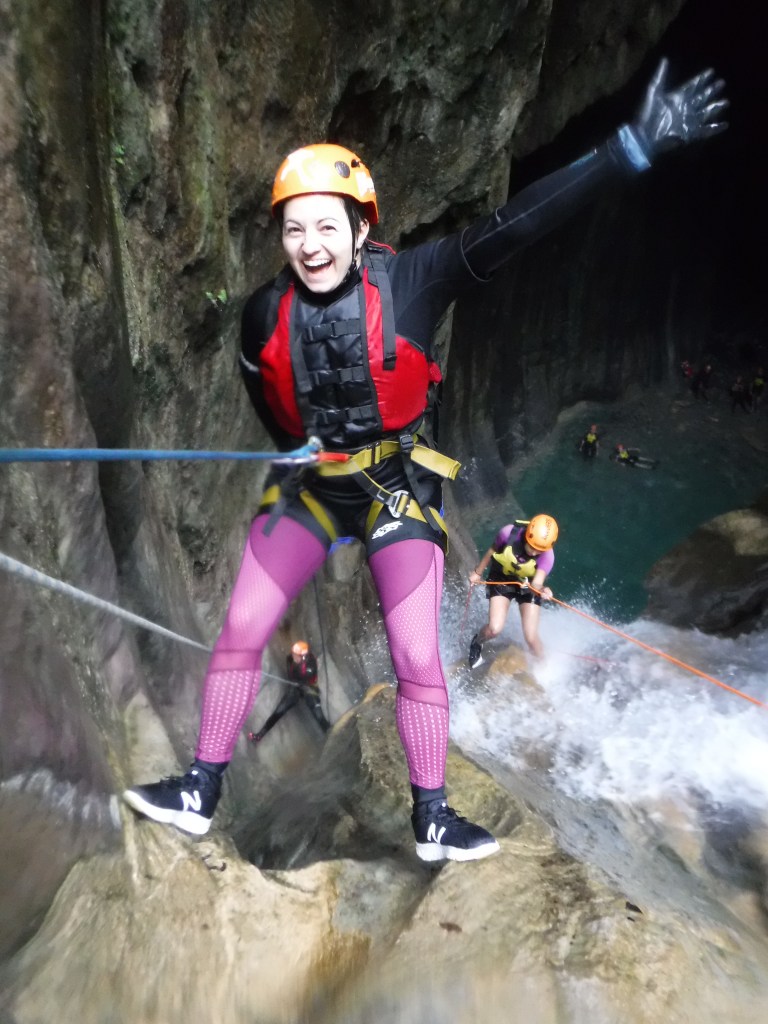
The next day, I woke up at 3:45 am to travel to the mountains for an incredible experience: a small-group tour in Matacanes canyon led by Daniel, a mountaineer with 20 years of experience and owner of Todo Avetura. He and Omar, another guide, led us for 12 hours and taught us about Matacanes canyon while we trekked 13 kilometers (8.7 miles) down waterfalls, through caves, over boulders, and over cliffs. Even the drive into and out of the canyon was an adventure; the steep road into the mountains fords rivers and winds along cliff faces. In the canyon, I got to do many things for the first time, including rappel down the side of two waterfalls; 27 m (88.6 ft) and 15 m (49.2 ft) into a cave, swim through the absolute dark of a river cave system, and jump off of several cliffs into the water below, including a 9.5 meter (31 ft) jump! It was supposed to be 10 meters, but that looked just a little too terrifying to try so I chose a spot that looked friendlier. Turns out that jumping 9.5 meters is a lot like getting up to present in front of a large audience, you just have to get up there and do it before you have time to think about and psych yourself out.
The guides were really passionate about the mountains, and they were particular about safety and not rushing or pushing us to the point where we would get hurt. If you have the chance, and the cohones, to go to Matacanes, I highly recommend Todo Aventura.
On Monday, sore but no worse for wear, I gingerly toured some of the facilities where Jose is currently working, MNA, an animal nutrition company. I met with company president and nutritionist Dr. Jorge Kawas, and Jose, Jorge, and I discussed the role of microbes in animal nutrition and health.
Dr. Jose Garcia-Mazcorro and I at MNA in Monterrey.
Monday night, I got to chat one-on-one with Professor T.J. Nagaraja, an author on theSaccharomyces review and a prominent researcher in rumen acidosis, cattle health, and infectious disease.
The main reason for my trip to Monterrey was to attend and speak at the XXII UANL-Engorda de Bovinos en Corral Symposium. I presented the opening seminar titled “Raising feedlot cattle with good microbes in mind” (“Cria y engorda de ganado con buenos microbios en mente”). The video can be found here, and slides with presentation notes here:
Organized by MNA and UANL, the university in Monterrey, the symposium brings together researchers, producers, animal industry professionals, and students to discuss animal health in feedlot cattle. I was honored to give the opening talk, which will be available online soon, and pleased to hear that the audience did in fact like microbes more than before my seminar! Usually when I start talking about the gut microbiome people have the urge to run off and wash their hands…
Unfortunately, I had to jump back
on a plane shortly after my talk, as I am heading to give a different
presentation at the Wildlife Society meeting in Reno, Nevada tomorrow! But, I
have plenty of memories and new project ideas to remember my trip by, and
hopefully I will come back to Monterrey soon!
I’ll be returning to the field I started in; gut microbiology, but I’ll be integrating things I picked up along the way over the past few years, including ongoing collaborations in soil and built environment microbiology. I’ll be right at home in the UMaine School of Food and Agriculture, which brings together animal science, nutrition, and plant and soil science.
In addition to formally starting my own lab, I’m looking forward to snowy winters and summers on the rivers.
In fact, I’ll be right at home anywhere in Orono.
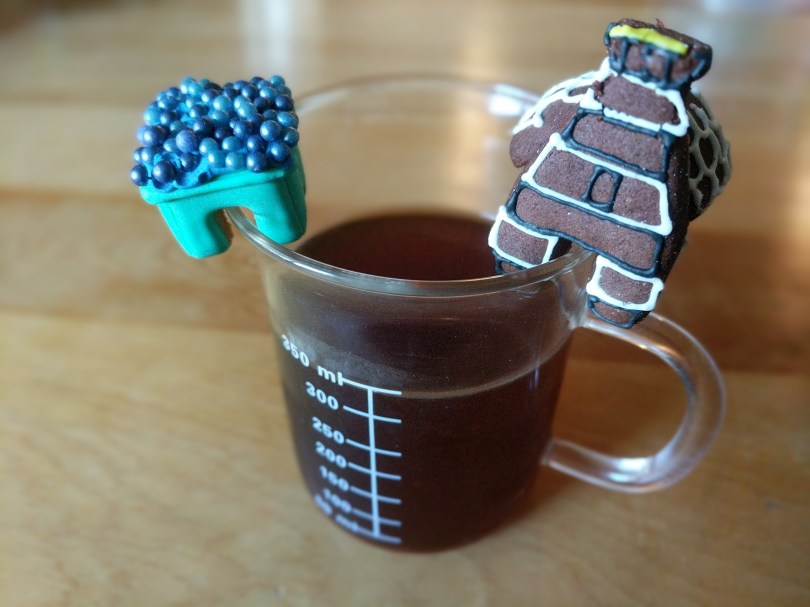
Cookies in the Featured Image are from Mug Buddy Cookies, made in Biddeford, Maine!!
Suzanne L. Ishaq1,2*, Maurisa Rapp2,3, Risa Byerly2,3, Loretta S. McClellan2, Maya R. O’Boyle2, Anika Nykanen2, Patrick J. Fuller2,4, Calvin Aas2, Jude M. Stone2, Sean Killpatrick2,4, Manami M. Uptegrove2, Alex Vischer2, Hannah Wolf2, Fiona Smallman2, Houston Eymann2,5, Simon Narode2, Ellee Stapleton6, Camille C. Cioffi7, Hannah Tavalire8
Biology and the Built Environment Center, University of Oregon
Robert D. Clark Honors College, University of Oregon
Department of Human Physiology, University of Oregon
Charles H. Lundquist College of Business, University of Oregon
School of Journalism and Communication, University of Oregon
Department of Landscape Architecture, University of Oregon
Counseling Psychology and Human Services, College of Education, University of Oregon
Institute of Ecology and Evolution, University of Oregon
Abstract
What do ‘microbes’
have to do with social equity? On the surface, very little. But these little
organisms are integral to our health, the health of our natural environment,
and even impact the ‘health’ of the environments we have built. Early life and
the maturation of the immune system, our diet and lifestyle, and the quality of
our surrounding environment can all impact our health. Similarly, the loss,
gain, and retention of microorganisms — namely their flow from humans to the
environment and back — can greatly impact our health and well-being. It is
well-known that inequalities in access to perinatal care, healthy foods and
fiber, a safe and clean home, and to the natural environment can create and
arise from social inequality. Here, we frame access to microorganisms as a
facet of public health, and argue that health inequality may be compounded by
inequitable microbial exposure.
In just a four-week course, I introduced 15 undergraduates from the University of Oregon Clark Honors College to microorganisms and the myriad ways in which we need them. More than that, we talked about how access to things, like nutritious foods (and especially fiber), pre- and postnatal health care, or greenspace and city parks, could influence the microbial exposures you would have over your lifetime. Inequalities in that access – such as only putting parks in wealthier neighborhoods – creates social inequity in resource distribution, but it also creates inequity in microbial exposure and the effect on your health.
By the end of the that four weeks, the students, several guest researchers, and myself condensed these discussions into a single paper (a mighty undertaking, indeed).
Last day of #MicrobesAndSocialEquity. It was a privilege to teach these students and build something together. I asked a lot of them and they rose to the challenge, and made the material their own. Preprint available next week. Thanks UO Honors for taking chance on my course!
And now that I’ve found a preprint server that accepts reviews/commentaries, it’s available for preview! The paper is currently under review and will be open-access when eventually published.
During the course, a number of guest lecturers were kind enough to lend us their expertise and their perspective:
I’ve been invited to give a talk at the XXII UANL-Engorda de Bovinos en Corral Symposium, in Monterrey, Mexico on October 1st! My talk, “Microbial livestock: raising cattle with good microbes in mind”, will be about improving cattle production using microbial means. The most exciting part is that this will be my first trip to Mexico!
The review on health in the built environment, led by undergrad (now post-bac) Patrick Horve and which I acted as managing author, is available online here, and an open-access, view-only version is available here. It’s part of the Healthy Building special issue from the Journal of Exposure Science & Environmental Epidemiology.
Building upon current knowledge and techniques of indoor microbiology to construct the next era of theory into microorganisms, health, and the built environment. Patrick F. Horve, Savanna Lloyd, Gwynne A. Mhuireach, Leslie Dietz, Mark Fretz, Georgia MacCrone, Kevin Van Den Wymelenberg & Suzanne L. Ishaq. Journal of Exposure Science & Environmental Epidemiology (2019)
Abstract
In the constructed habitat in which we spend up to 90% of our time, architectural design influences occupants’ behavioral patterns, interactions with objects, surfaces, rituals, the outside environment, and each other. Within this built environment, human behavior and building design contribute to the accrual and dispersal of microorganisms; it is a collection of fomites that transfer microorganisms; reservoirs that collect biomass; structures that induce human or air movement patterns; and space types that encourage proximity or isolation between humans whose personal microbial clouds disperse cells into buildings. There have been recent calls to incorporate building microbiology into occupant health and exposure research and standards, yet the built environment is largely viewed as a repository for microorganisms which are to be eliminated, instead of a habitat which is inexorably linked to the microbial influences of building inhabitants. Health sectors have re-evaluated the role of microorganisms in health, incorporating microorganisms into prevention and treatment protocols, yet no paradigm shift has occurred with respect to microbiology of the built environment, despite calls to do so. Technological and logistical constraints often preclude our ability to link health outcomes to indoor microbiology, yet sufficient study exists to inform the theory and implementation of the next era of research and intervention in the built environment. This review presents built environment characteristics in relation to human health and disease, explores some of the current experimental strategies and interventions which explore health in the built environment, and discusses an emerging model for fostering indoor microbiology rather than fearing it.
Update: on the very last day of June, I received word that two more papers had been accepted for publication, bringing the tally to five in the month of June alone!
I’ve previously discussed how many researchers end up with partially-completed projects in their wake, and I’ve made a concerted effort in the last 6-ish months to get mine across the finish line. I have five new publications which were accepted in June alone, with one reviews and one manuscript currently in review, and another three manuscripts in preparation. On top of that, I have a number of publications that are looming in the second half of 2019.
Ishaq, S.L., Lachman, M.M., Wenner, B.A., Baeza, A., Butler, M., Gates, E., Olivo, S., Buono Geddes, J., Hatfield, P., Yeoman, C.J. 2019. Pelleted-hay alfalfa feed increases sheep wether weight gain and rumen bacterial richness over loose-hay alfalfa feed. PLoS ONE 14(6): e0215797. Article.
I’ve already done the blog post and project page for the ‘particle size’ paper, so I’ll move on.
Stenson, J., Ishaq, S.L., Laguerre, A., Loia, A., MacCrone, G., Mugabo, I., Northcutt, D., Riggio, M., Barbosa, A., Gall, E.T., Van Den Wymelenberg, K. 2019. Monitored Indoor Environmental Quality of a Mass Timber Office Building: A Case Study. Buildings 9:142. Article.
This was a case study on a newly (at the time of sample collection) constructed building in Portland, OR which was made using mass timber framing. Since building materials alter the sound, vibration, smell, and air quality of a building, the primary goals of the study were to evaluate occupant experience and indoor air quality. Dust samples were also collected to investigate the indoor bacterial community, as the effect of building materials on the whole microbial community indoors is unknown. For this project, I assisted with microbial sample processing and analysis, for which I taught Georgia MacCrone, an undergraduate Biology/Ecology junior at UO, bioinformatics and DNA sequence analysis.
Garcia-Mazcorro, J.F., Ishaq, S.L., Rodriguez-Herrera, M.V., Garcia-Hernandez, C.A., Kawas, J.R., Nagaraja, T.G. 2019. Review: Are there indigenous Saccharomyces in the digestive tract of livestock animal species? Implications for health, nutrition and productivity traits. Animal. Accepted.
This review was a pleasure to work on. Last year, Dr. Jose Garcia-Mazcorro emailed me, as I am the corresponding author on a paper investigating protozoa and fungi in cows with acidosis. We corresponded about fungi in the rumen, probiotics, and diet, and Jose graciously invited me to contribute to the review. Last August, after having worked with Jose for months, we finally met in person in Leipzig, Germany at ISME. Since then, we’ve been discussion possible collaborations on diet, probiotics, and the gut microbiome.
Horve, P.F., Lloyd, S., Mhuireach, G.A., Dietz, L., Fretz, M., MacCrone, G., Van Den Wymelenberg, K., Ishaq, S.L. Building Upon Current Knowledge of Indoor Microbiology to Construct the Next Era of Research into Microorganisms, Health, and the Built Environment. Journal of Exposure Science and Environmental Epidemiology. Accepted.
Seipel, T., Ishaq, S.L., Menalled, F.D. Agroecosystem resilience is modified by management system via plant–soil feedbacks. Basic and Applied Ecology. Accepted.
And as a reminder, I’m a guest editor for the PLoS ” Microbiome Across Biological Systems” special issue call, which is accepting submissions into August!
I’m pleased to announce that the “particle size” project is officially published! I inherited this dataset of bacterial 16S rRNA sequences in 2015, while working for the Yeoman Lab. This collaborative project combined nutrition, animal production, and microbial ecology to look at the effect of diet particle size on lambs and their rumen bacteria. While small in size, the project was large in scope – despite everything we know about how different diet components encourage different microbial communities to survive in the digestive tract, we know practically nothing about how the size of the particles in that diet might contribute.
A lot of factors can be manipulated to help get the most out of one’s diet, including adjusting ingredients for water content, palatability, ease of chewing, and how easy the ingredients are to digest. For example, highly fibrous foods with larger particles/pieces require more chewing, as well as a longer time spent in the rumen digesting so that microorganisms have plenty of time to break the chemical bonds of large molecules. Smaller food particles can reduce the time and effort spent chewing, allow for more surface area on plant fibers for microorganisms to attach to and digest faster, and speed up the movement of food through the digestive tract. On the other hand, moving food too quickly could reduce the amount of time microorganisms can spend digesting, or time the ruminant can absorb nutrients across their GI tract lumen, or cause slow-growing microbial species to wash out.
Suzanne L. Ishaq1, Medora M. Lachman2, Benjamin A. Wenner3, Amy Baeza2, Molly Butler2, Emily Gates2, Sarah Olivo1, Julie Buono Geddes2, Patrick Hatfield2, Carl J. Yeoman2
Biology and the Built Environment Center, University of Oregon, Eugene, Oregon, United States of America
Department of Animal and Range Sciences, Montana State University, Bozeman, Montana, United States of America
Department of Animal Sciences, The Ohio State University, Columbus, Ohio, United States of America
Abstract
Diet composed of smaller particles can improve feed intake, digestibility, and animal growth or health, but in ruminant species can reduce rumination and buffering – the loss of which may inhibit fermentation and digestibility. However, the explicit effect of particle size on the rumen microbiota remains untested, despite their crucial role in digestion. We evaluated the effects of reduced particle size on rumen microbiota by feeding long-stem (loose) alfalfa hay compared to a ground and pelleted version of the same alfalfa in yearling sheep wethers during a two-week experimental period. In situ digestibility of the pelleted diet was greater at 48 h compared with loose hay; however, distribution of residual fecal particle sizes in sheep did not differ between the dietary treatments at any time point (day 7 or 14). Both average daily gain and feed efficiency were greater for the wethers consuming the pelleted diet. Observed bacterial richness was very low at the end of the adaptation period and increased over the course of the study, suggesting the rumen bacterial community was still in flux after two weeks of adaptation. The pelleted-hay diet group had a greater increase in bacterial richness, including common fibrolytic rumen inhabitants. The pelleted diet was positively associated with several Succiniclasticum, a Prevotella, and uncultured taxa in the Ruminococcaceae and Rickenellaceae families and Bacteroidales order. Pelleting an alfalfa hay diet for sheep does shift the rumen microbiome, though the interplay of diet particle size, retention and gastrointestinal transit time, microbial fermentative and hydrolytic activity, and host growth or health is still largely unexplored.
I’m excited to announce that I’ll be giving a presentation at the American Fisheries Society and The Wildlife Society 2019 Joint Annual Conference this September. I was invited to participate in a symposium: Utility of Microbiomes for Population Management. I’ll be returning to my roots and presenting on moose microbes. See you in Reno!
Abstract 36407 – “Moose Rumen Microbes and Their Relevance to Agriculture and Health”








 The Ishaq Lab