
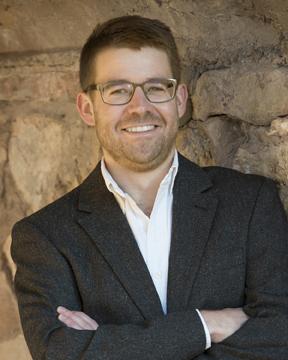
Watch the Microbes and Social Equity seminar from Feb 17th

Extended Health

Dr. Joshua August (Gus) Skorburg, PhD

February 17, 2021, 12:00 – 13:00 EST. 

Watch the recording.

About the speaker: Dr. Joshua August (Gus) Skorburg is Assistant Professor of Philosophy, Academic Co-Director of the Centre for Advancing Responsible and Ethical Artificial Intelligence (CARE-AI), and Faculty Affiliate at the One Health Institute at the University of Guelph in Ontario, Canada. He is also Adjunct Professor in the Fuqua School of Business at Duke University. He received his PhD in Philosophy in 2017 from the University of Oregon. His research spans topics in applied ethics and moral psychology.  

https://www.uoguelph.ca/arts/people/joshua-august-gus-skorburg

About the seminar:  Dominant views about the nature of health and disease tend to assume the existence of a fixed, stable, individual organism as the bearer of health and disease states, and as such, the appropriate target of medical therapy and ethical concern. However, recent developments in microbial biology, neuroscience, and social and personality psychology have produced a novel understanding of the individual and its fluid boundaries. Drawing on converging evidence from these disciplines, I will argue that certain features of our biological and social environment can be so tightly integrated as to constitute a unit of care extending beyond the intuitive boundaries of skin and skull. Call this the Hypothesis of Extended Health (HEH). Using the example of obesity as a case study, I show how HEH is well positioned to accommodate recent research on both the human microbiome and relationship partners. I conclude by suggesting that HEH helps us to break free from unhelpful dichotomous thinking about obesity – between individual behaviours (e.g., restraint, diet, exercise) or constraining socio-economic structures (e.g., food deserts, advertising).

About the series: Microorganisms are critical to many aspects of biological life, including human health.  The human body is a veritable universe for microorganisms: some pass through but once, some are frequent tourists, and some spend their entire existence in the confines of our body tissues.  The collective microbial community, our microbiome, can be impacted by the details of our lifestyle, including diet, hygiene, health status, and more, but many are driven by social, economic, medical, or political constraints that restrict available choices that may impact our health.   

Access to resources is the basis for creating and resolving social equity—access to healthcare, healthy foods, a suitable living environment, and to beneficial microorganisms, but also access to personal and occupational protection to avoid exposure to infectious disease. This speaker series explores the way that microbes connect public policy, social disparities, and human health, as well as the ongoing research, education, policy, and innovation in this field.  The spring speaker series will pave the way for a symposium on “Microbes, Social Equity, and Rural Health” in summer 2021.

Watch the Microbes and Social Equity seminar from Feb 10th

An Indigenous Micro- to Meta-Narrative: Microbes and Social Equity

Dr. Nicole Redvers, ND, MPH

February 10, 2021, 12:00 – 13:00 EST. 

Watch the recording.

About the seminar: Indigenous Peoples have scientific narratives and traditions that span thousands of years rooted within concepts of relationship. The microbial microcosm itself is a lens of relationship that situates us as humans within our own communities and in the biome of the planet. How these relationships intersect and how we view them as an evolution of knowledge in theory and practice impacts how we view equity and its applications in the scientific process. This seminar will seek to bridge Indigenous knowledge traditions and scientific discourse with the intent of situating microbes and social equity within a larger relationship within research and practice.

About the series: Microorganisms are critical to many aspects of biological life, including human health.  The human body is a veritable universe for microorganisms: some pass through but once, some are frequent tourists, and some spend their entire existence in the confines of our body tissues.  The collective microbial community, our microbiome, can be impacted by the details of our lifestyle, including diet, hygiene, health status, and more, but many are driven by social, economic, medical, or political constraints that restrict available choices that may impact our health.   

Access to resources is the basis for creating and resolving social equity—access to healthcare, healthy foods, a suitable living environment, and to beneficial microorganisms, but also access to personal and occupational protection to avoid exposure to infectious disease. This speaker series explores the way that microbes connect public policy, social disparities, and human health, as well as the ongoing research, education, policy, and innovation in this field.  The spring speaker series will pave the way for a symposium on “Microbes, Social Equity, and Rural Health” in summer 2021.

Microbes and Social Equity at UMaine

Last week, I chatted about Microbes and Social Equity with Ali Tobey, Marketing and Communications Graduate Assistant for the Office of the Vice President for Research and Dean of the Graduate School at the University of Maine. The MSE working group has been meeting for a year to discuss how microorganisms are what connects us to each other or to the environment, how microbes are involved in so much of human health, how disparities in access to basic needs can affect your health and your microbes, and how social policy can be used to resolve social inequity and improve health for all.

This spring, the MSE group and the University of Maine Institute of Medicine are hosting a semester-long speaker series. The talks range from basic to applied science, from research to education to medical practice, and touch on a variety of topics. The series is free, and open to the public, but registration is required.

The full list of speaker and registration links for the Microbes and Social Equity spring 2021 speaker series can be found here, and Ali’s piece is below:

Reblog of the story by Ali Tobey, University of Maine

Screenshot from an online seminar. The video of the speaker is in the upper right corner, and the title slide is the rest of the image. The seminar is "A crash course in the gut microbiome" by Sue Ishaq at the University of Maine.

UMaine Institute of Medicine seminar available online

Last Friday, I gave a seminar on “A crash course in the gut microbiome” to the University of Maine Institute of Medicine as part of their fall seminar series. You can find the previous seminars in that series here.

I was delighted to have the opportunity to share my science to researchers around Maine, and to have so many engaging questions!

You can find my seminar recording here, and a pdf of the slides with my presenter notes as annotated comments can be found here: