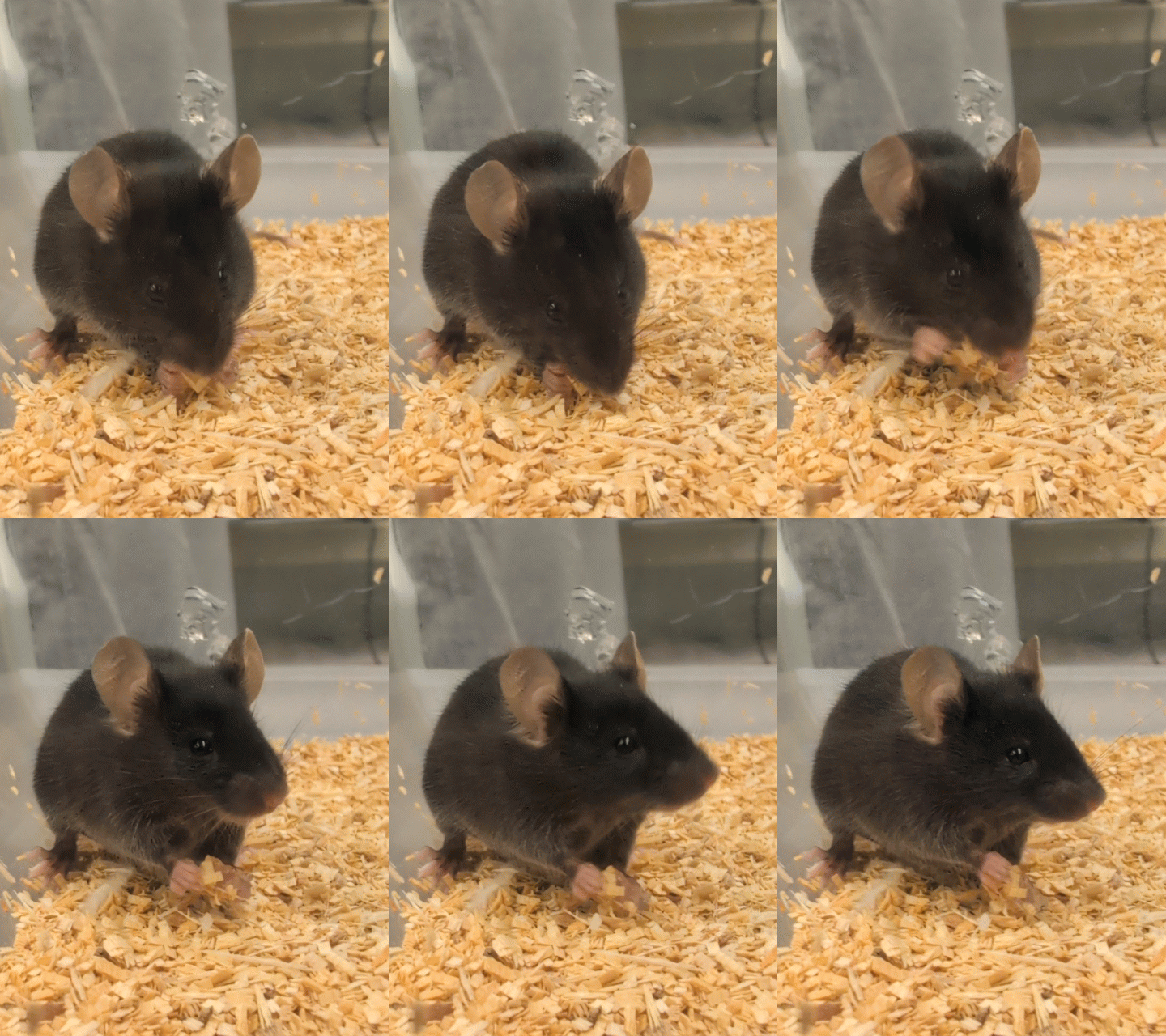
A research mouse picks up a cube of gelain and eats it.

Testing out some probiotic protocols

The Ishaq Lab is testing out some probiotics in mice this spring, as we look towards the next phase of our broccoli sprouts and gut microbiome work: generating solutions. It has been five years since our last mouse experiments, in part, because we have been busy digging into samples, data, and ideas from those studies.

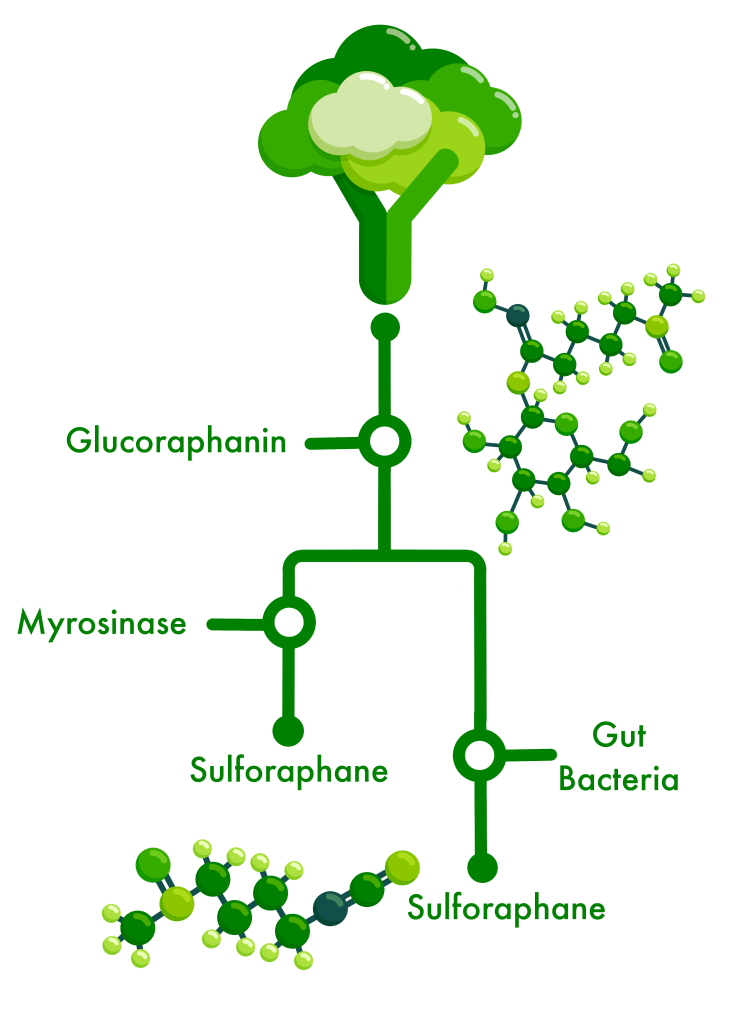
We gained valuable insight into which and how gut bacteria might metabolize the inactive glucosinolates from broccoli sprouts – glucoraphanin being the one we focus on – and produce byproducts like sulforaphane which our gut cells can use to reduce the chemical and physical damage caused by inflammation or oxidation.

This process is easy in the lab and tricky in the real world – not everyone has the bacteria in their gut which can do it, some have the bacteria but they are not active, and some have the bacteria but they are making a different version of the byproduct which we cannot use.

For the past three years, we have been screening >300 gut bacteria to identify and select ones with the ability to grow in the presence of GLR and metabolize it into the byproducts SFN or SFN-nitrile (which can be antimicrobial towards some bacteria).
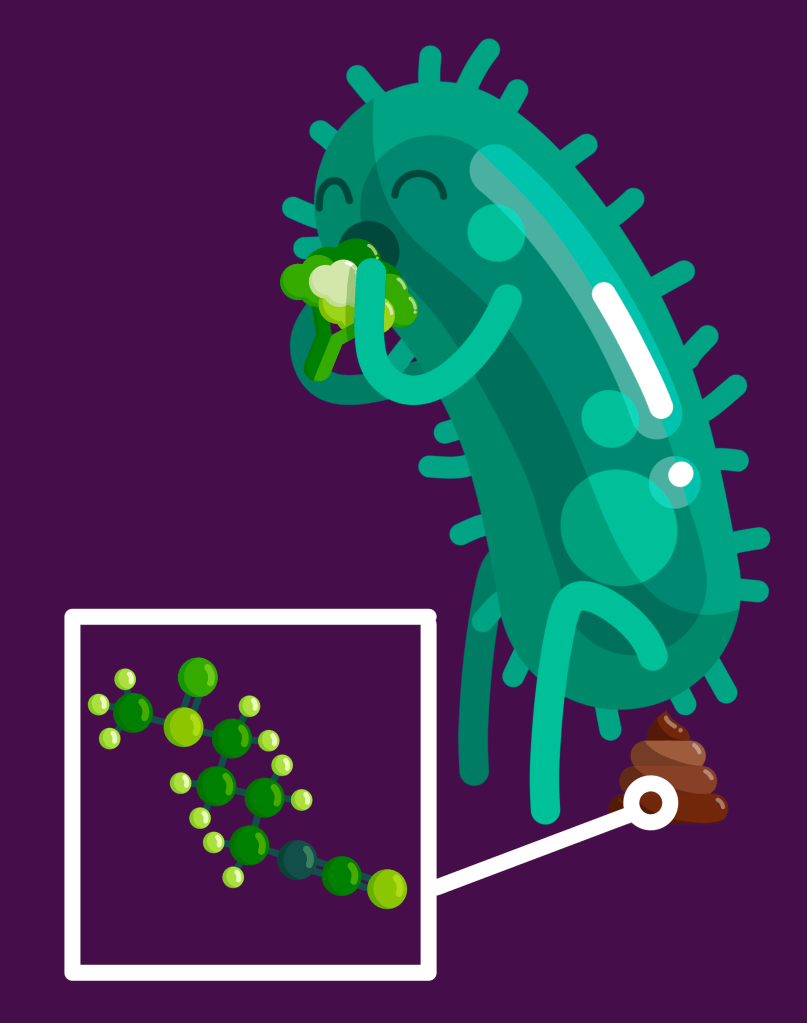
A cartoon of a bacteria eating broccoli and pooping out sulforaphane

In culture, the byproducts more-or-less all help the bacteria to survive by providing sulfur, glucose, or other chemicals it needs, but also by acting as an antioxidant compound that binds to a free oxygen (reactive oxygen species) so it doesn’t try to bond with chemicals on the surface of cells and cause them damage (oxidation damage). The byproducts also appear to help the bacteria thrive in acidic culture media which they otherwise can’t survive. When cultured with colon cells and GLR, some of those bacteria and their byproducts reduce inflammation.

The culmination of the past few years of work was to choose two bacterial cultures to try out our idea: that probiotics plus the broccoli sprout diet would help individuals who were not responsive to the diet. Because the gut microbiome, health, and the way that an individual and their microbes respond to diet are all very complicated processes that are specific to each person, it’s easier to test some of these concepts first in the lab or, which we did in early January, in animal models that mimic disease conditions in humans.
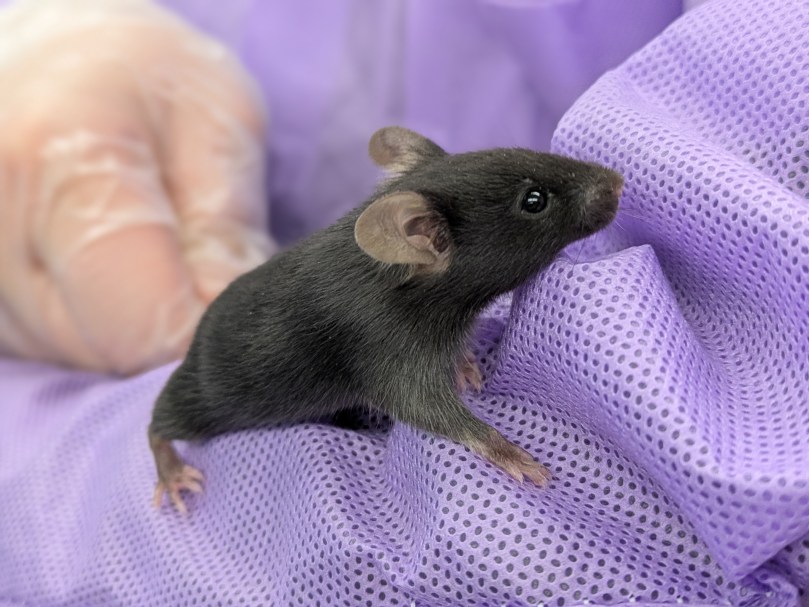
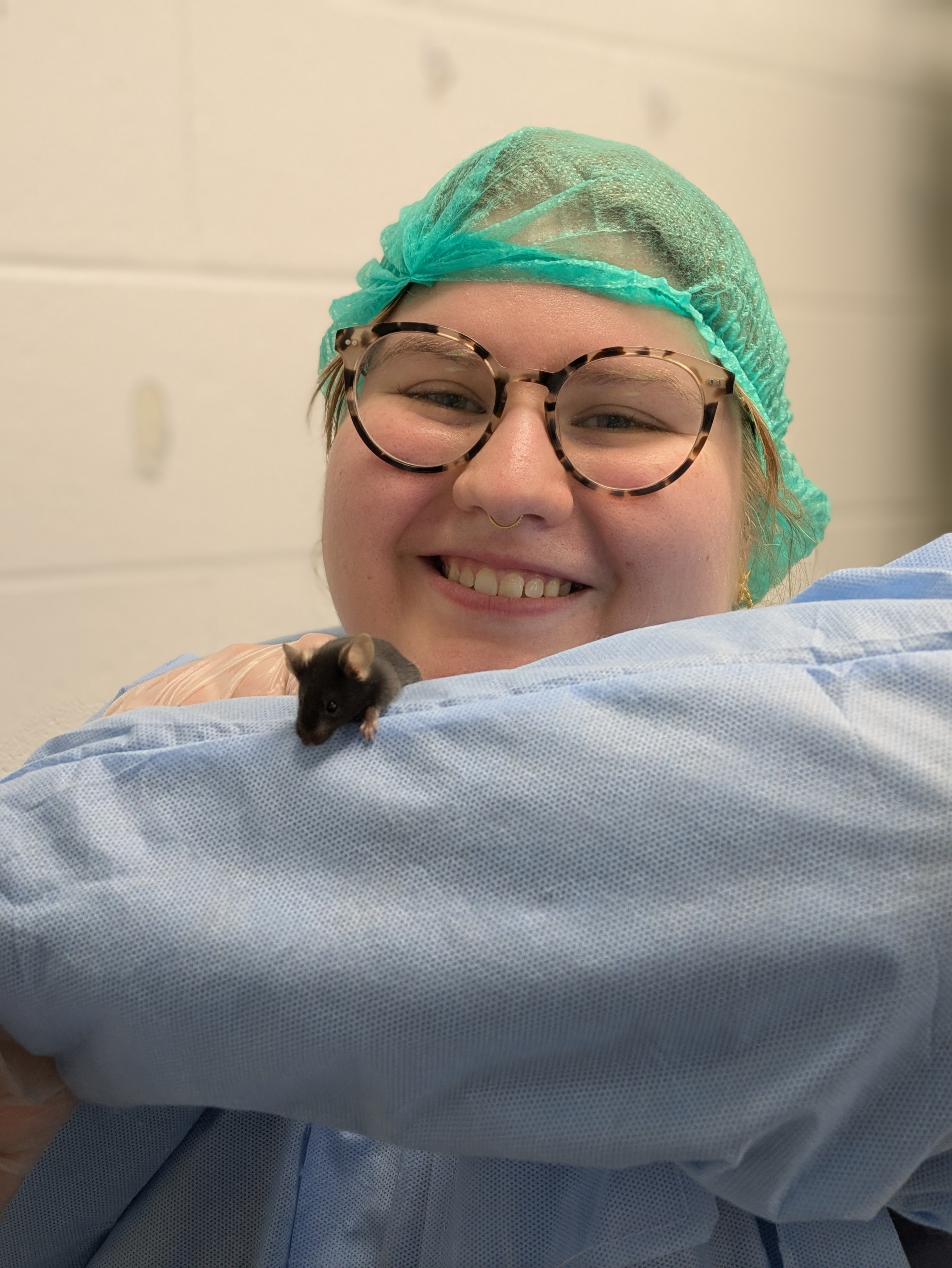
A research mouse on a sleeve of a lab coat.

We ran a short trial in mice to find out if our two bacterial cultures that were so successful in the lab would also be effective when put back into the chaotic and competitive ecosystem of the gut. To further challenge our bacteria, we tested their ability to survive and reduce inflammation during a flare up of ulcerative colitis.

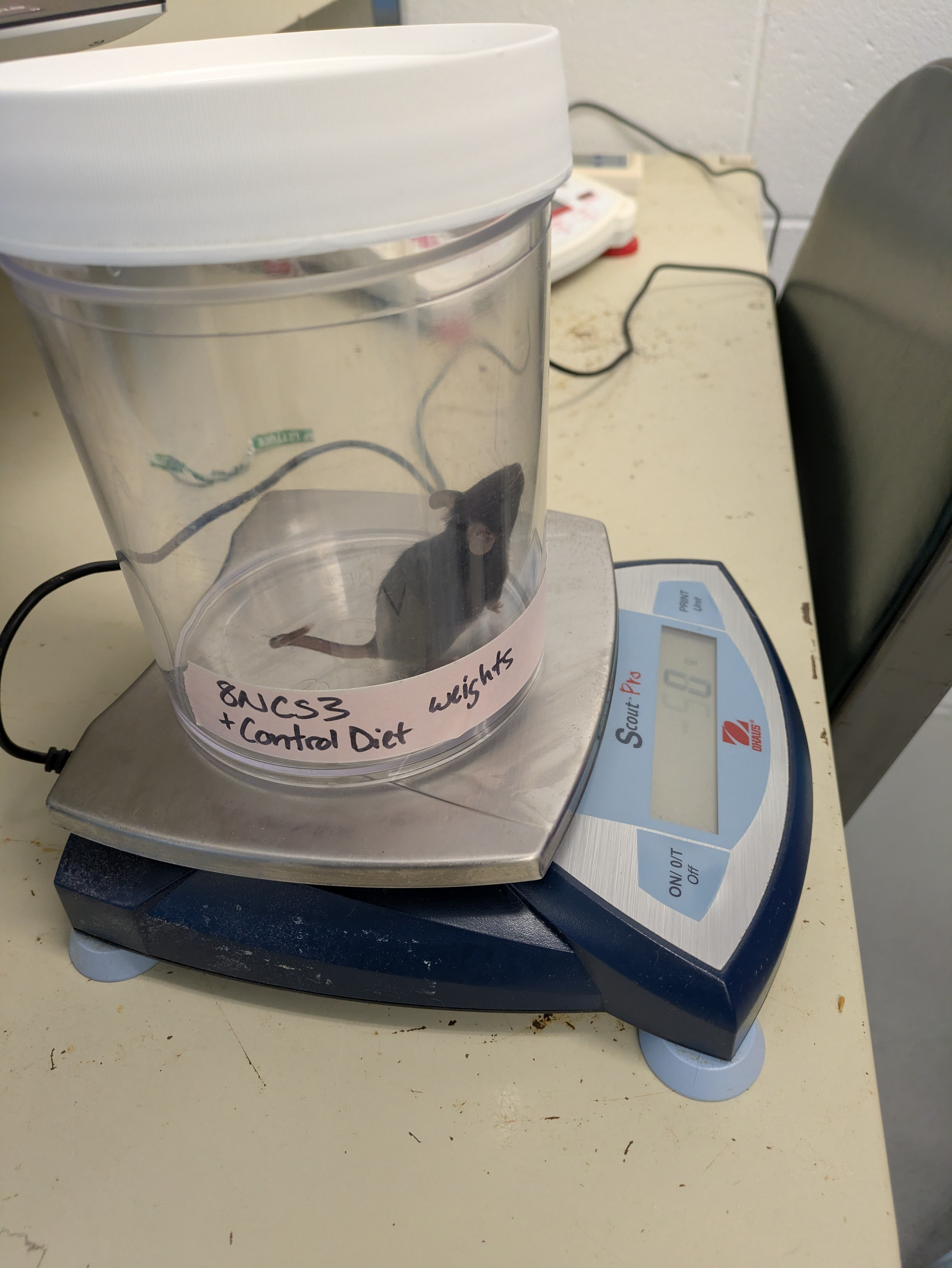
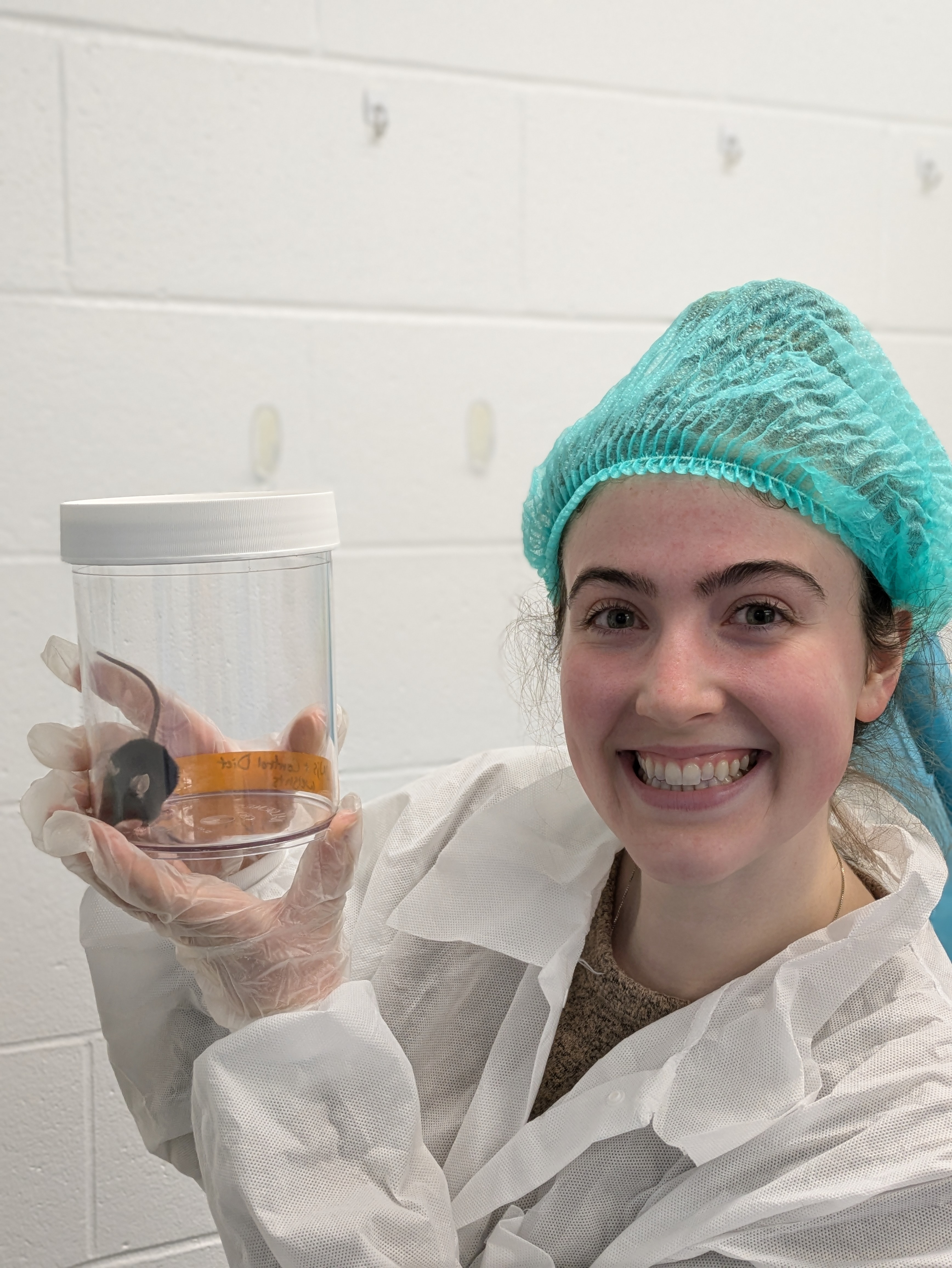
Every day for almost two weeks, we weighed each mouse (shown below) to make sure the colitis did not cause too much weight loss. Sue, Alexis, Johanna, and Ashley were all approved to handle the mice, so we were in charge of picking them up to weigh them. This was no easy task – mice are agile!
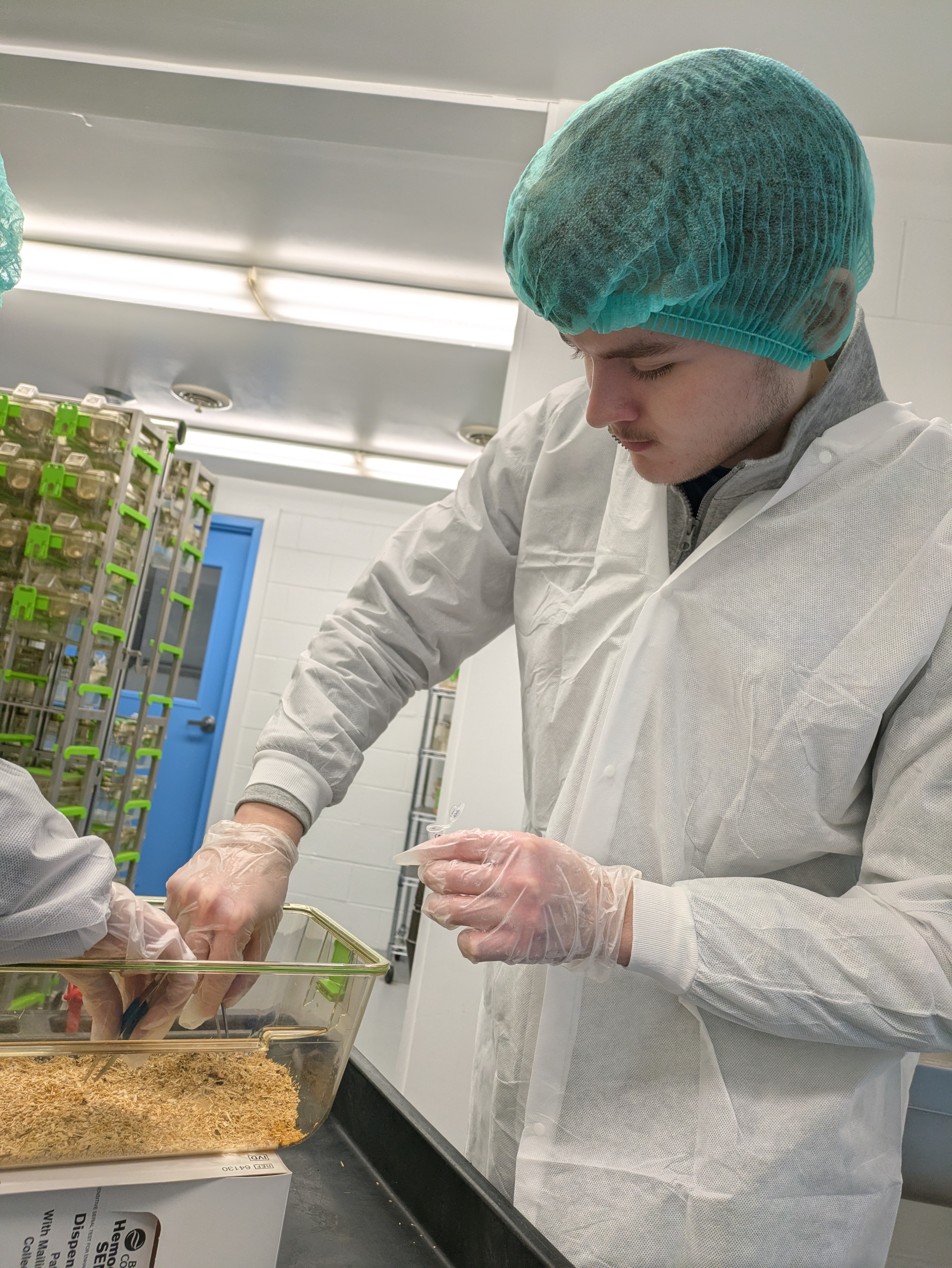
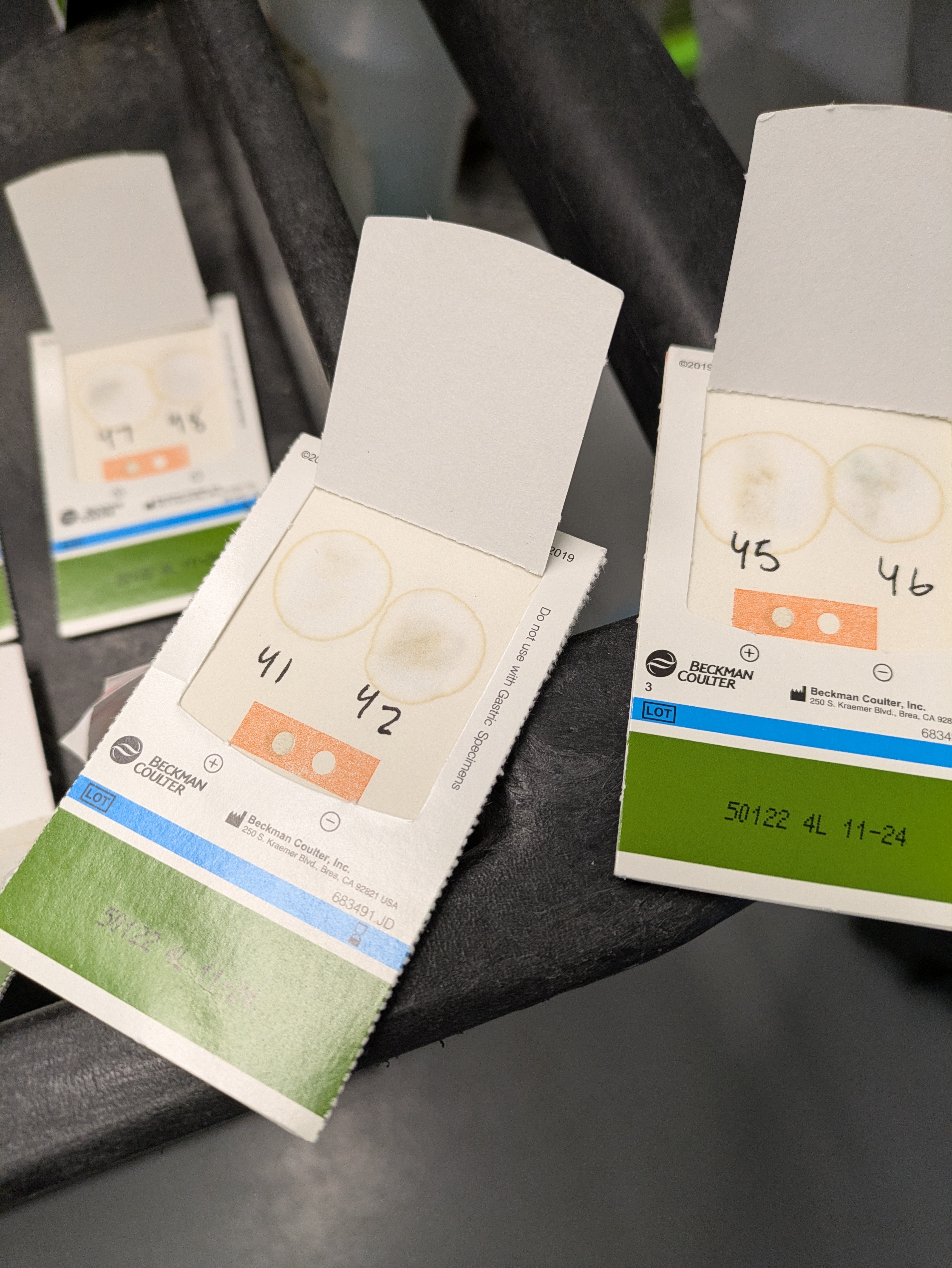
Each day, we also collected feces from the cages to check for diarrhea, or for blood, which are two symptoms of colitis. Our undergrads Madison and Brian worked tirelessly to tweeze feces into collection tubes, and to use the FOBT cards to check for blood.
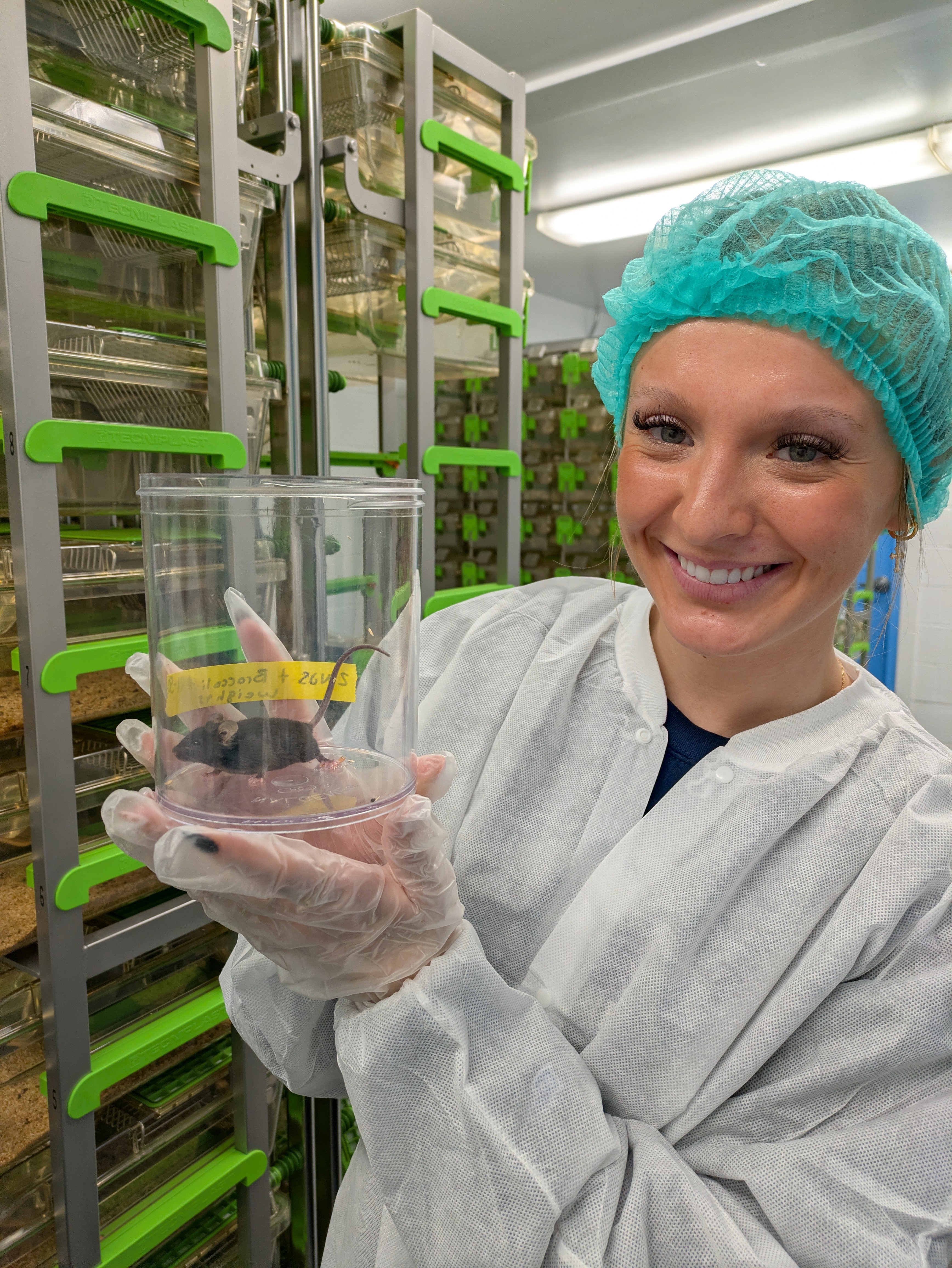
A research mouse picks up a cube of gelain and eats it.

We used custom made gelatin cubes filled with probiotic to deliver our treatments. The gelatin stuck to the side of the cages which allowed us to easily see that our mice were consuming their probiotic.

It will take us months to process some of the samples we collected which are the most cost-effective to run, and the rest will have to wait in the freezer until we receive more funding (which could take months or years as the changes to the federal funding system have doubled the time it takes for proposals to be reviewed and the ~5-20% of accepted projects to receive funding). We collected >500 fecal samples (each with 5 – 10 pellets/sample), 200 gut samples, 100 intestinal tissue samples, and 50 blood samples! To help maximize the benefits of this experiment and use all parts of these mice we also collected samples for a course at UMaine which teaches pre-medical, pre-veterinary, nursing, biology, and other health-focused students how to make and read tissue slides, to better understand anatomy, physiology, developmental biology, and health. 

Still, we gained valuable data already, and the experiment provided a unique opportunity for students to receive hands-on-training for evaluating disease intensity using fecal samples, using tissues to make slides for histology, evaluating intestinal damage to tissues, collecting samples using aseptic technique to prevent contaminating them, working safely with microbes, and collaboratively working as a team to advance knowledge of health.  Myself and our grad team (Johanna, Alexis, and Ashley) managed the project, and our undergrad team (Madison, Brian, Aaron, and Alexandra) were there to help us label ~1000 tubes for sample collection, and collect hundreds of fecal pellets out of the used bedding so we could track mouse microbes. Undergrads were also able to learn some general mouse care and research facility care from the ‘mouse house’ technician at UMaine, Alexis R. A former UMaine undergrad in the AVS program, Alexis R. manages and cares for a wide variety of animal species and she was instrumental in helping us manage our intensive sample collection schedule.
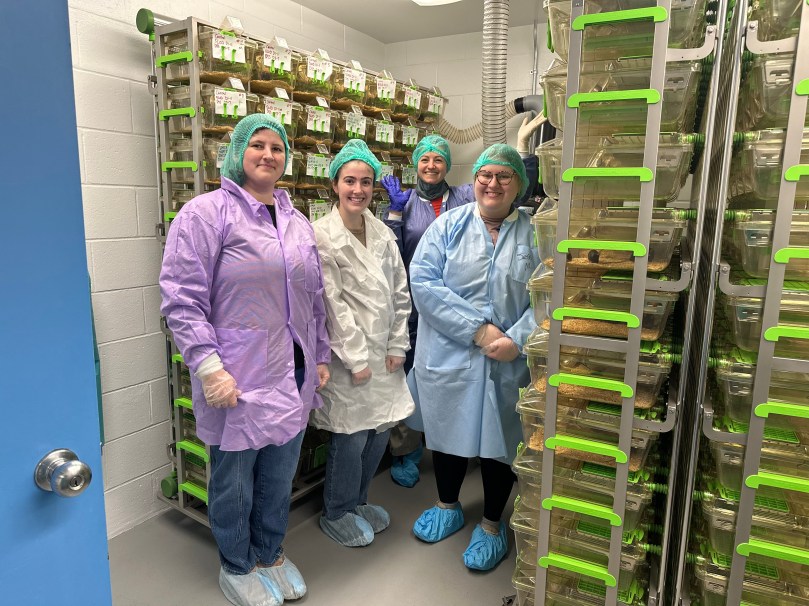
Johanna, Ashley, Alexis, and Sue wearing gloves, hairnets, booties, and gowns, and standing in front of racks of mice.
Johanna, Ashley, Alexis, and Sue put in long hours during the mouse trial to collect samples each day.

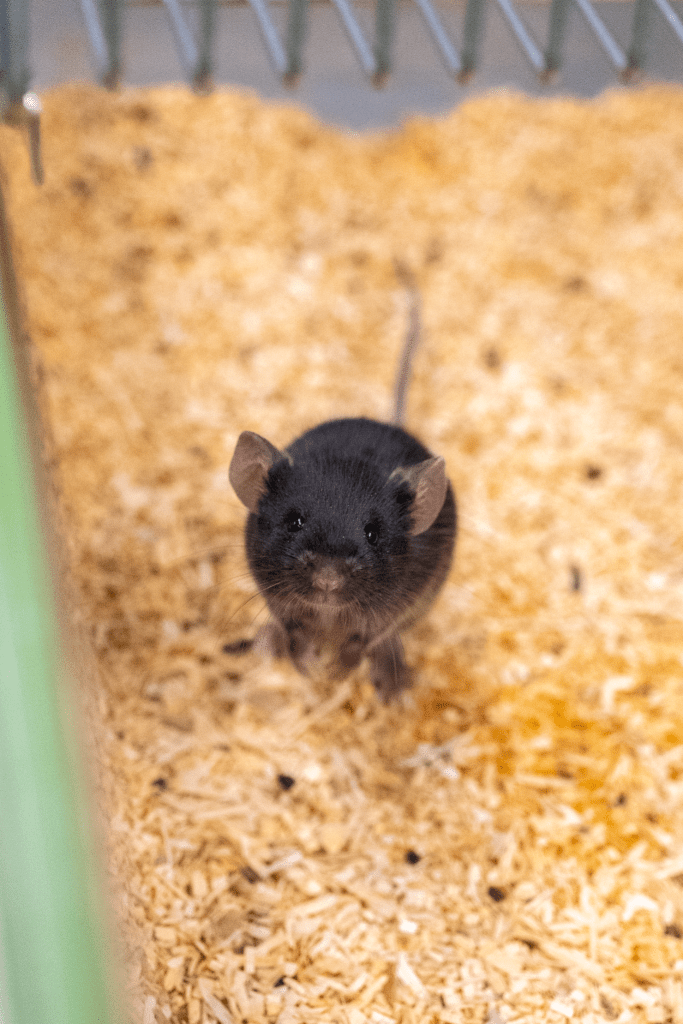
A research mouse is standing in its cage and looking at the camera.

This project was made possible by the help of many. Again, we are grateful to Alexis and the UMaine CORE staff who not only support research at specialized facilities but helped us to afford to run our pilot project, to Emma who runs the UMaine Electron Microscopy Lab for teaching students histology and microscopy, to all the undergraduate and graduate students who worked tirelessly to help each other on this project, and to the funding agencies which supporting the lab work that helped us get to this project: the Biomedical Association of Maine (graduate awards), the Crohn’s and Colitis Foundation (graduate awards), the NIH NIDDK, and the USDA.

MSE speaker series starts next week, features talks on diet and gut microbes, early life and breastfeeding, soil health, equitable research, how microbes are part of us, and more!

The Microbes and Social Equity Speaker Series starts next week! Join us for talks on microbiomes and health, equity in research, and more!

Spring 2023; January 18 – May, Wednesdays from 11:00 AM – 12:00 PM EST.

Presented over Zoom. Registration is free!

You can register for any or all of the events from the same link here.


Gut microbiome, nutrition, and food security

Theme organized by Sue Ishaq

“Broccoli Sprout Bioactives and Gut Microbiota: A Dietary Approach for Prevention and Management of Inflammatory Bowel Disease”

Dr. Yanyan Li, PhD

January 18, 2023; Wednesday,11:00 AM – 12:00 PM EST. Register for the Zoom link here.

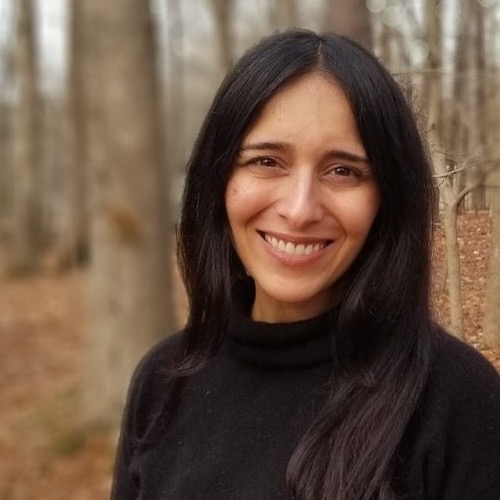
Headshot of Dr. Yanyan Li

Dr. Li is an Assistant Professor at the University of Maine. She received her PhD degree in Nutrition and Food Science from Ohio State University. She has been dedicating herself to studying the mechanisms of diet-derived bioactives in protecting against disease process and harnessing the gained knowledge to develop dietary approaches for disease prevention and management for more than a decade. Since 2016, she has been focusing on the interactions between dietary components, in particular glucosinolates from cruciferous vegetables such as broccoli and broccoli sprouts, and gut microbiota, aiming to develop a combined approach for inflammatory bowel disease. Her current research projects are funded by NIH/NIDDK, USDA/NIFA AFRI Foundational Program, and nutrition research programs of private foundations.

Added by Sue: For the past few years, Yanyan and her colleagues have also included the Ishaq Lab, and has led to a rewarding and productive collaboration which has resulted in several recent and forthcoming publications, funding awards, and students trained.

“Exploring Health Determinants, Gut Microbiome, and Health Outcomes in Immigrants”

Dr. Dany Fanfan, Ph.D., MSN, RN

January 25, 2023; Wednesday,11:00 AM – 12:00 PM EST. Register for the Zoom link here.

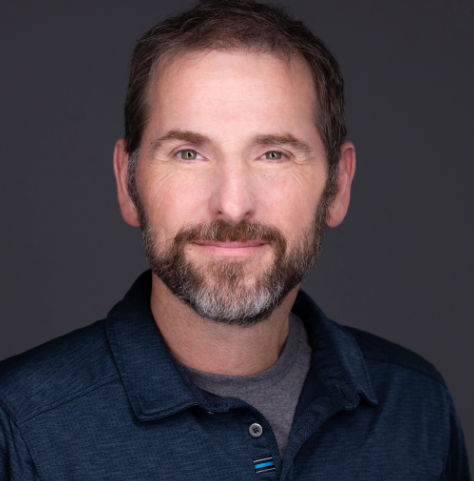
Headshot of Dr. Dany Fanfan

Dr. Dany Fanfan is an Assistant Professor at the University of Florida (UF) College of
Nursing. Before becoming a faculty, she completed a Bachelor’s degree in Nursing at
Florida International University, Master’s and Doctoral degrees in Nursing at the
University of South Florida, and a post-doctoral fellowship at UF focused on mental
health research with and for underrepresented populations (e.g., Latino/Haitian
immigrant farmworkers, rural Latino/LGBTQ+ adolescents) using a community-based
participatory research approach and social network analysis. She teaches and engages in
multidisciplinary mixed-methods research dedicated to advancing the science and
practice of reducing mental health disparities among minoritized immigrants by
exploring the underlying biobehavioral, cultural, and psychosocial mechanisms of
distress symptoms. With support from an NIH K23 career development award, she is
now incorporating microbial metagenomics and bioinformatics methods in her research
by examining the associations between post-migration social determinants of health,
gut microbiome, and psychological distress among recent Haitian immigrants. The long-
term goal of her interdisciplinary translational program of research is to identify and
address the conditions that create and sustain health disparities in minoritized
populations as well as develop and test culturally responsive interventions that target
social, behavioral, and biological determinants of health to improve long-term health
outcomes, reduce behavioral and mental health disparities, and increase health equity.

“Personalized nutrition and the human gut microbiome”

Dr. Sean Gibbons, PhD

February 1, 2023; Wednesday,11:00 AM – 12:00 PM EST. Register for the Zoom link here.

Headshot of Dr. Sean Gibbons.

Dr. Sean Gibbons is an Associate Professor at the Institute for Systems Biology, a non-profit research consortium. His lab develops computational and experimental tools for exploring and manipulating host-microbe systems.

Added by Sue: The work from Sean’s group and collaborators has been reshaping the way that host microbial researchers approach their work, by revealing trends through large metanalyses and novel perspectives on using data. Their most recent work has evaluated host-microbial interactions, metabolites, and health.

For the last three years, Sean’s lab has hosted the ISB Virtual Microbiome Series, which is freely available and attracts several thousand participants. The series includes a two day workshop that teaches data analysis skills, and a day-long symposium featuring discussions of current discoveries and conceptualizes the future of microbiome research.

Finally, Sean and his research group have been making science a more welcoming and inclusive place.

Panel discussion on Gut microbiome, nutrition, and food security

February 8, 2023; Wednesday,11:00 AM – 12:00 PM EST. Register for the Zoom link here.

This week, we’ll be bringing all of our Theme 1 speakers back to engage in a panel discussion together on the gut microbiome. Panel will be hosted by Sue Ishaq.

Please note, this session will only be featured live in real-time and will not be recorded.


Prenatal to early-life microbes and health

Theme organized by Emily Wissel.

Speaker confirmed but time TBD:

Dr. Eldin Jašarević, PhD. Magee-Womens Research Institute, University of Pittsburgh School of Medicine

Speaker 4 TBD

February 15, 2023; Wednesday,11:00 AM – 12:00 PM EST. Register for the Zoom link here.

“Intersecting breastmilk and microbiome science with the complexity of working with humans in a clinical context”

Dr. Merilee Brockway, PhD RN IBCLC, University of Calgary

February 22, 2023; Wednesday,11:00 AM – 12:00 PM EST. Register for the Zoom link here.

Dr. Merilee Brockway is a PhD prepared nurse and International Board-Certified Lactation Consultant (IBCLC) with expertise in maternal-child health, infant feeding, and patient engagement. She completed my PhD in nursing at the University of Calgary, examining maternal breastfeeding self-efficacy and infant feeding outcomes in moderate and late preterm infants. She also completed a three year post-doctoral fellowship at the University of Manitoba in Dr. Meghan Azad’s THRIVE Discovery Lab, exploring clinical applications of donor human milk for preterm infants. As an Assistant Professor at the University of Calgary, her program of research examines the use of human milk as a clinical intervention to mitigate early life perturbations to the infant microbiome.  

Speaker 6 TBD

March 1, 2023; Wednesday,11:00 AM – 12:00 PM EST. Register for the Zoom link here.

Panel discussion on Prenatal to early-life microbes and health

March 8, 2023; Wednesday,11:00 AM – 12:00 PM EST. Register for the Zoom link here.

This week, we’ll be bringing all of our Theme 2 speakers back to engage in a panel discussion together on the microbiome in early life. Panel will be hosted by Emily Wissel.

Please note, this session will only be featured live in real-time and will not be recorded.


The environment, microbes, and us

Anthropology Theme organized by Katherine Daiy and Kieran O’Doherty, and Environmental Theme organized by Mallory Choudoir, Mustafa Saifuddin, and Hannah Holland-Moritz.

Speakers confirmed by time TBD:

  • Dr. Stephanie Schnorr, University of Vienna, “The human-valued interest in microbiome science is the distillation of human-environmental interactions”

“Microbiome Research with the Yanomami”

David Good, University of Guelph

March 22, 2023; Wednesday,11:00 AM – 12:00 PM EST. Register for the Zoom link here.

David Good

David Good is a PhD student in microbiology at the University of Guelph, Ontario. His general research goal is characterizing the structural and functional microbial diversity of his Yanomami family, the Irokae-teri, located in the Amazon rainforest of Venezuela. They are of great interest in the microbiome field since the Irokae-teri live fully immersed in the rainforest environment and subsist by an active lifestyle of hunting-gathering and small-scale gardening. Furthermore, their relative isolation deep in the Amazon limits their exposure to microbiome stressors such as antibiotics, highly refined and processed foods, industrial toxins and pollutants, food preservatives, etc. David will discuss this unique and rare opportunity to advance our understanding of the human microbiome of a community largely unperturbed by westernization, while building global awareness on the importance of protecting these few remaining isolated indigenous societies. However, such research brings numerous challenges surrounding bioethics. David hopes to build dialogue around going beyond simple compliance in microbiome research, and how the Yanomami have the right to self-determination and harness their bioeconomic potential to protect their home.

Photo sourced from: https://www.jointhegoodproject.org/team

“Religion, Race and the Microbe: Theological Analysis of Public Health Resistance in the Pandemicine”

Dr. Aminah Al-Attas Bradford, PhD.

March 29, 2023; Wednesday,11:00 AM – 12:00 PM EST. Register for the Zoom link here.

Dr. Bradford is a research scholar in NC State’s Public Science Lab for Ecology, Evolution and Biodiversity of Humans and Food where she draws together interdisciplinary engagement of microbes, exploring fermentation, probiotic health and pathogens. Working at the intersections of religion, microbiology, ecology and race, Dr. Bradford’s research investigates the historical entanglement of disease theories, public health strategy, Christian thought, and coloniality to cultivate ecological wisdom, scientific engagement and the pursuit of environmental justice in religious contexts. She asks questions like, how have the historical entanglement of epidemiology, coloniality and Christian teaching contributed to the disease of both body and planet, the disproportionate effects of which are born by black and brown communities? How has demonizing the microbe paved the way for oppression of those deemed sub-human? And how might microbiome science reform Christian thought that often disrupts engagement of science and is complicit in exploitative and exclusionary ways of being?

Speaker 9 TBD

April 5, 2023; Wednesday,11:00 AM – 12:00 PM EST. Register for the Zoom link here.

“Anthropology, Microbiomes, and Antimicrobial Resistance”

Dr. Cecil Lewis, PhD.

April 12, 2023; Wednesday,11:00 AM – 12:00 PM EST. Register for the Zoom link here.

Dr. Cecil Lewis is a Professor at the University of Oklahoma.

Image sourced from: https://cecilmlewis.com/

Dr. Anna Krzywoszynska, PhD.

April 19, 2023; Wednesday,11:00 AM – 12:00 PM EST. Register for the Zoom link here.

Dr. Anna Krzywoszynska is starting a position as an Associate Professor of Transdisciplinary Human-Environment Relations, Faculty of Humanities, University of Oulu, Finland.

Speaker 12 TBD

April 26, 2023; Wednesday,11:00 AM – 12:00 PM EST. Register for the Zoom link here.

Panel Discussion on the environment, microbes, and us

May 3, 2023; Wednesday,11:00 AM – 1:00 PM EST. Register for the Zoom link here.

This week, we’ll be bringing all of our Theme 3 speakers back to engage in a panel discussion together on the importance of environmental microbiomes and our place in ecosystems, and then will continue talking about soil health. Panel will be hosted by Katherine Daiy, Kieran O’Doherty, Mallory Choudoir, Mustafa Saifuddin, and Hannah Holland-Moritz.

Please note, this session will only be featured live in real-time and will not be recorded.


Logo designed by Alex Guillen

Johanna’s review published on how gut microbes can make anti-inflammatory compounds when you eat broccoli

A massive literature review led by Johanna Holman, and featuring our collaborative team of broccoli sprout and microbes researchers, was accepted for publication!

As part of her master’s of science thesis, Johanna Holman reviewed hundreds of journal articles on anti-inflammatory, health-promoting dietary compounds in broccoli and other vegetables or fruits, and how microbes in the digestive tract can transform inactive precursors from foods into those beneficial compounds. This is part of a broader research collaboration on how glucoraphanin in broccoli sprouts can be made into sulforaphane, which acts as an anti-inflammatory in humans. Humans are unable to convert glucoraphanin to sulforaphane, and a small amount of this occurs naturally thanks to enzymes in the broccoli sprouts. But, certain gut microbes can make the conversion and this has helped resolve colitis and other symptoms in mice in laboratory trials (manuscripts in preparation).

A diagram with two panels, and a cartoon mouse in the middle.  The cartoon mouse is eating broccoli, and a cartoon of the digestive tract is overlaid on the mouse's abdomen. Lines emanating from the broccoli point to the left panel, and show the compound glucoraphanin being converted into sulforaphane by the myrosinase enzyme. Lines emanating from the colon of the mouse point to the panel on the right, showing the same biochemical conversion by gut microbes.
Artwork by Johanna Holman.

If you aren’t familiar with broccoli sprouts, a lovely review on their history, current food culture, and safe production was just published by some of our colleagues: Sprout microbial safety: A reappraisal after a quarter-century.

Check out the review

Holman, J., Hurd, M., Moses, P.,  Mawe, G.,  Zhang, T., Ishaq, S.L., Li, Y. 2022. Interplay of Broccoli/Broccoli Sprout Bioactives with Gut Microbiota in Reducing Inflammation in Inflammatory Bowel Diseases. Journal of Nutritional Biochemistry, in press.

Abstract

Inflammatory Bowel Diseases (IBD) are chronic, reoccurring, and debilitating conditions characterized by inflammation in the gastrointestinal tract, some of which can lead to more systemic complications and can include autoimmune dysfunction, a change in the taxonomic and functional structure of microbial communities in the gut, and complicated burdens in a person’s daily life. Like many diseases based in chronic inflammation, research on IBD has pointed towards a multifactorial origin involving factors of the host’s lifestyle, immune system, associated microbial communities, and environmental conditions. Treatment currently exists only as palliative care, and seeks to disrupt the feedback loop of symptoms by reducing inflammation and allowing as much of a return to homeostasis as possible. Various anti-inflammatory options have been explored, and this review focuses on the use of diet as an alternative means of improving gut health. Specifically, we highlight the connection between the role of sulforaphane from cruciferous vegetables in regulating inflammation and in modifying microbial communities, and to break down the role they play in IBD.

MSE seminar today: Dr. Liat Shenhav, “It’s about time: ecological and eco-evolutionary dynamics across the scales”

Today is final installment in the spring 2022 Microbes and Social Equity speaker series! Each week, we have been hearing from a researcher who shared their work and perspective on how microbes are involved in all aspects of our lives, and how those microbes can affect individuals, communities, and ecosystems.

This series ran from Jan 19 – May 4, Wednesdays at 12:00 – 13:00 EST. These are presented over Zoom, and open to researchers, practitioners, students, and the public. Registration is free, and required for each individual seminar you would like to attend. You can find the full speaker list, details, and recordings from previous talks here.


“It’s about time: ecological and eco-evolutionary dynamics across the scales”

Dr. Liat Shenhav, PhD

May 4, 2022, 12:00 – 13:00 EST. Register for this free talk.

Dr. Liat Shenhav. Photo borrowed from LinkedIN.

About the speaker: Dr. Liat Shenhav is an independent research fellow at the Center for Studies in Physics and Biology at the Rockefeller University. Prior to that, Liat received a B.Sc. and. M.Sc. in Mathematics and Statistics from Tel-Aviv University, and a Ph.D. in Computer Science from University of California, Los Angeles. Liat’s research focuses on developing computational methods for studying spatiotemporal dynamics of complex ecosystems and their contribution to human health and disease.

About the talk: Complex microbial communities play an important role across many domains of life, from the female reproductive tract, through the oceans, to the plant rhizosphere. The study of these communities offers great opportunities for biological discovery, due to the ease of their measurement, the ability to perturb them, and their rapidly evolving nature. Yet, their complex composition, dynamic nature, and intricate interactions with multiple other systems, make it difficult to extract robust and reproducible patterns from these ecosystems. To uncover their latent properties, I develop models that combine longitudinal data analysis and statistical learning, and which draw from principles of community ecology, complexity theory and evolution. 

I will briefly present methods for decomposition of microbial dynamics at an ecological scale (Shenhav et al., Nature Methods 2019; Martino & Shenhav et al., Nature Biotechnology). Using these methods we found significant differences in the trajectories of the infant microbiome in the first years of life as a function of early life exposures, namely mode of delivery and breastfeeding. I will then show how incorporating eco-evolutionary considerations allowed us to detect signals of purifying selection across ecosystems. I will demonstrate how interactions between evolution and ecology played a vital role in shaping microbial communities and the standard genetics code (Shenhav & Zeevi, Science 2020).

Inspired by these discoveries, I am currently expanding the scope beyond the microbiome, modeling multi-layered data on human milk composition. I will present results from an ongoing study in which I am building integrative models of nasal, gut and milk microbiota, combined with human milk components, to predict infant respiratory health. I found that the temporal dynamics of microbiota in the first year of life, mediated by milk composition, predict the development of chronic respiratory disease later in childhood. These models, designed to identify robust spatiotemporal patterns, would help us better understand the nature and impact of complex ecosystems like the microbiome and human milk from the time of formation and throughout life.

Institutional profile page.


MSE seminar today: Dr. Maya Hey, “What Connects Us: stories of working across difference with humans and microbes”

Today is the last installment in the spring 2022 Microbes and Social Equity speaker series! Each week, we’ll hear from a researcher who will share their work and perspective on how microbes are involved in all aspects of our lives, and how those microbes can affect individuals, communities, and ecosystems.

This series will run from Jan 19 – May 4, Wednesdays at 12:00 – 13:00 EST. These are presented over Zoom, and open to researchers, practitioners, students, and the public. Registration is free, and required for each individual seminar you would like to attend. You can find the full speaker list, details, and registration links for each seminar in the series here.

“What Connects Us: stories of working across difference with humans and microbes”

Dr. Maya Hey, PhD

April 27, 2022, 12:00 – 13:00 EST. Register for this free talk.

About the speaker: Dr. Maya Hey is a postdoctoral researcher with the Future Organisms project as part of an international trans-disciplinary team investigating Responsible Research and Innovation (RRI). She brings a humanities and social science perspective to the life sciences, calling upon feminist, intersectional, and multispecies approaches to map out human response-ability in a more-than-human world. She is vested in questions related to fermentation, particularly as they relate to discourses of health, the rhetoric of microbiomes, and how we come to know microbial life.”

Professional page.

Talk summary: What connects us across different scales of life? This talk examines three case studies—on fermentation, conversation, and innovation—to better understand how micro-organisms affect macro-cultures and vice-versa, with emphasis on working with difference instead of resolving them. 

MSE seminar today: Dr. Catherine Girard, “Microbiomes and climate change at the intersection of human and ecosystem health in the North”

Today there is another installment in the spring 2022 Microbes and Social Equity speaker series! Each week, we’ll hear from a researcher who will share their work and perspective on how microbes are involved in all aspects of our lives, and how those microbes can affect individuals, communities, and ecosystems.

This series will run from Jan 19 – May 4, Wednesdays at 12:00 – 13:00 EST. These are presented over Zoom, and open to researchers, practitioners, students, and the public. Registration is free, and required for each individual seminar you would like to attend. You can find the full speaker list, details, and registration links for each seminar in the series here.

“Microbiomes and climate change at the intersection of human and ecosystem health in the North”

Dr. Catherine Girard, PhD

April 20, 2022, 12:00 – 13:00 EST. Register for this free talk.

Portrait photo of Dr. Catherine Girard. Photo courtesy of Dr. Girard.

Dr. Catherine Girard is an Associate Professor at the Université du Québec à Chicoutimi, where she works on the response of microbiomes to climate change in the Arctic. In the past, she has worked on the human microbiome and how it is shaped by tradition, culture and global warming. She now explores how ice-dwelling microbes are responding to change, from a conservation and ecosystem service perspective. She is involved in collaborative research with partners from the Inuit Nunangat, and views microbiomes as part of our heritage.

Professional page.

MSE seminar today: Dr. Patricia Kaishian, “Deconstructing the individual: how science can materially advance using queer and feminist theory”

Today there is another installment in the spring 2022 Microbes and Social Equity speaker series! Each week, we’ll hear from a researcher who will share their work and perspective on how microbes are involved in all aspects of our lives, and how those microbes can affect individuals, communities, and ecosystems.

This series will run from Jan 19 – May 4, Wednesdays at 12:00 – 13:00 EST. These are presented over Zoom, and open to researchers, practitioners, students, and the public. Registration is free, and required for each individual seminar you would like to attend. You can find the full speaker list, details, and registration links for each seminar in the series here.

Deconstructing the individual: how science can materially advance using queer and feminist theory

Dr. Patricia Kaishian, PhD

April 13, 2022, 12:00 – 13:00 EST. Register for this free talk.

Dr. Patricia Kaishian. Photo courtesy of Dr. Kaishian.

About the speaker: Dr. Patricia Kaishian is a visiting professor of Biology at Bard College in NY. Her scientific research is focused on the taxonomy of Laboulbeniales fungi, fungal biodiversity, and exploration of the use of certain fungi as potential indicators of ecosystem health. Beyond more traditional scientific research, Patricia works in the realms of philosophy of science, feminist bioscience, ecofeminism and queer theory, exploring how mycology and other scientific disciplines are situated in and informed by our sociopolitical landscape. Her publication, The science underground: mycology as a queer discipline, appears in the journal Catalyst: Feminism, Theory & Technoscience. Patricia is also a founding member of the International Congress of Armenian Mycologists (ICAM), a research organization comprised of ethnically Armenian mycologists who seek to simultaneously advance mycological science and Armenian sovereignty and liberation.

Professional site.

This talk will explore the field of mycology and the mycobiome through a theoretical framework rooted in queer and feminist theories, as well as philosophy of science and Traditional Ecological Knowledge. The goal is to challenge, push, and explore central tenets of institutional science, and to socially and historically situate current research dilemmas in mycology and microbiome studies. By excavating and laying bare ingrained, systemic biases in scientific institutions, we can attempt to disarm fallacious assertions of “purity” in science and better understand bodies at various scales.

MSE seminar today: Dr. Kristina Lyons, “Decomposition as Life Politics”

Today there is another installment in the spring 2022 Microbes and Social Equity speaker series! Each week, we’ll hear from a researcher who will share their work and perspective on how microbes are involved in all aspects of our lives, and how those microbes can affect individuals, communities, and ecosystems.

This series will run from Jan 19 – May 4, Wednesdays at 12:00 – 13:00 EST. These are presented over Zoom, and open to researchers, practitioners, students, and the public. Registration is free, and required for each individual seminar you would like to attend. You can find the full speaker list, details, and registration links for each seminar in the series here.

“Decomposition as Life Politics” 

Dr. Kristina Lyons, PhD

April 6, 2022, 12:00 – 13:00 EST. Register for this free talk.

About the speaker: Dr. Kristina Lyons is an Assistant Professor of Anthropology and with the Penn Program in Environmental Humanities at the University of Pennsylvania. She also holds affiliations with the Center for Experimental Ethnography and the Center for Latin American and Latinx Studies. Kristina’s current research is situated at the interfaces of socio-ecological conflicts, science, and legal studies in Colombia and Latin America. Her manuscript, Vital Decomposition: Soil Practitioners and Life Politics (Duke 2020), was awarded honorable mention by the Bryce Wood Book Award committee from the Latin American Studies Association. She has also collaborated on the creation of soundscapes, street performances, photographic essays, graphic novels, popular education audiovisual projects, community radio programs, digital storytelling platforms, and various forms of literary writing.

Professional page.

Talk summary: How does attention to and stewardship of soils point to alternative frameworks for living and dying? Dr. Lyons explores the way life strives to flourish in the face of violence, criminalization, and poisoning produced by militarized, growth-oriented development in the midst of the U.S.-Colombia war on drugs.

MSE seminar today: Dr. Douglas Call, “Risk factors for colonization with antibiotic-resistant bacteria in Guatemala and East Africa”

Today there is another installment in the spring 2022 Microbes and Social Equity speaker series! Each week, we’ll hear from a researcher who will share their work and perspective on how microbes are involved in all aspects of our lives, and how those microbes can affect individuals, communities, and ecosystems.

This series will run from Jan 19 – May 4, Wednesdays at 12:00 – 13:00 EST. These are presented over Zoom, and open to researchers, practitioners, students, and the public. Registration is free, and required for each individual seminar you would like to attend. You can find the full speaker list, details, and registration links for each seminar in the series here.

“Risk factors for colonization with antibiotic-resistant bacteria in Guatemala and East Africa”

Dr. Douglas Call, PhD

March 30, 2022, 12:00 – 13:00 EST. Register for this free talk.

Dr. Douglas Call. Photo courtesy of Dr. Call

About the speaker: Dr. Douglas Call is a Regents Professor of molecular epidemiology at the Paul G. Allen School for Global Health, and the Associate Director for Research and Graduate Education, at Washington State University. In 2014 he became a Fellow with the American Association for the Advancement of Science in recognition for his contributions to food and water safety, particularly through molecular epidemiology of antibiotic resistant bacteria in agricultural systems. Dr. Call has published over 235 peer-reviewed papers and has ongoing antibiotic resistance research projects in the U.S., Kenya, Brazil and Guatemala with funding from NIH, USDA, and the CDC. He has consulted for the Gates Foundation and Fleming Fund regarding antibiotic resistance, and he is a member of the Board of Directors for the Washington State Academy of Science. In 2021 he received the Washington State University Sahlin Eminent Faculty Award. Dr. Call is currently serving as the chair of the Faculty Senate at Washington State University, and he is a regular columnist for the Moscow-Pullman Daily News where he frequently writes about science and science policy.

Faculty profile page.

MSE speaker series awarded a grant from the Cultural Affairs/Distinguished Lecture Series Fund!

The Microbes and Social Equity 2022 speaker series has been awarded additional funding support by a grant from the Cultural Affairs/Distinguished Lecture Series Fund at the University of Maine!

This award will complement the previous funding support we received from the University of Maine Institute of Medicine, and collectively these funds allow us to compensate speakers for their time and effort putting these talks and discussions together.

The series runs every Wednesday at noon from January 19th through May 4th this year, and we have had some incredible presentations and discussions. Registration links for the remaining events, and links to the recordings of previous events, can be found on the series event page.

Series summary: Microbes influence the health and well-being of all living things—individuals, communities, and broader environmental networks which span internationally. The Microbes and Social Equity group is presenting a speaker series, hosted by the University of Maine Institute of Medicine, which will specifically highlight how the different kinds of microbes that we interact with are influenced by aspects of daily life as well as the social policies which support or oppress livelihoods. The virtual speaker series aims to give students, staff, and faculty at UMaine, as well as our broader educational community, the opportunity to learn about how social equity and microbes intersect to shape health in wide range of settings—how we define what a ‘healthy human microbe’ is, how soil microbes shape community health, what challenges the integration of the microbiome research in a One Health perspective, and more. This speaker series will explore the ways that microbes connect public policy, social disparities, and human health, as well as ongoing research, education, policy, and innovation in this field.