Upcoming presentations at the UMaine Student Symposium 2024

The UMaine Student Symposium is an annual event featuring research presentations from undergraduate and graduate students, and is a way to share student research on campus and with the Maine public.

All of the abstracts for the full program, and previous years, are available here.

The event is free to attend, and will take place at the New Balance Field House on the UMaine Orono Campus, Friday April 12, 2024.

  • 8:00 a.m.: Doors open
  • 8:15 a.m.: UMaine Flute Ensemble
  • 9:00 a.m.: Opening Remarks
  • 9:30-11:30 a.m.: Graduate Poster / Oral / Exhibit Presentations
  • 11:00 a.m. – 1:00 p.m.: Undergraduate Poster / Oral / Exhibit Presentations
  • 9:15 a.m. – 10:30 a.m. – Musical Performances at Minsky Recital Hall, Class of 1944 Hall
  • 1:00 -2:00 p.m.: Student Panel
  • 2:00 p.m.: Keynote Speaker, Sreeram “Ram” Dhurjaty, PhD
  • 2:45 p.m.: Free Parking, Jazz Performance
  • 3:15 p.m.: Awards Ceremony and Closing Remarks

Several students from the Ishaq Lab will be presenting their ongoing work:

Early Life Broccoli Sprout Consumption Confers Stronger Protection Against Enterocolitis in an Immunological Mouse Model of Inflammatory Bowel Disease

Author(s): Lola Holcomb, Johanna Holman, Sue Ishaq. 

Type: poster presentation

Submission category: Biomedical sciences

Abstract number 1001: Inflammatory Bowel Diseases (IBD) are chronic conditions characterized by inflammation of the gastrointestinal tract that heavily burden daily life, result in surgery or other complications, and disrupt the gut microbiome. How IBD influences gut microbial ecology, especially biogeographic patterns of microbial location, and how the gut microbiota can use diet components and microbial metabolites to mediate disease, are still poorly understood. This study aimed to resolve such questions. Many studies on diet and IBD in mice use a chemically induced ulcerative colitis model, despite the availability of an immune-modulated Crohn’s Disease
model. Interleukin-10-knockout (IL-10-KO) mice on a C57BL/6 background, beginning at age 4
or 7 weeks, were fed either a control diet or one containing 10% (w/w) raw broccoli sprouts
which was high in the sprout-sourced anti-inflammatory sulforaphane. Diets began 7 days prior to inoculation with Helicobacter hepaticus, which triggers Crohn’s-like symptoms in these immune-impaired mice, and ran for two additional weeks. Key findings of this study suggest that the broccoli sprout diet increases sulforaphane concentration in plasma; decreases weight stagnation, fecal blood, and diarrhea associated with enterocolitis; and increases microbiota richness in the gut, especially in younger mice. Sprout diets resulted in some anatomically specific bacterial communities in younger mice, and reduced the prevalence and abundance of potentially pathogenic or otherwise-commensal bacteria which trigger inflammation in the IL-10 deficient mouse, for example, Escherichia coli and Helicobacter. Overall, the IL-10-KO mouse model is responsive to a raw broccoli sprout diet and represents an opportunity for more diet-host-microbiome research.
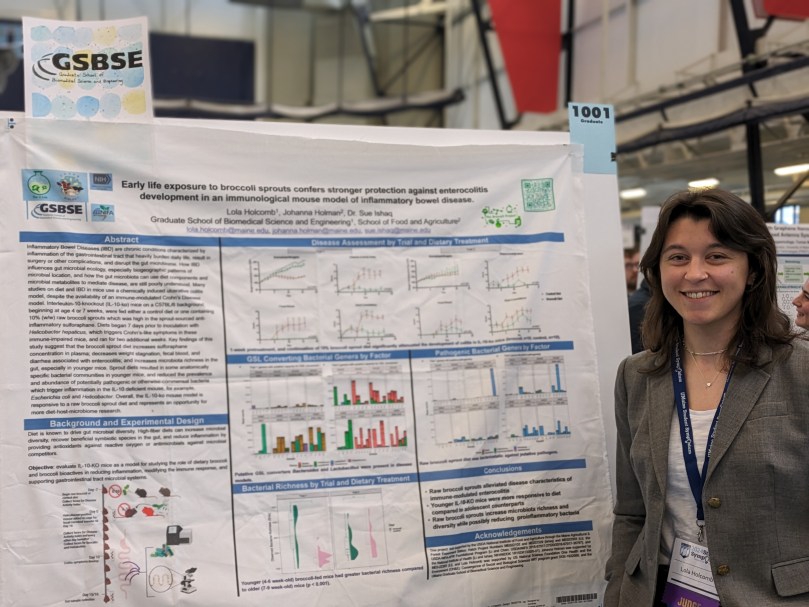
Lola’s poster from the CIMM 2024 meeting.

Steamed Broccoli Sprouts Alleviate Gut Inflammation and Retain Gut Microbiota Against DSS-induced Dysbiosis.

Author(s): Johanna Holman, Lola Holcomb, Sue Ishaq.

Type: oral presentation, 9:45 am

Submission Category: Biomedical Sciences


Abstract number 1002: Inflammatory bowel diseases are devastating conditions of the gastrointestinal tract with limited treatments, and dietary intervention may be effective, affordable, and safe for managing symptoms. Research has identified inactive compounds in broccoli sprouts that may be metabolized by the gut microbiota into key anti-inflammatories. Our research set out to identify biogeographic locations of participating microbiota and correlate that to health outcomes. We fed specific pathogen free C57BL/6 mice either a control diet or a 10% steamed broccoli sprout diet, and gave a three-cycle regimen of 2.5% dextran sulfate sodium in drinking water over 40 days to simulate ulcerative colitis. We monitored body weight, fecal characteristics and lipocalin, and sequenced bacterial communities from the contents and mucosa of the jejunum, cecum, and colon. Mice fed the broccoli sprout diet while receiving dextran sulfate sodium performed better than mice fed control diet for all disease parameters, including increased weight gain (2-way ANOVA, p < 0.05), lower Disease Activity Index scores (2-way ANOVA, p < 0.001), and higher bacterial richness (linear regression model, p < 0.01). Bacterial communities were assorted by gut location except in the mice receiving the control diet and colitis-inducing treatment (Beta-diversity, ANOVA, p < 0.05). Importantly, our results suggest that broccoli sprouts abrogated the effects of dextran sulfate sodium on the gut microbiota, that colitis erases biogeographical patterns of bacterial communities, and that the cecum is not likely to be a contributor to colonic bacteria of interest, in a mouse model of ulcerative colitis.
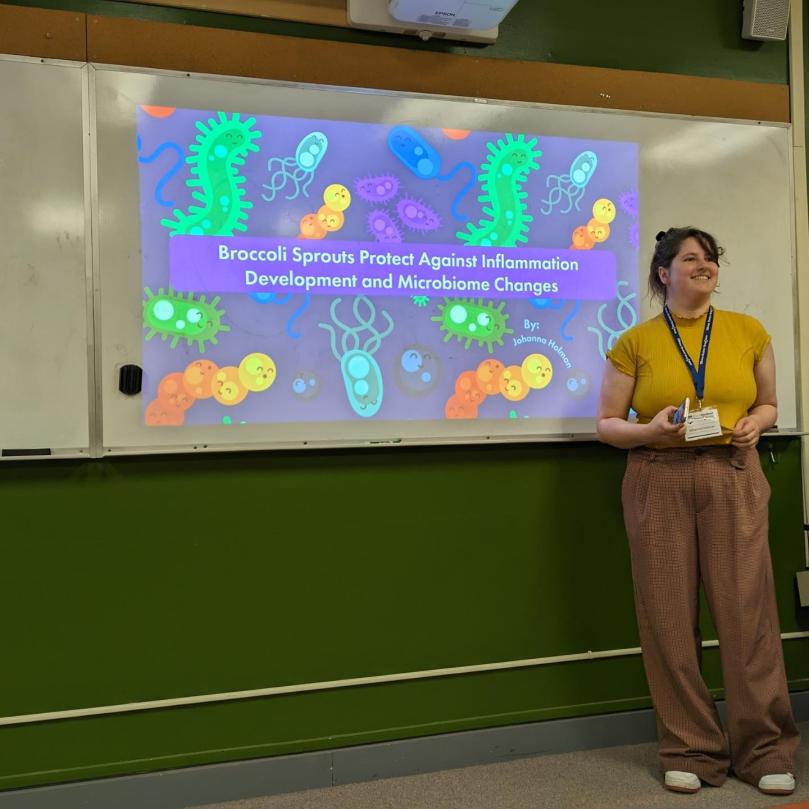
Johanna’s poster from the ASN 2023 meeting.

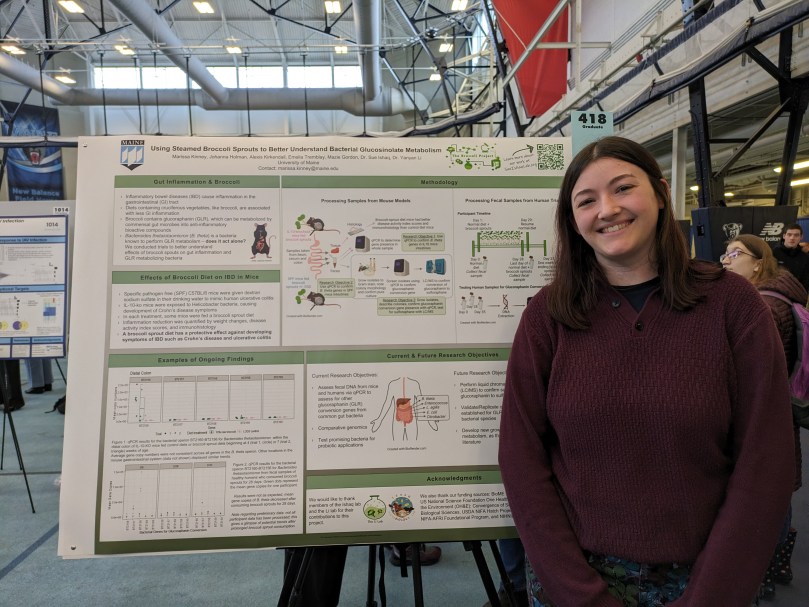
Using Steamed Broccoli Sprouts to Better Understand Bacterial Glucosinolate Metabolism

Author(s): Marissa Kinney, Johanna Holman, Alexis Kirkendall, Emelia Tremblay, Mazie Gordon.

Type: poster presentation

Submission Category: Allied Health

Abstract number 418: Inflammatory bowel diseases (IBD) lead to dysfunction of the gastrointestinal (GI) tract, resulting in disruption to overall health. These diseases can affect people of all ages and are present on a global scale. Research has demonstrated that diets high in cruciferous vegetables, such as broccoli, are associated with decreases in GI inflammation. Broccoli contains glucoraphanin, which through metabolism by gut bacteria, can become an anti-inflammatory compound, sulforaphane. Recent research has validated the use of steamed broccoli sprouts in the diet of mice to reduce inflammation and resolve symptoms of IBD. Isolated microbiota samples obtained from various locations in the GI of these mice are being investigated for the presence of glucoraphanin-metabolizing genes from a common gut bacteria, Bacteroides thetaiotaomicron (B. theta). Similar analyses being conducted on human fecal samples from individuals who consumed steamed broccoli sprouts for 28 days have demonstrated decreases in the presence of B. theta. This result was not anticipated and has strengthened beliefs that B. theta is not the primary species performing glucoraphanin metabolism, thus prompting further analyses of the fecal samples from mice and humans for glucoraphanin-metabolizing genes of other common GI bacteria. Genomes of isolates from the gut of mice which have high quantities of glucoraphanin-metabolizing genes will be sequenced for identification. This information will help to identify potential bacterial candidates for future research on probiotic development.
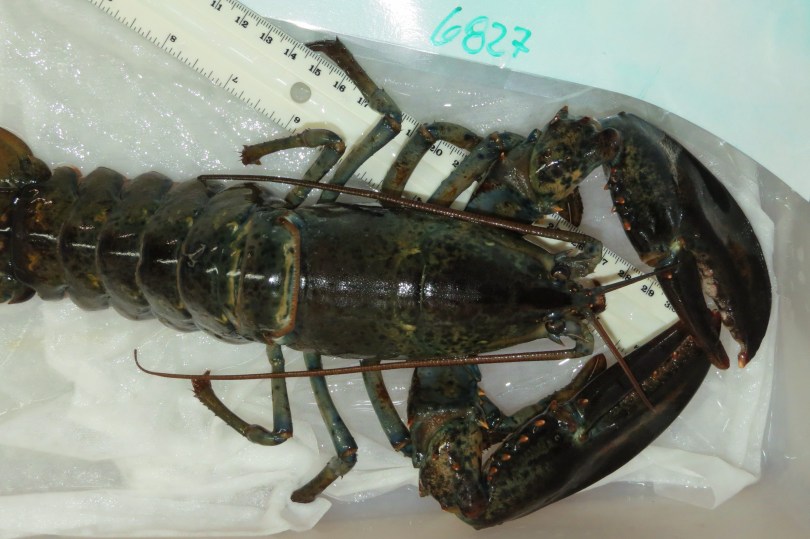
An American lobster on a countertop next to a ruler.

Lobster shell microbes, epizootic shell disease, and climate change manuscript is published!

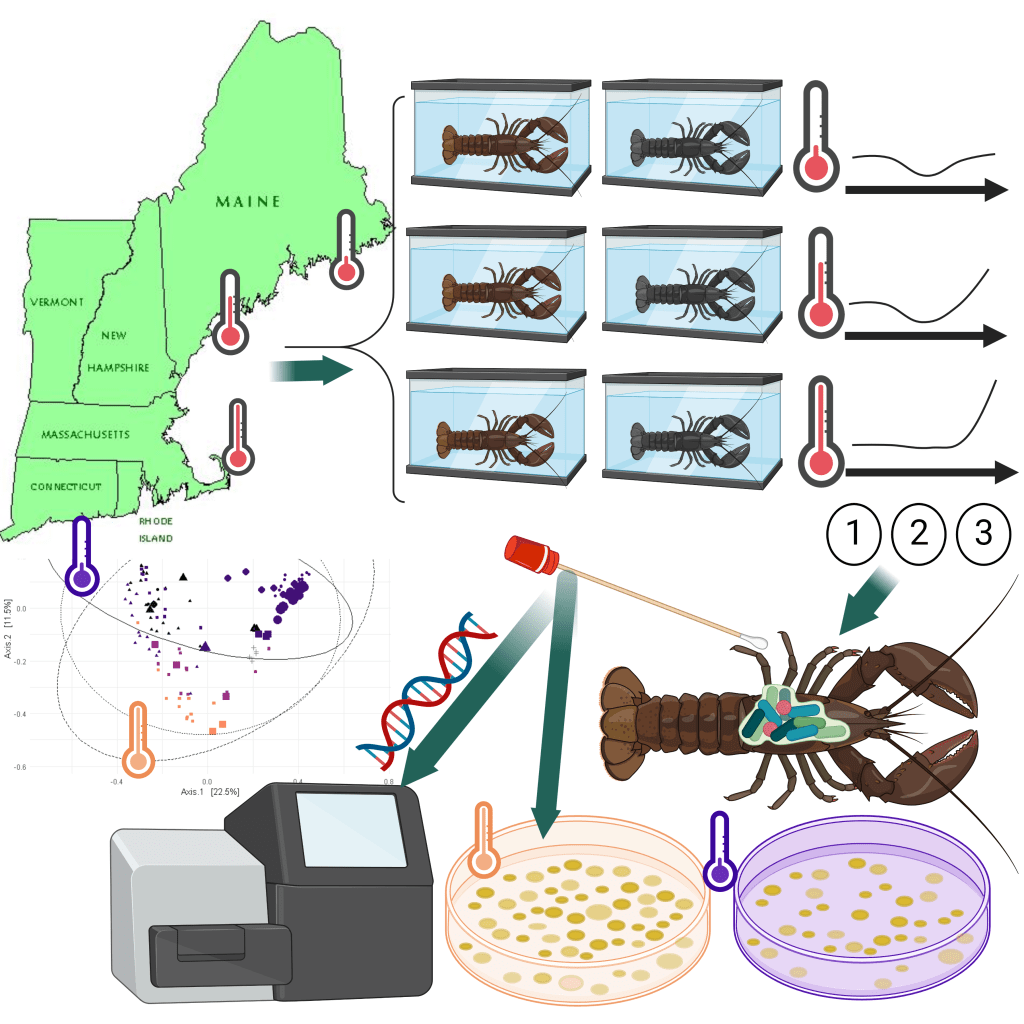
A collaborative paper on lobster shell bacteria has just been published in the journal iScience: “Water temperature and disease alters bacterial diversity and cultivability from American Lobster (Homarus americanus) shells.” This paper investigates what happens to bacterial communities on healthy and sick lobsters as they experience different water temperatures for a year.

You can read the paper here.

Woman sitting outside.

I joined this project back in the summer of 2020, towards the end of my first year at UMaine, when I was given a large 16S rRNA gene sequence dataset of bacterial communities from the shells of lobsters. I had been asking around for data as a training opportunity for Grace Lee, who at the time was an undergraduate at Bowdoin College participating in the abruptly cancelled summer Research Experience for Undergrads program at UMaine in summer 2020. Instead, Grace joined my lab as a remote research assistant and we worked through the data analysis over the summer and fall. Grace has since graduated with her Bachelor’s of Science in Neuroscience, obtained a Master’s of Science at Bowdoin, and is currently a researcher at Boston Children’s Hospital while she is applying to medical school.

My first point of contact on the project was Jean MacRae, an Associate Professor of Civil and Environmental Engineering at UMaine, who was the one to lend me the data and who had been working on bacterial community sequencing on other projects which I’ve been involved in. Jean has been involved with MSE, and this is our fourth publication together making her the collaborator at UMaine I have co-authored with the most (although it is a tight race 🙂 ).

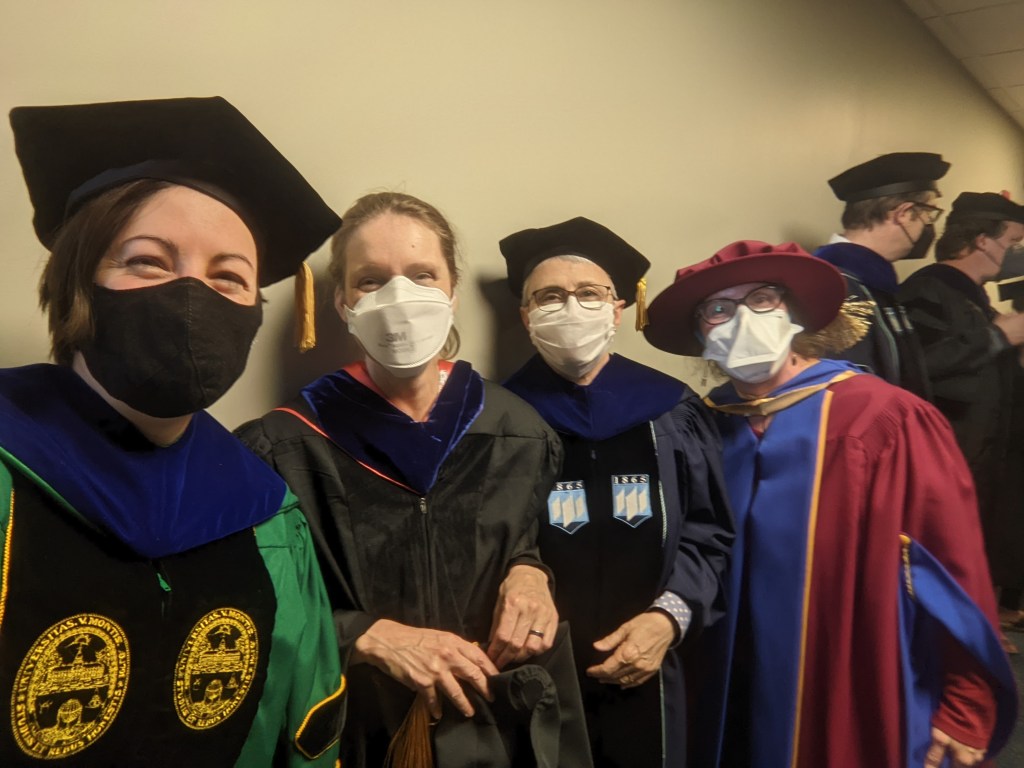
Four professors wearing full regalia, as well as face masks, posing for a photo in a hallway.

Jean introduced me to the original research team, including Debbie Bouchard, who is the Director of the Aquaculture Research Institute and was researching epizootic shell disease in lobsters for her PhD dissertation several years ago; Heather Hamlin, Professor and Director of the School of Marine Sciences; Scarlett Tudor (not pictured), the Education and Outreach Coordinator at the ARI; and Sarah Turner (not pictured), Scientific Research Specialist at ARI. The ARI team is involved in a lot of large-scale aquaculture research, education, and outreach to the industry here in Maine, and the collaborative work I have been doing with them has been a new an engaging avenue of scientific study for me.

In 2022, the research team, along with social science Masters student Joelle Kilchenmann, published a perspective/hypothesis piece which explored unanswered questions about how the movement of microbes, lobsters, and climate could affect the spread of epizootic shell disease in lobsters off the coast of Maine. That perspective paper was a fun exercise in hypothesis generation and asking ‘what if’?

A steamed lobster on a plate.

This manuscript is more grounded, and features work that was started in 2016. It examines bacterial communities on the shells of lobsters which were captured off the coast of Southern Maine and maintained in aquarium tanks for over a year. The lobsters were split into three treatment groups: those which were kept in water temperatures that mimicked what they would experience in Southern Maine, colder water to simulated what they would experience in Northern Maine, and hotter water to simulate what they would experience in Southern New England over that year. The original project team wanted to know if temperatures would make a different to their health or microbial communities.

Figure S8. Water temperature regimes, related to STAR Methods. A. Temperatures were obtained through the National Oceanographic Data Center (NODC). NODC temperatures reflect those recorded near Eastport, ME (A); Portland, ME (B); and an average of temperatures from Woods Hole, MA (C) and New Haven, CT (D) was used to represent Southern New England. B. Annual temperature cycles used in this project to represent Southern New England (SNE), Southern Maine (SME) and Northern Maine (NME).

The original project team swabbed lobster shells to obtain bacteria to try and grow in the lab, as well as DNA to sequence and identify whole bacterial communities. Grace and I performed the data analysis to identify which taxa were present in those communities, what happened over time or when the water temperature changed, and what bacteria were present or not in lobsters which died during the study.

Figure S11. Lobster carapace sampling using a sterile cotton swab to obtain bacterial communities from the shell surface, related to STAR Methods. The right side of the dorsolateral area of the cephalothorax was sampled for the baseline sampling, the left side for the Time 1, and the right side again for Time 2.

In addition to wanting to know about temperature, we wanted to know specifically how temperature would affect the bacteria if the lobsters had epizootic shell disease. It is not known what causes epizootic shell disease (which is why it is called ‘epizootic’), but it manifests as pitting in the shells of lobsters. Over time, the pitting can weaken shells and make it difficult for the lobster to molt, or make the lobster susceptible to predators or microbial infections. This type of shell disease had been a huge problem in Southern New England over the past few decades, and in Maine we have seen more cases over time.

Four panels of lobsters showing the progression of a healthy lobster to ones with more and more pitting in their shells.
Figure S10. Examples of lobster shell disease indices, related to STAR Methods. A) 0, no observable signs of disease, B) 1+, shell disease signs on 1-10% of the shell surface, C) 2+, shell disease signs on 11-50% of the shell surface, D) 3+, shell disease signs on > 50% of the shell surface.

The highlights of this project are here, but you can click the link below to read the entire study and what happened to lobster health and lobster microbes over time.

  • Shell bacteria from healthy lobsters, often overlooked, were included in the study.
  • Hotter and colder water temperatures affected shell bacterial communities.
  • Epizootic shell disease reduced bacterial diversity on lobster shells.
  • Epizootic shell disease could be induced or exacerbated by the loss of commensal bacteria from shells.

Water temperature and disease alters bacterial diversity and cultivability from American Lobster (Homarus americanus) shells.

Suzanne L. Ishaq1,2,, Sarah M. Turner2,3, Grace Lee4,5,M. Scarlett Tudor2,3, Jean D. MacRae6, Heather Hamlin2,7, Deborah Bouchard2,3

  • 1 School of Food and Agriculture; University of Maine; Orono, Maine, 04469; USA.
  • 2 Aquaculture Research Institute; University of Maine; Orono, Maine, 04469; USA.
  • 3 Cooperative Extension; University of Maine; Orono, Maine, 04469; USA.
  • 4 Department of Neuroscience, Bowdoin College, Brunswick, ME 04011; USA.
  • 5 Boston Children’s Hospital, Boston, MA 02115; USA.
  • 6 Department of Civil and Environmental Engineering; University of Maine; Orono, Maine, 04469; USA.
  • 7 School of Marine Sciences; University of Maine; Orono, Maine, 04469; USA.

Summary

The American lobster, Homarus americanus, is an economically valuable and ecologically important crustacean along the North Atlantic coast of North America. Populations in southern locations have declined in recent decades due to increasing ocean temperatures and disease, and these circumstances are progressing northward. We monitored 57 adult female lobsters, healthy and shell-diseased, under three seasonal temperature cycles for a year, to track shell bacterial communities using culturing and 16S rRNA gene sequencing, progression of ESD using visual assessment, and antimicrobial activity of hemolymph. The richness of bacterial taxa present, evenness of abundance, and community similarity between lobsters was affected by water temperature at the time of sampling, water temperature over time based on seasonal temperature regimes, shell disease severity, and molt stage. Several bacteria were prevalent on healthy lobster shells but missing or less abundant on diseased shells, although some bacteria were found on all shells regardless of health status.

Lobster shell microbes, epizootic shell disease, and climate change preprint manuscript is now online

A cookie in the shape of a lobster with icing to make it look like a pirate.

It’s been a few years in the making, but our draft manuscript on lobster shell microbes, epizootic shell disease, and climate change is available online as a preprint (not yet peer reviewed)! You can read the preprint here, and the summary is below.

I joined this project back in the summer of 2020, when I was given a large 16S rRNA gene sequence dataset of bacterial communities from the shells of lobsters by a research group at UMaine who had been studying lobster health for some time. My first point of contact on the project was Jean MacRae, an Associate Professor of Civil and Environmental Engineering at UMaine, who had been working on bacterial community sequencing on other projects which I’ve been involved in, and who has been involved with MSE, and this will be our fourth publication together!

Jean introduced me to the original research team, including Debbie Bouchard, who is the Director of the Aquaculture Research Institute and was researching epizootic shell disease in lobsters for her PhD dissertation; Heather Hamlin, Professor and Director of the School of Marine Sciences; Scarlett Tudor, the Education and Outreach Coordinator at the ARI; and Sarah Turner, Scientific Research Specialist at ARI.

I used the data as a training opportunity for Grace Lee, who at the time was an undergraduate at Bowdoin College participating in the abruptly cancelled summer Research Experience for Undergrads program at UMaine in summer 2020. Instead, Grace joined my lab as a remote research assistant and we worked through the data analysis over the summer and fall. Grace has since graduated with her Bachelor’s of Science in Neuroscience, obtained a Master’s of Science at Bowdoin, and is currently a researcher at Boston Children’s Hospital while she is applying to medical school.

Earlier this year, the research team, along with social science Masters student Joelle Kilchenmann, published a perspective/hypothesis piece which explored unanswered questions about how the movement of microbes, lobsters, and climate could affect the spread of epizootic shell disease in lobsters off the coast of Maine.

A steamed lobster on a plate.


Warmer water temperature and epizootic shell disease reduces diversity but increases cultivability of bacteria on the shells of American Lobster (Homarus americanus).”

Suzanne L. Ishaq1,2,, Sarah M. Turner2,3, Grace Lee4,5,M. Scarlett Tudor2,3, Jean D. MacRae6, Heather Hamlin2,7, Deborah Bouchard2,3

  • 1 School of Food and Agriculture; University of Maine; Orono, Maine, 04469; USA.
  • 2 Aquaculture Research Institute; University of Maine; Orono, Maine, 04469; USA.
  • 3 Cooperative Extension; University of Maine; Orono, Maine, 04469; USA.
  • 4 Department of Neuroscience, Bowdoin College, Brunswick, ME 04011; USA.
  • 5 Boston Children’s Hospital, Boston, MA 02115; USA.
  • 6 Department of Civil and Environmental Engineering; University of Maine; Orono, Maine, 04469; USA.
  • 7 School of Marine Sciences; University of Maine; Orono, Maine, 04469; USA.

Summary

The American lobster, Homarus americanus, is an economically valuable and ecologically important crustacean along the North Atlantic coast of North America. Populations in southern locations have declined in recent decades due to increasing ocean temperatures and disease, and these circumstances are progressing northward. We monitored 57 adult female lobsters, healthy and shell-diseased, under three seasonal temperature cycles for a year, to track shell bacterial communities using culturing and 16S rRNA gene sequencing, progression of ESD using visual assessment, and antimicrobial activity of hemolymph. The richness of bacterial taxa present, evenness of abundance, and community similarity between lobsters was affected by water temperature at the time of sampling, water temperature over time based on seasonal temperature regimes, shell disease severity, and molt stage. Several bacteria were prevalent on healthy lobster shells but missing or less abundant on diseased shells, although putative pathogens were found on all shells regardless of health status.

UMaine has an open position for an Assistant Professor of Integrative Avian Biology

Position Title: Assistant Professor of Integrative Avian Biology (id:73435)

Campus: Orono, Maine

Department:School of Biology & Ecology – OSBE

Bargaining Unit: AFUM

Salary Band/Wage Band: N/A

Details and Application: https://umaine.hiretouch.com/job-details?jobid=73435

Search Timeline is as follows:
Review of applications to begin: February 4, 2022
Screening interviews to begin no earlier than: March 1, 2022
On-site interviews to begin no earlier than: April 1, 2022
Tentative start date: August 29, 2022

For questions about the search, please contact search committee chair Dr. Danielle Levesque at danielle.l.levesque@maine.edu or 207-581-2511.

Statement of the Job:

The School of Biology and Ecology seeks integrative avian biologist for a 9-month academic year, full-time, tenure track position at the Assistant Professor level. We are interested in a broadly trained scientist who addresses physiological, neurobiological, immunological or endocrinological questions using birds as a study system. This position will contribute to growing departmental strengths in organismal physiology, global change biology, one health, biomedical sciences, ecology, biogeography, and evolution. 

Essential Duties & Responsibilities: This position is 50% teaching and 50% research. The successful candidate is expected to establish an externally funded research program that complements current research in organismal biology in the School of Biology and Ecology and other units in the College of Natural Sciences, Forestry and Agriculture (NSFA). We seek avian biologists who will build on existing strengths in integrative organismal biology and ecology on campus. Areas of particular interest include endocrinology, eco-immunology, and neurobiology using either field or lab-based studies. The ability to develop research relevant to Maine’s natural resource conservation, forestry, or agricultural industries is also desirable, as well as the capacity to provide assistance to stakeholders and other researchers as part of Maine’s Land Grant mission.

The successful candidate will be responsible for teaching upper-level undergraduate courses such as avian biology, animal behavior, and endocrinology. The faculty member will also be expected to contribute to the enhancement of the breadth of research areas for the growing demands of undergraduate capstone experience and honors thesis research at SBE and other departments.