The first look at Atlantic deep sea scallop bacterial communities in new publication

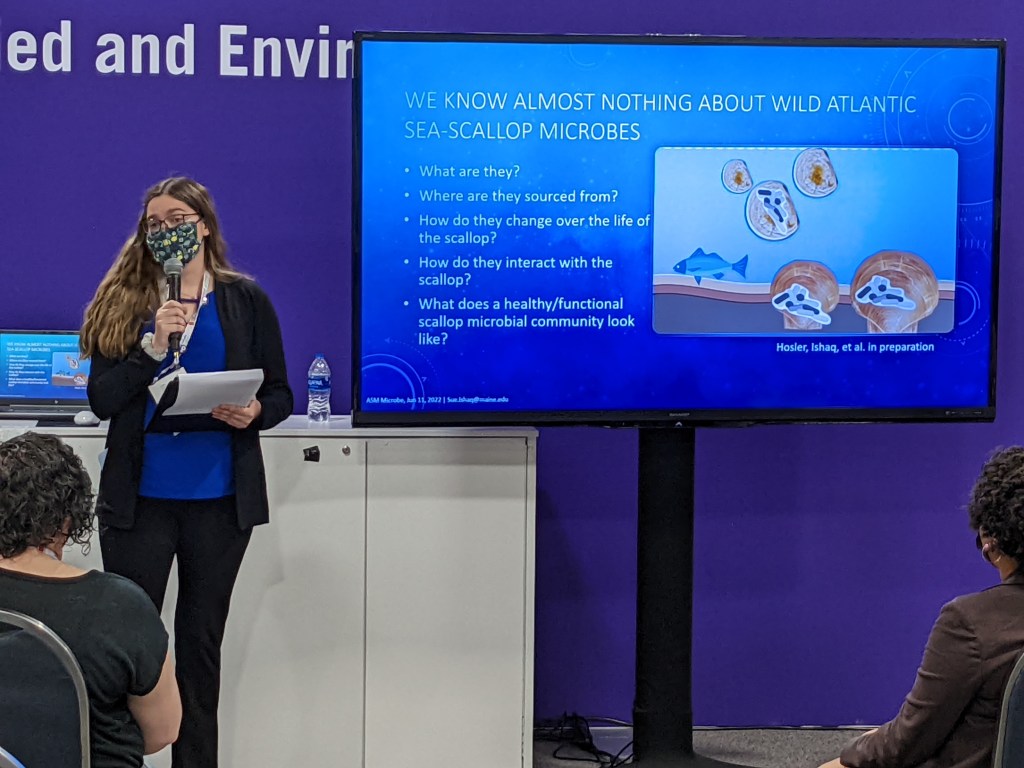
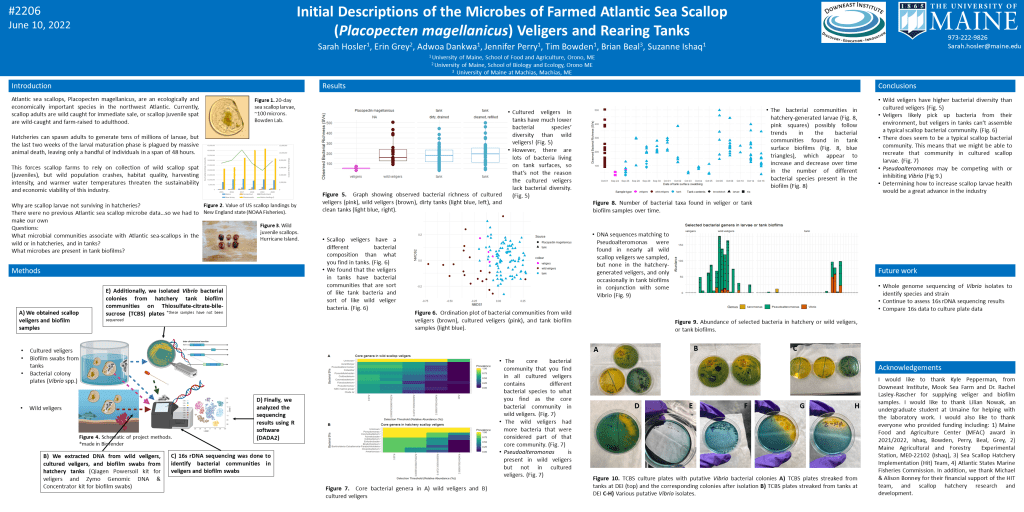
Our paper was published in Aquaculture Reports, on identifying the bacteria associated with wild and hatchery-raised Atlantic sea scallop larvae, and the biofilms in larval tanks in a hatchery! For the past few years, I’ve been part of a state-wide collaboration between researchers, industry professionals, and educators all working together to understand and improve Atlantic sea scallop hatchery production. To our knowledge, this is the first study to identify bacteria in Atlantic sea scallops, and even though it was a very small project we hope it will lead to a much larger, mult-year project to investigate this in more detail.

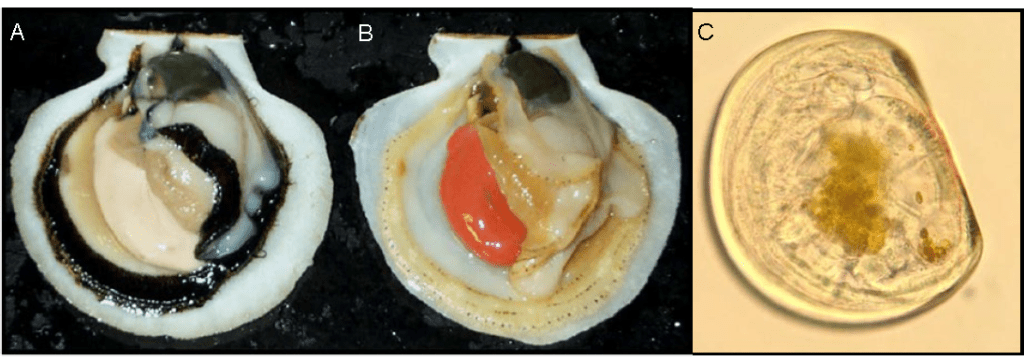
Scallops are a diverse animal group of marine bivalve mollusks (family Pectinidae) with global distribution in coastal waters, and Atlantic deep-sea scallops, Placopecten magellanicus, are found along the eastern coast of the United States and Canada. Scallops’ reproductive potential and industry demand make them a prime target for hatchery- and farm-based production, and this has been successfully achieved in bay scallops, but not in sea scallops. Currently, hatcheries collect wild sea scallop adults, or maintain cultured broodstocks, and spawn them in their facilities with the intention of forming a plentiful population to grow to adulthood, spawn, and sell to create a sustainable production cycle while also reducing disruption to the scallops’ natural habitat.
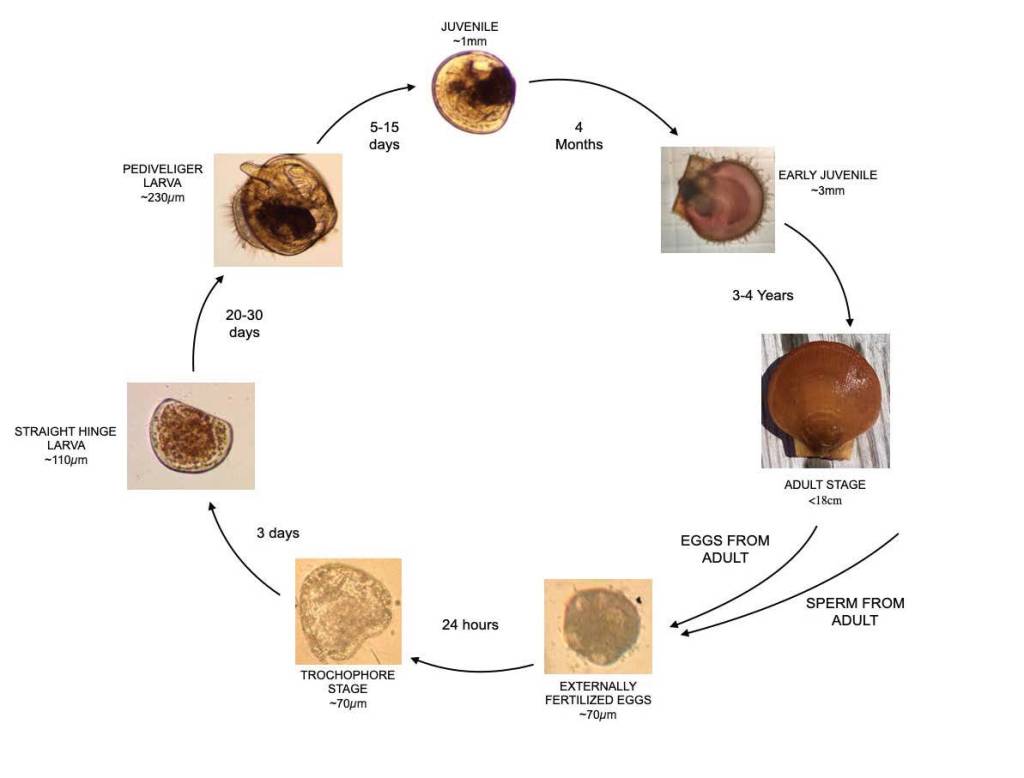
Unfortunately, in sea scallop hatcheries the last two weeks of the larval maturation phase, the veliger-stage, is plagued by large mortality events, going from 60 million sea scallop larvae down to several thousand individuals in a span of 48 hours. Survival of clutches to maturity remains very low, with an industry-standard rate around 1%. This drastic winnowing of larvae reduces the availability of cultured sea scallop spat for farmers, forcing sea scallop farms to rely almost exclusively on sea scallop spat collected from wild populations for stock and is seen as a bottleneck for growth of the industry and achieving sustainable harvests. Hatchery larval die-off is well-demonstrated not to be caused by inadequate diet, lighting, temperature, or atmospheric pressure in aquaculture facilities compared to wild conditions.

This project wanted to know if there was any clue in the bacteria that associate with larvae, or with the tanks they are in. In particular, hactcheries are worried about certain species of bacteria in the genus Vibrio, as they can cause disease to scallops and/or people, but it is tricky to study them because there are many species which do nothing at all. This project is part of another experiment to examine some of the Vibrio we found in tanks.

We sampled from some wild larvae, hatchery larvae, and from tank biofilms to indentify what was there. There were two styles of tank setup, and we collected from used tanks as well as tanks after they had been cleaned and refilled with filtered seawater.

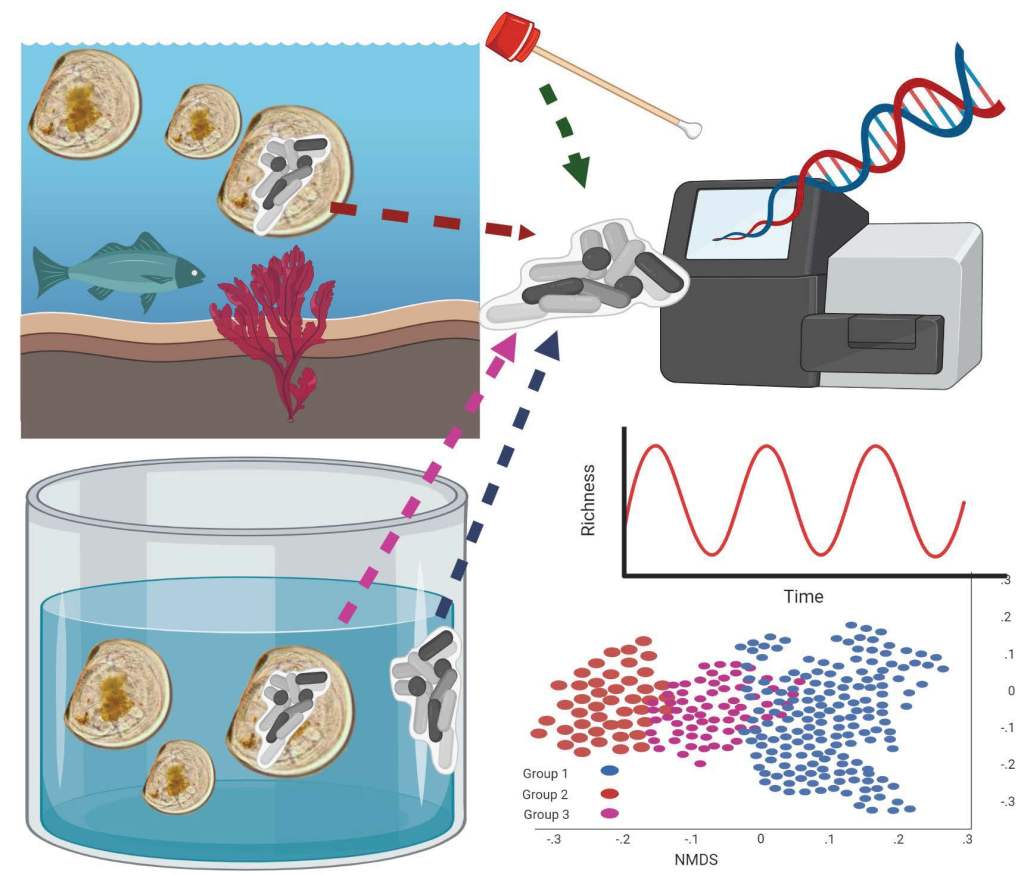
One of the surprising things we found, was that the bacterial communities in biofilms along the sides of larvae tank were more similar to each other (clustering) when samples were collected during the same phase of the lunar cycle. Bacterial richness and community similarity between tank samples fluctuated over the trial in repeated patterns of rise and fall, which showed some correlation to lunar cycle  where richness is high when the moon is about 50% and richness is low during new and full moon phases. This may be a proxy for the effects of spring tides and trends in seawater bacteria and phages which are propagated into hatchery tanks. The number of days since the full moon was significantly correlated with bacterial community richness in tanks: low during the full moon, peaking ~ 21 days after the full moon, and decreasing again at the next full moon.  

Fig. 7. Constrained ordination of bacterial communities in tank samples. Each point represents the bacterial community from one sample. Similarity between samples was calculated using Distance-based Redundancy Analysis (dbDRA), and significant model factors (anova, p < 0.01) are displayed with arrow lengths relative to their importance in the model (f value). The shape of points indicates whether swabbing was either immediately after filtered seawater has been used to fill the tank (cleaned, refilled) or 48 hours after (dirty, drained). Tank setup indicates if water was static, constantly filtered and recirculated in a flow-through system, or setup information was not available (n/a).

These results along with future work, will inform hatcheries on methods that will increase larval survival in these facilities, for example, implementing additional filtering or avoiding seawater collection during spring tides, to reduce certain bacterial taxa of concern or promoting a more diverse microbial community which would compete against pathogens.

Bacterial community trends associated with sea scallop, Placopecten magellanicus, larvae in a hatchery system.

Authors: Suzanne L. Ishaq1*, Sarah Hosler1, Adwoa Dankwa1, Phoebe Jekielek2, Damian C. Brady3, Erin Grey4,5, Hannah Haskell6, Rachel Lasley-Rasher6, Kyle Pepperman7, Jennifer Perry1, Brian Beal8, Timothy J. Bowden1

Affiliations:1 School of Food & Agriculture, University of Maine, Orono ME 044692 Ecology and Environmental Sciences, University of Maine, Orono ME 044733 School of Marine Sciences, Darling Marine Center, University of Maine, Walpole ME 045734 School of Biology and Ecology, University of Maine, Orono ME 044695 Maine Center for Genetics in the Environment, University of Maine, Orono ME 044696 Department of Biological Sciences, University of Southern Maine, Portland ME 041037 Downeast Institute, Beals, ME 046118 Division of Environmental & Biological Sciences, University of Maine at Machias, Machias, ME 04654

Abstract

Atlantic sea scallops, Placopecten magellanicus, are the most economically important marine bivalves along the northeastern coast of North America. Wild harvest landings generate hundreds of millions of dollars, and wild-caught adults and juvenile spat are increasingly being cultured in aquaculture facilities and coastal farms. However, the last two weeks of the larval maturation phase in hatcheries are often plagued by large mortality events. Research into other scallop- and aquacultured-species point to bacterial infections or altered functionality of microbial communities which associate with the host. Despite intense filtering and sterilization of seawater, and changing tank water every 48 hours, harmful microbes can still persist in biofilms and mortality is still high. There are no previous studies of the bacterial communities associated with the biofilms growing in scallop hatchery tanks, nor studies with wild or hatchery sea scallops. We characterized the bacterial communities in veliger-stage wild or hatchery larvae, and tank biofilms using the 16S rDNA gene V3-V4 region sequenced on the Illumina MiSeq platform. Hatchery larvae had lower bacterial richness (number of bacteria taxa present) than the wild larvae and tank biofilms, and hatchery larvae had a similar bacterial community (which taxa were present) to both wild larvae and tank biofilms. Bacterial richness and community similarity between tank samples fluctuated over the trial in repeated patterns of rise and fall, which showed some correlation to lunar cycle that may be a proxy for the effects of spring tides and trends in seawater bacteria and phages which are propagated into hatchery tanks. These results along with future work, will inform hatcheries on methods that will increase larval survival in these facilities, for example, implementing additional filtering or avoiding seawater collection during spring tides, to reduce bacterial taxa of concern or promote a more diverse microbial community which would compete against pathogens.

Acknowledgements

The authors would like to thank the staff at the Downeast Institute for supporting the development and implementation of this project, as well as for financially supporting the DNA sequencing; Meredith White of Mook Sea Farm for sharing her expertise and collecting biofilm samples; the Darling Marine Center for sharing their expertise and collecting biofilm samples; and the Sea Scallop Hatchery Implementation (Hit) Team for their expertise, review of this work, and funding support, who are financially supported by the Atlantic States Marine Fisheries Commission and Michael & Alison Bonney. The authors thank Lilian Nowak for assistance with related lab work to this project, and the Map Top Scholars Program for related financial support. The authors also thank Nate Perry for helping us collect wild scallop larvae. All authors have read and approved the final manuscript. This project was supported by the USDA National Institute of Food and Agriculture through the Maine Agricultural & Forest Experiment Station, Hatch Project Numbers: ME0-22102 (Ishaq), ME0-22309 (Bowden), and ME0-21915 (Perry); as well through NSF #OIA-1849227 to Maine EPSCoR at the University of Maine (Grey). This project was supported by an Integrated Research and Extension Grant from the Maine Food and Agriculture Center, with funding from the Maine Economic Improvement Fund.

Johanna’s review published on how gut microbes can make anti-inflammatory compounds when you eat broccoli

A massive literature review led by Johanna Holman, and featuring our collaborative team of broccoli sprout and microbes researchers, was accepted for publication!

As part of her master’s of science thesis, Johanna Holman reviewed hundreds of journal articles on anti-inflammatory, health-promoting dietary compounds in broccoli and other vegetables or fruits, and how microbes in the digestive tract can transform inactive precursors from foods into those beneficial compounds. This is part of a broader research collaboration on how glucoraphanin in broccoli sprouts can be made into sulforaphane, which acts as an anti-inflammatory in humans. Humans are unable to convert glucoraphanin to sulforaphane, and a small amount of this occurs naturally thanks to enzymes in the broccoli sprouts. But, certain gut microbes can make the conversion and this has helped resolve colitis and other symptoms in mice in laboratory trials (manuscripts in preparation).

A diagram with two panels, and a cartoon mouse in the middle.  The cartoon mouse is eating broccoli, and a cartoon of the digestive tract is overlaid on the mouse's abdomen. Lines emanating from the broccoli point to the left panel, and show the compound glucoraphanin being converted into sulforaphane by the myrosinase enzyme. Lines emanating from the colon of the mouse point to the panel on the right, showing the same biochemical conversion by gut microbes.
Artwork by Johanna Holman.

If you aren’t familiar with broccoli sprouts, a lovely review on their history, current food culture, and safe production was just published by some of our colleagues: Sprout microbial safety: A reappraisal after a quarter-century.

Check out the review

Holman, J., Hurd, M., Moses, P.,  Mawe, G.,  Zhang, T., Ishaq, S.L., Li, Y. 2022. Interplay of Broccoli/Broccoli Sprout Bioactives with Gut Microbiota in Reducing Inflammation in Inflammatory Bowel Diseases. Journal of Nutritional Biochemistry, in press.

Abstract

Inflammatory Bowel Diseases (IBD) are chronic, reoccurring, and debilitating conditions characterized by inflammation in the gastrointestinal tract, some of which can lead to more systemic complications and can include autoimmune dysfunction, a change in the taxonomic and functional structure of microbial communities in the gut, and complicated burdens in a person’s daily life. Like many diseases based in chronic inflammation, research on IBD has pointed towards a multifactorial origin involving factors of the host’s lifestyle, immune system, associated microbial communities, and environmental conditions. Treatment currently exists only as palliative care, and seeks to disrupt the feedback loop of symptoms by reducing inflammation and allowing as much of a return to homeostasis as possible. Various anti-inflammatory options have been explored, and this review focuses on the use of diet as an alternative means of improving gut health. Specifically, we highlight the connection between the role of sulforaphane from cruciferous vegetables in regulating inflammation and in modifying microbial communities, and to break down the role they play in IBD.

Collaborative paper published on winter wheat, farming practices, and climate!

The second paper from Tindall’s master’s work at Montana State University in the Menalled Lab has been accepted for publication! Tindall defended her master’s in August 2021, and has been working at a plant production company in Bozeman since then.

Ouverson, T., Boss, D., Eberly, J., Seipel, T.,  Menalled, F.D., Ishaq, S.L. 2022. Soil  bacterial community response to cover crops, cover crop termination, and predicted climate conditions in a dryland cropping system. Frontiers in Sustainable Food Systems.

Abstract

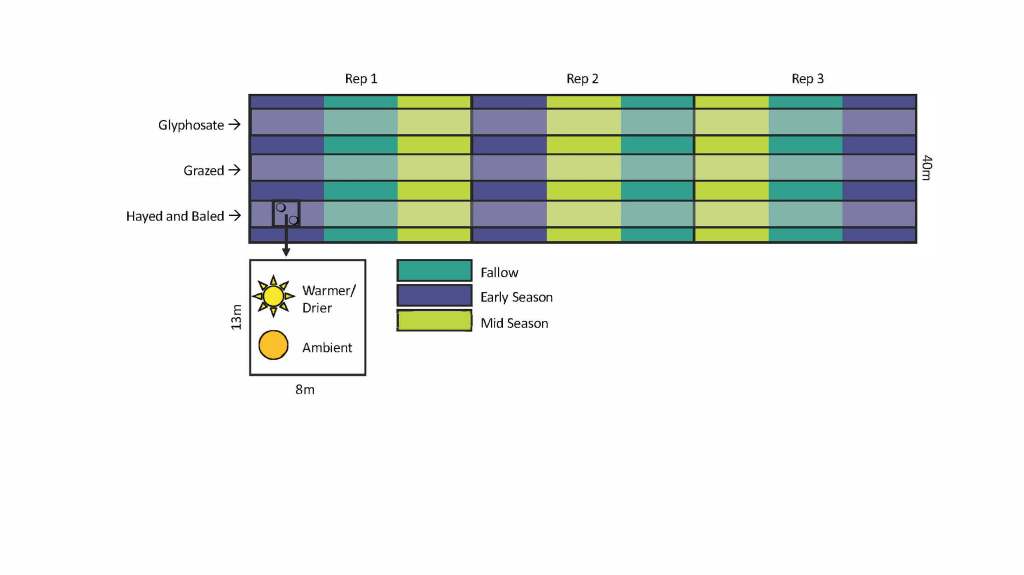
Soil microbial communities are integral to highly complex soil environments, responding to changes in aboveground plant biodiversity, influencing physical soil structure, driving nutrient cycling, and promoting both plant growth and disease suppression. Cover crops can improve soil health, but little is known about their effects on soil microbial community composition in semiarid cropping systems, which are rapidly becoming warmer and drier due to climate change. This study focused on a wheat-cover crop rotation near Havre, Montana that tested two cover crop mixtures (five species planted early season and seven species planted mid-season) with three different termination methods (chemical, grazed, or hayed and baled) against a fallow control under ambient or induced warmer/drier conditions. Soil samples from the 2018 and 2019 cover crop/fallow phases were collected for bacterial community 16S rRNA gene sequencing. The presence and composition of cover crops affected evenness and community composition. Bacterial communities in the 2018 ambient mid-season cover crops, warmer/drier mid-season cover crops, and ambient early season cover crops had greater richness and diversity than those in the warmer/drier early season cover crops. Soil microbial communities from mid-season cover crops were distinct from the early season cover crops and fallow. No treatments affected bacterial alpha or beta diversity in 2019, which could be attributed to high rainfall. Results indicate that cover crop mixtures including species tolerant to warmer and drier conditions can foster diverse soil bacterial communities compared to fallow soils.

Figure 1, showing a schematic of the fields and experimental design.

Related works from that research group include:

Paper published on the 2021 MSE symposium!

I am delighted to announce that a collaborative paper on the 2021 Microbes and Social Equity Symposium was just published! I was invited by the Challenges journal’s editor-in-chief to submit a contribution about the group’s activities, and the together the session organizers, speakers, student assistants, and I wrote about our experiences putting this together. The journal is dedicated to published highly interdisciplinary research which looks things from multiple perspectives and which contributes to Planetary Health.

We learned that, much like microbes, audiences don’t always act the way you expect them to. Even better: we learned that by providing collaborative working time after listening to speaker sessions, which could be used to get our thoughts down on paper, we could capture the magic and inspiration of the conversations we had post-talks and revisit those later as research and outreach resources.

You can check out the full article here.

And, if you are interested by what you read about last year’s event, check out this year’s symposium, happening next week!

Designing the Microbes and Social Equity Symposium, a Novel Interdisciplinary Virtual Research Conference Based on Achieving Group-Directed Outputs

Suzanne L. Ishaq 1,2,*, Emily F. Wissel 3, Patricia G. Wolf 4,5, Laura Grieneisen 6, Erin M. Eggleston 7, Gwynne Mhuireach 8, Michael Friedman 9, Anne Lichtenwalner 1,10, Jessica Otero Machuca 11, Katherine Weatherford Darling 12,13, Amber L. Pearson 14, Frank S. Wertheim 15, Abigail J. Johnson 16, Leslie Hodges 17, Sabrina K. Young 18, Charlene C. Nielsen 19, Anita L. Kozyrskyj 20, Jean D. MacRae 21, Elise McKenna Myers 22, Ariangela J. Kozik 23, Lisa Marie Tussing-Humphreys 24, Monica Trujillo 25, Gaea A. Daniel 26, Michael R. Kramer 27, Sharon M. Donovan 28, Myra Arshad 29, Joe Balkan 30 and Sarah Hosler 31

Abstract: The Microbes and Social Equity working group was formed in 2020 to foster conversations on research, education, and policy related to how microorganisms connect to personal, societal, and environmental health, and to provide space and guidance for action. In 2021, we designed our first virtual Symposium to convene researchers already working in these areas for more guided discussions. The Symposium organizing team had never planned a research event of this scale or style, and this perspective piece details that process and our reflections. The goals were to 1) convene interdisciplinary audiences around topics involving microbiomes and health, 2) stimulate conversation around a selected list of paramount research topics, and 3) leverage the disciplinary and professional diversity of the group to create meaningful agendas and actionable items for attendees to continue to engage with after the meeting. Sixteen co-written documents were created during the Symposium which contained ideas and resources, or identified barriers and solutions to creating equity in ways which would promote beneficial microbial interactions. The most remarked-upon aspect was the working time in the breakout rooms built into the schedule. MSE members agreed that in future symposia, providing interactive workshops, training, or collaborative working time would provide useful content, a novel conference activity, and allow attendees to accomplish other work-oriented goals simultaneously.

Affiliations:

1    School of Food and Agriculture, University of Maine, Orono, Maine 04469, USA; 2    Institute of Medicine, University of Maine, Orono, Maine 04469, USA; 3    School of Nursing, Emory University, Atlanta, Georgia 30322; 4    Department of Nutrition Science, Purdue University, West-Lafayette, Indiana, USA, 47907; 5    Department of Animal Sciences, University of Illinois, Urbana-Champaign, Urbana, Illinois 61801, USA; 6    Department of Genetics, Cell, & Development, University of Minnesota, Minneapolis, Minnesota 55108, USA; 7    Department of Biology, Middlebury College, Middlebury, Vermont 05753, USA; 8    Department of Architecture, University of Oregon, Eugene, Oregon 97403 USA; 9    Department of Science and Mathematics, Pratt Institute, Brooklyn, New York 11205, USA; 10   Cooperative Extension, University of Maine, Orono, Maine 04469, USA; 11   Mayo Clinic, Orlando, Florida 32837, USA; 12   Social Science Program University of Maine at Augusta Bangor, Maine 04401, USA; 13   Graduate School of Biomedical Science & Engineering, University of Maine, Orono, Maine 04469, USA; 14   Department of Geography, Environment, and Spatial Sciences, Michigan State University, East Lansing, Michigan 48824, USA; 15   Cooperative Extension, University of Maine, Springvale, Maine 04083, USA; 16   Division of Epidemiology and Community Health, School of Public Health, University of Minnesota, Minneapolis, Minnesota 55455, USA; 17   Economic Research Service, United States Department of Agriculture, USA; 18   Economic Research Service, United States Department of Agriculture, USA; 19   School of Public Health, University of Alberta, Edmonton, Alberta, Canada; 20   Department of Pediatrics, University of Alberta, Edmonton, Alberta, Canada; 21   Department of Civil and Environmental Engineering, University of Maine, 5711 Boardman Hall, Orono, Maine 04469, USA; 22   Boston Consulting Group, Bethesda, Maryland 20814, USA; 23   Division of Pulmonary and Critical Care Medicine, Department of Internal Medicine, University of Michigan. Ann Arbor, Michigan 48109, USA; 24   Department of Kinesiology and Nutrition, University of Illinois Chicago, Chicago, Illinois 60612, USA; 25   Department of Biology, Queensborough Community College, Queens, New York 11364, USA; 26   Nell Hodgson Woodruff School of Nursing, Emory University, Atlanta, Georgia 30322, USA; 27   Department of Epidemiology, Rollins School of Public Health, Emory University, Atlanta, Georgia 30322, USA; 28   Department of Food Science and Human Nutrition, University of Illinois, Urbana-Champaign, Urbana, Illinois 61801 USA; 29   Department of Biology, Stoney Brook University, Stony Brook, New York 11794, USA; 30   Department of Chemical and Biological Engineering, Tufts University, Medford, Massachusetts 02155, USA; 31   School of Food and Agriculture, University of Maine, Orono, Maine 04469, USA;

Collaborative paper accepted on winter wheat, weeds, and climate.

The last paper to be generated from the large-scale, multi-year, collaborative research I participated in as a postdoc at Montana State University in the Menalled Lab in 2016 has finally been accepted for publication! At the time, I was working on the soil bacteria associated with winter wheat crops under different simulated climate change scenarios, and with added stressors like weed competition and different farming strategies. I was part of a large team of researchers looking at various aspects of agricultural stressors on long-term food production, including several agroecologists who led the development of this paper.

Weed communities in winter wheat: responses to cropping systems and predicted warmer and drier climate conditions.

Tim Seipel, Suzanne L. Ishaq, Christian Larson, Fabian D. Menalled. Sustainability 202214(11), 6880; https://doi.org/10.3390/su14116880. Special Issue “Sustainable Weed Control in the Agroecosystems

Abstract

Understanding the impact of biological and environmental stressors on cropping systems is essential to secure the long-term sustainability of agricultural production in the face of unprecedented climatic conditions. This study evaluated the effect of increased soil temperature and reduced moisture across three contrasting cropping systems: a no-till chemically managed system, a tilled organic system, and an organic system that used grazing to reduce tillage intensity. Results showed that while cropping system characteristics represent a major driver in structuring weed communities, the short-term impact of changes in temperature and moisture conditions appear to be more subtle. Weed community responses to temperature and moisture manipulations differed across variables: while biomass, species richness, and Simpson’s diversity estimates were not affected by temperature and moisture conditions, we observed a minor but significant shift in weed community composition. Higher weed biomass was recorded in the grazed/reduced-till organic system compared with the tilled-organic and no-till chemically managed systems. Weed communities in the two organic systems were more diverse than in the no-till conventional system, but an increased abundance in perennial species such as Cirsium arvense and Taraxacum officinale in the grazed/reduced-till organic system could hinder the adoption of integrated crop-livestock production tactics. Species composition of the no-till conventional weed communities showed low species richness and diversity, and was encompassed in the grazed/reduced-till organic communities. The weed communities of the no-till conventional and grazed/reduced-till organic systems were distinct from the tilled organic community, underscoring the effect that tillage has on the assembly of weed communities. Results highlight the importance of understanding the ecological mechanisms structuring weed communities, and integrating multiple tactics to reduce off-farm inputs while managing weeds.

The related works from that project include:

Similar work has been done by that group, including:

New perspective paper published on microbial transmission and lobsters.

A cookie in the shape of a lobster with icing to make it look like a pirate.

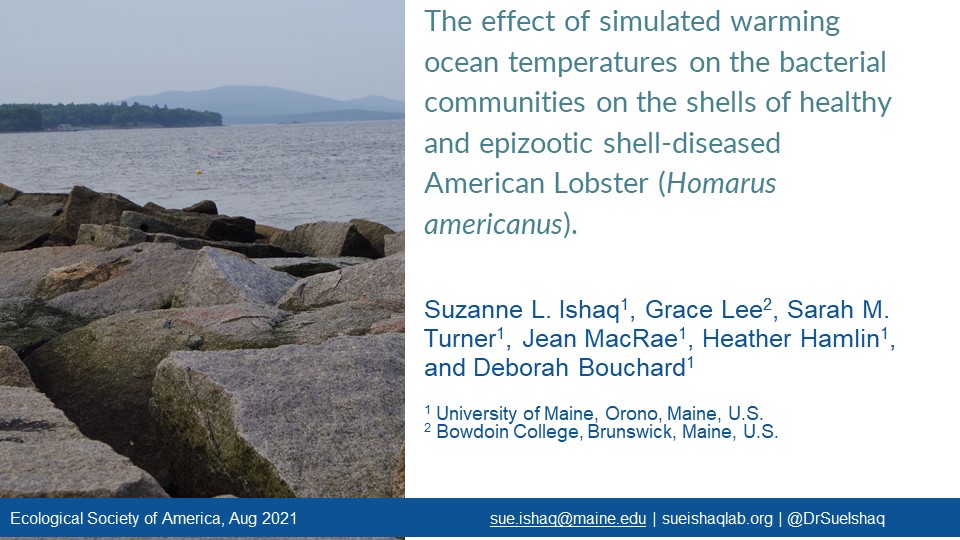
A collaborative perspective article was just published in Frontiers in Microbiology, which discusses epizootic shell disease in American lobsters, the role of microbes, and the movement of microbes in an aquatic environment. Because this is a perspective article, it is more of a thought exercise than my other publications, which either report findings or review other published literature, but it was intriguing to think about animal health in the context of rapidly-changing environmental conditions and microbial communities.

I previously presented some of the microbial community data related to the larger project from which this perspective piece came about, and this research team will continue to work on analyzing data from several experiments to develop into a research article later this year.

A steamed lobster on a plate.

This larger, collaborative project on lobster shell disease and warming ocean waters was begun by researchers at the Aquaculture Research Institute: Debbie Bouchard, Heather Hamlin, Jean MacRae, Scarlett Tudor, and later Sarah Turner as a grad student. I was invited to participate in the data analysis aspect two years ago.

At the time, Grace Lee was a rising senior at Bowdoin College, and accepted to my lab for the UMaine REU summer 2020 session, which was canceled. Instead, I hired Grace to perform DNA sequence analysis remotely, by independently learning data analysis following the teaching materials I had generated for my sequencing class.  I invited Joelle Kilchenmann to this piece after a series of conversations about microbes and social equity, because her graduate work in Joshua Stoll’s lab focuses on lobster fishing communities in Maine and understanding the challenges they face.


Ishaq, S.L., Turner, S.M., Tudor, M.S.,  MacRae, J.D., Hamlin, H., Kilchenmann, J., Lee1, G., Bouchard, D. 2022. Many questions remain unanswered about the role of microbial transmission in epizootic shell disease in American lobsters (Homarus americanus). Frontiers in Microbiology 13: 824950.

This was an invited contribution to a special collection: The Role of Dispersal and Transmission in Structuring Microbial Communities

Abstract: Despite decades of research on lobster species’ biology, ecology, and microbiology, there are still unresolved questions about the microbial communities which associate in or on lobsters under healthy or diseased states, microbial acquisition, as well as microbial transmission between lobsters and between lobsters and their environment. There is an untapped opportunity for metagenomics, metatranscriptomics, and metabolomics to be added to the existing wealth of knowledge to more precisely track disease transmission, etiology, and host-microbe dynamics. Moreover, we need to gain this knowledge of wild lobster microbiomes before climate change alters environmental and host-microbial communities more than it likely already has, throwing a socioeconomically critical industry into disarray. As with so many animal species, the effects of climate change often manifests as changes in movement, and in this perspective piece, we consider the movement of the American lobster (Homarus americanus), Atlantic ocean currents, and the microorganisms associated with either.

Microbes and Social Equity journal collection up to 6 published contributions!

The Microbes and Social Equity working group has been working with the scientific journal mSystems for the past year to develop a special collection of articles which highlight the connections between microbiomes, microbial exposures, social structures, and political contexts, as well as ways in which social, political, or economic changes could improve the way we interact with microbes to induce positive effects on our health and our planet.

The sixth contribution has just been published, and we have a handful more currently in the peer-review process! We plan to collect 25 invited contributions by the end of this year. You can check out the entire collection as it grows using the link below.

For more real-time discussions about microbes and social equity, check out our speaker series which is currently running until May 4th. You can also check out recordings from past talks.

mSystems Special Series: Social Equity and Disparities in Microbial Exposure

New publication on rumen microbes which may have uses in biofuel production

A scientific article led by my colleague Dr. Alaa Rabee at the Desert Research Center in Egypt was just published online and is now available! Dr. Rabee and I have been collaborating remotely on projects related to the bacteria in the rumen of camels, sheep, and cows, as Dr. Rabee’s work focuses on the isolation of bacteria which can degrade plant materials efficiently and could be used to produce biofuels. He will be spending 6 months working in my lab as a visiting scholar, which was delayed until this year because of the pandemic.


Rabee, A.E., Sayed Alahl, A.A., Lamara, M., Ishaq, S.L. 2022. Fibrolytic rumen bacteria of camel and sheep and their applications in the bioconversion of barley straw to soluble sugars for biofuel production. PLoS ONE 17(1): e0262304. Article.

Abstract

Lignocellulosic biomass such as barley straw is a renewable and sustainable alternative to traditional feeds and could be used as bioenergy sources; however, low hydrolysis rate reduces the fermentation efficiency. Understanding the degradation and colonization of barley straw by rumen bacteria is the key step to improve the utilization of barley straw in animal feeding or biofuel production. This study evaluated the hydrolysis of barley straw as a result of the inoculation by rumen fluid of camel and sheep. Ground barley straw was incubated anaerobically with rumen inocula from three fistulated camels (FC) and three fistulated sheep (FR) for a period of 72 h. The source of rumen inoculum did not affect the disappearance of dry matter (DMD), neutral detergent fiber (NDFD). Group FR showed higher production of glucose, xylose, and gas; while higher ethanol production was associated with cellulosic hydrolysates obtained from FC group. The diversity and structure of bacterial communities attached to barley straw was investigated by Illumina Mi-Seq sequencing of V4-V5 region of 16S rRNA genes. The bacterial community was dominated by phylum Firmicutes and Bacteroidetes. The dominant genera were RC9_gut_group, RuminococcusSaccharofermentansButyrivibrioSucciniclasticumSelenomonas, and Streptococcus, indicating the important role of these genera in lignocellulose fermentation in the rumen. Group FR showed higher RC9_gut_group and group FC revealed higher RuminococcusSaccharofermentans, and Butyrivibrio. Higher enzymes activities (cellulase and xylanase) were associated with group FC. Thus, bacterial communities in camel and sheep have a great potential to improve the utilization lignocellulosic material in animal feeding and the production of biofuel and enzymes.

MSE paper published on “Twenty important research questions in microbial exposure and social equity”

The Microbes and Social Equity working group has published its second collaborative paper together, led by Dr. Jake Robinson and featuring 25 other MSE group researchers in various fields related to microbiomes, social equity, and ecosystems. In developing this paper, we had many conversations about what had been accomplished in research related to microbial exposure, as well as what had yet to be done. We provide some background information as context, and spend the majority of the paper outlining twenty of the most poignant research directions. There are so many questions yet to be answered about the way the microbial communities interact with human lives, and how our lives impact them back. In our enthusiasm for the topics, we could have endlessly chatted about research, such that we decided to limit ourselves to twenty questions. We hope that this piece becomes a source for inspiration for others who continue this conversation and future research in these areas.

You can find a link below to read the full article, and links to the authors’ twitter feeds if you’d like to check them out on social media. You’ll be able to hear more about this publication in an upcoming seminar from Jake, as part of the 2022 MSE speaker series, which is open to all and free to attend over zoom.


Robinson, J.M., Redvers, N., Camargo, A., Bosch, C.A., Breed, M.F., Brenner, L.A., Carney, M.A., Chauhan, A., Dasari, M., Dietz, L.G., Friedman, M., Grieneisen, L., Hoisington, A.J., Horve, P.F., Hunter, A., Jech, S., Jorgensen, A., Lowry, C.A., Man, I., Mhuireach, G., Navarro-Pérez, E., Ritchie, E.G., Stewart, J.D., Watkins, H., Weinstein, P., and Ishaq, S.L. 2022. Twenty important research questions in microbial exposure and social equity. mSystems 7(1): e01240-21. Special Series: Social Equity as a Means of Resolving Disparities in Microbial Exposure

ABSTRACT

Social and political policy, human activities, and environmental change affect the ways in which microbial communities assemble and interact with people. These factors determine how different social groups are exposed to beneficial and/or harmful microorganisms, meaning microbial exposure has an important socioecological justice context. Therefore, greater consideration of microbial exposure and social equity in research, planning, and policy is imperative. Here, we identify 20 research questions considered fundamentally important to promoting equitable exposure to beneficial microorganisms, along with safeguarding resilient societies and ecosystems. The 20 research questions we identified span seven broad themes, including the following: (i) sociocultural interactions; (ii) Indigenous community health and well-being; (iii) humans, urban ecosystems, and environmental processes; (iv) human psychology and mental health; (v) microbiomes and infectious diseases; (vi) human health and food security; and (vii) microbiome-related planning, policy, and outreach. Our goal was to summarize this growing field and to stimulate impactful research avenues while providing focus for funders and policymakers.

iScience Backstory on our collaborative work on ants, nematodes, and bacterial transfer

Over the summer, an article was published which featured a handful of researchers from across the US and research spanning a decade on the bacterial communities associated with invasive ants and nematodes in Maine. At the time, we were invited to also contribute a “Backstory” article to the scientific journal iScience which described the journey and the ideas.

That story authored by myself and Ellie Groden (senior researcher on the journal article) has just been published, and can be found here. I’d like to thank Dr. Sheba Agarwal, who was the editor on the paper, helped us develop our Backstory, and also spoke to me about this and other work as a guest on the WeTalkScience podcast.