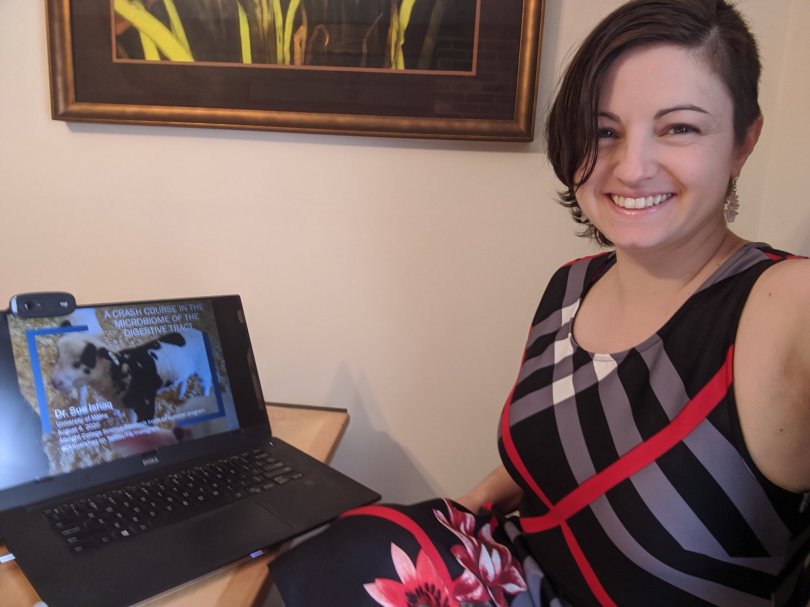
Last Friday, I gave a seminar on “A crash course in the gut microbiome” to the University of Maine Institute of Medicine as part of their fall seminar series. You can find the previous seminars in that series here.
I was delighted to have the opportunity to share my science to researchers around Maine, and to have so many engaging questions!
You can find my seminar recording here, and a pdf of the slides with my presenter notes as annotated comments can be found here:
Over the next few weeks, I’ll be sharing selected portions of my Teaching Statement here as part of a development series, as I refine my philosophies for the submission of my second-year review this fall. I welcome feedback! Feel free to comment on the post (note, all comments require my approval before appearing publicly on the site), or contact me directly if you have more substantial edits.
*Please note, these are selected portions of my Statement which have been edited to remove sensitive information. These are early drafts, and may not reflect my final version. Tenure materials that I generate are mine to share, but my department chair, committee, and union representative were consulted prior to posting these. Each tenure-granting institution is unique, and departments weigh criteria differently, thus Statements can’t really be directly compared between faculty.*
Improving the accessibility of course materials
While course content might seem like a more pertinent place to begin this Statement, the intellectual content of a course is predicated on the ability of students to access and connect with those materials. The pandemic and social turmoil of 2020 has made this a year like no other for our students, and in conversations with them, I have gathered that it has created new challenges for them and exacerbated existing ones. The primary obstacle for students to attend live lectures and provide effort on assignments is the general increased workload related to online classes, the necessity of employment, and the inflexibility of employers who schedule student employees in a way that precludes them from attending live lectures. Further, students are under an overwhelming amount of stress, and this has exacerbated learning disorders and created its own obstacles to engaging with course material. To that end, I have made a number of improvements in my course presentation to make materials more approachable and inclusive to learning style and student life outside of the classroom, which have been adopted in 2020 but will persist.
All the course materials for these classes are made available in Brightspace at the beginning of the semester, so students may download readings and lectures when they have access to internet services. This also allows them to a priori assess the coursework and gauge the expectations on their time, to better plan their effort over the semester in relation to other engagements. Assignments may be submitted early, and are accepted late with grade penalties applying in some cases. In 2020-2021, grade penalties are waved to facilitate student scheduling during the pandemic. For presentations, students may schedule time blocks well in advance, or may opt to record their presentation and submit videos. Live lectures are recorded and videos are made available to students immediately after class, and previous to the pandemic I gave students the option to attend via remote video conferencing when they were home sick but did not want to miss class.
The availability of coursework in advance and the flexibility of format allows for students to engage with the work at their own pace and in a way that feels more comfortable to them. In particular, the use of online discussion forums in Brightspace has given a voice to even the quietest of students and allowed for more diverse perspectives to contribute to the topic.
The use of online teaching platforms also allows for more accessibility in the materials for students with additional challenges. For example, after conferring with a student about understanding course materials, I added audio instructions to assignments (a recording of me reading the directions), which allows students with language dysmorphia or visual impairment to more easily understand what is being asked of them.
The use of online teaching software helps me curate assignments to more accurately test student learning and not just how clearly I asked the quiz questions. For example, it is much easier to track student performance over time and per assignment, and assess which portions of the assignment should be revised to improve their clarity.
Finally, one barrier to student engagement in coursework appears to be a lack of student confidence stemming from an underestimation of their own agency in asking for help, accommodation, or more visibility in the class. Students appear resigned to accept a zero instead of asking for deadline extensions, or for asking for more effort from their instructor. Students appear to internalize poor performance as a personal failure, rather than a discrepancy between how the information is communicated and how it is received. To that end, I solicit feedback using anonymous polls, and in lectures or assignments which do not generate student engagement I ask students how they would have rephrased the questions I pose to them.
Something which I have not yet tried, but intend to implement in the future, is a self-reflection assignment at the beginning of the semester for each class. The goal is for students to feel welcome, to feel that they have agency in their education in this class, and to feel that they can let go of control in order to try something new. First, students will be asked to watch a reading of the children’s story, If You Give A Mouse a Cookie (https://youtu.be/QCDPkGjMBro), about a mouse that keeps asking for things. Next, students will watch a TEDTalk, “Asking for Help is a Strength, Not A Weakness” (https://www.youtube.com/watch?v=akiQuyhXR8o&feature=youtu.be&ab_channel=TED). Then, students will watch the TEDTalk “The Art of Letting Go… Of The Floor” (https://www.ted.com/talks/siawn_ou_the_art_of_letting_go_of_the_floor/details). Finally, students will reflect and write down their goals for the class; 1 thing they want (the cookie), 1 thing they need (the help), and 1 thing they want to let go of (their floor).
This fall, my speaking engagements will all be held virtually, to aid in ongoing infectious-disease-prevention protocols. While in place to reduce the spread of SARS-CoV-2, these same protocols will also help me avoid the annual fall respiratory infection that I otherwise inevitably encounter while working with overly-stressed students.
But, staying away from others doesn’t mean I can’t stay connected! Virtual events might not feel as fun, but they have allowed me to reach a wider audience, because recorded talks are made available after the live event. And, annotated or subtitled recordings make my talks more accessible!
This fall, I have several public talks and scientific presentations lined up:
University of Maine Cooperative Extension Oxford County 4-H Teen Science Cafe (virtual), “Gut microbes on the farm”, Oct 15, 2020. For teens, this event is free but does require registration to obtain the link.
Genomes to Phenomes (G2P) group, University of Maine. Co-hosting a session with grad student Alice Hotopp, on gut microbes and survival of reintroduced animals. Oct 30, 2020. Link available to University of Maine community members.
University of Maine Medicine seminar series (virtual), “A crash course in the gut microbiome” , Nov 6, 2020. This event is open to the public and free, but does require registration to obtain the link.
Hotopp, A., Silverbrand, S., Ishaq, S.L., MacRae, J., Stock, S.P., Groden, E. “Can a necromenic nematode serve as a biological Trojan horse for an invasive ant?” Entomological Society of America 2020 (virtual). Nov 15-18, 2020. This pre-recorded seminar requires paid event registration.
Yeoman (presenter), C., Lachman, M., Ishaq, S., Olivo, S., Swartz, J., Herrygers, M., Berarddinelli, J. “Development of Climactic Oral and Rectal Microbiomes Corresponds to Peak Immunoglobin Titers in Lambs.” Conference of Research Workers in Animal Diseases (CRWAD) 2020. (Virtual) Dec 5, 2020. This seminar requires paid event registration.
Almost ready for my "Microbes on the farm" presentation to the Oxford County 4H kids! And I finally had to chance to use this photo from my 2015 lamb study. pic.twitter.com/cq43EctXWZ
Last week, I gave a presentation to the University of Maine Cooperative Extension Oxford County 4-H Jamboree.
The video is available on YouTube, with subtitles! I sat down to learn how to create and embed them in videos, to help make my science more approachable. The video is made for kids and contains suitable content for all ages, although the difficulty of the content makes it best for kids 12 and up.
From their main page, you can find descriptions of each virtual session, including subject material, presenter, and recommended age group (k-12). You can register for as many or as few sessions as you like, which will be delivered over Zoom.
Registration is free! But if you are able to donate to support the program, those are welcome through the 4H site.
I’ll be presenting on Thursday, August 13th, 2020 at 3 pm EST.
Learn about different digestive tracts in livestock, and the community of microbes living there that help animals digest food, or stay healthy. This presentation will give some background on different digestive tract anatomy, the factors which influence microbes in the gut, and how we can care for animals by caring for their microbes. This presentation will also feature a short presentation on Dr. Ishaq’s journey into science and a Q&A session where attendees can ask questions about gut microbes, life as a scientist, or how to get involved in this time of career. Register by August 12.
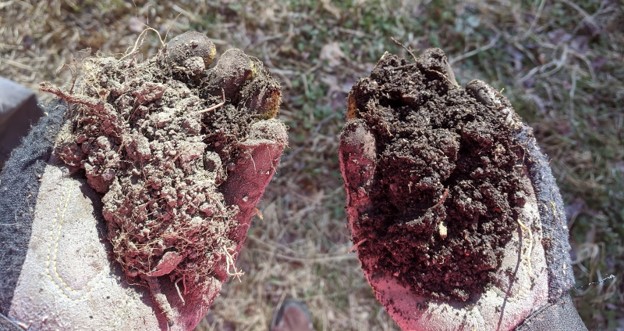
What do compost, food security, and social justice have in common? They are all part of creating sustainable, more localized food systems that benefit the community. Want to know more? Check out the piece I co-wrote for The Conversation, along with two other soil microbe researchers.
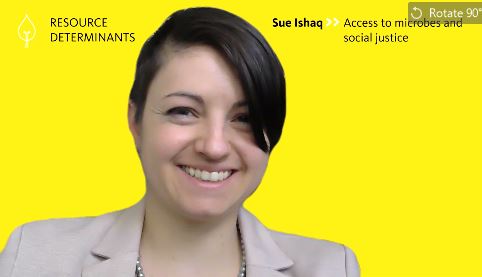
IHBE meeting organizers did a fantastic job at facilitating a remote meeting with a dozen speakers across multiple time zones. This included creating formatted slide decks for speakers to populate, coordinating sections by colors and symbols and providing respective virtual backgrounds for section speakers to use, and use of breakout rooms for smaller discussion groups.
I presented “Framing the discussion of microorganisms as a facet of social equity in human health“, and you can find a recorded version of the presentation here. There are no closed captions, but you can read the audio as annotations here:
The concept of “microbes and social equity” is one I’ve been playing with for a little over a year, and has developed into a colloquium course at the University of Oregon in 2019, an essay in PLoS Biology in 2019, and a consortium of researchers participating in “microbes and social equity part 2”. The Part 2 group has been developing some exciting research events planned for later in 2020, and those details will be forthcoming!
One of the biggest challenges faced by STEMM (science, technology, engineering, math, medicine) advocacy groups is finding the time and resources to propose and execute initiatives, as well as find the time for social media engagement to grow the group. There are a number of groups already established in Maine which seek to promote STEMM advocacy/education, accessibility, diversity/equity/inclusion, campus community members, and the general public.
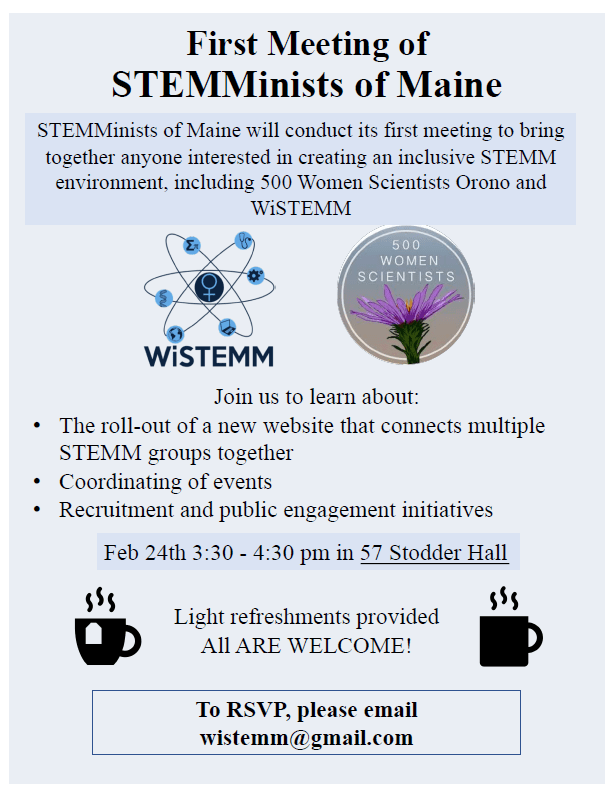
STEMMinists of Maine is a newly-formed STEMM advocacy group, which seeks to bring together these various groups. Our goal is to act as an umbrella organization, to create a cohesive social media presence that makes it easier for people interested in STEMM advocacy and inclusion to find resources, coordinate events, and get the message out. All participating groups will remain autonomous, but participation (which is free) will hopefully allow us all to reach a broader audience and have a greater impact in both campus and state-wide initiatives.
Our inaugural meeting will be held at the University of Maine campus, 57 Stodder Hall, to introduce STEMMinists and invite others to be part of our work to promote a better STEMM community. All are welcome!
Shortly after, our website and social media will be finalized and launched!
Notwithstanding the different reasons, 2019 has left us reeling, myself included. Early in the year, I was left scrambling to keep my science career going in the face of unsteady funding resources. Through a combination of collaboration, long hours of writing, a strong support network, a lot of luck, and a pragmatic demeanor, I landed a tenure-track faculty position and pulled off one of the best years of my career, to date. I deeply appreciate all of the concern, assistance, coffee, revisions in a timely manner, coffee, and support provided by so many individuals in the last year.
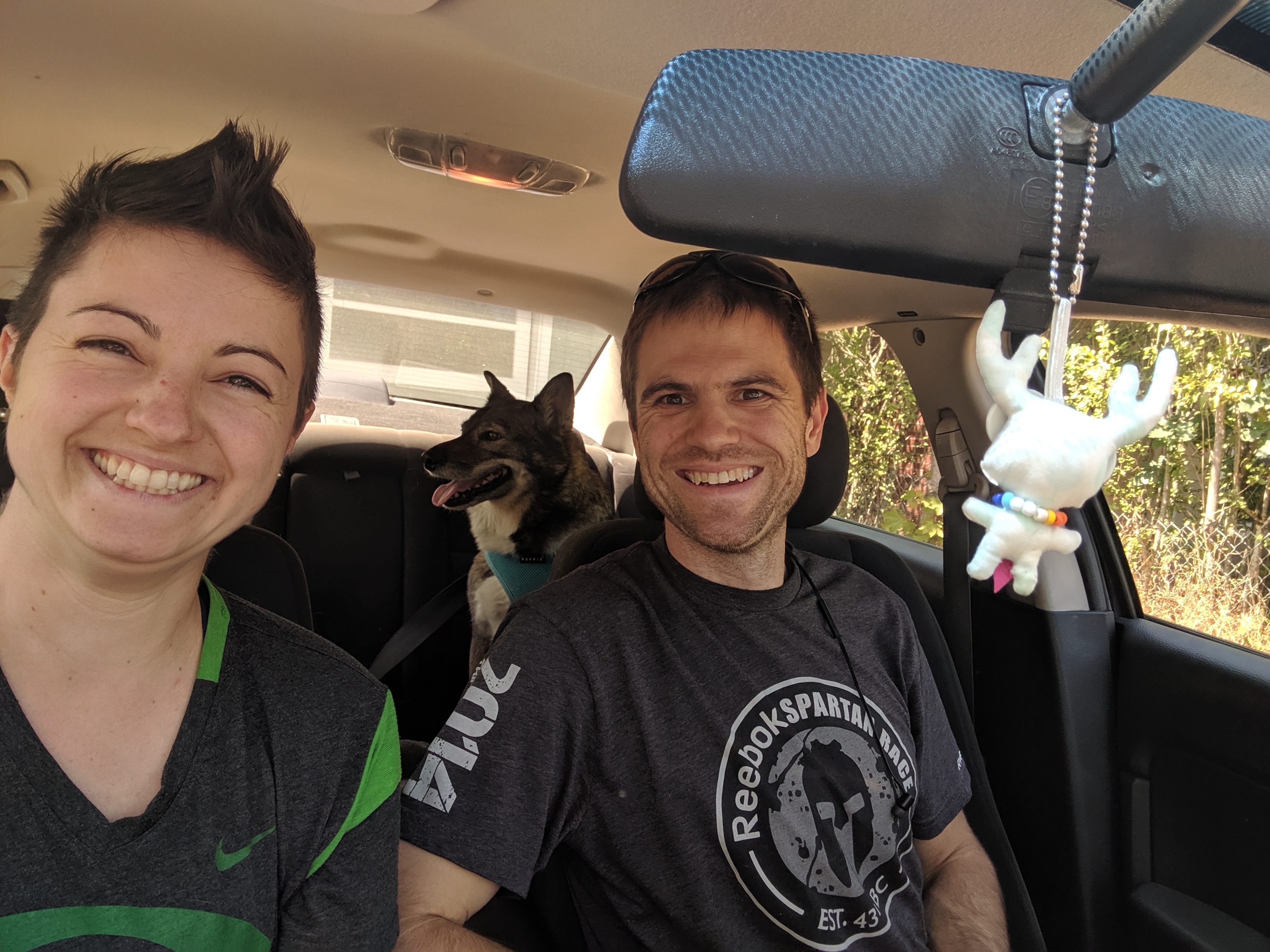
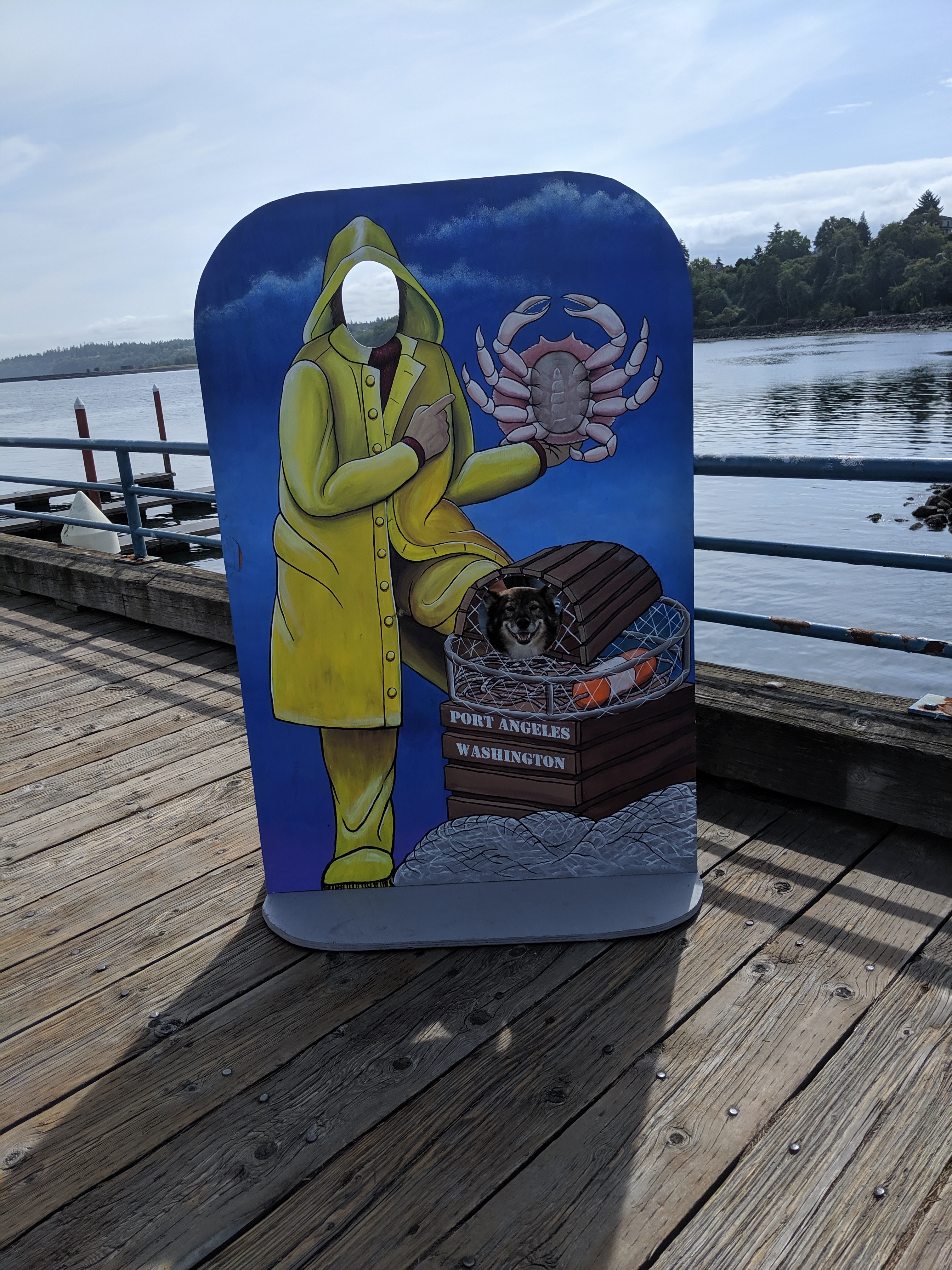
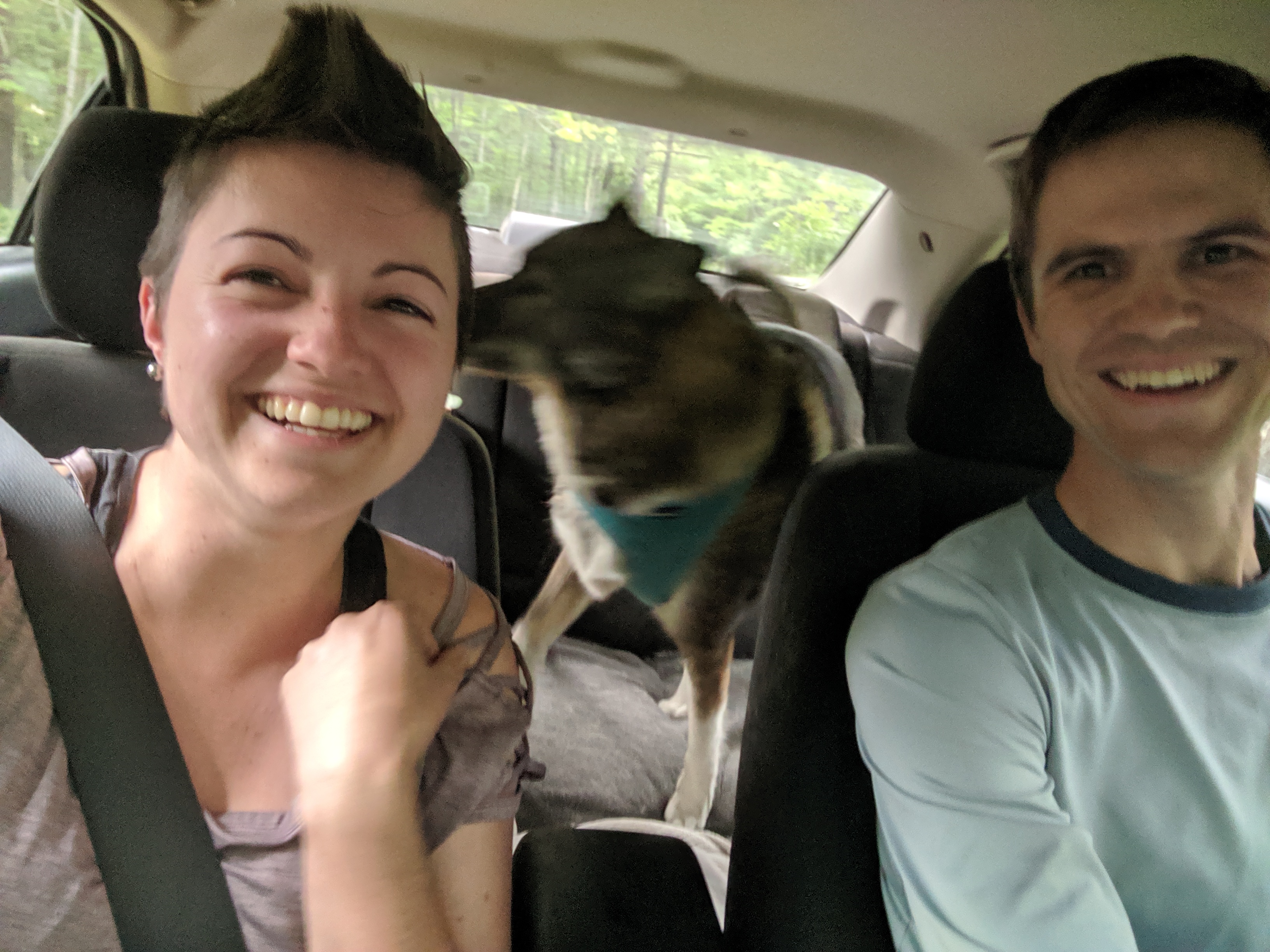
My momentous research activity of 2019 was joining the faculty of the University of Maine, Orono, School of Food and Agriculture as an Assistant Professor of Animal and Veterinary Sciences, beginning in September. In August, my partner, our patient dog, and I drove from the west coast to Maine on a 9-day adventure that would begin a new (and more permanent) phase of our life. From our education in Vermont, to my post-docs in Oregon, to my research faculty position in Oregon, to Maine, we loved the opportunity to live in various states, but are looking forward to having an address for longer than 2 years and more stable income forecasting.
We’ve driven over 7,000 miles in search of academic positions!
Leaving Oregon.
Arriving in Maine and Izzy can barely contain her enthusiasm.
The first few months of my faculty position have been busy! Notably, it’s involved a LOT of training, paperwork, getting acquainted with campus resources, and making connections. Some of these have involved seeking approval to take on graduate students, not just from my department, but students from other departmental programs that want their research to center around my lab’s specialties. UMaine strives to provide interdisciplinary opportunities for students, and as such, encourage multiple cooperating positions. In addition to being able to bring on grad students through the School of Food and Agriculture, I have just been approved as faculty in the Graduate School for Biomedical Sciences and Engineering, and have another cooperating position pending.
My work now spans three major research priorities. My lab will focus on the gut microbiome of livestock, and how microbes can be used to promote animal health and production. This will take shape in a variety of ways, including through global collaborations (more on those as they develop, but many of my previous rumen collaborations that began at Montana State are included in that). I’ll be taking on several graduate and undergraduate students in 2020 for these projects.
Through ongoing collaboration on projects led by Drs. Fabian Menalled and Tim Seipel at Montana State University, I’ll be participating in research to understand climate change and farming practices on wheat production and soil microbes. I am a graduate committee member for Tindall Ouverson, who is completing her master’s at MSU.
I’ll also be collaborating with researchers on microbes in the human gut. Through ongoing collaborations with researchers at the Institute for Health in the Built Environment (primarily those at BioBE) at the University of Oregon, I’ll be looking at infectious disease transmission and building design. And I’m currently developing new collaborations with researchers at Husson University, University of Maine, University of Vermont, and other institutions, which will investigate the interaction between diet, gut microbes, and human health. I’ll be taking on several graduate and undergraduate students in 2020 for these projects.
I published a record 10 papers this year! I don’t expect to achieve this again anytime soon: over the spring and summer I was only working half-time, and with the rest of my time I was doggedly writing up previous project results, overseeing undergraduate authors, and emailing co-authors for revisions. Writing or managing the writing of a manuscript takes a significant amount of work. Even when experiments or field trials are completed within days, weeks, or months, it may takes years to process, analyze, and measure the samples you collect, as well as complete the statistical analysis. You might encounter technical problems, or need to validate a method for use with your research. After all, much of what researchers do is trying new things, as there isn’t always a well-validated protocol to follow and you need to come up with something new. Thus, at least half of the publications from 2019 were wrapping up experiments that had occurred as far back as 2014!
Over the summer, I taught “Microbes and Social Equity” at The University of Oregon for the Clark Honors College. In just four weeks, the students, a few guest speakers, and I collectively wrote a paper to introduce the topic. We submitted it to the journal PloS Biology, and it was accepted for publication in their special call, Microbiomes Across Ecosystems. You can read it here. In the first month, it’s been viewed nearly 5,000 times!
I am developing new coursework for the University of Maine, including AVS 254 Introduction to Animal Microbiomes, which will be taught annually beginning in Fall 2020. This spring, I’ll be teaching a ‘special topics’ class, which will be the preliminary version of a class I am currently developing: DNA Sequence Data Analysis Lab, which will teach students the programming and analysis required to understand complex DNA sequence data, including amplicon, whole-genome, and metagenomics datasets. The special topics version is limited enrollment, and a way to beta-test the class before spending the significant amount of time required to develop a new course. I’ll be sharing more info about the classes as they develop.
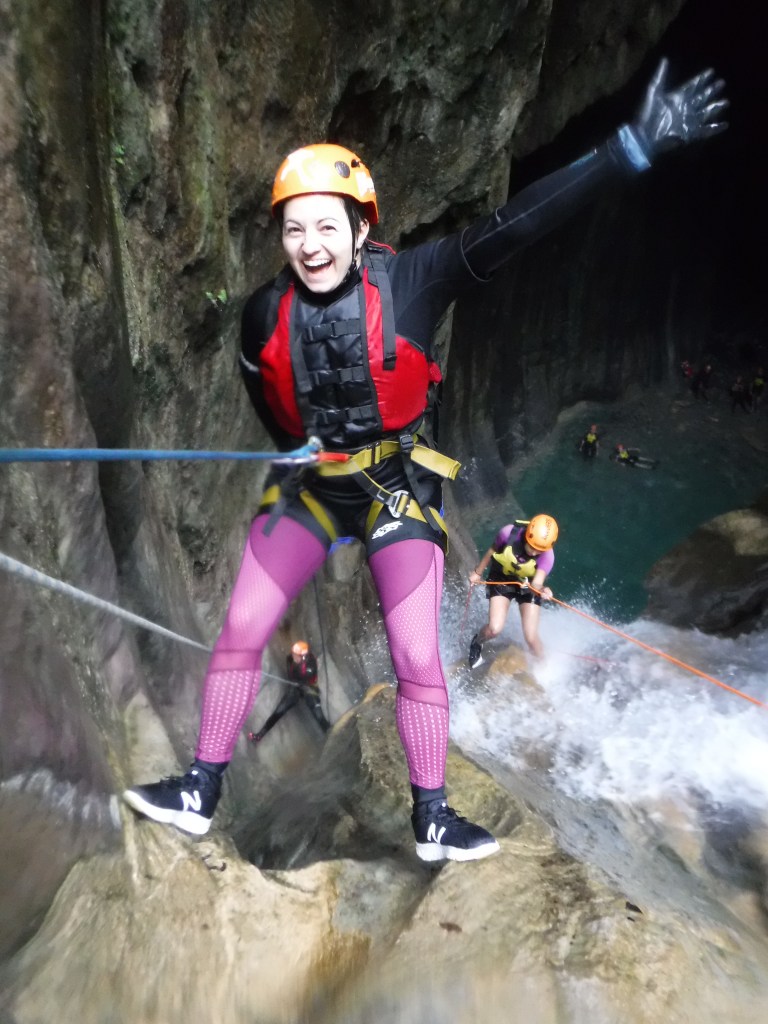
Consortium meeting in Portland, OR. It was a quiet summer for me, but I did attend the Gordon Research Conference on Animal-Microbe Symbioses in Vermont, which showcased fascinating research on the ways that humans and animals interact with the microbes that inhabit our bodies. In October, I had a whirlwind week-long trip which involved giving a presentation in Monterrey, Mexico, then a different presentation in Reno, NV the following day, then heading to Bozeman, MT to catch up with collaborators and teach bioinformatics to Tindall. All of the meetings, seminars, and training was very valuable, but the best part, hands-down, was going to Matacanes canyon.
Rappelling down through a waterfall into a cave.
Outreach
Over 2019, I gave more than ten (not all have been published) interviews on my research! This included a live radio interview, and two podcasts: all new experiences for me.
I published 30 posts this year, including this one, although with ~11,000 words total, I had less to talk about. I anticipate that will change when my lab gets rolling. The most popular post this year continues to be Work-Life Balance: What Do Professors Do?, self explanatory, and the least popular this year is I Accepted a New Position in Soil Microbiology and Agroeconomy!, which makes sense as it was an announcement from 2016 about a post-doc position I’d accepted.
My site had its most popular year, with >4,000 visitors taking >6,000 views, represented by 109 countries. In total, my site has had > 10,000 visitors and >15,000 views since Jan 2016
Website visitors in 2019.
Life
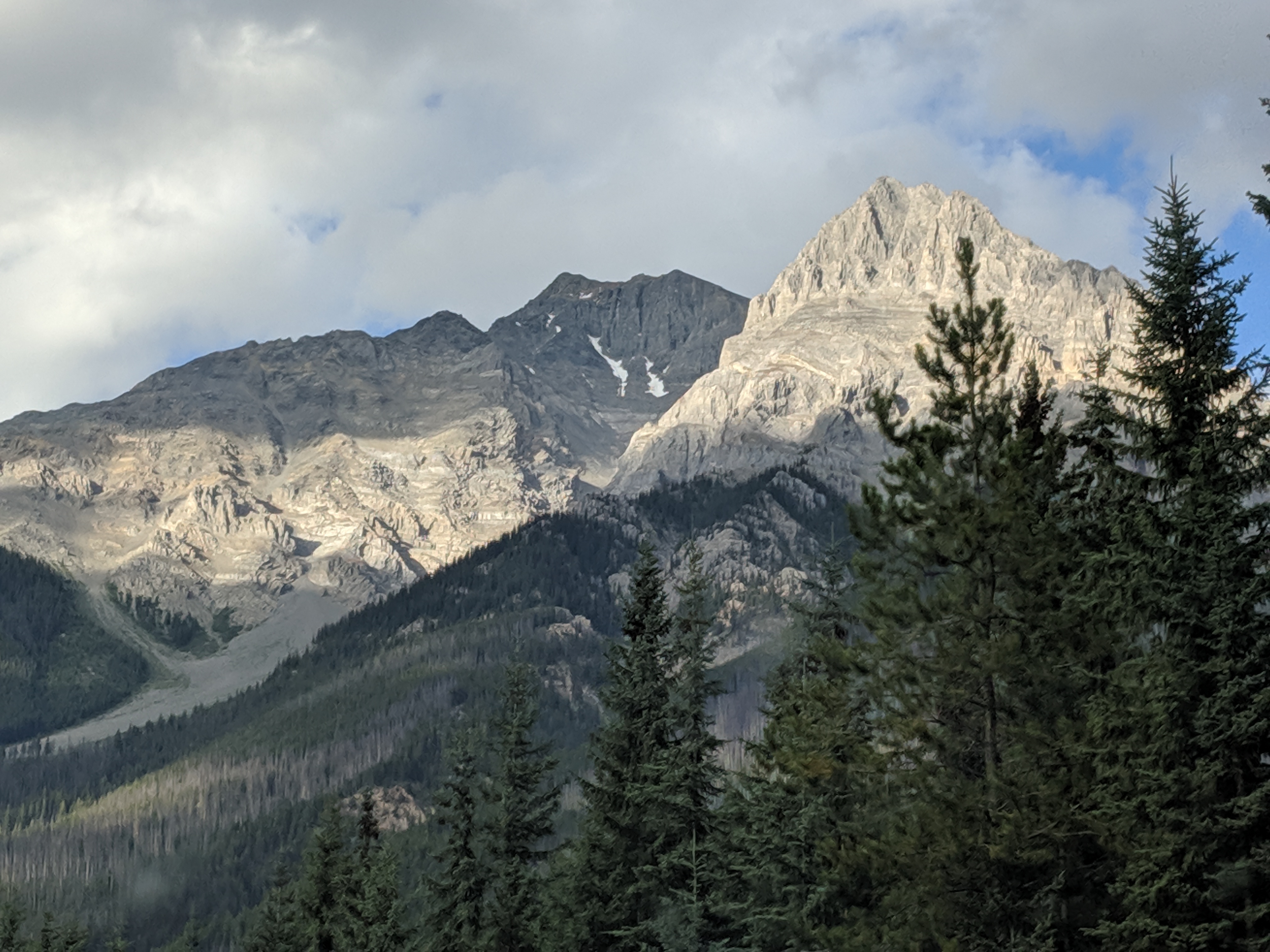
If you’ve read this far, you can probably guess how hectic my life has been this year. At the same time, it’s been gorgeously complex. I finally made it down to see Crater Lake in Oregon, went powder skiing in the Rockies in Utah, drove through the dramatic beauty of the Rockies in Alberta, made my first visit to Mexico and was immersed in the isolated beauty of a mountain canyon in Matacanes.
This Year in Review, I have the clearest idea of where my 2020 is heading. With a new lab and new classes, I’ll be happily well-occupied. I’ll be obtaining 3+ quotes to buy each piece of lab equipment (if it cost more that $6,000) and then waiting two months for it to arrive, troubleshooting R problems and revising scientific manuscripts written by first-time authors, I’ll be training my new brood of students in the lab, and I’ll be sharing my experiences here! Stay tuned!
This week, I chatted with Mike Tipping, Communications Director of Maine People’s Alliance, and Ben Chin, Deputy Director of Maine People’s Alliance, on my recent publication on ‘microbes and social equity’ in PLoS Biology and the blog version found in the Conversation. We chat about social policies currently under discussion and how they can impact your microbes, why you should care about your neighbor’s microbes, and steps you can take to be a mire microbially-minded and socially-minded community member.












 The Ishaq Lab