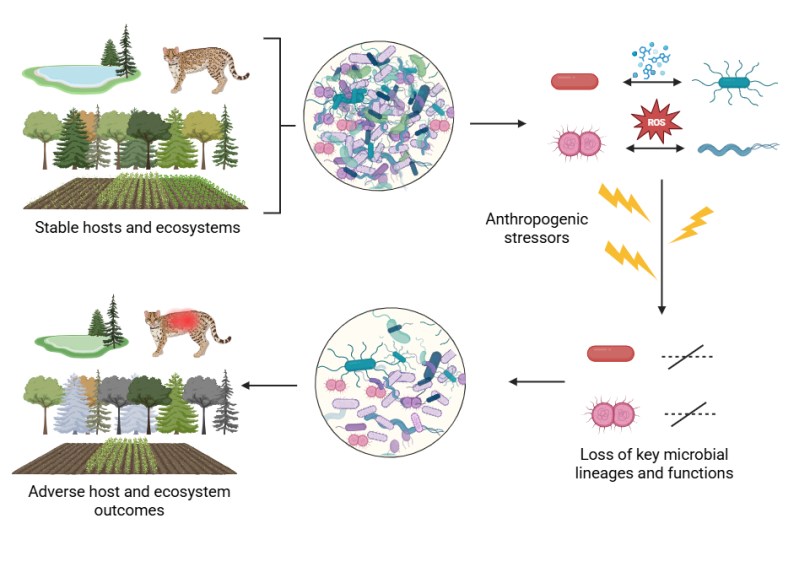
Diagram illustrating effects of biodiversity on microbial communities and plant health. Top section shows diverse ecosystem with various plants and animals leading to diverse microbes that produce reactive oxygen species (ROS) and suppress pathogens, enhancing plant resistance; bottom section shows less diverse ecosystem with fewer microbes, reduced ROS, and increased pathogen susceptibility.

Paper published on preserving microbiomes to secure health in degrading ecosystems!

I’m delighted to announce a new publication on the importance of preserving microbiomes to secure health in degrading ecosystems! The paper outlines strategies for preserving critical microbes, functions, and microbial communities using some specific examples, and ties these back to opportunities and challenges to making conservation efforts.

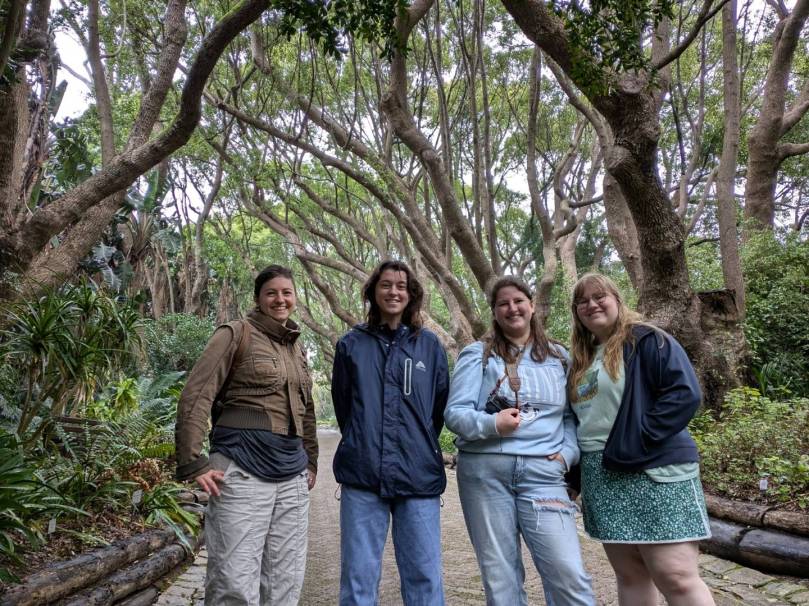
This paper was a collaborative effort by several members of the Microbiome Stewardship team, Panuya Athithan (grad student working with Emma), Kieran O’Doherty (fearless leader of the MiSt group), Emma Allen-Vercoe (maven of the human microbiome), and myself. Panuya and I led the paper, weaving our favorite stories of microbial symbioses together with existing studies that support the need for stewardship. Panuya is currently a PhD student working with Emma on a variety of projects, including a gut microbiome and early life project she was interviewed about here. She’s also a Young Director at the non-profit Fora: Network for Change, and was previously an undergraduate researcher while at the University of Waterloo.

A little over a year ago, the author team was discussing the need for papers which outline examples of critical host-microbial or ecosystem-microbial partnerships which are irreplaceable (unless you have several million years of free time to wait for evolution), as a means of supporting calls for taking action now to preserve life and ecosystems on what is currently the only planet we call home.
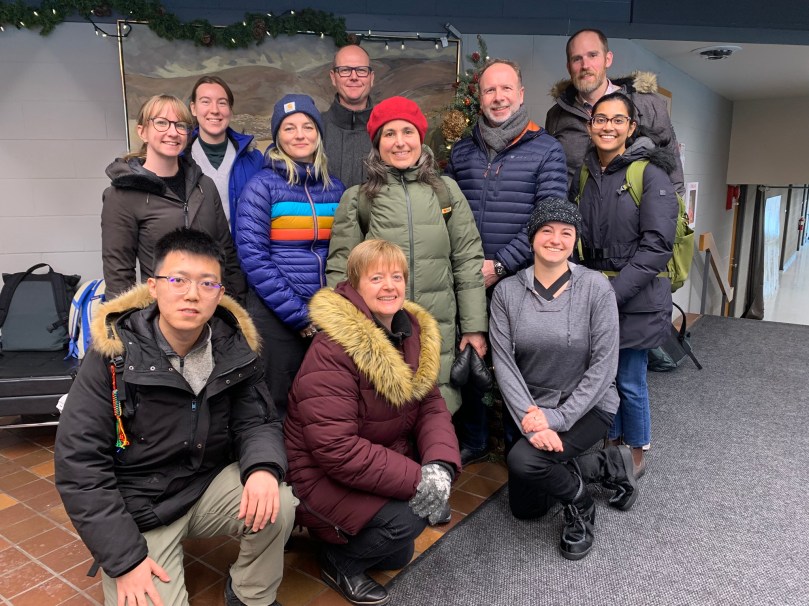
Left to right; front: Zhongzhi (Michael) Sun, Emma Allen-Vercoe, Sue Ishaq; middle: Mikaela Beijbom, Mallory Choudoir, Sarah Elton, Kieran O’Doherty, Panuya Athithan; back: Grace Gabber, Andreas Heyland, Rob Beiko.

Over a series of conversations with the MiSt group, as well as during the first public meeting to create the IUCN Microbe Specialist Group, our author team honed our paper to address the concerns of researchers over the ability and practicality of stewardship microbes.

Left to right in the photo are some of the MiSt group; front: Zhongzhi (Michael) Sun, Emma Allen-Vercoe, Sue Ishaq; middle: Mikaela Beijbom, Mallory Choudoir, Sarah Elton, Kieran O’Doherty, Panuya Athithan; back: Grace Gabber, Andreas Heyland, Rob Beiko.

This paper is one of the first in a forthcoming special issue (announcement coming soon!), which will feature several invited papers from my microbiome stewardship colleagues (both original team and expansion pack researchers). These papers will expand upon the concept of what it means to share microbes between individuals, communities, and ecosystems; what it would mean to consider microbes as shared natural resources to which everyone had an innate right to; and how it would look for public and planetary health to reduce the harm of human industry and consumerism to live more sustainably and regain all the benefits that the microbial world can provide us.

Microbes first into the life rafts: preserving microbiomes to secure health in degrading ecosystems

Authors: Panuya Athithan 1,2*, Suzanne L. Ishaq 2,3,4*, Emma Allen-Vercoe 1,2 Kieran C. O’Doherty 2,4,5

  • 1 Department of Molecular and Cellular Biology, University of Guelph, Guelph, Ontario, N1G 2W1
  • 2 The Microbiome Stewardship research group
  • 3 School of Food and Agriculture, University of Maine, Orono, Maine, 04469
  • 4 The Microbes and Social Equity working group, Orono, Maine, 04469
  • 5 Department of Psychology, University of Guelph, Guelph, Ontario, N1G 2W1

Abstract

All organisms on the planet intrinsically rely on microbial ecosystems, and there are increasing calls from research communities to consider microbiota when administering personal or public health, ecosystem health, and the use of microbiota in personal or environmental health remediation, such as reducing the impacts of climate change, or protecting at-risk habitats which host rare microbiota. Through our collective work on the integral nature of microbiomes to host and environmental health, on health policy, and on the development of research and policy agendas, we have previously developed the concept of ‘microbiome stewardship’ and guidelines to promote consideration of microbial communities broadly or in specific scenarios. The practicality of stewarding one versus many microbiota is highly contextual, and will require different strategies for different scales of conservation. Here, we provide scientific arguments for the need for microbial stewardship, examples of possible solutions scaled to different ecological challenges or conservation goals, discourse on the logistical challenges which have been cited by research communities, and opportunities to use cutting-edge microbiome concepts and technology to implement large-scale interventions.

Sustainability Statement

Microorganisms are responsible for environmental and organismal health, and the stewardship of microbiota has applications for human, plant, animal, and environmental health on local and global scales. The concepts described here are pertinent, in particular, to the United Nations’ Sustainable Development Goal 3) good health and wellbeing. Additionally, our paper is relevant to goals 6) clean water and sanitation, 9) industry, innovation, and infrastructure, 11) sustainable cities and communities, 12) responsible consumption and production, 13) climate action, 14) life below water, 15) life on land, and 17) partnerships for the goals.
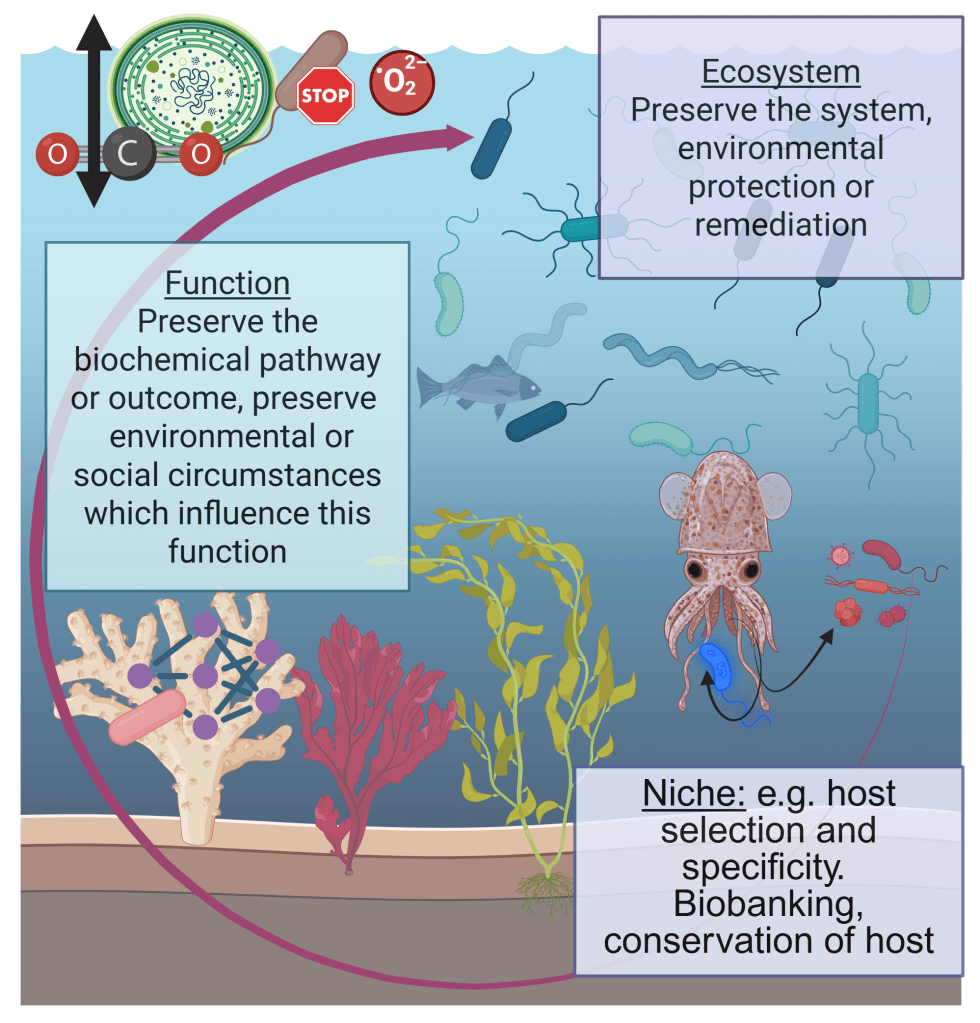
Diagram illustrating examples of microbial-host or microbial-ecosystem interactions which illustrate the need for microbiome stewardship, including preservation of ecosystems, functions, or niches. The interaction between bobtail squid and their symbiont bacteria is used as an example of a specific niche that cannot be replaced with another host or bacteria. The interactions between bacteria providing metabolites for a coral host exemplifies the need to protect microbial community functions. The interaction between two bacteria involving one bacteria blocking reactive oxygen species so another bacteria survives and sequesters carbon is used as an example of the need to protect whole ecosystems to allow this process to occur.
Graphical abstract: The concept of microbiome stewardship can be applied at multiple scales to provide guidance on both specific or general microbial interactions. Graphic made in Biorender under licence.

Alexis Kirkendall passed her comprehensive exam and advances to candidacy!!

Congratulations to Alexis Kirkendall, PhD candidate in the Microbiology Program, for passing her comprehensive exam!! The exam involved writing a research proposal on a topic outside of her main focus, and presenting her idea for an hour to her faculty committee, who then asked detailed questions about her work and understanding of this research for almost two hours.

Over the next two or three years, her dissertation research will focus on culturing bacteria that we previously isolated from mice consuming a steamed broccoli sprout diet, to test their capacity to grow amongst the gut pathogen Helicobacter pylori and produce the anti-inflammatory sulforphane under different conditions, as well as which bacteria produce sulforaphane in the gut, how they do it, and under which circumstances. It complements the collective lab research on how broccoli sprouts and gut microbes can be used to resolve Inflammatory Bowel Disease.

Alexis Kirkendall

Doctor of Philosophy candidate, Microbiology

Alexis is from Ohio and initially joined the lab in 2022 when she was majoring in Biology at Heidelberg University, through the Summer 2022 REU, during which she divided her time researching Cryptosporidium in cows, helping in the MSE Symposium, and aiding in the Camel Rumen Microbiome Project. Alexis continued her work remotely, and returned to Maine in summer 2023 as a research assistant for several projects related to gut microbes, diet, and Inflammatory Bowel Disease. Her research interests are in genetics and she has a love for the fascinating world of microbes.

She returned in January 2024 as a graduate student in the Microbiology program!


Lola Holcomb won a student research award from the Bioscience Association of Maine!!

Congratulations to Lola Holcomb, PhD candidate in the Graduate School for Biomedical Sciences and Engineering program, for winning a graduate student research award from the Bioscience Association of Maine!!

Over the next few months, she’ll focus on characterizing candidate anti-inflammatory bacterial species and genes of the gut microbiome, using whole genome sequence data from bacteria we previously isolated during a broccoli sprout diet study. This is part of Lola’s larger PhD project investigating which bacteria produce sulforphane in the gut, how they do it, and under which circumstances. It complements the collective lab research on how broccoli sprouts and gut microbes can be used to resolve Inflammatory Bowel Disease.

Portrait of Lola Holcomb, wearing a block sweater on a beach at sunset

Lola Holcomb, B.S.

Doctorate of Philosophy candidate, Biomedical Science

Lola entered as a rotating first-year GSBSE student in March 2022, and declared the Ishaq Lab her dissertation lab soon after.  Troubled with indecisiveness and the desire to research, well, everything, she quickly found that using bioinformatics and big data as a lens to study microbial ecology (and in time, its relation to social equity) allowed her to do the kind of meaningful interdisciplinary research she’s always wanted to do.  Lola is currently working on 16s data analysis for other ongoing lab projects, comparing gut microbiomes of mouse models of Inflammatory Bowel Disease with broccoli as a dietary treatment.  Lola is currently doing 16S data analysis for ongoing lab projects and developing a metagenomic analysis workflow to compare gut microbiomes of mouse models of Inflammatory Bowel Disease with broccoli as a dietary treatment. In addition to research, she instructs a graduate-level Genetics course, tutors several Biology undergraduate students, and serves as a GSBSE senator in the Graduate Student Government here at UMaine. 

Google Scholar page.

Alexis Kirkendall won a student research award from the Bioscience Association of Maine!!

Congratulations to Alexis Kirkendall, PhD student in the Microbiology Program, for winning a graduate student research award from the Bioscience Association of Maine!!

Over the next year, she’ll focus on culturing bacteria that we previously isolated from mice consuming a steamed broccoli sprout diet, to test their capacity to grow amongst the gut pathogen Helicobacter pylori and produce the anti-inflammatory sulforphane under different conditions. This will be part of Alexis’ larger PhD project investigating which bacteria produce sulforaphane in the gut, how they do it, and under which circumstances. It complements the collective lab research on how broccoli sprouts and gut microbes can be used to resolve Inflammatory Bowel Disease.

Alexis Kirkendall

Doctor of Philosophy student, Microbiology

Alexis is from Ohio and initially joined the lab in 2022 when she was majoring in Biology at Heidelberg University, through the Summer 2022 REU, during which she divided her time researching Cryptosporidium in cows, helping in the MSE Symposium, and aiding in the Camel Rumen Microbiome Project. Alexis continued her work remotely, and returned to Maine in summer 2023 as a research assistant for several projects related to gut microbes, diet, and Inflammatory Bowel Disease. Her research interests are in genetics and she has a love for the fascinating world of microbes.

She returned in January 2024 as a graduate student in the Microbiology program!


Upcoming talk at the 9th Southern California Microbiome Symposium in September!

I’m ecstatic to be heading back to southern California this September to present at the 9th annual Southern California Microbiome Symposium. I’ll be sharing my work on microbes and social equity, especially as pertains to food systems and sustainability. Registration is free, and can be found here.