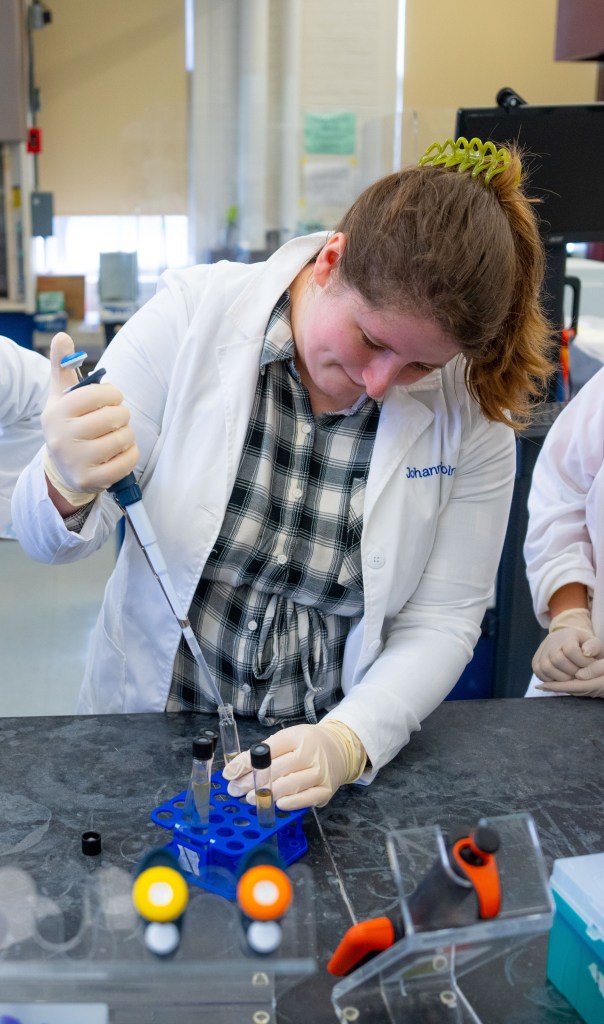
Tolu and Johanna’s literature review on beneficial phytochemicals in cruciferous vegetables and Inflammatory Bowel Disease was published!

The Li and Ishaq labs are excited to announce a new literature review on the beneficial compounds in cruciferous vegetables was just published here in Current Developments in Nutrition, led by Tolu Esther Alaba (PhD candidate in GSBSE) and Johanna Holman (soon to be PhD candidate in Microbiology/Nutrition)!!


We’ve been researching the benefits of cruciferous vegetables on health, some of which are available directly from the plants, and some of which require the participation of certain bacteria that live in our gut. Cruciferous vegetables are loaded with fiber, vitamins, minerals, and – what we are most interested in – the plant’s secondary compounds called glucosinolates which can be transformed into antioxidants and anti-inflammatories. Depending on the type of vegetable, and the way that it is cooked/prepared, you can end up with different types and quantities of these beneficial compounds. We are interested in how to target benefits to certain locations in the gut by inducing the gut microbiome to participate in making these compounds available to us (Figure below). The review consolidated the existing literature on cruciferous vegetables in regards to the glucosinolates and reducing inflammation in the gut.

Cruciferous vegetables or their purified compounds can ameliorate inflammatory symptoms through multiple pathways. Graphic designed by Johanna Holman.
Headshot for Esther Alaba, PhD Candidate in Biomedical Sciences

Tolu Esther Alaba is a PhD Candidate in the GSBSE program at UMaine. Her research has focused on antioxidants in fruits and vegetables which can be used to resolve inflammation, oxidative stress, injury, cardiometabolic and chronic diseases. Since joining #TeamBroccoli in the fall of 2023, she’s completed data analyses on gut metabolites and broccoli sprouts in mice and humans, and began drafting several manuscripts, in addition to writing this literature review. Tolu plans to defend her dissertation this summer, and we hope to bring her back to the Ishaq and Li labs as a postdoctoral researcher focusing on dietary habits, cruciferous vegetable intake, and dietary metabolomics!

Johanna Holman is a PhD student in the Nutrition/Microbiology programs. She began working on broccoli sprouts with Drs. Tao Zhang and Yanyan Li over 6 years ago as a research assistant. She joined the Ishaq lab in fall 2020 as a master’s student to investigate the effects of diet on the gut microbiome, and host-microbial interactions, as part of an ongoing collaboration with Tao and Yanyan Li, and graduated with her M.S. in nutrition science in the fall of 2022. Her research combines nutritional biochemistry of broccoli sprouts with effects on gut microbes and gastrointestinal inflammation, and spans biochemistry, microbiology, molecular biology, and incorporates a handful of undergraduate mentees every semester. Johanna also just created a website for Imaginome Designs, her graphic design portfolio!!

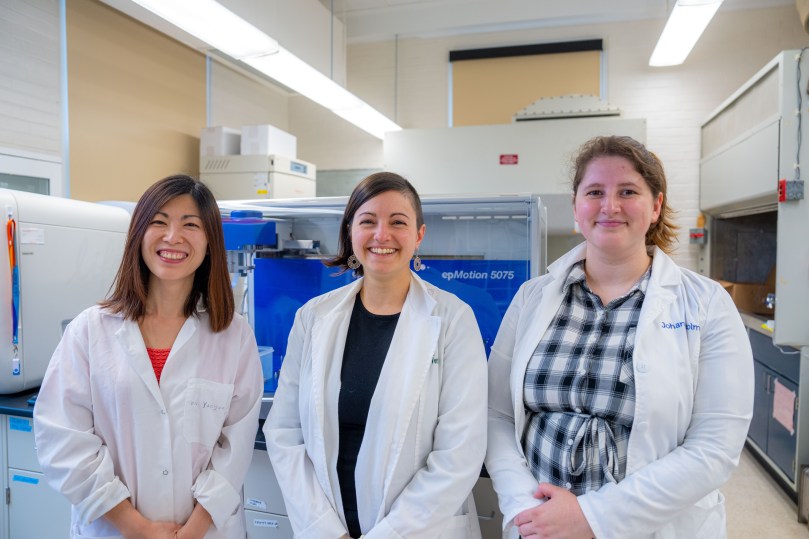
A black and white portrait of Johanna Holman

Yanyan Li, PhD, is an Assistant Professor of Pharmaceutical Sciences at SUNY Binghamton, and has been researching the nutritional biochemistry of broccoli sprouts for over a decade. Yanyan and Sue, along with Johanna, Tolu, and the rest of Team Broccoli have been collaborating on diet-microbe-health projects for the last 5 years!

Current knowledge on the preparation and benefits of cruciferous vegetables as relates to in vitro, in vivo, and clinical models of Inflammatory Bowel Disease  

Authors: Tolu E. Alaba1, Johanna M. Holman2 , Suzanne L. Ishaq2 , Yanyan Li2,3 

Affiliations: 1 Graduate School of Biomedical Sciences and Engineering, University of Maine, Orono, Maine, USA 04469; 2 School of Food and Agriculture, University of Maine, Orono, Maine, USA 04469; 3 School of Pharmacy and Pharmaceutical Sciences, SUNY Binghamton University, Johnson City, New York, USA 13790

Abstract

Inflammatory bowel disease is a chronic condition with a significant economic and social burden. The disease is complex and challenging to treat because it involves several pathologies, such as inflammation, oxidative stress, dysbiosis, and intestinal damage. The search for an effective treatment has identified cruciferous vegetables and their phytochemicals as potential management options for inflammatory bowel disease, as they contain prebiotics, probiotics, and anti-inflammatory and antioxidant metabolites essential for a healthy gut. This critical narrative style review provides a robust insight into the pharmacological effects and benefits of crucifers and their documented bioactive compounds in in vitro and in vivo models, as well as clinical inflammatory bowel disease. The review highlights the significant impact of crucifer preparation and the presence of glucosinolates, isothiocyanates, flavonoids, and polyphenolic compounds, which are essential for the anti-inflammatory and antioxidative benefits of cruciferous vegetables, as well as their ability to promote the healthy microbial community and maintain the intestinal barrier. This review may serve as a viable nutritional guide for future research on methods and features essential to developing experiments, preventions, and treatments for inflammatory bowel disease. There is limited clinical information and future research may utilize current innovative tools, such as metabolomics, for adequate knowledge and effective translation into clinical therapy.

Acknowlegements

This project was supported by the USDA National Institute of Food and Agriculture through the Maine Agricultural & Forest Experiment Station: Hatch Project Numbers ME022102 and ME022329 (Ishaq) and ME022303 (Li); and the National Institute of Health [Li and Ishaq; NIH/NIDDK 1R15DK133826-01], and the Allen Foundation [Li and Ishaq, #5409406]. Financial sponsors had no role in study design, data interpretation, or report writing.

Lots to celebrate in the Ishaq Lab this fall!

Ayodeji Olaniyi, B.S.

Master of Science student.

Ayodeji joined the lab in 2022, and has been investigating the Vibrio bacteria associated with different scallop hatchery tank systems. Ayodeji won a travel award from the University of Maine Aquaculture Research Institute Rapid Response Fund, to present his work at the upcoming meeting: Northeast Aquaculture Conference & Exposition (NACE) and the 43rd Milford Aquaculture Seminar (MAS)! He is also celebrating research job offers for when he defends his thesis in January!!

Marissa received a research award from the Bioscience Association of Maine, and contibuted to two papers this year!!

Marissa Kinney

Marissa Kinney 

Master of Science student

Marissa completed her undergraduate at the University of Maine in 2021, earning a BS in Microbiology and a BS in Cellular/Molecular Biology, and after graduating worked in the field of public health at UMaine’s Margaret Chase Smith Policy Center. She’s been crushing it since joining the lab in early 2023, including contibuting to the two papers listed below, being awarded a One Health and the Environment NRT Fellowship 2023 – 2024 at UMaine, and now, a research award from the Bioscience Association of Maine!!

Lola was first author on a paper that was just accepted (details soon), and contributed to a second paper that was recently published!

Portrait of Lola Holcomb, wearing a block sweater on a beach at sunset

Lola Holcomb

Doctorate of Philosophy candidate.

Lola entered as a rotating first-year GSBSE student in March 2022, and declared the Ishaq Lab her dissertation lab soon after, where she has been performing 16s data analysis for other ongoing lab projects, comparing gut microbiomes of mouse models of Inflammatory Bowel Disease with broccoli as a dietary treatment.  Lola was awarded a One Health and the Environment NRT Fellowship 2022- 2024 here at UMaine.  She led the data analysis on a paper using a Crohn’s Disease mouse model for innovate diet-microbe research.

Johanna was first author on a paper that was recently published, and contributed to a second paper accepted (details soon)!

Johanna Holman, B.S., M.S.

Doctor of Philosophy student

Johanna joined the lab in fall 2020 to investigate the effects of diet on the gut microbiome, and on host-microbial interactions. For the past several years, she has been working with Drs. Tao Zhang and Yanyan Li, and her project will combine her previous work on the nutritional biochemistry of broccoli with effects on gut microbes. She obtained her master’s in nutrition in summer 2022, and returned to the Ishaq and Li labs for her PhD! She won the 2022 Norris Charles Clements Graduate Student Award and the 2020-2021 University of Maine Graduate Student Employee of the Year. She led a large mouse project which was recently published, and led much of the lab work for a second paper that was just accepted.

Alexis is returning soon as PhD student in Microbiology!

Alexis Kirkendall

Undergraduate Researcher

Alexis is from Ohio and is about to graduate a semeser early in Biology at Heidelberg University. She joined the lab through the Summer 2022 REU, continued her work remotely, and returned to Maine in summer 2023 as a research assistant for several projects related to gut microbes, diet, and Inflammatory Bowel Disease. She was just accepted into the microbiology program at UMaine!!


Esther joined the lab!

Esther Alaba

Doctorate of Philosophy candidate

Esther has won several awards for combining mechanistic and functional tools to investigate dietary interventions in managing metabolic diseases. Her teaching experience includes Basic Physiology, Anatomy, and Experimental Physiology courses. She is passionate about Girls’ Education and Empowerment and currently mentors several young women towards successful career development. 

Her desire to utilize bioinformatics tools for nutritional therapy brought her to Ishaq’s lab. She currently works on human and mouse data to identify the microbiome and metabolomic pathways involved in the ameliorative effects of broccoli sprouts during IBD.

Esther is being co-advised by Dr. Yanyan Li.

Johanna’s review published on how gut microbes can make anti-inflammatory compounds when you eat broccoli

A massive literature review led by Johanna Holman, and featuring our collaborative team of broccoli sprout and microbes researchers, was accepted for publication!

As part of her master’s of science thesis, Johanna Holman reviewed hundreds of journal articles on anti-inflammatory, health-promoting dietary compounds in broccoli and other vegetables or fruits, and how microbes in the digestive tract can transform inactive precursors from foods into those beneficial compounds. This is part of a broader research collaboration on how glucoraphanin in broccoli sprouts can be made into sulforaphane, which acts as an anti-inflammatory in humans. Humans are unable to convert glucoraphanin to sulforaphane, and a small amount of this occurs naturally thanks to enzymes in the broccoli sprouts. But, certain gut microbes can make the conversion and this has helped resolve colitis and other symptoms in mice in laboratory trials (manuscripts in preparation).

A diagram with two panels, and a cartoon mouse in the middle.  The cartoon mouse is eating broccoli, and a cartoon of the digestive tract is overlaid on the mouse's abdomen. Lines emanating from the broccoli point to the left panel, and show the compound glucoraphanin being converted into sulforaphane by the myrosinase enzyme. Lines emanating from the colon of the mouse point to the panel on the right, showing the same biochemical conversion by gut microbes.
Artwork by Johanna Holman.

If you aren’t familiar with broccoli sprouts, a lovely review on their history, current food culture, and safe production was just published by some of our colleagues: Sprout microbial safety: A reappraisal after a quarter-century.

Check out the review

Holman, J., Hurd, M., Moses, P.,  Mawe, G.,  Zhang, T., Ishaq, S.L., Li, Y. 2022. Interplay of Broccoli/Broccoli Sprout Bioactives with Gut Microbiota in Reducing Inflammation in Inflammatory Bowel Diseases. Journal of Nutritional Biochemistry, in press.

Abstract

Inflammatory Bowel Diseases (IBD) are chronic, reoccurring, and debilitating conditions characterized by inflammation in the gastrointestinal tract, some of which can lead to more systemic complications and can include autoimmune dysfunction, a change in the taxonomic and functional structure of microbial communities in the gut, and complicated burdens in a person’s daily life. Like many diseases based in chronic inflammation, research on IBD has pointed towards a multifactorial origin involving factors of the host’s lifestyle, immune system, associated microbial communities, and environmental conditions. Treatment currently exists only as palliative care, and seeks to disrupt the feedback loop of symptoms by reducing inflammation and allowing as much of a return to homeostasis as possible. Various anti-inflammatory options have been explored, and this review focuses on the use of diet as an alternative means of improving gut health. Specifically, we highlight the connection between the role of sulforaphane from cruciferous vegetables in regulating inflammation and in modifying microbial communities, and to break down the role they play in IBD.

Illustrated image of a cross section of the ground. A light brown ant is pictured in the ground along with a microbe. Text to the left of the image reads, "Can a necromenic nematode serve as a biological Trojan horse for an invasive ant?". The names of six professors are listed below the text and image at the bottom left. In the bottom right corner, text reads, "The University of Maine" with "The University of Arizona" below it.

Paper published on bacterial transfer in insects and possible ecological impacts.

A collaborative paper on bacterial transfer in insects and the possible ecological impacts of that in the wild has been published in iScience! This work began a decade ago in the labs of Dr. Ellie Groden, recently retired Professor of Entomology in the School of Biology and Ecology at the University of Maine, and later Dr. Patricia Stock, a Professor in the School of Animal and Comparative Biomedical Sciences at the University of Arizona, who were investigating colony collapse of European fire ants (Myrmica rubra) which are invasive to Maine. The ants have a nasty bite, and can dramatically disturb the local plant and insect wildlife in coastal Maine.

Slide from Ishaq et al. Entomology 2020 presentation

When these invasive ant colonies collapsed, Drs. Groden and Stock wanted to find out why, as a possible means of developing a biological control strategy. It was thought that particular nematodes would ingest soil bacteria, and transfer it to ants once the worms invaded ant tissues to complete parts of their life cycle. This particular worm infection doesn’t kill the ants, but perhaps the soil bacteria were. Ants were collected from different colony sites, and investigations on the nematode worms inhabiting the ants were conducted.

Slide from Ishaq et al. Entomology 2020 presentation

Most of the work for this project was completed several years ago, with the exception of DNA sequencing data from a bacterial transfer experiment. I was added to the project by my collaborator at UMaine, Dr. Jean MacRae, an Associate Professor in the Department of Civil and Environmental Engineering who introduced me to the research team and shared the 16S rRNA dataset to use in my AVS 590 data analysis class in spring 2020. That semester was when the pandemic hit, and forced the course to move to remote-only instruction in March. UMaine graduate students Alice Hotopp and Sam Silverbrand were taking the class and learning 16S analysis on this dataset, and I mentored them through the analysis all the way to manuscript writing despite the incredible challenges that spring threw our way.

At the completion of the course, we shared the draft manuscript with the rest of the research team, who mentioned that several undergraduate honor’s theses had been written about the earlier experiment, but never published in a scientific journal. The team spent summer 2020 combining the three papers into one massive draft. The pandemic slowed down manuscript review, understandably, but I’m pleased to say that it was accepted for publication! In addition, this collaboration has led to further collaborations in the Ishaq Lab, several presentations (listed below), and is Sam’s first scientific publication, congrats Sam!!

Related Presentations

Alice Hotopp, A., Samantha Silverbrand, Suzanne L. Ishaq, Jean MacRae, S. Patricia Stock, Eleanor Groden. “Can a necromenic nematode serve as a biological Trojan horse for an invasive ant?Ecological Society of America 2021 (virtual). Aug 2-6, 2021 (accepted poster).

Ishaq*, S.L., Hotopp, A., Silverbrand, S.,   MacRae, J.,  Stock, S.P.,  Groden, E. “Can a necromenic nematode serve as a biological Trojan horse for an invasive ant?” Entomological Society of America 2020 (virtual). Nov 15-25, 2020. (invited talk)

Illustrated image of a cross section of the ground. A light brown ant is pictured in the ground along with a microbe. Text to the left of the image reads, "Can a necromenic nematode serve as a biological Trojan horse for an invasive ant?". The names of six professors are listed below the text and image at the bottom left. In the bottom right corner, text reads, "The University of Maine" with "The University of Arizona" below it.

IshaqS.L., A. Hotopp2, S. Silverbrand2, J.E. Dumont, A. Michaud, J. MacRae, S. P. Stock, E. Groden. 2021. Bacterial transfer from Pristionchus entomophagus nematodes to the invasive ant Myrmica rubra and the potential for colony mortality in coastal MaineiScience. In press. Impact 5.08.

Abstract

The necromenic nematode Pristionchus entomophagus has been frequently found in nests of the invasive European ant Myrmica rubra in coastal Maine, United States, and may contribute to ant mortality and collapse of colonies by transferring environmental bacteria. Paenibacillus and several other bacterial species were found in the digestive tracts of nematodes harvested from collapsed ant colonies. Serratia marcescens, Serratia nematodiphila, and Pseudomonas fluorescens were collected from the hemolymph of nematode-infected wax moth (Galleria mellonella) larvae.

Virulence against waxworms varied by site of origin of the nematodes. In adult nematodes, bacteria were highly concentrated in the digestive tract with none observed on the cuticle. In contrast juveniles had more on the cuticle than in the digestive tract. .  Host species was the primary factor affecting bacterial community profiles, but Spiroplasma sp. and Serratia marcescens sequences were shared across ants, nematodes, and nematode-exposed G. mellonella larvae.