
Alexis Kirkendall began her PhD with research funds awarded in her very first month!! Over the fall, she drafted a proposal to evaluate the probitoic potential of bacteria the we previously isolated from a broccoli sprout diet study. The funds were awarded from the Crohn’s and Colitis Foundation, and will help launch the research for Alexis’ dissertation!!

Alexis Kirkendall processing microscope slides. 
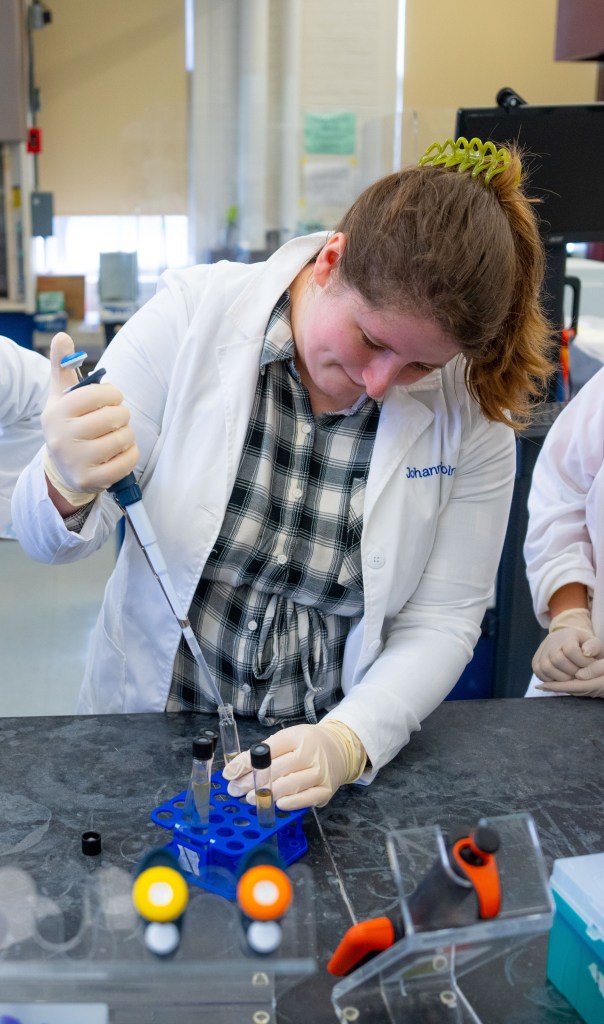
Alexis Kirkendall, Jaymie Sideaway, Aakriti Sharma, Johanna Holman, and Lilian Nowak. 
Logo designed by Johanna Holman. 

Alexis Kirkendall processing microscope slides.
Effect of probiotic candidates on intestinal epithelium barrier function.
Summary
Broccoli sprouts contain precursors to anti-inflammatories which increase beneficial gut bacteria and reduce pathogens, and confer protective effects against colitis. Gut microbiota are critical to converting the precursor to the anti-inflammatory sulforaphane to sites of intestinal inflammation. We are currently investigating hundreds of bacterial isolates for their capacity to produce sulforaphane using gut microbiota samples from different parts of the intestines in broccoli sprout-fed mice. We are benchmarking these 806 isolates against standard strains with GSLs-metabolism. We hypothesize that previous broccoli sprout entrainment of bacteria can improve their capacity for GLR metabolism in the new hosts. Our immediate goal is to test the capacity of these isolates to produce SFN and reduce inflammation, and our long-term goal is to develop a dietary preparation of broccoli sprouts and a probiotic which have therapeutic effects against IBD in humans.
Relevance to IBD
Broccoli sprouts contain plant secondary compounds, especially glucoraphanin, which is transformed into sulforaphane, an anti-inflammatory, by gut-microbiota-sourced enzymes. High fiber diets may reduce inflammation and cancer risk, and improve quality of life for colitis patients. Our research investigates a prevention/management approach which has the potential to restore host-microbial homeostasis, but also is more affordable and accessible than a dietary supplement or medical treatment. We found that certain gut microbiota metabolizing broccoli sprout glucoraphanin to anti-inflammatories such as sulforaphane, and that a broccoli sprout-supplemented diet results in sulforaphane accumulation systemically and in gut tissues, reduced inflammatory cytokines, and beneficial changes to gut microbiota. We found that these interactions between gut microbiota and broccoli sprouts reduce susceptibility of mice to chemically induced colitis and immunologically associated enterocolitis.









 The Ishaq Lab