Article published on the efficiency of a glucoraphanin supplement, and the gut microbial response!

The Lab is delighted to finally announce the publication of a study on the efficacy of a glucoraphanin supplement in converting to sulforaphane, and of the effect on or participation of gut microbes! The article can be found online here.

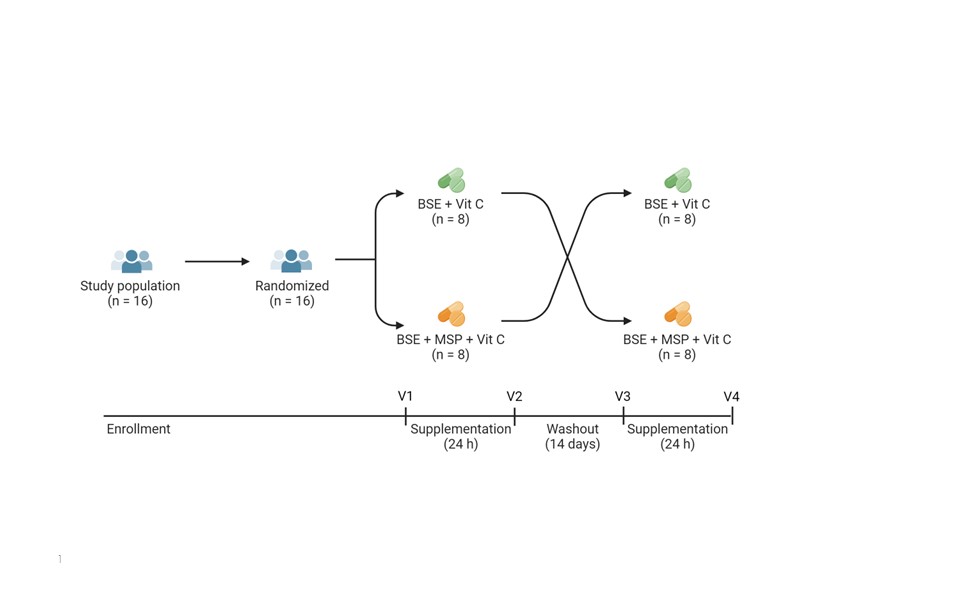
The study was run back in 2021 at Appalachian State University by Dr. Giuseppe Valacchi, Alessandra Pecorelli, and colleagues, when participants were given one dose of a glucoraphanin supplement combined with the plant enzyme myrosinase (which converts the GLR into the anti-inflammatory sulforaphane by the time the supplement gets to your small intestines), or one dose of the glucoraphanin supplement alone (in the absence of the plant enzyme, this requires gut microbes to convert GLR to SFN).
A diagram with two panels, and a cartoon mouse in the middle. The cartoon mouse is eating broccoli, and a cartoon of the digestive tract is overlaid on the mouse's abdomen. Lines emanating from the broccoli point to the left panel, and show the compound glucoraphanin being converted into sulforaphane by the myrosinase enzyme. Lines emanating from the colon of the mouse point to the panel on the right, showing the same biochemical conversion by gut microbes.

Since the Ishaq Lab is interested in how gut microbes can produce anti-inflammatories from inactive compounds in broccoli sprouts, and the Li Lab has been researching the use of sulforaphane for disease prevention and treatment for almost 20 years, Yanyan and I were a natural fit for this collaboration.

Yanyan and I were introduced to Dr. Jed Fahey when he joined the UMaine Institute of Medicine faculty network in 2022. We talked to Jed about his recent work Brassica Protection Products, a company he founded back in 1997 with Dr. Paul Talalay, and Yanyan and I were invited as collaborators in 2023 by Antony Talalay, CEO and Co-Founder, and Paul’s son.

As part of their dissertations, Marissa Kinney performed qPCR to quantify microbial genes during her master’s, and Lola Holcomb performed 16S rRNA bacterial community sequencing during her PhD. We submitted the manuscript for peer review in Dec 2024. After a slow review process, the paper was finally released in Feb 2026, and we’ve begun brainstorming the next step in our research. While Jed, Tony, and the BPP team are, of course, interested in how their supplement can be used to improve health, the Ishaq Lab is also interested in teasing apart why some people’s gut microbiome is very responsive to GLR supplementation and will produce a fair amount of sulforaphane, while other’s people’s gut won’t react to glucoraphanin at all.
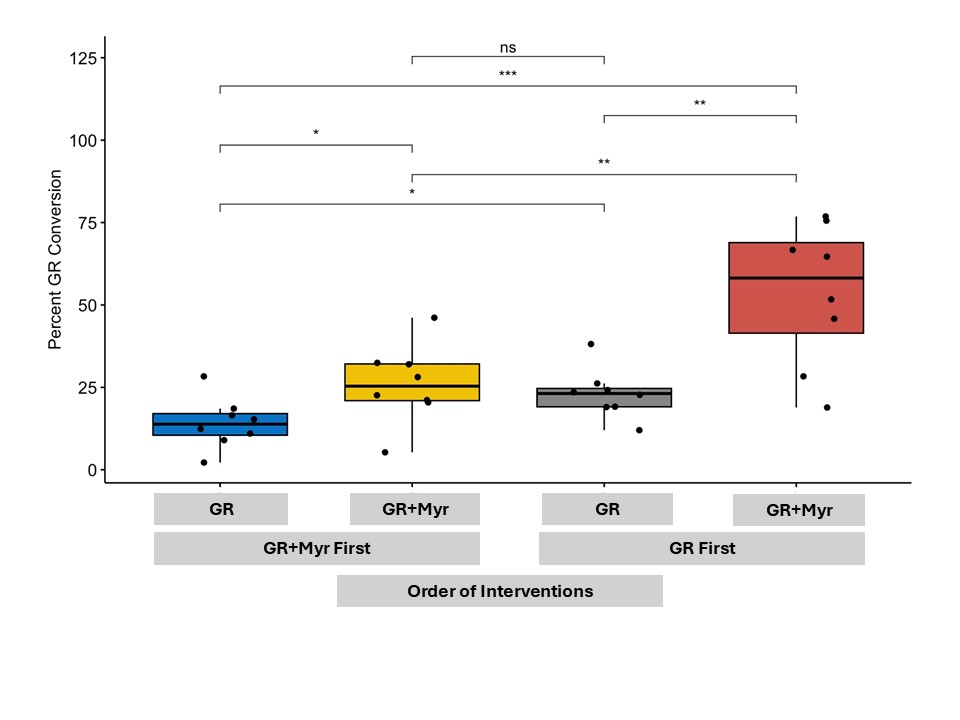
Even more intriguing were the participants in the study who had very little glucoraphanin conversion even when the myrosinase enzyme that can do the conversion was provided in the supplement. In fact, there was a lot of variability in how effective the enzyme was depending on the person- implying there are other biological or environmental factors at play which may be impeding the conversion of glucoraphanin into an anti-inflammatory.

Exogenous myrosinase from mustard seed increases bioavailability of sulforaphane from a glucoraphanin-rich broccoli seed extract in a randomized clinical study.

Angela Mastaloudis, Lola Holcomb, Jed W. Fahey, Camila Olson, David C. Nieman, Colin Kay, Robert O’Donnell, Alessandra Pecorelli, Marissa Kinney, Yanyan Li, Suzanne L. Ishaq & Giuseppe Valacchi. Scientific Reports, In Press.  (2026) 

Abstract: Inactive glucoraphanin (GR) in broccoli is converted to the antioxidant, anti-inflammatory, and anti-bacterial sulforaphane (SF) by cruciferous vegetable enzyme myrosinase (Myr), or similar enzymes from specific gut bacteria; both sources have variable efficiency. The effects of exogenous Myr on the conversion efficiency of GR to SF was compared to gut microbial Myr-like activity. In a randomized, double-blind, crossover study, sixteen subjects (9 F: 7 M) received a single oral dose of GR in broccoli seed extract with Myr-containing mustard seed powder, or broccoli seed extract alone, both with ascorbic acid. GR + Myr, on average, doubled the bioavailability of SF (39.8 ± 3.1%) compared to GR alone (18.6 ± 3.1%), and increased the conversion rate in the first 8 h (25.4% ± 2.7%) compared to GR alone (8.0% ± 2.7) based on measurement of urinary metabolites. There were no differences in fecal bacterial communities after the single dose; however, four bacterial GR-converting genes significantly correlated with GR conversion (p < 0.0155). To our knowledge, this is the first human study to simultaneously investigate (1) a well-defined Myr source, (2) broccoli seeds as source of GR, (3) prediction of gut microbial responsiveness to GR.

Tolu and Johanna’s literature review on beneficial phytochemicals in cruciferous vegetables and Inflammatory Bowel Disease was published!

The Li and Ishaq labs are excited to announce a new literature review on the beneficial compounds in cruciferous vegetables was just published here in Current Developments in Nutrition, led by Tolu Esther Alaba (PhD candidate in GSBSE) and Johanna Holman (soon to be PhD candidate in Microbiology/Nutrition)!!


We’ve been researching the benefits of cruciferous vegetables on health, some of which are available directly from the plants, and some of which require the participation of certain bacteria that live in our gut. Cruciferous vegetables are loaded with fiber, vitamins, minerals, and – what we are most interested in – the plant’s secondary compounds called glucosinolates which can be transformed into antioxidants and anti-inflammatories. Depending on the type of vegetable, and the way that it is cooked/prepared, you can end up with different types and quantities of these beneficial compounds. We are interested in how to target benefits to certain locations in the gut by inducing the gut microbiome to participate in making these compounds available to us (Figure below). The review consolidated the existing literature on cruciferous vegetables in regards to the glucosinolates and reducing inflammation in the gut.

Cruciferous vegetables or their purified compounds can ameliorate inflammatory symptoms through multiple pathways. Graphic designed by Johanna Holman.
Headshot for Esther Alaba, PhD Candidate in Biomedical Sciences

Tolu Esther Alaba is a PhD Candidate in the GSBSE program at UMaine. Her research has focused on antioxidants in fruits and vegetables which can be used to resolve inflammation, oxidative stress, injury, cardiometabolic and chronic diseases. Since joining #TeamBroccoli in the fall of 2023, she’s completed data analyses on gut metabolites and broccoli sprouts in mice and humans, and began drafting several manuscripts, in addition to writing this literature review. Tolu plans to defend her dissertation this summer, and we hope to bring her back to the Ishaq and Li labs as a postdoctoral researcher focusing on dietary habits, cruciferous vegetable intake, and dietary metabolomics!

Johanna Holman is a PhD student in the Nutrition/Microbiology programs. She began working on broccoli sprouts with Drs. Tao Zhang and Yanyan Li over 6 years ago as a research assistant. She joined the Ishaq lab in fall 2020 as a master’s student to investigate the effects of diet on the gut microbiome, and host-microbial interactions, as part of an ongoing collaboration with Tao and Yanyan Li, and graduated with her M.S. in nutrition science in the fall of 2022. Her research combines nutritional biochemistry of broccoli sprouts with effects on gut microbes and gastrointestinal inflammation, and spans biochemistry, microbiology, molecular biology, and incorporates a handful of undergraduate mentees every semester. Johanna also just created a website for Imaginome Designs, her graphic design portfolio!!

A black and white portrait of Johanna Holman

Yanyan Li, PhD, is an Assistant Professor of Pharmaceutical Sciences at SUNY Binghamton, and has been researching the nutritional biochemistry of broccoli sprouts for over a decade. Yanyan and Sue, along with Johanna, Tolu, and the rest of Team Broccoli have been collaborating on diet-microbe-health projects for the last 5 years!

Current knowledge on the preparation and benefits of cruciferous vegetables as relates to in vitro, in vivo, and clinical models of Inflammatory Bowel Disease  

Authors: Tolu E. Alaba1, Johanna M. Holman2 , Suzanne L. Ishaq2 , Yanyan Li2,3 

Affiliations: 1 Graduate School of Biomedical Sciences and Engineering, University of Maine, Orono, Maine, USA 04469; 2 School of Food and Agriculture, University of Maine, Orono, Maine, USA 04469; 3 School of Pharmacy and Pharmaceutical Sciences, SUNY Binghamton University, Johnson City, New York, USA 13790

Abstract

Inflammatory bowel disease is a chronic condition with a significant economic and social burden. The disease is complex and challenging to treat because it involves several pathologies, such as inflammation, oxidative stress, dysbiosis, and intestinal damage. The search for an effective treatment has identified cruciferous vegetables and their phytochemicals as potential management options for inflammatory bowel disease, as they contain prebiotics, probiotics, and anti-inflammatory and antioxidant metabolites essential for a healthy gut. This critical narrative style review provides a robust insight into the pharmacological effects and benefits of crucifers and their documented bioactive compounds in in vitro and in vivo models, as well as clinical inflammatory bowel disease. The review highlights the significant impact of crucifer preparation and the presence of glucosinolates, isothiocyanates, flavonoids, and polyphenolic compounds, which are essential for the anti-inflammatory and antioxidative benefits of cruciferous vegetables, as well as their ability to promote the healthy microbial community and maintain the intestinal barrier. This review may serve as a viable nutritional guide for future research on methods and features essential to developing experiments, preventions, and treatments for inflammatory bowel disease. There is limited clinical information and future research may utilize current innovative tools, such as metabolomics, for adequate knowledge and effective translation into clinical therapy.

Acknowlegements

This project was supported by the USDA National Institute of Food and Agriculture through the Maine Agricultural & Forest Experiment Station: Hatch Project Numbers ME022102 and ME022329 (Ishaq) and ME022303 (Li); and the National Institute of Health [Li and Ishaq; NIH/NIDDK 1R15DK133826-01], and the Allen Foundation [Li and Ishaq, #5409406]. Financial sponsors had no role in study design, data interpretation, or report writing.