Current knowledge on the preparation and benefits of cruciferous vegetables as relates to in vitro, in vivo, and clinical models of Inflammatory Bowel Disease.   

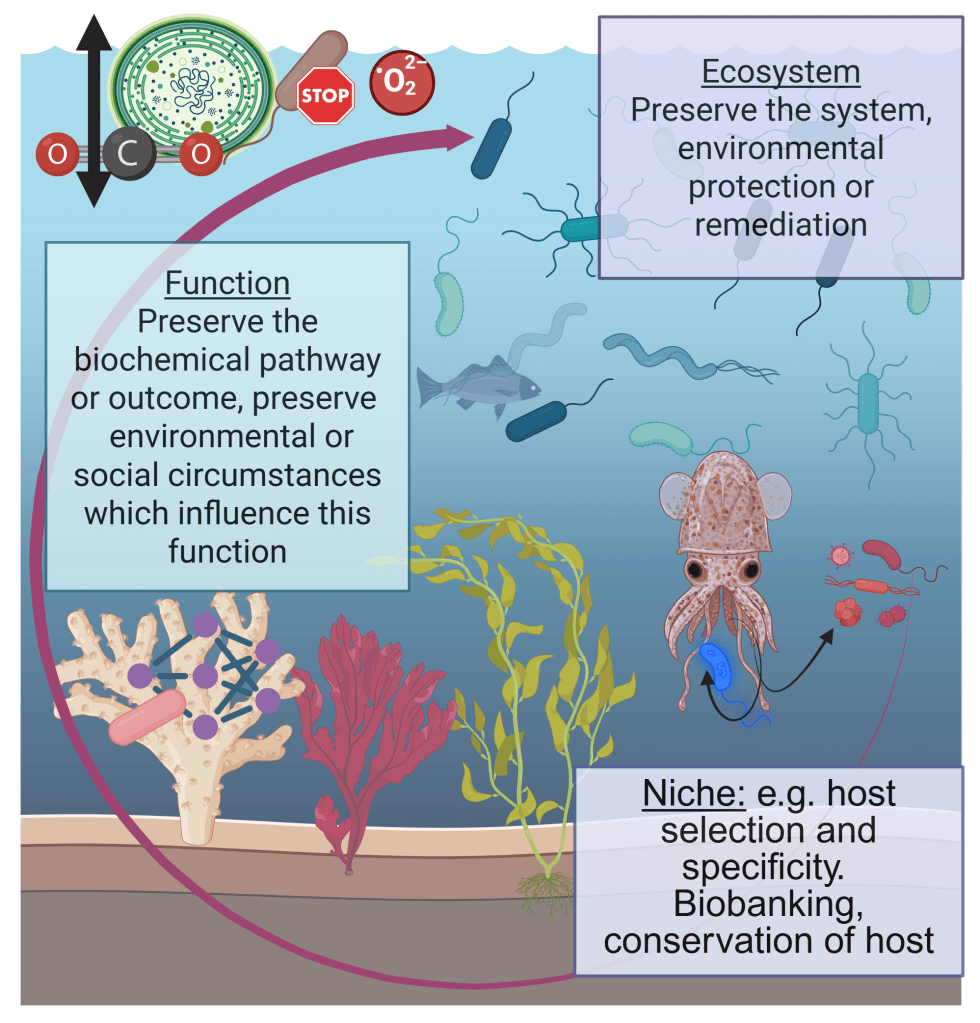
We’ve been researching the benefits of cruciferous vegetables on health, some of which are available directly from the plants, and some of which require the participation of certain bacteria that live in our gut. Cruciferous vegetables are loaded with fiber, vitamins, minerals, and – what we are most interested in – the plant’s secondary compounds called glucosinolates which can be transformed into antioxidants and anti-inflammatories. Depending on the type of vegetable, and the way that it is cooked/prepared, you can end up with different types and quantities of these beneficial compounds. We are interested in how to target benefits to certain locations in the gut by inducing the gut microbiome to participate in making these compounds available to us (Figure below). The review consolidated the existing literature on cruciferous vegetables in regards to the glucosinolates and reducing inflammation in the gut.

Cruciferous vegetables or their purified compounds can ameliorate inflammatory symptoms through multiple pathways. Graphic designed by Johanna Holman.
Headshot for Esther Alaba, PhD Candidate in Biomedical Sciences

Tolu Esther Alaba is a PhD Candidate in the GSBSE program at UMaine. Her research has focused on antioxidants in fruits and vegetables which can be used to resolve inflammation, oxidative stress, injury, cardiometabolic and chronic diseases. Since joining #TeamBroccoli in the fall of 2023, she’s completed data analyses on gut metabolites and broccoli sprouts in mice and humans, and began drafting several manuscripts, in addition to writing this literature review. Tolu plans to defend her dissertation this summer, and we hope to bring her back to the Ishaq and Li labs as a postdoctoral researcher focusing on dietary habits, cruciferous vegetable intake, and dietary metabolomics!

Johanna Holman is a PhD student in the Nutrition/Microbiology programs. She began working on broccoli sprouts with Drs. Tao Zhang and Yanyan Li over 6 years ago as a research assistant. She joined the Ishaq lab in fall 2020 as a master’s student to investigate the effects of diet on the gut microbiome, and host-microbial interactions, as part of an ongoing collaboration with Tao and Yanyan Li, and graduated with her M.S. in nutrition science in the fall of 2022. Her research combines nutritional biochemistry of broccoli sprouts with effects on gut microbes and gastrointestinal inflammation, and spans biochemistry, microbiology, molecular biology, and incorporates a handful of undergraduate mentees every semester. Johanna also just created a website for Imaginome Designs, her graphic design portfolio!!

A black and white portrait of Johanna Holman

Yanyan Li, PhD, is an Assistant Professor of Pharmaceutical Sciences at SUNY Binghamton, and has been researching the nutritional biochemistry of broccoli sprouts for over a decade. Yanyan and Sue, along with Johanna, Tolu, and the rest of Team Broccoli have been collaborating on diet-microbe-health projects for the last 5 years!

Current knowledge on the preparation and benefits of cruciferous vegetables as relates to in vitro, in vivo, and clinical models of Inflammatory Bowel Disease  

Authors: Tolu E. Alaba1, Johanna M. Holman2 , Suzanne L. Ishaq2 , Yanyan Li2,3 

Affiliations: 1 Graduate School of Biomedical Sciences and Engineering, University of Maine, Orono, Maine, USA 04469; 2 School of Food and Agriculture, University of Maine, Orono, Maine, USA 04469; 3 School of Pharmacy and Pharmaceutical Sciences, SUNY Binghamton University, Johnson City, New York, USA 13790

Abstract

Inflammatory bowel disease is a chronic condition with a significant economic and social burden. The disease is complex and challenging to treat because it involves several pathologies, such as inflammation, oxidative stress, dysbiosis, and intestinal damage. The search for an effective treatment has identified cruciferous vegetables and their phytochemicals as potential management options for inflammatory bowel disease, as they contain prebiotics, probiotics, and anti-inflammatory and antioxidant metabolites essential for a healthy gut. This critical narrative style review provides a robust insight into the pharmacological effects and benefits of crucifers and their documented bioactive compounds in in vitro and in vivo models, as well as clinical inflammatory bowel disease. The review highlights the significant impact of crucifer preparation and the presence of glucosinolates, isothiocyanates, flavonoids, and polyphenolic compounds, which are essential for the anti-inflammatory and antioxidative benefits of cruciferous vegetables, as well as their ability to promote the healthy microbial community and maintain the intestinal barrier. This review may serve as a viable nutritional guide for future research on methods and features essential to developing experiments, preventions, and treatments for inflammatory bowel disease. There is limited clinical information and future research may utilize current innovative tools, such as metabolomics, for adequate knowledge and effective translation into clinical therapy.

Acknowlegements

This project was supported by the USDA National Institute of Food and Agriculture through the Maine Agricultural & Forest Experiment Station: Hatch Project Numbers ME022102 and ME022329 (Ishaq) and ME022303 (Li); and the National Institute of Health [Li and Ishaq; NIH/NIDDK 1R15DK133826-01], and the Allen Foundation [Li and Ishaq, #5409406]. Financial sponsors had no role in study design, data interpretation, or report writing.

Full citation:

Alaba, T.E., Holman, J.M., Ishaq, S.L., Li, Y. 2024. Current knowledge on the preparation and benefits of cruciferous vegetables as relates to in vitro, in vivo, and clinical models of Inflammatory Bowel DiseaseCurrent Developments in Nutrition: 102160.

Early life exposure to broccoli sprouts confers stronger protection against enterocolitis development in an immunological mouse model of inflammatory bowel disease. 

This paper is part of a larger Broccoli project, in which we are evaluating the use of broccoli sprouts in the diet to enlist gut microbes to produce anti-inflammatories as a way to resolve symptoms of Inflammatory Bowel Disease.

The Premise

Broccoli sprouts are very high in a compound called glucoraphanin, which is in-active for humans. When glucoraphanin comes in contact with the myrosinase enzyme, also found in the sprouts, it is transformed into sulforaphane, which drives away insect pests but acts as an anti-inflammatory in people!

If you eat raw sprouts, most of this conversion happens when you cut or chew the sprouts, and that anti-inflammatory will get absorbed in your stomach. If you steam or cook the sprouts, you can inactivate the enzyme and leave the glucoraphanin compound alone. Some of your gut microbes are able to use glucoraphanin, and produce the anti-inflammatory sulforaphane right in your gut! We are trying to understand how and when this works, so we can use it to reduce symptoms of Inflammatory Bowel Disease.

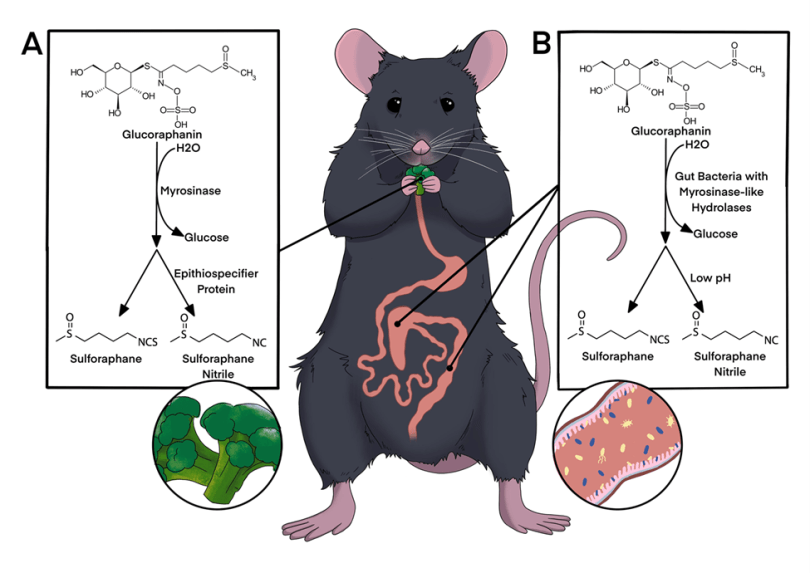
A diagram with two panels, and a cartoon mouse in the middle. The cartoon mouse is eating broccoli, and a cartoon of the digestive tract is overlaid on the mouse's abdomen. Lines emanating from the broccoli point to the left panel, and show the compound glucoraphanin being converted into sulforaphane by the myrosinase enzyme. Lines emanating from the colon of the mouse point to the panel on the right, showing the same biochemical conversion by gut microbes.
A cartoon of a woman eating broccoli, with the digestive tract shown on her shirt, and smiling microbes in the background.

The mice in this trial are used to mimic Crohn’s Disease, which is one of the main ways that Inflammatory Bowel Diseases may be classified. Crohn’s Disease is complictaed, and involves an over-active immune response to gut microbes. This is replicated in mice that are bred to lack the genes in the DNA to make interleukin-10 (IL-10). IL-10 is an immune factor that can be used to calm the immune system and tolerate microbes which are not causing harm. Without IL-10, these mice over-react to the presence of bacteria, even those which are not causing harm, and this creates symptoms similar to Crohn’s in people.

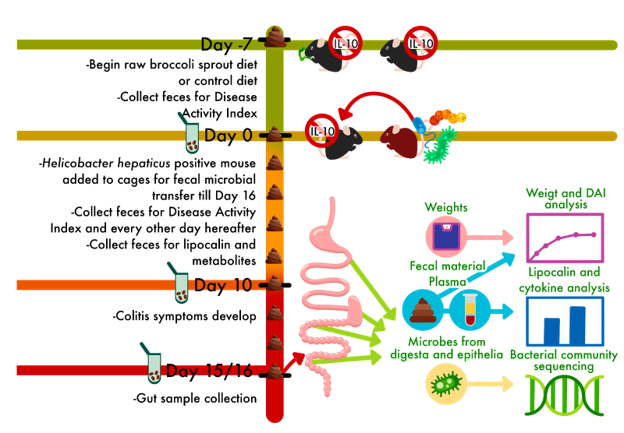
We used two age groups of mice, and in each group, half ate a mouse chow (control) diet and half ate the mouse chow with 10% of the chow replaced by raw broccoli sprouts. Crohn’s often develops in childhood and adolescence, so our two age groups of mice reflect the juvenile stage (4-5 weeks old) and the adolescence stage (5-6 weeks old) of symptom onset. After wo weeks of symptoms, we sacrificed the mice and collected as much information as we could.

Figure 1 from the paper mentioned in this post. It shows an experimental design.

The Team

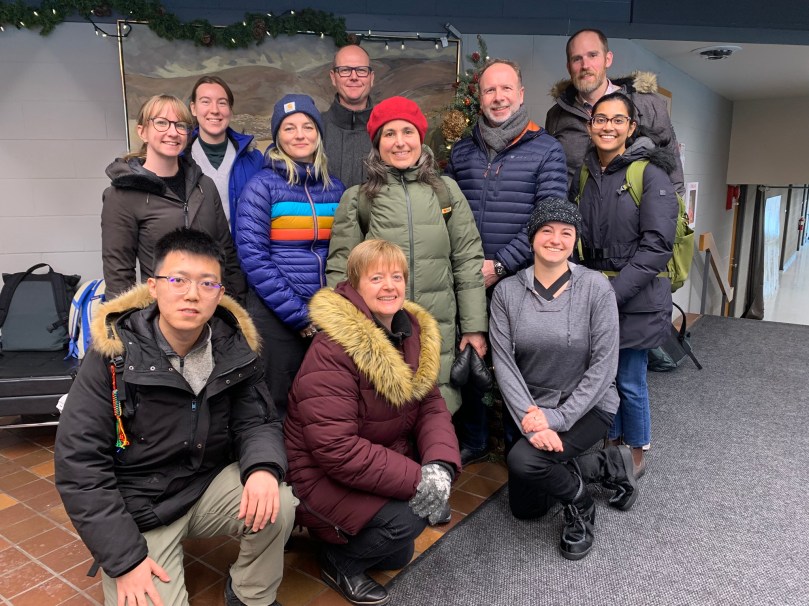
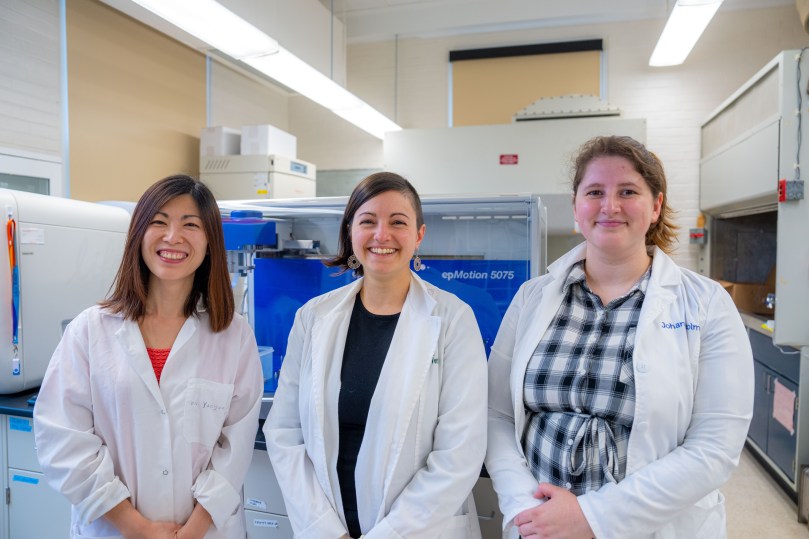
The mice, their care during the experiment, and sample collection for this project was graciously provided by University of Vermont researchers Gary Mawe and Brigitte Lavoie, and then-grad-student-now-medical-student Molly Hurd, in 2021. The SUNY Bingamton team, Tao Zhang and Allesandra Stratigakis, processed metabolite and cytokine samples and analyzed those data. The UMaine team (pictured below and led by Sue Ishaq and Yanyan Li) processed and analyzed data from different locations of gut tissue for histolgy and sequencing of bacterial communities, as well as analyzing those data, and took the lead on writing the paper.

The Health Benefits were most obvious in the younger mice

The mice that were eating the broccoli sprouts in their chow and did much better than the control group who ate only mouse chow when symptoms of Crohn’s Disease were induced — and we found something really interesting… The diet worked really well in the younger mice and reduced their symtpoms of inflammation and illness for almost every metric we studied. The older, adolecent mice got some benefit from eating the raw broccoli sprouts, but not nearly as much as the younger mice! Those graphs are shown in the paper.

The Gut Microbes were most changed in the younger mice

Bacterial richness (the number of different types of bacteria present) was increased, but only in younger mice consuming a 10% raw sprout diet, which is useful because pediatric Crohn’s patients usually have fewer types of bacteria present in their gut.

Younger mice consuming broccoli sprouts also had more types of bacteria that are known to convert glucoraphanin into sulforophane, and they had more of the genes needed to do it. Crohn’s patients usually have fewer of these types of bacteria, which are also known to provide other health benefits.

The Next Steps

We are currently working on replicating and expanding this project to include more age groups, so we can understand how different diet preparations of broccoli sprouts impact immune systems and gut microbiota at different developmental periods of life. We are also really interested in understanding how sex in mice, and gender in humans, plays a role in how immune systems and microbial communities develop during a critical phase of life. We have some initial data to suggest that male and female mice respond to different diets and at differnt ages, but we aren’t sure why yet.

We hope to expand our work with people to study how these diets work in the real world, and how we can tailor diet and cooking preparations of sprouts to best meet the needs of people of different ages, health statuses, and tastes.

Early life exposure to broccoli sprouts confers stronger protection against enterocolitis development in an immunological mouse model of inflammatory bowel disease

Lola Holcomb1$, Johanna M. Holman2$, Molly Hurd3, Brigitte Lavoie3, Louisa Colucci4, Benjamin Hunt5, Timothy Hunt5, Marissa Kinney2, Jahnavi Pathak1, Gary M. Mawe3,Peter L. Moses3,6, Emma Perry7, Allesandra Stratigakis8, Tao Zhang8, Grace Chen9, Suzanne L. Ishaq1*, Yanyan Li1*

1 Graduate School of Biomedical Sciences and Engineering, University of Maine, Orono, Maine, USA 04469. 2 School of Food and Agriculture, University of Maine, Orono, Maine, USA 04469. 3 Larner College of Medicine, University of Vermont, Burlington, Vermont, USA 05401. 4 Department of Biology, Husson University, Bangor, Maine, USA 04401. 5 Department of Biology, University of Maine, Orono, Maine, USA 04469. 6 Finch Therapeutics, Somerville, Massachusetts, USA 02143. 7 Electron Microscopy Laboratory, University of Maine, Orono, Maine, USA 04469. 8 School of Pharmacy and Pharmaceutical Sciences, SUNY Binghamton University, Johnson City, New York, USA 13790. 9 Department of Internal Medicine, University of Michigan Medical School, Ann Arbor, Michigan, USA 48109

$ these authors contributed equally.

Keywords: Crohn’s Disease, cruciferous vegetables, sulforaphane, glucoraphanin, gut microbiota, dietary bioactives, 16S rDNA, interleukin-10 knockout 

Abstract

Crohn’s Disease (CD) is a presentation of Inflammatory Bowel Disease (IBD) that manifests in childhood and adolescence, and involves chronic and severe enterocolitis, immune and gut microbial dysregulation, and other complications. Diet and gut-microbiota-produced metabolites are sources of anti-inflammatories which could ameliorate symptoms. However, questions remain on how IBD influences biogeographic patterns of microbial location and function in the gut, how early life transitional gut communities are affected by IBD and diet interventions, and how disruption to biogeography alters disease mediation by diet components or microbial metabolites. Many studies on diet and IBD use a chemically induced ulcerative colitis model, despite the availability of an immune-modulated CD model. Interleukin-10-knockout (IL-10-KO) mice on a C57BL/6 background, beginning at age 4 or 7 weeks, were fed a control diet or one containing 10% (w/w) raw broccoli sprouts, which was high in the sprout-sourced anti-inflammatory sulforaphane. Diets began 7 days prior to, and for 2 weeks after inoculation with Helicobacter hepaticus, which triggers Crohn’s-like symptoms in these immune-impaired mice. The broccoli sprout diet increased sulforaphane in plasma; decreased weight stagnation, fecal blood, and diarrhea associated; and increased microbiota richness in the gut, especially in younger mice. Sprout diets resulted in some anatomically specific bacteria in younger mice, and reduced the prevalence and abundance of pathobiont bacteria which trigger inflammation in the IL-10-KO mouse, e.g., Escherichia coli and Helicobacter. Overall, the IL-10-KO mouse model is responsive to a raw broccoli sprout diet and represents an opportunity for more diet-host-microbiome research.

Importance

To our knowledge, IL-10-KO mice have not previously been used to investigate the interactions of host, microbiota, and broccoli, broccoli sprouts, or broccoli bioactives in resolving symptoms of CD. We showed that a diet containing 10% raw broccoli sprouts increased the plasma concentration of the anti-inflammatory compound sulforaphane, and protected mice to varying degrees against disease symptoms, including weight loss or stagnation, fecal blood, and diarrhea. Younger mice responded more strongly to the diet, further reducing symptoms, as well as increased gut bacterial richness, increased bacterial community similarity to each other, and more location-specific communities than older mice on the diet intervention. Crohn’s Disease disrupts the lives of patients, and requires people to alter dietary and lifestyle habits to manage symptoms. The current medical treatment is expensive with significant side effects, and a dietary intervention represents an affordable, accessible, and simple strategy to reduce the burden of symptoms.

Acknowledgements: This project was supported by the USDA National Institute of Food and Agriculture through the Maine Agricultural & Forest Experiment Station: Hatch Project Numbers ME022102 and ME022329 (Ishaq) and ME022303 (Li); the USDA-NIFA-AFRI Foundational Program [Li and Chen; USDA/NIFA 2018-67017-27520/2018-67017-36797]; and the National Institute of Health [Li and Ishaq; NIH/NIDDK 1R15DK133826-01] which supported Marissa Kinney, Timothy Hunt, and Benjamin Hunt. Johanna Holman was supported by ME0-22303 (Li), and Lola Holcomb was supported by US National Science Foundation One Health and the Environment (OG&E): Convergence of Social and Biological Sciences NRT program grant DGE-1922560, and the UMaine Graduate School of Biomedical Science and Engineering.

Media/Interviews:

  1. ASM Press Release, Nov 9, 2023
  2. Can broccoli sprouts be used to treat IBD? UMaine researchers investigate”, Carly D’Eon, News Center Maine, Nov 22, 2022.
  3. UMaine researchers studying whether broccoli sprouts can help prevent and treat inflammatory bowel disease”, Marcus Wolf, UMaine News.

Steamed broccoli sprouts alleviate DSS-induced inflammation and retain gut microbial biogeography in mice.

Steamed broccoli sprouts alleviate DSS-induced inflammation and retain gut microbial biogeography in mice” is a publication that is part of a larger Broccoli project, in which we are evaluating the use of broccoli sprouts in the diet to enlist gut microbes to produce anti-inflammatories. You can read about the whole project here, with links to other resources.

The Premise

Broccoli sprouts are very high in a compound called glucoraphanin. When glucoraphanin comes in contact with the myrosinase enzyme, also found in the sprouts, it is transformed into a compound that acts an an anti-inflammatory in people!

If you eat raw sprouts, this conversion happens when you cut or chew the sprouts, and that anti-inflammatory will get absorbed in your stomach. If you steam or cook the sprouts, you can inactivate the enzyme and leave the glucoraphanin compound alone. Some of your gut microbes are able to use the compound, and produce the anti-inflammatory right in your gut! We are trying to understand how and when this works, so we can use it to reduce symptoms of Inflammatory Bowel Disease.

The Mouse work

In the winter of 2020-2021, we ran a 40-day study with 40 mice housed at UMaine. The mice were divided into 4 groups: “control” which ate the mouse chow, “control+DSS” which ate the mouse chow and had colitis induced by adding DSS (a salt laxative) to their drinking water, “broccoli” which ate the mouse chow with steamed broccoli sprouts mixed in, and “broccoli+DSS” which ate the mouse chow/steamed broccoli sprouts diet and had colitis induced by adding DSS (salt laxative) to their drinking water. This work was led by Johanna Holman, who was a master’s student at the time; Lousia Colicci, who was an undergrad at Husson University at the time and is applying to medical schools now; Dorein Baudewyns, who was an undergrad at Husson University at the time and is completing a graduate program in Psychology at UMaine; and Joe Balkan, who was completing his senior year of high school at the time and has since begin an undergrad degree in Biology at Tufts University where he is preparing for medical school.

The mice were weighed regularly and fecal samples assessed for blood (signs of colitis). At the end of the study, the mice were euthanized so we could study the bacteria in parts of the intestines that we can’t access in humans. We used as few mice as possible, and got as much information from this study as possible, to do as much good as we can with their sacrifice.

The Health Benefits

As we’d hoped, the broccoli+DSS mice that were eating the broccoli sprouts that were given colitis did much better than the control+DSS group who ate mouse chow during their colitis. The broccoli+DSS mice were able to keep gaining weight as they grew, had better consistency of their stool, and had lower amounts of proteins and other metabolities in their blood which indicate inflammation (lower cytokines and lipocalin). Those graphs are shown in the paper.

The Gut Microbes

We found a lot of interesting things with the microbial communities that were living in different parts of the intestines, but the most exciting was that broccoli sprouts in the diet helped microbial communities stay alive in their original gut locations even during colitis! Certain microbes like to live in particular places in our intestines based on where different ingredients in our diet get processed, or the local environment (like how acidic the intestinal neighborhood is), and this is called biogeography.

In the graph below, our control group mice (eating chow) or the broccoli group (eating chow plus sprouts), we see that microbial communites in the small intestines clustered away from the microbial communities in the large intestines.

The DSS salt laxative, and ulcerative colitis, wreak havoc on gut microbes because they cause physical damage to the lining of the intestine, which where many microbes that can be useful to us live on or near. When we induced colitis in mice that were eating mouse chow (control+DSS group), the damage to the intestines caused a loss to some of the microbes living in different places. The remaining microbes that could survive these tough conditions were basically the same ones regardless of where we we looked in the intestines.

But, if mice had colitis and were eating broccoli sprouts (broccoli+DSS), the microbes were able to survive in their original locations and preserved biogeography! This is important because where microbes live in the gut may determine if the beneficial things they make can help resolve IBD symptoms in specific locations in the gut.

Image by Johanna Holman, graph from the paper.

The Spatial Location of GLR-digesting-genes

Bejamin and Timothy Hunt are undergraduates in Biology who have been working on bioinformatics in the Ishaq Lab since December 2022 after completing Sue’s DNA Sequencing Data Analysis Class. They joined the DSS project to provide in-depth analysis on some of the sequences which matched bacteria that are known to convert GLR into the anti-inflammatory SFN, as well as analyze data comparing numbers of genes known to be involved in the process.

A cartoon of the intestines with bacteria of interest in the jejunum, ceculm and colon,
Cropped figure from the paper, made by Benjamin and Timothy.
Benjamin Hunt

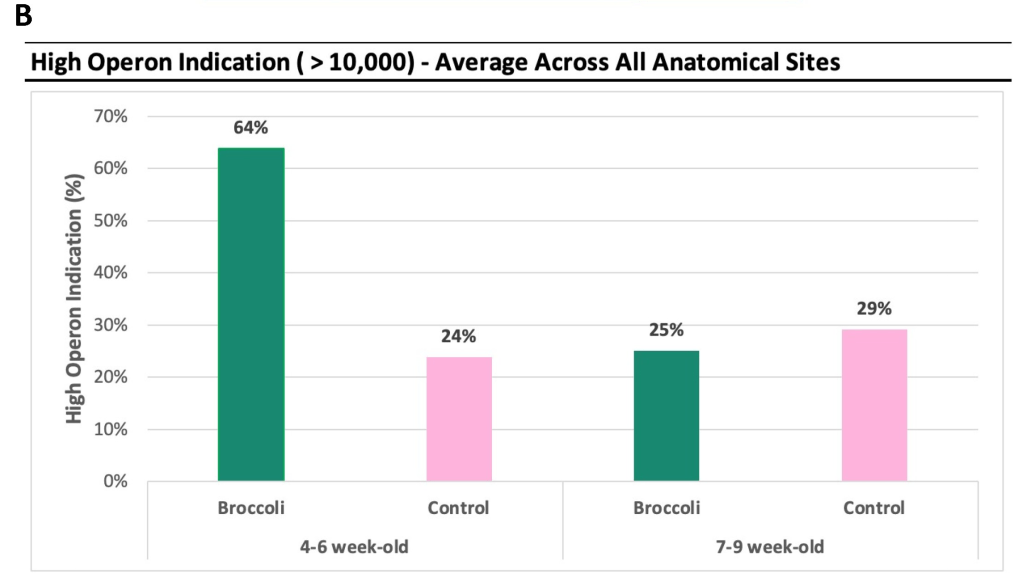
The study of the bioproduction of SFN and its mucosal and luminal activity benefited from the biogeographical analysis of this study. It was interesting to note the extreme dominance of a Bacteroides species in the broccoli treatments. B. thetaiotaomicron was indicated based on BLASTN analysis and an evaluation of matching species but was not directly suggested by the dada-Silva taxonomy assignment. The indication of B. thetaiotaomicron suggested analyzing the presence of the operon BT2159-BT2156, which was generally minimally present (<100) but at relatively high counts (>100,000) in some samples. Significantly, the operon was found at locations where no Bacteroides were identified. We continue to reflect on the similarities and differences in the biogeography of bacterial abundance and operon presence highlighted in the different treatments of this study.

Benjamin and Timothy Hunt

The Next Steps

As part of this project, we cultured hundreds of bacteria from the intestines of mice to try and isolate some of the ones that turn glucroraphanin into sulforaphane. We have a large team of students and researchers participating on the culturing work, some of whom are pictured here. We’ll be providing plenty of updates on that project as we continue to process the bacteria this fall!

The Paper

Steamed broccoli sprouts alleviate DSS-induced inflammation and retain gut microbial biogeography in mice.

Johanna M. Holman1, Louisa Colucci2, Dorien Baudewyns3, Joe Balkan4, Timothy Hunt5, Benjamin Hunt5, Marissa Kinney1, Lola Holcomb6, Allesandra Stratigakis7, Grace Chen8, Peter L. Moses9,10, Gary M. Mawe9, Tao Zhang7, Yanyan Li1*, Suzanne L. Ishaq1*

1 School of Food and Agriculture, University of Maine, Orono, Maine, USA 04469 2 Department of Biology, Husson University, Bangor, Maine, USA 04401 3 Department of Psychology, University of Maine, Orono, USA 04469 4 Department of Chemical and Biological Engineering, Tufts University, Medford, Massachusetts, USA 02155 5 Department of Biology, University of Maine, Orono, Maine, USA 04469 6 Graduate School of Biomedical Sciences and Engineering, University of Maine, Orono, Maine, USA 04469 7 School of Pharmacy and Pharmaceutical Sciences, SUNY Binghamton University, Johnson City, New York, USA 13790 8Department of Internal Medicine, University of Michigan Medical School, Ann Arbor, Michigan, USA 48109 9Departments of Neurological Sciences and of Medicine, Larner College of Medicine, University of Vermont, Burlington, Vermont, USA 0540110 Finch Therapeutics, Somerville, Massachusetts, USA 02143

Abstract: Inflammatory Bowel Diseases (IBD) are devastating conditions of the gastrointestinal tract with limited treatments, and dietary intervention may be effective, and affordable, for managing symptoms. Glucosinolate compounds are highly concentrated in broccoli sprouts, especially glucoraphanin, and can be metabolized by certain mammalian gut bacteria into anti-inflammatory isothiocyanates, such as sulforaphane. Gut microbiota exhibit biogeographic patterns, but it is unknown if colitis alters these or whether the location of glucoraphanin-metabolizing bacteria affects anti-inflammatory benefits. We fed specific pathogen free C57BL/6 mice either a control diet or a 10% steamed broccoli sprout diet, and gave a three-cycle regimen of 2.5% dextran sodium sulfate (DSS) in drinking water over a 34-day experiment to simulate chronic, relapsing ulcerative colitis. We monitored body weight, fecal characteristics, lipocalin, serum cytokines, and bacterial communities from the luminal- and mucosa-associated populations in the jejunum, cecum, and colon. Mice fed the broccoli sprout diet with DSS treatment performed better than mice fed the control diet with DSS, including significantly more weight gain, lower Disease Activity Indexes, lower plasma lipocalin and proinflammatory cytokines, and higher bacterial richness in all gut locations. Bacterial communities were assorted by gut location, but were more homogenous across locations in the control diet + DSS mice. Importantly, our results showed that broccoli sprout feeding abrogated the effects of DSS on gut microbiota, as bacterial richness and biogeography were similar between mice receiving broccoli sprouts with and without DSS. Collectively, this supports the protective effect of steamed broccoli sprouts against dysbiosis and colitis induced by DSS.


Importance: Evaluating bacterial communities across different locations in the gut provides a greater insight than fecal samples alone, and provides an additional metric by which to evaluate beneficial host-microbe interactions. Here, we show that 10% steamed broccoli sprouts in the diet protects mice from the negative effects of dextran sodium sulfate induced colitis, that colitis erases biogeographical patterns of bacterial communities in the gut, and that the cecum is not likely to be a significant contributor to colonic bacteria of interest in the DSS mouse model of ulcerative colitis. Mice fed the broccoli sprout diet during colitis performed better than mice fed the control diet while receiving DSS. The identification of accessible dietary components and concentrations that help maintain and correct the gut microbiome may provide universal and equitable approaches to IBD prevention and recovery, and broccoli sprouts represent a promising strategy.

Acknowledgements: All authors have read and approved the final manuscript. The authors thank Jess Majors, University of Maine, for her kind and detailed care of the mice during the trial, and for Ellie Pelletier for her informal review of the manuscript. This project was supported by the USDA National Institute of Food and Agriculture through the Maine Agricultural & Forest Experiment Station: Hatch Project Numbers ME022102 and ME022329 (Ishaq) and ME022303 (Li) which supported Johanna Holman; the USDA-NIFA-AFRI Foundational Program [Li and Chen; USDA/NIFA 2018-67017-27520/2018-67017-36797]; and the National Institute of Health [Li and Ishaq; NIH/NIDDK 1R15DK133826-01] which supported Marissa Kinney, Timothy Hunt, and Benjamin Hunt. Lola Holcomb was supported by US National Science Foundation One Health and the Environment (OG&E): Convergence of Social and Biological Sciences NRT program grant DGE-1922560, and through the UMaine Graduate School of Biomedical Sciences and Engineering. 

Conference Presentations:

  1. Holman, J., Holcomb, L., Colucci, L. Baudewyns, D., Balkan, J., Chen. G., Moses, P.,  Mawe, G.M.,  Zhang, T., Li, Y., Ishaq, S.L. Steamed broccoli sprouts alleviate gut inflammation and retain gut microbiota against DSS-induced dysbiosis. American Society for Nutrition annual meeting, Boston, MA. July 22-25, 2023.
  2. Kinney, M., Holman, J., Hunt, T., Hunt, B., Zhang, T., Chen, G., Li , Y.,  Ishaq, S.L. Establishing Growth Curve Assays for Bacterial Glucosinolate Metabolism: A Study Protocol. American Society for Nutrition annual meeting, Boston, MA. July 22-25, 2023.
  3. Li, Y. “Broccoli Sprout Bioactives and Gut Microbiota: A Dietary Approach for Prevention and Management of Inflammatory Bowel Disease”. Microbes of Social Equity working group 2023 speaker series. Virtual. Jan 18, 2023. (invited).
  4. Holman, J. M., S. Ishaq, Y. Li, T. Zhang, G. Mawe, L. Colucci, J. Balkan. Prevention of Inflammatory Bowel Disease by Broccoli Sourced and Microbially Produced Bioactives.  American Society for Microbiology (ASM) Microbe 2022, Washington, DC (USA), June 12, 2022.
  5. Ishaq, S., Li, Y., Holman*2, J., Zhang, T., Chen, G. “Biogeography may be key to microbial anti inflammatory production using dietary precursors.” Maine Biological and Medical Sciences Symposium, Bar Harbor, ME, April 22-23, 2022. (invited)
  6. Ishaq*, S., Li, Y., Holman2, J., Zhang, T., Mawe, G., Hurd, M., Lavoie, B. Baudewyns1, D., Colucci1, L., Balkan1, J., Chen, G, Moses, P. “Biogeography may be key to microbial anti inflammatory production using dietary precursors.”  Congress of Gastrointestinal Function (CGIF), virtual. April 11 – 13, 2022.
    1. 46 students and faculty researchers
  7. Ishaq*, S., Li, Y., Holman2, J., Zhang, T., Mawe, G., Hurd, M., Lavoie, B. Baudewyns1, D., Colucci1, L., Balkan1, J., Chen, G, Moses, P. “Biogeography may be key to microbial anti inflammatory production using dietary precursors.”  Dartmouth Molecular Microbiology and Pathogenesis (M2P2), February 24 – 25, 2022. (invited)
    1. 120 students and faculty researchers.
  8. Holman2 J., Ishaq S.L.., Li Y., Zhang T., Balkan1 J., Colucci1 L. Prevention of inflammatory bowel disease by broccoli-sourced and microbially-produced bioactives. Video presented at: OHS Student Led Research Panel, UC Davis; Nov 2021.
  9. Holman*2, J., Ishaq, S.L., Li, Y., Zhang, T.. Prevention of Inflammatory Bowel Disease by Broccoli-sourced and Microbially-produced Bioactives. ASM Microbe/ISME World Microbe Forum 2021 (virtual). June 20-24, 2021. (poster)

Media/Interviews:

  1. Can broccoli sprouts be used to treat IBD? UMaine researchers investigate”, Carly D’Eon, News Center Maine, Nov 22, 2022.
  2. UMaine researchers studying whether broccoli sprouts can help prevent and treat inflammatory bowel disease”, Marcus Wolf, UMaine News.

Bacterial community trends associated with sea scallop, Placopecten magellanicus, larvae in a hatchery system.

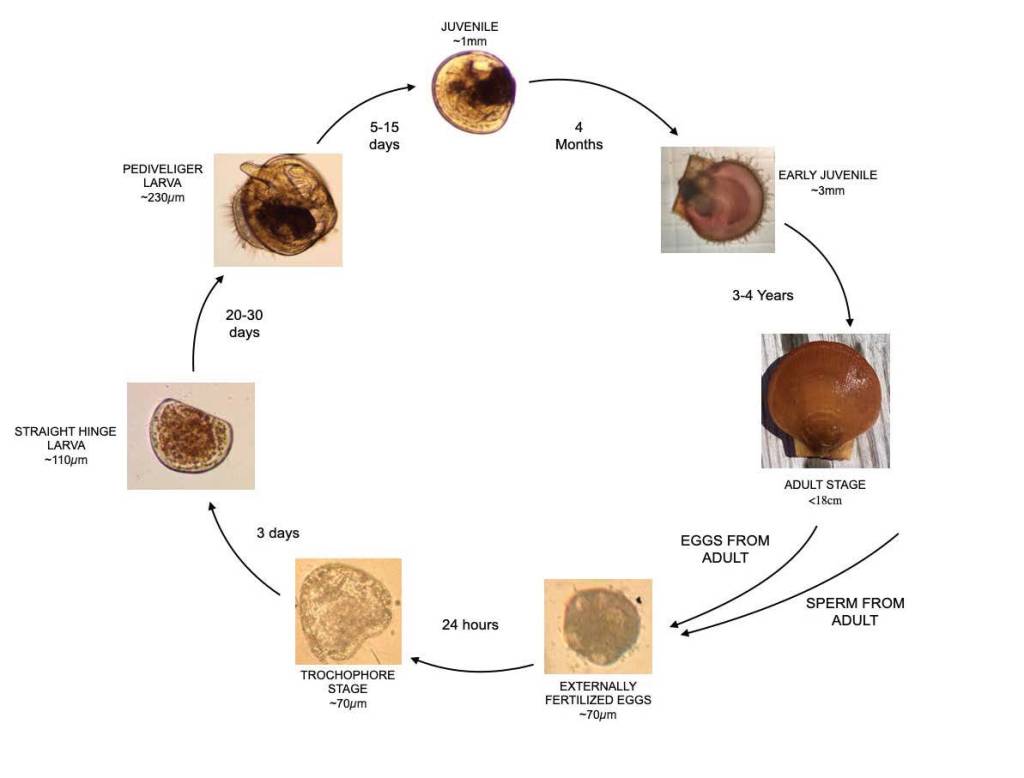
Scallops are a diverse animal group of marine bivalve mollusks (family Pectinidae) with global distribution in coastal waters, and Atlantic deep-sea scallops, Placopecten magellanicus, are found along the eastern coast of the United States and Canada. Scallops’ reproductive potential and industry demand make them a prime target for hatchery- and farm-based production, and this has been successfully achieved in bay scallops, but not in sea scallops. Currently, hatcheries collect wild sea scallop adults, or maintain cultured broodstocks, and spawn them in their facilities with the intention of forming a plentiful population to grow to adulthood, spawn, and sell to create a sustainable production cycle while also reducing disruption to the scallops’ natural habitat.

Unfortunately, in sea scallop hatcheries the last two weeks of the larval maturation phase, the veliger-stage, is plagued by large mortality events, going from 60 million sea scallop larvae down to several thousand individuals in a span of 48 hours. Survival of clutches to maturity remains very low, with an industry-standard rate around 1%. This drastic winnowing of larvae reduces the availability of cultured sea scallop spat for farmers, forcing sea scallop farms to rely almost exclusively on sea scallop spat collected from wild populations for stock and is seen as a bottleneck for growth of the industry and achieving sustainable harvests. Hatchery larval die-off is well-demonstrated not to be caused by inadequate diet, lighting, temperature, or atmospheric pressure in aquaculture facilities compared to wild conditions.

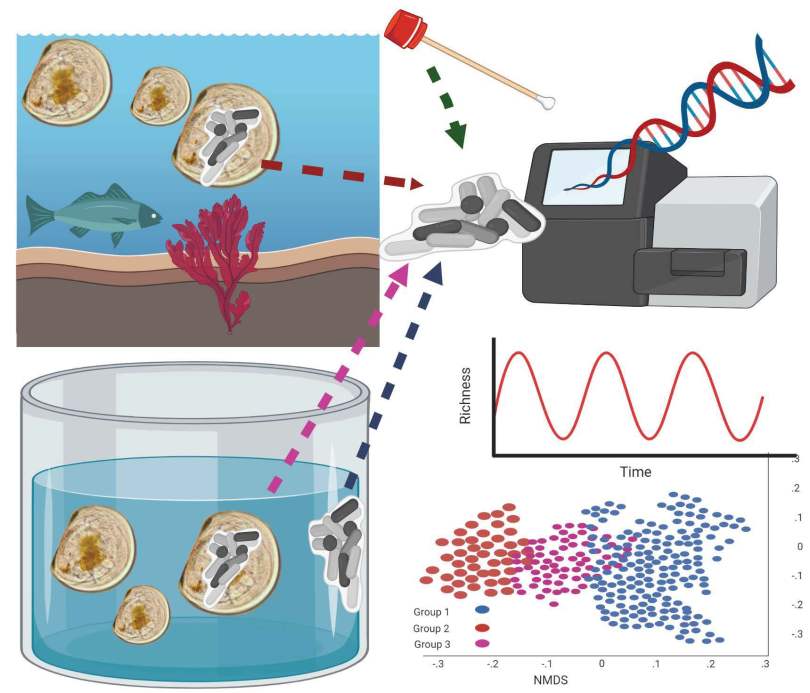
This project wanted to know if there was any clue in the bacteria that associate with larvae, or with the tanks they are in. In particular, hactcheries are worried about certain species of bacteria in the genus Vibrio, as they can cause disease to scallops and/or people, but it is tricky to study them because there are many species which do nothing at all. This project is part of another experiment to examine some of the Vibrio we found in tanks.

We sampled from some wild larvae, hatchery larvae, and from tank biofilms to indentify what was there. There were two styles of tank setup, and we collected from used tanks as well as tanks after they had been cleaned and refilled with filtered seawater.

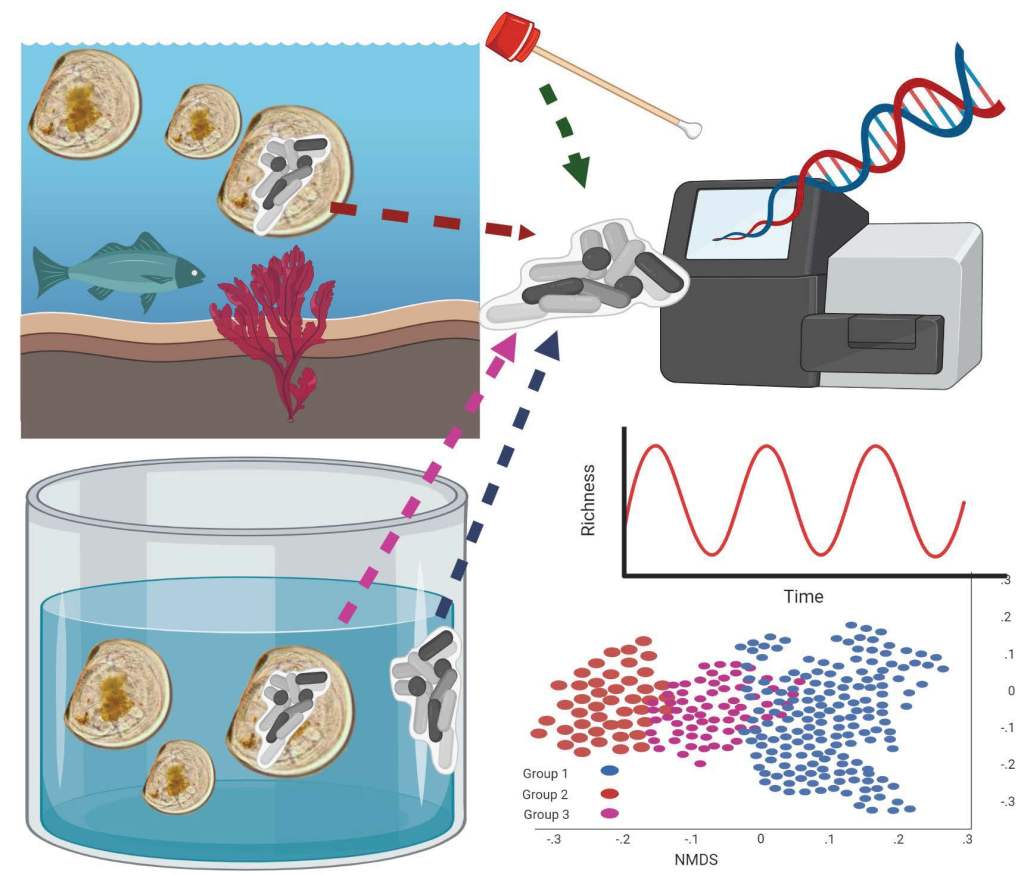
One of the surprising things we found, was that the bacterial communities in biofilms along the sides of larvae tank were more similar to each other (clustering) when samples were collected during the same phase of the lunar cycle. Bacterial richness and community similarity between tank samples fluctuated over the trial in repeated patterns of rise and fall, which showed some correlation to lunar cycle  where richness is high when the moon is about 50% and richness is low during new and full moon phases. This may be a proxy for the effects of spring tides and trends in seawater bacteria and phages which are propagated into hatchery tanks. The number of days since the full moon was significantly correlated with bacterial community richness in tanks: low during the full moon, peaking ~ 21 days after the full moon, and decreasing again at the next full moon.  

Fig. 7. Constrained ordination of bacterial communities in tank samples. Each point represents the bacterial community from one sample. Similarity between samples was calculated using Distance-based Redundancy Analysis (dbDRA), and significant model factors (anova, p < 0.01) are displayed with arrow lengths relative to their importance in the model (f value). The shape of points indicates whether swabbing was either immediately after filtered seawater has been used to fill the tank (cleaned, refilled) or 48 hours after (dirty, drained). Tank setup indicates if water was static, constantly filtered and recirculated in a flow-through system, or setup information was not available (n/a).

These results along with future work, will inform hatcheries on methods that will increase larval survival in these facilities, for example, implementing additional filtering or avoiding seawater collection during spring tides, to reduce certain bacterial taxa of concern or promoting a more diverse microbial community which would compete against pathogens.

Bacterial community trends associated with sea scallop, Placopecten magellanicus, larvae in a hatchery system.

Authors: Suzanne L. Ishaq1*, Sarah Hosler1, Adwoa Dankwa1, Phoebe Jekielek2, Damian C. Brady3, Erin Grey4,5, Hannah Haskell6, Rachel Lasley-Rasher6, Kyle Pepperman7, Jennifer Perry1, Brian Beal8, Timothy J. Bowden1

Affiliations:1 School of Food & Agriculture, University of Maine, Orono ME 044692 Ecology and Environmental Sciences, University of Maine, Orono ME 044733 School of Marine Sciences, Darling Marine Center, University of Maine, Walpole ME 045734 School of Biology and Ecology, University of Maine, Orono ME 044695 Maine Center for Genetics in the Environment, University of Maine, Orono ME 044696 Department of Biological Sciences, University of Southern Maine, Portland ME 041037 Downeast Institute, Beals, ME 046118 Division of Environmental & Biological Sciences, University of Maine at Machias, Machias, ME 04654

Abstract

Atlantic sea scallops, Placopecten magellanicus, are the most economically important marine bivalves along the northeastern coast of North America. Wild harvest landings generate hundreds of millions of dollars, and wild-caught adults and juvenile spat are increasingly being cultured in aquaculture facilities and coastal farms. However, the last two weeks of the larval maturation phase in hatcheries are often plagued by large mortality events. Research into other scallop- and aquacultured-species point to bacterial infections or altered functionality of microbial communities which associate with the host. Despite intense filtering and sterilization of seawater, and changing tank water every 48 hours, harmful microbes can still persist in biofilms and mortality is still high. There are no previous studies of the bacterial communities associated with the biofilms growing in scallop hatchery tanks, nor studies with wild or hatchery sea scallops. We characterized the bacterial communities in veliger-stage wild or hatchery larvae, and tank biofilms using the 16S rDNA gene V3-V4 region sequenced on the Illumina MiSeq platform. Hatchery larvae had lower bacterial richness (number of bacteria taxa present) than the wild larvae and tank biofilms, and hatchery larvae had a similar bacterial community (which taxa were present) to both wild larvae and tank biofilms. Bacterial richness and community similarity between tank samples fluctuated over the trial in repeated patterns of rise and fall, which showed some correlation to lunar cycle that may be a proxy for the effects of spring tides and trends in seawater bacteria and phages which are propagated into hatchery tanks. These results along with future work, will inform hatcheries on methods that will increase larval survival in these facilities, for example, implementing additional filtering or avoiding seawater collection during spring tides, to reduce bacterial taxa of concern or promote a more diverse microbial community which would compete against pathogens.

Acknowledgements

The authors would like to thank the staff at the Downeast Institute for supporting the development and implementation of this project, as well as for financially supporting the DNA sequencing; Meredith White of Mook Sea Farm for sharing her expertise and collecting biofilm samples; the Darling Marine Center for sharing their expertise and collecting biofilm samples; and the Sea Scallop Hatchery Implementation (Hit) Team for their expertise, review of this work, and funding support, who are financially supported by the Atlantic States Marine Fisheries Commission and Michael & Alison Bonney. The authors thank Lilian Nowak for assistance with related lab work to this project, and the Map Top Scholars Program for related financial support. The authors also thank Nate Perry for helping us collect wild scallop larvae. All authors have read and approved the final manuscript. This project was supported by the USDA National Institute of Food and Agriculture through the Maine Agricultural & Forest Experiment Station, Hatch Project Numbers: ME0-22102 (Ishaq), ME0-22309 (Bowden), and ME0-21915 (Perry); as well through NSF #OIA-1849227 to Maine EPSCoR at the University of Maine (Grey). This project was supported by an Integrated Research and Extension Grant from the Maine Food and Agriculture Center, with funding from the Maine Economic Improvement Fund.

Ishaq, S.L., Hosler2, S., Dankwa, A., Jekielek, P., Brady, D.C., Grey, E., Haskell, H., Lasley-Rasher, R., Pepperman, K., Perry, J., Beal, B., Bowden, T.J. 2023. Bacterial community trends associated with sea scallop, Placopecten magellanicus, larvae in a hatchery system. Aquaculture Reports 32: 101693.

In the media

“UMaine study reveals how to turn the tide on scallop-rearing challenges”, UMaine News, Feb 5, 2024.

Warmer water temperature and epizootic shell disease reduces diversity but increases cultivability of bacteria on the shells of American Lobster (Homarus americanus).

This collaborative paper investigates what happens to bacterial communities on healthy and sick lobsters as they experience different water temperatures for a year: “Water temperature and disease alters bacterial diversity and cultivability from American Lobster (Homarus americanus) shells.”

Woman sitting outside.

I joined this project back in the summer of 2020, towards the end of my first year at UMaine, when I was given a large 16S rRNA gene sequence dataset of bacterial communities from the shells of lobsters. I had been asking around for data as a training opportunity for Grace Lee, who at the time was an undergraduate at Bowdoin College participating in the abruptly cancelled summer Research Experience for Undergrads program at UMaine in summer 2020. Instead, Grace joined my lab as a remote research assistant and we worked through the data analysis over the summer and fall. Grace has since graduated with her Bachelor’s of Science in Neuroscience, obtained a Master’s of Science at Bowdoin, and is currently a researcher at Boston Children’s Hospital while she is applying to medical school.

My first point of contact on the project was Jean MacRae, an Associate Professor of Civil and Environmental Engineering at UMaine, who was the one to lend me the data and who had been working on bacterial community sequencing on other projects which I’ve been involved in. Jean has been involved with MSE, and this is our fourth publication together making her the collaborator at UMaine I have co-authored with the most (although it is a tight race 🙂 ).

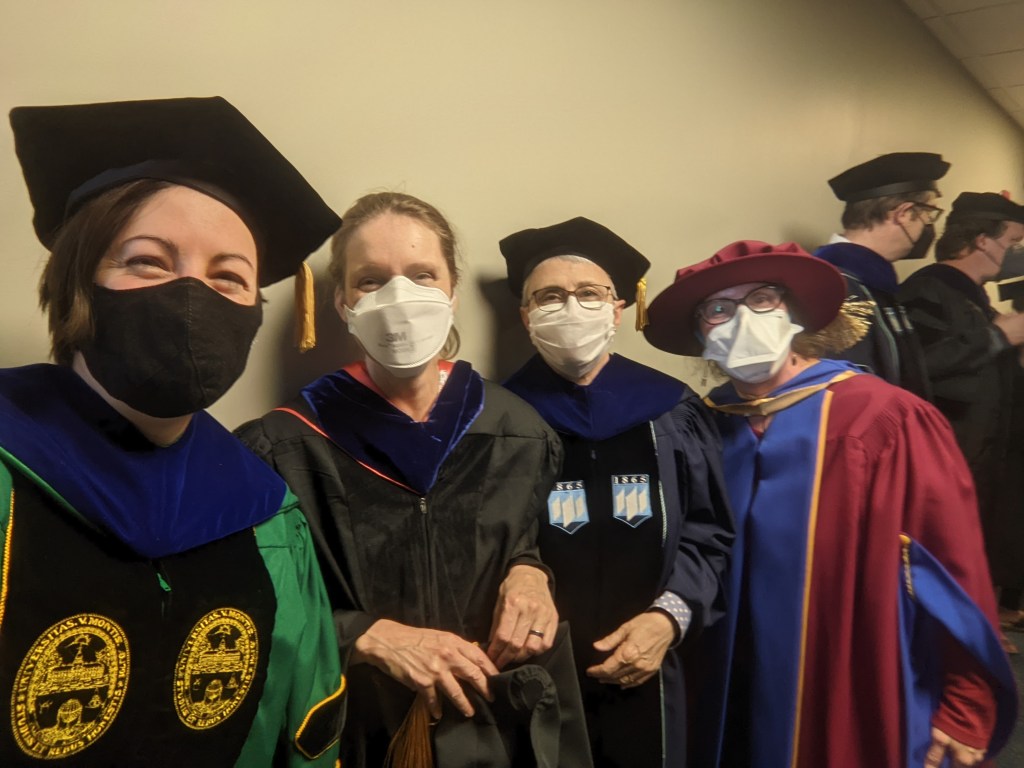
Four professors wearing full regalia, as well as face masks, posing for a photo in a hallway.

Jean introduced me to the original research team, including Debbie Bouchard, who is the Director of the Aquaculture Research Institute and was researching epizootic shell disease in lobsters for her PhD dissertation several years ago; Heather Hamlin, Professor and Director of the School of Marine Sciences; Scarlett Tudor (not pictured), the Education and Outreach Coordinator at the ARI; and Sarah Turner (not pictured), Scientific Research Specialist at ARI. The ARI team is involved in a lot of large-scale aquaculture research, education, and outreach to the industry here in Maine, and the collaborative work I have been doing with them has been a new an engaging avenue of scientific study for me.

In 2022, the research team, along with social science Masters student Joelle Kilchenmann, published a perspective/hypothesis piece which explored unanswered questions about how the movement of microbes, lobsters, and climate could affect the spread of epizootic shell disease in lobsters off the coast of Maine. That perspective paper was a fun exercise in hypothesis generation and asking ‘what if‘?

A steamed lobster on a plate.

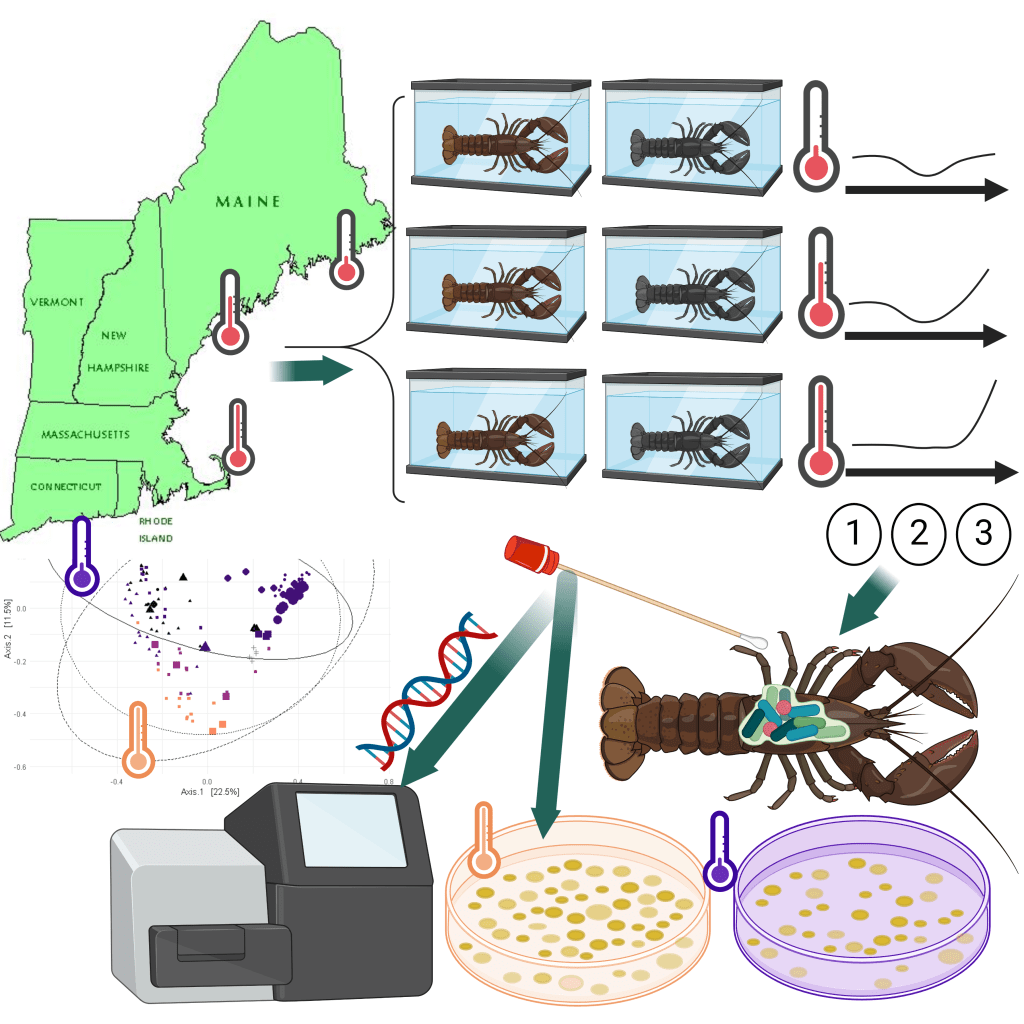
This paper is more grounded, and features work that was started in 2016. It examines bacterial communities on the shells of lobsters which were captured off the coast of Southern Maine and maintained in aquarium tanks for over a year. The lobsters were split into three treatment groups: those which were kept in water temperatures that mimicked what they would experience in Southern Maine, colder water to simulated what they would experience in Northern Maine, and hotter water to simulate what they would experience in Southern New England over that year. The original project team wanted to know if temperatures would make a different to their health or microbial communities.

Figure S8. Water temperature regimes, related to STAR Methods. A. Temperatures were obtained through the National Oceanographic Data Center (NODC). NODC temperatures reflect those recorded near Eastport, ME (A); Portland, ME (B); and an average of temperatures from Woods Hole, MA (C) and New Haven, CT (D) was used to represent Southern New England. B. Annual temperature cycles used in this project to represent Southern New England (SNE), Southern Maine (SME) and Northern Maine (NME).

The original project team swabbed lobster shells to obtain bacteria to try and grow in the lab, as well as DNA to sequence and identify whole bacterial communities. Grace and I performed the data analysis to identify which taxa were present in those communities, what happened over time or when the water temperature changed, and what bacteria were present or not in lobsters which died during the study.

Figure S11. Lobster carapace sampling using a sterile cotton swab to obtain bacterial communities from the shell surface, related to STAR Methods. The right side of the dorsolateral area of the cephalothorax was sampled for the baseline sampling, the left side for the Time 1, and the right side again for Time 2.

In addition to wanting to know about temperature, we wanted to know specifically how temperature would affect the bacteria if the lobsters had epizootic shell disease. It is not known what causes epizootic shell disease (which is why it is called ‘epizootic’), but it manifests as pitting in the shells of lobsters. Over time, the pitting can weaken shells and make it difficult for the lobster to molt, or make the lobster susceptible to predators or microbial infections. This type of shell disease had been a huge problem in Southern New England over the past few decades, and in Maine we have seen more cases over time.

Four panels of lobsters showing the progression of a healthy lobster to ones with more and more pitting in their shells.
Figure S10. Examples of lobster shell disease indices, related to STAR Methods. A) 0, no observable signs of disease, B) 1+, shell disease signs on 1-10% of the shell surface, C) 2+, shell disease signs on 11-50% of the shell surface, D) 3+, shell disease signs on > 50% of the shell surface.

The highlights of this project are here, but you can click the link below to read the entire study and what happened to lobster health and lobster microbes over time.

  • Shell bacteria from healthy lobsters, often overlooked, were included in the study.
  • Hotter and colder water temperatures affected shell bacterial communities.
  • Epizootic shell disease reduced bacterial diversity on lobster shells.
  • Epizootic shell disease could be induced or exacerbated by the loss of commensal bacteria from shells.

“Water temperature and disease alters bacterial diversity and cultivability from American Lobster (Homarus americanus) shells.”

Suzanne L. Ishaq1,2,, Sarah M. Turner2,3, Grace Lee4,5,M. Scarlett Tudor2,3, Jean D. MacRae6, Heather Hamlin2,7, Deborah Bouchard2,3

  • 1 School of Food and Agriculture; University of Maine; Orono, Maine, 04469; USA.
  • 2 Aquaculture Research Institute; University of Maine; Orono, Maine, 04469; USA.
  • 3 Cooperative Extension; University of Maine; Orono, Maine, 04469; USA.
  • 4 Department of Neuroscience, Bowdoin College, Brunswick, ME 04011; USA.
  • 5 Boston Children’s Hospital, Boston, MA 02115; USA.
  • 6 Department of Civil and Environmental Engineering; University of Maine; Orono, Maine, 04469; USA.
  • 7 School of Marine Sciences; University of Maine; Orono, Maine, 04469; USA.

iScience 26(5): 106606.

Summary

The American lobster, Homarus americanus, is an economically valuable and ecologically important crustacean along the North Atlantic coast of North America. Populations in southern locations have declined in recent decades due to increasing ocean temperatures and disease, and these circumstances are progressing northward. We monitored 57 adult female lobsters, healthy and shell-diseased, under three seasonal temperature cycles for a year, to track shell bacterial communities using culturing and 16S rRNA gene sequencing, progression of ESD using visual assessment, and antimicrobial activity of hemolymph. The richness of bacterial taxa present, evenness of abundance, and community similarity between lobsters was affected by water temperature at the time of sampling, water temperature over time based on seasonal temperature regimes, shell disease severity, and molt stage. Several bacteria were prevalent on healthy lobster shells but missing or less abundant on diseased shells, although some bacteria were found on all shells regardless of health status.

A diagram with two panels, and a cartoon mouse in the middle. The cartoon mouse is eating broccoli, and a cartoon of the digestive tract is overlaid on the mouse's abdomen. Lines emanating from the broccoli point to the left panel, and show the compound glucoraphanin being converted into sulforaphane by the myrosinase enzyme. Lines emanating from the colon of the mouse point to the panel on the right, showing the same biochemical conversion by gut microbes.

Interplay of broccoli/broccoli sprout bioactives with gut microbiota in reducing inflammation in inflammatory bowel diseases

As part of her master’s of science thesis in 2022, Johanna Holman reviewed hundreds of journal articles on anti-inflammatory, health-promoting dietary compounds in broccoli and other vegetables or fruits, and how microbes in the digestive tract can transform inactive precursors from foods into those beneficial compounds.

A cartoon of three gastrointestinal tracts showing the locations of inflammation in ulcerative colitis, crohn's disease, or healthy tissue. At the bottom are cross-sections showing thickening of the intestinal wall in patients with Crohn's, and ulcers in patients with colitis.
Figure 1. Primary Inflammatory Bowel Disease presentations, ulcerative colitis (UC) and Crohn’s disease (CD), compared to a healthy colon. UC is limited to the colon and is characterized by pseudopolyps and haustra loss (smoothing and shortening of the colon). CD can occur anywhere in the GI tract and is characterized by fissures, muscle thickening, and “cobblestoning”, which is the unique bubbling of the interior wall.

This is part of a broader research collaboration on how glucoraphanin in broccoli sprouts can be made into sulforaphane, which acts as an anti-inflammatory in humans (work that has been funded by the Allen Foundation). Humans are unable to convert glucoraphanin to sulforaphane, and a small amount of this occurs naturally thanks to enzymes in the broccoli sprouts. But, certain gut microbes can make the conversion and this has helped resolve colitis and other symptoms in mice in laboratory trials (manuscripts in review, work that has been funded by the NIH).

A diagram with two panels, and a cartoon mouse in the middle. The cartoon mouse is eating broccoli, and a cartoon of the digestive tract is overlaid on the mouse's abdomen. Lines emanating from the broccoli point to the left panel, and show the compound glucoraphanin being converted into sulforaphane by the myrosinase enzyme. Lines emanating from the colon of the mouse point to the panel on the right, showing the same biochemical conversion by gut microbes.
Figure 2. (A) Glucoraphanin hydrolysis in the presence of plant myrosinase upon damage to the broccoli plant. Epithiospecifier protein preferentially converts glucoraphanin to sulforaphane-nitrile. (B) Glucoraphanin hydrolysis has been demonstrated by gut bacteria in the cecum and colon of mammals. Low pH environments favor conversion to sulforaphane-nitrile.

Interplay of Broccoli/Broccoli Sprout Bioactives with Gut Microbiota in Reducing Inflammation in Inflammatory Bowel Diseases.

Holman, J., Hurd, M., Moses, P.,  Mawe, G.,  Zhang, T., Ishaq, S.L., Li, Y. 2022. The Journal of Nutritional Biochemistry 113: 109238.

Abstract

Inflammatory Bowel Diseases (IBD) are chronic, reoccurring, and debilitating conditions characterized by inflammation in the gastrointestinal tract, some of which can lead to more systemic complications and can include autoimmune dysfunction, a change in the taxonomic and functional structure of microbial communities in the gut, and complicated burdens in a person’s daily life. Like many diseases based in chronic inflammation, research on IBD has pointed towards a multifactorial origin involving factors of the person’s lifestyle, immune system, associated microbial communities, and environmental conditions. Treatment currently exists only as palliative care, and seeks to disrupt the feedback loop of symptoms by reducing inflammation and allowing as much of a return to homeostasis as possible. Various anti-inflammatory options have been explored, and this review focuses on the use of diet as an alternative means of improving gut health. Specifically, we highlight the connection between the role of sulforaphane from cruciferous vegetables in regulating inflammation and in modifying microbial communities, and to break down the role they play in IBD.


Acknowledgements: The authors would like to thank Brigitte Lavoie (University of Vermont) and Grace Chen (University of Michigan), as well as undergraduate researchers Dorien Baudewyns (Husson University), Louisa Colucci (Husson University), and Joe Balkan (Tufts University), for their work on the laboratory research which forms the broader collaboration that led to the generation of this review. All authors have read and approved the final manuscript. This project was supported by the USDA National Institute of Food and Agriculture, Hatch Project Numbers ME0-22102 (Ishaq) and ME0-22303 (Li) through the Maine Agricultural & Forest Experiment Station, and USDA-NIFA-AFRI Foundational Program [Grant No. 2018-67017-27520]. It was also supported by NIH grant NOA R21AT011203 (Mawe).

Conflict of Interest: The authors declare no conflicts of interest.

Introducing the Microbes and Social Equity Working Group: considering the microbial components of social, environmental, and health justice.

The Microbes and Social Equity Working Group was founded in early 2020 by Sue Ishaq, as interest grew following her publication in fall of 2019, “Framing the discussion of microorganisms as a facet of social equity in human health.”

In summer 2021, MSE group membership blossomed to ~ 90 members from around the globe, and “members represent diverse fields, e.g., anthropology, architecture, bioethics, bioinformatics, data science, ecology, engineering, genetics, medicine, microbiology, nutrition, psychology, and sociology, and exhibit expertise in various hosts, systems, and environments beyond human microbiomes. We are researchers, educators, practitioners, and policymakers spanning the globe and career levels.” (Ishaq et al. 2021).

In this publication, 35 of us collaboratively wrote our Mission Statement, our primary objectives, and introduced the group to the world!


Ishaq, S.L., Parada, F.J., Wolf, P.G., Bonilla, C.Y., Carney, M.A., Benezra, A., Wissel, E., Friedman, M., DeAngelis, K.M., Robinson, J.M., Fahimipour, A.K., Manus, M.B., Grieneisen, L., Dietz, L.G., Pathak, A., Chauhan, A., Kuthyar, S., Stewart, J.D., Dasari, M.R., Nonnamaker, E., Choudoir, M., Horve, P.F., Zimmerman, N.B., Kozik, A.J., Darling, K.W., Romero-Olivares, A.L., Hariharan, J., Farmer, N., Maki, K.A., Collier, J.L., O’Doherty, K., Letourneau, J., Kline, J., Moses, P.L., Morar, N. 2021. Introducing the Microbes and Social Equity Working Group: Considering the Microbial Components of Social, Environmental, and Health JusticemSystems 6:4.

Part of the mSystems Special Series: Social Equity as a Means of Resolving Disparities in Microbial Exposure

ABSTRACT

Humans are inextricably linked to each other and our natural world, and microorganisms lie at the nexus of those interactions. Microorganisms form genetically flexible, taxonomically diverse, and biochemically rich communities, i.e., microbiomes that are integral to the health and development of macroorganisms, societies, and ecosystems. Yet engagement with beneficial microbiomes is dictated by access to public resources, such as nutritious food, clean water and air, safe shelter, social interactions, and effective medicine. In this way, microbiomes have sociopolitical contexts that must be considered. The Microbes and Social Equity (MSE) Working Group connects microbiology with social equity research, education, policy, and practice to understand the interplay of microorganisms, individuals, societies, and ecosystems. Here, we outline opportunities for integrating microbiology and social equity work through broadening education and training; diversifying research topics, methods, and perspectives; and advocating for evidence-based public policy that supports sustainable, equitable, and microbial wealth for all.

Logo designed by Alex Guillen

Determination of the microbial community in the rumen and fecal matter of lactating dairy cows fed on reduced-fat dried distillers grains with solubles.

Ruminants, like sheep, goats, cows, deer, moose, etc.,  have a four-chambered stomach, the largest of which is called the rumen.  The rumen houses symbiotic microorganisms which break down plant fibers that the animal can’t digest on its own.  It’s estimated that up to 80% of a ruminant’s energy need is met from the volatile fatty acids (also called short-chain fatty acids) that bacteria produce from digesting fiber, and that up to 85% of a ruminant’s protein need is met from microbial proteins.

A lot of factors can be manipulated to help get the most out of one’s diet, including the source and processing method of the ingredients – in most cases in livestock feed: plants. Growing plants for animal feed can be expensive, and often nutrients in plants become more available to the animal after the plant has been processed/broken down in some way. This sometimes allows for food byproducts to be reused for animal feed, and one common example is used brewers’ grains. Once the grains have been fermented to produce alcohol, the simple sugars have been used up but a lot of the complex sugar carbohydrates – in other words: fiber – are left over. Ruminants don’t need simple sugars, but they do need a lot of fiber, and brewers’ grains have been investigated for their usefulness for animal nutrition because they are a cheap, readily-available, and common source of fiber, as well as protein.

The original experiment for this work took place several years ago, and involved an animal feeding trial which added reduced-fat distillers’ grains with solubles into dairy cattle feed. The research team found no negatives effect on milk production or animal health, and that work was previously published. To add to that project, the original research team wanted to know if the diet would drastically change the bacterial community living in the rumen, which would have implications for feed digestion and animal health.

A collaborator of mine donated the cow microbial community DNA data to my AVS 590 special topics in DNA Sequencing Data Analysis course in spring 2020 (now formally registered as AVS 454/554). I worked with UMaine graduate students Adwoa Dankwa and Usha Humagain over the semester to train them in coding and develop the manuscript. The diet only had minimal effects on the bacterial community profiles, which in this case is a good finding – we want to be able to feed a cheap, nutritional source like distillers’ grains without harming the cow or its microbes.


Dankwa, A.S., U. Humagain, S.L. Ishaq, C.J. Yeoman, S. Clark , D.C. Beitz, and E. D. Testroet. 2021. Determination of the microbial community in the rumen and fecal matter of lactating dairy cows fed on reduced-fat dried distillers grains with solubles. Animal 15(7):100281.

Abstract

Reduced-fat dried distillers’ grains with solubles (RF-DDGS) is a co-product of ethanol production and contains less fat than traditional distillers’ grains. The fat in corn is ~ 91% unsaturated, and it is toxic to rumen microorganisms so it could influence the composition of the rumen microbiome. It has been demonstrated that RF-DDGS is a suitable ration ingredient to support the high-producing dairy cow, and this feedstuff is a promising alternative protein source for lactating dairy cows. The current study aims to better understand the effect of RF-DDGS on the rumen and fecal bacterial composition in lactating dairy cows. Thirty-six multiparous (2 or 3), mid-lactation Holstein cows (BW = 680 ± 11 kg; 106 ± 27 DIM) were randomly assigned to two groups which were fed a control diet made up of corn, corn silage, and alfalfa hay supplemented with expeller soybean meal or with added RF-DDGS (20% of the dry matter (DM)) containing approximately 6.0% fat. Whole rumen contents (rumen fluid and digesta; esophageal tubing method) and feces (free catch method) were collected on day 35 of the experimental period, after the 14-d acclimation period. Rumen contents and feces from each cow were used for DNA extraction. The bacterial community composition in rumen and fecal samples was assessed via the 16S rRNA gene by using the Illumina MiSeq sequencing platform. Bacteroidetes, Actinobacteria, and Firmicutes were the most abundant phyla in rumen contents. The fecal microbiota was dominated by the phyla Firmicutes and Bacteroidetes, as well as Actinobacteria and Chloroflexi. RF-DGGS increased bacterial richness, evenness, and Shannon diversity in both rumen and fecal samples and was associated with several taxa that had different abundance in treatment versus control comparisons.  The RF-DGGS, however, did not significantly alter the bacterial community in the rumen or feces. In general, these findings demonstrated that dietary inclusion of RF-DDGS did not impose any serious short-term (within 30 days) health or production consequences, as would be expected. With this study, we present further evidence that inclusion of 20% (DM basis) RF-DDGS in the diet of lactating dairy cows can be done without consequence on the microbiome of the rumen.

Implications

Reduced-fat dried distillers’ grains with solubles is a quality, economical, and readily available protein source demonstrated to support the protein needs of high-producing dairy cows. In this study, the rumen and fecal bacterial communities of lactating dairy cows were not significantly influenced by 20% (dry matter basis) reduced-fat dried distillers’ grains with solubles and did not impose serious short-term (within 30 days) health or production consequences. This diet could potentially be introduced into Total Mixed Ration feeding of dairy cattle given the fact that it is readily available and relatively economical.

Bacterial transfer from Pristionchus entomophagus nematodes to the invasive ant Myrmica rubra and the potential for colony mortality in coastal Maine.

A collaborative paper on bacterial transfer in insects and the possible ecological impacts of that in the wild has been published in iScience! This work began a decade ago in the labs of Dr. Ellie Groden, recently retired Professor of Entomology in the School of Biology and Ecology at the University of Maine, and later Dr. Patricia Stock, a Professor in the School of Animal and Comparative Biomedical Sciences at the University of Arizona, who were investigating colony collapse of European fire ants (Myrmica rubra) which are invasive to Maine. The ants have a nasty bite, and can dramatically disturb the local plant and insect wildlife in coastal Maine.

Slide from Ishaq et al. Entomology 2020 presentation

When these invasive ant colonies collapsed, Drs. Groden and Stock wanted to find out why, as a possible means of developing a biological control strategy. It was thought that particular nematodes would ingest soil bacteria, and transfer it to ants once the worms invaded ant tissues to complete parts of their life cycle. This particular worm infection doesn’t kill the ants, but perhaps the soil bacteria were. Ants were collected from different colony sites, and investigations on the nematode worms inhabiting the ants were conducted.

Slide from Ishaq et al. Entomology 2020 presentation

Most of the work for this project was completed several years ago, with the exception of DNA sequencing data from a bacterial transfer experiment. I was added to the project by my collaborator at UMaine, Dr. Jean MacRae, an Associate Professor in the Department of Civil and Environmental Engineering who introduced me to the research team and shared the 16S rRNA dataset to use in my AVS 590 data analysis class in spring 2020. That semester was when the pandemic hit, and forced the course to move to remote-only instruction in March. UMaine graduate students Alice Hotopp and Sam Silverbrand were taking the class and learning 16S analysis on this dataset, and I mentored them through the analysis all the way to manuscript writing despite the incredible challenges that spring threw our way.

At the completion of the course, we shared the draft manuscript with the rest of the research team, who mentioned that several undergraduate honor’s theses had been written about the earlier experiment, but never published in a scientific journal. The team spent summer 2020 combining the three papers into one massive draft. The pandemic slowed down manuscript review, understandably, but I’m pleased to say that it was accepted for publication! In addition, this collaboration has led to further collaborations in the Ishaq Lab, several presentations (listed below), and is Sam’s first scientific publication, congrats Sam!!

Alice Hotopp, A., Samantha Silverbrand, Suzanne L. Ishaq, Jean MacRae, S. Patricia Stock, Eleanor Groden. “Can a necromenic nematode serve as a biological Trojan horse for an invasive ant?Ecological Society of America 2021 (virtual). Aug 2-6, 2021 (accepted poster).

Ishaq*, S.L., Hotopp, A., Silverbrand, S.,   MacRae, J.,  Stock, S.P.,  Groden, E. “Can a necromenic nematode serve as a biological Trojan horse for an invasive ant?” Entomological Society of America 2020 (virtual). Nov 15-25, 2020. (invited talk)

Press/Interviews

It began on an anthill in Maine“, Sue Ishaq and Ellie Groden, iScience Backstories, Dec 17, 2021.

UMaine researchers want to use nematodes to kill fire ants.”, Julia Bayly, Bangor Daily News, July 29, 2021.

Bacteria from nematodes could be used to kill fire ants, UMaine research reveals”, Marcus Wolf, University of Maine news, July 27, 2021.

Illustrated image of a cross section of the ground. A light brown ant is pictured in the ground along with a microbe. Text to the left of the image reads, "Can a necromenic nematode serve as a biological Trojan horse for an invasive ant?". The names of six professors are listed below the text and image at the bottom left. In the bottom right corner, text reads, "The University of Maine" with "The University of Arizona" below it.

IshaqS.L., A. Hotopp2, S. Silverbrand2, J.E. Dumont, A. Michaud, J. MacRae, S. P. Stock, E. Groden. 2021. Bacterial transfer from Pristionchus entomophagus nematodes to the invasive ant Myrmica rubra and the potential for colony mortality in coastal Maine. iScience. In Press. Impact 5.08.

Abstract

The necromenic nematode Pristionchus entomophagus has been frequently found in nests of the invasive European ant Myrmica rubra in coastal Maine, United States, and may contribute to ant mortality and collapse of colonies by transferring environmental bacteria. Paenibacillus and several other bacterial species were found in the digestive tracts of nematodes harvested from collapsed ant colonies. Serratia marcescens, Serratia nematodiphila, and Pseudomonas fluorescens were collected from the hemolymph of nematode-infected wax moth (Galleria mellonella) larvae.

Virulence against waxworms varied by site of origin of the nematodes. In adult nematodes, bacteria were highly concentrated in the digestive tract with none observed on the cuticle. In contrast juveniles had more on the cuticle than in the digestive tract. .  Host species was the primary factor affecting bacterial community profiles, but Spiroplasma sp. and Serratia marcescens sequences were shared across ants, nematodes, and nematode-exposed G. mellonella larvae. 

Temporal soil bacterial community responses to cropping systems and crop identity in dryland agroecosystems of the Northern Great Plains.

This project was part of the graduate research for master’s student Tindall Ouverson, and is her first manuscript!

Photo of woman in front of mountains

Tindall is a Master’s of Science in the Department of Land Resources and Environmental Sciences at Montana State University. Her graduate advisers are Drs. Fabian Menalled and Tim Seipel. Her research focuses on the response of soil microbial communities to cropping systems and climate change in semiarid agriculture. 

I have been mentoring Tindall as a graduate committee member since she began in fall 2019, teaching her laboratory and analytical skills in microbial ecology, DNA sequencing, and bioinformatic analysis. We first met when she came to visit when I was working in Oregon, and since then have connected remotely. She has a flair for bioinformatics analysis, and a passion for sustainable agricultural development. She plans to defend her thesis in spring 2021, and then to further her career in sustainable agriculture in Montana.

In the Northern Great Plains of the United States, cereal crops, such as wheat, are important economic staples. In this area, climate change is forecasted to increase temperature and decrease precipitation during the summer, which is expected to negatively affect crop production and the management of pests (insects and microbes).  There are numerous reports on the current effects of climate change on agricultural production, as well as how they will be predicted to worsen, such as:


Ouverson, T.,  Eberly, J., Seipel, T., Menalled, F., Ishaq, S.L.2021.Temporal soil bacterial community responses to cropping systems and crop identity in dryland agroecosystems of the Northern Great Plains.  Frontiers in Sustainable Food Systems 5:75No Impact Factor. Article. This is an invited submission to Plant Growth-Promoting Microorganisms for Sustainable Agricultural Production  special collection.

Abstract

Industrialized agriculture results in simplified landscapes where many of the regulatory ecosystem functions driven by soil biological and physicochemical characteristics have been hampered or replaced with intensive, synthetic inputs. To restore long-term agricultural sustainability and soil health, soil should function as both a resource and a complex ecosystem. In this study, we examined how cropping systems impact soil bacterial community diversity and composition, important indicators of soil ecosystem health. Soils from a representative cropping system in the semi-arid Northern Great Plains were collected in June and August of 2017 from the final phase of a five-year crop rotation managed either with chemical inputs and no-tillage, as a USDA-certified organic tillage system, or as a USDA-certified organic sheep grazing system with reduced tillage intensity. DNA was extracted and sequenced for bacteria community analysis via 16S rRNA gene sequencing. Bacterial richness and diversity decreased in all farming systems from June to August and was lowest in the chemical no-tillage system, while evenness increased over the sampling period. Crop species identity did not affect bacterial richness, diversity, or evenness. Conventional no-till, organic tilled, and organic grazed management systems resulted in dissimilar microbial communities. Overall, cropping systems and seasonal changes had a greater effect on microbial community structure and diversity than crop identity. Future research should assess how the rhizobiome responds to the specific phases of a crop rotation, as differences in bulk soil microbial communities by crop identity were not detectable.

Framing the discussion of microorganisms as a facet of social equity in human health

In summer 2019, I developed and taught a course on ‘Microbes and Social Equity‘ to the Clark Honors College at the University of Oregon.

In just a four-week course, I introduced 15 undergraduates from the University of Oregon Clark Honors College to microorganisms and the myriad ways in which we need them. More than that, we talked about how access to things, like nutritious foods (and especially fiber), per- and postnatal health care, or greenspace and city parks, could influence the microbial exposures you would have over your lifetime. Inequalities in that access – such as only putting parks in wealthier neighborhoods – creates social inequity in resource distribution, but it also creates inequity in microbial exposure and the effect on your health.

The course assignments were literature review essays on various topics, which were compiled into a single manuscript as the group-based final project for the course. This large version is available as a preprint; however, the published version is more focused (abstract below). Course materials are here.

What is next for ‘Microbes and Social Equity’?

Since publishing in November, a number of researchers have connected with me, and we have formed a loose collaboration for “Microbes and Social Equity Part 2”. We have several initiatives in development, and there will be news releases as those coalesce. At this time, we are developing a journal special call, and a series of workshops/mini-symposia, both with the goal of connecting researchers and practitioners. Stay tuned!


Framing the discussion of microorganisms as a facet of social equity in human health.

Suzanne L. Ishaq1,2*, Maurisa Rapp2,3, Risa Byerly2,3, Loretta S. McClellan2, Maya R. O’Boyle2, Anika Nykanen2, Patrick J. Fuller2,4, Calvin Aas2, Jude M. Stone2, Sean Killpatrick2,4, Manami M. Uptegrove2, Alex Vischer2, Hannah Wolf2, Fiona Smallman2, Houston Eymann2,5, Simon Narode2, Ellee Stapleton6, Camille C. Cioffi7, Hannah Tavalire8

  1. Biology and the Built Environment Center,  University of Oregon
  2. Robert D. Clark Honors College, University of Oregon
  3. Department of Human Physiology, University of Oregon
  4. Charles H. Lundquist College of Business, University of Oregon
  5. School of Journalism and Communication, University of Oregon
  6. Department of Landscape Architecture, University of Oregon
  7. Counseling Psychology and Human Services, College of Education, University of Oregon
  8. Institute of Ecology and Evolution, University of Oregon

Abstract

What do ‘microbes’ have to do with social equity? On the surface, very little. But these little organisms are integral to our health, the health of our natural environment, and even impact the ‘health’ of the environments we have built. Early life and the maturation of the immune system, our diet and lifestyle, and the quality of our surrounding environment can all impact our health. Similarly, the loss, gain, and retention of microorganisms ⁠— namely their flow from humans to the environment and back⁠ — can greatly impact our health and well-being. It is well-known that inequalities in access to perinatal care, healthy foods and fiber, a safe and clean home, and to the natural environment can create and arise from social inequality. Here, we focus on the argument that access to microorganisms as a facet of public health, and argue that health inequality may be compounded by inequitable microbial exposure.


In the Media

  1. ” UMaine prof: Inequity is creating a gut microbe gap.” Mike Tipping and Ben Chin, Maine People’s Alliance. Dec 20, 2019.
  2. Inequity takes a toll on your gut microbes, too.” Sue Ishaq,  The Conversation, Dec 4, 2019.
    1. Picked up by The Telegraph, Alton, Illinois, and other agencies
    2. Included on UMaine news
  3. All people have a right to healthy gut microbes.” Paige Jarreau and Signe Asberg, Lifeapps. Dec 3, 2019.  
  4. Rich People Have Access to Better Microbes Than Poor People, Researchers Say.” Becky Ferreira, Vice. Nov 26, 2019.
  5. Microbiome is a Human Right.” Heather Smith, Sierra. Nov 26, 2019.
  6. Life, liberty—and access to microbes?” Press release for Plos Biology. Nov 19, 2019.

Story picked up by (non-exhaustive list)