Article published on the use (and mis-use) of human population descriptors as biological determinants of human microbiomes!

Since the summer of 2023, I have been part of an interdisciplinary team that examines the way microbiome researchers use social and population descriptors for people in their analysis. In many cases, only basic information about a person is available in large datasets that are publicly available to use, or detailed information about a person is difficult to obtain during a study, thus many researchers rely on “proxy terms” to try and understand how human microbiomes are assembled and changed. Proxy terms are broad categories that group people, such as geographic area or race, but often these are too broad to be used for any meaningful analysis, especially when working with biological data.

‘Race’ is a relatively new concept used to describe social groups, and as discussed brilliantly in the National Academies of Science, Engineering, and Medicine’s report on “Use of Race, Ethnicity, and Ancestry as Population Descriptors in Genomics Research“, it has been mis-used for several hundred years to insinuate basic biological differences between people. This was done intentionally to justify discrimination all the way up to slavery, but it has been unintentionally propagated into research through the use of race as a proxy term to represent someone’s lifestyle. In recent decades, microbiome research has been trying to understand how human lives affect the microbiomes they accumulate, and similarly has sometimes incorrectly espoused the idea that vague social categories manifest as biological differences.

Our group delved in the history of race in biological science, case studies where results that implicate race led to discriminatory policy and practice, and give guidelines for selecting more specific factors to understand the social and environmental impacts on the microbiome.

I’m pleased to announce that we just had our review published in mSystems: ” Prioritizing Precision: Guidelines for the Better Use of Population Descriptors in Human Microbiome Research.” We presented this work at the 2024 Microbes and Social Equity speaker series, too, and the recording can be found here. It builds off of our collective work over the past decade.

Nicole M. Farmer, M.D.,

Amber Benezra, PhD.,

Katherine Maki, PhD.,

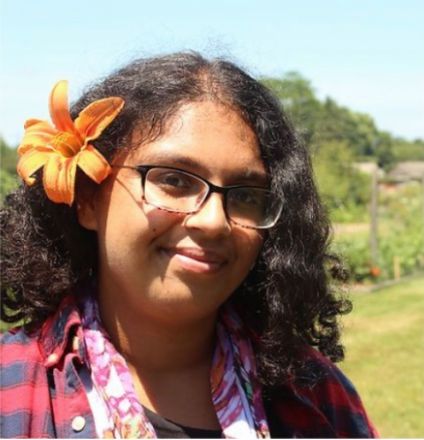
Sue Ishaq, photo courtesy of Patrick Wine, 2021.

Sue Ishaq, PhD.,

Ariangela Kozik

Ariangela Kozik, PhD.,

 Prioritizing Precision: Guidelines for the Better Use of Population Descriptors in Human Microbiome Research.

Authors:  Nicole M. Farmer1,2, Amber Benezra1,3, Katherine A. Maki1, Suzanne L. Ishaq1,2, Ariangela J. Kozik1,2,4,5* 

Affiliations:

1 The Microbes and Social Equity working group, Orono, Maine, USA; 2 Nova Institute for Health, Baltimore, MD; 3 Science and Technology Studies, Stevens Institute of Technology, Hoboken, New Jersey, USA; 4 Division of Pulmonary and Critical Care Medicine, Department of Internal Medicine, University of Michigan, Ann Arbor, Michigan, USA; 5 Department of Molecular, Cellular, and Developmental Biology, University of Michigan, Ann Arbor, Michigan, USA

Abstract

Microbiome science is a celebration of the connections between humans, our environment, and microbial organisms. We are continually learning more about our microbial fingerprint, how each microbiome may respond to identical stimuli differently, and how the quality of the environmental conditions around us influences the microorganisms we encounter and acquire. However, in this process of self-discovery, we have utilized socially constructed ideas about ourselves as biological factors, potentially obscuring the true nature of our relationships to each other, microbes, and the planet. The concept of race, which has continuously changing definitions over hundreds of years, is frequently operationalized as a proxy for biological variation and suggested to have a real impact on the microbiome. Scientists across disciplines and through decades of research have misused race as a biological determinant, resulting in falsely scientific justifications for social and political discrimination. However, concepts of race and ethnicity are highly nuanced, inconsistent, and culturally specific. Without training, microbiome researchers risk continuing to misconstrue these concepts as fixed biological factors that have direct impacts on our microbiomes and/or health. In 2023, the National Academies of Sciences, Engineering, and Medicine released recommendations on the use of population descriptors such as race and ethnicity in genetic science. In this paper, we posit similar recommendations that can and must be translated into microbiome science to avoid re-biologizing race and that push us toward the goal of understanding the microbiome as an engine of adaptation to help us thrive in a dynamic world.

White paper and perspective published on “Running a queer- and trans-inclusive faculty hiring process”!!

I’m delighted to announce the public release of a white paper on queer- and trans-inclusive faculty hiring practices, and a perspective piece introducing it!! This is the culmination of months of writing by an international group of talented scientists led by Dr. JL Weissman, and I was honored to participate in these and future efforts from the group.

The newly-formed group, Advancing Queer and Trans Equity in Science (AQTES), wants to improve the field of research by making the hiring process fair and welcoming for everyone. No matter what your personal identity is, we can all agree that fair and unbiased job searches are critical to hiring the best talent. But, sometimes a poorly-organized job search prevents the people with the best talent from applying at all.

In our white paper, we give suggestions on how to host a job search that is better for everyone. We provide examples and advice on how to write job adverts, create the agenda and atmosphere for the job search, how to make the interview process more accessible for everyone by remembering that we are humans and not robots, and how to support your new faculty.

Running a queer- and trans-inclusive faculty hiring process.

Authors

Weissman, JL, Chappell, C.R., Rodrigues de Oliveira, B.F., Evans, N., Fagre, A.C., Forsythe, D.,  Frese, S.A., Gregor, R., Ishaq, S.L., Johnston, J., Bittu, K.R., Matsuda, S.B., McCarren, S., Ortiz Alvarez de la Campa, M., Roepkw, T.A., Sinnott-Armstrong, N., Stobie, C.S., Talluto, L., Vargas-Muñiz, J., Advancing Queer and Trans Equity in Science (AQTES).

Abstract

Queer and transgender scientists face documented systemic challenges across the sciences, and therefore have a higher attrition rate than their peers. Recent calls for change within science have emphasized the importance of addressing barriers to the success and retention of queer and trans scientists to create a more inclusive, equitable, and just scientific establishment. Crucially, we note these calls come primarily from early career researchers; relatively few queer and trans scientists have passed through the gauntlet of the faculty job search to become faculty ourselves, which is typically key to long-term persistence in academia. Our lack of representation creates a self-reinforcing cycle in which queer and trans trainees do not see our needs considered in established processes and power structures. Moreover, this status quo has historically been and continues to be harmful, disproportionately impacting those of us who have multiple intersecting marginalized identities. Here, we provide concrete guidance to search committees to support queer and trans candidates throughout the faculty selection process based on our personal experiences as early career scientists who have been on the job market.

Graphics in the post and the article created by Callie R. Chappell.

Citations

Citation for the paper: Weissman, JL, Chappell, C.R., Rodrigues de Oliveira, B.F., Evans, N., Fagre, A.C., Forsythe, D.,  Frese, S.A., Gregor, R., Ishaq, S.L., Johnston, J., Bittu, K.R., Matsuda, S.B., McCarren, S., Ortiz Alvarez de la Campa, M., Roepkw, T.A., Sinnott-Armstrong, N., Stobie, C.S., Talluto, L., Vargas-Muñiz, J., Advancing Queer and Trans Equity in Science (AQTES). 2024. Running a queer- and trans-inclusive faculty hiring process. EcoEvoRvix repository 6791.

Perspective piece introducing the paper:  Weissman JL, Chappell CR, Francesco Rodrigues de Oliveira B, Evans N, Fagre AC, Forsythe D, et al. (2024) Queer- and trans-inclusive faculty hiring—A call for change. PLoS Biol 22(11): e3002919.

This work is being presented at the American Geophysical Union annual meeting in Washington DC in December, in the session on “ED12A: Advances and Progress Toward a More Inclusive, Diverse, Equitable, and Accessible Scientific Community II”.

This work is being presented as a seminar at the Microbes and Social Equity working group virtual seminar series, Dec 20th, 2024. Registration is free but required.

Featured on the GW Integrative Medicine podcast!!

I was interviewed by Leigh Frame and Janette Rodrigues for the GW Integrative Medicine podcast! Leigh Frame is an associate professor and Janette Rodrigues is the OIMH Admininstrative Director at the George Washington (GW) University School of Medicine and Health Sciences, and they host the podcast to explore research on health.

We talked about my work on broccoli sprouts and gut microbes, Microbes and Social Equity, and Microbiome Stewardship. You can listen to the episode here.

Featured on the Microbial Matters podcast!!

I was interviewed by Dr. Mark Martin for the Microbial Matters podcast! Mark is a renowned microbiologist who has long has a presence online making science accessbile to everyone. The show features exciting and fun conversations with researchers about their work on tiny organisms with a global impact.

I’ve linked to the Youtube video version below, but you can download the video/audio for my episode, link to podcast services, and find the show notes by clicking here.

The value of choosing when, and how, and how much to think about work

It has been a long time since I have written a reflection-style blog post (as opposed to simply sharing updates and events), and for good reason — I have been overcommitted for my time during (at least) the past year and half and have had little left over for the imagination-based portions of my work. I love what I do and I routinely choose to spend my free time on it, but with the increase in demands for my attention I have lost the freedom to choose when, and how, and how much I think about work.

Many of the non-essential aspects of my job, such as creative writing on the blog, had to be paused to accommodate an increasing number of requests for my time on task-based items (emails, forms, admin, logistics, planning). While many of those requests were simple, the urgent or time-sensitive nature of resolving student, colleague, or university requests with impending deadlines required me to cycle rapidly through tasks/conversations each day, which is mentally taxing over extended time.

More than that, many academics and researchers have had to learn to multi-task even to the point of answering emails during meetings or engaging in multiple conversations simultaneously just to find time to respond to all of the requests for our help and expertise. It might be feasible in short bursts, but after keeping up this pace for so long I started to face burnout over the fall.

I’ve previously written about the value of having time to think in research careers. It is well-recognized that more time off and better-quality time-off (in which you are not just taking work with you to the beach) is needed. But, it is critical to recognize that resolving academic burnout requires universities to increase hiring for faculty and staff rather than cutting positions to lower budgets and redistributing the workload among remaining faculty and staff.

The “too-busy-to-think” problem in academia can never be resolved if we have so many components to our daily task list that we don’t have time to complete the very things we were hired to do: research and teach. To excel in these, we need time to think. Over the past week, I took several vacation days (filled with amazing adventures with friends not al of which is pictured here) prior to attending a small (< 150 people) conference for two days, during which I intentionally minimized the amount of multi-tasking I did while listening to presentations. I never truly stop thinking about my work; it is a part of my identity and I love the problem-solving activities I do, but having this precious time to choose what I consider or spend my time on, and being able to focus on what was in front of me, was immensely rewarding to how I create my own research as well as restorative.

A music band onstage, with a blurry crowd in the foreground.

One of those adventures that I remembered to take photos of was a concert. I was lucky enough to catch “Tank and the Bangas” perform live at Belly Up in San Diego. The band’s most recent album has been nominated for a Grammy Award, and their live performance was electric, passionate, and inspiring.

I was even luckier to spend time with the incredible Candace Williams, a friend and researcher at the San Diego Zoo. Candace took another friend of mine and I around the park (most of which is not pictured here), and I really enjoyed the opportunity to hear about and see her work on rhino gut microbiomes in this setting.

One of the main reasons for my trip was to attend the 3rd CMI International Microbiome Meeting (CIMM) at the Center for Microbiome Innovation at UC San Diego. The conference was held at the Scripps Institute for Oceanography in La Jolla (just north of San Diego), and the long pier shown in the distance in the photo below is one of their state-of-the-art research facilities. I’ve wanted to visit the Institute for the past few years but have not had the opportunity to travel there.

Some other conference attendees and I got a tour of the pier from Jack Gilbert, who is the Deputy Director for Research and Associate Vice Chancellor for Marine Sciences there. Jack is also the Editor in Chief for the scientific journal mSystems, and has been a major supporter of my career and the Microbes and Social Equity working group for the past two years. It was awesome to finally meet Jack in person!

Having a small conference venue, and multiple meals and networking events on-site during the day, meant that I had plenty of time to chat with Jack and other storied researchers in my field. For example, I chatted about my work on scallop microbes as well as my unique conference-fashion combinations with one of the foundational researchers in host microbiology. I got ample opportunity to meet with peers and science celebrities-in-the-making, and even to re-meet Dimitry Krementsov, whom I had originally met way back in 2008 due to overlapping friend groups in Burlington, Vermont, well before I went to grad school or though about microbes. It turns out that not only do we have complementary research interests that we’ll be following up on, but had unknowingly shared mice recently through a collaborator we have in common.

The talks on the first two days of the event (I did not attend the third day as it was outside the scope of my work) ranged from gut microbiome, to diet, to agriculture, to the ocean, and because the presentations times were long the researchers were able to tell better stories about their science and progress through their thought process over time. As an early-career researcher, I enjoyed their perspective on the process of discovery. I enjoyed all the presentations, but a few in particular resonated with me. For example, a talk on gut immunology reflected on the idea that commensal bacteria have been anthropomorphized as friendly to us when in reality the commensalism arises from our immune system setting good boundaries for those relationships, which has me thinking about my own work on disrupted gut microbial communities. Rosie’s work on microbes in aquaculture-managed oceanwater got me thinking about how curating agricultural/aquacultural management practices within the context of working with an ecosystem can help reduce the negative impacts of those human activities while boosting production. And one talk on using plant biology and plant-microbe interactions to instill disease resistance in citrus plants was just awesome to hear about; I don’t work on plant microbiomes anymore but the research ideas were so novel to me that it sparked my curiosity and creative thought process.

I spent quite a bit of the conference with Candace with Rosie Alegado, during which we reflected on the scientific research being presented, the tastiness of the food served, and the immense value of ‘capacity sharing’ by inviting community members to participate in the design and performance of research.

Sue, Candace Williams, and

Rosie and Candace are both famous for their community-rooted research in ocean and wild animal microbiology, respectively, and I continue to learn and be inspired by them. Equally inspirational is Carla Bonilla (not pictured) who I caught up with (too) briefly while I was in San Diego. In addition to her research, Carla’s work on pedagogy and expanding our views of microbiology is one of the pillars of MSE.

I was also fortunate to spent quite a bit of time with Sean Gibbons and Jotham Suez, both prominent researchers on diet and gut microbiome who both presented their work. In addition to hanging out at the conference, we found time to go on several adventures. We caught the cherry blossoms in peak glory at the Japanese Garden in Balboa Park, as well as spend the day strolling around the rest of the park and La Jolla beach discussing research, judging coffee, laughing hysterically, perusing the art colony in the park, and meeting every dog within petting range. I can’t wait till the next round of shenanigans!

  • Sean Gibbons, Sue, and Jotham Suez posing on rock path in front of bright pink blooming cherry trees at a Japanese Garden.
  • A view down the underside of a concrete pier, with breaking waves and cloudy sky in the background and wet sand in the foreground.
  • Sue jumping in the air below a concrete pier, with wet sand in the foreground and breaking waves under cloudy skies.
  • A closeup of the sandstone cliff at La Jolla beach with green algae growing over the bottom several feet of the cliffs.

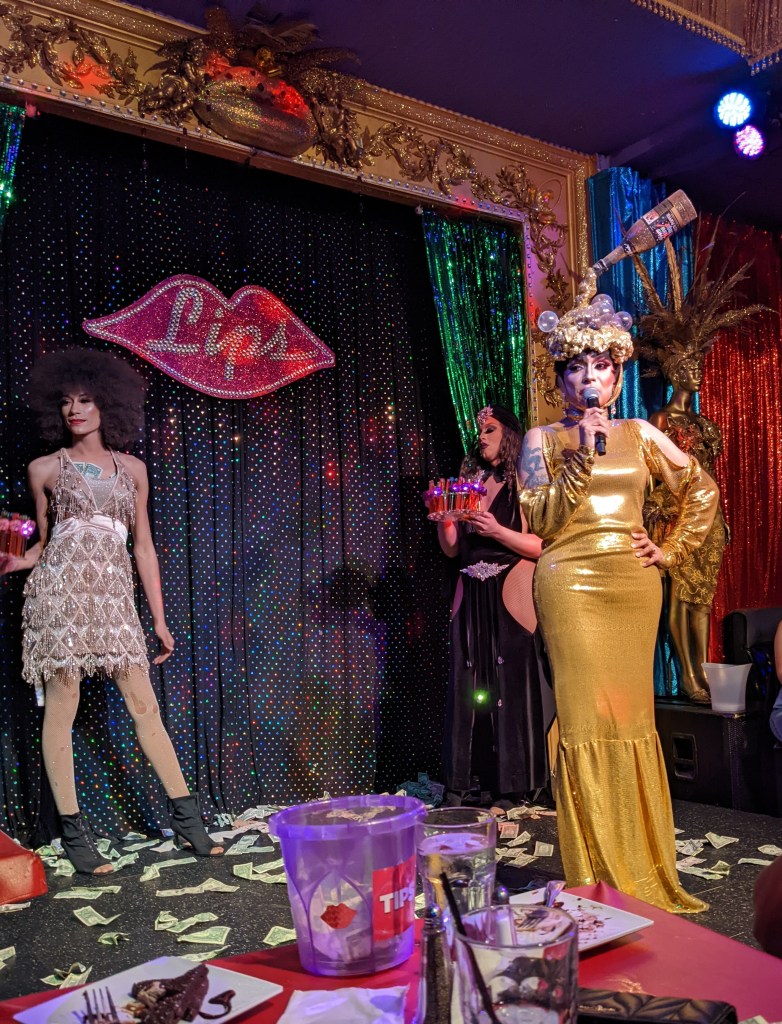
While I was in San Diego, I also went to a drag show with friends and colleagues. For anyone who is not familiar with ‘drag’, it can be presented in many ways but it always an artistic performance in which the performers adorn clothing, hairstyles, and makeup to create a persona for the stage. In the same way that actors don clothing, makeup, and more to create personas in order to tell a story, with drag the chosen persona plays on the idea of gender norms of what society thinks a person should wear or say based on which genitals they have. The performers often sing/lip sync, dance (including some extremely athletic moves while wearing high heels), perform stand-up comedy, read book aloud, or in the case of the show I just went to – host a game of bingo. However it is performed, drag engages in humor, pageantry, and the idea that how we look can be a form of artistic expression rather than the composite of other people’s opinions on how we should look or act. I can’t think of anything more wholesome than an event which welcomes everyone to be their authentic self. If you have never been to a drag show, I highly recommend it, and everyone is welcome at drag shows!

I have included some photos of a previous show I attended there, as I wasn’t able to get good photos of the performance this time (I do have an amazing group photo, but I wasn’t sure if my friends would want to be featured on my professional social media).

Several drag queens in elaborate gowns, hairstyles, and makeup, standing on a stage.

Overall, the combination of time to relax, to think, to share, and to have fun was an restorative and enjoyable way to make new friends, deepen connections with previous friends and colleagues, and to enrich my own research by learning from rockstars in my field. You’ll definitely find me at CIMM again next year!

*The title of this blog post is directly inspired by phrasing in Arundhati Roy’s novel, The God of Small Things.

iScience Backstory on our collaborative work on ants, nematodes, and bacterial transfer

Over the summer, an article was published which featured a handful of researchers from across the US and research spanning a decade on the bacterial communities associated with invasive ants and nematodes in Maine. At the time, we were invited to also contribute a “Backstory” article to the scientific journal iScience which described the journey and the ideas.

That story authored by myself and Ellie Groden (senior researcher on the journal article) has just been published, and can be found here. I’d like to thank Dr. Sheba Agarwal, who was the editor on the paper, helped us develop our Backstory, and also spoke to me about this and other work as a guest on the WeTalkScience podcast.

How does an academic department decide on their courses?

Now that I am an assistant professor, I perform scientific research, teach formal classes to undergraduate and graduate students, and I advise undergraduate students, as well as a smattering of other administrative or organizing-based activities. While I have performed nearly all of these in past job positions, the advising is a completely new aspect which has provided valuable insight into my other activities. The University of Maine serves a large number of undergraduate students, and many degree programs are specifically designed as preparation for specific career fields. Undergraduate students in my department now ask for my advice on which courses to take to best finish their degree, and this has led to some interesting discussions on why certain classes are required or not, and why certain classes are offered or not. I realized that the mechanics of course development are not well known to students, or even to academics who haven’t participated in it, and I thought I would share what I’ve learned.

Deciding on content

At the university level, courses are created and designed to offer a certain level of core material made up of basic concepts to introduce students to different fields of information; courses like introduction to biology, or general writing techniques. These may be referred to as ‘general education‘ courses and are designed for student audiences from many different programs at once. GenEd courses are taken in the first or second year of study in order to fill in any gaps from the very different high school educations students have, as well as teach the basics of information-finding and collaboration skills that they will need in other classes. GenEds are usually required before students take high-level courses in specific areas of study. Often, GenEds or introductory courses cater to hundreds of students per year, and there are several instructors to cover all the course sections, as well as teaching assistants, who provide instruction. There are additional core University requirements that each department can decide how to handle, such as the UMaine Capstone Experience requirement for students, which requires students to create a senior project related to their major. Within each academic department or unit (for example, Animal and Veterinary Sciences), there are core course requirements specific to that field of student that all students enrolled in that program need to take (for example, these requirements for Bachelor’s of Animal Science with a pre-veterinary concentration).

One factor in the decision about course content is simply which skills or knowledge students will need in order to enter the workforce related to their field of study. For example, undergraduate students who are intending to go on to a veterinary degree are often enrolled in pre-vet programs designed to prepare students for that further degree and to meet those application qualifications. As such, they will need to learn everything from anatomy to physics. Any content which is required to make the degree meaningful will also be required for students to pass in order to graduate, and means that it must be taught often enough that students have an opportunity to take it. Thus, core or required classes might be held at least annually, and sometimes multiple times a year. If the usual instructor is unable to teach it for a period of time, or there is turnover in the department, a temporary or adjunct instructor can be brought in on a short-term contract to ensure that course can be offered regularly.

Another factor is the area of expertise of the faculty instructors, who are research and/or teaching faculty with long-term contracts, such that those classes will be offered for at least as long as that person is employed. Because areas of expertise change over time, and because faculty come and go, this often drives the evolution of an academic department’s curriculum focus over decades. For example, I have a 50% research and 50% teaching appointment over a 9-month contract, which equates to 12 credits worth of teaching or formal mentoring in my department over the academic year. While I do teach some courses which were already set by the department, I had enough room in that 50% appointment to propose and teach two classes of my own design, one of which has now become a required course for animal science undergraduates specifically because my area of expertise has grown in importance and popularity in the past few decades. Departments will hire new faculty or instructors specifically because of their area of expertise and which direction they want the overall academic program to go in.

A more minor consideration on course content relates to university budget models, and whether academic departments get additional faculty or instructor salary for teaching students from outside their department – essentially a question of where tuition revenue is spent. Departmental course content is tailored to the intended student audience.  If a course is popular across the university but does not have applicability or appeal to the students within that faculty or instructor’s department, it can be difficult to justify spending time on it because most instructors or faculty are contracted to specific departments or academic unit budgets. However, a course with broad appeal could be taught outside of our contracted time, such as during winter or summer sessions, or potentially during the academic year as “overload teaching” which is above the number of credits outlined in our contact. This usually pays on top of the 9 or 12 month salaried contracts of instructors, but is restricted by the lack of free time that most faculty face.

Theory or approach to teaching

After settling on what should be taught, how, then, does a department decide how a class should be taught or constructed? How broad or specific should the information be, and how will the assignments or course requirements assess what students have learned? How will skills be taught? Broadly, this is called pedagogy: the method and practice of teaching, and is something which many faculty find themselves responsible for knowing even if we have not gotten an opportunity to develop our pedagogy in previous jobs. Prior to being an assistant professor at UMaine, I taught several different courses, including ones with pre-set materials that I re-hashed and presented in my own way, and ones with materials that I collected and decided entirely how to present (taught as electives). It wasn’t until that I was a long-term member of an academic department that I was able to participate in setting the direction of departmental courses, and to consider what we teach and how.  As part of my application to my current position, and my tenure packet (application to get a forever contract for my job), I am required to explain my teaching philosophy and how I put those ideas into practice in the classroom. I have previously shared some of those working documents.

As an example: it’s important to learn about how microbes affect animal health. Do I need to spend all my time lecturing to provide that info, or is there another format of information sharing I can use? I certainly need to lecture some, to introduce new topics or walk students through reading complicated graphs. But, it’s important that I also teach students how to find this information and assess it on their own, because they will be doing that for the rest of their life after they leave the classroom. Thus, I need to design my class materials and timeline to provide information and empower students to develop those same skills that I learned to get where I am: reading graphs, considering multiple and conflicting study results, forming questions and how to go about finding the answer. I might start a class with some lecture, followed by an assignment where students have to identity a question they have about microbiomes, then write down the expertise or people needed to find the answer from multiple perspectives, and finally outline what they thought that team could get done in one year.

Getting courses approved

There are many steps in the course approval process and, naturally, plenty of paperwork. In addition to a draft syllabus, a course proposal form is required which provides the logistical details (how many credits, lab or lecture, in person or online, and more), and describes the goals and scope of the content (introductory or experienced level), intended audience (students in which departments and which year of study), and how it will provide necessary skills or info to them. Importantly, the proposal form must describe how the new course will complement current courses that are offered at the University. Being able to show that there is a demand for this specific course, or that it is needed for professional development of the students, will support the course proposal during the approval process. This last part requires the person proposing the course to communicate with instructors of similar classes who might have students that will want to take this class. Are there aspects that you could include in your new course to make this more relevant to them, or to connect this new class to existing classes?

Once the proposal form is complete, it gets sent to the unit or departmental faculty committee for discussion, and may be returned for revisions. This committee might be made up of senior faculty in the department, or all the faculty if it is a small department. Not only can other faculty help improve the courses, but the time you spend teaching a course is time you can’t spend teaching other things that the department needs. So, your colleagues need assess whether this course is a good use of time and effort.

If the course is approved by the department, the proposal goes to the college curriculum committee which is made up of faculty from multiple different but related departments (for example, one from each department in the College of Natural Sciences, Forestry, and Agriculture). Often, faculty sitting on this committee are Undergraduate Coordinators in their own department, and have a lot of input into the scope of what undergraduates study.  After that committee, the proposal then goes on to the university curriculum committee to make sure it complies with university-wide standards and formatting. There are different forms and committees for undergraduate or graduate courses, and if you create a cross-listed course which can be taken by senior undergraduates and graduates, you’ll need to submit both forms and talk to both committee sets.

If a course is approved by the university, it will be assigned a number and will start appearing on the course catalogue. If the course is going to be required for students, though, it will usually be offered as an elective for the first year or even two before it is required for incoming students (current students can take it as an elective). Courses may also fulfil multiple requirements at once. For example, my AVS 254 Intro to Animal Microbiomes is required core subject material for AVS students, but also fills a university general education requirement to take a course that includes population and environment-scale information. In learning about the microbial communities, students also learn about microbial transmission between individuals, lifestyle choices and impact on host microbes, and interaction with the environment and affect on host microbes.

Matching faculty expectations to student experiences

An important consideration for course design is matching faculty expectations with student experiences. For example, the course materials which faculty see describe the course, but those faculty do not attend the course and experience how that information is shared. Thus, faculty may think that students are receiving information or skills, but the way that it is presented is not approachable or pertinent for students and they are unable to reuse what was presented in the course. Even faculty did audit a whole undergraduate course, we don’t have the same perspective that students do in that we might already be familiar with the material and we would not be able to identify where a lecture left out general information that would be critical for someone who is new to this. The student perspective is also driven by their need to do well in the course, not only by receiving a high grade but also by absorbing as much information which can help them in other classes or in their future career. Thus, aspects of the course which students think are interesting or important are not necessarily the same aspects that faculty identify as important.

Aligning the faculty and the student perspectives requires regular assessment of the course to make sure it is providing the necessary training and information to students. Often this assessment takes the form of faculty input and opinions, or changing needs of post-graduation industry career needs. It also relies on end of the semester evaluations of student performance (grades), and student feedback and evaluation of the courses. Student feedback can be unreliable when feedback on the course is preoccupied with comments which come from a place of personal bias or outright hostility. And, most course evaluations don’t provide enough granularity in the questions to thoroughly assess student perspectives on different aspects of the course, forcing students to give overall ratings. However, student feedback can be valuable when combined with other sources of information or asks more detailed questions.

To that end, Samantha Coombs, an AVS senior undergraduate researcher and I are designing surveys to gather student and faculty mentor perspectives for the UMaine AVS program Capstone Experiences courses, AVS 401 and 402. These courses are required for undergraduates to take to earn their bachelor’s degree, and require students to propose, conduct, and present results on research – often for the first time in their time at UMaine. If this wasn’t stressful enough, students typically work on projects which are part of faculty’s research portfolio,  and both students and faculty can be impacted by mismatches in expectations versus the reality of those collaborations. While we won’t be fully sharing the results of those surveys, we will be sharing summaries, and how the responses impacted future course materials in AVS 401 – the course in which students are first launched into research.

Improving the Curriculum for Future AVS 401 Undergraduates

Authors: Samantha Coombs and Dr. Sue Ishaq

Affiliations: School of Food and Agriculture at University of Maine, Orono

Keywords: Capstone, AVS 401, Undergraduates, Faculty, Stress, Mentor, Curriculum

Abstract

AVS undergraduates are not prepared to complete the requirements of AVS 401, before taking the course. In the AVS degree program, it is expected that undergraduates will gain knowledge, experience, and ideas to create a research project of their own. In many cases, AVS undergraduates are completing their capstones with never having performed a research project on their own. This is stress-inducing due to undergraduates having to learn both how to complete a research project, and how to write and complete a proposal. Undergraduates are given the choice to join a research project guided by a faculty mentor, but this leads to striving to meet expectations. Others struggle due to not knowing what project or path to go down. Each student needs a different situation that best fits their needs; this project will assist in trying to create a one-size-fits-all curriculum. The question I want to figure out is, can we adjust the curriculum in AVS 401 to meet the requirements of all AVS undergraduates for them to succeed in their capstone research? I hypothesize that we can create a curriculum that meets the requirements of undergraduates by surveying both faculty and undergraduates on their different expectations and experiences. Methods of research that will be conducted are, surveying AVS and other degree professors, surveying undergraduates who have taken AVS 401, reading syllabi, and reading scientific articles. The impact that this research will have is to create a class that is a one-size-fits-all for AVS 401 undergraduates. The curriculum will be adjusted due to the responses from both parties. The results will be a class that teaches undergraduates what they need to know to improve: the quality, efficiency, and reduce the stress of capstone projects.

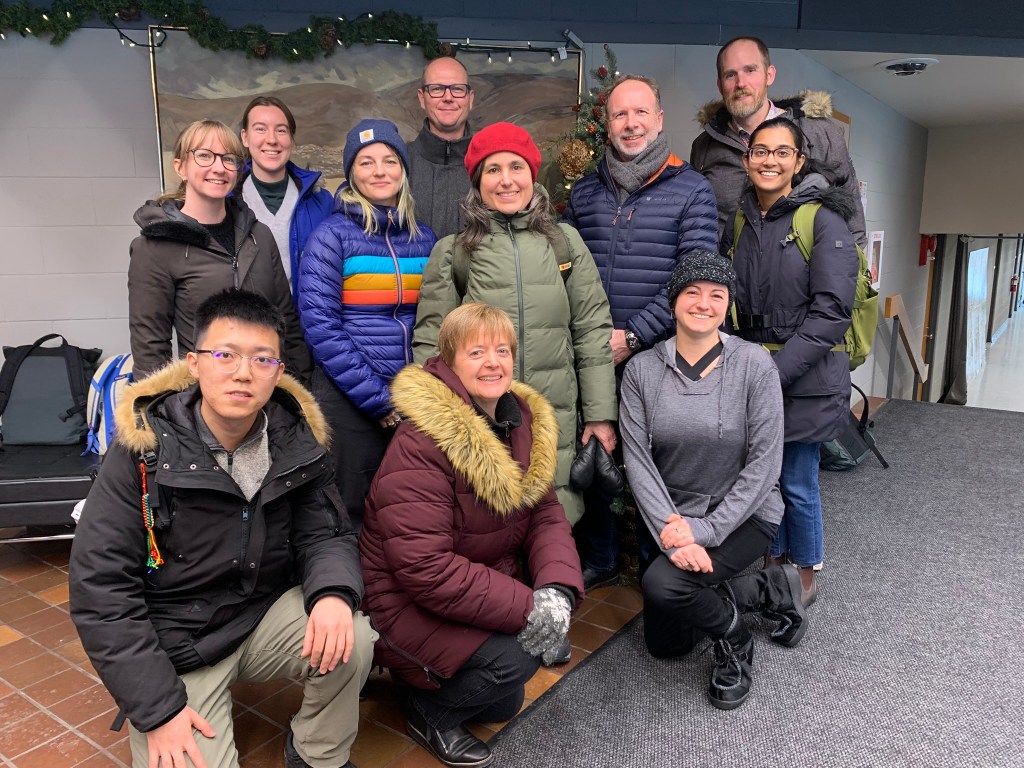
Rumening through camel microbes, by Myra Arshad

Written by Myra Arshad

Myra Arshad

Did you know that camels have three stomach chambers or that they have to throw up their own food in order to digest their food properly? Have you felt excluded from science spaces before? Then this blog post is for you!

Allow me to introduce myself. 

My name is Myra, and I am a rising senior at SUNY Stony Brook University, where my major is Ecosystems and Human Impact, with a biology minor. In a nutshell, my major is interdisciplinary with a focus on conservation and ecology within human societies. 

If I were to describe my college experience in one word I’d pick “surprises”. I never actually saw myself being a scientist in my middle and high school years. I found it hard to care about abstract concepts or theories that felt so far removed from humanity, particularly minority communities. But, during college I found myself falling in love with environmental studies, and along with it, the beautiful complexities that come with being human in our increasingly anthropogenic world. 

At UMaine, we focus on the One Health Initiative, which views the health of humans, animals, and the environment as interconnected. When COVID-19 caused everyone to go into lockdown, I was fortunate to find this farm was looking for crew members, with a focus on food security. While certainly not how I planned to spend the summer of 2020, farming for underserved communities is where I saw how impactful One Health was. Organic farmers commonly use plastic mulch as a popular alternative to pesticides for weed suppression. At my home institution, I lead a project on the impacts of microplastics on earthworm health, an Ecotoxicology lab (students of the lab affectionately gave it the nickname “the Worm lab”).  We use earthworm health as an indicator of soil health, which in turn is crucial for crop flourishment. The Worm Lab and farming emboldened me to pursue science and, ergo, look for this REU! 

At UMaine, I am a member of the Ishaq Lab where I work on the camel metagenome project. Basically, scientists in Egypt raised camels on different diets, then used samples from their feces to sequence their microbial genome. These microbes live in the camel rumen (part of the camel stomach), and help the camel digest their food. What I do with Dr. Ishaq’s lab is, I perform data analysis on these sequences to see how the microbial gene profile changes with different diets. Camels are essential for transportation and food for the communities that rely on them, so finding the most efficient feed for them is important. Camels also release methane depending on their diet so it’s possible humans could control methane production of camels through their diet. 

Being a part of the REU ANEW program for 2021 definitely has been an interesting experience, since it is the first time this program has been conducted virtually. Even though I would have loved to have seen everyone in person and spent time in lovely Orono, Maine, I’m glad for the research opportunity as it has further solidified my love of research and the One Health initiative.

Myra’s poster for the REU Research Symposium, virtual, Aug 13, 2021.

Introducing the Microbes and Social Equity Working Group: Considering the Microbial Components of Social, Environmental, and Health Justice

The Microbes and Social Equity Working Group is delighted to make its published debut, with this collaboratively-written perspective piece introducing ourselves and our goals. You can read about us here.

This piece also debuts the special series we are curating in partnership with the scientific journal mSystems; “Special Series: Social Equity as a Means of Resolving Disparities in Microbial Exposure“. Over the next few months to a year, we will be adding additional peer-reviewed, cutting edge research, review, concept, and perspective pieces from researchers around the globe on a myriad of topics which center around social inequity and microbial exposures.

Ishaq, S.L., Parada, F.J., Wolf, P.G., Bonilla, C.Y., Carney, M.A., Benezra, A., Wissel, E., Friedman, M., DeAngelis, K.M., Robinson, J.M., Fahimipour, A.K., Manus, M.B., Grieneisen, L., Dietz, L.G., Pathak, A., Chauhan, A., Kuthyar, S., Stewart, J.D., Dasari, M.R., Nonnamaker, E., Choudoir, M., Horve, P.F., Zimmerman, N.B., Kozik, A.J., Darling, K.W., Romero-Olivares, A.L., Hariharan, J., Farmer, N., Maki, K.A., Collier, J.L., O’Doherty, K., Letourneau, J., Kline, J., Moses, P.L., Morar, N. 2021. Introducing the Microbes and Social Equity Working Group: Considering the Microbial Components of Social, Environmental, and Health Justice. mSystems 6:4.

Responsible conduct of research – oversight, training, and more

One aspect of research which requires substantial training, adherence, and reflection for researchers, yet gets almost no public attention, is the rules and regulations on the responsible conduct of research. In this piece I focus on the US, but many countries have ethical guidelines of their own. This piece is meant as a reflection of how far science and society have come, and while ethics in science are only as good as the scientist, I wanted to share the stringent approval and review processes that modern research must go through prior to completing any work, to ensure safety and respect for all persons and animals. Thus, please don’t read the first section and run off thinking that researchers are monsters – it is there to give you an understanding of where we ae now.

Bias and the misuse of research

If you’ve ever read “The immortal life of Henrietta Lacks”, by Rebecca Skloot, you are familiar with a high -profile case which took decades to uncover. The book examines the case of a woman, Henrietta Lacks, with cervical cancer whose cells have revolutionized medicine and research.  However, doctors didn’t ask for her permission to use those cancer cells, she didn’t know they were being taken, her family didn’t know they were being used extensively in research labs around the globe, and even decades later they have not benefited from the billions of dollars of research and development profits that came about because of her cells.

History is littered with examples of cruel or nonconsensual research going back hundreds of years. Most of those involve intensive research on humans or animals without their knowledge or their consent, other examples include disregard for safety or privacy. Even decisions which appear benign but are still unethical prevent people from benefitting from their own contributions to research.  

However, nearly all of these historical examples involving human subjects research are rooted in racism, sexism, and/or anti-religious or religion/ethnic cleansing. Historically and today, science has often been intentionally misconstrued to perpetuate social constructs of superiority/inferiority. Science is only a tool, and while these examples can be blamed on individuals choosing science to be the tool of their ill-intent, the historical lack of ethical guidelines, constraints, or consequences belies the failure of society to ensure equality and respect to all persons. There are numerous resources (for example, here and here) which examine these past offenses in detail, and reflect on how they led to the ethical guidelines we have in place today. 

In addition to the obvious harm it could cause, not incorporating ethics into research contributes to Institutional Betrayal.  This concept was coined by psychologist Dr. Jennifer Freyd, and describes the harm caused or allowed to happen by an institution, which causes psychological damage because you expect the institution to protect you. Collectively, unethical research leads to a distrust of science, researchers, and medical professionals, and can lead to science denialism.

One of the challenges to understanding ethics in scientific research is that our ethics reflect our values as a society and those values and laws change over time.  You only have to read the news to see that we all have different ideas about what is acceptable to do to someone else.  We should not think of everything that is permissible as also acceptable: just because you can do something, doesn’t mean you should do it. And, you can still take advantage of someone even if you are not physically harming them. Thus, ethical standards inform what we are able to research, but also why we are doing it, and how, as there may be less invasive methods available.

Importantly, ethical standards takes power away from the researcher and puts it into more objective hands. If a researcher wants to do a project, and millions of dollars of research funding, 20 research staff, and their careers are all based on the research succeeding, that puts a lot of bias in all of their thoughts and actions.  Ethical review helps ensure that researchers are making good decisions before, during, and after the research.

Perception of authority and power dynamics

Americans have historically distrusted science, and this has always been encouraged by various social and political entities. This external influence on our perception of science has intensified in recent years, which has become dramatically clear in the way that people have responded to the pandemic. However, generally when people look at photos of researchers, scientists, or doctors, and they respond that they have some level of trust in them. This trust, of course, varies by gender and race and is rooted in how certain demographics have been taken advantage of previously.

There is a term called perception of authority, which can be used to describe how people ascribe authority to researchers, scientists, and doctors simply based on visual cues (like wearing a white coat). However, this perception can be incorrectly attributed to people who appear to be in that same category but are in fact not trustworthy or knowledgeable about the topics they claim to be experts in, for example, some TV personalities

Ethical standards and review prevent researchers from intentionally or unintentionally taking advantage of participants’ willingness to say “yes” based on their perception of you being an authority, whether or not you really are. That is just one example of a power dynamic.

Research sets up a power dynamic, which is a relationship wherein one person has more power, authority, or control over another person. In research, there are a lot of ways in which that can be set up.

In addition to perception of authority, there is a perception of luck, in which participants assume they will be in the placebo group (the control group which receives no treatment to make sure the effects you see are because of the treatment and not just from the excitement of being in a research study) and dismiss concerns about potential risks. Financial incentive for participating may recruit people that really need that money and feel pressured to be int he study regardless of the risks. There is also the hope of a cure. For medical research involving obscure or rare diseases, studies may use developmental treatments and by necessity must recruit participants who suffer from this particular problem. You might be more like to participate if you assume that the treatment will cure you, or if you don’t understand that it is equally likely that you could be in a placebo group as in the treatment group. There are also people that feel pressured to consent because they have less social impact and power and feel that they can’t say ‘no’ to participation, by refusing to enroll or by withdrawing from the study at any time. Ethical regulations specifically include prisoners, children, pregnant people, and anyone without the ability to make an informed decision under special protections against power dynamics, but ethical review boards will help you identify other situations or demographics and how to lessen those power differentials.

In addition, having a study approval that rests with a committee who are in no way involved with the research can help reduce bias or harm. These standards may require researchers to be more creative in order to do less harm and find a better way to conduct that research, either by using alternative methods or fewer participants. Ethical review boards also ensure that researchers get the most out of the study, such that if some harm, even just some inconvenience, is being done to someone (human or animal), the benefits from the study are worth the cost and that judgment call is made by someone with no stake in the research. Review also ensures that the study is designed to collect as much info as possible so that it does not have be repeated.

Ethical standards also require researchers to obtain informed consent from your human participants. This includes what will be done to them during the study, what information or samples will be collected, what information (including methods) will be obtained from these samples, and what will be done with their samples or information in the future. Finally, ethical standards creates accountability for researchers’ actions by creating a paper trail, setting up oversight on the project, and creating consequences for failure to comply with regulations.

The logistics of ethics

How do we add ethical principles to our research?  To summarize, you want to minimize harm to participants, be transparent about your activities and keep human participants well informed, keep excellent records and document all communications and information you share with human participants, always get Institutional approval before conducting research or collecting samples or information, and try to reduce the power dynamic by making yourself accountable for your actions. There are many guiding principles available, including some listed here provided by the NIH:

  • Social and clinical value
  • Scientific validity
  • Fair subject selection
  • Favorable risk-benefit ratio
  • Independent review
  • Informed consent
  • Respect for potential and enrolled subjects

Institutional Animal Care and Use Committees (IACUCs)

If research involves live, vertebrate animals in some way and has a hands-on or disruptive aspect, approval from the Institutional Animal Care and Use Committee (IACUC) is required prior to starting the work. These regulations and guidelines stem from animal welfare laws and guidelines.

You should always consult with your IACUC board about your project before you have made preparations or started any work, as they should be kept apprised of research for reporting purposes and are the ones to verify if you do or do not need a formal approval. You typically don’t need formal approval if you are only observing animals and not interfering with them in any way or holding them captive, if you are collecting discarded animal products (like feathers), or if you are collecting tissue from carcasses. Keep in mind, you will need institutional biosafety approval to conduct this research if there is a specific infectious disease concern, and you need approval from your state fish and wildlife department if you are collecting samples from wild animals (even more so if the animal has a protected status). If you will be transporting biological material across state or national borders, there is another layer of training and approval before you can begin.

Each institution which performs animal research in the US is required to form at least a 5-member committee, which has to include the attending veterinarian at the institution with experience and training in the care and use of laboratory (and livestock) animals, one member from the local community, a practicing scientist experienced in research involving animals, a non-scientist, and at least one more member of any kind (usually another practicing scientist at the university). 

In addition to applying to IACUC for approval for your study, you’ll need to document that everyone on the project has completed relevant training on responsible research conduct, animal handling, and the procedures you will be using. Some of that training is administered by your institution, but much of it will be performed through the Collaborative Institutional Training Initiative (CITI), which provides standardized information and training.

Institutional Review Boards (IRBs)

If research involves humans in some way, including surveys, approval is required from the Institutional Review Board (IRB) prior to starting the work.  Even if your project ultimately does not require approval, you should always contact your IRB first, to let them know what you intend, and get their informal approval that you don’t need formal approval from the committee to do your work.

The members of the IRB committee may not have a personal, professional, or financial conflict of interest, and the federal code of regulations stipulates many guidelines about membership:

“Each IRB shall have at least five members, with varying backgrounds to promote complete and adequate review of research activities commonly conducted by the institution. The IRB shall be sufficiently qualified through the experience and expertise of its members, and the diversity of the members, including consideration of race, gender, cultural backgrounds, and sensitivity to such issues as community attitudes, to promote respect for its advice and counsel in safeguarding the rights and welfare of human subjects. In addition to possessing the professional competence necessary to review the specific research activities, the IRB shall be able to ascertain the acceptability of proposed research in terms of institutional commitments and regulations, applicable law, and standards of professional conduct and practice. * * * The IRB shall therefore include persons knowledgeable in these areas. If an IRB regularly reviews research that involves a vulnerable category of subjects, such as children, prisoners, pregnant women, or handicapped or mentally disabled persons, consideration shall be given to the inclusion of one or more individuals who are knowledgeable about and experienced in working with those subjects.”

Code of Federal Regulations, Title 21, Volume 1, Revised as of April 1, 2020, CITE: 21CFR56.107

Generally speaking, you’ll need IRB approval (and training) if you intend to publish this work or share this information widely, if you are collecting sensitive information (such as health, finances, or anything which would put the safety and wellbeing of that person at risk if it were revealed), if you are collecting (biological) samples, if you are doing anything physically or psychologically invasive, or if you are working with vulnerable populations. If you will be transporting biological material across state or national borders, there is another layer of training and approval before you can begin.

There are a number of information-gathering activities that don’t require review and approval, most of which are student projects that are part of coursework. These include interviewing one person for a biography on non-sensitive information, or interviewing multiple people on non-sensitive topics (such as asking about their favorite animal), performing a literature review or information search on non-sensitive or de-identified information, or creating science curricula.

Biosafety and chemical regulations

In addition to regulations on working with biological study subjects, there are additional health and safety regulations if your work involves anything infectious or dangerous. Institutional biosafety and chemical safety review requires researchers to describe all protocols, sample types and relative risks, and all safety and containment procedures – from the protective gear you will wear, to your sterilization or detoxification procedures, to the equipment you are using that could cause aerosolization and spread. There are yearly chemical and biosafety inventory reviews, laboratory walk-through audits, training, reporting, and equipment maintenance records that all go along with this.

Consequences

Like any good policy, responsible research is best accomplished when there are consequences and an institutional dedication to enforcement. Not only are applications and training required prior to performing the research, but there are facilities audits, reporting, and other regular check ins. Because there is no much to keep track of, review boards and enforcement are there to help researchers set up good practices and protocols ahead of time, help you stay in compliance, and correct problems before they exacerbate. Researchers who refuse to obtain permission prior to sample collection, who change their protocols without notifying review boards, who flaunt regulations, or who commit ethics violations will risk losing their funding, their job, and in severe cases, could face criminal investigations.