MSE seminar this Friday: “What microbes can tell us about the built environment”

Events will be hosted January – December, 2024, on the last Friday of every month, 12:00 – 14:00 pm ET. Presented over Zoom.

After each talk, we will continue the discussions in an informal social meeting with MSE. All speakers and members of the audience are welcome to join the social meeting.

Hosted by: Sue Ishaq, MSE, and finacially supported by the University of Maine Institute of Medicine and the UMaine Cultural Affairs/Distinguished Lecture Committee.

“What microbes can tell us about the built environment”

Dr. Davida Smyth, PhD

Jul 26, 2024 12:00 PM Eastern Daylight Time. This event has passed, watch the recording here.

Dr. Davida Smyth, PhD., is an Associate Professor at Texas A&M University – San Antonio. She received her Ph.D. in Microbiology from the University of Dublin, Trinity College, Ireland, and completed her postdoctoral training at New York Medical College, the University of Mississippi Medical Center, and New York University. She has served as an Associate Professor and Chairperson of the Department of Natural Sciences in Mercy College’s School of Health and Natural Sciences, an Assistant Research Scientist in Richard Novicks lab at NYU Langone Medical Center, an Adjunct Lecturer for the online Masters in Bioinformatics program at NYU Tandon School of Engineering, and an Assistant Professor of Biology at New York City College of Technology (NYCCT). She is an external committee member for Mercy Colleges Adjunct Academy component of their Inclusive Excellence Project and Peer-Led Team Learning Program for Biology, Chemistry, and Psychology students. In 2019, she was invited to the steering committee of the Research Experiences in Microbiomes Network (REMNet) of CUNY and became a Co-PI in 2020. Her research focuses on epidemiology of microbes in wastewater, and she is deeply committed to improving STEM education with integrated social impacts, such as her course on “How the Toilet Changed the World” about the role and impact of sanitation on our society and about the ongoing and future challenges associated with both access to toilets and sustainable toilet design.

This talk will focus on how microbes in our built environment can tell us much about the biological and chemical processes occurring. From their transmission through the air and their accumulation in our wastewater, we can learn much about the health of our communities, at different levels of scale and over time. Using novel sampling techniques and next generation sequencing we’re studying the microbes in our classroom air, those present in the soils around our campus, and in our city’s wastewater to determine the prevalence of pathogens as well as antibiotic resistance.

Her lab website is here; they research microbiology, sustainability, pedagogy, and inclusion.


Logo designed by Alex Guillen

MSE seminar today: “Antimicrobial chemicals, antimicrobial resistance, and the indoor microbiome”

Events will be hosted January – December, 2024, on the last Friday of every month, 12:00 – 14:00 pm ET. Presented over Zoom.

After each talk, we will continue the discussions in an informal social meeting with MSE. All speakers and members of the audience are welcome to join the social meeting.
Hosted by: Sue Ishaq, MSE, and finacially supported by the University of Maine Institute of Medicine and the UMaine Cultural Affairs/Distinguished Lecture Committee.


“Antimicrobial chemicals, antimicrobial resistance, and the indoor microbiome”

Dr. Erica Hartmann, PhD.

Jun 28, 2024 12:00 PM Eastern Time. This event has passes, watch the recording here.

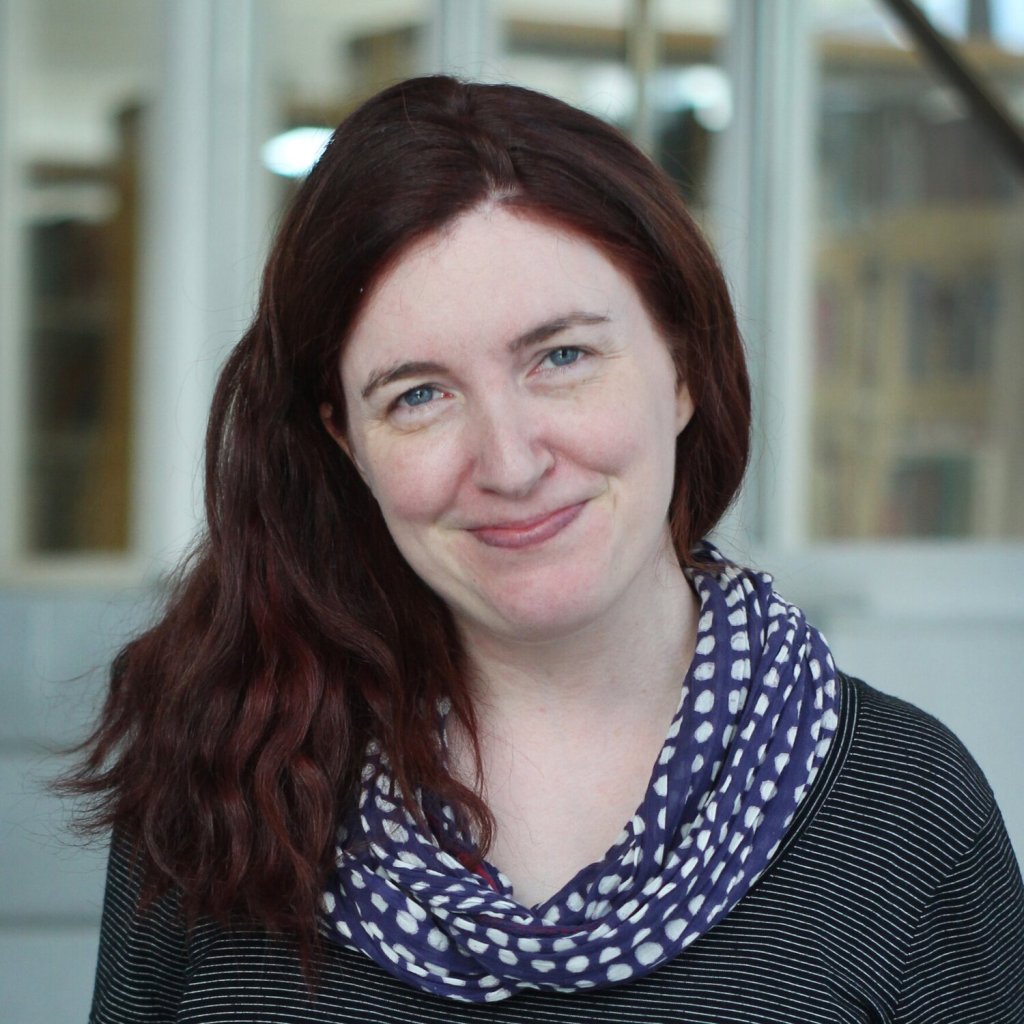
Professional headshot of Erica Hartmann in front of a wall of ivy.

Dr. Erica Hartmann, PhD., Associate Professor at Northwestern University. Dr. Erica Marie Hartmann is an environmental microbiologist interested in the interaction between anthropogenic chemicals and microorganisms, as well as bio-inspired mechanisms for controlling microbial communities.

Her career began at the Johns Hopkins Bloomberg School of Public Health, where she worked on mass spectrometry-based methods for detecting microbial enzymes necessary for bioremediation. She then moved to Arizona State University where she was the first graduate of the interdisciplinary Biological Design PhD program. She then moved to France on a Fulbright, studying microbes that degrade carcinogenic pollutants at the Commission for Atomic Energy. She began leading studies on antimicrobial chemicals and microbes found in indoor dust at the Biology and the Built Environment Center at the University of Oregon. She is currently continuing that work, as well as developing novel non-chemical antimicrobials, as an associate professor at Northwestern University. She was recently awarded an NSF CAREER to support her work on antimicrobial textiles.

Her lab website is here.


Logo designed by Alex Guillen

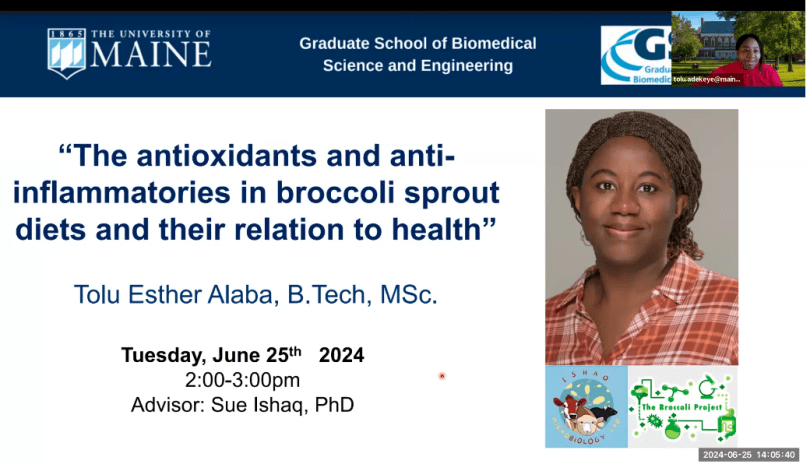
Congratulations to Dr. Tolu Esther Alaba for passing her PhD Defense!

The Ishaq Lab is ecstatic to announce that Dr. Tolu Esther Alaba has successfully defended her PhD dissertation on the antioxidants and anti-inflammatories in broccoli sprout diets and their relation to health, officially completing her PhD!!! You can check out the recording of her talk here, which was attended by >40 people over Zoom.

The committee was impressed by her breadth of knowledge, ability to think abstractly about future research, plans for research designs and integrating technology into education, and enthusiasm for using food as medicine. Dr. Alaba will enjoy a very-well-earned summer break before considering postdoctoral research options in the fall, and we are thrilled to keep working with her!

Tolu has been researching the benefits of cruciferous vegetables on health, and especially the benefits by antioxidants or anti-inflammatories we get from these plants. Some of these compounds are available directly from the plants, and some of them are produced or made available through the biochemistry of certain bacteria that live in our gut. Depending on the type of vegetable, and the way that it is cooked/prepared, you can end up with different types and quantities of these beneficial compounds.

Cruciferous vegetables or their purified compounds can ameliorate inflammatory symptoms through multiple pathways. Graphic designed by Johanna Holman.
Headshot for Esther Alaba, PhD Candidate in Biomedical Sciences

Tolu Esther Alaba has been a PhD Candidate in the Graduate School of Biomedical Science and Engineering at UMaine. She previously completed her bachelors of technology at Ladoke Akintola University of Technology, in Ogbomosho Nigeria in 2011, and her masters of science at the University of Ibadan, in Ibadan, Nigeria in 2015.

She started her PhD at UMaine in the fall of 2019, just a few months before the pandemic, and during her PhD she weathered the pandemic, an advisor leaving, leaving an advisor, navigating university policy and advocating for herself, being a mentor in STEM, being a teaching assistant, raising a family, moving across the country, and learning entirely new research skills. This has been a difficult journey, but Tolu has risen to every challenge, become a competent interdisciplinary researcher and added an entirely new dimension of research to our work.

Her research has focused on antioxidants in fruits and vegetables which can be used to resolve inflammation, oxidative stress, injury, cardiometabolic and chronic diseases. She joined #TeamBroccoli last September, and in less than a year, completed a literature review which was recently published in the journal Current Developments in Nutrition, she has completed metabolomics for mouse studies for two manuscripts in preparation, and completed a nutritional analysis for a human study for a manuscript in development. The Ishaq Lab is proud of her strength in standing up for herself as an employee and a researcher, as well as of the incredible work she’s added to our team.

Publications

  1. Tolu E. Alaba, Johanna M. Holman , Suzanne L. Ishaq, Yanyan Li. 2024. Current knowledge on the preparation and benefits of cruciferous vegetables as relates to in vitro, in vivo, and clinical models of Inflammatory Bowel Disease Current Developments in Nutrition 8(5):102160.
  2. In preparation: Early life intervention with broccoli sprouts affects serum and gut metabolites.
  3. In preparation: Healthy eating habits and effects of consuming steamed broccoli sprouts daily for a month.

Presentations

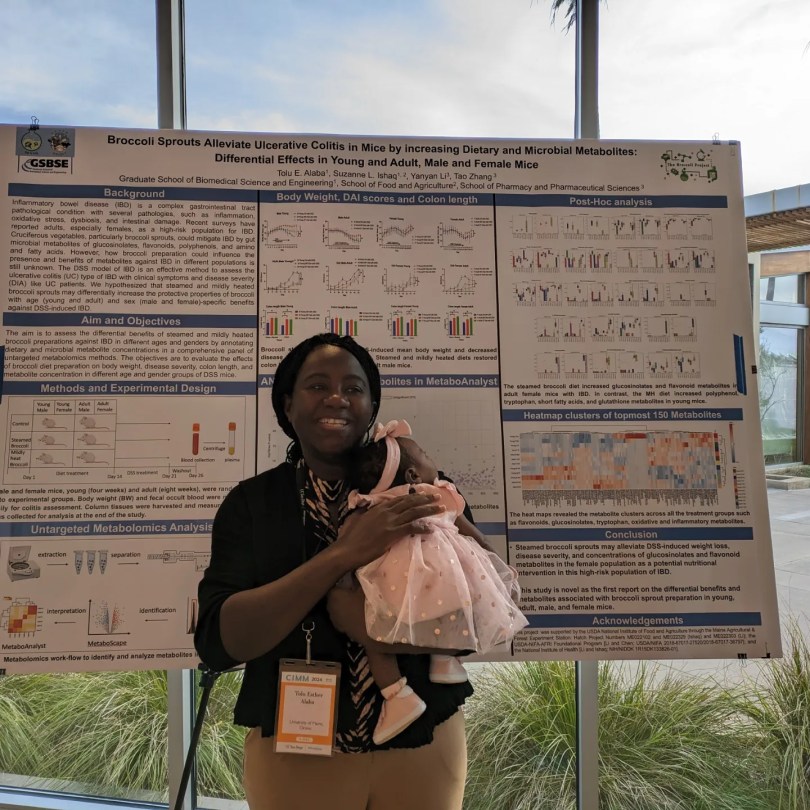
Alaba*, T.E., Ishaq, S.L., Li, Y., Zhang, T. “Broccoli sprouts alleviate ulcerative colitis in mice by increasing dietary and microbial metabolites: differential effects in young and adult, male and female mice. 4th CMI International Microbiome Meeting (CIMM), La Jolla, CA, March 12th – 14th, 2024.

MSE seminar this Friday: “Antimicrobial chemicals, antimicrobial resistance, and the indoor microbiome”

Events will be hosted January – December, 2024, on the last Friday of every month, 12:00 – 14:00 pm ET. Presented over Zoom.

After each talk, we will continue the discussions in an informal social meeting with MSE. All speakers and members of the audience are welcome to join the social meeting.

Hosted by: Sue Ishaq, MSE, and finacially supported by the University of Maine Institute of Medicine and the UMaine Cultural Affairs/Distinguished Lecture Committee.


“Antimicrobial chemicals, antimicrobial resistance, and the indoor microbiome”

Dr. Erica Hartmann, PhD.

Jun 28, 2024 12:00 PM Eastern Time. This event has passes, watch the recording here.

Professional headshot of Erica Hartmann in front of a wall of ivy.

Dr. Erica Hartmann, PhD., Associate Professor at Northwestern University. Dr. Erica Marie Hartmann is an environmental microbiologist interested in the interaction between anthropogenic chemicals and microorganisms, as well as bio-inspired mechanisms for controlling microbial communities.

Her career began at the Johns Hopkins Bloomberg School of Public Health, where she worked on mass spectrometry-based methods for detecting microbial enzymes necessary for bioremediation. She then moved to Arizona State University where she was the first graduate of the interdisciplinary Biological Design PhD program. She then moved to France on a Fulbright, studying microbes that degrade carcinogenic pollutants at the Commission for Atomic Energy. She began leading studies on antimicrobial chemicals and microbes found in indoor dust at the Biology and the Built Environment Center at the University of Oregon. She is currently continuing that work, as well as developing novel non-chemical antimicrobials, as an associate professor at Northwestern University. She was recently awarded an NSF CAREER to support her work on antimicrobial textiles.

Her lab website is here.


Logo designed by Alex Guillen

MSE seminar today: “The human microbiome and cancer risk: Opportunities for prospective studies”

Events will be hosted January – December, 2024, on the last Friday of every month, 12:00 – 14:00 pm ET. Presented over Zoom.

After each talk, we will continue the discussions in an informal social meeting with MSE. All speakers and members of the audience are welcome to join the social meeting.

Hosted by: Sue Ishaq, MSE, and finacially supported by the University of Maine Institute of Medicine and the UMaine Cultural Affairs/Distinguished Lecture Committee.


“The human microbiome and cancer risk: Opportunities for prospective studies”

Dr. Emily Vogtmann, PhD, MPH

May 31, 2024 12:00 PM Eastern Time. This event has passed, watch the recording here.

Dr. Emily Vogtmann is an Earl Stadtman Investigator in the Metabolic Epidemiology Branch of the Division of Cancer Epidemiology & Genetics in the National Cancer Institute. She received her B.S. in biochemistry and molecular biology and B.A. in Spanish from Michigan State University, M.P.H. in international health epidemiology from the University of Michigan, and Ph.D. in epidemiology in 2013 from the University of Alabama at Birmingham. Dr. Vogtmann’s research focuses on the association between the human microbiome and cancer risk and the evaluation of methods for collection, storage, and processing of samples and data for study of the human microbiome.


MSE Logo designed by Alex Guillen

MSE seminar this Friday: “The human microbiome and cancer risk: Opportunities for prospective studies”

Events will be hosted January – December, 2024, on the last Friday of every month, 12:00 – 14:00 pm ET. Presented over Zoom.

After each talk, we will continue the discussions in an informal social meeting with MSE. All speakers and members of the audience are welcome to join the social meeting.

Hosted by: Sue Ishaq, MSE, and finacially supported by the University of Maine Institute of Medicine and the UMaine Cultural Affairs/Distinguished Lecture Committee.


“The human microbiome and cancer risk: Opportunities for prospective studies”

Dr. Emily Vogtmann, PhD, MPH

May 31, 2024 12:00 PM Eastern Time. This event has passed, watch the recording here.

Dr. Emily Vogtmann is an Earl Stadtman Investigator in the Metabolic Epidemiology Branch of the Division of Cancer Epidemiology & Genetics in the National Cancer Institute. She received her B.S. in biochemistry and molecular biology and B.A. in Spanish from Michigan State University, M.P.H. in international health epidemiology from the University of Michigan, and Ph.D. in epidemiology in 2013 from the University of Alabama at Birmingham. Dr. Vogtmann’s research focuses on the association between the human microbiome and cancer risk and the evaluation of methods for collection, storage, and processing of samples and data for study of the human microbiome.


MSE Logo designed by Alex Guillen

Speaking at the first Northern New England Microbiome Symposium at UVM!

I will be giving a talk at the upcoming Northern New England Microbiome Symposium on my collaborative work on broccoli sprouts, gut microbes, and Inflammatory Bowel Disease: “Place and Time Matter for Gut Microbes Making Anti-Inflammatories from Broccoli Sprouts”.

The Symposium is June 3, 2024, and free to attend at the University of Vermont campus:

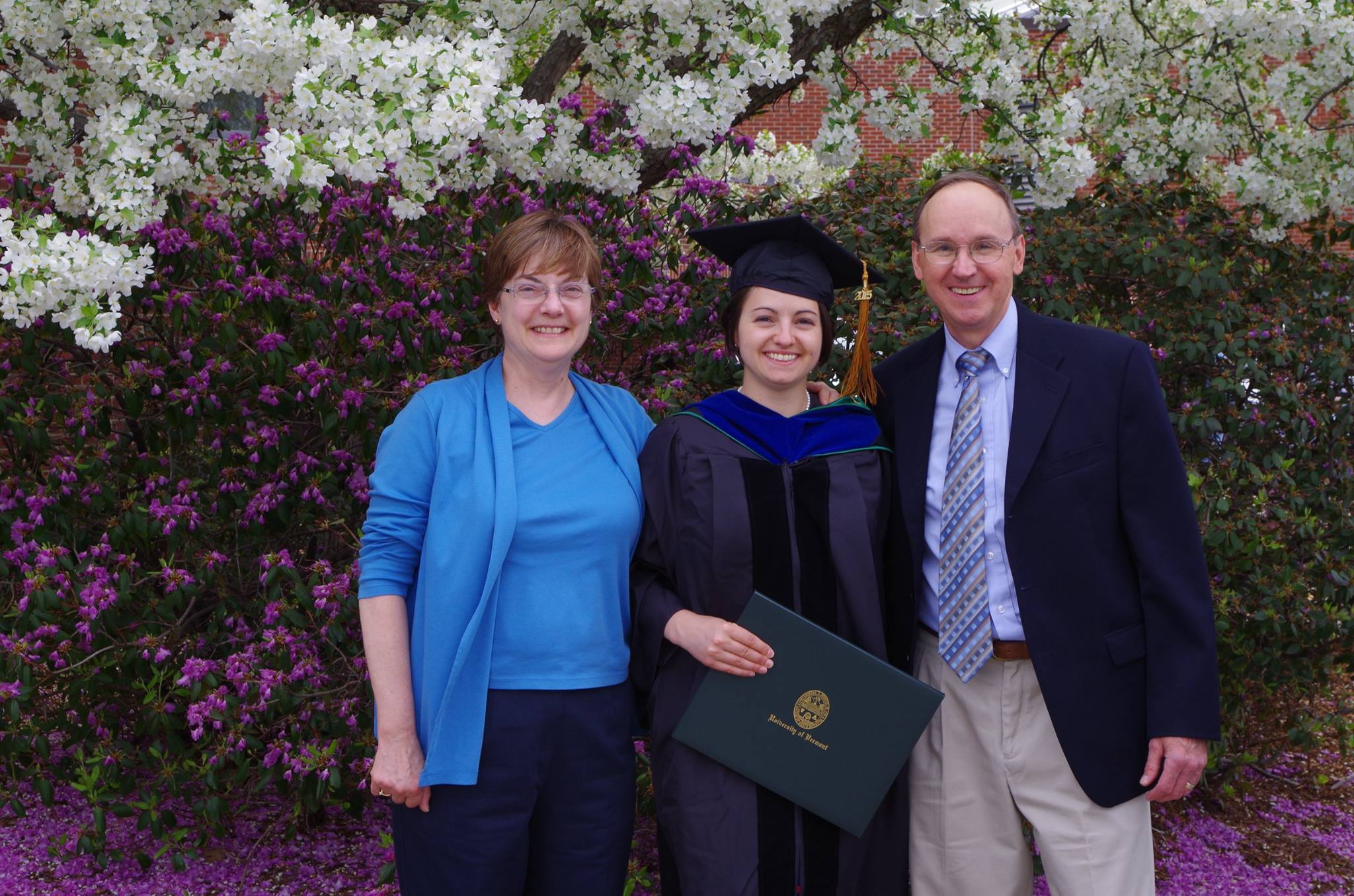
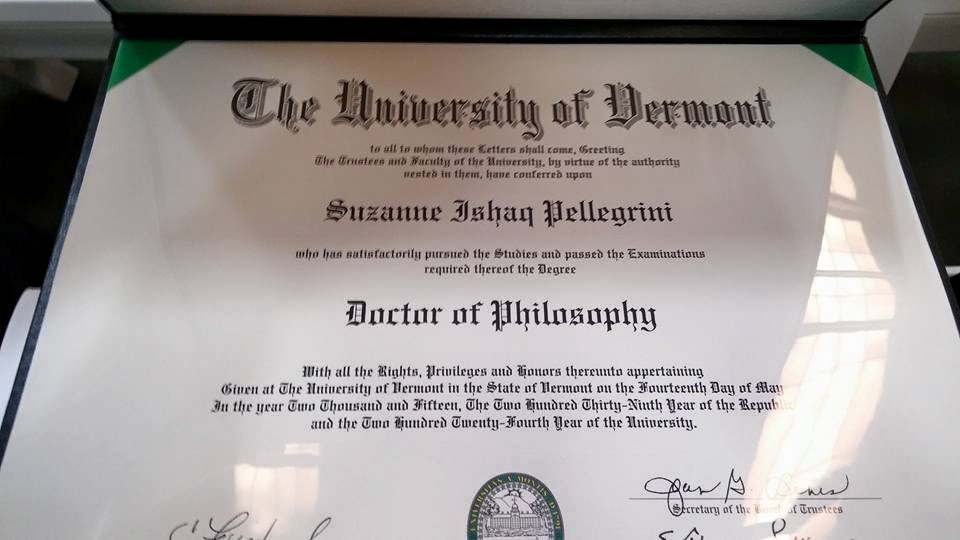
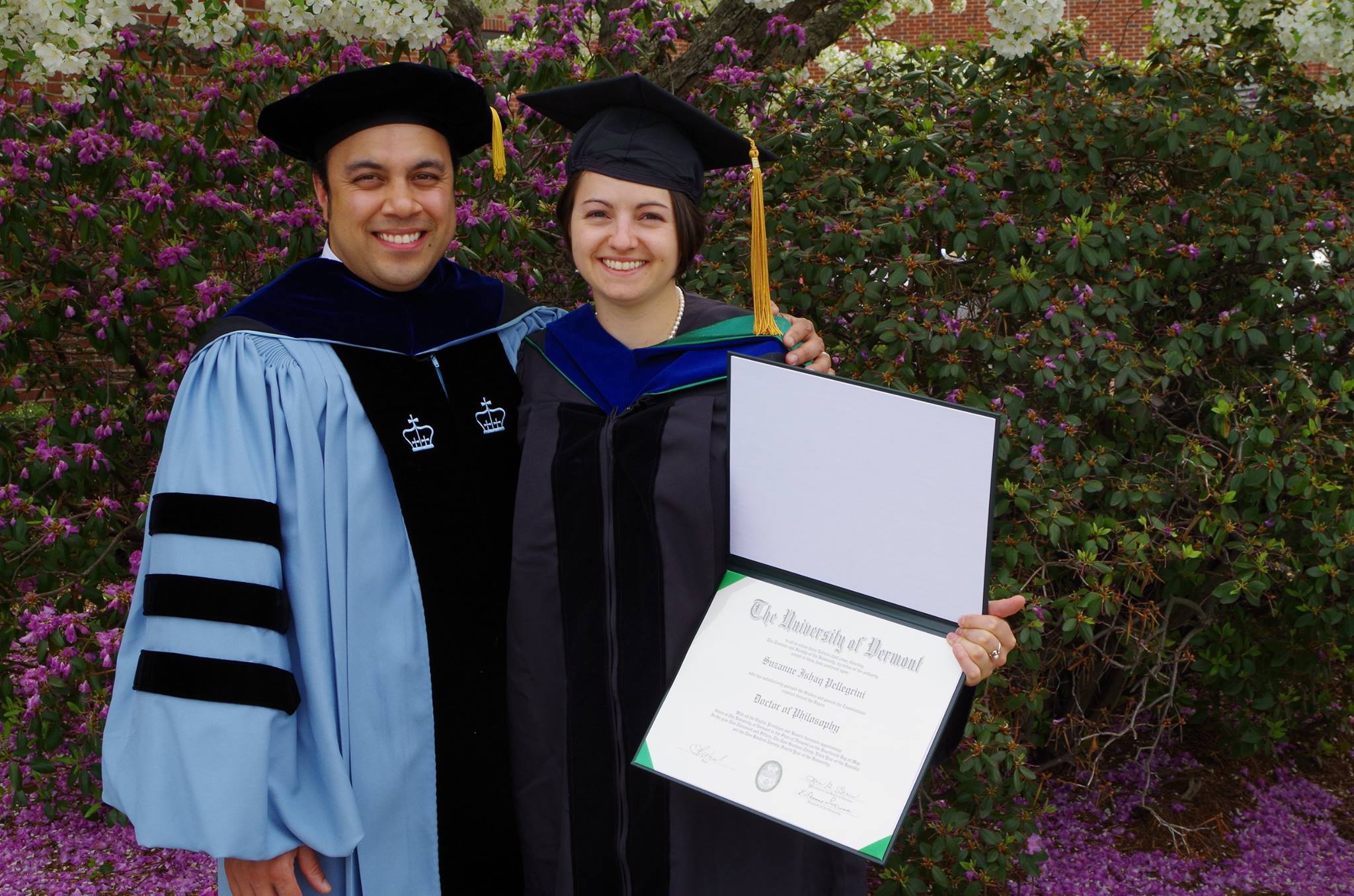
But, this talk is particularly special because this is the FIRST microbiome sysmposium in Northern New England featuring local research, and because UVM is where I did my undergraduate and graduate degrees! I can’t wait to visit campus again, and relive some fond memories:

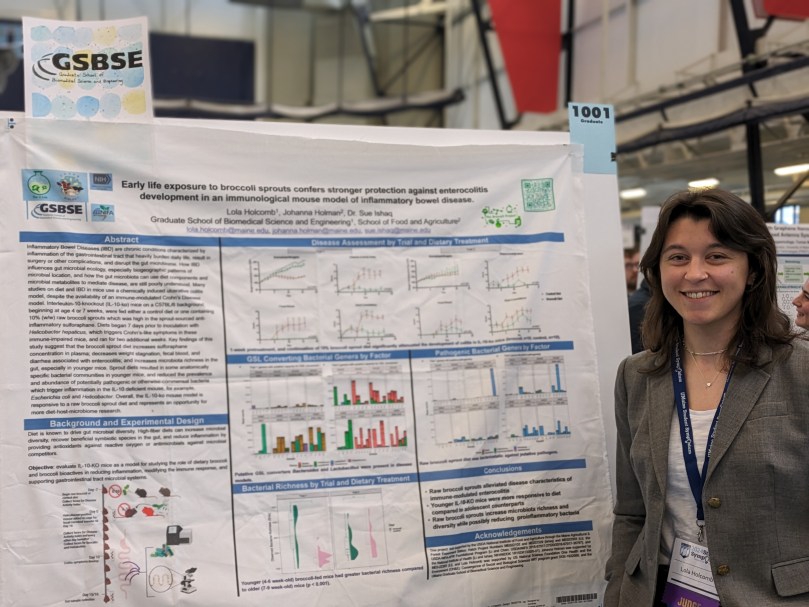
Tolu Esther Alaba is standing in front of a science conference poster, smiling, and holding her infant.

Tolu Esther Alaba sets a date for her PhD Defense!

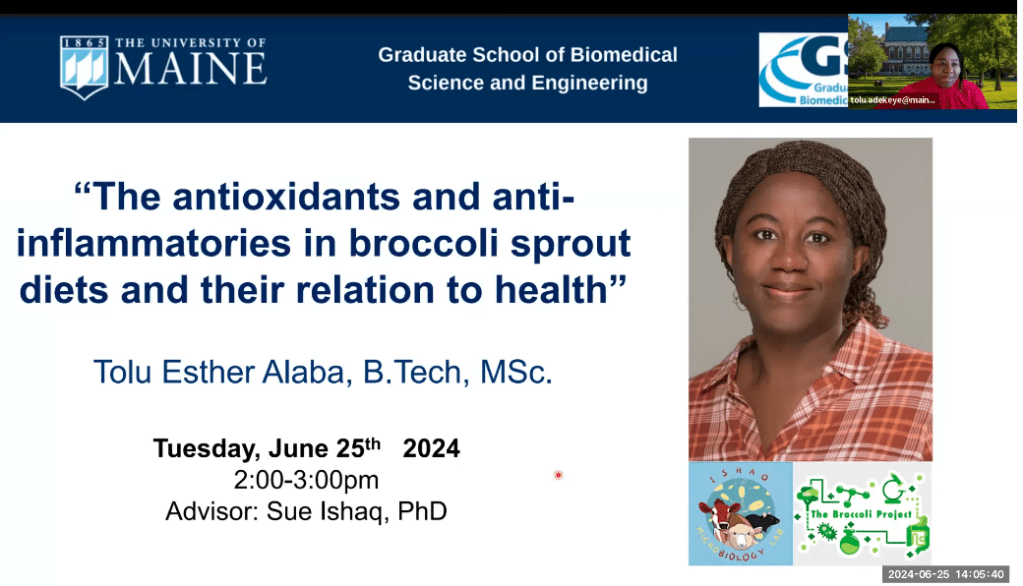
The Ishaq Lab is delighted to announce that Tolu Esther Alaba will soon be defending her PhD dissertation on the antioxidants and anti-inflammatories in broccoli sprout diets and their relation to health. Her dissertation will be presented over Zoom on June 25, 2024, from 2 – 3 pm EDT, which is open to the public. Registration is free but required here.

Tolu has been researching the benefits of cruciferous vegetables on health, and especially the benefits by antioxidants or anti-inflammatories we get from these plants. Some of these compounds are available directly from the plants, and some of them are produced or made available through the biochemistry of certain bacteria that live in our gut. Depending on the type of vegetable, and the way that it is cooked/prepared, you can end up with different types and quantities of these beneficial compounds.

Cruciferous vegetables or their purified compounds can ameliorate inflammatory symptoms through multiple pathways. Graphic designed by Johanna Holman.

Headshot for Esther Alaba, PhD Candidate in Biomedical Sciences

Tolu Esther Alaba is a PhD Candidate in the GSBSE program at UMaine. Her research has focused on antioxidants in fruits and vegetables which can be used to resolve inflammation, oxidative stress, injury, cardiometabolic and chronic diseases. She joined #TeamBroccoli in the fall of 2023, and in less than a year, completed a dissertation’s-worth of research, including performing metabolomics and related data analyses on gut metabolites and broccoli sprouts in mice and humans, and drafting several manuscripts, and publishing literature review (details below) — and all this was on top of moving to California with her family, giving birth to her second child, Bethel, and extricating herself from the punitive environment of her former lab. The Ishaq Lab is proud of her strength in standing up for herself as an employee and a researcher, as well as of the incredible work she’s added to our team.

Publications

  1. Tolu E. Alaba, Johanna M. Holman , Suzanne L. Ishaq, Yanyan Li. 2024. Current knowledge on the preparation and benefits of cruciferous vegetables as relates to in vitro, in vivo, and clinical models of Inflammatory Bowel Disease Current Developments in Nutrition 8(5):102160.
  2. In preparation: Early life intervention with broccoli sprouts affects serum and gut metabolites.
  3. In preparation: Healthy eating habits and effects of consuming steamed broccoli sprouts daily for a month.

Presentations

Tolu Esther Alaba is standing in front of a science conference poster, smiling, and holding her infant.

Alaba*, T.E., Ishaq, S.L., Li, Y., Zhang, T. “Broccoli sprouts alleviate ulcerative colitis in mice by increasing dietary and microbial metabolites: differential effects in young and adult, male and female mice. 4th CMI International Microbiome Meeting (CIMM), La Jolla, CA, March 12th – 14th, 2024.

MSE seminar today: “Linking Plant, Animal, and Human Health in Livestock Systems: a Metabolomics Approach”

Events will be hosted January – December, 2024, on the last Friday of every month, 12:00 – 14:00 pm ET. Presented over Zoom.

After each talk, we will continue the discussions in an informal social meeting with MSE. All speakers and members of the audience are welcome to join the social meeting.

Hosted by: Sue Ishaq, MSE, and finacially supported by the University of Maine Institute of Medicine and the UMaine Cultural Affairs/Distinguished Lecture Committee.


“Linking Plant, Animal, and Human Health in Livestock Systems: a Metabolomics Approach.”

Dr. Stephan van Vliet, Phd.

Apr 26, 2024 12:00 PM Eastern Daylight Time. This event has passed, watch the recording here.

Headshot of Dr. Stephan van Vliet, wearing a blue and while shirt in front of a white wall and a tree.

Dr. Stephan van Vliet is a nutrition scientist with metabolomics expertise in the Center for Human Nutrition Studies at Utah State University. Dr. Stephan van Vliet earned his PhD in Kinesiology as an ESPEN Fellow from the University of Illinois at Urbana-Champaign, and received training at the Washington University in St Louis School of Medicine and Duke University School of Medicine. Dr. van Vliet’s research is performed at the nexus of agricultural and human health. He routinely collaborates with farmers, ecologists, and agricultural scientists to study critical linkages between sustainable agriculture, the nutrient density of food, and human health. His work has been published in the American Journal of Clinical Nutrition, Scientific Reports, the Journal of Nutrition, and the Journal of Physiology.

His Faculty profile is here.


MSE Logo designed by Alex Guillen

MSE seminar this Friday: “Linking Plant, Animal, and Human Health in Livestock Systems: a Metabolomics Approach”

Events will be hosted January – December, 2024, on the last Friday of every month, 12:00 – 14:00 pm ET. Presented over Zoom.

After each talk, we will continue the discussions in an informal social meeting with MSE. All speakers and members of the audience are welcome to join the social meeting.

Hosted by: Sue Ishaq, MSE, and finacially supported by the University of Maine Institute of Medicine and the UMaine Cultural Affairs/Distinguished Lecture Committee.


“Linking Plant, Animal, and Human Health in Livestock Systems: a Metabolomics Approach.”

Dr. Stephan van Vliet, Phd.

Apr 26, 2024 12:00 PM Eastern Time. This event has passed, watch the recording here.

Headshot of Dr. Stephan van Vliet, wearing a blue and while shirt in front of a white wall and a tree.

Dr. Stephan van Vliet is a nutrition scientist with metabolomics expertise in the Center for Human Nutrition Studies at Utah State University. Dr. Stephan van Vliet earned his PhD in Kinesiology as an ESPEN Fellow from the University of Illinois at Urbana-Champaign, and received training at the Washington University in St Louis School of Medicine and Duke University School of Medicine. Dr. van Vliet’s research is performed at the nexus of agricultural and human health. He routinely collaborates with farmers, ecologists, and agricultural scientists to study critical linkages between sustainable agriculture, the nutrient density of food, and human health. His work has been published in the American Journal of Clinical Nutrition, Scientific Reports, the Journal of Nutrition, and the Journal of Physiology.

His Faculty profile is here.


MSE Logo designed by Alex Guillen