I'm an assistant professor of animal and veterinary studies at the University of Maine, Orono, studying how animals get their microbes. I am also the Founder and Lead of the Microbes and Social Equity working group.
This fall, my speaking engagements will all be held virtually, to aid in ongoing infectious-disease-prevention protocols. While in place to reduce the spread of SARS-CoV-2, these same protocols will also help me avoid the annual fall respiratory infection that I otherwise inevitably encounter while working with overly-stressed students.
But, staying away from others doesn’t mean I can’t stay connected! Virtual events might not feel as fun, but they have allowed me to reach a wider audience, because recorded talks are made available after the live event. And, annotated or subtitled recordings make my talks more accessible!
This fall, I have several public talks and scientific presentations lined up:
University of Maine Cooperative Extension Oxford County 4-H Teen Science Cafe (virtual), “Gut microbes on the farm”, Oct 15, 2020. For teens, this event is free but does require registration to obtain the link.
Genomes to Phenomes (G2P) group, University of Maine. Co-hosting a session with grad student Alice Hotopp, on gut microbes and survival of reintroduced animals. Oct 30, 2020. Link available to University of Maine community members.
University of Maine Medicine seminar series (virtual), “A crash course in the gut microbiome” , Nov 6, 2020. This event is open to the public and free, but does require registration to obtain the link.
Hotopp, A., Silverbrand, S., Ishaq, S.L., MacRae, J., Stock, S.P., Groden, E. “Can a necromenic nematode serve as a biological Trojan horse for an invasive ant?” Entomological Society of America 2020 (virtual). Nov 15-18, 2020. This pre-recorded seminar requires paid event registration.
Yeoman (presenter), C., Lachman, M., Ishaq, S., Olivo, S., Swartz, J., Herrygers, M., Berarddinelli, J. “Development of Climactic Oral and Rectal Microbiomes Corresponds to Peak Immunoglobin Titers in Lambs.” Conference of Research Workers in Animal Diseases (CRWAD) 2020. (Virtual) Dec 5, 2020. This seminar requires paid event registration.
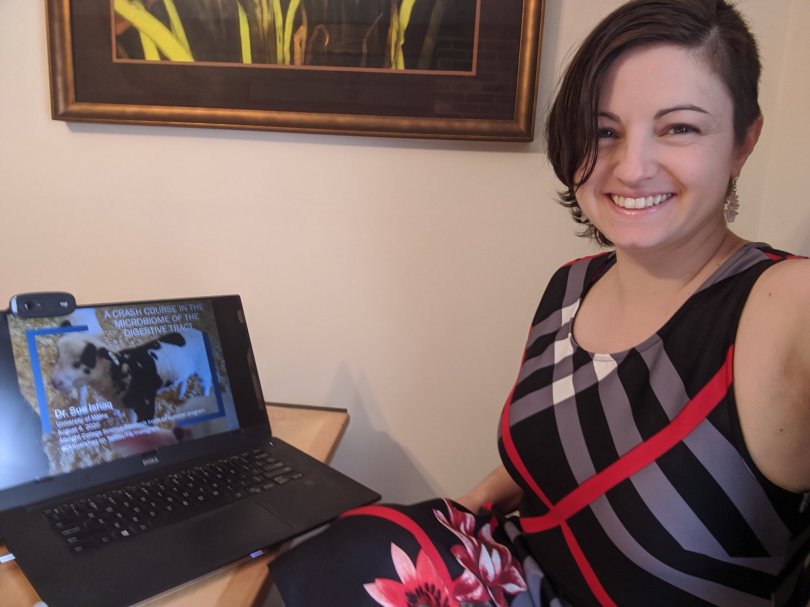
Almost ready for my "Microbes on the farm" presentation to the Oxford County 4H kids! And I finally had to chance to use this photo from my 2015 lamb study. pic.twitter.com/cq43EctXWZ
Beginning in early 2019, I participated as one of the guest editors for the Microbiomes Across Biological Systems special call hosted by three PLoS Journals. The journal collection was officially released in early 2020, but due to the global upheaval this year, the overview piece planned by the guest editors was not able to be completed. Here is a partial overview, written by myself and written by Dr. Noelle Noyes, Assistant Professor at the University of Minnesota.
Diet and gut systems
Ecosystem dynamics are important at any scale
As humans, animals, and plants are key members of their environmental ecosystems, so too are microorganisms key members of the host-associated ecosystems in which they reside. Throughout eons of interactions between microorganisms and macroorganism hosts, specialized and reproducible host-microbial interactions developed, leading to inherent differences in the microbial communities residing within even closely-related microorganism hosts (Bennett et al. 2020; Loo et al. 2020; Sun et al. 2020). The strength and outcome of each of these host-microbial interactions can sway the trajectory of that host’s life, and decades of research has only barely uncovered the mechanisms behind the exorbitantly complicated relationships between host and microbial community. In part, this is because the host microbiome does not develop in isolation; it is dependent on the environment (e.g. Bennett et al. 2020), on diet (e.g. Taylor et al. 2020), on the host signalment (e.g. Jacobs et al. 2020), and upon all the minute details of that hosts’s life which informs the “who”, when, why, and how of host-microbial interactions. To better understand biological systems, we must evaluate them at different scales, from the microbial ecosystems to the environmental ones, and how microbial selection and transfer are the mechanisms by which these scalable ecosystems are connected.
Your gut microbiota are what you eat
Diet is the most consistent and striking aspect of a host’s lifestyle which can select for different microbial communities in the gastrointestinal tract (Bloodgood et al. 2020; Loo et al. 2020; Lü et al. 2020; Ogato et al. 2020; Sun et al. 2020; Taylor et al. 2020), and especially at different locations along the GI tract depending on localized anatomy and organ-specific environmental conditions (Subotic et al. 2020; Lourenco et al. 2020). The amount of different macronutrients, such as proteins, fats, or carbohydrates, in a diet selectively encourage different biochemical capabilities in the gut microbiome and the microbial members which can thrive under those conditions (Lourenco et al. 2020). At a finer resolution, the specific types of each nutrient, and their availability for catabolism will also affect the gut microbiome (Taylor et al. 2020).
Yet, diet may affect the microbiome of different host species in nuanced ways, based on dissimilar anatomy of the gastrointestinal tract, the relative stability of host-microbial interactions and host reliance on their gut microbiota, and the relative stability of the diet of the host. For example, specialized herbivores which possess a four-chambered stomach, known as ruminants, are dependent on the presence of fibrolytic microbiota, yet due to the overwhelming microbial diversity present in their GI tract they have functional redundancy which allows for a great deal of latitude in the specific microbial species present in their communities. Microbiota in the rumen of cattle are easily swayed by changes in diet composition (Lourenco et al. 2020; Ogato et al. 2020), as were microbiota in sea turtles (Bloodgood et al. 2020) and potato ladybird beetles (Lü et al. 2020), whereas diet composition seems to affect only the less abundant community members in the honeybee gut (Taylor et al. 2020).
The impact of diet on the gut microbiome and host health is an active and long-standing research field, yet the depth and breadth of dietary effects leaves many questions yet unanswered, particularly in cases where feeding the animal host is prioritized over feeding the gut microbiota specifically. Animal production and weight gain is a primary goal of feeding strategies in agriculture, often with detrimental effects to the functionality of gut microbiome which can lead to systemic health problems in the animal if the perturbation to the microbiome is extensive or protracted. An understanding of how host-microbial ecosystems can be altered over time to prevent such health problems is important (Ogato et al. 2020). Similarly, wild animal recovery programs opt for diets to support weight gain in malnourished animals, even when the diet composition is contrary to their natural diet. In recovering juvenile sea turtles, feeding an omnivorous diet to promote weight gain over the herbivorous diet these turtles consume at this stage of life causes changes in gut microbiota profiles and it is unknown how this may affect long-term digestive function and health (Bloodgood et al. 2020).
An interesting and understudied aspect of the effects of diet on the gut microbiome is the potential for knock-on effects across microbial ecosystems. For example, changing the diet may impact the gut bacterial profiles based on “who” is directly catabolizing those nutrients, but may also impact other microorganisms which are supported by the byproducts of that microbial digestion. Similarly, therapeutics targeting some microbial community members may inadvertently alter other community members. A deeper understanding of how diet and medication affects the entire microbial community and not just selected members can reveal insight into community dynamics and the relative risk of medications to cause disruptions. For example, anthelmintic in beagles were shown to not alter fecal microbial communities (Fujishiro et al. 2020).
Environment to host to host: microbial transfer highlights connections between systems
Yet, what constitutes a beneficial microbiome for one animal species may be detrimental to another animal species. A dramatic example of this is vector-borne infectious disease, in which symbiotic or neutral members of an insect microbiome are highly pathogenic in other animals which have not learned to tolerate or control those particular microorganisms. Bacteria carried by arthropods, such as mosquitos, flies, or ticks, may provide nutrition or disease-mitigation benefits to its arthropod host yet cause widespread disease and mortality in humans and animals (Bennett et al. 2020). Interaction with the ecosystem can recruit microbial members to a host-associated microbial community. Habitat destruction alters the quality of the environment and thus microbial transfer from environment to insect, and this can make arthropod microbial communities more variable (Bennett et al. 2020). It is yet unknown if these knock-on changes to the arthropod microbiota will have positive or negative impacts for vector-borne diseases.
Studies such as Bennet et al. (2020), which put host-associated gut microbial community assessment into the context of habitat quality and environmental microbial transfer, remind us that microbial communities do not exist in isolation. Understanding how the environment shapes the microbial communities which shape the host is a critical aspect to understanding the connectedness between biological systems. Further, it better illuminates the dynamics of microbial transmission and when they are and are not transferred. Maternal transfer is a well-demonstrated mechanism of vertical transmission of microorganisms, and transfer between social pairs is a method of horizontal transmission of microorganisms, both often demonstrated via microbial community similarity analysis. However, when pair-bonded tree swallows are sampled asynchronously, there is no significant level of similarity in their gut microbiota (Hernandez et al. 2020).
The need to put host-associated gut microbial community assessment into the context of environment is also highlighted in Loo et al. (2020), in which habitat and geographic location impacted the gut microbiome of island finches independently of foraging diet data. Environmental conditions, localized plant diversity, and localized niche competition can also impact the type, nutritional content, and life stage of plant life, which can in turn impact the gut microbiota recruited in those host animals consuming plants. As discussed in Jacobs et al. (2020), when animals are removed from their natural environments and held in captivity, where local macro-biodiversity is dramatically reduced, there is often a corresponding decline in host gut microbial diversity which can impact animal health. In semi-captive situations, such as beehives, animals may still freely encounter diverse environmental microorganisms, but the habitat or housing design may impact host behavior and/or stress response due to interactions with humans. Chronic stress has been demonstrated to negatively impact the diversity and functionality of host-associated microbial communities in the gut by altering the host immune system and its latitude for microbial tolerance. Thus, even at the very localized scale, environmental conditions and habitat play a role in host-microbial interactions (Subotic et al. 2020).
Bennett et al. Habitat disturbance and the organization of bacterial communities in Neotropical hematophagous arthropods
Bloodgood et al. The effect of diet on the gastrointestinal microbiome of juvenile rehabilitating green turtles (Chelonia mydas)
Fujishiro et al. Evaluation of the effects of anthelmintic administration on the fecal microbiome of healthy dogs with and without subclinical Giardia spp. and Cryptosporidium canis infections
Hernandez et al. Cloacal bacterial communities of tree swallows (Tachycineta bicolor): Similarity within a population, but not between pair-bonded social partners
Jacobs et al. California condor microbiomes: Bacterial variety and functional properties in captive-bred individuals
Loo et al. An inter-island comparison of Darwin’s finches reveals the impact of habitat, host phylogeny, and island on the gut microbiome
Lourenco et al. Comparison of the ruminal and fecal microbiotas in beef calves supplemented or not with concentrate
Lü et al. Host plants influence the composition of the gut bacteria in Henosepilachna vigintioctopunctata.
Ogato et al. Long-term high-grain diet altered the ruminal pH, fermentation, and composition and functions of the rumen bacterial community, leading to enhanced lactic acid production in Japanese Black beef cattle during fattening
Subotic et al. Honey bee microbiome associated with different hive and sample types over a honey production season
Taylor et al. The effect of carbohydrate sources: Sucrose, invert sugar and components of mānuka honey, on core bacteria in the digestive tract of adult honey bees (Apis mellifera)
Environmental and physiochemical factors structure water-associated microbiomes
Water bodies are highly diverse ecosystems, and this is reflected in the articles of this Special Edition, which investigate the microbiomes of Indian mangroves, Icelandic cold springs, Antarctic lakes, urban lakes in Beijing, and Pacific seawater. A common theme emerging from this diverse collection is that water-associated microbiomes are highly influenced by the nutrient and physiochemical properties of the water body itself; and that these properties, in turn, are influenced by the surrounding atmospheric and environmental inputs. For example, nitrogen levels were correlated with microbial composition in Mangrove-associated and Beijing urban lake water samples (Dhal et al 2020, Wang et al 2020), and nitrogen fixation capacity of the microbiome was found to vary significantly by water depth within Antarctic benthic mats (Dillon et al 2020). pH levels were found to influence the microbiomes of Icelandic cold springs (Guðmundsdóttir et al 2019) and Mangrove-associated waters (Dhal et al 2020); and the archaeal composition of Beijing urban lake sediment (Wang et al 2020).
Water-associated microbiomes are dynamic across gradients, geography and time
While water bodies exhibit heterogeneous physiochemical and nutrient properties depending on their environmental and geographical circumstances, the articles in this collection demonstrate that many water-associated microbiomes fluctuate predictably and periodically. For example, the diversity of seawater microbiomes exhibited diel fluctuation, which itself was characterized by rhythmic changes in temperature and concentrations of nitrate, ammonium, phosphate and silicate (Weber et al 2020). Microbiome structure and composition also correlated with gradients established by water depth (Dillon et al 2020, Weber et al 2020), eutrophication (Dhal et al 2020), and distance from coral reefs (Weber et al 2020). These findings emphasize the importance of the physical environment from which water samples are collected, and the fact that water and water-associated samples are inherently connected to — and impacted by — features that may be located far away from the actual sampling site. This highlights the importance of contextualizing sampling sites both temporally and spatially.
Fall 2020 is the beginning of my second year as an assistant professor at the University of Maine, but in some aspects, it feels like my first year.
The most prominent visual which evokes this feeling is the new office I just moved into last week. My new office space overlooks my two renovated lab spaces and allows me to witness the first official Ishaq Lab research take shape. My first office was in a building across the street from the two labs, all of which I was inheriting from a previous lab. This reduced our output for several reasons, in particular because undergraduates could not access or be left alone in the lab early on in their training. For several months, when students were in the lab, I was there, too, trying to maintain productivity while on my laptop. And, I needed to be present for several deliveries, meaning I would have to wait around. For the better part of the last year, several students and I have redesigned the space to fit our needs, and it was only over this summer that the microbiology space finally was sorted. Now, I can be close by to answer questions, sign for packages, and sort out problems.
Before (as a nutritional biochemistry lab) and after (as a microbiology lab). Anaerobic chamber is not in the photo frame.
Not only do I have spaces ready for my research, but this year I am also starting with students to perform it. It takes time to recruit students to your lab, and graduate students take particularly long because of application submission or funding start dates. Over the past year, I have been joined by two thesis master’s students, one non-thesis master’s student, 3 graduate students from other labs who do collaborative work with mine, 6 undergraduate researchers, and a handful more partial time undergraduate researchers through the Animal Science Capstone class (more on that further on). The projects range from gut microbes and health, soil microbes in blueberry fields, the use of leaves for home silage, lobster microbes and water temperature, and more! The team is dynamic, curious, and a delight to work with.
To ensure that we stay safe, we manage our lab occupancy with a shared lab calendar (and several of the students are performing partial or fully-online projects). Both spaces are designated for Biosafety Level II work, which means we are already wiping down surfaces with disinfectant before and after use, wearing gloves and a lab coat, and washing our hands before and after work. The air exchange systems stay on to prevent moisture or fume buildup, and they also remove particles from the air, but I have added HEPA filtration units in each lab and my office to remove additional particles (including viruses) from the air. A robotic vacuum in each space cleans dust and settled microbes off the floor each night. In addition, we now limit occupancy, wear masks when multiple people are in the room, and check in/out of the space to facilitate contact tracing.
This semester also feels like my first because I am teaching official courses for the first time. Between the two courses, I am teaching over 50 students! I expect that to increase next fall as my new course becomes more well-known, and as recruitment and retention continue to rise in Animal and Veterinary Studies.
I’m also teaching one on undergraduate research which is a long-standing class that I generated some new materials for. I will teach part of this each fall, and part each spring. Over the academic year they participate in research, then write proposals and reports.
Students generated a word cloud of descriptors for ‘scientist’. At the end, we’ll make a new cloud to see if their impressions change after participating in science.
Over the fall, I have a number of research projects to wrap up from the spring, such as data analysis projects which arose from my DNA sequencing data analysis course, one of which on ants I was invited to present at the virtual Entomological Society of America scientific conference in November! I’m also wrapping up a few small projects which originated over the summer, such as the blueberry soil pilot or the lobster microbes data analysis performed by my REU student-turned-direct-hire. I’ll also be starting several new projects on the interaction between gut microbes and the host, led by my graduate students and a number of undergraduates, which will form the core of the research in our lab.
In addition, my Microbes and Social Equity working group is gaining traction! At over 40 participants, the MSE group has been met with interest and enthusiasm from different research and professional fields, and levels of career stage. We are planning to collaborate on a journal special collection, as well as organize a mini meeting sometime in 2021. I look forward to bringing attention to important and timely work on microbes, health, and public policy!
Last week, I gave a presentation to the University of Maine Cooperative Extension Oxford County 4-H Jamboree.
The video is available on YouTube, with subtitles! I sat down to learn how to create and embed them in videos, to help make my science more approachable. The video is made for kids and contains suitable content for all ages, although the difficulty of the content makes it best for kids 12 and up.
Almost year ago, I woke up early to drive an hour and a half from the place I was staying to the University of Maine campus in Orono. My housing had fallen through after I had driven across country from Oregon to Maine, and apartments were difficult to find as students were returning for the fall semester. I took my highway exit, and almost immediately joined a mile and a half long line of cars waiting to get to campus. This may not sound like a lot, but Orono is small – really small. There are three bridges onto the island, each with a single lane of traffic in either direction. It was 8 am, and I still needed to get to campus and find parking before my 8:30 am meeting with my new department chair, something I very much did not want to be late for.
View from the bridge in Orono.
After moving only 100 yards in 10 min, I was able to turn around in a side street and get back on the highway to the next exit, in Old Town, from where I could drive southward on the island. In another 10 minutes, I had made it back to the highway, onto campus, and had found parking. That simple detour makes a nice metaphor for starting out as new faculty: there is probably an easier way to accomplish your task, you just don’t know yet that that way exists.
Last September, I joined the University of Maine as an Assistant Professor. It’s my first academic faculty position, and with it comes a variety of new responsibilities (you can read here about the differences in academic positions). There’s a learning curve to any new job, but faculty positions, in particular, require a level of expertise in time management that you likely have never encountered.
I needed to establish a laboratory and order things for it, recruit students and develop career development plans for them; develop research plans spanning the next five years; propose and then develop new classes; learn a new institutional system for ordering, reporting, teaching, advising; meet new people; and the myriad other administrative tasks that go along with teaching, advising, and managing a laboratory.
There is pressure, some from external sources but primarily from ‘the thorn in your side which seeks accomplishment’, to advance each of your goals immediately and simultaneously. You need to show progress early on, but it is not possible to devote the time and focus that each of these goals demand to all of them at once. If you try, you will find yourself buried in unmet objectives and overcooked marshmallows.
Instead, plan well in advance and try to concentrate on one objective at a time. I’ve compiled some examples, thoughts, and advice on navigating the first year of a faculty position, which is hopefully entertaining if not also useful.
Bring a campus map
One of the largest draws on my time in the first few weeks was simply finding things: buildings, services on campus, my mailbox, where the faculty parking lots were, and where the best coffee was. Make sure you have a campus map handy. I learned the hard way not to run a generic search for building names to find addresses, when I went to the wrong building which shared the name of, and was across the campus from, the building I needed to be in for a meeting. Facilities buildings can be particularly challenging to locate as they aren’t always marked, but may store excess and available office or laboratory furniture, key services, chemical supply, and more.
In addition to physical resources, I also needed to find personnel resources: who handled my startup funds? Purchasing? Hiring students? To whom do I submit course proposals? I politely framed my emails to people when fishing for the applicable administrative staff personnel, and made sure to thank them for redirecting me to the correct person.
Do not neglect the mountain of paperwork
There are so many forms you need to fill out in the first year, and you keep finding new forms as you go. I needed to sign and return my contract, funds letters, health insurance, financial conflict of interest, and more. I needed to sign paperwork to hire students, get my travel approved and more to submit my travel receipts, paperwork to propose courses, to request approval to be listed as graduate school faculty (which is not automatically conferred), and request approval to be graduate faculty in other departments or programs to be able to advise students there. You need to fill out order forms to purchase supplies, and sign off on monthly expenditure summaries. I suggest finding access to a scanner or fax, and/or software that allows you to edit and digitally sign PDFs, especially if you’ll be remote while you are trying to relocate and find housing.
Also be prepared for hours and hours of training: you’ll need to know how to use the university online system for employees, online teaching software, advising tracking programs, and any other online systems the university uses. And you need an extensive amount of compliance or professional development training your university requires, including FERPA for working with student information, OSHA and CITI safety training for working in a lab (often annual), university-based safety training for working in a lab, and implicit bias or inclusion training. Many schools also offer training in course development, and many of the other basic skills needed by professors. And be sure to keep all that paperwork, just in case you ever get audited!
Take time to generate new materials
Despite keeping copies of old protocols, lectures, and written materials that I might reuse, I found myself generating an immense amount of new written materials. While institutions often have templates available for safety materials available for use, they still require personalization to the hazards specific to the working conditions in your research location (lab, farm, field, etc.). Even the course materials that I had previously generated all needed to be reformatted and personalized to the student audiences I will have at UMaine. Here are a few examples of materials I had to generate this year:
Lab safety training records (mine is a 2 page in-lab walk-through and spreadsheet linking to up to 15 other training modules)
Chemical hygiene plan (how to protect yourself from the hazards in the lab)
Updated lab protocols for every procedure and culture media recipe to be used
Lab handbook on expectations, finding campus resources
New curricula, which requires a draft syllabus, a course proposal form explaining learning outcomes and how they will be measured, not to mention the lectures, reading, assignments, and assessments to go along with it.
Research proposals – by far the most intensive. I have written/co-written eight this year, ranging from one to several dozen pages in length and varying complexity.
Writing, especially technical writing, takes time, which was something UMaine gave me. I had almost no teaching obligation, and no undergraduate academic advising, for my first year. This gave me the opportunity to spend blocks of time focused on developing research plans that will guide me over the next 5 years, or create 15 – 40 lectures per course. This time was a luxury not afforded to all new faculty, and while you can often ask for it during job contract negotiations, many institutions pressure their new faculty to take on a lot of obligation in their first year. In that case, have as much written material ready before you begin the job would have been helpful. But, since I went from gut microbiology to soil to dust, and because I was teaching science to primarily liberal arts students, none of my old written materials were appropriate to use without some amount of revision.
Ask for help
As new faculty, you don’t yet know what to ask or who has the answer. Even finding your mailbox can be a challenge at first. Rather than waste your time trying to figure it out, doing it wrong, and then having to fix it, just ask someone for help. Portions of your funded research proposals will go to paying for administrative staff, you should use their services to help minimize the time you spend on administrative tasks. Especially since you may spend hours trying to order supplies through the university ordering system, matching receipts to expense reports, allocating expenses to different funding chartstrings, and setting up contracts with outside vendors, but you don’t get any credit in your tenure review for having spent all that time on it.
This also extends to facilities management staff, especially safety and environmental management personnel. They are the ones that have approval rights over the work you propose to do in the research spaces allotted to you. They are always incredibly enthusiastic people who value organization, preparation, and training in keeping you and your students safe on the job. If you are proactive about reaching out to them, they will generously give you their time to help you access the resources you need to be in compliance.
Ask for help even if you think you don’t need it
It’s worth putting that one twice, and it includes asking for help on course development and grant proposal writing. When you are focused on your own work, it can be difficult to review your own materials. Asking a colleague to check over your syllabus, lectures, manuscripts, or proposals can help improve their quality and save you time on revisions later. Be mindful of others’ time, but know that there are faculty who would be happy to mentor you and help you establish yourself.
In part, this can be achieved by scheduling yourself in ways that make sense in the context of the academic calendar or department preferences. For example, in my current department, faculty prefer to teach Tuesday/Thursday and have meetings Mondays and Fridays. So, I asked to teach M/W/F, and will fill in meetings and advising around it. Teaching tends to interrupt the flow of my day, since I need to prepare before class and handle student queries after it. I find I work better if I stack my responsibilities which deal with communication, brain-storming, or large amounts of interaction into blocks or whole days. That leaves large chunks of uninterrupted time on Tuesdays and Thursdays to write papers, proposals, curricula, or work in the lab, while everyone else is busy with their own teaching.
Leave yourself plenty of flexibility in your schedule
Avoid the temptation to schedule things as soon as possible and fill up your calendar. Especially in the first few months, you need to have flexibility in your time such that you can drop everything for a day or two in order to meet a sudden deadline you didn’t know about until it occurred to someone to tell you about it. This includes course proposals to curricula committees, which meet a year in advance of when you would actually teach the course, internal review reports, internal budget reports, and more. Don’t worry that you might delay networking with your new colleagues, people will be eager to meet and collaborate with you, you won’t have any trouble filling your dance card.
Track everything you do
Start immediately, and keep a running list of your efforts and accomplishments. All of them, no matter how small. At your annual reviews, and in particular your three-year and tenure reviews, you need to show what you have been up to and that you have been using your time effectively. You’ll never remember it all trying to write the report all at once, and you are liable to forget the smaller things. For example, in no particular order, here are the heading from my tracking list so far: advising (subset into as primary adviser and as grad committee member), publications, press releases/interviews, presentations, guest lectures, courses developed, courses taught (with number of students), professional development activities, research initiated (including student projects and things under my startup funds), proposals submitted, proposals accepted (a much shorter list), service efforts, and reviewing efforts (manuscripts, grant panels, etc.). When it comes time for me to justify myself, all I have to do is hit the “share” button.
Be kind to yourself
Despite the fact that you have been intensively training for this job for years, when you begin a faculty position you are, in a sense, starting from scratch. Most faculty have to relocate long distances to their new institution, which in itself is very disruptive and time consuming. Your laboratory space is almost always inherited from a previous lab which very likely was not specialized in what you study, and needs to be rearranged, renovated, restocked, and reenvisioned to fit your needs. This can delay your lab work by months, and if you were not provided with a lab space immediately, for years.
Most new faculty also expand their range of methodology and propose to incorporate other aspects into their research. Or, like me, have come from previous positions that were relevant, but perhaps not exactly in the same field, and need to re-acclimate and reassemble current laboratory protocols, which is time consuming. I was trained in rumen microbial ecology, but took detours into soil and indoor/building microbial ecology, as well. Even though I was returning to my primary field of experience with my position at UMaine, I still needed to remind people that I was not, in fact, an indoor microbiologist or even a soil scientist. I addressed this in the opening lines of my cover letter:
How is a rumen, a rhizosphere, and a room like a writing desk? I have written on all of them.
You are also dropped into a thriving community of people and need to build an entirely new social network. While many faculty and graduate students will know you have arrived and reach out to you, you will need to actively recruit undergrads to your classes and your lab, as undergraduate students are not commonly involved in the interview process and won’t have an idea of your reputation or expertise before you arrive. And social interaction is tiring! You are creating new neural pathways by trying to assimilate to a new social group.
Being a new faculty member is extremely rewarding, but can also be exhausting, especially for those also trying to establish a family as well as a laboratory. Many academics report that they meet their deadlines, but fail to take care of themselves and their health and family suffers as a consequence. Take the opportunity to slow down, even if it’s just taking your laptop to a location with a better view.
From their main page, you can find descriptions of each virtual session, including subject material, presenter, and recommended age group (k-12). You can register for as many or as few sessions as you like, which will be delivered over Zoom.
Registration is free! But if you are able to donate to support the program, those are welcome through the 4H site.
I’ll be presenting on Thursday, August 13th, 2020 at 3 pm EST.
Learn about different digestive tracts in livestock, and the community of microbes living there that help animals digest food, or stay healthy. This presentation will give some background on different digestive tract anatomy, the factors which influence microbes in the gut, and how we can care for animals by caring for their microbes. This presentation will also feature a short presentation on Dr. Ishaq’s journey into science and a Q&A session where attendees can ask questions about gut microbes, life as a scientist, or how to get involved in this time of career. Register by August 12.
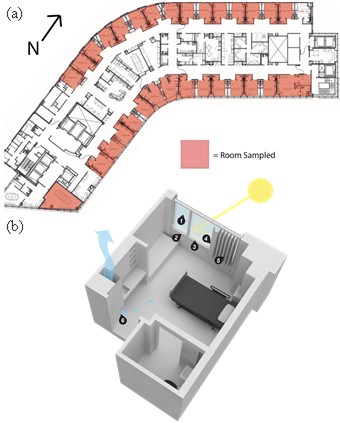
In a 2019 collaboration between the Biology and the Built Environment Center at the University of Oregon and the Oregon Health & Sciences University, we sampled various window surfaces from patient rooms in a hospital ward. We characterized the viable bacterial community located on these surfaces, and investigated the association of relative light exposure of the surface (in direct light or not), the cardinal direction of the room (and roughly the amount of total light exposure in a day), and proximity of the patient room to the nurses’ station (which has higher occupancy and traffic).
Figure 1. Floor plan and rendering of a typical patient room at the Oregon Health and Science University hospital. (a) Floor plan of the 13th floor of Kohler Pavilion (13K) at Oregon Health and Science University (OHSU). Red shading indicates the rooms that were sampled between 10:00 a.m. and 11:00 a.m. on June 7, 2019 (b) Digital rendering of a typical patient room on OHSU (13K) with the sampling locations indicated by the numbers. The sampled locations were (1) window glass surface, (2) the window frame surface facing into the room at the sill, (3) glazing-side of the window frame at the sill, (4) window-side of the curtain, (5) patient-side of the curtain and, (6) wood-covered air return grille.
The microbial community found in buildings is primarily a reflection of the occupants, and in the case of hospitals, the microbiota may be sourced from patients, staff, or visitors. In addition to leaving microbiota behind, occupants may pick up microorganisms from building surfaces. Most of the time, this continuous exchange of microorganisms between a person and their surroundings is unremarkable and does not raise concerns. But in a hospital setting with immunocompromised patients, these microbial reservoirs may pose a risk. Window glass, sills, and the surfaces around windows are often forgotten during hospital disinfection protocols, and the microbial communities found there have not previously been examined.
This paper is the first first-authored research paper from a former undergraduate mentee of mine at the University of Oregon; Patrick Horve.
Horve, P.F., Dietz, L., Ishaq, S.L., Kline, J., Fretz, M., Van Den Wymelenberg, K. 2020. Viable bacterial communities on hospital window components in patient rooms. PeerJ 8: e9580. Impact 2.353. Article.
I’m pleased to announce that an article was published today on soil microbes, climate change, and agriculture! As local climates continue to shift, the dynamics of above- and below-ground associated bio-diversity will also shift, which will impact food production and the need for more sustainable practices.
This publication is part of a series, from data collected from a long-term farming experiment in Bozeman, MT, led by researchers at Montana State University with whom I have published several times, including:
Weed communities and wheat yield are modified by cropping systems and climate conditions. In review.
In this study, cropping system (such as organic or conventional), soil temperature, soil moisture, the diversity and biomass of weed communities, and treatment with Wheat streak mosaic virus were compared as related to the bacterial community in the soil associated with wheat plant roots.
This paper is open-access, which means anyone can read the full paper.
Little knowledge exists on how soil bacteria in agricultural settings are impacted by management practices and environmental conditions under current and predicted climate scenarios. We assessed the impact of soil moisture, soil temperature, weed communities, and disease status on soil bacterial communities between three cropping systems: conventional no-till (CNT) utilizing synthetic pesticides and herbicides, 2) USDA-certified tilled organic (OT), and 3) USDA-certified organic with sheep grazing (OG). Sampling date within the growing season, and associated soil temperature and moisture, exerted the greatest effect on bacterial communities, followed by cropping system, Wheat streak mosaic virus (WSMV) infection status, and weed community. Soil temperature was negatively correlated with bacterial richness and evenness, while soil moisture was positively correlated with bacterial richness and evenness. Soil temperature and soil moisture independently altered soil bacterial community similarity between treatments. Inoculation of wheat with WSMV altered the associated soil bacteria, and there were interactions between disease status and cropping system, sampling date, and climate conditions, indicating the effect of multiple stressors on bacterial communities in soil. . In May and July, cropping system altered the effect of climate change on the bacterial community composition in hotter, and hotter and drier conditions as compared to ambient conditions, in samples not treated with WSMV. Overall, this study indicates that predicted climate modifications as well as biological stressors play a fundamental role in the impact of cropping systems on soil bacterial communities.
Congratulations to all three University of Maine undergrads in the Ishaq Lab for making the Dean’s List in Spring 2020: Jade Chin (AVS), Nicholas Hershbine (EES), and Emily Pierce (AVS)!!
Note, the Bowdoin Dean’s List is announced annually in the fall.
Summer 2020 is…. here. This year has been unpredictable at best, but some things have stayed the same. For example, summer is one of my favorite seasons in which to work in science, because things calm down when the university is not in full session and I’m not facing a deluge of emails, meetings, and myriad small interactions that accumulate to eat up the day. I’ve been taking the time to prepare my laboratory, dive deep into scientific writing, and prepare for the increased teaching load I will have starting this fall.
Manuscripts
You might think that the pandemic causing months of delayed or reduced labwork would have lightened my research load, but I’ve had more than enough to keep me occupied over this spring. Not only have I been submitting a few manuscripts for peer review at scientific journals from my time at the University of Oregon and Montana State University, but I have been working on some unanticipated manuscripts that coalesced this spring. This has included a project with a previous collaborator on diet and health, another based on soil microbial ecology led by master’s student Tindall Ouverson at MSU, and three more which were generated during my DNA sequence data analysis course that I taught this spring! Of these, I am lead author on two and contributing to the others at a variety of depths. Some require a great deal of my time, while others require only editing and review.
I am working on a manuscript compiled from 3 documents: the seq data manuscript from the class I taught, and 2 unpublished honors theses. Taking only what I wanted from each, the unedited compilation was 100+ pages. After weeks of effort we are down to *checks notes* 88.
And then there were 10! I now have three University of Maine master’s students and 4 undergraduate students performing research in my lab, as well as three other graduate students from other labs who are affiliated with us (as in, I am on their committee). In addition to training them on scientific research theory, laboratory protocols, and data management and analysis, they are getting general training in scientific literature review and critique, scientific writing and presentation, and laboratory management.
I am preparing the second of two laboratory spaces for my research, and this space hasn’t been fully renovated in years. While still very functional, there have been a number of remodeling, refinishing, and reorganization steps which needed to be taken to get it in line for biosafety level II microbiology work.
I have been doing much of this work personally, because it’s cheaper, and I have experience in basic home renovations. And, I enjoy the opportunity to put my email inbox away and let my thoughts wander to scientific theory while I use power tools.
When it is ready, I’ll be starting the wet-lab research into gut microbiology and doing more culture work to supplement the genomics work. To aid in that research, I’ve been acquiring more nifty bits of equipment.
Over the spring, I piloted a new course as a special topics version, and I have just been approved to teach that as an official course starting in spring 2021! This summer, I have and will continue to revise my teaching materials from the spring version to prepare them for AVS 454-554 next year.
I’ll be teaching two courses starting in fall 2020, one on animal microbiomes and one on undergraduate research for animal science students. AVS 254, on animal microbiomes, is material I have taught at other institutions with a different course focus. For that course, I will be updating the course material, adding new lectures from scratch, and revising the formatting of powerpoints. I’ll also need to make some of it more accessible for asynchronous online learning, depending on how the semester is organized this fall. This means pre-recording the lectures, and putting more effort into the online learning software I have available.
The other course I am teaching is new to me, AVS 401 (and 402 each spring), the AVS Capstone experience. I’ll be teaching students how to write scientific proposals, research papers, and give scientific presentations, as well as guiding them through participation in research along with faculty mentors. For many students, it’ll be their first experience participating in research. This year, since many students are unable to participate in in-person research and labs have been closed, it’ll be extra challenging to come up with projects, but I have some creative ideas in mind.
Works in development
In addition the above objectives, I have a number of things in development which are not yet ready to be shared in detail. These includes new research collaborations, leading a team to organize a journal special collection, and leading a team to organize and host a (virtual) mini conference meeting in the fall!
Faculty positions and summer work
Now, as an assistant professor at the University of Maine, I’m on a 9-month contract. During the academic year, I devote 50% of my time to research-related activities, and 50% to teaching/advising/mentoring– related activities. I have the option of working in the summer, or taking it off unpaid. However, my summer salary is contingent on me being awarded research funds which will pay for the work, something which is not guaranteed in this funding climate. It is generally not advisable for pre-tenure faculty to spend summers idle, and in any case, I would inevitably have to perform work of some kind over the summer to keep pace with my workload.
I am lucky enough to have start-up funding which can pay up to 2 months of summer salary per year during my first 3 years; however, I am expensive: one month of my summer salary is the equivalent of 1 full-time undergraduate researcher for 3 months, or a sizable chunk of a research project. On the one hand, I want to value my time and effort, and being paid for summer research helps close the gender pay gap for salary and retirement contributions. On the other hand, I am also forced to consider how to get work done on a reduced budget, should federal funding not come through. After all, being awarded tenure is contingent on productivity.
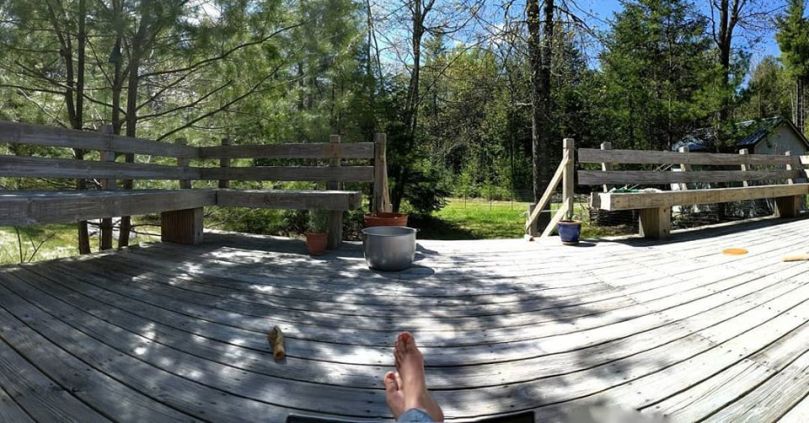
In May, I was adamant about taking the entire month of July off, as 2019 and 2020 have been incredulously busy and stressful and I haven’t had a vacation since Feb 2019. Now, at the end of June, I’m not sure I could take off a full summer month and still output all of the above, plus be prepared for the challenges of teaching this fall. At least my working-from-home view is more or less a vacation-scape, and some surprise home renovations will at least keep me away from electronic screens for some of it.








 The Ishaq Lab