I'm an assistant professor of animal and veterinary studies at the University of Maine, Orono, studying how animals get their microbes. I am also the Founder and Lead of the Microbes and Social Equity working group.
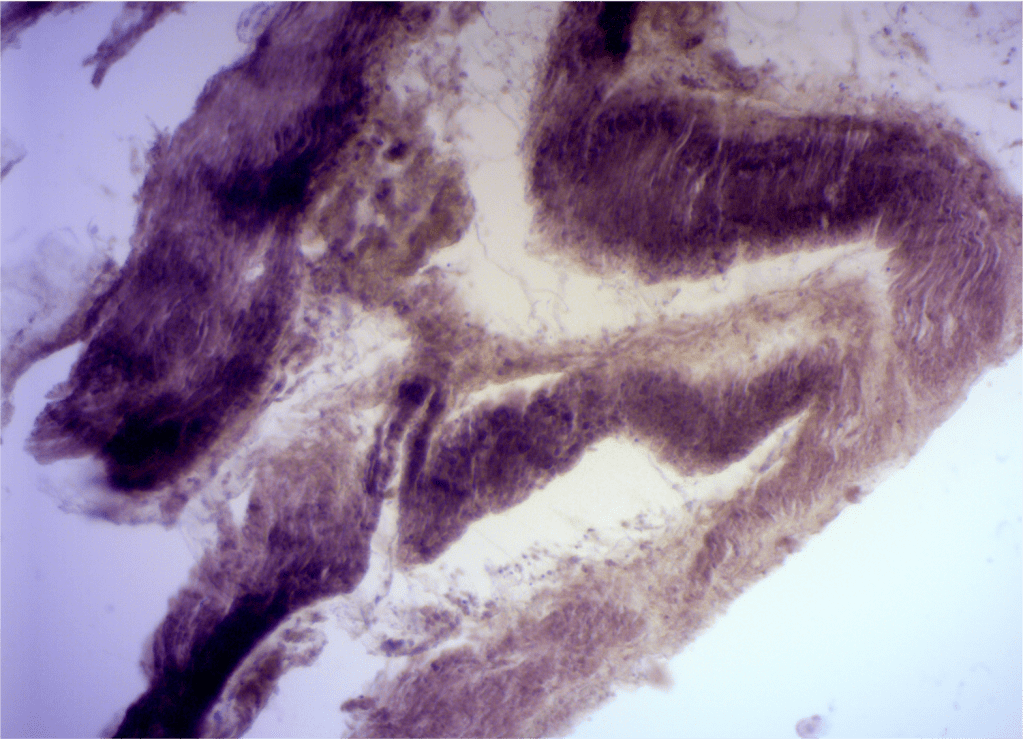
A collaborative pilot project was funded by the Maine Food and Agriculture Center (MFAC) to investigate Vibrio bacteria in scallop hatcheries in Maine! This will support some ongoing work by a collaborative research team at UMaine and the Downeast Institute, as we develop a long-term, larger-scale project investigating scallop health and survival in hatcheries, something which will be critical to supporting sustainable and economically viable aquaculture productions.
“Investigating microbial biofilms in Maine hatchery production of sea scallop, Placopecten magellanicus.”
Principal Investigator: Sue Ishaq
Co-Investigators:
Dr. Tim Bowden, Associate Professor of Aquaculture, University of Maine
Dr. Jennifer Perry, Assistant Professor of Food Microbiology, University of Maine
Dr. Brian Beal, Professor of Marine Ecology, University of Maine at Machias; and Research Director/Professor, Downeast Institute
Dr. Erin Grey, Assistant Professor of Aquatic Genetics, University of Maine
Project Summary: Atlantic deep-sea scallops, Placopecten magellanicus, are an economically important species, generating up to $9 million in Maine alone. Despite their potential to the aquaculture industry, hatchery-based sea scallop production cannot rely on the generation of larvae to produce animals for harvest. In hatcheries, the last two weeks of the larval maturation phase is plagued by massive animal death, going from 60 million scallop larvae down to a handful of individuals in a span of 48 hours. This forces farmed scallop productions to rely on collection of wild scallop spat (juveniles), but wild population crashes, habitat quality, harvesting intensity, and warmer water temperatures threaten the sustainability and economic viability of this industry. The reasons for sea scallop larvae death remain unknown, but other cultured scallop species are known to suffer animal loss from bacterial infections, including from several bacterial species of Vibrio and Aeromonas. At the Downeast Institute in Beals, Maine, biofilms appear on tank surfaces within 24 hours. Routine screening for the presence of Vibrio sp. in tanks at DEI reveals no obvious signs of colonies in scallop tanks. Preliminary culturing and genetic identification from these biofilms suggests a species of Pseudoalteromonas, known biofilm formers which outcompete or inhibit other microorganisms. Our goal is to investigate the dynamics of tank surface biofilms in bivalve aquaculture facilities. Our long-term goals are to understandmicrobial community assembly and animal health during scallop hatchery production, and to standardize management practices to enhance the success of cultured scallop production.
Experimental design schematic for this project. Our objectives are to 1) Identify the microbial community members involved in tank biofilms, and if it is a repeated or novel community assembly, and 2) Test for biofilm antagonism in vitro, using competing microorganisms, chemical treatments, and environmental conditions.
I’m delighted to announce that a paper was published on the effect of a dietary additive on the rumen and fecal bacterial communities in dairy cattle, in the journal Animal: The International Journal of Animal Biosciences!
A lot of factors can be manipulated to help get the most out of one’s diet, including the source and processing method of the ingredients – in most cases in livestock feed: plants. Growing plants for animal feed can be expensive, and often nutrients in plants become more available to the animal after the plant has been processed/broken down in some way. This sometimes allows for food byproducts to be reused for animal feed, and one common example is used brewers’ grains. Once the grains have been fermented to produce alcohol, the simple sugars have been used up but a lot of the complex sugar carbohydrates – in other words: fiber – are left over. Ruminants don’t need simple sugars, but they do need a lot of fiber, and brewers’ grains have been investigated for their usefulness for animal nutrition because they are a cheap, readily-available, and common source of fiber, as well as protein.
The original experiment for this work took place several years ago, and involved an animal feeding trial which added reduced-fat distillers’ grains with solubles into dairy cattle feed. The research team found no negatives effect on milk production or animal health, and that work was previously published. To add to that project, the original research team wanted to know if the diet would drastically change the bacterial community living in the rumen, which would have implications for feed digestion and animal health.
A collaborator of mine donated the cow microbial community DNA data to my AVS 590 special topics in DNA Sequencing Data Analysis course in spring 2020 (now formally registered as AVS 454/554). I worked with UMaine graduate students Adwoa Dankwa and Usha Humagain over the semester to train them in coding and develop the manuscript. The diet only had minimal effects on the bacterial community profiles, which in this case is a good finding – we want to be able to feed a cheap, nutritional source like distillers’ grains without harming the cow or its microbes.
Reduced-fat dried distillers’ grains with solubles (RF-DDGS) is a co-product of ethanol production and contains less fat than traditional distillers’ grains. The fat in corn is ~ 91% unsaturated, and it is toxic to rumen microorganisms so it could influence the composition of the rumen microbiome. It has been demonstrated that RF-DDGS is a suitable ration ingredient to support the high-producing dairy cow, and this feedstuff is a promising alternative protein source for lactating dairy cows. The current study aims to better understand the effect of RF-DDGS on the rumen and fecal bacterial composition in lactating dairy cows. Thirty-six multiparous (2 or 3), mid-lactation Holstein cows (BW = 680 ± 11 kg; 106 ± 27 DIM) were randomly assigned to two groups which were fed a control diet made up of corn, corn silage, and alfalfa hay supplemented with expeller soybean meal or with added RF-DDGS (20% of the dry matter (DM)) containing approximately 6.0% fat. Whole rumen contents (rumen fluid and digesta; esophageal tubing method) and feces (free catch method) were collected on day 35 of the experimental period, after the 14-d acclimation period. Rumen contents and feces from each cow were used for DNA extraction. The bacterial community composition in rumen and fecal samples was assessed via the 16S rRNA gene by using the Illumina MiSeq sequencing platform. Bacteroidetes, Actinobacteria, and Firmicutes were the most abundant phyla in rumen contents. The fecal microbiota was dominated by the phyla Firmicutes and Bacteroidetes, as well as Actinobacteria and Chloroflexi. RF-DGGS increased bacterial richness, evenness, and Shannon diversity in both rumen and fecal samples and was associated with several taxa that had different abundance in treatment versus control comparisons. The RF-DGGS, however, did not significantly alter the bacterial community in the rumen or feces. In general, these findings demonstrated that dietary inclusion of RF-DDGS did not impose any serious short-term (within 30 days) health or production consequences, as would be expected. With this study, we present further evidence that inclusion of 20% (DM basis) RF-DDGS in the diet of lactating dairy cows can be done without consequence on the microbiome of the rumen.
Implications
Reduced-fat dried distillers’ grains with solubles is a quality, economical, and readily available protein source demonstrated to support the protein needs of high-producing dairy cows. In this study, the rumen and fecal bacterial communities of lactating dairy cows were not significantly influenced by 20% (dry matter basis) reduced-fat dried distillers’ grains with solubles and did not impose serious short-term (within 30 days) health or production consequences. This diet could potentially be introduced into Total Mixed Ration feeding of dairy cattle given the fact that it is readily available and relatively economical.
Last week, the Microbes and Social Equity working group hosted its first ever symposium! We hosted 15 talks over 5 days, with each session melding presentations and active discussion groups.
In total, the symposium had 254 participants (467 registrants) from 22 countries, and including researchers from various fields and career levels, as well as members of the Maine State Legislation, and members of the general public. The breakout rooms resulted in 16 draft documents collaboratively written by meeting ideas, which highlight issues/barriers to social equity in research and practice, resources and policy ideas to resolve inequity, research questions yet to be answered, and ideas for curricula development and integrating research and policy into education.
The Microbes and Social Equity working group and The University of Maine Institute of Medicine present an inaugural symposium on:
“Microbes, Social Equity, and Rural Health”
June 14 – 18th, 2021
Format: virtual meeting, Zoom platform.
Day 1 of the Microbes and Social Equity virtual symposium
Session 5: “Access to healthcare and the microbiome”
Friday, June 18th, 13:00 ~ 16:30 EST. Registration for this session is closed.
Section leader: Emily Wissel
Access to healthcare, including treatment and preventative care, is critical to moderate beneficial host-microbe interactions and mitigate host-pathogen interactions, yet healthcare is inequitably distributed and often curbed by social policy. For instance, maternity care is well-demonstrated to improve health outcomes and facilitate the transfer of beneficial maternal microbes to newborns. Policies which support breastfeeding likewise promote this transfer of maternal microbes. Similarly, newborns and infants with access to care in their first five years of life have better outcomes overall than those with limited access. This difference in care during early life can impact lifelong differences in outcomes, reinforcing inequalities present at birth. This session will cover topics from the vaginal microbiome during pregnancy to the infant gut microbiome after birth, with perspectives from a clinician, public health researchers, and a biological scientist.
Program and Registration
Registration, a full speaker list and program, and details of each day can be found here.
Registration will occur for each (day) section individually, so participants can select which topics to participate in, or all of them.
Registration is free and open to the public.
Summary
Microorganisms are critical to many aspects of biological life, including human health. The human body is a veritable universe for microorganisms: some pass through but once, some are frequent tourists, and some spend their entire existence in the confines of our body tissues. The collective microbial community, our microbiome, can be impacted by the details of our lifestyle, including diet, hygiene, health status, and more, but many are driven by social, economic, medical, or political constraints that restrict available choices that may impact our health.
Many human clinical conditions or diseases have been established as being related to the state of the human microbiome. It is known that collective social inequity can drive the prevalence, morbidity, and mortality of some of these diseases or conditions. When access to a nutritious diet and healthcare are impeded by social inequity, these disparities can also affect the human microbiome; this can further contribute to reduced or poorly functioning microbiomes.
Access to resources is the basis for creating and resolving social equity—access to healthcare, healthy foods, a suitable living environment, and to beneficial microorganisms, but also access to personal and occupational protection to avoid exposure to infectious disease. The emergence of the SARS-CoV2 (COVID-19) pandemic has dramatically altered our daily lives and the availability and ability to access essential resources, which has been worsened by pre-existing social inequity. Yet, the pandemic has also highlighted the inherent social disparity among those more likely to be exposed to infectious diseases.
This meeting highlights recent investigations into beneficial and detrimental instances of microbial exposure, in the context of how social policy may mediate or deepen disparities between and within populations. In addition to invited presentations on thematic sections, each section will involve a discussion session using smaller breakout groups, to facilitate conversations and brainstorming between attendees. These groups will be arranged around smaller themes or research questions, and group members will identify knowledge gaps for future research, as well as list actionable steps that can be taken using existing research to promote equitable social policy. Ideally, meeting attendees will gain knowledge, collaborators and connections, and a path forward for turning their research into evidence-based policy to support public health.
Meeting dynamics
Unlike traditional symposium formats, this meeting will present some plenary-style talks by experts in the field, including biological scientists, social scientists, practitioners or policy makers, as well as facilitate discussion among participants. Each thematic section will feature 90 minutes of talks, which will be recorded and made publicly available after the live session. After each plenary session, there will be 90 minutes of discussion in groups led by speakers and MSE group members, and assisted by notetakers, with ~10 participants per breakout room. Participants will be encouraged to “problem solve” a suggested topic or one of their own choosing. The goal is to create action items that are meaningful for group participants, such as ideas for curricula development, identifying research needs or best practices, suggestions for engaging research in policy, and more.
The Microbes and Social Equity working group and The University of Maine Institute of Medicine present an inaugural symposium on:
“Microbes, Social Equity, and Rural Health”
June 14 – 18th, 2021
Format: virtual meeting, Zoom platform.
Day 1 of the Microbes and Social Equity virtual symposium
Session 4: “Social and Environmental Stress”
Thursday, June 17th, 13:00 ~ 16:30 EST. Registration for this session is closed.
Section leader: Patricia Wolf
While it has been established that human behavior may impact microbiome structure, it has become evident that this is only part of the story. Historically racist housing policies may lead to inequitable exposure of those living in segregated neighborhoods to environmental pollutants. Additionally, life-long exposure to social and environmental stress faced by minority groups within the US may increase risk to disease through the alteration of host and bacterial metabolites. These inequities were compounded during the COVID-19 pandemic, during which neighborhood structural environments led to differing access to healthcare and treatment for the disease. Notably, those with the least access often were subject to higher exposure to the disease due to having “essential” employment. This session will explore the social and environmental factors that can impact human microbiomes, and will discuss measures that investigators should incorporate into research in order to fully understand microbial mechanisms of disease.
Program and Registration
Registration, a full speaker list and program, and details of each day can be found here.
Registration will occur for each (day) section individually, so participants can select which topics to participate in, or all of them.
Registration is free and open to the public.
Summary
Microorganisms are critical to many aspects of biological life, including human health. The human body is a veritable universe for microorganisms: some pass through but once, some are frequent tourists, and some spend their entire existence in the confines of our body tissues. The collective microbial community, our microbiome, can be impacted by the details of our lifestyle, including diet, hygiene, health status, and more, but many are driven by social, economic, medical, or political constraints that restrict available choices that may impact our health.
Many human clinical conditions or diseases have been established as being related to the state of the human microbiome. It is known that collective social inequity can drive the prevalence, morbidity, and mortality of some of these diseases or conditions. When access to a nutritious diet and healthcare are impeded by social inequity, these disparities can also affect the human microbiome; this can further contribute to reduced or poorly functioning microbiomes.
Access to resources is the basis for creating and resolving social equity—access to healthcare, healthy foods, a suitable living environment, and to beneficial microorganisms, but also access to personal and occupational protection to avoid exposure to infectious disease. The emergence of the SARS-CoV2 (COVID-19) pandemic has dramatically altered our daily lives and the availability and ability to access essential resources, which has been worsened by pre-existing social inequity. Yet, the pandemic has also highlighted the inherent social disparity among those more likely to be exposed to infectious diseases.
This meeting highlights recent investigations into beneficial and detrimental instances of microbial exposure, in the context of how social policy may mediate or deepen disparities between and within populations. In addition to invited presentations on thematic sections, each section will involve a discussion session using smaller breakout groups, to facilitate conversations and brainstorming between attendees. These groups will be arranged around smaller themes or research questions, and group members will identify knowledge gaps for future research, as well as list actionable steps that can be taken using existing research to promote equitable social policy. Ideally, meeting attendees will gain knowledge, collaborators and connections, and a path forward for turning their research into evidence-based policy to support public health.
Meeting dynamics
Unlike traditional symposium formats, this meeting will present some plenary-style talks by experts in the field, including biological scientists, social scientists, practitioners or policy makers, as well as facilitate discussion among participants. Each thematic section will feature 90 minutes of talks, which will be recorded and made publicly available after the live session. After each plenary session, there will be 90 minutes of discussion in groups led by speakers and MSE group members, and assisted by notetakers, with ~10 participants per breakout room. Participants will be encouraged to “problem solve” a suggested topic or one of their own choosing. The goal is to create action items that are meaningful for group participants, such as ideas for curricula development, identifying research needs or best practices, suggestions for engaging research in policy, and more.
A collaborative paper on bacterial transfer in insects and the possible ecological impacts of that in the wild has been published in iScience! This work began a decade ago in the labs of Dr. Ellie Groden, recently retired Professor of Entomology in the School of Biology and Ecology at the University of Maine, and later Dr. Patricia Stock, a Professor in the School of Animal and Comparative Biomedical Sciences at the University of Arizona, who were investigating colony collapse of European fire ants (Myrmica rubra) which are invasive to Maine. The ants have a nasty bite, and can dramatically disturb the local plant and insect wildlife in coastal Maine.
Slide from Ishaq et al. Entomology 2020 presentation
When these invasive ant colonies collapsed, Drs. Groden and Stock wanted to find out why, as a possible means of developing a biological control strategy. It was thought that particular nematodes would ingest soil bacteria, and transfer it to ants once the worms invaded ant tissues to complete parts of their life cycle. This particular worm infection doesn’t kill the ants, but perhaps the soil bacteria were. Ants were collected from different colony sites, and investigations on the nematode worms inhabiting the ants were conducted.
Slide from Ishaq et al. Entomology 2020 presentation
Most of the work for this project was completed several years ago, with the exception of DNA sequencing data from a bacterial transfer experiment. I was added to the project by my collaborator at UMaine, Dr. Jean MacRae, an Associate Professor in the Department of Civil and Environmental Engineering who introduced me to the research team and shared the 16S rRNA dataset to use in my AVS 590 data analysis class in spring 2020. That semester was when the pandemic hit, and forced the course to move to remote-only instruction in March. UMaine graduate students Alice Hotopp and Sam Silverbrand were taking the class and learning 16S analysis on this dataset, and I mentored them through the analysis all the way to manuscript writing despite the incredible challenges that spring threw our way.
At the completion of the course, we shared the draft manuscript with the rest of the research team, who mentioned that several undergraduate honor’s theses had been written about the earlier experiment, but never published in a scientific journal. The team spent summer 2020 combining the three papers into one massive draft. The pandemic slowed down manuscript review, understandably, but I’m pleased to say that it was accepted for publication! In addition, this collaboration has led to further collaborations in the Ishaq Lab, several presentations (listed below), and is Sam’s first scientific publication, congrats Sam!!
Related Presentations
Alice Hotopp, A., Samantha Silverbrand, Suzanne L. Ishaq, Jean MacRae, S. Patricia Stock, Eleanor Groden. “Can a necromenic nematode serve as a biological Trojan horse for an invasive ant?” Ecological Society of America 2021 (virtual). Aug 2-6, 2021 (accepted poster).
Ishaq*, S.L., Hotopp, A., Silverbrand, S., MacRae, J., Stock, S.P., Groden, E. “Can a necromenic nematode serve as a biological Trojan horse for an invasive ant?” Entomological Society of America 2020 (virtual). Nov 15-25, 2020. (invited talk)
The necromenic nematode Pristionchus entomophagus has been frequently found in nests of the invasive European ant Myrmica rubra in coastal Maine, United States, and may contribute to ant mortality and collapse of colonies by transferring environmental bacteria. Paenibacillus and several other bacterial species were found in the digestive tracts of nematodes harvested from collapsed ant colonies. Serratia marcescens, Serratia nematodiphila, and Pseudomonas fluorescens were collected from the hemolymph of nematode-infected wax moth (Galleria mellonella) larvae.
Virulence against waxworms varied by site of origin of the nematodes. In adult nematodes, bacteria were highly concentrated in the digestive tract with none observed on the cuticle. In contrast juveniles had more on the cuticle than in the digestive tract. . Host species was the primary factor affecting bacterial community profiles, but Spiroplasma sp. and Serratia marcescens sequences were shared across ants, nematodes, and nematode-exposed G. mellonella larvae.
One aspect of research which requires substantial training, adherence, and reflection for researchers, yet gets almost no public attention, is the rules and regulations on the responsible conduct of research. In this piece I focus on the US, but many countries have ethical guidelines of their own. This piece is meant as a reflection of how far science and society have come, and while ethics in science are only as good as the scientist, I wanted to share the stringent approval and review processes that modern research must go through prior to completing any work, to ensure safety and respect for all persons and animals. Thus, please don’t read the first section and run off thinking that researchers are monsters – it is there to give you an understanding of where we ae now.
Bias and the misuse of research
If you’ve ever read “The immortal life of Henrietta Lacks”, by Rebecca Skloot, you are familiar with a high -profile case which took decades to uncover. The book examines the case of a woman, Henrietta Lacks, with cervical cancer whose cells have revolutionized medicine and research. However, doctors didn’t ask for her permission to use those cancer cells, she didn’t know they were being taken, her family didn’t know they were being used extensively in research labs around the globe, and even decades later they have not benefited from the billions of dollars of research and development profits that came about because of her cells.
History is littered with examples of cruel or nonconsensual research going back hundreds of years. Most of those involve intensive research on humans or animals without their knowledge or their consent, other examples include disregard for safety or privacy. Even decisions which appear benign but are still unethical prevent people from benefitting from their own contributions to research.
However, nearly all of these historical examples involving human subjects research are rooted in racism, sexism, and/or anti-religious or religion/ethnic cleansing. Historically and today, science has often been intentionally misconstrued to perpetuate social constructs of superiority/inferiority. Science is only a tool, and while these examples can be blamed on individuals choosing science to be the tool of their ill-intent, the historical lack of ethical guidelines, constraints, or consequences belies the failure of society to ensure equality and respect to all persons. There are numerous resources (for example, here and here) which examine these past offenses in detail, and reflect on how they led to the ethical guidelines we have in place today.
In addition to the obvious harm it could cause, not incorporating ethics into research contributes to Institutional Betrayal. This concept was coined by psychologist Dr. Jennifer Freyd, and describes the harm caused or allowed to happen by an institution, which causes psychological damage because you expect the institution to protect you. Collectively, unethical research leads to a distrust of science, researchers, and medical professionals, and can lead to science denialism.
One of the challenges to understanding ethics in scientific research is that our ethics reflect our values as a society and those values and laws change over time. You only have to read the news to see that we all have different ideas about what is acceptable to do to someone else. We should not think of everything that is permissible as also acceptable: just because you can do something, doesn’t mean you should do it. And, you can still take advantage of someone even if you are not physically harming them. Thus, ethical standards inform what we are able to research, but also why we are doing it, and how, as there may be less invasive methods available.
Importantly, ethical standards takes power away from the researcher and puts it into more objective hands. If a researcher wants to do a project, and millions of dollars of research funding, 20 research staff, and their careers are all based on the research succeeding, that puts a lot of bias in all of their thoughts and actions. Ethical review helps ensure that researchers are making good decisions before, during, and after the research.
There is a term called perception of authority, which can be used to describe how people ascribe authority to researchers, scientists, and doctors simply based on visual cues (like wearing a white coat). However, this perception can be incorrectly attributed to people who appear to be in that same category but are in fact not trustworthy or knowledgeable about the topics they claim to be experts in, for example, some TV personalities.
Ethical standards and review prevent researchers from intentionally or unintentionally taking advantage of participants’ willingness to say “yes” based on their perception of you being an authority, whether or not you really are. That is just one example of a power dynamic.
Research sets up a power dynamic, which is a relationship wherein one person has more power, authority, or control over another person. In research, there are a lot of ways in which that can be set up.
In addition to perception of authority, there is a perception of luck, in which participants assume they will be in the placebo group (the control group which receives no treatment to make sure the effects you see are because of the treatment and not just from the excitement of being in a research study) and dismiss concerns about potential risks. Financial incentive for participating may recruit people that really need that money and feel pressured to be int he study regardless of the risks. There is also the hope of a cure. For medical research involving obscure or rare diseases, studies may use developmental treatments and by necessity must recruit participants who suffer from this particular problem. You might be more like to participate if you assume that the treatment will cure you, or if you don’t understand that it is equally likely that you could be in a placebo group as in the treatment group. There are also people that feel pressured to consent because they have less social impact and power and feel that they can’t say ‘no’ to participation, by refusing to enroll or by withdrawing from the study at any time. Ethical regulations specifically include prisoners, children, pregnant people, and anyone without the ability to make an informed decision under special protections against power dynamics, but ethical review boards will help you identify other situations or demographics and how to lessen those power differentials.
In addition, having a study approval that rests with a committee who are in no way involved with the research can help reduce bias or harm. These standards may require researchers to be more creative in order to do less harm and find a better way to conduct that research, either by using alternative methods or fewer participants. Ethical review boards also ensure that researchers get the most out of the study, such that if some harm, even just some inconvenience, is being done to someone (human or animal), the benefits from the study are worth the cost and that judgment call is made by someone with no stake in the research. Review also ensures that the study is designed to collect as much info as possible so that it does not have be repeated.
Ethical standards also require researchers to obtain informed consent from your human participants. This includes what will be done to them during the study, what information or samples will be collected, what information (including methods) will be obtained from these samples, and what will be done with their samples or information in the future. Finally, ethical standards creates accountability for researchers’ actions by creating a paper trail, setting up oversight on the project, and creating consequences for failure to comply with regulations.
The logistics of ethics
How do we add ethical principles to our research? To summarize, you want to minimize harm to participants, be transparent about your activities and keep human participants well informed, keep excellent records and document all communications and information you share with human participants, always get Institutional approval before conducting research or collecting samples or information, and try to reduce the power dynamic by making yourself accountable for your actions. There are many guiding principles available, including some listed here provided by the NIH:
Social and clinical value
Scientific validity
Fair subject selection
Favorable risk-benefit ratio
Independent review
Informed consent
Respect for potential and enrolled subjects
Institutional Animal Care and Use Committees (IACUCs)
You should always consult with your IACUC board about your project before you have made preparations or started any work, as they should be kept apprised of research for reporting purposes and are the ones to verify if you do or do not need a formal approval. You typically don’t need formal approval if you are only observing animals and not interfering with them in any way or holding them captive, if you are collecting discarded animal products (like feathers), or if you are collecting tissue from carcasses. Keep in mind, you will need institutional biosafety approval to conduct this research if there is a specific infectious disease concern, and you need approval from your state fish and wildlife department if you are collecting samples from wild animals (even more so if the animal has a protected status). If you will be transporting biological material across state or national borders, there is another layer of training and approval before you can begin.
Each institution which performs animal research in the US is required to form at least a 5-member committee, which has to include the attending veterinarian at the institution with experience and training in the care and use of laboratory (and livestock) animals, one member from the local community, a practicing scientist experienced in research involving animals, a non-scientist, and at least one more member of any kind (usually another practicing scientist at the university).
In addition to applying to IACUC for approval for your study, you’ll need to document that everyone on the project has completed relevant training on responsible research conduct, animal handling, and the procedures you will be using. Some of that training is administered by your institution, but much of it will be performed through the Collaborative Institutional Training Initiative (CITI), which provides standardized information and training.
Institutional Review Boards (IRBs)
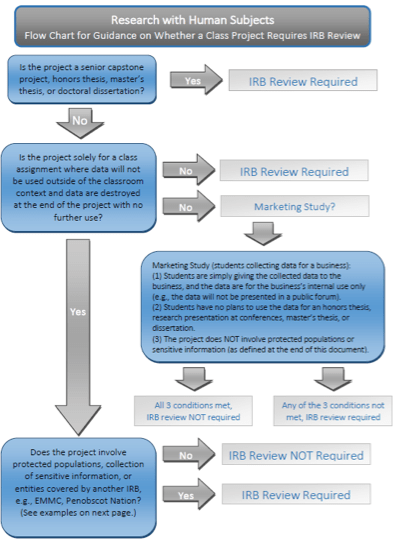
If research involves humans in some way, including surveys, approval is required from the Institutional Review Board (IRB) prior to starting the work. Even if your project ultimately does not require approval, you should always contact your IRB first, to let them know what you intend, and get their informal approval that you don’t need formal approval from the committee to do your work.
The members of the IRB committee may not have a personal, professional, or financial conflict of interest, and the federal code of regulations stipulates many guidelines about membership:
“Each IRB shall have at least five members, with varying backgrounds to promote complete and adequate review of research activities commonly conducted by the institution. The IRB shall be sufficiently qualified through the experience and expertise of its members, and the diversity of the members, including consideration of race, gender, cultural backgrounds, and sensitivity to such issues as community attitudes, to promote respect for its advice and counsel in safeguarding the rights and welfare of human subjects. In addition to possessing the professional competence necessary to review the specific research activities, the IRB shall be able to ascertain the acceptability of proposed research in terms of institutional commitments and regulations, applicable law, and standards of professional conduct and practice. * * * The IRB shall therefore include persons knowledgeable in these areas. If an IRB regularly reviews research that involves a vulnerable category of subjects, such as children, prisoners, pregnant women, or handicapped or mentally disabled persons, consideration shall be given to the inclusion of one or more individuals who are knowledgeable about and experienced in working with those subjects.”
Code of Federal Regulations, Title 21, Volume 1, Revised as of April 1, 2020, CITE: 21CFR56.107
Generally speaking, you’ll need IRB approval (and training) if you intend to publish this work or share this information widely, if you are collecting sensitive information (such as health, finances, or anything which would put the safety and wellbeing of that person at risk if it were revealed), if you are collecting (biological) samples, if you are doing anything physically or psychologically invasive, or if you are working with vulnerable populations. If you will be transporting biological material across state or national borders, there is another layer of training and approval before you can begin.
There are a number of information-gathering activities that don’t require review and approval, most of which are student projects that are part of coursework. These include interviewing one person for a biography on non-sensitive information, or interviewing multiple people on non-sensitive topics (such as asking about their favorite animal), performing a literature review or information search on non-sensitive or de-identified information, or creating science curricula.
Biosafety and chemical regulations
In addition to regulations on working with biological study subjects, there are additional health and safety regulations if your work involves anything infectious or dangerous. Institutional biosafety and chemical safety review requires researchers to describe all protocols, sample types and relative risks, and all safety and containment procedures – from the protective gear you will wear, to your sterilization or detoxification procedures, to the equipment you are using that could cause aerosolization and spread. There are yearly chemical and biosafety inventory reviews, laboratory walk-through audits, training, reporting, and equipment maintenance records that all go along with this.
Consequences
Like any good policy, responsible research is best accomplished when there are consequences and an institutional dedication to enforcement. Not only are applications and training required prior to performing the research, but there are facilities audits, reporting, and other regular check ins. Because there is no much to keep track of, review boards and enforcement are there to help researchers set up good practices and protocols ahead of time, help you stay in compliance, and correct problems before they exacerbate. Researchers who refuse to obtain permission prior to sample collection, who change their protocols without notifying review boards, who flaunt regulations, or who commit ethics violations will risk losing their funding, their job, and in severe cases, could face criminal investigations.
The spring semester has brought quite a few changes to the Ishaq lab, including new members and graduating several seniors, new projects, new papers, and a multitude of events for the Microbes and Social Equity Working group!
Research Team
We welcomed several new lab members to the Team, including Dorien Baudewyns (Husson, B.S. 2021), Louisa Colucci (Husson, expected graduation 2022), and Omar Tavio (freelance), who are all helping with master’s student Johanna Holman’s project on the gut microbiome in response to broccoli. In January, we were joined by Joe Balkan (Tufts University undergraduate student), who learned anaerobic culturing and assisted with the massive sample collection and processing initiative that followed the mouse experiment over the winter. Joe will be joining us again this summer as we continue that work with more anaerobic culturing and biochemical testing.
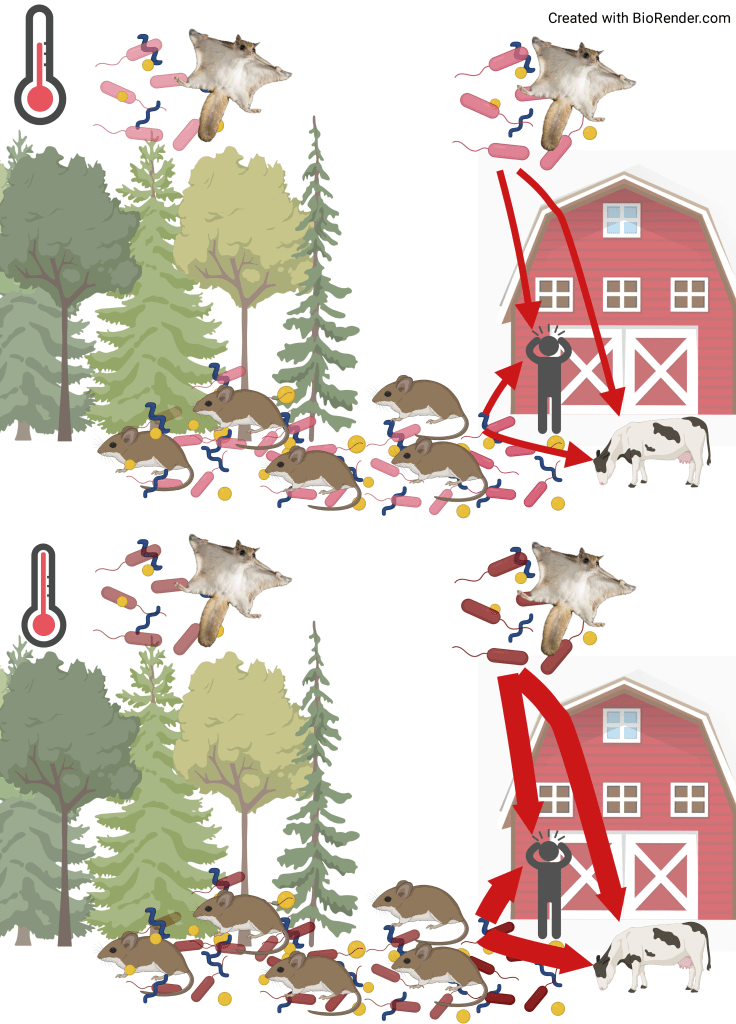
We welcomed Rebecca French, who is joining a collaborative team of undergraduate and faculty researchers at UMaine in the Orono and Presque Isle campuses. This pilot study will examine zoonotic diseases in some rodent species in Maine, and how climate change might be affecting their geographic locations and pushing them further north, thereby bringing certain pathogenic microbes to new locations or putting them in closer contact with people or livestock. Rebecca was awarded a 2021 J. Franklin Witter Undergraduate Research Endowment Fund award to support her research, which she will complete for her senior Capstone Experience in animal and veterinary studies. She’ll be joined by undergraduates in the Kamath and Levesque labs at UMaine, and eventually by an undergraduate in the Johnston Lab at UMPI.
We are also saying goodbye to some of our seniors, including Emily Pierce, the very first undergrad in the Ishaq Lab, who is headed for Kansas State University College of Veterinary Medicine to pursue her dream of becoming a veterinarian. Emily was awarded a 2021 CUGR Fellowship for her Capstone Experience research on Cryptosporidium parvum infection, for which she presented at the UMaine Student Symposium in April.
Jade Chin, also an undergraduate researcher, is heading to Glasgow University for her senior year after which she will attend as a veterinary student there. Jade completed a literature review of leaf silage as livestock feed for her UMaine Undergraduate Honor’s Thesis, which was successfully defended in May and awarded High Honors!
A collaborative paper on bacterial transfer in insects and the possible ecological impacts of that in the wild has been accepted for publication in iScience! This work began a decade ago in the labs of Dr. Ellie Groden, recently retired Professor of Entomology at the University of Maine, and later Dr. Patricia Stock, Professor of Entomology at the University of Arizona, who were investigating colony collapse of European fire ants (Myrmica rubra) which are invasive to Maine. The ants have a nasty bite, and can dramatically disturb the local plant and insect wildlife in coastal Maine. Most of the work for this project was completed several years ago, with the exception of DNA sequencing data from an bacterial transfer experiment. I was added to the project by my collaborator at UMaine, Dr. Jean MacRae, who introduced me to the research team and shared the16S rRNA dataset to use in my AVS 590 data analysis class in spring 2020. That semester was when the pandemic hit, and forced the course to move to remote-only instruction in March. UMaine graduate students Alice Hotopp and Sam Silverbrand were taking the class and learning 16S analysis on this dataset, and I mentored them through the analysis all the way to manuscript writing despite the incredible challenges that spring threw our way.
Another paper was accepted for publication, in Animal, using data analysis from the spring 2020 AVS 590 class, on the effect of a dietary additive on the rumen and fecal bacterial communities in dairy cattle! Similarly, the original experiment for this work took place several years ago, and involved an animal feeding trial which added reduced-fat distillers’ grains with solubles into dairy cattle feed. The research team found no negatives effect on milk production or animal health, and that work was previously published. To add to that project, the original research team wanted to know if the diet would drastically change the bacterial community living in the rumen, which would have implications for feed digestion and animal health. A collaborator of mine donated the cow microbial community DNA data to my AVS 590 special topics in DNA Sequencing Data Analysis course in spring 2020 (now formally registered as AVS 454/554). I worked with UMaine graduate students Adwoa Dankwa and Usha Humagain over the semester to train them in coding and develop the manuscript. The diet only had minimal effects on the bacterial community profiles, which in this case is a good finding – we want to be able to feed a cheap, nutritional source like distillers’ grains without harming the cow or its microbes.
Microbes and Social Equity
The Microbes and Social Equity Working Group had an extremely productive spring, including growing to more than 80 members internationally, hosting a 12-session speaker series which can be viewed here, organizing a virtual symposium for June, and organizing a journal special collection in partnership with a scientific journal. The special collection will highlight recent work, and review previous efforts in this field from a set of invited international authors, and which includes an Introduction to the ‘Microbes and Social Equity Working Group’ perspective piece featuring 35 members as authors.
Summer Outlook
This summer, in addition to the ongoing work mentioned above, I’ll be mentoring a student through the UMaine Research Experience for Undergraduates (REU) program. Myra Arshad is an undergraduate at Stony Brook University, in New York, and will be joining the lab remotely over the summer to participate in research and related professional development. Myra will be learning some data analysis to work on camel rumen samples as part of an ongoing collaboration with a researcher in Egypt, Dr. Alaa Rabee, as well as helping with the Microbes and Social Equity Working Group initiatives. Patrick Fludgate, a rising senior in Animal and Veterinary Sciences at UMaine, will be joining the project, as well, as he completes his senior project for the Capstone Research Experience.
The Microbes and Social Equity Working Group will be hosting a virtual symposium June 14 – 18, along with the UMaine Institute of Medicine. Over 5 sessions, we will explore how microbial exposure can affect human and ecosystem health, and discuss research, education, and policy which can promote equitable access to beneficial microbes. Registration is free.
Finally, the Ishaq Lab and affiliates will be presenting some research at conferences this summer:
Ishaq*, S.L., Lee, G., MacRae, J., Hamlin, H., Bouchard, D. The Effect Of Simulated Warming Ocean Temperatures On The Bacterial Communities On The Shells Of Healthy And Epizootic Shell Diseased American Lobster (Homarus americanus). ASM Microbe/ISME World Microbe Forum 2021 (virtual). June 20-24, 2021.
Hotopp*, A., Silverbrand, S., Ishaq, S.L., Dumont, J., Michaud, A., MacRae, J., Stock, S.P., Groden, E. “Can a necromenic nematode serve as a biological Trojan horse for an invasive ant?” Ecological Society of America 2021. (virtual). Aug 2-6, 2021. (poster)
Ishaq*, S.L., Lee, G., MacRae, J., Hamlin, H., Bouchard, D. “The effect of simulated warming ocean temperatures on the bacterial communities on the shells of healthy and epizootic shell diseased American Lobster (Homarus americanus).” Ecological Society of America 2021. (virtual). Aug 2-6, 2021. (accepted talk)
The Microbes and Social Equity Working group, “Special Session 17: “Microbiomes and Social Equity” (19205).”, Ecological Society of America 2021. (virtual). Aug 5, 2021.
The Microbes and Social Equity working group and The University of Maine Institute of Medicine present an inaugural symposium on:
“Microbes, Social Equity, and Rural Health”
June 14 – 18th, 2021
Format: virtual meeting, Zoom platform.
Day 1 of the Microbes and Social Equity virtual symposium
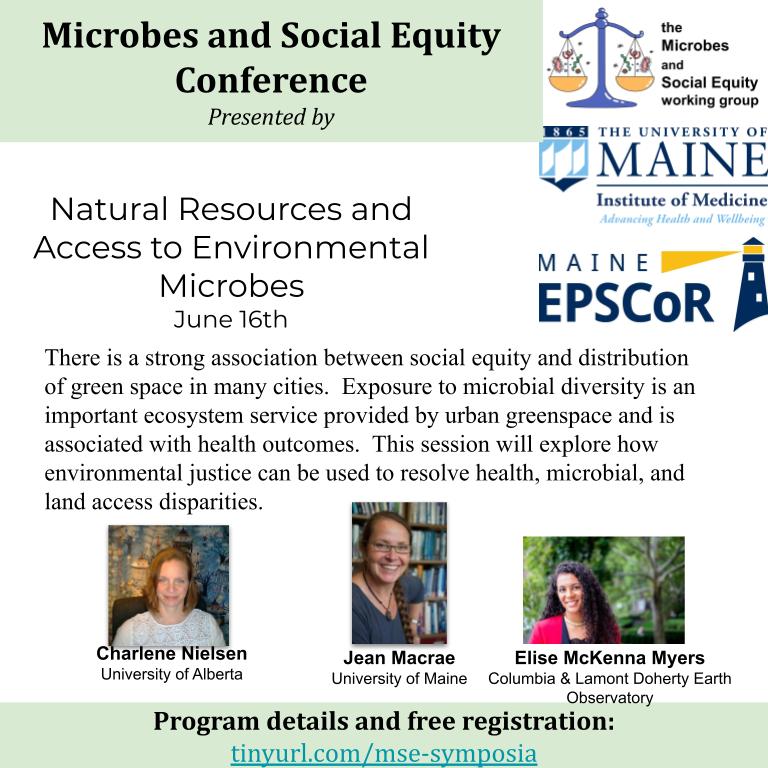
Session 3: “Natural resources and access to environmental microbes”
Wednesday, June 16th, 13:00 ~ 16:00 EST. Registration for this session is closed.
Section leader: Gwynne Mhuireach
The relationship between health and greenspace is well-established. There is also a recognized association between social equity and distribution of greenspace in many cities—parks are often larger, higher quality, and more prevalent in higher-income, upper-class neighborhoods; private yards and gardens are a luxury sometimes inaccessible to lower-income households; even street trees tend to be older, larger, and more numerous in higher income neighborhoods. New evidence shows that exposure to microbial diversity may be an important ecosystem service provided by urban greenspace, as exposure to greater microbial diversity early in life is related to lower prevalence of autoimmune disorders, such as allergies and asthma. This session will explore how environmental justice can be used to resolve health, microbial, and land access disparities.
Program and Registration
Registration, a full speaker list and program, and details of each day can be found here.
Registration will occur for each (day) section individually, so participants can select which topics to participate in, or all of them.
Registration is free and open to the public.
Summary
Microorganisms are critical to many aspects of biological life, including human health. The human body is a veritable universe for microorganisms: some pass through but once, some are frequent tourists, and some spend their entire existence in the confines of our body tissues. The collective microbial community, our microbiome, can be impacted by the details of our lifestyle, including diet, hygiene, health status, and more, but many are driven by social, economic, medical, or political constraints that restrict available choices that may impact our health.
Many human clinical conditions or diseases have been established as being related to the state of the human microbiome. It is known that collective social inequity can drive the prevalence, morbidity, and mortality of some of these diseases or conditions. When access to a nutritious diet and healthcare are impeded by social inequity, these disparities can also affect the human microbiome; this can further contribute to reduced or poorly functioning microbiomes.
Access to resources is the basis for creating and resolving social equity—access to healthcare, healthy foods, a suitable living environment, and to beneficial microorganisms, but also access to personal and occupational protection to avoid exposure to infectious disease. The emergence of the SARS-CoV2 (COVID-19) pandemic has dramatically altered our daily lives and the availability and ability to access essential resources, which has been worsened by pre-existing social inequity. Yet, the pandemic has also highlighted the inherent social disparity among those more likely to be exposed to infectious diseases.
This meeting highlights recent investigations into beneficial and detrimental instances of microbial exposure, in the context of how social policy may mediate or deepen disparities between and within populations. In addition to invited presentations on thematic sections, each section will involve a discussion session using smaller breakout groups, to facilitate conversations and brainstorming between attendees. These groups will be arranged around smaller themes or research questions, and group members will identify knowledge gaps for future research, as well as list actionable steps that can be taken using existing research to promote equitable social policy. Ideally, meeting attendees will gain knowledge, collaborators and connections, and a path forward for turning their research into evidence-based policy to support public health.
Meeting dynamics
Unlike traditional symposium formats, this meeting will present some plenary-style talks by experts in the field, including biological scientists, social scientists, practitioners or policy makers, as well as facilitate discussion among participants. Each thematic section will feature 90 minutes of talks, which will be recorded and made publicly available after the live session. After each plenary session, there will be 90 minutes of discussion in groups led by speakers and MSE group members, and assisted by notetakers, with ~10 participants per breakout room. Participants will be encouraged to “problem solve” a suggested topic or one of their own choosing. The goal is to create action items that are meaningful for group participants, such as ideas for curricula development, identifying research needs or best practices, suggestions for engaging research in policy, and more.
The Microbes and Social Equity working group and The University of Maine Institute of Medicine present an inaugural symposium on:
“Microbes, Social Equity, and Rural Health”
June 14 – 18th, 2021
Format: virtual meeting, Zoom platform.
Day 1 of the Microbes and Social Equity virtual symposium
Session 2: “Nutrition and the gut microbiome”
Tuesday, June 15th, 13:00 ~ 16:00 EST. Registration for this session is closed.
Session leader: Laura Grieneisen
Access to fresh foods, and especially fruits, vegetables, and other products high in fiber, is well demonstrated to be affected by social inequity. The lack of fiber and nutritious food can dramatically hamper a functional gut microbiome. With the effects of COVID-19 being felt, the loss of income/loss of SNAP benefits and disruption to our food and transport systems will make it more difficult for many individuals to obtain a nutritious diet and reap the benefit of a healthy gut microbiome. This effect will be disproportionately felt by lower-income individuals. This session explores the effects of diet on the gut microbiome and health, food insecurity, policy to support food access, and how to use existing resources to create community-based food systems.
Program and Registration
A full speaker list and program, and details of each day can be found here.
Registration will occur for each (day) section individually, so participants can select which topics to participate in, or all of them.
Registration is free and open to the public.
Summary
Microorganisms are critical to many aspects of biological life, including human health. The human body is a veritable universe for microorganisms: some pass through but once, some are frequent tourists, and some spend their entire existence in the confines of our body tissues. The collective microbial community, our microbiome, can be impacted by the details of our lifestyle, including diet, hygiene, health status, and more, but many are driven by social, economic, medical, or political constraints that restrict available choices that may impact our health.
Many human clinical conditions or diseases have been established as being related to the state of the human microbiome. It is known that collective social inequity can drive the prevalence, morbidity, and mortality of some of these diseases or conditions. When access to a nutritious diet and healthcare are impeded by social inequity, these disparities can also affect the human microbiome; this can further contribute to reduced or poorly functioning microbiomes.
Access to resources is the basis for creating and resolving social equity—access to healthcare, healthy foods, a suitable living environment, and to beneficial microorganisms, but also access to personal and occupational protection to avoid exposure to infectious disease. The emergence of the SARS-CoV2 (COVID-19) pandemic has dramatically altered our daily lives and the availability and ability to access essential resources, which has been worsened by pre-existing social inequity. Yet, the pandemic has also highlighted the inherent social disparity among those more likely to be exposed to infectious diseases.
This meeting highlights recent investigations into beneficial and detrimental instances of microbial exposure, in the context of how social policy may mediate or deepen disparities between and within populations. In addition to invited presentations on thematic sections, each section will involve a discussion session using smaller breakout groups, to facilitate conversations and brainstorming between attendees. These groups will be arranged around smaller themes or research questions, and group members will identify knowledge gaps for future research, as well as list actionable steps that can be taken using existing research to promote equitable social policy. Ideally, meeting attendees will gain knowledge, collaborators and connections, and a path forward for turning their research into evidence-based policy to support public health.
Meeting dynamics
Unlike traditional symposium formats, this meeting will present some plenary-style talks by experts in the field, including biological scientists, social scientists, practitioners or policy makers, as well as facilitate discussion among participants. Each thematic section will feature 90 minutes of talks, which will be recorded and made publicly available after the live session. After each plenary session, there will be 90 minutes of discussion in groups led by speakers and MSE group members, and assisted by notetakers, with ~10 participants per breakout room. Participants will be encouraged to “problem solve” a suggested topic or one of their own choosing. The goal is to create action items that are meaningful for group participants, such as ideas for curricula development, identifying research needs or best practices, suggestions for engaging research in policy, and more.













 The Ishaq Lab