
https://www.nature.com/articles/s41598-026-39389-4

Exogenous myrosinase from mustard seed increases bioavailability of sulforaphane from a glucoraphanin-rich broccoli seed extract in a randomized clinical study.

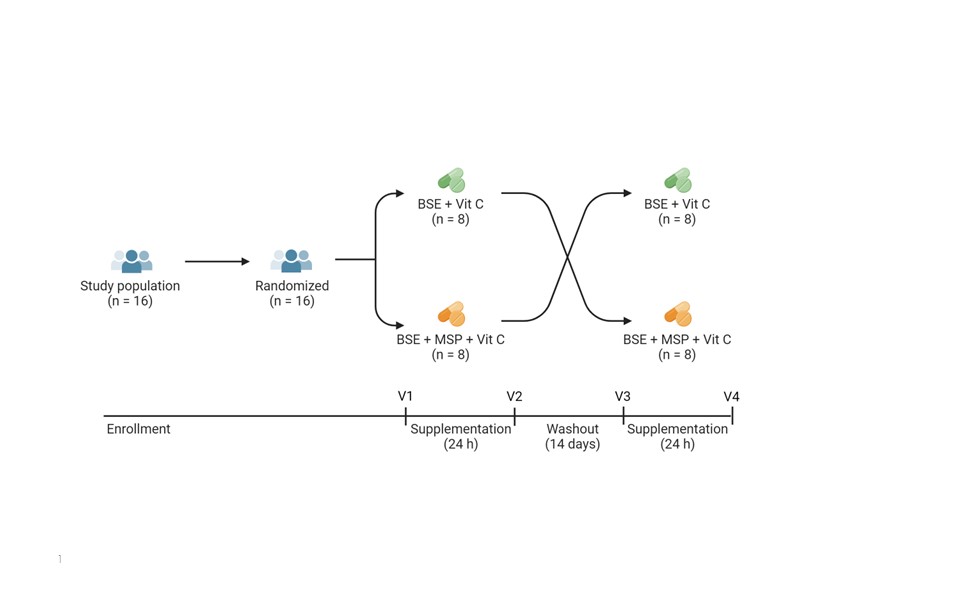
This study was run back in 2021 at Appalachian State University by Dr. Giuseppe Valacchi, Alessandra Pecorelli, and colleagues, when participants were given one dose of a glucoraphanin supplement combined with the plant enzyme myrosinase (which converts the GLR into the anti-inflammatory sulforaphane by the time the supplement gets to your small intestines), or one dose of the glucoraphanin supplement alone (in the absence of the plant enzyme, this requires gut microbes to convert GLR to SFN).
A diagram with two panels, and a cartoon mouse in the middle. The cartoon mouse is eating broccoli, and a cartoon of the digestive tract is overlaid on the mouse's abdomen. Lines emanating from the broccoli point to the left panel, and show the compound glucoraphanin being converted into sulforaphane by the myrosinase enzyme. Lines emanating from the colon of the mouse point to the panel on the right, showing the same biochemical conversion by gut microbes.

Since the Ishaq Lab is interested in how gut microbes can produce anti-inflammatories from inactive compounds in broccoli sprouts, and the Li Lab has been researching the use of sulforaphane for disease prevention and treatment for almost 20 years, Yanyan and I were a natural fit for this collaboration.

Yanyan and I were introduced to Dr. Jed Fahey when he joined the UMaine Institute of Medicine faculty network in 2022. We talked to Jed about his recent work Brassica Protection Products, a company he founded back in 1997 with Dr. Paul Talalay, and Yanyan and I were invited as collaborators in 2023 by Antony Talalay, CEO and Co-Founder, and Paul’s son.

As part of their dissertations, Marissa Kinney performed qPCR to quantify microbial genes during her master’s, and Lola Holcomb performed 16S rRNA bacterial community sequencing during her PhD. While Jed, Tony, and the BPP team are, of course, interested in how their supplement can be used to improve health, the Ishaq Lab is also interested in teasing apart why some people’s gut microbiome is very responsive to GLR supplementation and will produce a fair amount of sulforaphane, while other’s people’s gut won’t react to glucoraphanin at all.
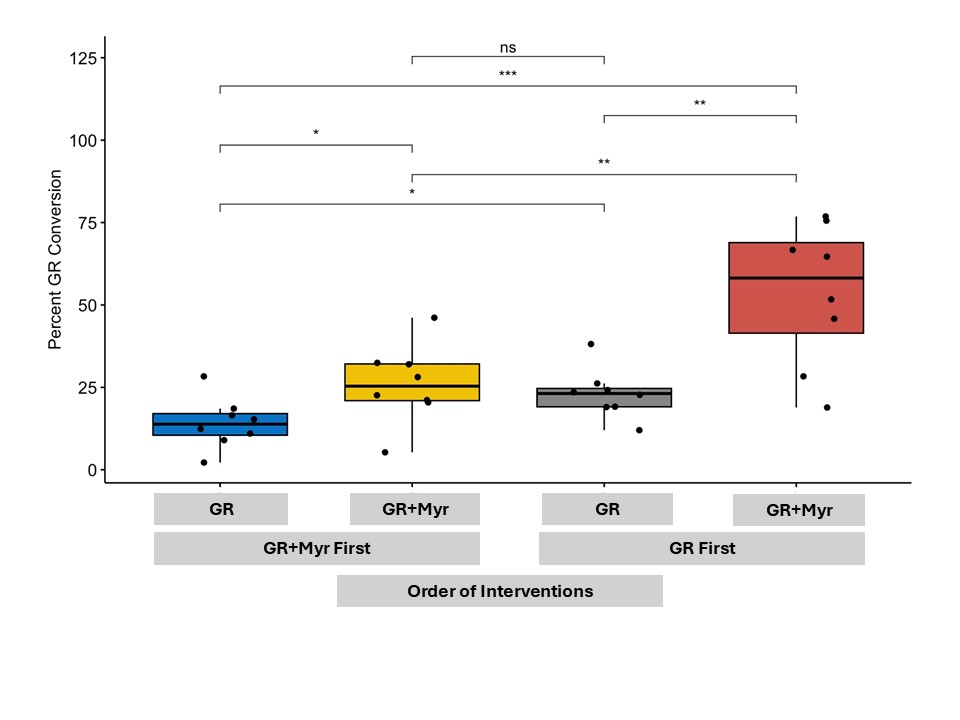
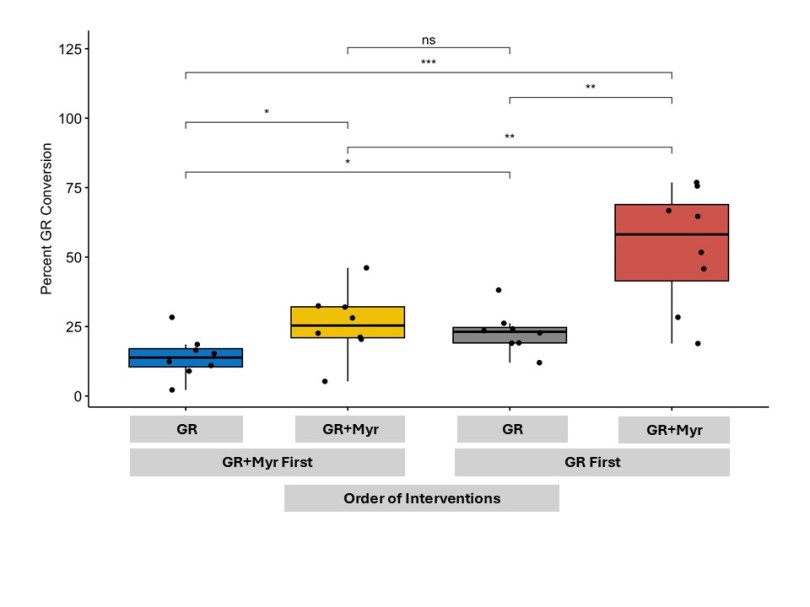
Even more intriguing were the participants in the study who had very little glucoraphanin conversion even when the myrosinase enzyme that can do the conversion was provided in the supplement. In fact, there was a lot of variability in how effective the enzyme was depending on the person- implying there are other biological or environmental factors at play which may be impeding the conversion of glucoraphanin into an anti-inflammatory.

Exogenous myrosinase from mustard seed increases bioavailability of sulforaphane from a glucoraphanin-rich broccoli seed extract in a randomized clinical study.

Angela Mastaloudis, Lola Holcomb, Jed W. Fahey, Camila Olson, David C. Nieman, Colin Kay, Robert O’Donnell, Alessandra Pecorelli, Marissa Kinney, Yanyan Li, Suzanne L. Ishaq & Giuseppe Valacchi. Scientific Reports, In Press.  (2026) 

Abstract: Inactive glucoraphanin (GR) in broccoli is converted to the antioxidant, anti-inflammatory, and anti-bacterial sulforaphane (SF) by cruciferous vegetable enzyme myrosinase (Myr), or similar enzymes from specific gut bacteria; both sources have variable efficiency. The effects of exogenous Myr on the conversion efficiency of GR to SF was compared to gut microbial Myr-like activity. In a randomized, double-blind, crossover study, sixteen subjects (9 F: 7 M) received a single oral dose of GR in broccoli seed extract with Myr-containing mustard seed powder, or broccoli seed extract alone, both with ascorbic acid. GR + Myr, on average, doubled the bioavailability of SF (39.8 ± 3.1%) compared to GR alone (18.6 ± 3.1%), and increased the conversion rate in the first 8 h (25.4% ± 2.7%) compared to GR alone (8.0% ± 2.7) based on measurement of urinary metabolites. There were no differences in fecal bacterial communities after the single dose; however, four bacterial GR-converting genes significantly correlated with GR conversion (p < 0.0155). To our knowledge, this is the first human study to simultaneously investigate (1) a well-defined Myr source, (2) broccoli seeds as source of GR, (3) prediction of gut microbial responsiveness to GR.

Framing the discussion of microorganisms as a facet of social equity in human health

In summer 2019, I developed and taught a course on ‘Microbes and Social Equity‘ to the Clark Honors College at the University of Oregon.

In just a four-week course, I introduced 15 undergraduates from the University of Oregon Clark Honors College to microorganisms and the myriad ways in which we need them. More than that, we talked about how access to things, like nutritious foods (and especially fiber), per- and postnatal health care, or greenspace and city parks, could influence the microbial exposures you would have over your lifetime. Inequalities in that access – such as only putting parks in wealthier neighborhoods – creates social inequity in resource distribution, but it also creates inequity in microbial exposure and the effect on your health.

The course assignments were literature review essays on various topics, which were compiled into a single manuscript as the group-based final project for the course. This large version is available as a preprint; however, the published version is more focused (abstract below). Course materials are here.

What is next for ‘Microbes and Social Equity’?

Since publishing in November, a number of researchers have connected with me, and we have formed a loose collaboration for “Microbes and Social Equity Part 2”. We have several initiatives in development, and there will be news releases as those coalesce. At this time, we are developing a journal special call, and a series of workshops/mini-symposia, both with the goal of connecting researchers and practitioners. Stay tuned!


Framing the discussion of microorganisms as a facet of social equity in human health.

Suzanne L. Ishaq1,2*, Maurisa Rapp2,3, Risa Byerly2,3, Loretta S. McClellan2, Maya R. O’Boyle2, Anika Nykanen2, Patrick J. Fuller2,4, Calvin Aas2, Jude M. Stone2, Sean Killpatrick2,4, Manami M. Uptegrove2, Alex Vischer2, Hannah Wolf2, Fiona Smallman2, Houston Eymann2,5, Simon Narode2, Ellee Stapleton6, Camille C. Cioffi7, Hannah Tavalire8

  1. Biology and the Built Environment Center,  University of Oregon
  2. Robert D. Clark Honors College, University of Oregon
  3. Department of Human Physiology, University of Oregon
  4. Charles H. Lundquist College of Business, University of Oregon
  5. School of Journalism and Communication, University of Oregon
  6. Department of Landscape Architecture, University of Oregon
  7. Counseling Psychology and Human Services, College of Education, University of Oregon
  8. Institute of Ecology and Evolution, University of Oregon

Abstract

What do ‘microbes’ have to do with social equity? On the surface, very little. But these little organisms are integral to our health, the health of our natural environment, and even impact the ‘health’ of the environments we have built. Early life and the maturation of the immune system, our diet and lifestyle, and the quality of our surrounding environment can all impact our health. Similarly, the loss, gain, and retention of microorganisms ⁠— namely their flow from humans to the environment and back⁠ — can greatly impact our health and well-being. It is well-known that inequalities in access to perinatal care, healthy foods and fiber, a safe and clean home, and to the natural environment can create and arise from social inequality. Here, we focus on the argument that access to microorganisms as a facet of public health, and argue that health inequality may be compounded by inequitable microbial exposure.


In the Media

  1. ” UMaine prof: Inequity is creating a gut microbe gap.” Mike Tipping and Ben Chin, Maine People’s Alliance. Dec 20, 2019.
  2. Inequity takes a toll on your gut microbes, too.” Sue Ishaq,  The Conversation, Dec 4, 2019.
    1. Picked up by The Telegraph, Alton, Illinois, and other agencies
    2. Included on UMaine news
  3. All people have a right to healthy gut microbes.” Paige Jarreau and Signe Asberg, Lifeapps. Dec 3, 2019.  
  4. Rich People Have Access to Better Microbes Than Poor People, Researchers Say.” Becky Ferreira, Vice. Nov 26, 2019.
  5. Microbiome is a Human Right.” Heather Smith, Sierra. Nov 26, 2019.
  6. Life, liberty—and access to microbes?” Press release for Plos Biology. Nov 19, 2019.

Story picked up by (non-exhaustive list)